

P0894 on 2001-2005 Chevrolet Silverado: Transmission Component Slipping Causes and Fixes
On a 2001-2005 Silverado, P0894 indicates the transmission is slipping, most often due to a worn Torque Converter Clutch (TCC) or a worn TCC regulator valve in the valve body. This is a serious code that can lead to a full transmission rebuild if ignored. A common fix involves installing a valve body repair kit like the Sonnax 77754-04K. A valve body repair may cost $400-$800, while a full rebuild can exceed $2,500.
- P0894 on a 2001-2005 Silverado indicates a serious internal transmission slip, most often related to the torque converter clutch system.
- Do not continue to drive with this code. The slipping generates heat that can cause catastrophic transmission failure.
- The most common causes are a worn TCC regulator valve bore in the valve body or a failed torque converter.
- Diagnosis requires a professional scan tool to monitor TCC slip speed in real-time.
- Simply replacing the torque converter without checking the valve body for wear may not fix the problem.
What's Unique About the 2001-2005 Chevrolet SILVERADO
The 2001-2005 Silverado (GMT800 platform) primarily uses the 4L60E or the heavy-duty 4L80E automatic transmission. Both are known for specific wear points that directly cause the P0894 code. The most common is the TCC regulator valve bore within the aluminum valve body, which wears over time from the constant oscillation of the steel valve, causing a hydraulic pressure leak that prevents the torque converter clutch from applying firmly. This specific valve body issue is a well-documented weak point on this generation of Silverado and is often serviced with aftermarket kits designed to repair the worn bore. This code is functionally identical to the older GM-specific code P1870, which points to the same failures.
🎬 Watch: A full teardown of a 4L60E with code P0894.Diagnostic Flowchart
Tap your situation to follow the diagnostic path that matches what you're seeing on this vehicle.
Symptoms You May Notice
- Harsh or abrupt shifting, especially from 1st to 2nd gear (due to the computer commanding max line pressure).
- Engine RPM flares up between shifts.
- Sensation of slipping or shuddering at highway speeds when the TCC should be locked.
- Reduced fuel economy.
- Transmission overheating.
- Illuminated Check Engine Light.
- Vehicle may enter 'limp mode', stuck in one gear.
- Replacing only the torque converter when the valve body's TCC regulator bore is worn. The new converter will still slip due to the hydraulic pressure leak, and the code will return.
- Replacing speed sensors. While faulty speed sensors can cause transmission issues, P0894 is specifically a 'slippage' code calculated from the sensor readings, not a code for a faulty sensor itself.
- Replacing only the TCC solenoid when the valve body bore is worn out. The new solenoid cannot overcome the hydraulic leak from the worn bore.
Most Likely Causes
- Worn TCC Regulator Valve Bore in Valve Body 🔴 High Probability The steel TCC regulator valve constantly oscillates within the softer aluminum valve body bore, causing wear over time. This wear creates a hydraulic leak, preventing the TCC from applying with enough force. This is a very common failure on 4L60E and 4L80E transmissions, often triggering P0894 or the related P1870 code.
How to confirm: A technician can monitor TCC slip RPM on a scan tool while commanding lock-up. If slip remains high (>100 RPM) while the TCC duty cycle is maxed out, it points to a hydraulic leak. The definitive test is to remove the valve body and perform a vacuum test on the bore. 🎬 Watch: A quick tip for inspecting the valve body bore.
Typical fix: The valve body is removed, the worn bore is reamed, and an oversized valve and sleeve kit is installed to restore the hydraulic seal. Aftermarket kits from brands like Sonnax are specifically designed for this repair, such as the Sonnax TCC Regulator & Isolator Valve Kit 77754-04K.
Est. part cost: $50-$150 for a valve kit, $300-$500 for a remanufactured valve body. - Failed Torque Converter 🔴 High Probability The friction material on the clutch inside the torque converter can wear out, delaminate, or break apart from high mileage and heat cycles, especially under heavy use like towing. This creates a massive internal leak, preventing lockup.
How to confirm: After ruling out valve body and solenoid issues, a failed converter is the likely cause. A technician can cut open the old converter to visually confirm the destroyed clutch lining. Dropping the transmission pan and finding a large amount of black clutch material or metal debris is a strong indicator of converter failure.
Typical fix: The transmission must be removed to replace the torque converter. If the converter has failed and sent debris through the system, a full transmission flush or rebuild is necessary to prevent the debris from damaging the new converter and other components. A common OEM replacement part is the ACDelco GM Original Equipment Torque Converter (e.g., part #24298483).
Est. part cost: $200-$600 - Failed TCC Control Solenoid 🟡 Medium Probability The solenoid that controls the flow of fluid to apply the TCC can fail electrically or, more commonly, develop a hairline crack in its plastic housing, causing a pressure leak. This is a known failure point.
How to confirm: The solenoid can be commanded on and off with a capable scan tool while monitoring its effect. Its electrical resistance can be tested with a multimeter after dropping the transmission pan. An amperage draw test can also confirm if it's working correctly. Visual inspection for cracks is crucial.
Typical fix: Drop the transmission pan, unbolt the old solenoid, and install a new one. The transmission filter and fluid should be replaced at the same time. A common replacement is the ACDelco TCC PWM Solenoid 🎬 See this walkthrough on replacing the TCC and shift solenoids. (part #24227792).
Est. part cost: $30-$80 - Low or Burnt Transmission Fluid ⚪ Low Probability
How to confirm: Check the transmission fluid dipstick. If the fluid is low, there is a leak that must be found. If the fluid is dark brown or black and smells burnt, it indicates severe internal friction and wear, likely from slipping clutches or a failing converter.
Typical fix: If low, top off the fluid and repair the source of the leak. If burnt, a fluid change is necessary, but it will not fix the underlying mechanical damage that caused the fluid to burn.
Est. part cost: $50-$150 for fluid and a filter kit.
Rare But Worth Checking
- Internal Transmission Mechanical Failure: Beyond the TCC, other internal components like the 3-4 clutch pack (a known weak point in the 4L60E) or worn bushings can fail, causing general slipping that may contribute to setting this code.
- Faulty Transmission Control Module (TCM): While rare, the TCM itself can fail. This should only be considered after all mechanical, hydraulic, and wiring issues have been definitively ruled out.
Diagnosis Steps
- Check the transmission fluid level and condition. If it's low, top it off and check for leaks. If it's dark and smells burnt, suspect significant internal wear.
- Use a professional scan tool to check for other transmission-related codes and to monitor live data.
- Observe the 'TCC Slip Speed' data parameter during a test drive. When lock-up is commanded (typically at steady cruising speeds above 45 mph), the slip should drop to near zero (ideally under 50 RPM). If it remains high (e.g., over 100 RPM) while the TCC solenoid duty cycle is high, the slip is confirmed.
- Drop the transmission pan and inspect for excessive metal shavings or friction material. A small amount of fine grey material on the magnet is normal, but large flakes or chunks of black clutch material indicate serious internal damage, likely from the torque converter.
- While the pan is off, inspect and test the TCC solenoid. Check for hairline cracks in the plastic housing and test its electrical integrity with a multimeter or by commanding it with a scan tool and checking amperage draw.
- If solenoids and fluid are good, the next step is to inspect the valve body. This typically requires removal and specialized testing (like vacuum testing the TCC regulator valve bore) to check for wear.
- If the valve body is confirmed to be in good condition, the torque converter itself is the most likely culprit, having failed internally.
Parts You'll Likely Need
- TCC Regulator Valve Repair Kit — This is the most common fix for the hydraulic pressure leak in the valve body that causes TCC slip on the 4L60E/4L80E.
Trusted brands: Sonnax (e.g., Part #77754-04K for 4L60E)
Aftermarket price range: $50-$150 - Torque Converter
(OEM #ACDelco 24298483 (example))— If the internal clutch lining is worn out or has delaminated, the converter must be replaced. This requires transmission removal.
Trusted brands: ACDelco, Yank, Circle D
OEM price range: $250-$500
Aftermarket price range: $200-$600 - TCC PWM Solenoid
(OEM #24227792)— The solenoid controlling TCC lockup can fail electrically or crack, causing a pressure leak. It's located inside the pan and is a common replacement item.
Trusted brands: ACDelco
OEM price range: $40-$80
Aftermarket price range: $30-$60
Related Codes That Often Appear With This One
- P0741 — Stands for 'Torque Converter Clutch Circuit Performance or Stuck Off.' It is highly specific to the TCC system and strongly reinforces that the problem lies with the TCC, its solenoid, or its hydraulic circuit.
- P1870 — This is an older GM-specific code for 'Transmission Component Slipping' that serves the same purpose as P0894 on many models. They point to the exact same set of common failures, particularly the worn TCC regulator valve bore.
- P0700 — This is a generic code indicating the Transmission Control Module (TCM) has stored a fault. It acts as a 'check engine light' request from the TCM and will always be present alongside a specific transmission code like P0894.
Technical Service Bulletins (TSBs) & Recalls
- A GM Preliminary Information bulletin that lists P0894 among a wide range of transmission-related DTCs that can occur with symptoms like no engagement, delayed engagement, or range inhibit. It instructs technicians to check fluid levels and follow standard diagnostics.
Platform-Specific Known Issues
- Real-World Diagnosis: TCC Solenoid vs. Torque Converter: In a detailed YouTube video, a technician diagnoses a P0894 on a 2006 Silverado 2500 with a 4L80E. After confirming high TCC slip with a scan tool, he performs a current draw test on the TCC solenoid, which passes, ruling out an electrical failure. He correctly deduces the torque converter has failed internally. Upon cutting the old converter open, he shows the clutch friction material has completely broken apart, which caused the massive hydraulic leak and slip. This highlights the importance of diagnosing beyond just the solenoid.
- Misdiagnosis with Wrong Filter and Cracked Solenoid: A teardown of a 4L60E from a 2004 Avalanche with code P0894 revealed several issues. The technician noted that a previous service had installed the incorrect (early style) transmission filter. He also points out that the TCC solenoid housing is prone to cracking near the screen, which can cause the code and recommends replacing it during any overhaul for this issue.
Mechanic-Grade Diagnostic Values
- TCC PWM Solenoid Resistance — expected: 10-11 Ohms at 68°F (some sources state 7-20 Ohms).. Failure: An open circuit (infinite resistance) or a reading significantly outside the expected range indicates a failed solenoid.
- TCC On/Off Solenoid Resistance (if applicable, less common on PWM models) — expected: 20-40 Ohms.. Failure: A reading outside this range suggests an electrical failure in the solenoid coil.
- Pressure Control (EPC) Solenoid Resistance — expected: 3.5-8.0 Ohms.. Failure: Readings outside this narrow range point to a faulty EPC solenoid, which can cause global pressure issues.
- TCC Slip Speed (Live Scan Tool Data) — expected: Under 50-100 RPM when TCC is commanded locked.. Failure: Sustained slip of over 100 RPM while the TCC duty cycle is commanded near maximum (e.g., 90%+) confirms a slip condition.
- TCC Apply Pressure (Specialized Test) — expected: A healthy, repaired valve body should produce over ~120 PSI.. Failure: A worn valve body may only produce ~85 PSI, a loss of over 4,000 lbs of apply force in the converter.
Hidden / Shadow Codes Worth Checking
- P1870: This is the older, manufacturer-specific version of P0894 for GM vehicles. It means 'Transmission Component Slipping' and is triggered by the exact same failure mechanisms, most notably the worn TCC regulator valve bore in the valve body. If you see P1870, the diagnostic path is identical to P0894. (see via Visible on most standard OBD-II scanners.)
Scan Tool Commands That Help
- Tech2 or equivalent professional scanner: TCC Solenoid Control / Output Component Control — This bidirectional command allows a technician to manually command the TCC solenoid on and off with the engine running and in gear (at a standstill) to see if it stalls the engine. A successful stall indicates the solenoid and converter clutch are capable of holding, pointing away from a complete hydraulic failure. It's also used to listen for the solenoid's 'click' with the pan off.
- Professional Scan Tool with Live Data: Live Data Monitoring (TCC Slip, TCC Duty Cycle) — This is the primary diagnostic method. During a test drive at steady cruise (over 45 mph), the technician watches for the PCM to command TCC lockup (duty cycle increases) and verifies if the TCC slip speed drops to near zero. If slip remains high when commanded, the fault is confirmed.
Wiring & Ground Locations
- Main Transmission Connector (Round, 13+ pin) — On the passenger side of the transmission case.. This is the main electrical interface. The TCC PWM solenoid signal is on Pin T. Power is supplied via Pin E. Testing resistance at these pins can diagnose the solenoid and harness continuity from outside the transmission.
- PCM Ground (G102/G104) — A critical ground wire from the PCM harness that bolts to the rear of the driver's side or passenger's side cylinder head/engine block.. This is the main ground for the computer and its sensors. Corrosion or a loose connection here can cause erratic sensor readings and incorrect PCM/TCM behavior, potentially leading to false codes or improper transmission control. It is a primary location to check for any electrical fault.
- Firewall & Frame Grounds — Braided straps from the back of the engine to the firewall, and wires from the battery negative terminal to the radiator support and frame rail.. Multiple ground paths are essential for stable electrical operation. A corroded frame or body ground can force module communication and sensor signals to find alternate, high-resistance paths, causing unpredictable issues.
- Engine Harness Chafe Points — While more documented on newer trucks, common chafe areas for harnesses include the ECM/TCM mounting bracket, the upper control arm, and shock tower bolts.. A short-to-ground in the TCC solenoid control wire could cause erratic lockup behavior. If electrical testing of the solenoid circuit is inconclusive, inspecting the harness for physical damage at contact points is a necessary step.
Real Owner Repair Stories
- PerformanceTrucks.net forum user '06sierra5.3' (Silverado with a freshly rebuilt 4L60E and a new Yank TT3000 torque converter.) — P0894 code appeared twice within the first 300 miles after the rebuild. Also reported RPMs flaring up by ~200 RPM when cruising at light throttle on the freeway.
❌ Tried (didn't work) Clearing the code would make it go away temporarily. The user reused the original solenoids and wiring harness in the rebuild.
✅ What actually fixed it The user later posted an update admitting they had forgotten to install the O-ring on the input shaft during the rebuild. This created a major hydraulic leak, preventing proper TCC apply. - PerformanceTrucks.net forum user 'LARRY01Z28' (Truck with a 4L60E, details similar to the original poster's issue.) — P0894 code, harsh 1-2 shift.
❌ Tried (didn't work) The user was investigating the common TCC regulator valve issue based on forum advice.
✅ What actually fixed it The user posted a final update stating, 'well wanted to give an update. I had a bad TQ converter that was causing my P0894 code.' - Chevrolet Forum user 'slaroche' (1999 Silverado 1500 with 4L60E, recently rebuilt transmission.) — Code P1870 (functionally identical to P0894) appeared after replacing a radiator that had leaked coolant into the transmission fluid. Slipping and harsh 1-2 shifts were present.
❌ Tried (didn't work) A professional transmission flush and adding a bottle of Lucas Transmission Fix. The problem returned.
✅ What actually fixed it The consensus from experienced technicians in the thread was that the transmission was destroyed internally. Engine coolant contaminates and delaminates the friction material on clutches and bands very quickly. The only fix is a complete teardown and rebuild.
Model Year Variations Within This Range
- 2000-onward: Starting around the 2000 model year, the 4L60E used in V8 trucks received a deeper bellhousing (approx. 3/4 inch deeper) to accommodate a larger 300mm torque converter. The input shaft is also longer. This means torque converters are not interchangeable between pre- and post-2000 models without also changing the input shaft and bellhousing.
- 1995-onward: Beginning in 1995, the 4L60E switched from a simple on/off TCC solenoid to a Pulse-Width Modulated (PWM) TCC solenoid. This allows for a controlled, partial slip during lockup to improve shift feel. The 2001-2005 Silverados use this PWM system. The converter clutch material was also upgraded to woven carbon to better handle the heat from this controlled slippage.
Helpful Videos
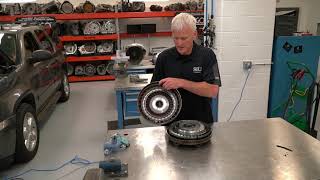

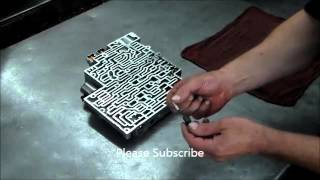
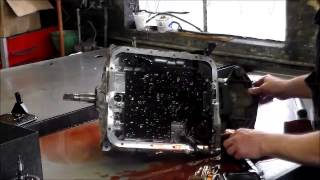
We Have This Part in Stock


The information in this article is provided for general reference and educational purposes only. Vehicle specifications, procedures, and part compatibility can vary by production date, trim level, and region. Always consult your vehicle's factory service manual and verify part numbers before purchasing or performing repairs. Safety-critical components such as airbags, seat belts, and braking systems should be installed by a qualified professional.
- Chevrolet SILVERADO:
- 🎬 Helpful Videos
- 🛍️ Shop This Part
- What's Unique About the 2001-2005 Chevrolet SILVERADO
- Diagnostic Flowchart
- Symptoms You May Notice
- Most Likely Causes
- Rare But Worth Checking
- Diagnosis Steps
- Parts You'll Likely Need
- Related Codes That Often Appear With This One
- Technical Service Bulletins (TSBs) & Recalls
- Platform-Specific Known Issues
- Mechanic-Grade Diagnostic Values
- Hidden / Shadow Codes Worth Checking
- Scan Tool Commands That Help
- Wiring & Ground Locations
- Real Owner Repair Stories
- Model Year Variations Within This Range
- 🎟️ Get 5% Off