

P0894 on 2007-2014 Chevrolet Silverado 1500: Transmission Slipping Causes and Fixes
P0894 on a 2007-2014 Silverado indicates the transmission is slipping, most often due to a failing Torque Converter Clutch (TCC) solenoid or worn internal valve body components. Expect to pay $200-$600 for a solenoid and fluid service, but costs can rise significantly if a valve body repair or transmission rebuild is needed.
- P0894 means a component inside your transmission is slipping, which is a serious issue that should not be ignored.
- The most common symptoms are a Check Engine Light and sudden, harsh shifts, which is the transmission's attempt to protect itself.
- Start diagnosis by checking the transmission fluid level and condition. Low or burnt fluid points to different problems.
- A faulty TCC solenoid is a very common and relatively inexpensive part to replace that often resolves this code.
- If a new solenoid doesn't work, the problem is likely deeper, involving wear inside the valve body or the torque converter itself, requiring professional service.
What's Unique About the 2007-2014 Chevrolet SILVERADO 1500
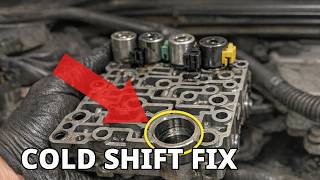
The 2007-2014 Silverado 1500 primarily used the 4L60-E and the heavier-duty 6L80 automatic transmissions. 🎬 Learn about common 6L80 failure points and how to address them. Both are known to set the P0894 code, often related to wear in the valve body that controls hydraulic pressure to the torque converter clutch. Once the code sets, the TCM typically commands maximum line pressure to prevent further slippage, resulting in noticeably harsh and firm shifts as a self-preservation measure. This is a common owner complaint associated with the code and is often described as a 'bang' shift between 1st and 2nd gear.
Diagnostic Flowchart
Tap your situation to follow the diagnostic path that matches what you're seeing on this vehicle.
Generation note: This year range covers the end of the GMT900 generation (2007-2013) and the first year of the K2XX generation (2014). The GMT900 trucks often used the 4-speed 4L60-E, while the 2014 K2XX models exclusively used 6-speed transmissions like the 6L80. While the code's meaning is the same, the specific internal components (like the TCC solenoid and valve body design) differ between these transmissions. The P0894 code on a 4L60-E is often analogous to the P1870 code on earlier models.
Symptoms You May Notice
- Check Engine Light is on
- Harsh, firm, or banging shifts, especially from 1st to 2nd gear.
- Transmission slipping (engine RPMs flare up without an increase in speed).
- Delayed engagement when shifting into Drive or Reverse.
- Vehicle feels sluggish or has weak acceleration.
- A burning smell from the transmission fluid.
- Reduced fuel economy due to the torque converter not locking up.
- Transmission temperature warning light or higher than normal temperature readings.
- Replacing the entire transmission when only a TCC solenoid or valve body repair was needed.
- Replacing the torque converter without addressing a worn TCC regulator valve bore in the valve body, which will cause the new converter to slip as well.
Most Likely Causes
- Failed Torque Converter Clutch (TCC) Solenoid 🔴 High Probability The TCC solenoid is an electronic part that lives in hot fluid and cycles constantly. The plastic housing on older-style solenoids is known to develop hairline cracks, causing a pressure leak that prevents the TCC from applying correctly. It is a very common failure point.
How to confirm: A professional scan tool can command the TCC solenoid on and monitor the TCC slip RPM. If the slip remains high (e.g., over 100 RPM) when commanded on, the solenoid or its circuit is suspect. On a healthy GM transmission, TCC slip should be under 50 RPM when lockup is active. Visual inspection upon removal may reveal cracks.
Typical fix: Replace the TCC solenoid, which is located inside the transmission oil pan. This is often done along with a new pan gasket, filter, and fluid.
Est. part cost: $30-$80 - Worn TCC Regulator Valve Bore in Valve Body 🟡 Medium Probability The TCC regulator valve constantly oscillates within its bore in the aluminum valve body, leading to wear over time. This wear creates a hydraulic leak, reducing the pressure needed to apply the torque converter clutch, causing slippage. This is a well-documented wear point on both 4L60-E and 6L80 transmissions.
How to confirm: This is difficult to confirm without disassembly. A transmission specialist can remove the valve body and use a vacuum tester on the specific valve bore to measure the extent of the wear. A shop may also test TCC apply pressure, which will be low if the bore is worn.
Typical fix: The valve body must be removed. A specialty kit (like those from Sonnax) is used to ream the worn bore and install an oversized valve and sleeve, restoring hydraulic integrity. Alternatively, a remanufactured valve body is installed. This is often considered a permanent fix for the issue.
Est. part cost: $60-$150 for a reaming kit, $300-$500 for a remanufactured valve body. - Low or Burnt Transmission Fluid 🟡 Medium Probability
How to confirm: Check the transmission fluid level and condition using the dipstick (if equipped) while the vehicle is running and at operating temperature. Low fluid indicates a leak. Fluid that is dark brown/black and smells burnt indicates severe internal wear and clutch material degradation.
Typical fix: If low, top off with the correct fluid (ACDelco DEXRON-VI) and find and fix the leak. If the fluid is burnt, a simple fluid change will not fix the underlying mechanical damage; a rebuild is likely necessary.
Est. part cost: $10-$20 per quart of fluid. - Worn Torque Converter ⚪ Low Probability The clutch material inside the torque converter can wear out or even break apart, especially on high-mileage vehicles. When it wears, it can no longer create a solid lock-up, causing slippage and sending debris throughout the transmission.
How to confirm: This is typically diagnosed after confirming the TCC solenoid and valve body are functioning correctly. If slip is still present, the torque converter itself is the likely culprit. Finding a large amount of metallic or friction material in the transmission pan is a strong indicator of converter or internal clutch failure.
Typical fix: The transmission must be removed from the vehicle to replace the torque converter. If the converter has failed, the transmission and coolers must be thoroughly flushed or replaced to prevent debris from damaging the new parts.
Est. part cost: $200-$500
Rare But Worth Checking
- Transmission Pump Losing Prime: TSB #PIP4379K (superseding PIP4379M) mentions that after sitting, especially in cold weather, the transmission pump can lose its prime due to low fluid level or other issues, causing low pressure, delayed engagement, and setting P0894 among other codes.
- Faulty Transmission Control Module (TCM): While possible, this is rare. TSB #PIP4379K specifically notes that replacing the TCM is unlikely to correct this code. All other mechanical and hydraulic causes should be ruled out first.
- Worn Stator Support Bushing: In 4L60-E transmissions, a worn front stator support bushing inside the pump can cause a major loss of converter charge oil, leading to TCC slip and code P0894. This requires transmission removal to inspect and replace.
Diagnosis Steps
- Check the transmission fluid level and condition. Ensure it is full and does not smell burnt.
- Use a professional OBD-II scanner to check for any other transmission-related codes, especially P0700 and P0741.
- Monitor live data with the scan tool, specifically Engine RPM, Transmission Output Speed, TCC Command Percentage, and TCC Slip RPM.
- During a test drive at steady cruising speed (45-60 mph), observe if the TCC slip RPM drops to near zero (ideally under 50 RPM) when the TCC is commanded on. If it stays high (e.g., >100 RPM), a slip is confirmed.
- If possible with the scan tool, manually command the TCC solenoid on and off to test its function and listen for a change in engine RPM.
- Drop the transmission pan to inspect for excessive metal or clutch debris. This is a critical step to differentiate between a simple solenoid/valve body issue and a major internal failure.
- While the pan is off, inspect and replace the TCC solenoid. Check for cracks in the old solenoid's housing.
- If a new solenoid does not fix the issue, the next step is to have a professional inspect the valve body for a worn TCC regulator valve bore using vacuum testing equipment.
- If the valve body is confirmed to be good, the issue likely lies with a worn stator support bushing, the torque converter itself, or internal clutch packs, requiring transmission removal.
Parts You'll Likely Need
- Torque Converter Clutch (TCC) PWM Solenoid
(OEM #24227792 (For many 4L60-E/6L80 applications, verify by VIN))— This is the most common and accessible part to fail, causing a pressure loss that leads to slippage
Related Codes That Often Appear With This One
- P0741 — Stands for 'Torque Converter Clutch Circuit Performance or Stuck Off'. This code is very specific to the TCC system and often accompanies P0894, pointing directly to a TCC solenoid, valve body, or converter issue.
- P0700 — This is a generic code indicating the Transmission Control Module (TCM) has requested the Check Engine Light to be turned on. It is a general flag that a more specific transmission code, like P0894, is stored in the TCM.
- P0731-P0736 — These codes indicate incorrect gear ratios. As noted in TSB #PIP4379K, they can be set along with P0894, often stemming from a common root cause of low hydraulic pressure.
- P1870 — This is an older GM code for 'Transmission Component Slipping' often found on pre-2006 4L60-E transmissions. P0894 is the newer equivalent, and they share the same common causes, particularly the worn TCC regulator valve bore.
Technical Service Bulletins (TSBs) & Recalls
- TSB #PIP4379K: This bulletin addresses delayed engagement and multiple transmission codes, including P0894. It points towards a potential loss of transmission pump prime, especially in cold weather or after a fluid service. It specifically advises that low fluid level is a primary cause and that replacing the TCM is unlikely to be the fix.
Mechanic-Grade Diagnostic Values
- 4L60-E TCC PWM Solenoid Resistance — expected: 10-15 ohms @ 68°F. Failure: Open circuit (infinite resistance) or a reading significantly outside the expected range.
- 6L80 TCC Solenoid (PWM) Resistance — expected: 3-8 ohms. Failure: A reading outside this range indicates a failed solenoid winding, requiring TEHCM replacement.
- TCC Slip RPM (Code Trigger Threshold) — expected: Less than 50 RPM when TCC is commanded locked.. Failure: If TCC slip is between 130 to 800 RPM for 7 seconds, the computer will log the P0894 fault.
Hidden / Shadow Codes Worth Checking
- P1870: Transmission Component Slipping. This is the manufacturer-specific predecessor to the generic P0894 code on many GM vehicles, particularly pre-2006 4L60-E transmissions. The causes and diagnostic logic are virtually identical, often pointing to a worn TCC regulator valve bore. (see via Standard OBD-II scanner. It is not a hidden code, but its direct relationship to P0894 is critical knowledge for diagnosis.)
Scan Tool Commands That Help
- GDS2 / Tech2 (or equivalent professional scanner): Solenoid Automated Cleaning Process — For 6L80 transmissions, if a solenoid performance code like P0894 is present, this function can be run before replacing the TEHCM. It cycles all solenoids to dislodge potential debris causing them to stick.
- GDS2 / Tech2 (or equivalent professional scanner): TCC Solenoid Command — During a test drive or on a lift, a technician can manually command the TCC solenoid ON or to a specific duty cycle to verify its operation. While monitoring TCC Slip RPM, this directly tests the hydraulic and mechanical response of the TCC circuit.
Wiring & Ground Locations
- G110 — On the right rear of the engine, mounted to the back of the cylinder head.. This is a primary engine and transmission-related ground. A loose or corroded connection here can cause erratic sensor readings and incorrect TCM behavior, potentially leading to false slip detection or solenoid control issues. TSBs on newer trucks highlight this as a problem area.
- G103 — On the cowl in the left rear of the engine compartment, typically above the brake booster.. This ground serves the Body Control Module (BCM) and the Data Link Connector (DLC). A poor connection can disrupt communication between the TCM and other modules, causing a variety of codes and diagnostic headaches.
- TCM Connector (External, 4L60-E) — Varies by year, but typically on the transmission itself or mounted nearby on the frame.. For 4L60-E models with an external TCM, checking for power and ground at the connector is crucial. For a 2009 model, Pin 9 (BK/WH wire) is ground and Pin 10 (OG wire) is battery positive voltage. Loss of either can cause the TCM to malfunction.
Real Owner Repair Stories
- YouTube channel 'Precision Transmission' (2007 Chevrolet truck with 4L60-E) — Check Engine Light with code P0894. Scan tool confirmed TCC slip of 175-200 RPM when commanded locked.
❌ Tried (didn't work) A common field fix of modifying the valve body by blocking the isolator valve and TCC regulator valve. The P0894 code returned after 3-4 days.
✅ What actually fixed it The transmission was removed. The root cause was a severely worn front stator support bushing in the transmission pump. This allowed converter charge oil to leak, preventing the TCC from applying with sufficient pressure. Replacing the bushing resolved the slip. - YouTube channel '1998ChevyBlazer' (2003 GM truck with 4L60-E) — Very harsh and banging 1-2 shift, a common side effect of the P0894 code causing max line pressure.
✅ What actually fixed it The factory plastic 1-2 accumulator piston was found to be cracked and worn. It was replaced with an upgraded, pinless aluminum accumulator piston from Sonnax (part #77998-03K). This restored proper hydraulic cushioning for the 1-2 shift.
When the Usual Fixes Don't Work
- In one documented case for a 2007 Silverado with a 4L60-E and P0894, a common fix of repairing the TCC regulator valve in the valve body did not resolve the issue; the code returned quickly. The actual root cause was found to be a severely worn front stator support bushing inside the transmission pump, which required full removal of the transmission to replace. This demonstrates that while valve body wear is a common cause, it is not the only cause, and if a valve body repair fails, internal hard part wear must be investigated before condemning the torque converter.
OEM Part Supersession History
N/A (usage change)→24227747— Part Application Change
Heads up: Part number 24227747 was used as the 3-2 downshift solenoid on 1993-1995 4L60-E transmissions. From 1996 onward, the same part number was used as the TCC PWM solenoid. Using it as the wrong solenoid in the wrong year will cause function issues.
Model Year Variations Within This Range
- 2007-2013 (approx.): Many of these trucks, especially with the 4.8L V8 or in lower trims, used the 4-speed 4L60-E. This transmission has an external TCM and individual solenoids that can be replaced. A visual cue is the gear selector indicator showing PRND321.
- 2009-2014 (approx.): The 6-speed 6L80 became common, especially with 5.3L and 6.2L engines, and was standard by 2014. The 6L80 uses an internal Transmission Electro-Hydraulic Control Module (TEHCM), which combines the TCM, valve body, and solenoids into a single unit inside the pan. A failure of a single solenoid often requires replacement of the entire TEHCM. The gear selector shows PRNDM or PRNDL.
Helpful Videos

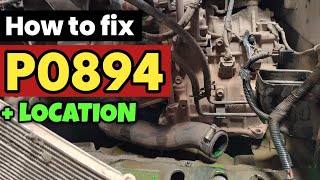

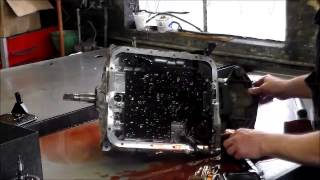
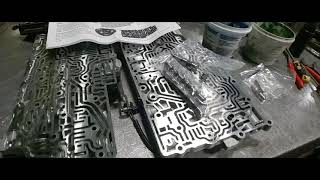
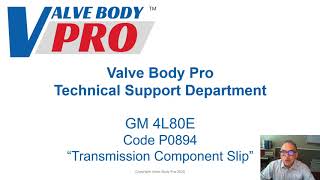
We Have This Part in Stock

The information in this article is provided for general reference and educational purposes only. Vehicle specifications, procedures, and part compatibility can vary by production date, trim level, and region. Always consult your vehicle's factory service manual and verify part numbers before purchasing or performing repairs. Safety-critical components such as airbags, seat belts, and braking systems should be installed by a qualified professional.
- Chevrolet SILVERADO 1500:
- 🎬 Helpful Videos
- 🛍️ Shop This Part
- What's Unique About the 2007-2014 Chevrolet SILVERADO 1500
- Diagnostic Flowchart
- Symptoms You May Notice
- Most Likely Causes
- Rare But Worth Checking
- Diagnosis Steps
- Parts You'll Likely Need
- Related Codes That Often Appear With This One
- Technical Service Bulletins (TSBs) & Recalls
- Mechanic-Grade Diagnostic Values
- Hidden / Shadow Codes Worth Checking
- Scan Tool Commands That Help
- Wiring & Ground Locations
- Real Owner Repair Stories
- When the Usual Fixes Don't Work
- OEM Part Supersession History
- Model Year Variations Within This Range
- 🎟️ Get 5% Off