

P0894 on 1998-2002 Chevrolet S10: Transmission Slipping Causes and Fixes
P0894 on a 1998-2002 S10 almost always indicates a problem with the Torque Converter Clutch (TCC) system in the 4L60E transmission, often due to a worn valve body. The most common fix is to install a TCC valve repair kit, which costs under $100 for the part, but can also be caused by a failing torque converter, which is a much more expensive repair. This code is functionally identical to the older GM-specific code P1870.
- P0894 on a 1998-2002 S10 is a serious transmission code, often accompanied by P1870, indicating component slippage.
- The most common cause is a worn TCC regulator valve bore in the transmission valve body, a known design flaw in the 4L60E transmission.
- Symptoms often include a harsh shift from 1st to 2nd gear and a shudder at highway speeds, which are typically worse when the transmission is hot.
- Do not drive the vehicle with this code. It can lead to complete transmission failure.
- The most common and cost-effective fix is installing an aftermarket TCC valve repair kit, which is a job for an experienced DIYer or a professional transmission shop.
What's Unique About the 1998-2002 Chevrolet S10
The 1998-2002 S10 uses the 4L60E automatic transmission, which is known for a specific design issue that causes this code. The valve that controls the TCC lockup (the TCC regulator valve) is pulse-width modulated (PWM), meaning it constantly oscillates within its bore in the soft aluminum valve body. Over time, this constant movement causes the bore to wear out. This wear allows hydraulic fluid to leak, preventing the TCC from applying firmly, which the computer detects as slippage and logs as P0894 or P1870. This is a very common and well-documented issue, particularly on models from 1996-2002, leading to the development of many aftermarket repair kits.
Diagnostic Flowchart
Tap your situation to follow the diagnostic path that matches what you're seeing on this vehicle.
Symptoms You May Notice
- Check Engine Light is on
- Harsh or abrupt 1-2 shifts (This happens when the TCM detects slip and commands maximum line pressure to protect the transmission).
- Transmission slipping, where engine RPMs flare up without an increase in speed, especially at highway speeds.
- Feeling a shudder or vibration at highway speeds (around 45-55 mph) as the TCC tries to engage and disengage.
- Transmission overheating.
- Loss of overdrive (4th gear) or TCC lockup after the transmission gets hot.
- A burning smell from the transmission fluid.
- Replacing only the TCC solenoid when the valve body bore is the actual problem. The new solenoid will not fix the hydraulic leak from the worn bore.
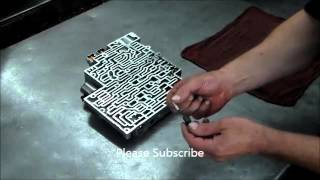
- Replacing the entire transmission without first diagnosing the valve body. A simple valve body repair kit can often solve the problem for a fraction of the cost of a rebuild. 🎬 See this video for a budget-friendly P1870 code fix
- Replacing the torque converter without addressing the worn valve body bore. The new converter will continue to slip and will eventually fail due to the same lack of apply pressure.
Most Likely Causes
- Worn TCC Regulator Valve Bore in Valve Body 🔴 High Probability The 4L60E transmission in this year range used a pulse-width modulated (PWM) TCC valve that constantly oscillates, causing wear in the soft aluminum valve body bore. This is a well-known design flaw addressed by multiple TSBs and aftermarket solutions.
How to confirm: This is the most likely cause if the code P1870 is also present and symptoms are worse when the transmission is hot. A professional would drop the transmission pan and valve body to inspect the bore. A worn bore allows the valve to be wiggled side-to-side.
Typical fix: Install an aftermarket TCC valve repair kit (e.g., a re-sleeving kit or an oversized valve) from brands like Sonnax or TransGo. This often requires specialized tools to ream the valve bore. Some shops may opt to replace the entire valve body with an updated or remanufactured unit.
Est. part cost: $50-$150 for a repair kit, $200-$400 for a remanufactured valve body. - Failing Torque Converter Clutch (TCC) 🟡 Medium Probability High mileage and excessive heat from slipping (often caused by the worn valve body) can cause the friction material on the clutch inside the torque converter to wear out, glaze over, or break apart.
How to confirm: A technician would use a scan tool to monitor TCC slip RPM in real-time. If slip is high (over 100-200 RPM) when the TCC is commanded on, and the valve body is known to be good, the torque converter is the likely cause. Finding excessive clutch material (looks like black sludge or sand) in the transmission pan is another strong indicator.
Typical fix: Replace the torque converter. This is a major repair that requires removing the transmission. It is critical to also flush the transmission cooler lines to remove any debris from the failed converter.
Est. part cost: $150-$400 - Failed TCC PWM Solenoid ⚪ Low Probability The solenoid is an electronic component that can fail electrically or, more commonly, develop a crack in its plastic housing, causing a pressure leak. This was a known issue, particularly with the original brown-colored solenoids.
How to confirm: A scan tool can command the solenoid on and off to check for an audible click and measure amperage draw. The solenoid's resistance can be checked with a multimeter (should be 10-11 ohms at 68°F). A visual inspection for cracks is also necessary.
Typical fix: Replace the TCC PWM solenoid (ACDelco P/N: 24227792). This is located on the valve body and is accessible after removing the transmission pan. 🎬 Watch: Step-by-step guide to replacing the TCC solenoid It is often replaced as a preventative measure.
Est. part cost: $20-$60 - Low or Burnt Transmission Fluid ⚪ Low Probability Low fluid levels reduce hydraulic pressure, which can cause slipping. This is not specific to the S10 but is a general cause for this code.
How to confirm: Check the transmission fluid level and condition on the dipstick with the engine running and the transmission warm. If the fluid is low, dark brown/black, or smells burnt, it indicates a problem.
Typical fix: Top off the fluid if low and check for leaks. If the fluid is burnt, a full transmission service is needed, but this is usually a symptom of a larger internal problem (like a worn TCC) rather than the root cause.
Est. part cost: $20-$100 for fluid and filter.
Rare But Worth Checking
- Worn Stator Support Bushing: A worn bushing in the transmission pump's stator support shaft can cause a major hydraulic leak in the TCC apply circuit, preventing the converter from locking up. This is often found during a full rebuild and can be a root cause of converter failure.
- Cracked or Leaking Turbine Shaft O-ring: A small O-ring on the turbine shaft can become brittle and fail, causing a loss of TCC apply pressure. This is another item typically found during a rebuild.
- Worn 1-2 Accumulator Piston: While not a direct cause of P0894, a cracked or worn 1-2 accumulator piston is a very common failure on the 4L60E that causes a harsh 1-2 shift. This symptom is often confused with the max line pressure harsh shift caused by P0894, leading to misdiagnosis. The accumulator is accessible with the pan off.
Diagnosis Steps
- Check the transmission fluid level and condition. Ensure the fluid is at the correct level, red in color, and does not smell burnt.
- Connect a professional scan tool capable of reading live transmission data.
- Check for other codes, paying close attention to P1870 or P0741.
- Monitor live data while driving at a steady speed (around 55 mph) where lockup should occur. Watch the 'TCC Command' (should be ON or 90%+ duty cycle) and 'TCC Slip Speed'.
- If slip speed is consistently over 100 RPM when the TCC is commanded ON, a slip is confirmed. Ideal slip is under 50 RPM. 🎬 Watch: How to diagnose a slipping transmission component
- If the problem is worse when the transmission is hot (fluid temp > 180°F), it strongly points to a worn valve body bore, as the fluid thins and leaks more easily.
- Drop the transmission oil pan and inspect for excessive metal debris or black clutch material. A fine gray paste on the magnet is normal, but large chunks or heavy sludge indicate severe internal damage.
- Visually inspect the TCC PWM solenoid for cracks, especially if it is the original brown plastic design. Test its resistance with a multimeter (should be 10-11 Ohms).
- If the solenoid is good, inspect the valve body for wear in the TCC regulator valve bore. This is the most probable cause and may require removal of the valve body for proper inspection.
- If the valve body and solenoids are confirmed good, the torque converter is the next likely culprit.
Parts You'll Likely Need
- TCC Valve Repair Kit — This is the most common fix for the well-known valve body bore wear issue that causes P0894/P1870 on the 4L60E transmission. These kits include an oversized valve and/or a sleeve to restore hydraulic integrity.
Trusted brands: Sonnax (P/N: 77754-04K for '98+ models), TransGo (P/N: SK 4L60E)
OEM price range: N/A
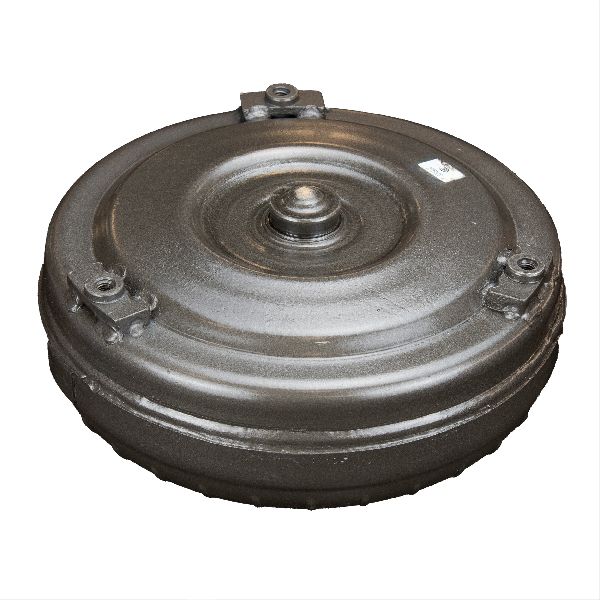
Aftermarket price range: $50-$100 - Torque Converter
Related Codes That Often Appear With This One
- P1870 — This is a GM-specific code for 'Transmission Component Slipping' and is functionally identical to P0894. They point to the exact same fault, most commonly the worn TCC valve bore in the 4L60E.
- P0741 — This code means 'Torque Converter Clutch Circuit Performance or Stuck Off'. It is more specific to the TCC electrical circuit and solenoid, but can appear alongside P0894 if the computer detects both a circuit issue and the resulting slippage.
Technical Service Bulletins (TSBs) & Recalls
- PIP5340A: Directly mentions P0894 or P1870 on 1998-2004 S10/Blazer/Sonoma/Jimmy models and instructs dealers to contact GM technical assistance, highlighting it as a known, complex issue.
- 01-07-30-023A: An earlier TSB specifically for P1870 that identifies wear in the TCC isolator/regulator valve bore as the cause and recommends valve body replacement for vehicles built before Jan 15, 1999.
- 08-07-30-008B: A later TSB that lists a cracked TCC solenoid as a possible cause for P0894.
Platform-Specific Known Issues
- A GM Technical Service Bulletin (TSB) #PIP5340A directly addresses P0894/P1870 on these vehicles, instructing technicians to contact GM Technical Assistance, indicating the complexity and commonality of the issue.
- An older TSB, #01-07-30-023A, specifically identifies wear in the TCC isolator/regulator valve bore as the cause for P1870 and recommends replacing the valve body on 1996-2000 models.
- The harsh 1-2 shift that accompanies this code is a specific programmed response by the PCM. When it detects the slip (P0894/P1870), it commands maximum line pressure to prevent further clutch/band slippage, which makes the next 1-2 shift feel very abrupt.
Mechanic-Grade Diagnostic Values
- TCC PWM Solenoid Resistance — expected: 10-11 Ohms at 68°F (20°C). Failure: An open circuit (infinite resistance) or a reading significantly outside the expected range.
- TCC (On/Off) Solenoid Resistance — expected: 20-40 Ohms. Failure: A reading outside this range indicates an electrical fault in the solenoid.
- TCC Slip Speed (Live Scan Tool Data) — expected: Under 50 RPM when TCC is commanded ON.. Failure: Consistently over 100-130 RPM when the TCC is commanded ON indicates significant slippage.
- Pressure Control (PC) Solenoid Resistance — expected: 3.5-8.0 Ohms. Failure: A reading outside this range suggests a fault in the EPC/PC solenoid, which can affect overall line pressure and shift quality.
Scan Tool Commands That Help
- GM Tech 2: TCC Solenoid Control (Active Test) — This bidirectional control allows a technician to manually command the TCC PWM solenoid ON and OFF while the vehicle is stationary (engine running, in gear) to verify electrical circuit integrity and listen for the solenoid's click. It helps isolate a faulty solenoid from a hydraulic or mechanical issue.
- GM Tech 2: Live Data - TCC Slip Speed — This data PID is critical for diagnosis. It directly displays the difference between engine RPM and transmission input RPM. Watching this while driving under conditions where lock-up should occur (steady cruise) provides definitive proof of TCC slippage.
Wiring & Ground Locations
- Transmission Main Connector (Round, 20-pin) — On the passenger side of the transmission case.. This is the primary connection for all internal transmission electronics. Testing for power and control signals occurs here.
- Pin U (TCC PWM Solenoid Control) — On the main transmission connector. The wire is typically Brown (BRN).. This is the control wire from the PCM that modulates the TCC PWM solenoid. A technician can check for a PWM signal here with a lab scope or test for continuity back to the PCM (Pin 2 of Connector C2, typically Green).
- Pin T (TCC Solenoid Valve Control) — On the main transmission connector. The wire is typically Tan with a Black stripe (TAN/BLK).. This is the control wire for the on/off TCC apply solenoid. It can be checked for a 12V signal when lockup is commanded.
- Pin E (Ignition Power) — On the main transmission connector. The wire is typically Pink (PNK).. This pin supplies 12V ignition power to all of the transmission solenoids. A loss of voltage here will disable all solenoids and cause multiple codes and shifting issues.
- G117 (Ground) — Located on the right rear of the engine.. This is a primary ground location for the engine and powertrain control systems. A poor connection here can cause erratic behavior in the PCM and transmission controls, leading to incorrect codes or performance issues.
Real Owner Repair Stories
- Car Forums and Automotive Chat (Year not specified, GM vehicle with 4L60E) — Code P1870 (functionally identical to P0894) returned after a new valve body was installed.
❌ Tried (didn't work) Replacing the valve body.
✅ What actually fixed it The final repair was replacing a faulty sensor that controls the TCC engagement, which was described as a '$50.00 sensor'. This likely refers to the TCC PWM solenoid itself.
OEM Part Supersession History
Varies (early designs)→ACDelco 24227792 (also appears as 24227747 in some catalogs)— The TCC PWM solenoid was updated to improve reliability and address issues with cracked plastic housings on earlier designs.
Heads up: The solenoid's function changed from a 3-2 downshift solenoid in pre-1996 models to the TCC PWM solenoid from 1996-onward. While they may look similar, using the wrong year part will cause functionality issues. Always verify the part number for the specific year and model.
Model Year Variations Within This Range
- 1998: 1998 was the first year the 4L60E was used across all S10 applications with a two-piece case (bolt-on bellhousing). Transmissions from 1998 will have the 300mm style input shaft if coupled to a Gen III-based engine (like an LS swap), but the S10's 4.3L V6 used the 298mm input shaft.
- 2001-2002: Starting in 2001, some 4L60E transmissions received minor internal upgrades, such as an improved input shaft and a deeper pan, though the more significant 4L65E upgrades (5-pinion planetaries) were typically reserved for V8 applications like trucks and SUVs. A minor valve body difference for annular lockup was introduced in 2001-2002, but it is functionally interchangeable with the 1998-2000 models for service and repair.
Helpful Videos



We Have This Part in Stock


The information in this article is provided for general reference and educational purposes only. Vehicle specifications, procedures, and part compatibility can vary by production date, trim level, and region. Always consult your vehicle's factory service manual and verify part numbers before purchasing or performing repairs. Safety-critical components such as airbags, seat belts, and braking systems should be installed by a qualified professional.
- Chevrolet S10:
- 🎬 Helpful Videos
- 🛍️ Shop This Part
- What's Unique About the 1998-2002 Chevrolet S10
- Diagnostic Flowchart
- Symptoms You May Notice
- Most Likely Causes
- Rare But Worth Checking
- Diagnosis Steps
- Parts You'll Likely Need
- Related Codes That Often Appear With This One
- Technical Service Bulletins (TSBs) & Recalls
- Platform-Specific Known Issues
- Mechanic-Grade Diagnostic Values
- Scan Tool Commands That Help
- Wiring & Ground Locations
- Real Owner Repair Stories
- OEM Part Supersession History
- Model Year Variations Within This Range
- 🎟️ Get 5% Off