

P0894 on 1998-2004 Chevrolet Blazer: Transmission Component Slipping Causes & Fixes
P0894 on a Chevy Blazer almost always points to a problem within the 4L60-E automatic transmission, most commonly a worn Torque Converter Clutch (TCC) regulator valve bore in the valve body. A repair kit for the valve body is a common fix, but a failing torque converter or TCC solenoid are also frequent culprits. The issue is so common it often appears with the identical GM code P1870.
- P0894 on a 1998-2004 Blazer indicates a serious transmission problem, and you should stop driving immediately to prevent further damage.
- The most probable cause is a worn TCC regulator valve bore in the transmission valve body, a well-known weakness of the 4L60-E transmission.
- A cost-effective first step for a qualified mechanic is often to install a valve body repair kit (like Sonnax 77754-03K) and a new TCC solenoid.
- This code is functionally identical to the more famous GM code P1870; any information or parts related to fixing P1870 on a 4L60-E also apply here.
- If simpler fixes don't work, the problem is likely a failed torque converter or other major internal wear, requiring transmission removal.
What's Unique About the 1998-2004 Chevrolet BLAZER
The Chevrolet Blazer from this era uses the ubiquitous 4L60-E transmission, which has several well-documented wear points that lead to slippage codes like P0894. The most famous is the tendency for the TCC regulator valve bore within the aluminum valve body to wear out from constant oscillation of the steel valve. This wear allows hydraulic pressure to leak, preventing the torque converter clutch from applying fully, which causes the slip. This issue is so common that it is often seen with the older GM-specific code P1870, which has the same meaning and is addressed by the same repairs. In fact, GM TSB #01-07-30-023A was released specifically to address P1870 caused by this valve body wear.
Diagnostic Flowchart
Tap your situation to follow the diagnostic path that matches what you're seeing on this vehicle.
Symptoms You May Notice
- Check Engine Light is on
- Harsh 1-2 shifts, especially after highway driving
- Transmission slipping or engine RPMs flaring between gears
- Vehicle may feel sluggish or lack power
- Transmission may get stuck in one gear (limp mode)
- Transmission fluid smells burnt
- Overheating transmission
- Sensation of driving over a "rumble strip" as the TCC tries to engage and disengage rapidly.
- Engine RPMs fluctuate by 100-200 RPM at steady highway speeds.
- Immediately replacing the entire transmission without diagnosing the valve body, TCC solenoid, or torque converter first. Many shops will condemn the transmission when a much cheaper valve body repair kit could solve the issue.
- Replacing the TCC solenoid when the actual problem is a worn valve body bore or a failing torque converter.
- Replacing the wrong filter during a service. The 4L60-E has different filter designs for deep vs. shallow pans, and using the wrong one can cause fluid starvation.
Most Likely Causes
- Worn TCC Regulator Valve Bore in Valve Body 🔴 High Probability The design of the 4L60-E valve body allows the steel TCC regulator valve to oscillate and wear its bore in the softer aluminum valve body, causing a loss of hydraulic pressure needed to apply the torque converter clutch. This is the primary cause of code P1870, which is functionally identical to P0894.
How to confirm: This is difficult to confirm without removing the valve body for inspection. A common symptom is the code setting only after the transmission is hot and has been driven at highway speeds. A tell-tale sign is a TCC slip speed of over 100 RPM on a scan tool when lock-up is commanded.
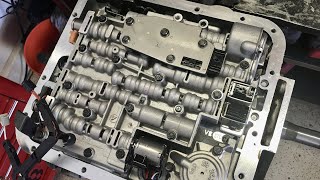
Typical fix: The valve body must be removed. A technician can ream the bore and install an oversized valve and sleeve kit 🎬 Watch: How to fix the TCC valve without removing the valve body. to restore hydraulic integrity. The Sonnax 77754-04K is the correct kit for '98-later vehicles, while the 77754-03K is for earlier models.
Est. part cost: $50-$100 - Failing Torque Converter or Torque Converter Clutch (TCC) 🟡 Medium Probability The internal clutch inside the torque converter can wear out, glaze over, or delaminate, especially on higher-mileage vehicles. This prevents the converter from locking up, causing the slippage code.
How to confirm: A professional scan tool can monitor TCC slip RPM in real-time. If slip is high (150-200+ RPM) when the TCC is commanded on, and the valve body/solenoids are known to be good, the converter is the likely cause. A severely failed converter will contaminate the fluid with friction material.
Typical fix: The transmission must be removed to replace the torque converter. It is critical to also flush the transmission cooler and lines to remove any debris.
Est. part cost: $150-$400 - Faulty TCC Lock-Up/PWM Solenoid 🟡 Medium Probability This solenoid controls the flow of fluid to apply the TCC. It can fail electrically, become clogged, or its plastic body can develop hairline cracks near the screen, causing pressure loss.
How to confirm: The solenoid can be tested for resistance with a multimeter after dropping the transmission pan. Visual inspection for cracks is also necessary. A scan tool can command the solenoid on and off to check for a response.
Typical fix: Drop the transmission pan and replace the solenoid. It is often recommended to replace this part whenever the pan is off for service due to its low cost and common failure rate.
Est. part cost: $30-$80 - Low or Burnt Transmission Fluid ⚪ Low Probability Low fluid level prevents the pump from creating adequate hydraulic pressure to operate clutches and bands, leading to slippage. Using the wrong fluid type (e.g., anything other than DEXRON-III/VI) can also cause issues.
How to confirm: Check the transmission fluid level and condition with the engine running and transmission warm, after cycling through the gears. If the fluid is dark brown/black and smells burnt, internal damage is likely.
Typical fix: Top off the fluid or perform a fluid and filter change. If the fluid is burnt, a transmission rebuild may be necessary as this indicates clutch material has been destroyed.
Est. part cost: $50-$150
Rare But Worth Checking
- Worn Stator Support Bushing: A worn bushing in the stator support shaft (part of the transmission pump) can cause a major hydraulic leak in the TCC apply circuit, leading to P0894/P1870. This was identified as the root cause in detailed teardowns after valve body fixes failed. The bushing itself is inexpensive, but requires transmission removal to replace.
- Worn 3-4 Clutch Pack: While P0894 is often TCC-related, severe slippage of the internal 3-4 clutches can also set this code. This is a sign of major internal transmission failure requiring a full rebuild.
- Cracked or Damaged Separator Plate: The separator plate in the valve body can be damaged by check balls hammering against it over time, causing cross-leaks between hydraulic circuits. Aftermarket plates are hardened to prevent this.
- Exposed/Shorted TCC Solenoid Wire: In one documented case, an exposed wire for the TCC solenoid was shorting out, causing intermittent P0894. The fix was simply to repair the insulation on the wire.
Diagnosis Steps
- Check the transmission fluid level and condition. Note any burnt smell or dark color.
- Use a scan tool to confirm P0894 and check for any other related codes like P1870 or P0741.
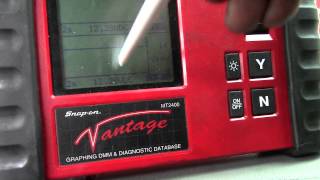
- With a capable scan tool, monitor the TCC Slip Speed data while driving at a steady cruise (above 45 mph). When the TCC is commanded ON, the slip should drop to near zero (<50 RPM). If it remains high (e.g., >100 RPM), slippage is confirmed.
- Drop the transmission pan and inspect for excessive metal shavings or clutch material. A small amount of fine, gray material is normal, but large pieces or a thick sludge indicate severe internal wear.
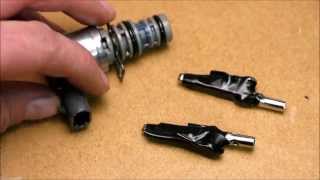
- While the pan is off, inspect the TCC solenoid for cracks in its plastic housing and test its resistance with a multimeter. 🎬 See this walkthrough on troubleshooting and replacing the TCC PWM solenoid. Replace if questionable.
- If the solenoid is good and the fluid was clean, the next logical step is to inspect and repair the valve body, specifically the TCC regulator valve bore.
- If a valve body repair does not solve the issue, inspect the stator support bushings for wear, which requires transmission removal.
- If all other components check out, the torque converter itself is the most likely cause of the slippage.
Parts You'll Likely Need
- TCC Regulator & Isolator Valve Kit — This kit addresses the most common cause of P0894 on the 4L60-E: the worn TCC valve bore in the valve body.
Trusted brands: Sonnax (P/N: 77754-04K for '98+), TransGo
OEM price range: N/A
Aftermarket price range: $50-$100 - TCC PWM Solenoid
(OEM #24227792 (ACDelco))— This solenoid is a common failure point and is relatively inexpensive to replace while the pan is off.
Trusted brands: ACDelco, Rostra
OEM price range: $40-$90
Aftermarket price range: $25-$60 - Transmission Filter and Pan Gasket Kit — Required for any repair that involves dropping the transmission pan.
Trusted brands: ACDelco, Wix, ATP
OEM price range: $30-$50
Aftermarket price range: $15-$30
Related Codes That Often Appear With This One
- P1870 — This is an older, GM-specific code for 'Transmission Component Slipping'. It is functionally identical to P0894 on these vehicles and is often referenced in the same TSBs and repair guides.
- P0741 — This code means 'Torque Converter Clutch Circuit Performance or Stuck Off'. It is more specific to the TCC circuit and often appears with P0894, strongly indicating the problem is with the TCC solenoid, valve body, or the converter itself.
- P0700 — This is a generic code indicating the Transmission Control Module has detected a fault and has requested the main Check Engine Light to be turned on. It will always be accompanied by a more specific code like P0894.
Technical Service Bulletins (TSBs) & Recalls
- PIP5340A: Instructs technicians to contact GM Technical Assistance when P0894 or P1870 is found.
- 01-07-30-023A: Addresses DTC P1870 caused by wear in the valve body TCC isolator/regulator bore, the primary cause of P0894 as well.
Platform-Specific Known Issues
- Owner Experience: The Hidden Cracked Solenoid: A user on PerformanceTrucks.net with a Silverado reported chasing a P0894 code. They initially tried a Transgo valve body kit, which did not solve the problem. The ultimate fix was replacing the TCC solenoid after discovering a hairline crack in its plastic body, which was causing a pressure leak. This highlights the importance of carefully inspecting the solenoid, as the crack can be very hard to see.
- Owner Experience: The Worn Stator Bushing: On BAT Auto Technical forums, a 1999 Blazer owner with a P1870 code tried both a Transgo kit and a new Sonnax-repaired valve body, but the slip continued. After dropping the transmission, they found a severely worn rear stator support bushing. Replacing the bushing and the input drum it had damaged finally resolved the code, proving that when valve body fixes fail, the problem often lies deeper within the pump assembly.
- Owner Experience: Bad Torque Converter After Rebuild: A user on PerformanceTrucks.net reported getting a P0894 code after a fresh transmission rebuild with a new torque converter. The issue was ultimately traced back to a faulty torque converter that was bad out of the box, causing the slip.
Mechanic-Grade Diagnostic Values
- TCC PWM Solenoid Resistance — expected: 10-11 ohms at 68°F (20°C). Some sources give a wider range of 7-20 ohms.. Failure: A reading of open (infinite resistance) or a value significantly outside the specified range indicates a failed solenoid.
- TCC Enable (On/Off) Solenoid Resistance — expected: 20-40 ohms at 68°F (20°C).. Failure: A reading outside this range indicates a faulty solenoid.
- TCC Slip Speed (Live Scan Tool Data) — expected: Near 0 RPM (typically under 50 RPM, ideally under 10 RPM) when TCC is commanded to lock.. Failure: A sustained slip speed of over 100-150 RPM while the TCC is commanded ON confirms a slippage problem.
- TCC Enable Solenoid Control Wire Voltage — expected: Should read near battery voltage with key on, engine off. Should drop to near 0 volts when the PCM commands the TCC on (grounds the circuit).. Failure: Voltage that does not drop when commanded on points to a wiring issue or a failed PCM driver. No voltage at all points to an open circuit.
Scan Tool Commands That Help
- GM Tech2 / High-End Bidirectional Scanner: TCC Solenoid Command — This bidirectional control allows a technician to manually command the TCC solenoid ON and OFF while monitoring live data PIDs like TCC Slip Speed. This is the definitive test to confirm if the hydraulic circuit is failing to achieve lock-up when commanded by the PCM.
- GM Tech2 / High-End Bidirectional Scanner: Monitor PIDs: TCC Enable, TCC PWM Duty Cycle, TCC Slip RPM — During a test drive, monitoring these three parameters simultaneously shows the complete picture. You can see the PCM command lockup (TCC Enable: YES), see the duty cycle ramp up to apply pressure, and then verify if the TCC Slip RPM drops accordingly.
Wiring & Ground Locations
- Transmission Case Connector (C7) — The large round connector on the passenger side of the transmission case.. This is the main interface between the PCM and the transmission. Pin E is the 12V+ power feed for most solenoids, and Pin T is the specific ground-side control for the TCC Enable solenoid. Testing for power at Pin E and ground signal at Pin T is a key electrical diagnostic step.
- G114 / G117 — Main engine-to-chassis grounds located on the rear of the left (G114) and right (G117) cylinder heads.. The PCM and its sensors rely on a solid engine ground. A poor ground connection at these points can cause erratic sensor readings and incorrect PCM behavior, potentially leading to false codes or improper transmission control.
Real Owner Repair Stories
- Blazer Forum user (1999 Chevrolet Blazer) — P1870 code, TCC slip of 150+ RPM on scan tool, fluid leaking from vent tube, high fluid temps.
❌ Tried (didn't work) A previous owner had already installed a Transgo TCC valve fix kit., The user installed a completely new valve body with a reamed bore and a Sonnax valve kit., A test to manually force lockup with a check ball in the solenoid snout failed to make the engine stall, proving a major leak was still present.
✅ What actually fixed it After dropping the transmission, the user found the rear stator support bushing was severely worn on one side, and the input/turbine shaft journal (where it inserts into the torque converter) was also worn with burn marks. Replacing the worn input shaft and stator bushing finally resolved the pressure loss and the code. - Blazer Forum user (1996 Chevrolet Blazer) — P1870 code, hard 1-2 shifts.
❌ Tried (didn't work) User considered just replacing the TCC valve or solenoid.
✅ What actually fixed it The user opted to replace the entire valve body with an upgraded unit that included new solenoids. This fixed the problem, and the transmission ran without issues for another 5 years.
"I Checked Everything" — The Actual Cause
- In the context of P0894, the equivalent of a 'smoke test clean' scenario is when the common fixes (TCC solenoid and valve body repair) fail to resolve the code. In one documented case, after a new valve body with a Sonnax repair kit still resulted in a P1870, the root cause was found only after transmission removal. The actual faults were a severely worn rear stator support bushing and a worn journal on the input shaft, both causing a major leak in the TCC apply circuit that the valve body repairs could not overcome.
When the Usual Fixes Don't Work
- While the vast majority of P0894/P1870 codes on the 4L60-E are caused by the worn TCC regulator valve bore in the valve body, it is not a guaranteed fix. As documented in forums, owners have replaced the valve body with a reamed-and-sleeved unit only for the code to return. In these cases, the root cause was found to be deeper inside the transmission, requiring its removal. The most common culprit after a failed valve body fix is a worn stator support bushing in the pump or a worn input shaft journal, both of which create a hydraulic leak that prevents the TCC from applying properly. This demonstrates that while starting with the valve body is the correct diagnostic path, it may not be the final solution for higher-mileage or severely worn units.
OEM Part Supersession History
24212690→24227792— Standard part evolution and replacement.
Heads up: The part 24227792 is the correct TCC PWM solenoid for this application. However, some parts catalogs may confusingly list it as a '3-2 Shift Solenoid' as well, so verify application before purchasing.
Model Year Variations Within This Range
- 1998-2004: All vehicles in this range use the Pulse Width Modulated (PWM) TCC apply system, which is the design susceptible to the TCC regulator valve bore wear that causes P0894/P1870. The pump cover is typically cast with 'PWM' for easy identification. While there were other internal changes to the 4L60-E during this period (like a deeper pan and a change to a 300mm input shaft/converter around 2000), the fundamental TCC hydraulic circuit and its common failure points remain the same for this diagnosis.
Helpful Videos


We Have This Part in Stock



The information in this article is provided for general reference and educational purposes only. Vehicle specifications, procedures, and part compatibility can vary by production date, trim level, and region. Always consult your vehicle's factory service manual and verify part numbers before purchasing or performing repairs. Safety-critical components such as airbags, seat belts, and braking systems should be installed by a qualified professional.
- Chevrolet BLAZER:
- 🎬 Helpful Videos
- 🛍️ Shop This Part
- What's Unique About the 1998-2004 Chevrolet BLAZER
- Diagnostic Flowchart
- Symptoms You May Notice
- Most Likely Causes
- Rare But Worth Checking
- Diagnosis Steps
- Parts You'll Likely Need
- Related Codes That Often Appear With This One
- Technical Service Bulletins (TSBs) & Recalls
- Platform-Specific Known Issues
- Mechanic-Grade Diagnostic Values
- Scan Tool Commands That Help
- Wiring & Ground Locations
- Real Owner Repair Stories
- "I Checked Everything" — The Actual Cause
- When the Usual Fixes Don't Work
- OEM Part Supersession History
- Model Year Variations Within This Range
- 🎟️ Get 5% Off