

P0877 on 2001-2005 Chevrolet Silverado: Transmission Pressure Switch 'D' Circuit Low
This code usually indicates a problem inside the transmission, often due to debris in the valve body or a failing pressure switch. It is not a simple sensor replacement and requires dropping the transmission pan for diagnosis. The root cause is frequently a mechanical or hydraulic issue, not just a bad sensor.
- P0877 on a 2001-2005 Silverado is a serious code indicating an internal transmission issue.
- Do not drive the vehicle, as it may fail to move or cause further transmission damage.
- The most likely cause, according to GM's technical service bulletins, is debris inside the transmission valve body, not just a bad sensor.
- Repair is not a simple DIY fix; it requires dropping the transmission pan and inspecting internal components.
- Always check for other transmission codes, as P0877 often appears with others, indicating a broader problem.
What's Unique About the 2001-2005 Chevrolet SILVERADO
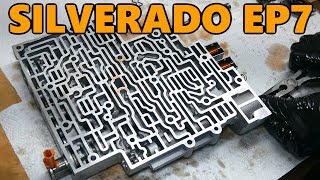
On this generation of Silverado, the transmissions (like the 4L60-E or 4L80-E) are robust but can be susceptible to internal issues as they age. The provided NHTSA technical service bulletins point directly to internal mechanical problems rather than simple electrical faults. Specifically, TSB PIP4972C highlights that debris can clog orifices in the valve body separator plate, leading to this code and a no-move condition. This suggests the root cause is often a hydraulic issue. Furthermore, a known weak point in the 4L60-E valve body is the Actuator Feed Limit (AFL) valve bore, which can wear over time, causing significant pressure loss that affects shifting and can contribute to setting pressure-related codes. Repair videos often show significant metallic debris accumulated on the manifold pressure switch itself, which can interfere with its operation and cause false low-pressure readings.
Diagnostic Flowchart
Tap your situation to follow the diagnostic path that matches what you're seeing on this vehicle.
Symptoms You May Notice
- Vehicle will not move in forward or reverse.
- Delayed or harsh shifting between gears.
- Transmission slipping.
- Check Engine Light is on.
- Transmission may enter "limp mode," getting stuck in a single gear.
- Smell of overheated or burnt transmission fluid.
- Immediately replacing the TFP switch without checking for debris in the valve body. The TSBs indicate a mechanical/hydraulic issue is a strong possibility, and a new switch will not fix a clogged passage or a worn valve body.
- Replacing the TFP switch when the actual fault is a worn separator plate or worn checkball seats causing a hydraulic leak.
Most Likely Causes
- Debris in Valve Body Separator Plate Orifices 🔴 High Probability TSB PIP4972C directly identifies this as a cause for the P0877 code on this platform, leading to a no-move condition. Fine metallic particles from normal wear can also build up on the pressure switch manifold itself, causing incorrect readings.
How to confirm: Requires removing the transmission pan and valve body for visual inspection of the separator plate and its small fluid passages (orifices). The pressure switch manifold can also be inspected for visible metallic sludge.
Typical fix: Clean or replace the valve body separator plate and replace the transmission fluid and filter. The pressure manifold should be thoroughly cleaned with brake cleaner or replaced.
Est. part cost: $50-$150 for a separator plate kit. - Faulty Transmission Fluid Pressure (TFP) Switch Manifold 🟡 Medium Probability The pressure switch is an electronic component located inside the transmission, bathed in hot fluid. Over time, the plastic and rubber components can become brittle and fail, or the electronic switches can fail internally. The orange diaphragms under the seals are known to crack or get pushed out by fluid pressure, causing leaks and false readings.
How to confirm: After confirming the wiring is intact, the switch itself can be tested with a multimeter for correct resistance and voltage signals, or diagnosed with an advanced scan tool that shows live data for each pressure switch. Visual inspection may reveal pushed-out or damaged diaphragms.
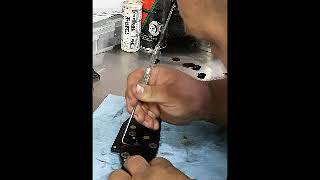
Typical fix: Replace the entire TFP switch manifold assembly, which is located on the valve body. This is done after dropping the pan. The OEM part is ACDelco 24229872. 🎬 Watch: Step-by-step guide to changing the pressure switch manifold.
Est. part cost: $50-$100 for an aftermarket assembly (e.g., Dorman 92436), $80-$150 for OEM. - Low or Contaminated Transmission Fluid 🟡 Medium Probability
How to confirm: Check the transmission fluid level and condition using the dipstick. Fluid should be at the correct level, red in color, and not smell burnt.
Typical fix: Top off fluid if low and inspect for leaks. If fluid is dark, burnt, or contains debris, a full fluid and filter change is necessary, but this is often a symptom of a larger internal problem that must be addressed.
Est. part cost: $50-$120 for fluid and a filter kit. - Wiring or Connector Issues ⚪ Low Probability
How to confirm: Inspect the external transmission wiring harness and connector for damage. Internal wiring to the TFP switch can also be a cause, which requires dropping the pan to inspect. A user on a forum suggested checking for bent pins or loose wires at the solenoid connectors.
Typical fix: Repair or replace the damaged section of the wiring harness or the connector. One owner fixed the code by tightening the pins on the connector at the Pressure Switch Manifold (PSM) and applying dielectric grease.
Est. part cost: $20-$100 depending on the extent of the damage.
Rare But Worth Checking
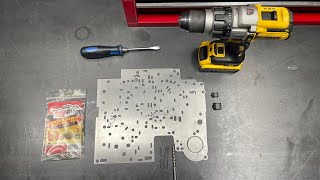
- Worn Checkball Seats in Separator Plate: Over time, the steel checkballs can wear down their seats in the aluminum separator plate, causing hydraulic leaks. This can lead to various shifting issues and pressure-related codes. The plate can be replaced, or a repair kit (like the Fitzall kit) can be used to install hardened sleeves into the worn holes. 🎬 See how to perform a cheap separator plate seat repair.
- Worn Valve Body Bores (e.g., AFL Valve): Significant wear in the valve body bores, particularly the AFL valve bore, can cause major pressure loss that a new sensor or plate won't fix. This requires specialized tools to ream the bore and install an oversized valve, a job typically done by transmission shops or experienced rebuilders.
- Faulty Transmission Control Module (TCM) or Powertrain Control Module (PCM): This is rare. The TCM/PCM should only be considered after all other possibilities, including internal transmission mechanics and wiring, have been thoroughly ruled out.
Diagnosis Steps
- Check the transmission fluid level and condition. If low, top off and check for leaks. If burnt or dirty, it indicates a more serious problem.
- Use a scan tool to check for other transmission-related codes. If P0701 is present, follow its diagnostic tree first as per TSB PIP4379K.
- Inspect the external transmission wiring harness and connector for any visible damage.
- Drop the transmission pan to gain access to the internal components. Inspect the fluid in the pan for excessive metal shavings or clutch material.
- Visually inspect the TFP switch manifold and its wiring for any obvious damage. Note any accumulation of metallic sludge on the switch plate. 🎬 Watch: Common manifold pressure switch issues and cleaning tips.
- As a preliminary step, some owners suggest removing, thoroughly cleaning the TFP switch manifold with brake cleaner, and reinstalling it to see if the code clears before buying a new part.
- Following the guidance from TSB PIP4972C, remove the valve body and inspect the separator plate orifices for debris or blockages.
- While the separator plate is out, inspect the checkball seats for excessive wear or damage. If wear is significant, the plate should be replaced or repaired.
- If the separator plate is clear, test the TFP switch circuit for proper voltage and ground at the connector.
- If wiring is good, test the TFP switch itself. If it fails, replace the TFP switch manifold assembly.
- If the separator plate was clogged, clean or replace it, reinstall the valve body with new gaskets, and replace the transmission filter.
- Refill the transmission with the correct type and amount of fluid, clear the codes, and perform a test drive to ensure the issue is resolved.
Parts You'll Likely Need
- Transmission Fluid Pressure (TFP) Switch Manifold
(OEM #ACDelco 24229872)— This component contains the pressure switch 'D'. If the switch has failed electronically or is damaged, the entire manifold must be replaced.
Trusted brands: ACDelco, Dorman (92436)
OEM price range: $80-$150
Aftermarket price range: $50-$100 - Transmission Valve Body Separator Plate
(OEM #ACDelco 24241785)— TSB PIP4972C specifically calls out debris in the separator plate orifices as a primary cause. Plates can also wear at checkball locations, requiring replacement.
Trusted brands: ACDelco, Sonnax
OEM price range: $40-$80
Aftermarket price range: $30-$60 - Transmission Filter and Pan Gasket Kit — This should always be replaced whenever the transmission pan is removed for service.
Trusted brands: ACDelco, Wix, Fram
OEM price range: $30-$50
Aftermarket price range: $15-$30
Related Codes That Often Appear With This One
- P0701 — TSB PIP4379K lists P0877 with P0701 and advises diagnosing P0701 (Transmission Control System Range/Performance) first, suggesting it's a general transmission fault code that can accompany more specific ones.
- P2723 — TSB PIP4972C lists P0877 and P2723 together, indicating they are both caused by debris in the valve body separator plate orifices.
- P0989 — This code is for 'Transmission Fluid Pressure Sensor/Switch 'E' Circuit Low'. It is common to see codes for multiple pressure switches set at the same time, often pointing to a failure of the entire TFP switch manifold, a widespread hydraulic issue, or a problem with the TCM.
- P0751, P0756, P0761, etc. — These are shift solenoid performance codes. TSB PIP4379K groups them with P0877, indicating a widespread internal transmission problem that could affect multiple hydraulic circuits.
Technical Service Bulletins (TSBs) & Recalls
- PIP4972C: Mentions P0877 in relation to a no-move condition and instructs technicians to inspect the valve body separator plate orifices for debris.
- PIP4379K: Groups P0877 with many other transmission codes and advises following diagnostics for P0701 first.
Platform-Specific Known Issues
- TSB PIP4972C notes that P0877 can be caused by debris blocking the valve body separator plate orifices, resulting in a vehicle that will not move.
- TSB PIP4379K lists P0877 among a large group of transmission codes that may appear together, pointing to a potentially complex internal fault. It recommends starting diagnostics with code P0701 if it is present.
- The 4L60-E valve body is known for wear in the AFL (Actuator Feed Limit) valve bore, which causes pressure loss that can manifest as various shift problems and codes. A simple part replacement may not fix the issue if this bore is worn out.
Mechanic-Grade Diagnostic Values
- Transmission Line Pressure at Idle (in Park/Neutral) — expected: Approximately 50-80 PSI at operating temperature.. Failure: Significantly lower pressure can indicate a worn pump, clogged filter, or major internal leaks. Significantly higher pressure can indicate a stuck pressure regulator valve.
- TFP Switch Manifold Pin Resistance — expected: The switches are either normally open or normally closed. Resistance should be either near 0 ohms (closed) or infinite/Open Line (open).. Failure: A switch that does not change state when pressure is applied (or vacuum for testing) or shows high resistance when it should be closed indicates a failure.
Scan Tool Commands That Help
- GM Tech 2: Transmission Adaptive Pressure (TAP) Reset — This function should be used after replacing the transmission or valve body to reset the learned shift pressure values back to their baseline. Failure to do so can cause harsh or incorrect shifting with the new parts as the TCM is still using values adapted for the old, worn components.
- GM Tech 2 with Kent-Moore Test Plate: Solenoid Actuation Test — Using a special test plate (like Kent-Moore DT-47825) that attaches to the valve body, a technician can use the Tech 2 to command each solenoid on individually and check for an air pressure reading on a gauge. This allows for bench testing of the solenoids and pressure switches outside of the transmission to confirm their electrical and mechanical function.
Wiring & Ground Locations
- G101 / G104 — G101 is located at the front of the engine on the lower block. G104 is located on the left rear of the engine block.. G101 provides a ground path for the Engine Control Module (ECM) and Transmission Control Module (TCM). G104 is also a primary engine block ground. A poor connection at either of these points can cause erratic behavior and fault codes from the TCM.
- G103 — Located at the left rear of the engine compartment on the cowl, above the brake booster.. This is a major ground point for the Body Control Module (BCM) and the Data Link Connector (DLC). While not directly for the TCM, a bad ground here can cause communication issues between modules, potentially leading to incorrect fault codes.
- PCM Connector C2 (Green) — One of the two main 80-pin connectors at the Powertrain Control Module (PCM), typically located in the engine bay.. This connector contains the wiring for the transmission range switch signals and shift solenoids. For example, on a 2004 truck, Pin 72 (Yellow wire) is for Transmission Range Switch Signal B. Testing for continuity and voltage at these specific pins can isolate a wiring fault from a component fault.
- Main Transmission Case Connector — The large, round 20-pin connector on the passenger side of the transmission case.. This is the single point of connection for all internal transmission electronics, including the TFP manifold. Corrosion, bent pins, or a loose connection here can cause P0877 and other transmission codes.
Real Owner Repair Stories
- DuramaxDiesels.com forum user 'Hambone' (2006 Chevrolet Silverado 2500) — Truck went into limp mode, P0877 code was present.
❌ Tried (didn't work) Replacing the Pressure Switch Manifold (PSM) did not fix the problem., Testing the resistance of the wiring harness showed no obvious shorts or open circuits.
✅ What actually fixed it The mechanic tightened the female pin connectors at the PSM plug with a pick and applied dielectric grease to the main transmission plug. This resolved the 'circuit low' condition by improving the connection.
Model Year Variations Within This Range
- 2001+: In 2001, some transmissions were upgraded to the 4L65-E (RPO M32). This version included a five-pinion planetary carrier (up from four), a stronger input shaft, and an improved 3-4 clutch pack to handle more torque. While the P0877 diagnosis is similar, it's important to know the 4L65-E is internally more robust than an early 4L60-E.
- 1996-2006: Within the 4L60-E family, the valve body castings are largely the same from 1996-2006. The primary differences affecting swaps or repairs relate to the type of manual valve used and whether the system is PWM (Pulse Width Modulated) for the TCC, which became standard. For the 2001-2005 range, the valve bodies are generally interchangeable, but care must be taken with gaskets and the EPC solenoid type.
Helpful Videos

We Have This Part in Stock


The information in this article is provided for general reference and educational purposes only. Vehicle specifications, procedures, and part compatibility can vary by production date, trim level, and region. Always consult your vehicle's factory service manual and verify part numbers before purchasing or performing repairs. Safety-critical components such as airbags, seat belts, and braking systems should be installed by a qualified professional.
- Chevrolet SILVERADO:
- 🎬 Helpful Videos
- 🛍️ Shop This Part
- What's Unique About the 2001-2005 Chevrolet SILVERADO
- Diagnostic Flowchart
- Symptoms You May Notice
- Most Likely Causes
- Rare But Worth Checking
- Diagnosis Steps
- Parts You'll Likely Need
- Related Codes That Often Appear With This One
- Technical Service Bulletins (TSBs) & Recalls
- Platform-Specific Known Issues
- Mechanic-Grade Diagnostic Values
- Scan Tool Commands That Help
- Wiring & Ground Locations
- Real Owner Repair Stories
- Model Year Variations Within This Range
- 🎟️ Get 5% Off