

OBD-II Code P0876: Transmission Fluid Pressure Sensor/Switch 'D' Circuit Range/Performance
What P0876 means, why it triggers, and how to fix it
- Check your transmission fluid first; low or burnt fluid causes over 50% of P0876 codes and costs under $200 to fix.
- Stop driving if P0876 appears alongside P0868 or P0944, as this combination signals catastrophic internal failure requiring a $4,000+ rebuild.
- Do not replace the pressure sensor without checking live scan tool data; the sensor is often just reporting a real hydraulic pressure loss.
- Check for manufacturer Technical Service Bulletins (TSBs) before starting repairs, especially for 2010-2019 Subaru CVTs and 2007-2024 Ram trucks with known valve body defects.
What Does P0876 Mean?
The Powertrain Control Module (PCM) detected an illogical voltage signal from the 'D' transmission fluid pressure sensor. This sensor converts hydraulic pressure into electrical data. Code P0876 triggers when the sensor's output contradicts the expected pressure for the current gear and engine speed.
Technical definition: SAE/OBD-II defines P0876 as "Transmission Fluid Pressure Sensor/Switch 'D' Circuit Range/Performance". The PCM or Transmission Control Module (TCM) receives a voltage signal from the 'D' sensor circuit that falls outside the programmed parameters for the current operating state.
🎬 Watch: A quick breakdown of how P0876 affects your transmission.Can I Drive With P0876?
Yes, But With Caution. You can drive, but limit it to short trips under 10 miles to reach a repair shop. The transmission defaults to limp mode (stuck in 2nd or 3rd gear) to prevent damage. Driving over 50 miles in limp mode overheats the transmission, turning a $350 sensor replacement into a $5,000 complete rebuild.
Common Causes
- Low, dirty, or incorrect transmission fluid (Very Common) — Low fluid levels from leaks, or heavily contaminated fluid, fail to create the necessary hydraulic pressure for the transmission to operate, triggering the sensor.
- Faulty Transmission Fluid Pressure Sensor (TFPS) (Common) — The sensor itself fails internally, sending incorrect voltage readings to the control module even when actual fluid pressure is normal.
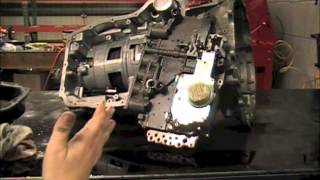
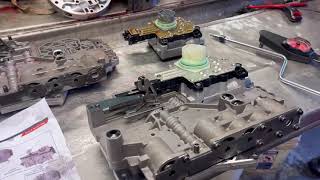
- Faulty valve body or solenoid pack (Common) — The valve body directs hydraulic fluid to the clutch packs. Sticking solenoids or internal cross-leaks cause erratic pressure drops, triggering the code.
- Damaged wiring or corroded connectors (Common) — Frayed wires, loose connections, or corrosion in the harness between the pressure sensor and the TCM disrupt the electrical signal.
- Internal transmission mechanical failure (Less Common) — A failing hydraulic pump, worn clutch packs, or a cracked thrust bearing cause actual pressure loss that the sensor correctly reports.
- TCM/PCM fault or software glitch (Rare) — The control module interpreting the data fails or requires a manufacturer-issued software update to correct flawed shifting logic.
Symptoms
- Check Engine Light is on — The PCM illuminates the malfunction indicator lamp immediately upon storing the P0876 code.
- Transmission stuck in one gear (Limp Mode) — The transmission locks into 2nd or 3rd gear to protect internal components from further damage.
- Harsh, erratic, or delayed shifting — The transmission slams into gear, hesitates before shifting, or shifts at incorrect RPMs.
- Decreased fuel economy — Inefficient shifting forces the engine to work harder, increasing fuel consumption by up to 15%.
- Odor of burning transmission fluid — Slipping clutches generate extreme heat, burning the transmission fluid and producing a distinct acrid smell.
- Transmission slipping (also visible on scanner) — Engine RPMs spike without a corresponding increase in vehicle speed, indicating clutch packs are not fully engaging.
Diagnostic Flowchart
Tap your situation to follow the diagnostic path that matches what you're seeing on this code.
Common Fixes & Costs
- Transmission Fluid Drain and Fill — Parts: $50-$120, Labor: $100-$250, ~1.5 hr book time (DIY)
- Replace Transmission Fluid Pressure Sensor (TFPS) — Parts: $50-$250, Labor: $200-$500, ~2.5 hr book time (Intermediate)
- Replace Valve Body Assembly or Solenoid Pack
— Parts: $400-$1500, Labor: $500-$1500, ~4.0 hr book time
(Professional)
Dodge/Ram (68RFE): OEM Mopar 68353383AB (Alt: RevMax 68RFE-801B)
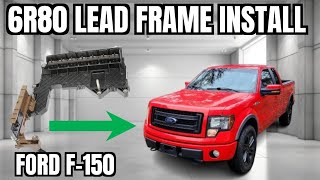
Ford (6R80): OEM Ford AL3Z-7G276-D (Molded Lead Frame) (Alt: Dorman 926-149)
Subaru (TR580 CVT): OEM Subaru 31825AA052 (Valve Body Assembly) (Alt: Various remanufactured units) - Repair Damaged Wiring or Connectors — Parts: $10-$50, Labor: $100-$300, ~2.0 hr book time (Intermediate)
- Replace Transmission Control Module (TCM) — Parts: $300-$1000, Labor: $200-$500, ~2.0 hr book time (Professional)
- Transmission Rebuild or Replacement — Parts: $2500-$5000, Labor: $1500-$4000, ~12.0 hr book time (Professional)
Used vs. New Parts: Buying Guide
When a used part is worth it: Buying a used valve body or solenoid pack is highly risky and generally advised against. Only consider a used part if the OEM unit is on national backorder and the donor vehicle has under 50,000 miles.
Donor-vehicle mileage cap: roughly under 50000 miles for the part to have meaningful remaining life.
Donor quality checklist:
- Verify the donor vehicle was wrecked for non-drivetrain reasons.
- Match the part number exactly to ensure compatibility.
- Demand a minimum 90-day functional warranty.
Decision logic:
- If The part is a known high-failure item (e.g., Subaru TR580 valve body, Ford 6R80 lead frame). → Buy new OEM. Used parts will likely fail the exact same way.
- If The budget is tight and the vehicle has over 150,000 miles. → Purchase a remanufactured unit from a reputable builder (e.g., Sonnax, RevMax) rather than a junkyard part.
Warranty tradeoff: Used parts offer 30-90 day warranties on the part only. New OEM parts carry 1-year warranties. Remanufactured units often include 1-to-3 year warranties.
Worst-case if a used part fails: $1200
What Happens If You Wait — Timeline
- 0-1 month: Check Engine Light illuminates. Minor hesitation during cold shifts. (MPG impact: 0-5%% · Added cost: $0)
- 1-3 months: Shifting becomes harsh. Transmission slips, causing RPMs to flare. Fuel economy drops noticeably. (MPG impact: 5-15%% · Added cost: $150)
- 3-6 months: Slipping generates intense heat, burning the fluid and glazing the clutch packs. Internal seals harden. (MPG impact: 15-25%% · Added cost: $2000)
- 6+ months: Catastrophic failure. The transmission overheats, warping hard parts and filling the pan with metal debris. The vehicle stops moving. (MPG impact: >25%% · Added cost: $5000)
Cost of Not Fixing It
- 0-1 month: Continued harsh shifting and a 5-15% decrease in fuel economy. Increased stress on transmission mounts. (Added cost: $50)
- 1-3 months: Slipping clutches generate extreme heat, burning the fluid and glazing the clutch packs. Internal seals harden, causing permanent pressure loss. (Added cost: $1500)
- 3+ months: Catastrophic internal failure. The transmission overheats, warping hard parts and filling the system with metal debris. The vehicle loses all forward gears. (Added cost: $4500)
Diagnosis Steps
- Check Transmission Fluid Level and Condition
Park on level ground. With the engine running and warm, check the transmission fluid dipstick. The fluid must be at the 'Full' mark and bright red. Low, dark brown, or burnt-smelling fluid is the primary cause of this code.
Tools: Rag or paper towel (Beginner) - Scan for Codes and Review Freeze Frame Data
Use an OBD-II scanner to pull all stored codes. P0876 often appears with P0700, P0868, or P0944. Review the freeze-frame data to identify the exact vehicle speed, RPM, and temperature when the fault occurred.
Tools: OBD-II Scanner (Beginner) - Monitor Live Data with a Scan Tool
Access the live data PIDs for 'TFPS D Voltage' and 'Desired vs. Actual Line Pressure'. The voltage must vary smoothly (typically 0.5V to 4.5V) as engine RPM changes. A stuck or erratic voltage confirms a sensor or circuit fault.
Tools: Advanced Scan Tool (Advanced) - Inspect Wiring and Connectors
Visually inspect the wiring harness running to the transmission case. Look for melted insulation, frayed wires, or green corrosion on the connector pins.
Tools: Flashlight (Intermediate) - Test the Sensor's Circuit with a Multimeter
Disconnect the sensor harness. Verify a 5V reference signal and a solid ground at the connector using a multimeter. Test the signal wire for continuity between the sensor connector and the TCM to rule out an open circuit.
Tools: Digital Multimeter, Vehicle-specific wiring diagram (Advanced) - Test Sensor/Solenoid Resistance
Measure the internal resistance of the sensor or solenoid pack at the transmission connector pins. Compare the Ohms reading to the manufacturer's specification. A reading of 'OL' (open) or near zero (shorted) requires replacing the component.
Tools: Digital Multimeter, Vehicle-specific repair manual (Advanced) - Perform a Voltage Drop Test
With the circuit powered, measure the voltage drop across the power and ground wires. A reading above 0.2V indicates excessive resistance hidden within the wiring or connectors.
Tools: Digital Multimeter (Professional) - Use an Oscilloscope for Signal Analysis
Connect an oscilloscope to the sensor's signal wire. A healthy sensor displays a smooth voltage curve as pressure changes. Erratic spikes or dropouts confirm a failing sensor that a multimeter is too slow to detect.
Tools: Oscilloscope, Back-probe pins (Professional) - Check Transmission Pressure Manually
Connect a manual hydraulic pressure gauge to the transmission's exterior service port. Compare the mechanical gauge reading to the electronic scan tool reading. If the manual pressure is low, the transmission has an internal mechanical failure.
Tools: Manual pressure gauge, Hydraulic pressure diagram (Professional)
When This Code Triggers (Freeze-Frame Conditions)
- Engine Coolant Temp: 180-210°F (Vehicle is at full operating temperature.)
- Engine RPM: 1500-2500 RPM (Code sets during steady-state cruising, not during hard acceleration.)
- Vehicle Speed: 40-65 mph (Occurs at sustained city or highway speeds.)
- Engine Load: 25-60% (Light to moderate engine load.)
Related Codes
- P0875 — Indicates a complete electrical failure (short or open circuit) on the same 'D' sensor. P0876 means the circuit is intact, but the data is illogical.
- P0846 — An identical performance fault for the 'C' pressure sensor. Seeing both codes together proves the issue is systemic (low fluid or failing pump), not two simultaneously broken sensors.
- P0700 — A generic code stating the TCM has requested the Check Engine Light be turned on. It always accompanies specific transmission codes like P0876.
- P0868 and P0944 — Indicate severe low fluid pressure and loss of pump prime. When paired with P0876, they signal catastrophic internal mechanical failure.
Climate & Environmental Factors
- Cold Weather: Sub-zero temperatures thicken old transmission fluid, delaying hydraulic pressure build-up on startup. This triggers a temporary P0876 code that often clears once the vehicle reaches operating temperature.
- High Humidity and Road Salt: Moisture and salt penetrate weathered connector seals, corroding the sensor pins. This alters the electrical resistance of the circuit, causing erratic voltage readings.
How to Talk to a Mechanic About This Code
Say this: "I have a P0876 code and harsh shifting. I've verified the fluid level is correct. Please inspect the fluid condition, check the wiring harness, and monitor the live sensor data before quoting internal parts."
This directs the mechanic to follow a logical diagnostic path, starting with electrical and hydraulic tests, rather than immediately quoting a $4,000 transmission rebuild.
Avoid saying:
- The car is shifting funny, I think the transmission is shot.
- Just replace the sensor the code is for.
Questions to ask before authorizing the repair:
- Was there any metal or clutch material in the transmission pan?
- Did you test the sensor circuit for correct voltage and ground?
- What were the desired versus actual pressure readings on the scan tool?
- Did you confirm the low pressure reading with a manual hydraulic gauge?
Where to Take It: Dealer vs Independent vs Chain
- Dealer:
Recommended for warranty work or specific manufacturer recalls.
Best for: Vehicles under warranty., Diagnosing known TSBs (e.g., Ram thrust bearings, Subaru valve bodies)., Repairs requiring TCM software programming.
Downsides: Highest labor rates., Often default to replacing the entire transmission rather than repairing internal components. (Typical cost: +40% vs. baseline) - Independent Shop:
Good for initial diagnosis, but internal repairs should be routed to a specialist.
Best for: Initial diagnosis and fluid checks., Wiring repairs or external sensor replacements.
Downsides: May lack the clean-room environment required for valve body replacements. (Typical cost: +0% vs. baseline) - Chain Shop:
Avoid. They are not equipped to diagnose electronic transmission pressure faults.
Best for: Basic fluid and filter changes.
Downsides: Lack the advanced scan tools required to read live transmission data., High risk of misdiagnosis on complex electronic codes. (Typical cost: -10% vs. baseline)
When to Walk Away From the Repair
If the estimated repair cost exceeds 50% of the car's private-party value, sell or trade the vehicle.
- Car worth $4000, fix is $2500: Walk away. The repair cost is 62% of the vehicle's value.
- Car worth $15000, fix is $1800: Fix it. The repair cost is only 12% of the vehicle's value.
What Scan Tool You Need for This Code
Minimum: A scanner that reads manufacturer-specific transmission codes and displays live data PIDs.
A $20 code reader cannot display live voltage from the pressure sensor or the desired vs. actual pressure commanded by the TCM. Without live data, you cannot determine if the fault is electrical or hydraulic.
Rent vs buy: Buy. Parts store loaner tools are basic code readers that cannot display the live transmission data required to diagnose P0876.
How to Clear the Code After You Fix It
- Use an OBD-II scan tool to clear P0876 and related codes.
- Perform a transmission relearn procedure using a bidirectional scan tool if the valve body or TCM was replaced.
- Complete a full OBD-II drive cycle to reset readiness monitors.
Drive cycle (~30 minutes): Start the engine cold and idle for 3 minutes. Drive at a steady 55 mph for 15 minutes, followed by 10 minutes of stop-and-go city driving. Keep the fuel tank between 1/4 and 3/4 full.
Readiness monitors affected: Comprehensive Component Monitor, Transmission-related monitors
Before emissions retest: drive at least 50 miles to fully set monitors.
Watch out for:
- Disconnecting the battery clears adaptive memory, causing harsh shifting until the transmission relearns your driving habits.
- Attempting an emissions test before the Comprehensive Component Monitor reads 'Ready' results in an automatic failure.
Will This Fail Emissions / State Inspection?
Yes — this code typically fails an OBD-II emissions inspection.
- California: An active P0876 code is an automatic failure. All readiness monitors must be 'Ready' before passing a smog check.
- New York: An illuminated Check Engine Light for P0876 results in an automatic failure during the NYS DMV OBD-II scan.
- Texas: Clearing the code right before the test fails the vehicle due to 'Not Ready' monitors. You must complete a drive cycle first.
Most Commonly Affected Vehicles
- Dodge/Ram 1500, 2500, 3500 (545RFE/68RFE Transmissions) (2007-2024) — Extremely common. Usually caused by a faulty solenoid pack. For 2024 HD models, TSB 21-012-25 links this code to a cracked thrust bearing requiring full transmission replacement.
- Subaru Outback, Forester, Crosstrek, Impreza (TR580/TR690 CVTs) (2010-2019) — Almost exclusively caused by a failing valve body assembly. Subaru extended the CVT warranty to 10 years/100,000 miles for many of these vehicles.
- Ford F-150, Explorer, Mustang (6R80 Transmission) (2009-2020) — Frequently caused by a failing molded lead frame, which houses the pressure and speed sensors. Often accompanied by sudden, harsh downshifts at highway speeds.
- Nissan Altima, Maxima, Rogue, Murano (2007-2018) — Common on early CVT models where fluid pressure is critical. A class-action settlement extended warranties for 2015-2018 Murano and 2016-2018 Maxima models.
- Honda Odyssey, Accord, Pilot (2003-2017) — Often related to failing 3rd or 4th gear pressure switches. These are screwed into the exterior of the transmission case, making them an easy DIY fix.
- Chevrolet/GMC Silverado, Sierra, Tahoe (2007-2021) — Typically related to low fluid, worn valve bodies, or degraded clutch packs in high-mileage 6-speed and 8-speed automatics.
Manufacturer-Specific Notes
- Dodge/Ram: On 2024 Ram 2500/3500s built from June-Sept 2024, TSB 21-012-25 REV. C links P0876, P0868, and P0944 to a cracked rear selective thrust bearing. This requires a complete transmission replacement under warranty.
- Subaru: On 2010-2019 CVTs, P0876 is almost always a failing valve body. Mechanics universally advise against replacing individual solenoids and strongly recommend installing a new, genuine OEM valve body assembly.
- Ford: On 6R80 transmissions, sudden downshifts to 1st gear at highway speeds trigger pressure codes. Ford issued recall 19S07 to reflash the PCM software to prevent this dangerous condition, though the molded lead frame often still requires replacement.
Real Owner Stories
2014 Subaru Outback at 163K miles
Check Engine Light and AT TEMP light illuminated after a harsh shift. Dealer quoted $1,800 for a valve body replacement.
What they tried:
- Considered replacing individual solenoids to save money.
Outcome: Advised by specialists, the owner installed a complete new OEM valve body. The repair permanently resolved the code and restored smooth shifting.
Lesson: On high-mileage Subaru CVTs, replacing the entire OEM valve body assembly is the only reliable fix. Aftermarket solenoids have an unacceptably high failure rate.
2017 Ford F-150 with 6R80 Transmission
Wrench light appeared, and the truck locked into 1st gear. A dealership reprogrammed the PCM, which worked for one month before the truck locked into 7th gear.
What they tried:
- Owner attempted a DIY replacement of the molded lead frame.
Outcome: The DIY attempt failed because the owner lacked the scan tool required to program the transmission gear selection. The truck required a tow to a professional shop.
Lesson: The molded lead frame is a known failure point on Ford's 6R80. While parts are cheap, the installation requires strict cleanliness and advanced software programming.
2010 Ram 1500 with 545RFE Transmission at 50K miles
Intermittent P0876 code. The truck shuddered and RPMs hung at 2500 at highway speeds.
What they tried:
- Topped off slightly low fluid. Replaced the individual pressure sensor.
Outcome: The sensor replacement worked for a month before symptoms returned. The true culprit was a failing solenoid pack assembly.
Lesson: On Ram trucks, an intermittent P0876 is a classic symptom of a failing solenoid pack. Replacing just the sensor wastes time and money.
How to Prevent This Code From Triggering
- Perform regular transmission fluid and filter changes. (Every 30,000-60,000 miles.) — Clean fluid maintains hydraulic pressure and prevents debris from clogging solenoids and valve body passages.
- Use only the exact manufacturer-specified transmission fluid. (Every fluid service.) — Incorrect fluid lacks the proper frictional properties, leading to slipping clutches and destroyed seals.
- Install an auxiliary transmission cooler. (One-time installation for towing vehicles.) — Keeps fluid temperatures stable under heavy loads, preventing heat from destroying internal electronics and clutch packs.
Frequently Asked Questions
What's the most common misdiagnosis for a P0876 code?
Mechanics often replace the pressure sensor without verifying the actual hydraulic pressure. They also fix fluid leaks without checking for internal damage caused by driving with low fluid. Always perform a full diagnosis, including manual pressure tests, before replacing parts.
Can a software update fix a P0876 code?
Yes. Manufacturers occasionally release TCM software updates to correct logic errors or improve shifting strategies. For example, Ford issued recalls for certain F-150s to reflash the PCM and prevent erroneous downshifts that trigger this code.
Can low transmission fluid cause a P0876 code?
Yes. Low fluid is the most common cause of P0876. Without enough fluid, the transmission cannot build the correct hydraulic pressure, triggering the sensor.
Is it expensive to fix a P0876 code?
Repair costs range from $150 for a simple fluid change to over $5,000 for a complete transmission replacement. Replacing a sensor or solenoid pack typically costs $400 to $1,200. The final bill depends entirely on whether the root cause is electrical, hydraulic, or mechanical.
Where is the transmission fluid pressure sensor located?
The sensor is usually located inside the transmission oil pan, bolted directly to the valve body or integrated into the solenoid pack. On some Honda models, pressure switches screw into the exterior of the transmission case, making them easily accessible.
Can I fix the P0876 code myself?
You can easily check and top off the transmission fluid yourself. However, replacing internal sensors, testing complex electrical circuits, or swapping a valve body requires specialized tools and a pristine work environment. Leave internal transmission repairs to professionals.
Can a bad battery or alternator cause a P0876 code?
Yes. A failing battery or alternator causes low system voltage, which disrupts the TCM and other electronic modules. This voltage drop triggers false performance codes like P0876.
Will clearing the code fix the problem?
No. Clearing the code only turns off the Check Engine Light temporarily. The TCM will detect the fault and trigger the code again during your next drive cycle.
What is the difference between a pressure sensor and a pressure switch?
A pressure switch is a simple on/off device that opens or closes a circuit at a specific pressure threshold. A pressure sensor provides a continuous, variable voltage signal corresponding to the exact hydraulic pressure. This gives the TCM precise real-time data.
Key Takeaways
- Check your transmission fluid first; low or burnt fluid causes over 50% of P0876 codes and costs under $200 to fix.
- Stop driving if P0876 appears alongside P0868 or P0944, as this combination signals catastrophic internal failure requiring a $4,000+ rebuild.
- Do not replace the pressure sensor without checking live scan tool data; the sensor is often just reporting a real hydraulic pressure loss.
- Check for manufacturer Technical Service Bulletins (TSBs) before starting repairs, especially for 2010-2019 Subaru CVTs and 2007-2024 Ram trucks with known valve body defects.
Helpful Videos
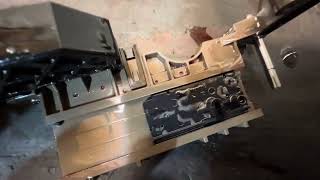
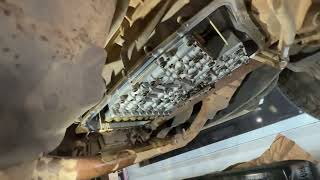
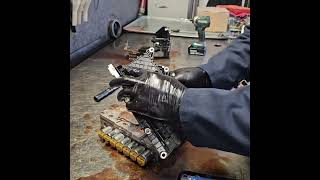
![What is P0876 Engine Code [Quick Guide]](https://img.youtube.com/vi/e0M5pRMTfBw/mqdefault.jpg)

The information in this article is provided for general reference and educational purposes only. Vehicle specifications, procedures, and part compatibility can vary by production date, trim level, and region. Always consult your vehicle's factory service manual and verify part numbers before purchasing or performing repairs. Safety-critical components such as airbags, seat belts, and braking systems should be installed by a qualified professional.
- 🎬 Helpful Videos
- What Does P0876 Mean?
- Can I Drive With P0876?
- Common Causes
- Symptoms
- Diagnostic Flowchart
- Common Fixes & Costs
- Used vs. New Parts: Buying Guide
- What Happens If You Wait — Timeline
- Cost of Not Fixing It
- Diagnosis Steps
- When This Code Triggers (Freeze-Frame Conditions)
- Related Codes
- Climate & Environmental Factors
- How to Talk to a Mechanic About This Code
- Where to Take It: Dealer vs Independent vs Chain
- When to Walk Away From the Repair
- What Scan Tool You Need for This Code
- How to Clear the Code After You Fix It
- Will This Fail Emissions / State Inspection?
- Most Commonly Affected Vehicles
- Manufacturer-Specific Notes
- Real Owner Stories
- 2014 Subaru Outback at 163K miles
- 2017 Ford F-150 with 6R80 Transmission
- 2010 Ram 1500 with 545RFE Transmission at 50K miles
- How to Prevent This Code From Triggering
- Frequently Asked Questions
- What's the most common misdiagnosis for a P0876 code?
- Can a software update fix a P0876 code?
- Can low transmission fluid cause a P0876 code?
- Is it expensive to fix a P0876 code?
- Where is the transmission fluid pressure sensor located?
- Can I fix the P0876 code myself?
- Can a bad battery or alternator cause a P0876 code?
- Will clearing the code fix the problem?
- What is the difference between a pressure sensor and a pressure switch?
- Key Takeaways
- 🎟️ Get 5% Off