

OBD-II Code P0870: Transmission Fluid Pressure Sensor 'C' Circuit Malfunction
The Ultimate Guide to What P0870 Means, Why It Triggers, and Exactly How to Fix It
- Code P0870 triggers 'limp mode' and locks your transmission into 2nd or 3rd gear, requiring immediate attention to prevent a $3,500+ rebuild.
- Check your transmission fluid level and color first, as low or burnt fluid is the root cause in over 30% of pressure-related codes.
- If you drive a 2017-2019 Ram 2500/3500, do not replace hardware until a dealer verifies TSB #9004016, as a $150 software update often fixes the issue.
- Inspect the external transmission wiring harness for green corrosion or broken wires before authorizing a $1,000+ internal solenoid pack replacement.
What Does P0870 Mean?

P0870 means your Powertrain Control Module (PCM) detects an electrical malfunction in the transmission fluid pressure sensor 'C' circuit. This sensor provides critical hydraulic pressure data to the Transmission Control Module (TCM) for smooth gear shifts. When the PCM receives an impossible signal—such as voltage that is too high, too low, or absent—it triggers P0870 and illuminates the Check Engine Light.
Technical definition: The SAE/OBD-II definition is "Transmission Fluid Pressure Sensor/Switch 'C' Circuit". This indicates the PCM detects an electrical circuit malfunction connected to pressure sensor 'C'. While primarily an electrical code, internal mechanical failures like hydraulic leaks or a failing oil pump also trigger it.
Can I Drive With P0870?
Yes, But With Caution. You can drive, but do not exceed a few miles. Your transmission enters 'limp mode,' locking into a single gear (usually 2nd or 3rd) and severely limiting speed. Continuing to drive overheats the transmission, turning a sub-$1,000 sensor repair into a $3,500+ rebuild by destroying clutches and the torque converter.
Common Causes

- Low or Dirty Transmission Fluid (Very Common) — Low fluid prevents the system from building proper pressure. Dirty fluid clogs passages, sticks solenoids, and forces sensors to read incorrectly.
- Damaged Wiring or Corroded Connectors (Common) — The transmission wiring harness suffers from heat, vibration, and road salt. Chafed wires or a corroded main connector disrupt the signal to the computer.
- Faulty Transmission Solenoid Pack / Pressure Switch Assembly (Common) — The pressure sensor is integrated into the solenoid pack inside the transmission pan. Constant heat cycles cause these internal electronics to fail.
- Software/Calibration Issue (Less Common) — On specific Ram, Chrysler, and Dodge vehicles, a software glitch falsely triggers P0870. A dealer software update (reflash) is the only solution.
- Worn Internal Transmission Components (Valve Body) (Less Common) — High-mileage valve bodies develop internal leaks in their aluminum bores. This pressure loss triggers P0870 even if the sensor functions perfectly.
- Faulty Transmission Oil Pump (Rare) — A failing internal oil pump cannot maintain required line pressure, triggering P0870 alongside P0944 (Loss of Prime).
- Faulty Transmission Range Sensor (TRS) (Rare) — A faulty TRS sends incorrect gear position data to the TCM, confusing the module into setting pressure codes.
- Faulty Transmission Control Module (TCM) or Powertrain Control Module (PCM) (Very Rare) — Control module failure is extremely uncommon. Consider this only after exhaustively testing all sensors, wiring, and internal components.
Symptoms

- Check Engine Light is On — The Malfunction Indicator Lamp (MIL) or a dedicated transmission warning light illuminates on the dashboard.
- Transmission Stuck in 'Limp Mode' — The vehicle locks into a single gear (often 2nd or 3rd) to prevent damage, resulting in poor acceleration and high RPMs at cruising speeds.
- Harsh, Erratic Shifting or Surging — The transmission slams into gear, hesitates, refuses to shift, or causes the vehicle to jerk violently during acceleration.
- Transmission Slipping — Engine RPMs flare up without a corresponding increase in vehicle speed, feeling as if the transmission shifted into neutral.
- Burning Smell — A pungent, burnt smell from the transmission fluid indicates severe overheating from slipping clutches or limp mode operation.
- Reduced Fuel Economy — Operating in lower gears forces the engine to run at higher RPMs, noticeably decreasing fuel mileage.
Diagnostic Flowchart

Tap your situation to follow the diagnostic path that matches what you're seeing on this code.
Common Fixes & Costs
- Transmission Fluid and Filter Change — Parts: $50-$120, Labor: $100-$230, ~1.5 hr book time (Intermediate)
- Update Powertrain/Transmission Control Module Software — Parts: $0, Labor: $125-$250, ~1.0 hr book time (Professional)
- Repair or Replace Damaged Wiring/Connector — Parts: $15-$60, Labor: $150-$400, ~2.0 hr book time (Intermediate)
- Replace Transmission Solenoid Pack / Pressure Sensor Assembly
— Parts: $150-$600, Labor: $250-$750, ~3.5 hr book time
(Professional)
Ram 2500/3500 (68RFE): OEM Mopar 68376696AA (Alt: Rostra 52-0531)
Honda (External Switch): OEM Honda 28610-RKE-004 (Alt: Standard Motor Products PS636) - Replace Transmission Valve Body
— Parts: $400-$1200, Labor: $400-$1000, ~4.0 hr book time
(Professional)
Subaru (TR580 CVT): OEM Subaru 31825AA052 (Alt: Remanufactured units vary by supplier)
DIY vs Professional
- Fluid/Filter Change — Beginner:
Tools: Socket set, drain pan, funnel, new fluid, new filter/gasket. - External Pressure Switch (Honda) — Beginner:
Tools: Deep socket wrench, rag. - Wiring/Connector Repair — Beginner:
Tools: Multimeter, wire strippers, crimpers, heat shrink. - Solenoid Pack Replacement — Beginner:
Tools: Extensive socket set, torque wrench, drain pan, new fluid/filter, service manual. - Valve Body Replacement — Beginner:
Tools: Specialized transmission tools, torque wrench, service manual, clean environment. - Software Update — Beginner:
Tools: OEM-level scan tool and subscription.
Used vs. New Parts: Buying Guide
When a used part is worth it: Buying used internal electronic components (solenoid packs/valve bodies) is highly discouraged. These degrade with heat and time. Used parts are only acceptable for simple external switches.
Donor-vehicle mileage cap: roughly under 40000 miles for the part to have meaningful remaining life.
Donor quality checklist:
- Source from a low-mileage vehicle via a reputable dismantler with a warranty.
- Match part numbers exactly to account for manufacturer revisions.
- Reject parts from vehicles with unknown maintenance histories.
Decision logic:
- If The part is an internal electronic component like a solenoid pack or valve body. → Buy new or remanufactured. The repeat labor cost outweighs any used-part savings.
- If The vehicle has >150k miles and the budget is extremely tight. → A used part is a temporary gamble. Expect a significantly shorter lifespan.
- If The part is a simple external switch (e.g., Honda pressure switch). → Used is acceptable, but new aftermarket parts are inexpensive enough to justify buying new.
Warranty tradeoff: Used parts offer a 30-90 day parts-only warranty. Remanufactured parts include a 1-year to lifetime warranty. New OEM parts carry a 1-year manufacturer warranty.
Worst-case if a used part fails: $500-$1500 if a used internal part fails, covering repeat labor, new fluid, gaskets, and a second replacement part.
What Happens If You Wait — Timeline
- 0-4 weeks: Check Engine Light on. Transmission enters limp mode intermittently. Shifting feels slightly harsher than normal. (MPG impact: 5-10%% · Added cost: $0-$50 in wasted fuel.)
- 1-3 months: Limp mode becomes permanent, locking the transmission in a single gear. Harsh, slamming shifts occur. The transmission fluid starts to overheat. (MPG impact: 10-20%% · Added cost: $50-$200 in wasted fuel. Internal seals begin to harden from heat.)
- 3-6 months: Constant operation in limp mode generates extreme heat, burning the transmission fluid. This heat damages clutch packs and warps metal components in the valve body. (MPG impact: 15-25%% · Added cost: $1,800-$3,500. The initial sensor issue has caused enough internal damage to require a full transmission rebuild.)
- 6+ months: Catastrophic failure. Clutch packs are completely burned out. Metal debris circulates throughout the transmission. The vehicle stops moving altogether. (MPG impact: N/A (Vehicle is likely undrivable)% · Added cost: $4,000-$8,000+. A full replacement with a remanufactured or new transmission is required.)
Cost of Not Fixing It
- 0-1 month: Harsh shifting, vehicle stuck in limp mode, and a 5-15% drop in fuel economy. High risk of being stranded. (Added cost: Negligible, besides wasted fuel.)
- 1-3 months: Driving in limp mode generates excessive heat, rapidly degrading transmission fluid. This hardens seals and damages internal clutch packs. (Added cost: $1,800-$3,500)
- 3+ months: Catastrophic transmission failure. The initial sensor issue causes widespread internal damage, requiring a complete transmission rebuild or replacement. (Added cost: $2,500-$5,000+)
Diagnosis Steps
- Inspect Transmission Fluid Level and Condition
With the engine warm and running in Park or Neutral, check the transmission fluid dipstick. The fluid must be at the correct level, bright red, and not smell burnt. Low or dark fluid indicates a problem requiring immediate attention.
Tools: Rag, Owner's Manual (Beginner) - Scan for All Codes & Review Freeze Frame Data
Retrieve all stored codes using an OBD-II scanner. Note related codes (P0700, P0871, P0944) for context. Record freeze-frame data to view line pressure vs. desired pressure at the exact moment of failure.
Tools: OBD-II Scanner (Beginner) - Check for Technical Service Bulletins (TSBs)
Search online for your vehicle's make, model, year, and 'P0870 TSB'. Chrysler, Dodge, Ram, and GM have known software or hardware issues where a dealer update is the required fix.
Tools: Internet Access (Beginner) - Visually Inspect External Wiring and Connectors
Inspect the transmission wiring harness for burnt, chafed, or broken wires. Unplug the main connector and check for green corrosion, moisture, or bent pins. A poor connection is a primary cause of circuit codes.
Tools: Flashlight, Mirror (Intermediate) - Analyze Live Data with a Scan Tool
Monitor live data PIDs for transmission fluid pressure. Compare 'Desired Line Pressure' to 'Actual Line Pressure'. Consistently low pressure points to a hydraulic issue. Erratic or zero pressure points to an electrical fault.
Tools: Advanced OBD-II Scanner (Advanced) - Test Circuit Integrity with a Multimeter
Disconnect the sensor and PCM. Check for continuity on the signal and ground wires (< 5.0 Ohms). Check for a short to ground or power. Back-probe the connector with the key on to verify the 5V reference voltage.
Tools: Digital Multimeter, Wiring Diagram (Advanced) - Pro Tip: Test Pressure Switch State Voltage
Back-probe the signal wire at the TCM. Voltage changes based on whether the switch is open or closed (e.g., near 12V open, <50mV closed). A stuck voltage indicates a failed switch or shorted wire.
Tools: Advanced OBD-II Scanner, Digital Multimeter, Wiring Diagram (Advanced) - Pro Tip: Measure Sensor/Solenoid Resistance
Measure the resistance across the terminals of the suspect solenoid. Compare this to the manufacturer's specification. An open circuit (OL) or out-of-spec reading confirms a failed component.
Tools: Digital Multimeter, Service Manual (Professional) - Test the Sensor/Solenoid Pack
If wiring is good, remove the transmission oil pan to access the internal sensor or solenoid pack. Test resistance according to specs. Given the labor involved, replacing the component is standard practice at this stage.
Tools: Digital Multimeter, Socket Set, Drain Pan, Service Manual (Professional) - Inspect Internal Components (Valve Body)
If sensors pass, inspect the valve body for cracks, stuck valves, or excessive wear. Use a vacuum tester on suspect bores; a reading below 16-18 in-Hg indicates a leak requiring valve body replacement.
Tools: Socket Set, Drain Pan, New Gasket, New Fluid, Vacuum Tester (Professional)
When This Code Triggers (Freeze-Frame Conditions)
- Engine Coolant Temp: 180-221°F (Sets when the vehicle is fully warmed up.)
- RPM: 1500-2500 (Triggers during steady-state cruising or light acceleration when the transmission attempts to shift.)
- Engine Load: 30-60% (Occurs under normal driving load, rarely during heavy acceleration or idling.)
- Vehicle Speed: 35-55 mph (Appears at highway or suburban cruising speeds when specific clutch packs engage.)
Related Codes
- P0700 — A general Transmission Control System Malfunction code. It acts as a request from the TCM to turn on the check engine light. You will almost always see P0700 alongside P0870.
- P0871 — A 'Range/Performance' code indicating the sensor signal is illogical for current conditions. P0871 points toward a hydraulic leak, while P0870 points toward an electrical break.
- P0846 — Transmission Fluid Pressure Sensor 'B' Circuit. Seeing it with P0870 strongly suggests a wider solenoid pack failure or a damaged wiring harness affecting multiple circuits.
- P0944 — Hydraulic Pump Unit Loss of Prime. Indicates a severe drop in overall hydraulic pressure from a major leak or failing pump, which subsequently triggers P0870.
Climate & Environmental Factors
- Cold Weather: Extreme cold thickens transmission fluid, causing temporarily sluggish shifting. It rarely causes a persistent P0870 circuit fault.
- High Humidity / Road Salt: Regions using road salt see a high incidence of P0870. Salt and moisture accelerate corrosion on the external wiring harness connector, causing electrical shorts.
How to Talk to a Mechanic About This Code
Say this: "I have a P0870 transmission code. Before replacing parts, please check for relevant TSBs, especially software updates, and inspect the external wiring harness and connector. I would also like to see the live pressure data from the scan tool."
This signals you are an informed customer. It directs the mechanic to perform a logical diagnostic process rather than immediately quoting an expensive part replacement.
Avoid saying:
- 'My check engine light is on.' (Too vague, invites a costly exploratory process)
- 'My transmission is acting weird.' (Too vague, be specific about the code)
- 'Just fix whatever is wrong.' (Gives the shop a blank check to replace parts without proper diagnosis)
Questions to ask before authorizing the repair:
- Did you check for Technical Service Bulletins? Is my vehicle's software up to date?
- Did you inspect the main transmission connector and wiring harness for corrosion?
- What did the live data for the transmission pressure sensor show? Was the reading stuck, erratic, or low?
- If you recommend a part replacement, how did you rule out a wiring or software issue?
- What is the warranty on this specific repair, including parts and labor?
Where to Take It: Dealer vs Independent vs Chain
- Dealer:
Recommended for specific, known software-related issues or warranty claims.
Best for: Vehicles under warranty., Ram, Chrysler, or Dodge vehicles where a software update is the required fix., Subaru vehicles covered by the CVT warranty extension.
Downsides: Highest labor rates., May recommend expensive part replacements if technicians ignore TSBs. (Typical cost: +50% vs. baseline) - Independent Shop:
Best overall choice for most out-of-warranty P0870 repairs, especially if you choose a reputable transmission specialist.
Best for: Out-of-warranty vehicles where the cause is a hardware or wiring failure., Transmission specialists with deep expertise in diagnosing hydraulic and electrical faults., Honda vehicles with simple external pressure switch failures.
Downsides: Quality and expertise vary greatly; vet shops carefully., May lack OEM tools to perform software updates on newer vehicles. (Typical cost: +0% vs. baseline) - Chain Shop:
AVOID for P0870 diagnosis. Their limited diagnostic capability makes them highly likely to misdiagnose the issue.
Best for: Simple fluid and filter changes.
Downsides: Technicians lack specialized training for complex transmission diagnostics., High pressure to sell services leads to misdiagnosis., Incapable of correctly diagnosing software or complex wiring issues. (Typical cost: -10% vs. baseline)
When to Walk Away From the Repair
If the estimated repair cost exceeds 50% of the car's private-party value, seriously consider selling or trading in the vehicle.
- Car worth $4000, fix is $2200: Walk away. The repair cost is over 50% of the car's value. Sell as a 'mechanic special' or scrap it.
- Car worth $25000, fix is $150: Fix it. This is a minor cost for a software update on a valuable vehicle.
- Car worth $8000, fix is $1500: Fix it. The repair is significant but well below the 50% threshold and restores the vehicle's function.
What Scan Tool You Need for This Code
Minimum: A scanner that reads manufacturer-specific transmission codes and displays live data streams (PIDs) for transmission fluid pressure.
A basic $20 code reader only shows the P0870 code. It cannot display the live data needed to determine if the sensor reading is stuck, erratic, or low.
Budget: Autel AP200 / Topdon TopScan Lite (~$70) — Bluetooth dongles that pair with your smartphone. They offer full system diagnostics, including reading TCM codes and viewing live transmission pressure PIDs.
Mid-range: Foxwell NT510 Elite / Autel MaxiCOM MK808S (~$150) — Handheld scanners providing full system diagnostics, live data graphing, and bidirectional controls to perform transmission adaptation resets after a repair.
Professional: Autel MaxiSys MS906 / Launch X431 Series (~$600-1500) — Offers full bidirectional control to actuate solenoids, OEM-level diagnostics, and the ability to perform software updates on some modules.
Rent vs buy: Free rental scanners from auto parts stores are basic code readers and are NOT sufficient for diagnosing P0870. You must buy a scanner with live transmission data capabilities.
How to Clear the Code After You Fix It
- Use an OBD-II scan tool to clear the diagnostic trouble codes (DTCs).
- Perform a complete drive cycle to allow the onboard diagnostic monitors to run.
- Reconnect the battery if disconnected, noting this clears all memory and radio presets.
Drive cycle (~30 minutes): A generic drive cycle requires a cold start after an 8-hour rest, 2-3 minutes of idling, mixed city driving, and 5-10 minutes of steady highway driving between 55-60 mph.
Readiness monitors affected: Transmission Components, Catalyst Monitor, O2 Sensor Monitor
Before emissions retest: drive at least 100 miles to fully set monitors.
Watch out for:
- Disconnecting the battery does not set readiness monitors; you must complete a specific drive cycle.
- The code returns immediately if the root cause remains unfixed.
- Failing to let the vehicle cool for 8 hours prevents cold start-dependent monitors from running.
Will This Fail Emissions / State Inspection?
Yes — this code typically fails an OBD-II emissions inspection.
- California: An active P0870 code automatically fails the smog check. All readiness monitors must complete post-repair.
- New York: An illuminated Check Engine Light and stored P0870 code results in an immediate inspection failure.
- Texas: An active Check Engine Light is an automatic fail. Readiness monitors must be set before a re-test.
Most Commonly Affected Vehicles
- Ram 2500/3500 (2017-2019) — TSB #9004016 explicitly warns technicians NOT to replace hardware for an isolated P0870 code, as a PCM software update is the correct fix.
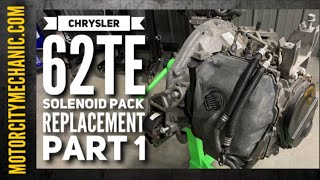
- Dodge / Chrysler Grand Caravan / Town & Country (2008-2016) — Frequently caused by a failing solenoid/pressure switch assembly inside the 62TE transmission. TSB 21-013-13 addresses related shift quality issues.
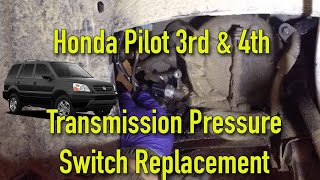
- Honda Odyssey, Accord, Pilot (2003-2013) — Commonly caused by a single, externally accessible pressure switch failure (3rd or 4th gear switches), which are inexpensive and easy to replace.
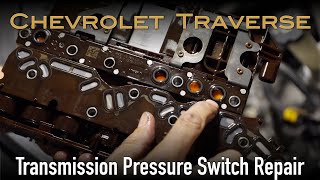
- Chevrolet Silverado, Cruze, Equinox, Malibu (2010-2018) — Caused by a faulty Transmission Electro-Hydraulic Control Module (TEHCM). The internal laminated pressure discs degrade. See TSB 08-07-30-021E.
- Subaru Outback, Forester, Impreza, Crosstrek (2013-2018) — Points to a failure of the valve body assembly in the TR580 CVT. Subaru extended the CVT warranty for many of these models.
- Dodge Durango (2011-2013) — Equipped with the 62TE transmission, this code frequently points to an issue with the solenoid pack or associated wiring harness.
- Ford Focus, Fusion (2012-2018) — On vehicles with the DSP6 PowerShift transmission, pressure and control issues manifest as various codes, including circuit faults.
Manufacturer-Specific Notes
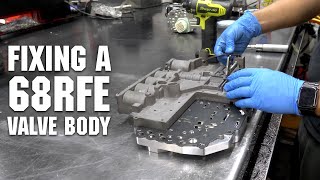
- Chrysler/Dodge/Ram: For 68RFE transmissions, an isolated P0870 is almost always a software issue. TSB #9004016 instructs technicians to update the PCM software and explicitly forbids replacing hardware.
- General Motors (GM): On 6-speed automatics, the TEHCM is a common failure point because internal laminated pressure switch discs tear. TSB 08-07-30-021E covers this assembly.
- Nissan: In CVTs, this code is an early indicator of internal valve body wear. It requires valve body or oil pump repair for a permanent fix.
- Honda: Honda 5-speed automatics use multiple external pressure switches screwed into the case. P0870 is often fixed by replacing a $50 external switch in under an hour.
- Subaru: Subaru extended the CVT warranty to 10 years / 100,000 miles for many 2010-2018 models due to valve body failures triggering this code.
Real Owner Stories
2018 Ram 2500 with 68RFE at 75K miles
Check engine light came on, truck went into limp mode (stuck in 4th gear). Code read was P0870. Fluid level was fine.
Outcome: Owner researched forums and found TSB #9004016. Took the truck to a Ram dealer, who updated the PCM software for a $150 labor charge. The code cleared and did not return.
Lesson: For Ram trucks with the 68RFE transmission, always check for software-related TSBs before authorizing expensive hardware replacements.
2007 Honda Odyssey at 140K miles
Transmission shifted harshly into 3rd gear, and the 'D' light flashed. Check engine light showed P0870.
Outcome: Purchased a new OEM switch for $50. Replaced the switch in under 30 minutes using a deep socket wrench. The harsh shifting vanished.
Lesson: On Honda and Acura models, pressure switch codes are often caused by inexpensive, externally-mounted switches that are simple DIY replacements.
2014 Chevy Cruze at 110K miles
Car intermittently went into limp mode with harsh shifting. Codes P0700 and P0870 stored. Fluid was clean.
Outcome: A transmission specialist found a corroded wire in the harness connector at the transmission case. Repairing the connector cost $250 and permanently fixed the issue.
Lesson: P0870 is a 'Circuit' code. Always thoroughly inspect the wiring harness and connectors for corrosion before replacing internal components.
2015 Subaru Outback with TR580 CVT at 95K miles
Transmission warning light and Check Engine Light illuminated with P0870. Car hesitated and surged at low speeds.
Outcome: The dealer diagnosed a faulty valve body. The vehicle was covered under Subaru's extended CVT warranty (10 years/100,000 miles), so the entire assembly was replaced for free.
Lesson: For Subaru models from 2010-2018, a P0870 code pointing to a valve body failure is often covered by a manufacturer warranty extension.
How to Prevent This Code From Triggering
- Perform regular transmission fluid and filter changes. (Every 30,000-60,000 miles, or per your owner's manual.) — Clean fluid maintains correct hydraulic pressure and keeps contaminants from clogging solenoids and valve body passages.
- Use only the manufacturer-specified transmission fluid. (Every time fluid is added or changed.) — Incorrect fluid causes chemical damage to seals and has the wrong viscosity, leading to improper hydraulic pressure.
- Apply dielectric grease to the main transmission harness connector. (Once, or whenever the connector is serviced.) — Creates a waterproof barrier, preventing moisture from causing corrosion on connector pins—a primary cause of circuit fault codes.
- Avoid aggressive driving and heavy towing beyond vehicle limits. (Daily driving habit.) — Reduces heat buildup. Excessive heat breaks down fluid and accelerates wear on all components, including electronics.
- Install an auxiliary transmission cooler. (One-time modification, especially for vehicles used for towing.) — Dramatically reduces operating temperatures, preserving the life of the transmission fluid and internal components.
Frequently Asked Questions
Can I fix P0870 myself?
For a beginner, checking and topping off the fluid is manageable. Replacing an external pressure switch on a Honda is also a simple DIY task. However, replacing an internal solenoid pack or valve body requires dropping the transmission pan and is best left to a professional.
How much does it cost to fix P0870?
Costs vary widely based on the root cause. A dealer software update typically costs $125-$250, while a fluid and filter service runs $150-$350. Replacing an internal solenoid pack or valve body ranges from $500 to over $2,000 depending on the vehicle.
What are the most common misdiagnosis mistakes for P0870?
The biggest mistake is immediately replacing the solenoid pack or valve body on a Ram truck without checking for software update TSB #9004016. Another common error is replacing internal sensors when the true fault is a corroded wire in the external harness. Always verify wiring integrity and software versions first.
Is it safe to drive with code P0870?
No, driving with P0870 is unsafe and risks catastrophic damage. The transmission often locks into 'limp mode,' severely limiting your speed and acceleration in traffic. Continuing to drive overheats the fluid, turning a minor electrical repair into a $3,500+ transmission rebuild.
Will replacing the sensor always fix the code?
No, because P0870 specifically indicates a 'Circuit Malfunction'. The problem is often damaged wiring, a corroded connector, or a software glitch rather than the sensor itself. Proper diagnosis prevents wasting money on unnecessary parts.
What is the difference between a pressure sensor and a pressure switch?
A pressure sensor provides a variable voltage signal corresponding to exact hydraulic pressure. A pressure switch is a digital on/off device indicating if pressure is above or below a specific threshold. While the terms are used interchangeably for this code, testing methods differ slightly.
What does the 'C' circuit actually mean in P0870?
The letter 'C' is simply a manufacturer designation for a specific hydraulic circuit. Automatic transmissions have multiple circuits (A, B, C, D) monitoring pressure for different clutches. It identifies which specific circuit the PCM flagged, not a physical part like a 'clutch'.
Can a bad battery or alternator cause transmission codes like P0870?
Yes, modern transmissions rely heavily on clean, stable voltage. A failing battery or alternator causes low or erratic system voltage. This confuses sensitive electronics like the TCM, triggering spurious electrical fault codes including P0870.
How long does it take to fix a P0870 code?
A software update or external Honda pressure switch replacement takes about an hour. Repairing a damaged wiring harness typically takes 1-3 hours depending on the fault's location. Replacing an internal solenoid pack or valve body is a complex job requiring 3-6 hours of professional labor.
Key Takeaways
- Code P0870 triggers 'limp mode' and locks your transmission into 2nd or 3rd gear, requiring immediate attention to prevent a $3,500+ rebuild.
- Check your transmission fluid level and color first, as low or burnt fluid is the root cause in over 30% of pressure-related codes.
- If you drive a 2017-2019 Ram 2500/3500, do not replace hardware until a dealer verifies TSB #9004016, as a $150 software update often fixes the issue.
- Inspect the external transmission wiring harness for green corrosion or broken wires before authorizing a $1,000+ internal solenoid pack replacement.
Helpful Videos

The information in this article is provided for general reference and educational purposes only. Vehicle specifications, procedures, and part compatibility can vary by production date, trim level, and region. Always consult your vehicle's factory service manual and verify part numbers before purchasing or performing repairs. Safety-critical components such as airbags, seat belts, and braking systems should be installed by a qualified professional.
- 🎬 Helpful Videos
- What Does P0870 Mean?
- Can I Drive With P0870?
- Common Causes
- Symptoms
- Diagnostic Flowchart
- Common Fixes & Costs
- DIY vs Professional
- Used vs. New Parts: Buying Guide
- What Happens If You Wait — Timeline
- Cost of Not Fixing It
- Diagnosis Steps
- When This Code Triggers (Freeze-Frame Conditions)
- Related Codes
- Climate & Environmental Factors
- How to Talk to a Mechanic About This Code
- Where to Take It: Dealer vs Independent vs Chain
- When to Walk Away From the Repair
- What Scan Tool You Need for This Code
- How to Clear the Code After You Fix It
- Will This Fail Emissions / State Inspection?
- Most Commonly Affected Vehicles
- Manufacturer-Specific Notes
- Real Owner Stories
- 2018 Ram 2500 with 68RFE at 75K miles
- 2007 Honda Odyssey at 140K miles
- 2014 Chevy Cruze at 110K miles
- 2015 Subaru Outback with TR580 CVT at 95K miles
- How to Prevent This Code From Triggering
- Frequently Asked Questions
- Can I fix P0870 myself?
- How much does it cost to fix P0870?
- What are the most common misdiagnosis mistakes for P0870?
- Is it safe to drive with code P0870?
- Will replacing the sensor always fix the code?
- What is the difference between a pressure sensor and a pressure switch?
- What does the 'C' circuit actually mean in P0870?
- Can a bad battery or alternator cause transmission codes like P0870?
- How long does it take to fix a P0870 code?
- Key Takeaways
- 🎟️ Get 5% Off