

OBD-II Code P0856: Traction Control Input Signal Malfunction
The Ultimate 2026 Guide to Diagnosing and Fixing P0856
- P0856 disables your ABS and Traction Control systems, increasing stopping distances and skid risks on wet or icy roads.
- Corroded wiring and bad grounds cause 80% of P0856 codes, not expensive computer module failures.
- On GM vehicles, inspect the main transmission connector (X1) and the EBCM frame ground first, as detailed in TSB #PIC4740F.
- Diagnosing this code requires an advanced OBD-II scanner capable of reading Chassis (C) and Network (U) codes from the ABS module.
- If driving a Hyundai or Kia, check your brake lights; a $25 faulty brake light switch frequently triggers this exact code.
What Does P0856 Mean?

P0856 means the Powertrain Control Module (PCM) lost communication or received an invalid signal from the traction control system. The traction control system prevents wheel spin by communicating with the engine and brakes. When the PCM cannot trust the signal from the Electronic Brake Control Module (EBCM), it triggers this code, illuminates the Check Engine Light, and disables traction control and ABS as a safety precaution.
Technical definition: The SAE definition is "Traction Control Input Signal." The PCM sets this code when it detects a fault in the communication signal from the Electronic Brake Control Module (EBCM). The EBCM requests torque reduction from the PCM via serial data or a pulse-width modulated (PWM) signal during wheel slip. An open circuit, short, or invalid data packet triggers the code. On GM systems, the PCM sends a 5-volt reference signal that the EBCM toggles to ground; a stuck high or low state sets P0856.
Can I Drive With P0856?
Yes, But With Caution. Yes, but with significant caution. Your Traction Control System (TCS) and Anti-lock Braking System (ABS) are disabled. Stopping distances increase on wet or icy roads, and the vehicle will not assist during a skid. Some GM vehicles also experience harsh, unexpected transmission shifts. Limit driving to short trips to a repair shop.
Common Causes

- Damaged, Corroded, or Loose Wiring and Connectors (Very Common) — This is the primary cause. Wires and connectors linking the EBCM, PCM, and wheel speed sensors face harsh underbody conditions. Corrosion at frame ground points, the main EBCM connector, or transmission pass-through connectors interrupts the signal.
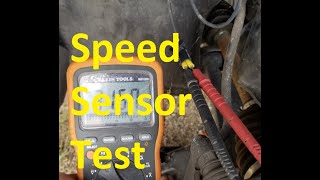
- Faulty Wheel Speed Sensor or Circuit (Common) — The traction control system relies on wheel speed sensors to detect spin. If a sensor fails, its wiring breaks, or a failing wheel bearing increases the sensor air gap, 🎬 Watch: How to test a wheel speed sensor with a multimeter. the EBCM receives bad data and stops communicating properly with the PCM.
- Faulty Brake Light Switch (Common) — On Hyundai, Kia, and Ford models, the brake light switch sends a critical input signal to the TCS/ABS module. A faulty or misadjusted switch sends an implausible signal, forcing the system offline and triggering P0856.
- Defective Traction Control ON/OFF Switch (Uncommon) — The dashboard switch that toggles traction control fails due to wear or spilled liquids. A shorted switch sends a continuous or erratic signal, which the EBCM interprets as a hard fault.
- Low System Voltage / Weak Battery (Uncommon) — Control modules require stable voltage. A dying battery causes voltage drops during engine cranking, leading to module initialization failures and communication errors like P0856.
- Faulty Ignition Switch (Uncommon) — On older GM models, a failing ignition switch delivers intermittent low voltage to the EBCM. This prevents the module from powering on correctly, leading to a 'TCS No Comm' message and a P0856 code.
- Faulty Electronic Brake Control Module (EBCM) (Less Common) — The EBCM fails internally due to fractured solder joints or shorted components. This severs communication with the PCM. Always rule out wiring and grounds before replacing this expensive module.
- Failing Powertrain Control Module (PCM) (Rare) — The main engine computer fails due to hardware damage or software corruption. This is the absolute last component to suspect after verifying all wiring, sensors, and the EBCM.
Symptoms
- Check Engine Light is on — The PCM illuminates the Check Engine Light immediately upon storing the P0856 code.
- Traction Control Light (TCS/ESC) is on — The dashboard traction control warning light (often a car with squiggly lines) illuminates steadily.
- ABS Light is on — Because TCS and ABS share the same control module, a fault disabling traction control also disables ABS, triggering the ABS warning light.
- Traction control system is disabled — The vehicle allows excessive wheel spin during acceleration on wet or icy surfaces. The dashboard TCS button becomes unresponsive.
- Hard or erratic transmission shifting — On GM vehicles, the traction control system dictates transmission torque management. A communication fault forces the transmission to shift harshly to protect internal clutches.
- Reduced engine power (Limp Mode) — The PCM enters a reduced power mode to protect the powertrain from conflicting signals, severely limiting acceleration and top speed.
Diagnostic Flowchart
Tap your situation to follow the diagnostic path that matches what you're seeing on this code.
Common Fixes & Costs
- Repair or clean wiring and connectors — Parts: $10-$30, Labor: $120-$250, ~1.5 hr book time (Intermediate)
- Replace the brake light switch — Parts: $20-$60, Labor: $50-$100, ~0.5 hr book time (DIY)
- Replace a faulty wheel speed sensor — Parts: $50-$200, Labor: $100-$180, ~1.0 hr book time (DIY)
- Replace the traction control ON/OFF switch — Parts: $30-$75, Labor: $60-$120, ~0.7 hr book time (DIY)
- Repair or replace the ABS/EBCM module — Parts: $250-$800 (Reman) / $700-$1500 (New), Labor: $150-$300, ~2.0 hr book time (Professional)
Used vs. New Parts: Buying Guide
When a used part is worth it: For the expensive ABS/EBCM module, a used part from a reputable salvage yard saves hundreds of dollars. This is practical for older, high-mileage vehicles. For inexpensive parts like wheel speed sensors or brake switches, always buy new.
Donor-vehicle mileage cap: roughly under 100000 miles for the part to have meaningful remaining life.
Donor quality checklist:
- Verify the part number matches exactly; modules are VIN-specific.
- Purchase from a supplier offering a minimum 30-day warranty.
- Avoid parts from flood-damaged or severely wrecked cars.
- Inspect the part for physical damage, corrosion, or cut wires.
Decision logic:
- If The failed part is a sensor, switch, or wiring pigtail → Always buy new. The cost savings for used are minimal and not worth the risk of premature failure.
- If The failed part is the ABS/EBCM module and the vehicle is over 10 years old or 120K miles → A tested, warrantied used module is a cost-effective choice.
- If The failed part is the ABS/EBCM module and the vehicle is newer or has low mileage → Favor a new or professionally remanufactured module to ensure longevity and avoid programming headaches.
Warranty tradeoff: Used parts typically come with a 30-90 day warranty. New aftermarket parts offer a 1-year to limited lifetime warranty. New OEM parts carry a 1-2 year warranty but are the most expensive.
Worst-case if a used part fails: $300-$500 if a used ABS module is dead on arrival, covering repeat labor costs and programming fees.
What Happens If You Wait — Timeline
- 0-1 month: Code is set. Check Engine, ABS, and Traction Control lights are on. Active safety systems are disabled. The vehicle drives normally, or exhibits harsh transmission shifting on GM models. (MPG impact: 0%% · Added cost: $0)
- 1-6 months: The primary safety risk of having no ABS or TCS continues. On GM models with hard shifting, continued operation puts extra stress on transmission clutches and solenoids, accelerating wear. The vehicle automatically fails state inspections. (MPG impact: 0-2%% · Added cost: $500-$1500 (Accelerated wear on transmission components))
- 6-12 months: An underlying wiring issue worsens and shorts out other circuits, potentially damaging a control module. Continued harsh shifting leads to internal transmission damage, requiring a costly rebuild. (MPG impact: 0-2%% · Added cost: $1500-$3500 (Increased likelihood of needing a transmission rebuild))
- 12+ months: The root cause fails completely, leading to a no-start condition if CAN bus communication is lost. The probability of an accident increases. Secondary damage to the transmission is highly probable. (MPG impact: 0-2%% · Added cost: $3000-$7000+ (Full transmission replacement plus fixing the electrical fault))
Cost of Not Fixing It
- Immediate: Significantly increased risk of losing vehicle control and longer stopping distances in adverse weather due to disabled ABS and Traction Control. (Added cost: N/A)
- 1-6 months: On GM models, continued driving with erratic shifting signals places extreme stress on transmission components, accelerating wear on clutches and solenoids. (Added cost: $500-$3500 (Accelerated transmission wear/damage))
- 6+ months: Automatic failure of state vehicle inspections, resulting in fines and inability to legally register the vehicle. (Added cost: $20+ (Fines and re-inspection fees))
Diagnosis Steps

- Read All Trouble Codes from All Modules
Use an advanced OBD-II scanner to read Powertrain (P), Chassis (C), and Communication (U) codes. A basic scanner showing only P0856 is useless here. Write down all codes. C-codes (like C0035 for a wheel speed sensor) or U-codes (like U0121 for lost communication) pinpoint the exact root cause.
Tools: Advanced OBD-II Scanner (ABS/Chassis/Network capable) (Beginner) - Check for Technical Service Bulletins (TSBs)
Search for P0856 TSBs for your specific VIN. For example, GM TSB #PIC4740F identifies a corroded transmission connector as the primary cause on Cadillac, Chevy, and GMC models. Following a TSB saves hours of diagnostic time.
Tools: Internet Access (Beginner) - Perform a Thorough Visual Inspection
Inspect all wiring and connectors related to the ABS/EBCM module, wheel speed sensors, and transmission. Look for chafed wires, loose connections, or green corrosion. Check known problem areas, like the frame ground behind the driver's front wheel on GM trucks.
Tools: Flashlight, Inspection Mirror (Intermediate) - Test the Brake Light Switch
On Ford and Hyundai/Kia vehicles, use the scanner's live data to monitor the brake pedal switch status. Ensure it changes state immediately when the pedal is pressed and released. A delayed or flickering signal requires switch replacement.
Tools: Advanced OBD-II Scanner with Live Data (Intermediate) - Inspect Wheel Speed Sensor Live Data
View the live data stream from each wheel speed sensor while driving slowly in a straight line. All sensors must report the exact same speed. A sensor that reads differently, drops to zero, or spikes erratically has a failed circuit.
Tools: Advanced OBD-II Scanner with Live Data (Intermediate) - Test Module Power and Grounds
Verify the EBCM has proper battery voltage and a solid ground connection at its main connector. Perform a voltage drop test on the ground circuit: connect the negative meter lead to the negative battery post and the positive lead to the EBCM ground pin. With the key on, the reading must be less than 0.1 volts (100mV). Higher readings indicate a bad ground.
Tools: Multimeter, Vehicle-Specific Wiring Diagrams (Advanced) - PRO TIP: Load Test the Signal Circuit
On GM systems with a dedicated 'Torque Request' wire, a multimeter shows 5 volts, but high resistance causes failure under load. Access the signal wire at the EBCM. Connect a multimeter to verify 5V. Connect a headlight bulb in parallel. A good circuit maintains 5V and lights the bulb brightly. A significant voltage drop indicates high resistance in the wire.
Tools: Multimeter, Headlight Bulb with test leads, Wiring Diagrams (Advanced) - PRO TIP: Analyze the Signal with an Advanced Tool
Look for a data PID for 'Traction Control Signal' or 'Requested Torque'. On GM systems, this is a PWM duty cycle. It reads 90% when inactive and drops during wheel slip. A value stuck at 0% or 100% confirms a hard signal fault.
Tools: Professional Scan Tool, Oscilloscope (optional) (Advanced) - Advanced: Test Wheel Speed Sensor Resistance
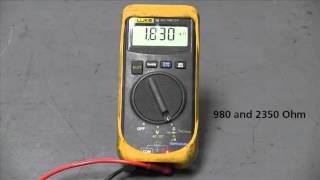
Disconnect the suspect wheel speed sensor and measure resistance between its two pins. Passive sensors read between 800 and 2,500 Ohms. 'OL' indicates an open circuit; near 0 Ohms indicates a short. Compare against a known good sensor on the same axle.
Tools: Multimeter, Jack and Jack Stands (Advanced) - Advanced: Test Wheel Speed Sensor AC Voltage Output
Set the multimeter to AC Volts. With the passive sensor connected and the wheel raised, spin the wheel by hand at one revolution per second. The sensor must generate at least 0.25V AC (250mV AC). Lower voltage indicates a failed sensor or excessive air gap.
Tools: Multimeter, Jack and Jack Stands (Advanced) - Advanced: Test CAN Bus Resistance
If U-codes are present, test the network. Disconnect the battery. Measure resistance between CAN High (Pin 6) and CAN Low (Pin 14) at the OBD-II port. A healthy network reads 60 Ohms. A reading of 120 Ohms means a termination resistor is missing or a module is unplugged.
Tools: Multimeter, Wiring Diagrams (Advanced)
When This Code Triggers (Freeze-Frame Conditions)
- Engine Coolant Temp: 180-205°F (Fully warmed up, during normal operation.)
- RPM: 1200-2500 RPM (During steady cruise or light acceleration.)
- Engine Load: 25-65% (Appears under normal driving load, rarely during heavy acceleration or deceleration.)
- Vehicle Speed: 30-60 mph (Sets at city or highway cruising speeds when the PCM expects stable, continuous communication.)
Related Codes
- P0857 — 'Traction Control Input Signal Range/Performance.' P0856 means the signal is missing entirely. P0857 means a signal is present, but it is erratic or illogical, pointing to a failing sensor that still sends corrupted data.
- P0858 — 'Traction Control Input Signal Low.' This directs you to diagnose a low voltage condition, typically a short to ground in the signal circuit. P0856 is a general 'invalid signal' fault.
- P0859 — 'Traction Control Input Signal High.' This points to an abnormally high voltage condition, usually a short to a power source. P0859 is stored if the high voltage condition is constant.
- U0121 — 'Lost Communication With Anti-Lock Brake System (ABS) Control Module.' P0856 means the PCM receives an invalid signal from the EBCM. U0121 means the PCM receives no signal at all—the module is completely offline. Diagnose U0121 by checking module power and grounds.
Climate & Environmental Factors
- High Humidity and Road Salt: Moisture and salt dramatically accelerate the degradation of wiring, connectors, and frame grounds. The EBCM ground on GM trucks is highly exposed to road spray, making it a frequent failure point.
- Extreme Cold: Cold temperatures make wire insulation brittle and susceptible to cracking. It also weakens battery performance, causing low-voltage glitches during startup that trigger communication codes.
How to Talk to a Mechanic About This Code
Say this: "I have a P0856 code with the ABS and Traction Control lights on. I know this is often a wiring, connector, or ground issue. Please start by inspecting the common failure points like the EBCM ground and related harnesses before quoting a module replacement."
This signals to the shop that you are an informed consumer. It directs the technician to the most probable and cost-effective repairs first, preventing them from immediately suggesting an expensive EBCM replacement.
Avoid saying:
- 'My check engine and ABS lights are on, can you just fix it?'
- 'I think I need a new ABS computer.'
- 'Just do whatever you think is best.'
Questions to ask before authorizing the repair:
- Did you find the specific point of failure? Was it a corroded wire, a bad ground, or a faulty sensor?
- If you are recommending a module replacement, what specific tests did you run to confirm the module is bad and not the wiring to it?
- Can you show me the corroded connector or the bad sensor that you're replacing?
- What is the warranty on both the parts and the labor for this repair?
Where to Take It: Dealer vs Independent vs Chain
- Dealer:
Best for: Vehicles still under warranty, Complex repairs requiring module programming or specialized tools, When you've exhausted other options and suspect a rare failure
Downsides: Highest labor rates, typically 1.5-2x more than an independent shop., May be quicker to recommend expensive module replacement over time-consuming wiring diagnostics. (Typical cost: +50% vs. baseline) - Independent Shop:
Best fit. An independent shop with a strong reputation for electrical diagnostics is the ideal choice for a P0856 code. They affordably diagnose and repair the most common causes like wiring and ground faults.
Best for: Out-of-warranty vehicles where cost is a factor., Diagnosing known issues and common electrical faults., Vehicles where common causes (wiring, grounds) are well-documented online.
Downsides: Quality and diagnostic skill vary widely. Look for shops specializing in electrical systems., May not have the latest manufacturer-specific programming tools for all modules. (Typical cost: +0% vs. baseline) - Chain Shop:
AVOID for diagnosis. Only use a chain shop if you have already 100% confirmed the failure is a simple, accessible part like a brake light switch.
Best for: Simple, straightforward part replacements like a wheel speed sensor if it has already been correctly diagnosed.
Downsides: Technician skill varies dramatically; not equipped for in-depth electrical diagnostics., High pressure to meet sales targets leads to misdiagnosis and upselling unnecessary parts., Likely to misdiagnose a wiring issue and suggest expensive, ineffective part replacements. (Typical cost: -10% vs. baseline)
When to Walk Away From the Repair
If the estimated repair cost exceeds 40-50% of your car's private-party market value, it's time to seriously consider not fixing it.
- Car worth $5000, fix is $350: Fix it. This repair cost is low compared to the car's value and restores critical safety features.
- Car worth $3500, fix is $1800: Walk away. The repair cost is over 50% of the car's value. It is not a sound financial decision.
- Car worth $8000, fix is $1500: Borderline. The repair is significant but below the 50% threshold. Get a second opinion on the diagnosis and repair cost before proceeding.
What Scan Tool You Need for This Code

Minimum: A scanner that reads and clears Anti-lock Brake System (ABS) / Chassis (C-prefix) trouble codes and displays live data from wheel speed sensors.
A basic $20 code reader only shows the P0856 code from the engine computer. It CANNOT see the crucial trouble codes stored in the ABS module (like a specific wheel speed sensor fault) which are the actual root cause. Diagnosing P0856 without an ABS-capable scanner is impossible.
Budget: BlueDriver Pro (~$100) — Connects to your smartphone and reads/clears engine and ABS/TCS codes. It graphs live data from all four wheel speed sensors, which is essential for diagnosing a faulty sensor.
Mid-range: Foxwell NT510 Elite (~$180) — A powerful handheld unit offering full system diagnostics, including ABS/TCS. Its key advantage is bi-directional control, allowing you to command the ABS pump and solenoids to test them directly.
Professional: Autel MaxiCOM MK808BT (~$550) — A professional-grade wireless tablet scanner. It provides full bi-directional control, OE-level diagnostics for all modules, and advanced service functions like ABS bleeding and module programming.
Rent vs buy: Most AutoZone locations scan your codes for free, and their tools read ABS codes. If you want to diagnose it yourself, buying a tool like the BlueDriver is a good investment. Note: Some states like California have laws preventing parts stores from loaning out tools for customer use.
How to Clear the Code After You Fix It
- Fix the underlying mechanical or electrical fault.
- Use an OBD-II scan tool to clear all stored trouble codes from the PCM and EBCM.
- Perform a complete drive cycle to allow the onboard readiness monitors to run their self-tests.
Drive cycle (~30 minutes): A generic drive cycle includes a cold start (after sitting for 8+ hours), 2-3 minutes of idling, mixed city driving with stop-and-go conditions, and at least 5-10 minutes of steady highway driving between 50-60 mph.
Readiness monitors affected: Comprehensive Component Monitor, Misfire Monitor
Before emissions retest: drive at least 100 miles to fully set monitors.
Watch out for:
- Disconnecting the battery clears the code but resets all readiness monitors to 'Not Ready', causing an automatic emissions test failure.
- The code returns immediately if the root cause (e.g., bad wiring, faulty sensor) is not repaired.
- Short city trips prevent readiness monitors from setting.
Will This Fail Emissions / State Inspection?
Yes — this code typically fails an OBD-II emissions inspection.
- California: An illuminated Check Engine Light is an automatic failure. After repair, all readiness monitors must be 'Ready' before passing the smog check. This requires 100+ miles of driving.
- New York: The NYS vehicle inspection includes an OBD-II scan. A P0856 code and the associated Check Engine Light result in an automatic failure.
- Texas: In counties requiring an emissions test, an illuminated Check Engine Light is an automatic failure. You cannot pass until the issue is repaired and the code is cleared.
Most Commonly Affected Vehicles

- Cadillac STS, SRX, CTS (2006-2015) — Extremely common issue documented in GM TSB #PIC4740F. The cause is unseated pins or corrosion in the transmission's main X1 electrical connector, not a module failure. Inspecting this connector first is mandatory.
- Chevrolet Silverado (2007-2013) — Highly prone to issues from a corroded frame ground wire (G103/G104) located behind the driver's side front wheel well liner. Cleaning this ground resolves intermittent P0856 faults.
- Chevrolet Equinox (2010-2017) — Frequently cited for issues with wheel speed sensor wiring harnesses that become damaged, stretched, or corroded. The wiring pigtail is the primary failure point.
- GMC Sierra, Kodiak (2007-2013) — Shares the same platform and wiring issues as the Silverado. The primary suspect is the corroded frame ground behind the driver's side front wheel.
- Chevrolet HHR (2006-2011) — Triggered by open circuits in the EBCM wiring or poor grounds. Faulty camshaft actuator solenoids (P0013/P0014) create electrical noise that triggers a false P0856.
- Ford Focus, Ranger (2005-2012) — Issues trace back to faulty wheel speed sensors or damaged sensor wiring. A faulty brake pedal position switch is a known, inexpensive cause.
- Subaru Crosstrek, Impreza, Forester (2012-2019) — P0856 appears alongside other ABS/VDC codes. Diagnosis points towards wheel speed sensors or wiring. A failing steering angle sensor causes communication conflicts resulting in this code.
- Hyundai Veloster, Elantra (2011-2017) — Triggered by a faulty or misadjusted brake pedal switch, which provides a critical input to the traction control system. Check this $25 part before complex diagnostics.
Manufacturer-Specific Notes
- General Motors (Chevrolet, GMC, Cadillac): For a huge number of GM vehicles, P0856 is caused by a poor connection at the main transmission connector (X1) or a corroded frame ground near the driver's side front wheel. TSB #PIC4740F is the key document. Inspect these two points before replacing any modules.
- Ford: The ABS/TCS system is highly sensitive to the brake pedal position switch input. If P0856 appears without obvious wiring damage, testing the brake switch is the most cost-effective next step.
- Subaru: A P0856 code is often a secondary code caused by a primary fault in the steering angle sensor. If the code appears after an alignment, the steering angle sensor requires recalibration.
- Hyundai / Kia: A faulty brake light switch is a surprisingly common cause for P0856. It is an inexpensive part that causes intermittent signal issues. Technicians check or replace it as a primary diagnostic step.
Real Owner Stories
2008 Cadillac CTS at 115K miles
Multiple warning lights appeared suddenly: 'Service Traction Control,' 'Service StabiliTrak,' and Check Engine Light. Transmission began shifting very harshly.
What they tried:
- A local shop scanned the codes and found P0856 and U0121. They recommended replacing the EBCM for $1,200.
Outcome: Owner searched forums and found GM TSB #PIC4740F. They inspected the main transmission connector (X1) and found visible green corrosion. After cleaning the connector pins with contact cleaner and applying dielectric grease, all codes cleared. The transmission shifting returned to normal. Total cost was under $20.
Lesson: On GM vehicles, a cluster of communication codes plus hard shifting points to the transmission X1 connector or a bad ground, not a failed module. Always check TSBs before authorizing expensive repairs.
2011 Chevy Silverado at 140K miles
Intermittent ABS and Traction Control lights for months, especially in wet weather. Eventually, the lights stayed on and P0856 was stored.
What they tried:
- Replaced the front-left wheel speed sensor. The code returned.
- Visually inspected wiring harnesses but found no obvious damage.
Outcome: A forum post mentioned a specific EBCM ground point (G103) on the frame behind the driver's side front wheel well. The owner removed the wheel liner and found the ground bolt heavily corroded. They cleaned the wire terminals and frame to bare metal with a wire brush and re-secured it. This permanently fixed the problem.
Lesson: Intermittent electrical faults that worsen with moisture indicate a poor ground connection. For this GM truck platform, the EBCM ground is a known weak point.
2013 Hyundai Elantra at 85K miles
Check Engine, ABS, and TCS lights all came on. Code scanner showed P0856. No other symptoms were noticeable.
What they tried:
- Owner was about to take the car to a diagnostic shop, expecting a wiring or sensor issue.
Outcome: A quick search on a Hyundai forum suggested checking the brake light switch. The owner noticed their brake lights were not working. They replaced the brake light switch (a $25 part) in 15 minutes. This immediately fixed the issue and all warning lights went away.
Lesson: On Hyundai and Kia, the brake light switch is a critical input for the TCS/ABS system. Perform a simple check of brake light function before beginning complex electrical diagnosis.
How to Prevent This Code From Triggering
- Apply Dielectric Grease to Critical Connectors (Whenever a connector is disconnected, or every 3-4 years) — Dielectric grease is a non-conductive, waterproof sealant. Applying a thin layer inside connectors for wheel speed sensors, the EBCM, and transmission harness seals out moisture and prevents corrosion.
- Inspect and Clean Main Ground Points (Every 30,000 miles or every 2-3 years) — Control modules require a solid ground. Frame grounds exposed to road spray corrode over time, increasing resistance. Cleaning the connection to bare metal prevents intermittent communication failures.
- Maintain a Healthy Battery (Test annually after 3 years of age) — A weak battery provides low voltage during startup, causing modules to fail initialization checks and post false communication codes like P0856.
- Regularly Wash the Vehicle's Undercarriage (Seasonally, especially after winter in 'Salt Belt' regions) — Road salt is extremely corrosive to wiring, connectors, and ground points. Washing the underbody removes corrosive agents before they damage the electrical system.
Frequently Asked Questions
What is the most common misdiagnosis for a P0856 code?
The most common mistake is replacing the $800+ Electronic Brake Control Module (EBCM). The actual cause is usually a corroded ground, bad connector, or damaged wiring. Always test electrical integrity before condemning a module.
My scanner only shows P0856. Why are there no ABS codes?
Basic $20 code readers only access the engine computer (PCM). You need an advanced scanner to read Chassis (C-codes) and Network (U-codes) from the ABS module. Without ABS codes, you lack the data needed to find the root cause.
Can I just clear the code and see if it comes back?
You can, but P0856 usually indicates a hard electrical fault. The code and warning lights will return immediately or as soon as the vehicle moves. Temporary glitches only happen after a dead battery or jump start.
Can a bad alignment cause a P0856 code?
A bad alignment causes an off-center steering wheel, confusing the steering angle sensor. This creates a data conflict with the wheel speed sensors, triggering traction control faults. Recalibrating the sensor after an alignment fixes this issue.
Will a P0856 code fail an emissions test?
Yes. An illuminated Check Engine Light results in an automatic failure in all states with OBD-II emissions testing. You must repair the fault and complete a drive cycle to pass.
Can a bad battery cause a P0856 code?
Yes. A weak battery drops system voltage during engine cranking. This disrupts module communication and generates false codes like P0856. Always test a battery older than 3 years before starting complex diagnostics.
What is the difference between a wheel speed sensor code (like C0035) and P0856?
C0035 points to a physical failure at a specific wheel speed sensor. P0856 means the engine computer lost the overall traction control signal. A faulty wheel sensor (C0035) often causes the ABS module to stop sending the traction signal, triggering P0856 as a secondary code.
Key Takeaways
- P0856 disables your ABS and Traction Control systems, increasing stopping distances and skid risks on wet or icy roads.
- Corroded wiring and bad grounds cause 80% of P0856 codes, not expensive computer module failures.
- On GM vehicles, inspect the main transmission connector (X1) and the EBCM frame ground first, as detailed in TSB #PIC4740F.
- Diagnosing this code requires an advanced OBD-II scanner capable of reading Chassis (C) and Network (U) codes from the ABS module.
- If driving a Hyundai or Kia, check your brake lights; a $25 faulty brake light switch frequently triggers this exact code.
Helpful Videos

The information in this article is provided for general reference and educational purposes only. Vehicle specifications, procedures, and part compatibility can vary by production date, trim level, and region. Always consult your vehicle's factory service manual and verify part numbers before purchasing or performing repairs. Safety-critical components such as airbags, seat belts, and braking systems should be installed by a qualified professional.
- 🎬 Helpful Videos
- What Does P0856 Mean?
- Can I Drive With P0856?
- Common Causes
- Symptoms
- Diagnostic Flowchart
- Common Fixes & Costs
- Used vs. New Parts: Buying Guide
- What Happens If You Wait — Timeline
- Cost of Not Fixing It
- Diagnosis Steps
- When This Code Triggers (Freeze-Frame Conditions)
- Related Codes
- Climate & Environmental Factors
- How to Talk to a Mechanic About This Code
- Where to Take It: Dealer vs Independent vs Chain
- When to Walk Away From the Repair
- What Scan Tool You Need for This Code
- How to Clear the Code After You Fix It
- Will This Fail Emissions / State Inspection?
- Most Commonly Affected Vehicles
- Manufacturer-Specific Notes
- Real Owner Stories
- 2008 Cadillac CTS at 115K miles
- 2011 Chevy Silverado at 140K miles
- 2013 Hyundai Elantra at 85K miles
- How to Prevent This Code From Triggering
- Frequently Asked Questions
- What is the most common misdiagnosis for a P0856 code?
- My scanner only shows P0856. Why are there no ABS codes?
- Can I just clear the code and see if it comes back?
- Can a bad alignment cause a P0856 code?
- Will a P0856 code fail an emissions test?
- Can a bad battery cause a P0856 code?
- What is the difference between a wheel speed sensor code (like C0035) and P0856?
- Key Takeaways
- 🎟️ Get 5% Off