

OBD-II Code P0852: Park/Neutral Switch Input Circuit High
The Ultimate 2026 Guide to Meaning, Causes, and Fixes
- P0852 triggers when the Powertrain Control Module (PCM) receives a constant high voltage (typically over 4.5V) from the Park/Neutral switch when it expects near 0V.
- Always check for a misadjusted switch first, especially if the vehicle starts in Neutral but not in Park, saving you the $150+ cost of unnecessary parts.
- Do not drive with an active P0852 code; the PCM disables the starter and reverse lights, creating immediate safety and stranding risks.
- On 2015-2018 Subaru WRX manual models, fix this code by requesting a $100-$200 ECM software update (TSB 11-174-17R) rather than replacing hardware.
What Does P0852 Mean?

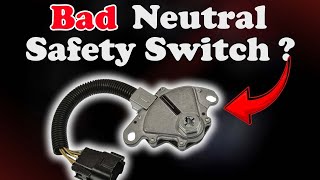
The Powertrain Control Module (PCM) detects an unusually high voltage signal from the Park/Neutral switch (also known as the transmission range sensor). This switch tells the computer which gear is selected. A high voltage reading means the PCM receives incorrect gear data. Consequently, the system refuses to engage the starter because it cannot confirm the transmission is safely in Park or Neutral.
Technical definition: The SAE/OBD-II definition is "Park/Neutral Switch Input Circuit High". The PCM registers a voltage from the Park/Neutral switch exceeding the manufacturer's specified range. Typically, the PCM sees a constant 12-volt or >4.5V signal when it expects a near 0-volt signal to confirm the gear position.
🎬 Watch: Neutral safety switch explained – symptoms, causes, and fixes.Can I Drive With P0852?
Yes, But With Caution. Driving with a P0852 code is a significant gamble. The engine frequently refuses to start, leaving you stranded, or the transmission shifts erratically, creating unsafe driving conditions. Your reverse lights also fail, increasing collision risks when backing up. Diagnose and repair this issue immediately.
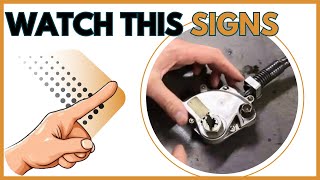
🎬 See why a bad switch can leave you stuck.Common Causes

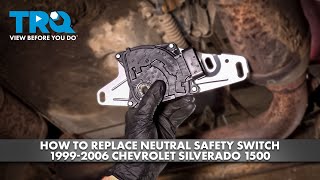
- Misadjusted park/neutral switch (Very Common) — The sensor's alignment is off, sending the wrong signal. This frequently occurs after recent transmission repairs or due to loose retaining bolts. A simple mechanical adjustment resolves it. 🎬 Watch this step-by-step neutral safety switch replacement walkthrough.
- Wiring harness or connector failures (Common) — Damaged wires, corroded connectors, or a short-to-power between the switch and the PCM trigger the 'circuit high' reading. Moisture intrusion at the transmission-mounted connector is the primary culprit.
- Faulty park/neutral switch (transmission range sensor) (Common) — The switch fails internally due to wear, heat, or water damage, sending constant high voltage to the computer.
- Faulty Powertrain Control Module (PCM) or TCM (Rare) — The PCM or TCM suffers a software glitch or hardware failure, misinterpreting the switch signal. This requires a software update or module replacement.
Symptoms

- Engine will not start in Park or Neutral — The vehicle refuses to crank because the computer blocks the starter. It often starts in one gear but not the other.
- Harsh, delayed, or failed shifting — The transmission shifts roughly, hesitates, or locks into 'limp mode' to protect internal components.
- Incorrect or blank gear indicator — The dashboard gear display (P, R, N, D) goes blank, shows the wrong gear, or fails to update when shifting.
- Reverse lights fail to illuminate — The switch cannot confirm the vehicle is in Reverse, preventing the reverse lights from turning on.
- Inability to engage four-wheel drive — Four-wheel drive systems fail to engage because they require accurate gear position data.
- Check Engine Light and disabled cruise control — The Malfunction Indicator Lamp illuminates, and the computer disables cruise control as a safety precaution.
Diagnostic Flowchart

Tap your situation to follow the diagnostic path that matches what you're seeing on this code.
Common Fixes & Costs
- Adjusting the park/neutral switch — Parts: $0, Labor: $80-$150, ~1 hr book time (Intermediate)
- Repairing wiring or cleaning connectors — Parts: $10-$50, Labor: $100-$250, ~1.5 hr book time (Intermediate)
- Replacing the park/neutral switch (transmission range sensor)
— Parts: $40-$150, Labor: $100-$250, ~1.5 hr book time
(DIY)
Subaru WRX (2015-2018): OEM 32008AA181 (Alt: Standard Motor Products NS-631)
Jeep Wrangler (2007-2018): OEM 68089463AA (Alt: Duralast SW6409)
Chevrolet Silverado (2007-2013): OEM 24298931 (Alt: Dorman 924-435) - Updating PCM/ECM Software (Subaru) — Parts: $0, Labor: $100-$200, ~1 hr book time (Professional)
Used vs. New Parts: Buying Guide
When a used part is worth it: Buying a used Park/Neutral Switch rarely makes sense. The part is exposed to heat and moisture, and a new aftermarket part ($40-$70) is affordable enough to avoid the risk of a faulty used unit.
Donor-vehicle mileage cap: roughly under 50000 miles for the part to have meaningful remaining life.
Donor quality checklist:
- Avoid parts from rust-belt states due to connector corrosion.
- Ensure the part number matches exactly.
- Inspect the connector pins for green corrosion or physical damage.
Decision logic:
- If The part is under $100 new → Always buy new. The labor to install a faulty used part negates any savings.
- If The part is an expensive, dealer-only item (> $300) → A used part from a low-mileage vehicle is reasonable, but demand a 90-day warranty.
Warranty tradeoff: Salvage yards offer 30-90 day warranties. New aftermarket parts include 1-year to lifetime warranties.
Worst-case if a used part fails: $250 if a used part fails, requiring repeat labor costs.
What Happens If You Wait — Timeline
- 0-1 month: Intermittent Check Engine Light. No-start condition occurs rarely but resolves by re-shifting. (MPG impact: 0%% · Added cost: $0)
- 1-3 months: Check Engine Light stays on. The car consistently fails to start in Park. Reverse lights stop working. (MPG impact: 0-5%% · Added cost: $150 (Towing if stranded))
- 3-6 months: The PCM triggers 'limp mode'. Shifting becomes harsh, putting mechanical stress on clutches and solenoids. (MPG impact: 5-15%% · Added cost: $1000 (Accelerated wear on transmission components))
- 6+ months: Continued harsh shifting destroys internal transmission components. The vehicle is unsafe to drive. (MPG impact: 10-20%% · Added cost: $3500 (Transmission rebuild))
Cost of Not Fixing It
- Immediate: Vehicle fails to start, leaving you stranded. Reverse lights fail, creating a backing hazard. (Added cost: $150 (Towing))
- 1-3 months: Erratic shifting puts extreme stress on internal transmission clutches and bands. (Added cost: $1000 (Premature transmission wear requiring solenoid replacement))
- 6+ months: Operating in limp mode with incorrect line pressures destroys the transmission. (Added cost: $3500 (Complete transmission rebuild))
Diagnosis Steps
- Verify Code & Live Data
Connect a scan tool and monitor the live data parameter for the Park/Neutral switch. Slowly move the shifter through P, R, N, and D. If the value stays stuck 'High' or 'On' in all positions, the fault is active.
Tools: Advanced OBD-II Scan Tool (Intermediate) - Visual Inspection & Wiggle Test
Inspect the switch (usually on the transmission side) and its wiring. Look for cracked connectors or rubbed wires. While watching live data, wiggle the harness; if the reading flickers, you have a loose connection or broken wire.
Tools: Flashlight, Advanced OBD-II Scan Tool (Beginner) - Check Switch Adjustment
If the vehicle starts in Neutral but not Park, the switch is misadjusted. Follow the service manual to loosen the retaining bolts and align the switch (e.g., using a 4mm pin on Subarus).
Tools: Basic hand tools, Service manual, Alignment pin (Intermediate) - Test Circuit Voltage
Disconnect the switch. With the key on, probe the signal wire at the harness connector. Finding ~12V or >4.5V when it should be ~0V indicates a short to power in the wiring harness.
Tools: Multimeter, Wiring Diagram (Advanced) - Bench Test the Switch
Remove the switch and test its internal continuity in each gear position against the service manual's chart. If it shows infinite resistance when it should be closed, replace the switch.
Tools: Multimeter, Service Manual (Intermediate)
When This Code Triggers (Freeze-Frame Conditions)
- Gear Selector Position: Park or Neutral (Code sets when shifting into or out of Park/Neutral at startup.)
- Vehicle Speed: 0 mph (Detected during the key-on, engine-off self-test or when attempting to start the engine.)
- Engine RPM: 0 or cranking RPM (~200-300) (Indicates the fault was present before the engine was running.)
Related Codes
- P0851 — Park/Neutral Switch Input Circuit Low. The direct opposite of P0852. Diagnosing both together points to a wiring harness shorting to both power and ground.
- P0850 — Park/Neutral Switch Input Circuit Malfunction. A general code set when the fault is intermittent or doesn't meet the specific high/low criteria.
- P0705 — Transmission Range Sensor Circuit Malfunction. Indicates a problem with the entire sensor circuit across all gears, whereas P0852 isolates the Park/Neutral signal.
Climate & Environmental Factors
- Humidity and Moisture: The switch mounts externally on the transmission, making it vulnerable to water intrusion from rain or car washes. Moisture causes internal corrosion, leading to short circuits that trigger P0852.
- Dirt and Contaminants: Road grime and mud accumulate on the switch linkage. This physically impedes movement or contaminates the electrical connector, causing faulty readings.
- Cold Weather: Freezing temperatures exacerbate existing moisture problems, causing mechanical binding inside the switch and making plastic connectors brittle.
How to Talk to a Mechanic About This Code
Say this: "I have a P0852 code and my car sometimes won't start in Park. Please check if the park/neutral switch simply needs an adjustment or if there's a wiring issue before recommending a full replacement."
This signals you know the most common and cheapest fixes for P0852. It directs the technician to perform a proper diagnosis instead of defaulting to an expensive part replacement.
Avoid saying:
- 'My check engine light is on, can you fix it?'
- 'The car won't start, just do whatever it takes.'
- 'I think I need a new neutral safety switch.'
Questions to ask before authorizing the repair:
- Did you check the switch's alignment and test the wiring before concluding the part needs replacement?
- If it needs adjustment, is that included in the diagnostic fee?
- Can you show me the corroded connector or damaged wire that justifies the repair?
Where to Take It: Dealer vs Independent vs Chain
- Dealer:
Necessary for software-related fixes; otherwise, an independent shop is more cost-effective.
Best for: Vehicles under warranty, Known TSBs requiring a software update (e.g., 2015-2018 Subaru WRX).
Downsides: Higher labor rates., May prefer full part replacement over a simple adjustment. (Typical cost: +50% vs. baseline) - Independent Shop:
Best choice for most P0852 scenarios. A good independent shop properly diagnoses adjustments versus part failures.
Best for: Out-of-warranty vehicles., Diagnosing common fixes like switch adjustment or wiring repair.
Downsides: May lack tools for manufacturer-specific software updates. (Typical cost: +0% vs. baseline) - Chain Shop:
Avoid for this code unless you are 100% certain a simple part swap is the fix.
Best for: Simple part replacements if the diagnosis is already certain.
Downsides: Technicians lack diagnostic experience to differentiate between adjustment and component faults., High pressure to sell parts. (Typical cost: -10% vs. baseline)
When to Walk Away From the Repair
If the estimated repair cost for P0852 exceeds 40-50% of your car's value, pause and evaluate. However, since this is a low-to-moderate cost repair, it rarely triggers the 'walk away' threshold on its own.
- Car worth $4500, fix is $250: Fix it. The repair cost is minimal and critical for safety.
- Car worth $3000, fix is $2500: Walk away. A quote this high means P0852 is a symptom of catastrophic transmission failure, not a switch issue.
What Scan Tool You Need for This Code
Minimum: An OBD-II scanner that reads and displays live data streams.
A basic $20 code reader only confirms the P0852 code exists. You need live data to see if the switch's reported position changes as you move the shifter, distinguishing between an adjustment issue and a failed part.
Budget: BlueDriver Pro (~$100) — Connects to your smartphone and graphs live data for the park/neutral switch, confirming its operation in real-time.
Mid-range: Foxwell NT604 Elite (~$170) — Provides live data graphing for the transmission range sensor and scans other modules like ABS and SRS without needing a phone.
Professional: Autel MaxiCOM MK808 (~$500) — Offers full-system diagnostics and bidirectional controls. Overkill for just P0852, but invaluable for serious DIYers.
Rent vs buy: Auto parts stores lend basic scanners for free, but they rarely support live data. Buying a budget pick like the BlueDriver is a better investment than paying a single diagnostic fee at a shop.
How to Clear the Code After You Fix It
- Use an OBD-II scan tool to erase the DTCs.
- Start the engine and verify the Check Engine Light remains off.
- Perform a drive cycle to set the readiness monitors.
Drive cycle (~20 minutes): Cold start and idle for 3 minutes. Drive in stop-and-go traffic with light accelerations. Drive at a steady 55 mph for 10 minutes. Coast from 60 mph to 20 mph without braking.
Readiness monitors affected: Comprehensive Component Monitor
Before emissions retest: drive at least 50 miles to fully set monitors.
Watch out for:
- Clearing codes resets all readiness monitors to 'Not Ready', causing an immediate emissions test failure.
- Disconnecting the battery fails to clear the code from all modules on modern vehicles.
Will This Fail Emissions / State Inspection?
Yes — this code typically fails an OBD-II emissions inspection.
- California: An active P0852 code is an automatic smog check failure. You must complete a drive cycle to set all readiness monitors to 'Ready' before re-testing.
- New York: A P0852 fault causes the vehicle to fail the OBD-II emissions inspection.
- Texas: An illuminated MIL due to P0852 results in an inspection failure in emissions-testing counties.
Most Commonly Affected Vehicles
- Subaru WRX (2015-2018) — Subaru issued TSB 11-174-17R for this code, caused by shifting too fast. An ECM software update is the specified fix.
- Subaru Impreza, Outback, Forester (2005-2023) — Commonly requires 'inhibitor switch' adjustment using a 4mm alignment pin. Recall 23V-755 covers 2021-2023 models for water intrusion.
- Jeep Wrangler, Cherokee (2007-2018) — The transmission range sensor's location makes it highly vulnerable to water and mud during off-roading.
- Chevrolet/GMC Silverado, Sierra (2007-2013) — Mechanical misalignment between the Internal Mode Switch (IMS) and the manual shift shaft causes this DTC without an electrical fault.
- Toyota Prius (2004-2010) — Relates to the momentary 'P' button on the dash, not a traditional range sensor. Diagnosis involves checking specific resistance values at the switch.
- Honda Accord, Pilot (2017-2023) — Common on push-button shifters. Diagnosis requires checking for companion codes like P1708 before testing voltage.
- Ford F-150, Explorer (2011-2017) — Issues stem from the Transmission Range (TR) sensor or the internal 'lead frame'. The external connector frequently fails due to water intrusion.
- Land Rover Range Rover L322 (2002-2012) — Triggers a 'Transmission Failsafe' warning. The neutral sensing switch on the ZF gearbox is a known failure point.
Manufacturer-Specific Notes

- Subaru: On 2015-2018 manual WRXs, shifting too quickly triggers P0852. The fix is an ECM software update (TSB 11-174-17R), not a part replacement. Automatic models require precise switch adjustment using a 4mm pin.
- Chevrolet/GM: Service manuals warn that mechanical misalignment between the internal mode switch (IMS) and the park/neutral switch causes this code. Shift cable adjustment is critical before replacing parts.
- Toyota (Prius): The code refers to the momentary 'P' button on the dash. The ECU detects a fault based on incorrect resistance readings from the switch's internal resistors.
How to Prevent This Code From Triggering
- Clean the switch and connector (Every 30,000 miles) — Rinsing road grime and applying dielectric grease prevents water intrusion and corrosion that causes electrical shorts.
- Inspect shift linkage (Annually) — Worn shifter bushings prevent the switch from fully aligning in each gear, causing the PCM to interpret the ambiguous signal as a fault.
- Come to a complete stop before shifting to Reverse (Daily habit) — Shifting while moving stresses the manual shift shaft, accelerating wear on the sensor's internal contacts.
Frequently Asked Questions
What is the most common mistake when diagnosing a P0852 code?
Replacing the switch when it only needs adjustment. This happens frequently after transmission repairs disturb the alignment. Always check adjustment first.
Can I still start my car with a P0852 code?
Often, no. The computer disables the starter if it doesn't see a valid Park or Neutral signal. If it starts in Neutral but not Park, the switch is misadjusted.
Where is the park/neutral safety switch located?
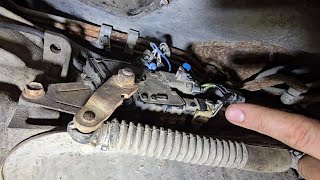
The switch mounts externally on the side of the transmission housing where the shift linkage connects. On some modern vehicles, it integrates into the interior shifter assembly or internal transmission lead frame.
How much does it cost to fix a P0852 code?
A simple adjustment costs $80-$150 in labor. Replacing the switch runs $140-$400 total, while wiring repairs range from $100 to $300.
Is it dangerous to drive with a P0852 code?
Yes. You risk being stranded by a no-start condition, experiencing unpredictable shifting, and driving without reverse lights.
Can I bypass the neutral safety switch to start the car?
Do not bypass the neutral safety switch. This disables a critical safety feature designed to prevent the car from starting in gear and lurching unexpectedly.
Does P0852 always mean the switch is bad?
No. The fault frequently stems from a misadjustment, a corroded connector, or a wiring short. Thorough diagnosis prevents wasting money on unneeded parts.
Key Takeaways
- P0852 triggers when the Powertrain Control Module (PCM) receives a constant high voltage (typically over 4.5V) from the Park/Neutral switch when it expects near 0V.
- Always check for a misadjusted switch first, especially if the vehicle starts in Neutral but not in Park, saving you the $150+ cost of unnecessary parts.
- Do not drive with an active P0852 code; the PCM disables the starter and reverse lights, creating immediate safety and stranding risks.
- On 2015-2018 Subaru WRX manual models, fix this code by requesting a $100-$200 ECM software update (TSB 11-174-17R) rather than replacing hardware.
Helpful Videos

The information in this article is provided for general reference and educational purposes only. Vehicle specifications, procedures, and part compatibility can vary by production date, trim level, and region. Always consult your vehicle's factory service manual and verify part numbers before purchasing or performing repairs. Safety-critical components such as airbags, seat belts, and braking systems should be installed by a qualified professional.
- 🎬 Helpful Videos
- What Does P0852 Mean?
- Can I Drive With P0852?
- Common Causes
- Symptoms
- Diagnostic Flowchart
- Common Fixes & Costs
- Used vs. New Parts: Buying Guide
- What Happens If You Wait — Timeline
- Cost of Not Fixing It
- Diagnosis Steps
- When This Code Triggers (Freeze-Frame Conditions)
- Related Codes
- Climate & Environmental Factors
- How to Talk to a Mechanic About This Code
- Where to Take It: Dealer vs Independent vs Chain
- When to Walk Away From the Repair
- What Scan Tool You Need for This Code
- How to Clear the Code After You Fix It
- Will This Fail Emissions / State Inspection?
- Most Commonly Affected Vehicles
- Manufacturer-Specific Notes
- How to Prevent This Code From Triggering
- Frequently Asked Questions
- What is the most common mistake when diagnosing a P0852 code?
- Can I still start my car with a P0852 code?
- Where is the park/neutral safety switch located?
- How much does it cost to fix a P0852 code?
- Is it dangerous to drive with a P0852 code?
- Can I bypass the neutral safety switch to start the car?
- Does P0852 always mean the switch is bad?
- Key Takeaways
- 🎟️ Get 5% Off