

OBD-II Code P0851: Park/Neutral Switch Input Circuit Low
The Ultimate 2026 Guide: What P0851 Means, Why It Triggers, and How to Fix It
- Code P0851 triggers when the Powertrain Control Module (PCM) detects less than 0.5 volts on the Park/Neutral switch circuit, preventing the starter from engaging.
- Always check the switch alignment first; a misadjusted switch causes over 50% of P0851 codes, especially after recent transmission repairs.
- Diagnose the exact failure point by watching the Transmission Range Sensor live data on an OBD-II scanner while moving the shifter through all 5 gear positions.
- Do not drive more than 50 miles with an active P0851 code, as the resulting harsh shifting fail-safe mode causes permanent damage to internal transmission clutch packs.
What Does P0851 Mean?

Your car's Powertrain Control Module (PCM) detects a voltage signal from the Park/Neutral switch that is lower than the manufacturer's specified threshold (typically under 0.5V). This switch tells the computer when the transmission is in Park or Neutral. This signal is critical for safely starting the engine and engaging the correct gears. A 'low' circuit code points directly to a short to ground, a misaligned switch, or a failed sensor.
🎬 Watch: This Subaru P0851 repair shows how to fix the sensor.Technical definition: The SAE/OBD-II definition is "Park/Neutral Switch Input Circuit Low." The PCM has detected that the voltage from the park/neutral switch input circuit dropped below its calibrated minimum for a specified period. The PCM continuously monitors this circuit's voltage and compares it against expected values based on vehicle speed and shifter position.
Can I Drive With P0851?
Yes, But With Caution. You can drive, but it risks leaving you stranded. The vehicle will likely not restart after being put in Park. Continued driving with harsh shifting accelerates wear on transmission components, turning a $200 sensor fix into a $2,000 transmission repair. Diagnose the issue within 50 miles.
Common Causes

- Misadjusted Park/Neutral Switch (Very Common) — This is the most frequent cause, especially after recent transmission or shifter cable repairs. If the switch is not perfectly aligned, or if its retaining bolts vibrate loose, it sends incorrect voltage signals to the PCM.
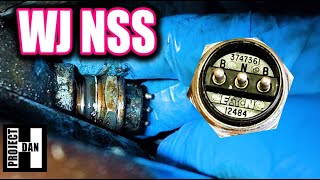
- Faulty Park/Neutral Switch (Neutral Safety Switch) (Common) — The switch fails internally from mechanical wear, electrical breakdown, or fluid intrusion. 🎬 See this walkthrough for replacing a Jeep neutral safety switch. This creates an internal short or high resistance, pulling the signal voltage below the required threshold.
- Damaged Wiring or Connectors (Common) — Exposed wiring harnesses under the vehicle chafe against the chassis, shorting the signal wire directly to ground. Connectors also suffer from pushed-out pins or green copper corrosion from road salt and fluid leaks.
- Improperly Installed Aftermarket Accessories (Less Common) — Aftermarket remote starters or alarm systems splice directly into the starter and neutral safety circuits. A poor splice or improper ground pulls the circuit voltage down, triggering the code.
- Low Battery Voltage or Charging System Issues (Less Common) — A weak battery or failing alternator drops the overall system voltage. This system-wide drop pulls the switch circuit's voltage below the PCM's minimum threshold, triggering a false sensor code.
- Faulty Powertrain Control Module (PCM) (Rare) — The internal circuit driver responsible for interpreting the switch's signal fails. This requires replacing or reprogramming the PCM and is only diagnosed after exhaustively ruling out the switch and wiring.
Symptoms

- Engine will not start in Park (Starts in Neutral) — The computer does not receive the 'safe' signal from Park, preventing the starter from engaging. Shifting to Neutral often bypasses the faulty Park contact.
- Incorrect gear indicator on the dashboard — The PRNDL display on the dash goes blank, flashes, or shows a gear that does not match the physical position of the shifter.
- Harsh or Erratic Shifting — The transmission shifts roughly, delays engagement, or hunts for gears because the PCM lacks accurate gear selector position data.
- 4WD and Cruise Control Disabled — The vehicle disables four-wheel drive and cruise control as a safety fail-safe because it cannot verify the transmission's current gear state.
- Check Engine Light is on — The PCM commands the Malfunction Indicator Lamp (MIL) to illuminate immediately after detecting the low voltage fault for a set duration.
Diagnostic Flowchart

Tap your situation to follow the diagnostic path that matches what you're seeing on this code.
Common Fixes & Costs
- Adjusting the Park/Neutral Switch — Parts: $0, Labor: $100-$200, ~1 hr book time (Intermediate)
- Replacing the Park/Neutral Switch
— Parts: $40-$250, Labor: $125-$250, ~1.5 hr book time
(Intermediate)
: OEM
: OEM
: OEM - Repairing Damaged Wiring or Connectors — Parts: $10-$50, Labor: $150-$300, ~2 hr book time (Advanced)
- Professional Diagnosis — Parts: $0, Labor: $150-$200, ~1 hr book time (Professional)
- PCM Reprogramming or Replacement — Parts: $300-$1000, Labor: $150-$300, ~1.5 hr book time (Professional)
Used vs. New Parts: Buying Guide
When a used part is worth it: Buying a used Park/Neutral Switch is rarely recommended. The minimal savings do not justify the risk of the used electronic part failing immediately. Only buy used if the vehicle is 15+ years old and new parts are discontinued.
Donor-vehicle mileage cap: roughly under 60000 miles for the part to have meaningful remaining life.
Donor quality checklist:
- Verify the part number matches exactly.
- Inspect the connector pins for any signs of green corrosion.
- Avoid parts from vehicles in salt-belt regions.
Decision logic:
- If New aftermarket part is available for under $100 → Buy new. The warranty outweighs the small savings.
- If The part is known for high failure rates → Always buy new, as a used part is a guaranteed gamble.
Warranty tradeoff: Salvage yard parts carry a 30-day warranty covering only the part. New aftermarket parts carry a 1-year to lifetime warranty.
Worst-case if a used part fails: $250-$500 if a used part fails, due to paying labor costs twice.
What Happens If You Wait — Timeline
- 0-2 weeks: Code sets, MIL is on. Vehicle fails to start in Park, requiring a shift to Neutral. No major performance issues. (MPG impact: 0%% · Added cost: $0-$150 (Potential tow if stranded))
- 2 weeks - 3 months: PCM triggers harsh or delayed shifts as a fail-safe. 4WD and cruise control are disabled. Fuel economy drops slightly. (MPG impact: 3-5%% · Added cost: $50 in wasted fuel.)
- 3-6 months: Continued harsh shifting causes accelerated wear on internal transmission clutch packs and bands. Engine mounts stress and crack. (MPG impact: 5-10%% · Added cost: $500-$2,000 (Cost to repair internal transmission damage).)
- 6+ months: The short-to-ground in the wiring harness overheats the signal circuit driver inside the PCM, causing permanent computer failure. (MPG impact: 10%+% · Added cost: $1,500-$3,000 (Cost for PCM replacement and programming).)
Cost of Not Fixing It
- Immediate: Being stranded. The vehicle fails to start in Park or Neutral, requiring a tow. (Added cost: $100-$300 (for towing))
- 1-3 months: Accelerated transmission wear. Continued driving with harsh shifting destroys internal clutches and bands. (Added cost: $500-$2000 (for internal transmission repairs))
- 3+ months: Progressive electrical damage. An unfixed short-to-ground destroys the driver circuit within the PCM. (Added cost: $800-$2500 (for PCM replacement and programming))
Diagnosis Steps
- Verify the Code and Freeze Frame Data
Connect an OBD-II scanner. Confirm P0851 is active. Document freeze frame data to see the vehicle's speed and gear state when the code triggered. Clear the code to see if it immediately returns.
Tools: OBD-II Scanner (Beginner) - [PRO TIP] Analyze Live Data
Access the scanner's live data for the Transmission Range Sensor or Park/Neutral Switch PID. Slowly move the shifter through P, R, N, D, L. The reading must change cleanly for each position. If it reads 'In Gear' while physically in Park, the switch or circuit is faulty.
Tools: Advanced OBD-II Scanner (with Live Data) (Intermediate) - Thorough Visual Inspection
Inspect the switch on the side of the transmission. Look for frayed wires, chafing against the metal frame, transmission fluid leaks contaminating the housing, and green corrosion inside the electrical connector.
Tools: Flashlight (Beginner) - Check Switch Adjustment
Place the shifter in Neutral. Loosen the switch's mounting bolts and align the specific alignment marks on the switch and transmission housing according to the factory service manual. Retighten the bolts to spec.
Tools: Basic hand tools, Service Manual (Intermediate) - [PRO TIP] Perform a 'Wiggle Test'
With the engine running and the scanner displaying live switch data, systematically wiggle the wiring harness from the transmission to the PCM. If the scanner reading flickers or drops out, you have pinpointed the exact location of the short or break.
Tools: Advanced OBD-II Scanner (Advanced) - Test Switch Internal Continuity
Unplug the switch. Set a multimeter to Ohms. Probe the Park/Neutral pins on the switch itself while an assistant moves the shifter. You must see near 0 ohms (continuity) in Park/Neutral, and 'OL' (open loop) in all other gears. High resistance means a dead switch.
Tools: Multimeter, Service Manual (Advanced) - Test Circuit Voltage and Ground
Turn the key ON (engine off). Probe the harness connector's reference wire to ensure the PCM is sending 5V or 12V. Next, check the signal wire for continuity to a chassis ground. Continuity to ground on the signal wire confirms a short in the harness.
Tools: Multimeter, Wiring Diagram (Advanced)
When This Code Triggers (Freeze-Frame Conditions)
- Vehicle Speed: > 0 mph (The code often sets when the vehicle is in motion.)
- Gear Selector: Drive or Reverse (The PCM expects a high voltage signal when in gear, but sees a low voltage, triggering the fault.)
- System Voltage: 13.5-14.5V (The fault is usually recorded when the charging system is operating normally, ruling out low battery voltage.)
Related Codes
- P0850 — A general fault for the Park/Neutral Switch Input Circuit. P0851 is more specific, indicating the voltage is too low (short to ground).
- P0852 — The exact opposite of P0851, indicating 'Circuit High.' P0852 suggests an open circuit or a short to a voltage source, rather than a short to ground.
- P0705 — Indicates a fault in the broader Transmission Range Sensor Circuit. If present with P0851, the entire sensor assembly has likely failed.
Climate & Environmental Factors
- High Humidity / Salt Belt Regions: Salt and moisture wick into the switch's external connector, causing short circuits or high resistance that directly trigger a P0851 code. The switch itself fails internally from moisture intrusion.
- Extreme Cold Weather: Wiring harnesses become brittle and crack. Older switches with internal grease experience thickening, leading to sluggish mechanical action and poor electrical contact.
How to Talk to a Mechanic About This Code
Say this: "I have a P0851 code. My primary symptom is [the car won't start in Park, but does in Neutral / the transmission is shifting harshly]. I need a diagnostic to determine if the cause is the park/neutral switch, its adjustment, or a wiring short."
This proves you researched the issue. It focuses the technician on the three most likely causes and prevents an expensive, unnecessary diagnostic fishing expedition.
Avoid saying:
- 'My check engine light is on, can you look at it?'
- 'My car is acting weird, just fix whatever is wrong.'
- 'I think I need a new transmission.'
Questions to ask before authorizing the repair:
- Did you check the switch's adjustment first?
- If the switch needs replacement, does the estimate include the labor for the factory alignment procedure?
- If you found a wiring issue, can you show me the damaged section of the harness?
Where to Take It: Dealer vs Independent vs Chain
- Dealer:
A safe but expensive choice. Recommended only if the vehicle is under warranty or requires specialized OEM software.
Best for: Vehicles under powertrain warranty., Newer vehicles (under 5 years old) requiring manufacturer-specific software (e.g., Honda HDS)., Cases with active Technical Service Bulletins (TSBs) or recalls.
Downsides: Highest labor rates., Often default to replacing the entire switch assembly rather than performing a simple adjustment. (Typical cost: +50% vs. baseline) - Independent Shop:
Best fit for most situations. A competent independent mechanic diagnoses and repairs P0851 effectively at a much lower cost than a dealer.
Best for: Most out-of-warranty vehicles., Diagnosing common causes like faulty switches, bad wiring, or incorrect adjustments.
Downsides: Diagnostic skill varies. You must vet the shop for strong electrical diagnostic reviews. (Typical cost: +0% vs. baseline) - Chain Shop:
AVOID. The risk of misdiagnosis is high, and you will likely pay for parts that do not fix the root cause.
Best for: Routine maintenance like oil changes or tires only.
Downsides: Technicians lack in-depth electrical diagnostic training., High pressure to sell parts leads to unnecessary switch replacements when a wire is frayed. (Typical cost: -10% vs. baseline)
When to Walk Away From the Repair
If the estimated repair cost exceeds 50% of the car's current private-party value, sell or trade in the vehicle instead of repairing it.
- Car worth $4000, fix is $350: Fix it. This repair is well below the 50% threshold and restores a critical starting function.
- Car worth $3000, fix is $1800: Walk away. The repair cost is 60% of the car's value. Put this money toward a down payment on a reliable vehicle.
What Scan Tool You Need for This Code
Minimum: OBD-II scanner with Live Data functionality to view transmission-related PIDs.
A basic $20 code reader cannot display live data. You must see if the switch's status changes as you move the gear shifter to determine if the switch, wiring, or adjustment is the problem.
Budget: BlueDriver Pro Scan Tool (~$100) — Connects via Bluetooth to display live data for the transmission range sensor, allowing you to perform a wiggle test on the wiring harness.
Mid-range: Foxwell NT510 Elite (~$180) — Provides manufacturer-specific live data and bi-directional controls to command specific components during advanced diagnostics.
Professional: Autel MaxiCOM MK808 (~$500-1200) — Offers full OEM-level diagnostics and topology mapping to visualize module communication, essential for diagnosing complex PCM faults.
Rent vs buy: For a one-time diagnosis, use a 'Loan-A-Tool' program at an auto parts store. You pay a deposit, use the scanner, and get a full refund upon return.
How to Clear the Code After You Fix It
- Use an OBD-II scan tool to clear the diagnostic trouble codes (DTCs).
- Perform a specific drive cycle to allow the vehicle's readiness monitors to run.
- Rescan the vehicle to ensure the P0851 code does not return.
Drive cycle (~20 minutes): 1. Cold start (sit for 8+ hours). 2. Idle for 3 minutes. 3. Drive a mix of city and highway speeds (steady 55 mph for 5 minutes). 4. Allow the vehicle to cool down.
Readiness monitors affected: Comprehensive Component Monitor, Transmission
Before emissions retest: drive at least 50 miles to fully set monitors.
Watch out for:
- Disconnecting the battery clears the code but resets all readiness monitors, causing an automatic emissions test failure.
- If the underlying short-to-ground is not fixed, the code returns immediately upon shifting gears.
Will This Fail Emissions / State Inspection?
Yes — this code typically fails an OBD-II emissions inspection.
- California: An illuminated Check Engine Light from P0851 is an automatic smog check failure. The vehicle must complete a drive cycle after repair.
- New York: The NYS DMV inspection includes an OBD-II scan. P0851 causes an automatic emissions failure.
- Texas: In the 17 counties requiring emissions testing, an active P0851 code results in an automatic test failure.
Most Commonly Affected Vehicles
- Subaru Outback, Forester, Impreza, WRX (2005-2023) — Extremely common. TSB 16-68-06 provides a specific adjustment procedure. A recall (NHTSA 23V-755) covers 2021-2023 models for water intrusion into the inhibitor switch.
- Nissan Frontier, Xterra, Pathfinder (2005-2015) — Caused by a faulty transmission range sensor or corrosion in the main harness connector due to internal circuit board failure.
- Jeep Grand Cherokee, Wrangler (2007-2018) — The transmission range sensor frequently fails, leading to a no-start condition. Replacement is the standard fix.
- Ford F-150, Explorer, Edge (2004-2018) — Issues with the Digital Transmission Range (DTR) sensor or its wiring are common. TSB 18-2274 addresses harsh shifting with a PCM reprogram on newer models.
- Honda Accord, Civic, CR-V (2016-2023) — Points to a low voltage issue in the neutral position sensor circuit. Diagnosis requires the Honda Diagnostic System (HDS) to verify the 5.0V reference signal.
Manufacturer-Specific Notes
- Subaru: TSB 16-68-06 provides a mandatory adjustment procedure for the inhibitor switch that must be performed before replacing parts. This code is also common on manual transmissions (neutral position switch).
- Honda: Diagnosis on 2016+ models requires the Honda Diagnostic System (HDS) to monitor the exact voltage of the neutral position sensor, which must sit near 5.0V.
- Toyota: The PNP switch has a specific 'Neutral Line' alignment mark. On hybrids like the Prius, the system uses a momentary 'P' button requiring resistance measurement, not simple continuity.
Real Owner Stories
2012 Subaru Outback with P0851, No-Start in Park
Vehicle would not crank in Park, but started reliably when shifted to Neutral. Check Engine Light was on.
What they tried:
- Suspected a bad starter, but the Neutral start pointed to the safety switch circuit.
- Took the vehicle to an independent shop.
Outcome: The shop found a misadjusted inhibitor switch. The mechanic performed the alignment procedure outlined in Subaru TSB 16-68-06, resolving the no-start condition without replacing any parts.
Lesson: For a 'starts in Neutral but not Park' symptom, always check switch adjustment via manufacturer TSBs before buying a $150 replacement part.
2009 Nissan Frontier with P0851 and Harsh Shifting
Truck developed harsh, jerky shifting, slamming into gear. Check Engine Light illuminated.
What they tried:
- Feared a catastrophic transmission failure.
- Scanned the vehicle and found code P0851.
Outcome: The transmission range sensor's internal electronics failed, sending erratic signals to the TCM. Replacing the sensor for $350 total restored normal shifting.
Lesson: A faulty $150 sensor perfectly mimics a failing $3,000 transmission. Always scan codes before assuming the worst.
2018 Jeep Grand Cherokee with P0851, No-Start, No Codes
Vehicle would not start, and the dash gear indicator was blank. No Check Engine Light initially.
What they tried:
- Wiggled the shifter to no avail.
- Towed to the dealership.
Outcome: Dealership found a stored P0851. Mice chewed through the wiring harness leading to the transmission range sensor, causing a short to ground. Repair cost $400 for labor-intensive wire tracing and splicing.
Lesson: Inspect wiring harnesses for rodent damage if you park outdoors, especially when dealing with sudden, catastrophic electrical faults.
How to Prevent This Code From Triggering
- Apply Dielectric Grease to Connectors (Anytime a connector is disconnected) — Dielectric grease seals out moisture, road salt, and dirt from the electrical pins, preventing the corrosion and short circuits that cause P0851.
- Address Fluid Leaks Promptly (As soon as a leak is noticed) — Engine oil and transmission fluid degrade the plastic housings and rubber seals of electrical connectors, causing internal switch failure.
- Ensure Proper Adjustment After Service (After any transmission or shifter cable service) — A misaligned switch is the most common cause of P0851. Mechanics must verify alignment as the final step of any related repair.
Frequently Asked Questions
What is the most common mistake when diagnosing P0851?
The most common mistake is replacing the Park/Neutral switch without checking its adjustment first. A simple readjustment often solves the problem. Failing to inspect the wiring harness for hidden shorts is the second biggest error.
My P0851 code is intermittent. What causes this?
Intermittent faults are almost always caused by wiring or connection issues. A fraying wire that shorts to ground during engine vibration, or a loose connector pin, are prime suspects. Perform a 'wiggle test' to find the exact break.
Can a bad battery cause a P0851 code?
Yes. A failing battery or alternator drops the overall system voltage, pulling the switch circuit's voltage below the PCM's minimum threshold and triggering the code.
Can I still drive my car with a P0851 code?
You can, but you risk being stranded if the car refuses to start in Park. Continued driving also causes harsh shifting that damages internal transmission components.
Is a P0851 code serious?
It is moderately serious. While it won't cause immediate engine explosion, the inability to start the vehicle is a major hazard. Erratic shifting also creates unsafe driving conditions in traffic.
What's the difference between a Park/Neutral Switch and a Neutral Safety Switch?
They are often the same component. 'Neutral Safety Switch' refers to preventing the engine from starting in gear, while 'Park/Neutral Switch' broadly reports all gear positions to the computer.
How much does it cost to fix a P0851 code?
A simple switch adjustment costs $100-$200 in labor. Replacing the switch ranges from $165 to $500 for parts and labor. Wiring repairs or professional diagnostics typically add $150 to $300.
Where is the Park/Neutral switch located?
It is mounted on the exterior of the transmission housing where the gear shift linkage connects. On front-wheel-drive cars, it is on top; on rear-wheel-drive cars, it is on the side.
Key Takeaways
- Code P0851 triggers when the Powertrain Control Module (PCM) detects less than 0.5 volts on the Park/Neutral switch circuit, preventing the starter from engaging.
- Always check the switch alignment first; a misadjusted switch causes over 50% of P0851 codes, especially after recent transmission repairs.
- Diagnose the exact failure point by watching the Transmission Range Sensor live data on an OBD-II scanner while moving the shifter through all 5 gear positions.
- Do not drive more than 50 miles with an active P0851 code, as the resulting harsh shifting fail-safe mode causes permanent damage to internal transmission clutch packs.
Helpful Videos


The information in this article is provided for general reference and educational purposes only. Vehicle specifications, procedures, and part compatibility can vary by production date, trim level, and region. Always consult your vehicle's factory service manual and verify part numbers before purchasing or performing repairs. Safety-critical components such as airbags, seat belts, and braking systems should be installed by a qualified professional.
- 🎬 Helpful Videos
- What Does P0851 Mean?
- Can I Drive With P0851?
- Common Causes
- Symptoms
- Diagnostic Flowchart
- Common Fixes & Costs
- Used vs. New Parts: Buying Guide
- What Happens If You Wait — Timeline
- Cost of Not Fixing It
- Diagnosis Steps
- When This Code Triggers (Freeze-Frame Conditions)
- Related Codes
- Climate & Environmental Factors
- How to Talk to a Mechanic About This Code
- Where to Take It: Dealer vs Independent vs Chain
- When to Walk Away From the Repair
- What Scan Tool You Need for This Code
- How to Clear the Code After You Fix It
- Will This Fail Emissions / State Inspection?
- Most Commonly Affected Vehicles
- Manufacturer-Specific Notes
- Real Owner Stories
- 2012 Subaru Outback with P0851, No-Start in Park
- 2009 Nissan Frontier with P0851 and Harsh Shifting
- 2018 Jeep Grand Cherokee with P0851, No-Start, No Codes
- How to Prevent This Code From Triggering
- Frequently Asked Questions
- What is the most common mistake when diagnosing P0851?
- My P0851 code is intermittent. What causes this?
- Can a bad battery cause a P0851 code?
- Can I still drive my car with a P0851 code?
- Is a P0851 code serious?
- What's the difference between a Park/Neutral Switch and a Neutral Safety Switch?
- How much does it cost to fix a P0851 code?
- Where is the Park/Neutral switch located?
- Key Takeaways
- 🎟️ Get 5% Off