

OBD-II Code P0850: Park/Neutral Switch Input Circuit Malfunction
The Ultimate Expert Guide to Diagnosing and Fixing P0850
- A faulty or misadjusted Park/Neutral switch (Transmission Range Sensor) causes over 80% of P0850 codes.
- An engine that refuses to crank in Park but starts immediately in Neutral is the definitive symptom of a P0850 failure.
- Verify switch alignment and test the wiring harness for a 5V reference voltage before spending $150+ on a replacement sensor.
- Ignoring this code risks a sudden no-start stranding you, or forces the transmission into a harsh-shifting limp mode that accelerates internal wear.
What Does P0850 Mean?

The Powertrain Control Module (PCM) is not receiving a valid signal from the Park/Neutral switch. This switch, also known as a transmission range sensor, is a critical safety device that verifies the car is safely in Park or Neutral before allowing the engine to start. When this signal is illogical, intermittent, or conflicts with vehicle speed data (e.g., the switch reads 'Park' while the car moves at 50 MPH), the PCM logs code P0850.
Technical definition: The SAE/OBD-II definition is "Park / Neutral Switch Input Circuit." The PCM detected an abnormal voltage reading—or a complete lack of signal—from the Park/Neutral switch input circuit. The PCM continuously cross-references this signal with vehicle speed and engine RPM. If the input is irrational, it flags the circuit as malfunctioning and stores the P0850 fault code.
Can I Drive With P0850?
Yes, But With Caution. You can drive, but it is a significant gamble. The immediate risk is being stranded if the engine refuses to start. Continuing to drive causes unpredictable shifting, placing stress on the transmission and potentially causing internal damage that adds thousands to the repair bill. In rare cases, a short circuit bypasses the safety lock, allowing the vehicle to start in gear and move unexpectedly. Address this code immediately.
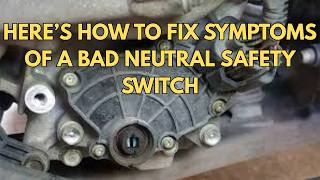
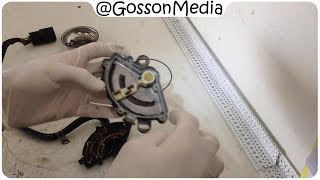
🎬 Watch: Common symptoms and fixes for a bad neutral safety switchCommon Causes

- Faulty or misadjusted Park/Neutral Switch (Transmission Range Sensor) (Very Common) — This is the primary cause. The switch fails from internal wear or gets knocked out of alignment, sending the wrong gear position signal. A previous repair involving the switch is a frequent reason for misadjustment.
- Damaged wiring, corroded connectors, or bad grounds (Common) — The wiring harness is exposed to the elements. Wires become brittle, frayed, or shorted. Connectors fill with water and corrode, and loose ground wires create intermittent electrical drops that trigger the code.
- Malfunctioning or misaligned shift linkage (Less Common) — The mechanical linkage between the shifter and transmission becomes loose or bent. This creates a mismatch where the shifter is in 'Park', but the transmission and sensor are not fully engaged.
- Spilled liquids into the center console shifter (Less Common) — For vehicles with the range sensor integrated into the center console shifter assembly, spilled liquids seep into the electronics and cause immediate short circuits.
- Interference from aftermarket accessories (Rare) — A poorly installed remote starter or security system interferes with the Park/Neutral switch circuit, introducing voltage irregularities the PCM detects as a fault.
- Faulty Powertrain Control Module (PCM) (Very Rare) — The computer itself fails, but this is only considered after exhaustively ruling out the switch, linkage, and wiring.
Symptoms

- Engine will not start or starts intermittently — The car does not crank in Park but starts in Neutral, or does not crank at all. The PCM's safety protocol prevents the starter from engaging without a clear 'Park' or 'Neutral' signal.
- Check Engine Light is on — The PCM illuminates the Malfunction Indicator Lamp (MIL) immediately upon detecting the circuit malfunction.
- Harsh shifting or stuck in 'limp mode' — The transmission slams into gear, delays shifts, or defaults to a single gear (often 2nd or 3rd) to protect itself. The dash gear indicator is blank or incorrect.
- Reverse lights do not work — The transmission range sensor activates the reverse lights. If the sensor fails, the reverse lights do not turn on, creating a safety hazard.
- Cruise control is inoperative — Cruise control automatically disables when the PCM is uncertain of the gear position.
- Inability to engage four-wheel drive (4WD) — On 4WD vehicles, the system requires a signal confirming the transmission is in Neutral before allowing a shift into 4WD Low.
- Reduced fuel efficiency — The PCM adopts a less efficient engine and transmission strategy when unsure of the gear, noticeably decreasing gas mileage.
Diagnostic Flowchart
Tap your situation to follow the diagnostic path that matches what you're seeing on this code.
Common Fixes & Costs
- Replace the Park/Neutral Safety Switch (Transmission Range Sensor)
— Parts: $50-$150, Labor: $120-$300, ~1.5 hr book time
(Intermediate)
: OEM
: OEM
: OEM - Adjust the Park/Neutral Safety Switch or Shift Linkage — Parts: $0, Labor: $80-$160, ~0.8 hr book time (DIY)
- Repair Damaged Wiring or Clean Corroded Connectors — Parts: $10-$50, Labor: $100-$250, ~2 hr book time (Intermediate)
- Replace the entire Shifter Assembly (if switch is internal) — Parts: $250-$900, Labor: $150-$300, ~2.5 hr book time (Professional)
Used vs. New Parts: Buying Guide
When a used part is worth it: For a simple external Transmission Range Sensor, buying used is rarely worth the minimal savings. A used part makes sense for a complete shifter assembly, which costs $500+ new.
Donor-vehicle mileage cap: roughly under 60000 miles for the part to have meaningful remaining life.
Donor quality checklist:
- Verify the part number matches exactly.
- Inspect electrical connector pins for corrosion.
- For a shifter assembly, check for smooth mechanical movement and no signs of spilled liquids.
Decision logic:
- If The part is just the external sensor (under $150 new) → Always buy new. The labor to replace it outweighs the small savings on a used part.
- If The required part is a complete shifter assembly (over $500 new) and your vehicle is older → A used assembly from a low-mileage, accident-damaged vehicle is a reasonable choice.
- If The part is for a Subaru or other make with a very high failure rate for this specific component → Buy a new OEM or updated aftermarket part to avoid a repeat failure.
Warranty tradeoff: Used parts typically have a 30-90 day warranty. New aftermarket parts carry a 1-year to limited lifetime warranty. An OEM part provides the best guarantee of fit.
Worst-case if a used part fails: $250-$500 (Paying labor to replace a failed used part a second time).
What Happens If You Wait — Timeline
- 0-4 weeks: Code appears, Check Engine Light is on. The car starts intermittently in Park, requiring a jiggle of the shifter or a shift to Neutral. No other major symptoms. (MPG impact: 0%% · Added cost: $0)
- 1-3 months: The no-start in Park happens almost every time. Reverse lights stop working. Occasional harsh shift or hesitation from a stop occurs. (MPG impact: 0-5%% · Added cost: $75-$250 (Risk of needing a tow if the car refuses to start in Neutral).)
- 3-6 months: The switch fails completely. The car refuses to start in Park or Neutral, leaving the driver stranded. The transmission enters 'limp mode,' stuck in a single gear. (MPG impact: 10-25% (if in limp mode)% · Added cost: $250-$500 (Tow truck and diagnostic fees).)
- 6+ months: Continued driving with erratic signals increases stress on internal transmission components. Constant harsh shifting accelerates wear on clutches and solenoids. (MPG impact: 15-30%% · Added cost: $2000-$5000+ (Internal transmission failure requiring a rebuild or replacement).)
Cost of Not Fixing It
- Immediate: Being stranded. The immediate risk is the engine refusing to start, leaving you stuck without warning. (Added cost: $75-$250 (for a tow truck).)
- Weeks to Months: Progressive transmission wear. Incorrect gear data results in harsh shifting, delayed engagement, and increased stress on internal transmission components. (Added cost: $2000-$5000+ (if internal transmission damage occurs).)
- Long-Term: Safety hazard. A failed switch prevents reverse lights from working, and a shorted switch allows the vehicle to start in gear. (Added cost: Varies (Potential accident liability).)
Diagnosis Steps

- Test Basic Starting Functionality
Attempt to start the engine in both Park and Neutral. If it starts in one but not the other, the switch is faulty or misadjusted. Wiggle the gear shifter while turning the key; finding a 'sweet spot' points to a loose linkage or worn switch.
Tools: None (Beginner) - Read the Code and Analyze Freeze Frame Data
Connect an OBD-II scanner and confirm P0850. Analyze freeze frame data to see exact conditions (vehicle speed, gear position) when the fault triggered. Note accompanying codes like P0705, P0851, or P0852.
Tools: OBD-II Scanner (Beginner) - Perform a Comprehensive Visual Inspection
Locate the Park/Neutral switch on the transmission. Inspect the wiring harness for chafing, melting, or rodent damage. Check the connector for corrosion, pushed-out pins, or a loose fit.
Tools: Flashlight, Safety Glasses (Beginner) - PRO TIP: Monitor Live Data with a Scan Tool
Access the live data stream for the Transmission Range Sensor. Slowly move the shifter through each gear (P, R, N, D) and watch the data PID. The reading must change instantly and logically. Flickering or incorrect readings indicate a sensor or wiring problem.
Tools: Advanced OBD-II Scanner (Intermediate) - Check Switch Adjustment
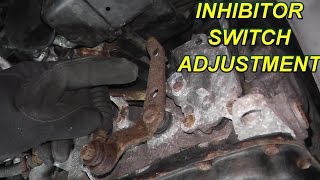
Consult a repair manual to verify proper alignment. The procedure usually involves putting the transmission in Neutral and aligning marks on the switch and transmission case. A simple adjustment often solves the problem.
Tools: Repair Manual, Basic Hand Tools (Intermediate) - PRO TIP: Perform a Harness Wiggle Test
With the key on and engine off, watch the live sensor data on a scan tool. Physically wiggle and bend the wiring harness between the switch and the firewall. If the reading flickers or drops out, you found an internal wire break or short.
Tools: Advanced OBD-II Scanner, a Helper (Advanced) - Test Circuit Voltage, Ground, and Voltage Drop
Disconnect the switch connector. With the key on, check for the correct reference voltage from the PCM (typically 5V or 12V) and verify a solid ground (less than 0.1V). Perform a voltage drop test by placing the positive lead on the battery and negative on the power pin; readings above 0.5V indicate excessive resistance. Stop DIY and tow to a shop if the wiring harness requires complete replacement.
Tools: Digital Multimeter, Repair Manual (Advanced) - Test the Switch Internally for Resistance
With the switch disconnected, use a multimeter set to Ohms (Ω) to test resistance between the pins for the Park and Neutral circuits as you move the shift lever. A closed circuit must have less than 1 ohm. An open circuit must show 'OL'. Any deviation indicates a failed switch.
Tools: Digital Multimeter, Repair Manual (Advanced)
When This Code Triggers (Freeze-Frame Conditions)
- Vehicle Speed: > 15 MPH (The code sets when the PCM sees a 'Park' or 'Neutral' signal while the vehicle is clearly in motion.)
- Gear Selector Position: Drive or Reverse (The fault logs when the physical gear selector is in a drive gear, but the P/N switch circuit sends a conflicting signal.)
- Engine RPM: 1200-2500 RPM (Occurs during steady driving, not necessarily during a shift event.)
- Time Since Engine Start: Varies (The fault logs immediately on startup if the signal is missing, or during a drive cycle if the signal becomes irrational.)
Related Codes
- P0705 — A broader code indicating a problem with the sensor circuit as a whole (e.g., signals for two gears at once). Seeing both strongly points to a faulty range sensor.
- P0851 — Indicates the PCM sees a constant low voltage (near 0V). Points to a short to ground in the signal wire or an internally shorted switch.
- P0852 — Indicates the PCM sees a constant high voltage (5V or 12V). Points to an open circuit (broken wire, unplugged connector) or a short to power.
- P0707 — A sibling to P0851 that applies to any gear position. If present with P0850, it confirms the issue is a low voltage signal from the range sensor.
Climate & Environmental Factors
- High Humidity / Heavy Rain: Moisture penetrates non-sealed connectors or damaged wire insulation, causing corrosion and short circuits. This increases resistance, causing intermittent voltage signals that trigger P0850.
- Cold Climates / Road Salt (Rust Belt): Road salt accelerates the degradation of wiring harnesses, connector pins, and the switch housing. This corrosion is a primary cause of poor electrical connections.
- Extreme Cold: Plastic and rubber components like wire insulation and connector seals become brittle and crack, creating entry points for moisture. Mechanical parts of the switch become stiff, leading to intermittent signal issues.
How to Talk to a Mechanic About This Code
Say this: "I have a P0850 code and the car intermittently fails to start in Park, but starts in Neutral. I need a diagnostic. Please check the switch alignment and test the wiring circuit with a scan tool's live data before recommending a part replacement."
This language shows you have done your research. It specifically mentions the most common symptoms and directs the shop toward a logical diagnostic process (checking alignment and wiring) rather than replacing the most expensive part by default. It prevents unnecessary repairs.
Avoid saying:
- 'Just fix whatever's wrong'
- 'My check engine light is on, can you look at it?'
- 'I think I need a new transmission sensor.'
Questions to ask before authorizing the repair:
- Did you confirm the switch is faulty, or was it just out of adjustment?
- Did you perform a wiggle test on the wiring harness to check for shorts?
- If the switch needs replacement, does your quote include the labor to properly align the new one?
- What is the warranty on this specific repair, including parts and labor?
Where to Take It: Dealer vs Independent vs Chain
- Dealer:
A safe but expensive choice. Recommended only if you have a known manufacturer-specific issue or if the problem traces to a complex internal shifter module.
Best for: Vehicles still under powertrain warranty., Models with known TSBs for this issue (e.g., Subaru)., Complex repairs where the switch is integrated into a shifter assembly requiring brand-specific knowledge.
Downsides: Highest labor rates., Defaults to replacing large assemblies instead of performing detailed wiring repairs. (Typical cost: +50% vs. baseline) - Independent Shop:
Best fit for most P0850 situations. An experienced independent mechanic easily handles the diagnosis and repair of external switches and wiring, offering the best balance of cost and expertise.
Best for: Out-of-warranty vehicles where cost is a factor., Diagnosing and fixing common causes like a faulty external switch, bad wiring, or a simple adjustment.
Downsides: Diagnostic skill varies widely. Vet shops based on reviews and ASE certifications., Lacks access to the very latest manufacturer TSBs. (Typical cost: +0% vs. baseline) - Chain Shop:
Use with caution. Acceptable if you are certain it is a simple switch replacement, but risky for diagnosis. An incorrect diagnosis leads to paying for unneeded parts.
Best for: Simple, clearly identified part replacements if you already diagnosed the issue yourself.
Downsides: Technician skill varies dramatically., Lacks advanced diagnostic tools to trace intermittent wiring faults., High pressure to upsell leads to misdiagnosis. (Typical cost: -10% vs. baseline)
When to Walk Away From the Repair
If the estimated repair cost exceeds 40% of your car's private-party value, consider selling or trading it in.
- Car worth $3500, fix is $1200: Walk away. The repair cost is a significant percentage of the car's value. This happens if a full shifter assembly needs replacement on an older vehicle.
- Car worth $12000, fix is $450: Fix it. This repair cost is well below the threshold and is a routine expense for a vehicle of this value.
- Car worth $2500, fix is $300: Fix it. Even on a low-value car, a repair this inexpensive makes economic sense to restore functionality and safety.
What Scan Tool You Need for This Code
Minimum: A scanner that reads and displays live data PIDs, specifically for the Transmission Range Sensor (TRS) or Park/Neutral Position (PNP) switch.
A basic $20 code reader only shows the P0850 code. It cannot show the live data needed to watch the sensor's output as you move the shifter, which is crucial for confirming if the switch works, is misadjusted, or has faulty wiring.
Budget: BlueDriver Bluetooth Pro or FOXWELL NT301 (~$99-120) — Connects to your smartphone or uses a built-in screen to display live sensor data. You watch the gear position PID change as you move the shifter, essential for diagnosing P0850 without guessing.
Mid-range: Autel MaxiCOM MK808S or XTOOL D7 (~$350-480) — Provides extensive live data, graphing capabilities, and manufacturer-specific codes. Offers bi-directional control to test circuits, useful for advanced diagnostics like the Harness Wiggle Test.
Professional: Autel MaxiCheck MX900 or Launch X431 Series (~$500-1200) — Offers full bi-directional control, advanced graphing, and OEM-level diagnostic functions. Commands and tests modules directly, isolating wiring versus module faults.
Rent vs buy: For a one-time diagnosis, auto parts stores offer free loaner tools. Buy a scanner only if you plan to do your own diagnostics more than twice a year.
How to Clear the Code After You Fix It
- Use an OBD-II scan tool to clear the diagnostic trouble codes.
- Perform a complete OBD-II drive cycle to allow the readiness monitors to run.
- Check for pending codes after the drive cycle to confirm the fix was successful.
Drive cycle (~20 minutes): A drive cycle includes a cold start, a few minutes of idling, mixed city driving, and steady highway-speed driving (55 MPH for 5-10 minutes).
Readiness monitors affected: Comprehensive Component Monitor (CCM), Catalyst Monitor, EVAP System Monitor
Before emissions retest: drive at least 50 miles to fully set monitors.
Watch out for:
- Disconnecting the battery clears the code but resets all readiness monitors, causing an automatic emissions failure.
- If the root cause is not repaired, the code returns as soon as the PCM runs its diagnostic test.
Will This Fail Emissions / State Inspection?
Yes — this code typically fails an OBD-II emissions inspection.
- California: A P0850 code causes an automatic failure of the smog check. The Check Engine Light must be off, and readiness monitors must be 'Ready'.
- New York: An active P0850 code is an automatic failure. The vehicle cannot be registered until the issue is repaired and the code is cleared.
- Texas: For vehicles in counties requiring an emissions test, an active P0850 code results in a failed test. A Check Engine Light is an automatic fail.
Most Commonly Affected Vehicles
- Subaru Outback, Forester, Crosstrek, Impreza (2010-2018) — Extremely common. The inhibitor switch fails internally. Subaru issued TSB 16-102-16R for this exact issue. Symptoms start as an intermittent no-start in Park.
- Jeep Grand Cherokee, Wrangler (2005-2016) — Often related to the transfer case range sensor on vehicles used off-road, where the sensor and wiring are vulnerable to damage from debris or water.
- Dodge / Ram Ram 1500/2500, ProMaster (2010-2018) — The gearbox position switch is a known failure point. On ProMaster vans, it causes the key to get stuck in the ignition.
- Chevrolet / GMC Silverado, Sierra, Malibu (2008-2016) — Problems with the neutral safety switch and the associated wiring harness are frequently reported, causing erratic shifting and starting issues.
- Hyundai / Kia Elantra, Sonata, Optima (2011-2017) — The transmission range sensor is a very common failure item, leading to P0850, harsh shifting, and getting stuck in gear.
- Honda Civic, HR-V, Accord (2016-2021) — Points to a voltage disagreement between two separate neutral position sensors (A and B). Disables features like auto rev-matching on manual transmissions.
- Ford Fusion, Focus, F-150 (2010-2017) — The transmission range sensor is a frequent cause, particularly on the Focus and Fusion with the DSP6 automatic transmission.
- Nissan Altima, Sentra, Rogue (2007-2015) — Linked to a failing neutral safety switch on the CVT transmission, causing other transmission-related symptoms.
- Toyota Tacoma, Camry, Corolla (2005-2015) — Caused by a misaligned or faulty switch. Proper alignment during installation is critical; the 'Neutral Line' on the switch must be perfectly aligned.
Manufacturer-Specific Notes
- Subaru: The inhibitor switch is a high-failure part, addressed in TSB 16-102-16R. The repair involves replacing the switch with an updated part. Symptoms begin as an intermittent no-start.
- Ram (Dodge): On ProMaster vans, P0850 is accompanied by gear indicator lights going out and the key getting stuck in the ignition. This is caused by a failure within the entire shifter assembly.
- Jeep: On 4x4 models, a fault in the transfer case sensor circuit triggers a P0850 code even if the transmission switch is fine.
- Toyota: The 'Neutral Basic Line' on the switch body must be precisely aligned with a corresponding mark on the transmission case while in Neutral. Failure to do this causes the code to return immediately.
Real Owner Stories
2015 Subaru Outback at 110K miles - The Classic Intermittent No-Start
The car occasionally refused to crank in Park but started fine in Neutral. Eventually, the Check Engine Light came on with code P0850.
What they tried:
- Tested the battery, which was fine.
- Wiggled the shifter, which sometimes helped.
- A local shop diagnosed a failing inhibitor switch.
Outcome: The inhibitor switch was replaced with an updated OEM part per Subaru's TSB 16-102-16R for $450. The problem was completely resolved.
Lesson: For Subarus of this era, an intermittent no-start fixed by shifting to Neutral is a textbook symptom of a failing inhibitor switch. Test this component before buying a battery or starter.
2014 Ram ProMaster 1500 at 78K miles - The Misdiagnosis Trap
The owner experienced simultaneous issues: Check Engine Light (P0850), key stuck in the ignition, shifter gear indicator lights out, and cruise control inoperative.
What they tried:
- Two mechanics suggested replacing the entire shifter assembly for over $1000.
- The owner replaced the shifter assembly, but it did not solve the problem.
Outcome: The issue persisted, suggesting the actual fault was in the wiring harness between the shifter and the PCM, or a poor ground connection. The owner was left with the original problem and a large bill.
Lesson: When multiple electrical issues appear at once with a P0850 code, suspect a wiring or ground problem before replacing expensive assemblies. A wiggle test pinpoints the real cause.
2004 Toyota Tacoma 4x4 - The Aftermarket Culprit
A used Tacoma had codes P0850 and P0705. The truck ran fine but wouldn't start in Neutral, only in Park.
What they tried:
- Tested wiring continuity, which was good.
- Discovered the Neutral Safety Switch was misaligned. Adjusting it resolved the P0850 code.
- Investigated the remaining P0705 code and found a poorly installed aftermarket cruise control system tapping into related wiring.
Outcome: After adjusting the switch and removing the aftermarket wiring, both codes cleared. The fix combined mechanical adjustment and removing a problematic modification.
Lesson: Always check switch alignment first—it is a free fix. If other codes are present on a used vehicle, look for aftermarket accessories improperly wired into transmission circuits.
How to Prevent This Code From Triggering
- Apply Dielectric Grease to the Connector (Whenever the connector is disconnected for service, or once every 5-7 years.) — Dielectric grease is a non-conductive, waterproof sealant that protects electrical pins and plastic housings from moisture and corrosion, preventing circuit failure.
- Periodically Clean the Undercarriage (After every winter in salt-belt regions; occasionally otherwise.) — Washing away road salt and mud slows the degradation of the switch housing, connector seals, and wire insulation.
- Ensure Shifter Linkage is Secure and Lubricated (During routine transmission service or if shifting feels loose.) — A loose mechanical linkage causes the switch to be slightly out of alignment, putting stress on the switch and leading to incorrect signals.
- Avoid Spilling Liquids in the Center Console (Daily habit.) — Spilled liquids seep into electronic shifter assemblies, causing short circuits and immediate failure of the component.
Frequently Asked Questions
What is the most common misdiagnosis for a P0850 code?
The most common mistake is replacing the Park/Neutral switch without checking its adjustment first. A slightly misaligned switch fails all electrical tests, leading a technician to believe it is faulty. Always check alignment according to the service manual before condemning the part.
I replaced the switch and P0850 came back. What now?
If a new switch does not fix it, the problem is in the wiring, a connector, or the switch's alignment. Re-verify the switch is adjusted correctly. Then, perform a wiggle test and voltage drop test on the harness to find hidden resistance.
Can a bad battery cause a P0850 code?
It is highly unlikely to be the direct cause, as P0850 points to a specific circuit failure. However, a failing battery causes widespread low voltage conditions and electronic havoc. Test the battery first to rule it out as a contributing factor.
Is a Park/Neutral Safety Switch the same as a Transmission Range Sensor?
Yes, in modern vehicles, these terms are interchangeable. The component is officially the Transmission Range Sensor (TRS) because it reports all gear positions. Its safety function of allowing the engine to start only in Park or Neutral is why it is called a Neutral Safety Switch.
How much does it cost to diagnose a P0850 code?
Most repair shops charge a standard diagnostic fee ranging from $120 to $180. This covers the technician's time to scan the code, analyze data, and pinpoint the exact cause.
Can I just bypass the neutral safety switch to start my car?
Bypassing the switch allows the vehicle to start in any gear, creating a severe risk of the car lurching unexpectedly. This is a huge safety liability and must never be done.
My reverse lights don't work, could this be related to P0850?
Yes. The Transmission Range Sensor closes the circuit that activates your reverse lights when you shift into Reverse. If your reverse lights are out and you have a P0850, the sensor itself is the most likely culprit.
Key Takeaways
- A faulty or misadjusted Park/Neutral switch (Transmission Range Sensor) causes over 80% of P0850 codes.
- An engine that refuses to crank in Park but starts immediately in Neutral is the definitive symptom of a P0850 failure.
- Verify switch alignment and test the wiring harness for a 5V reference voltage before spending $150+ on a replacement sensor.
- Ignoring this code risks a sudden no-start stranding you, or forces the transmission into a harsh-shifting limp mode that accelerates internal wear.
Helpful Videos


The information in this article is provided for general reference and educational purposes only. Vehicle specifications, procedures, and part compatibility can vary by production date, trim level, and region. Always consult your vehicle's factory service manual and verify part numbers before purchasing or performing repairs. Safety-critical components such as airbags, seat belts, and braking systems should be installed by a qualified professional.
- 🎬 Helpful Videos
- What Does P0850 Mean?
- Can I Drive With P0850?
- Common Causes
- Symptoms
- Diagnostic Flowchart
- Common Fixes & Costs
- Used vs. New Parts: Buying Guide
- What Happens If You Wait — Timeline
- Cost of Not Fixing It
- Diagnosis Steps
- When This Code Triggers (Freeze-Frame Conditions)
- Related Codes
- Climate & Environmental Factors
- How to Talk to a Mechanic About This Code
- Where to Take It: Dealer vs Independent vs Chain
- When to Walk Away From the Repair
- What Scan Tool You Need for This Code
- How to Clear the Code After You Fix It
- Will This Fail Emissions / State Inspection?
- Most Commonly Affected Vehicles
- Manufacturer-Specific Notes
- Real Owner Stories
- 2015 Subaru Outback at 110K miles - The Classic Intermittent No-Start
- 2014 Ram ProMaster 1500 at 78K miles - The Misdiagnosis Trap
- 2004 Toyota Tacoma 4x4 - The Aftermarket Culprit
- How to Prevent This Code From Triggering
- Frequently Asked Questions
- What is the most common misdiagnosis for a P0850 code?
- I replaced the switch and P0850 came back. What now?
- Can a bad battery cause a P0850 code?
- Is a Park/Neutral Safety Switch the same as a Transmission Range Sensor?
- How much does it cost to diagnose a P0850 code?
- Can I just bypass the neutral safety switch to start my car?
- My reverse lights don't work, could this be related to P0850?
- Key Takeaways
- 🎟️ Get 5% Off