

P0846 on 2011-2017 Nissan Juke: CVT Pressure Sensor, Valve Body, and Transmission Guide
On a 2011-2017 Nissan Juke, code P0846 almost always indicates a serious internal problem with the CVT, not just a bad sensor. The most likely fix is replacing the transmission valve body or the entire CVT assembly, a costly repair that should be professionally diagnosed. This is a well-documented failure on the Jatco JF015E transmission used in the Juke and its platform-mates.
- P0846 on a 2011-2017 Juke is a severe code that almost always signals a major internal CVT problem, not a simple sensor fault.
- Do not replace just the pressure sensor; the actual fix is almost always a new valve body or a complete CVT replacement.
- Diagnosis MUST include dropping the transmission pan to check for metal debris. This step determines whether you need a valve body ($1400+) or a whole new transmission ($4000+).
- This is not a DIY-friendly repair. It requires specialized tools and knowledge of Nissan CVTs.
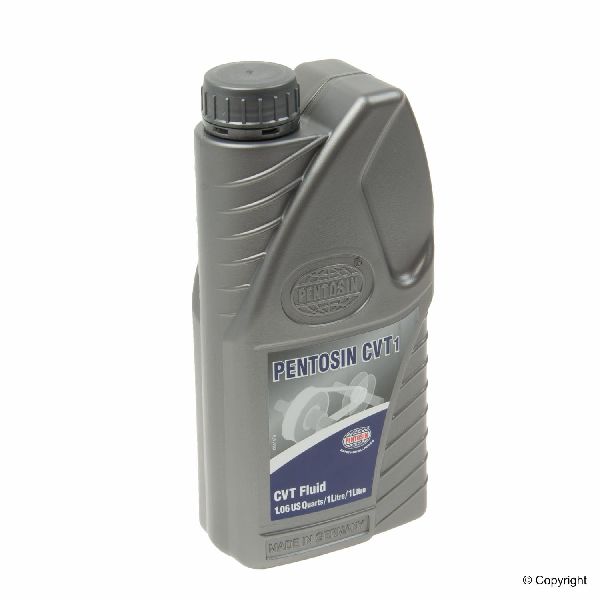
- Always use Genuine Nissan CVT Fluid (NS-2 or NS-3). The wrong fluid will destroy the transmission.
What's Unique About the 2011-2017 Nissan Juke

The Nissan Juke from this era uses a Jatco RE0F11A (also known as JF015E or CVT7) Continuously Variable Transmission. These CVTs are known for a specific failure pattern where internal components, particularly the valve body and the pump's flow control valve, wear out prematurely. While P0846 points to a pressure sensor circuit, the root cause is almost never the sensor. Nissan has issued technical service bulletins (like NTB19-075a for the Sentra with the same CVT) that link P0846 directly to internal judder and pressure control issues requiring valve body or full transmission replacement. Owner and mechanic experiences confirm this is a severe code on the Juke, often accompanied by metal debris in the transmission pan, indicating catastrophic failure.
Symptoms You May Notice
- Check Engine Light is on
- Vehicle enters 'limp mode' (fail-safe mode) with reduced power
- Harsh or delayed shifting/engagement
- Shuddering, juddering, or vibration during acceleration
- Engine RPMs flare or are unusually high
- Poor acceleration and lack of power
- Decreased fuel efficiency
- Transmission overheating
- Replacing only the transmission fluid pressure sensor. The sensor is part of the valve body and is rarely the point of failure. Replacing it without addressing the underlying hydraulic issue will not fix the problem.
- Performing a fluid change without inspecting the pan for debris. If significant metal is present, a fluid change is a waste of money as the transmission has already failed internally.
Most Likely Causes

- Faulty CVT Control Valve Body 🔴 High Probability The valve body, which contains solenoids and the integrated pressure sensors, is a known weak point in this Jatco JF015E CVT. Sticking solenoids or wear in the valve bores from metallic contamination causes incorrect hydraulic pressure.
How to confirm: A technician will monitor pressure sensor data with a scan tool. The definitive diagnosis involves dropping the transmission pan. If there is little to no metal debris, the valve body is the primary suspect.
Typical fix: Replace the entire CVT valve body assembly and reprogram the TCM. This is a complex job requiring specialized knowledge.
Est. part cost: $800-$1500 - Internal CVT Failure (Belt/Pulley Damage) 🟡 Medium Probability Severe wear or failure of the valve body can lead to improper pressure control, causing the CVT's steel belt to slip on the pulleys. This generates significant metal debris and leads to total transmission failure.
How to confirm: Dropping the transmission oil pan and finding a significant amount of metallic, shiny debris ('glitter') on the magnets or in the fluid is a definitive sign of internal failure.
Typical fix: Complete replacement of the CVT assembly with a new or remanufactured unit. Repairing internal components is often not cost-effective.
Est. part cost: $2500-$5000 - Low or Contaminated CVT Fluid ⚪ Low Probability While less common as the primary cause for this specific code, fluid that is extremely old, degraded, or contaminated with debris can cause pressure regulation issues. Using the incorrect fluid type (anything other than Nissan NS-2 or NS-3) will also cause severe damage.
How to confirm: Check the fluid level and condition. The fluid should be translucent green (for Nissan NS-2/NS-3) and not dark, burnt, or full of particles. Note: Many Juke CVTs do not have a traditional dipstick.
Typical fix: Perform a full fluid flush using only Genuine Nissan CVT Fluid. If the fluid is heavily contaminated, the underlying cause (e.g., valve body or belt failure) must still be found.
Est. part cost: $150-$300
Rare But Worth Checking
- Failed Transmission Fluid Pressure Sensor: While this is what the code directly names, an isolated electrical failure of the sensor itself is very rare on this platform. The sensor is integrated into the valve body and is almost never the sole point of failure. It should only be considered after all mechanical and hydraulic causes are ruled out.
- Wiring Harness Issues: Damage to the wiring harness leading to the transmission could cause this code, but it's uncommon. A visual inspection for chafed or broken wires should be part of the diagnostic process.
Diagnosis Steps
- Verify the code with a professional OBD-II scanner capable of reading transmission data.
- Check the CVT fluid level and condition. This may require a technician as many Jukes lack a user-accessible dipstick.
- Using a scan tool, monitor the live data for Transmission Fluid Pressure Sensor 'B'. Compare the voltage/pressure readings to manufacturer specifications under various conditions (idle, in gear, driving).
- Inspect the transmission wiring harness for any visible damage, corrosion, or loose connections.
- Drop the transmission oil pan and inspect the magnets for metallic debris. A fine metallic paste is normal wear, but large shavings or chunks ('glitter') indicate catastrophic internal failure.
- If minimal debris is found, the valve body is the most likely culprit.
- If significant debris is found, the entire CVT assembly needs to be replaced.
Parts You'll Likely Need

- CVT Control Valve Body
(OEM #31705-3TX0C (latest), supersedes 31705-3TX0A, 31705-1XZ1B, 31705-1XZ2C)— This is the most common point of failure for hydraulic pressure issues that trigger P0846. It contains the solenoids and sensors that control the transmission.
Trusted brands: Hitachi, Genuine Nissan
OEM price range: $1000-$1500
Aftermarket price range: $700-$1200 - Continuously Variable Transmission (CVT) Assembly — Required if inspection reveals significant metal debris in the oil pan, indicating the internal belt and pulleys have been damaged.
Trusted brands: Genuine Nissan (New or Remanufactured)
OEM price range: $3500-$7700 (Dealer installed)
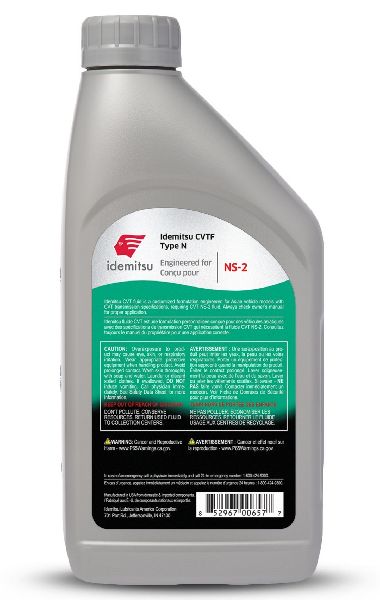
Aftermarket price range: $2500-$4400 (Remanufactured, independent shop) - Nissan CVT Fluid NS-3 — This specific fluid is required for any service on later models. Using any other type of transmission fluid will cause severe damage. Note: Early models may specify NS-2; always verify by VIN.
Trusted brands: Genuine Nissan
OEM price range: $20-$25 per quart
Related Codes That Often Appear With This One
- P1715 — This code indicates an issue with the wheel speed sensor input to the TCM. It is often triggered alongside P0846 when the CVT's erratic behavior or internal slippage causes a discrepancy between engine speed and wheel speed.
- P0841 — This is the equivalent code for the 'A' (primary) pressure sensor circuit. Seeing both codes together strongly points to a widespread hydraulic failure within the valve body or the entire CVT.
- P0746, P0868, P0965, P17F0, P17F1 — These are all codes related to CVT pressure control and judder. Nissan groups them with P0846 in service bulletins for other models with the same transmission (like TSB NTB17-034k for the Versa), indicating a common root cause in the valve body or CVT assembly.
Technical Service Bulletins (TSBs) & Recalls
- NTB19-075 (for Nissan Sentra): While not directly for the Juke, this TSB is highly relevant as it covers the same family of CVT (RE0F11A) and lists P0846 as a primary DTC for diagnosing CVT judder, pointing to either a valve body or full CVT replacement.
- Bulletin #NTB17-034k (for Nissan Versa): This manufacturer bulletin addresses CVT judder and instances where P0846 is stored, indicating a shared failure pattern across Nissan platforms using similar CVT technology.
Platform-Specific Known Issues
- A Nissan Technical Service Bulletin for the Sentra (NTB19-075a), which uses the same JF015E CVT, explicitly lists P0846 as a key indicator of internal issues requiring inspection of the valve body and CVT belt. This procedure is highly likely to apply to the Juke.
- A YouTube video of a Nissan Juke with P0846 and P1715 shows a mechanic finding large amounts of metal shavings in the transmission pan, confirming catastrophic failure and advising a full replacement over a rebuild.
Mechanic-Grade Diagnostic Values

- Secondary Pulley Pressure Sensor Voltage — expected: Approximately 0.88-0.94 V at idle in Neutral.. Failure: Voltage that is erratic, does not change with load, or is stuck at 0V or 5V.
- Secondary Pulley Pressure Sensor Voltage (under load) — expected: Voltage should smoothly increase under acceleration, potentially exceeding 3.0V, which corresponds to over 550 psi.. Failure: Voltage is erratic or does not increase sufficiently under load, indicating a hydraulic pump or leak issue.
- CVT Fluid Temperature Sensor Resistance — expected: Approx. 6.5 kΩ at 68°F (20°C), 2.2 kΩ at 122°F (50°C), 0.87 kΩ at 176°F (80°C).. Failure: Readings outside these ranges can affect pressure calculations and trigger other codes.
Scan Tool Commands That Help
- Nissan CONSULT-III plus: WRITE IP CHARA - REPLACEMENT AT/CVT — This function is mandatory after replacing the CVT assembly or the valve body. It writes the unique calibration data from a supplied CD or downloaded file to the TCM to ensure correct hydraulic pressure control.
- Nissan CONSULT-III plus: CLUTCH POINT LEARNING — This procedure is required after replacing the valve body, but should be skipped if the entire CVT assembly was replaced. It calibrates the clutch engagement points.
- Nissan CONSULT-III plus: G-Sensor Learning — According to Nissan TSB NTB12-103H, this procedure is required after some TCM-related replacements but should be specifically skipped on Juke vehicles.
Wiring & Ground Locations
- Transmission Harness Connector — The main electrical connector on the exterior of the CVT case.. This is the primary point to check for corrosion or damage. The secondary pressure sensor signal is transmitted through this connector. Pin 16 is the 5V sensor supply and Pin 25 is the shared sensor ground for the pressure and temperature sensors.
Real Owner Repair Stories
- YouTube channel 'Victor Berezutskiy' (Nissan Juke (year not specified, but within F15 generation)) — Vehicle hesitates, sometimes drives and sometimes doesn't, especially when warm. Codes P0846 and P1715 present.
❌ Tried (didn't work) The video implies that attempting a repair would be pointless due to the severity of the findings.
✅ What actually fixed it The transmission was condemned and required complete replacement. The mechanic dropped the oil pan and found large amounts of metallic shavings ('glitter') on the filter and magnets, indicating catastrophic internal failure of the CVT. He advises against attempting a rebuild in such cases due to the high cost and likelihood of repeat failure, recommending a used replacement from a reputable source instead. - Reddit user in r/Nissan (2012 Nissan Juke) — Check engine light came on while driving downhill, code P0846.
❌ Tried (didn't work) Changed the CVT fluid and cleared the code.
✅ What actually fixed it The code returned after 1,000 KM, again while driving downhill. The user did not post a final resolution, but the story is a classic example of how a fluid change alone fails to fix the underlying mechanical or hydraulic issue causing P0846. - NHTSA ODI #11326547 (Nissan Versa) — An owner reported that the P0846 fluid pressure sensor code required either the replacement of the transmission control valve body or a complete transmission replacement.
- NHTSA ODI #11567449 (Nissan Sentra) — A driver reported that the CVT caused the car to lose power and driving pressure, with engine codes P0846 and P0868 indicating transmission fluid pressure and low pressure issues.
OEM Part Supersession History
31705-1XZ1B, 31705-1XZ2C, 31705-3TX0A→31705-3TX0C— Revisions to address reliability issues and internal component wear that cause pressure control faults.
Heads up: While physically interchangeable, using an older part number is not advised as it will carry the original design flaws. Always use the latest available revision (31705-3TX0C) for this repair.
Model Year Variations Within This Range
- 2011-2014 (approx.): These earlier models typically specified Nissan CVT Fluid NS-2. Always confirm with the VIN.
- 2015-2017 (approx.): These later models require Nissan CVT Fluid NS-3. Using NS-2 in an NS-3 transmission (or vice-versa) can cause damage. NS-3 is backward compatible for a drain-and-fill, but a full flush should use the specified fluid.
Diagnostic Flowchart
Other Known Issues on This Vehicle
Issues unrelated to this code that are worth knowing about as an owner of this generation:
- Premature Timing Chain Stretch 🔴 High — Common on 2011-2013 models, can occur at relatively low mileage (as low as 32k miles). Can lead to catastrophic engine failure if not addressed. (Ref: Nissan TSB NTB14-030D was issued to address this, involving replacing the timing chain and related parts.)
- Turbocharger Failure 🔴 High — A well-documented issue on the 1.6L (MR16DDT) turbo engine, often attributed to oil starvation from clogged oil feed lines or infrequent oil changes with non-synthetic oil.
- Excessive Oil Consumption 🟠 Medium — The direct-injection (DIG) MR16DDT engine is prone to oil burning, partly due to carbon buildup on intake valves and issues with the PCV system.
- General CVT Unreliability 🔴 High — Beyond the specific P0846 failure, the Jatco CVT is known for a high failure rate, often requiring replacement. Regular fluid changes (every 30,000 miles) are critical to prolonging its life. (Ref: A class-action lawsuit settlement extended warranties for some model years.)
Used vs. New Parts: Buying Guide for This Vehicle
When a used part is the smart pick: A complete, used CVT assembly from a low-mileage donor vehicle can be a cost-effective alternative to a new or remanufactured unit, especially if the original transmission has suffered catastrophic internal failure (heavy metal debris). A used valve body is extremely risky and not recommended, as it likely has the same wear issues.
Donor-vehicle mileage cap: roughly under 60000 miles for the part to have meaningful remaining life.
What to inspect on the donor part:
- Verify the donor vehicle's mileage and accident history.
- If possible, ask the dismantler to drain a small fluid sample. It should not be black, burnt, or full of glitter.
- Ask for a warranty period (e.g., 30-90 days) to cover installation and initial testing.
OEM-only on this vehicle (don't cheap out):
- CVT Fluid (NS-2 or NS-3). There are no universally trusted aftermarket equivalents; using non-genuine fluid is a leading cause of failure.
- CVT Control Valve Body. While some aftermarket options exist, a Genuine Nissan new part is the safest bet to ensure compatibility and avoid immediate failure. A professionally remanufactured unit from a specialist is a secondary option.
Brands owners have reported issues with on this vehicle:
- Unbranded, low-cost valve bodies from online marketplaces. These often have poor quality control and may fail shortly after installation.
Real Owner Stories
Aggregated from forums and TSBs cited above. Mileages and costs reflect what owners reported in those sources.
2012 Nissan Juke
Symptoms: Check engine light came on while going downhill.
What fixed it: Not resolved. The owner reported the code came back after a CVT oil change.
Source hint: Reddit r/Nissan
Nissan Juke
Symptoms: The vehicle had error codes P1715 and P0846.
What fixed it: The transmission was condemned after significant metallic debris was found in the pan, indicating catastrophic failure that required a full replacement.
Source hint: YouTube (https://www.youtube.com/watch?v=s_e_Y981E2E)
Nissan Sentra (Related Platform)
Symptoms: An owner reported P0846 along with P0965, P0101, and P0747 after a mass air flow sensor issue was fixed (NHTSA ODI #11257185).
What fixed it: Another owner with P0846 and C1130 was informed by transmission specialists that the issue was internal to the transmission (NHTSA ODI #11663513).
Related OBD-II Codes
Frequently Asked Questions
My mechanic says my 2012 Juke's valve body is bad. Is this a common cause for the P0846 code?
I found a Nissan TSB for a Sentra (NTB19-075a) that mentions P0846. Does this apply to my Juke?
What does it mean if the mechanic finds a lot of metal 'glitter' in my Juke's transmission pan?
Can I just change the CVT fluid to fix code P0846?
My Juke is shuddering and feels like it has no power. Are these symptoms of a P0846 fault?
Besides the transmission, what other major problems should I be aware of with a 2011-2017 Juke?
We Have This Part in Stock

The information in this article is provided for general reference and educational purposes only. Vehicle specifications, procedures, and part compatibility can vary by production date, trim level, and region. Always consult your vehicle's factory service manual and verify part numbers before purchasing or performing repairs. Safety-critical components such as airbags, seat belts, and braking systems should be installed by a qualified professional.
- Nissan Juke:
- 🛍️ Shop This Part
- What's Unique About the 2011-2017 Nissan Juke
- Symptoms You May Notice
- Most Likely Causes
- Rare But Worth Checking
- Diagnosis Steps
- Parts You'll Likely Need
- Related Codes That Often Appear With This One
- Technical Service Bulletins (TSBs) & Recalls
- Platform-Specific Known Issues
- Mechanic-Grade Diagnostic Values
- Scan Tool Commands That Help
- Wiring & Ground Locations
- Real Owner Repair Stories
- OEM Part Supersession History
- Model Year Variations Within This Range
- Diagnostic Flowchart
- Other Known Issues on This Vehicle
- Used vs. New Parts: Buying Guide for This Vehicle
- Real Owner Stories
- 2012 Nissan Juke
- Nissan Juke
- Nissan Sentra (Related Platform)
- Related OBD-II Codes
- Frequently Asked Questions
- 🎟️ Get 5% Off