

OBD-II Code P0846: Transmission Fluid Pressure Sensor 'B' Circuit Performance Problem
What P0846 means, why it triggers, and how to fix it
- Code P0846 flags a voltage irregularity in the transmission fluid pressure sensor 'B' circuit, directly compromising hydraulic pressure control and shift quality.
- Stop driving immediately and tow the vehicle; driving in limp mode with low hydraulic pressure destroys clutch packs and turns a $150 sensor fix into a $3,000 transmission rebuild.
- Start diagnosis by checking the transmission fluid level and condition, as low or burnt fluid causes 40% of P0846 codes.
- Verify sensor failure using a scan tool's live data stream before replacing parts; a reading stuck at 0V or 5V confirms a hard electrical fault.
- Expect repair costs to range from $200 for a fluid change to over $1,500 if the sensor is integrated into a failing valve body, common in Nissan and Subaru CVTs.
What Does P0846 Mean?

The Powertrain Control Module (PCM) or Transmission Control Module (TCM) detects a voltage signal from the 'B' transmission fluid pressure sensor (TFPS) that contradicts the current gear and engine speed. This incorrect signal prevents the computer from accurately controlling hydraulic pressure, causing poor shift quality and internal damage.
Technical definition: The SAE/OBD-II definition is "Transmission Fluid Pressure Sensor/Switch 'B' Circuit Range/Performance". The PCM/TCM detects the voltage signal from the 'B' sensor circuit is outside the expected operational range. For example, if the computer commands a gear change requiring 2.5 volts of pressure, but the sensor sends 0.1 volts (short to ground) or 4.9 volts (open circuit), it triggers P0846.
Can I Drive With P0846?

No — Do Not Drive. Do not drive the vehicle. Operating in 'limp mode' with incorrect hydraulic pressure causes internal clutch packs to slip, generating extreme heat. This quickly destroys the transmission, turning a $150 sensor issue into a $3,000 rebuild. Towing the vehicle is the only safe option.
Common Causes

- Low, contaminated, or incorrect transmission fluid (Very Common) — Low fluid reduces hydraulic pressure, while dirty fluid clogs the sensor. Using non-specified fluid alters hydraulic properties, triggering the code even if the level is correct.
- Failed Transmission Fluid Pressure Sensor (TFPS) (Very Common) — The sensor fails internally from heat, vibration, and age, sending erratic or no voltage signals to the computer.
- Damaged wiring, fretting, or corroded connectors (Common) — Frayed wires, green-tinted corrosion on pins, or fretting (oxidation from micro-vibrations) disrupt the 5-volt reference signal.
- Clogged transmission filter or cooler (Less Common) — A restriction in the hydraulic circuit starves the system of fluid, causing actual low pressure readings.
- Defective valve body or solenoids (Less Common) — A faulty pressure control solenoid or a blockage within the valve body causes pressure problems that the sensor correctly reports as abnormal.
- Internal mechanical transmission failure (Rare) — A failing transmission pump or worn clutch packs cause a total loss of hydraulic pressure.
- Failed Powertrain/Transmission Control Module (PCM/TCM) (Rare) — The module misinterprets a perfectly good signal. Consider this only after exhaustively eliminating all other possibilities.
Symptoms
- Check Engine Light and/or Transmission Warning Light is on — The computer illuminates the Malfunction Indicator Lamp (MIL) on the dashboard immediately upon detecting the fault.
- Vehicle stuck in 'limp mode' — The computer limits the transmission to a single gear (often 2nd or 3rd) to prevent damage, capping top speed at 30-45 mph.
- Harsh, erratic, or delayed shifting — Gears bang, jerk, or slip. The transmission hesitates before engaging or flares (RPMs spike between shifts).
- Decreased fuel economy — Inefficient shifting forces the engine to work harder, dropping fuel economy by 5-15%.
- Transmission overheating (also visible on scanner) — Improper fluid pressure increases friction from slipping clutches, generating excessive heat and triggering a temperature warning.
Diagnostic Flowchart
Tap your situation to follow the diagnostic path that matches what you're seeing on this code.
Common Fixes & Costs
- Transmission Fluid and Filter Change — Parts: $50-$150, Labor: $150-$300, ~1.5 hr book time (DIY)
- Replace Transmission Fluid Pressure Sensor
— Parts: $50-$150, Labor: $100-$300, ~1.5 hr book time
(Intermediate)
: OEM - Repair Damaged Wiring or Connector — Parts: $10-$50, Labor: $150-$300, ~1.5 hr book time (Intermediate)
- Replace Transmission Solenoid Pack
— Parts: $200-$500, Labor: $250-$500, ~3.5 hr book time
(Professional)
: OEM - Replace Transmission Valve Body
— Parts: $400-$1000, Labor: $400-$800, ~4.5 hr book time
(Professional)
: OEM - TCM Software Update — Parts: $0, Labor: $100-$200, ~1 hr book time (Professional)
DIY vs Professional
- Transmission Fluid and Filter Change — Beginner:
Tools: Socket set, drain pan, funnel, torque wrench, new fluid and filter/gasket. - Replace External Pressure Sensor (e.g., Honda) — Beginner:
Tools: Socket set, torque wrench, new sensor. - Repair Damaged Wiring — Beginner:
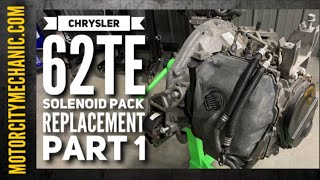
Tools: Multimeter, wire strippers, soldering iron, heat shrink tubing. - Replace Internal Sensor/Solenoid Pack (e.g., Chrysler 62TE) — Beginner:
Tools: Extensive socket set, inch-pound torque wrench, gasket scrapers, service manual. - Replace Valve Body (e.g., Nissan CVT) — Beginner:
Tools: Vehicle-specific tools, advanced scan tool for relearn procedures.
Used vs. New Parts: Buying Guide
When a used part is worth it: For externally mounted sensors on high-mileage vehicles where budget is the primary concern, a used OEM part is viable. For internal components like solenoid packs or valve bodies, buy a professionally remanufactured unit.
Donor-vehicle mileage cap: roughly under 80000 miles for the part to have meaningful remaining life.
Donor quality checklist:
- Verify the exact part number matches; superseded numbers do not always interchange.
- For solenoid packs and valve bodies, prefer remanufactured units over used ones.
- Ensure the seller offers a warranty of at least 90 days.
Decision logic:
- If The part is an external sensor and the vehicle has over 150k miles → A used OEM sensor is a reasonable budget option.
- If The part is an internal solenoid pack or valve body → Favor a new OEM or high-quality remanufactured part with a strong warranty.
- If The vehicle is a Nissan/Subaru with a CVT → Buy a new OEM or professionally remanufactured valve body; used parts carry a very high risk of premature failure.
Warranty tradeoff: Used parts from a salvage yard typically have a 30-90 day warranty. Remanufactured parts come with a 1-year warranty. New OEM parts carry a 12-month/12,000-mile warranty.
Worst-case if a used part fails: 500-1000. If a used internal part fails, you pay for the replacement part plus repeating the significant labor costs for installation.
What Happens If You Wait — Timeline
- 0-1 month: Code is set, Check Engine Light is on. Occasional hard shift or slight hesitation occurs. (MPG impact: 0-5%% · Added cost: $0-$50 in wasted fuel)
- 1-3 months: Shifting becomes noticeably erratic. Vehicle enters 'limp mode' intermittently. Transmission fluid temperature increases due to clutch slippage. (MPG impact: 5-15%% · Added cost: $100-$300 in wasted fuel and accelerated fluid breakdown.)
- 3-6 months: Sustained high temperatures warp seals and damage solenoids. Internal clutch material circulates in the fluid, clogging the filter and valve body. (MPG impact: 15-25%% · Added cost: $500-$1500 as damage moves from the sensor circuit to the valve body and clutches.)
- 6+ months: Catastrophic failure. The transmission is permanently stuck in limp mode or fails to engage a gear. A complete rebuild is required. (MPG impact: 25%+% · Added cost: $3,000-$7,000+ for a new or remanufactured transmission.)
Cost of Not Fixing It
- Immediate (0-1 month): Erratic shifting, decreased fuel economy (5-15% drop), and risk of being stranded if the vehicle enters limp mode. (Added cost: 50-150)
- Short Term (1-6 months): Continued driving with incorrect pressure causes accelerated wear on clutch packs and bands due to slipping and overheating. (Added cost: 600-1500)
- Long Term (6+ months): Catastrophic internal transmission failure. Slipping clutches generate debris, clogging the filter and starving the pump, requiring a full rebuild. (Added cost: 2500-5000+)
Diagnosis Steps

- Check Transmission Fluid Level and Condition
With the engine warm and running in Park or Neutral, check the transmission dipstick. The fluid must be at the 'FULL' mark and appear bright red or pink. Low, brown, black, or burnt-smelling fluid confirms a hydraulic or mechanical issue.
Tools: Rag or paper towel (Beginner) - Scan for Other Trouble Codes
Use an OBD-II scanner to read all codes. P0846 appearing with other pressure sensor codes (P0845, P0847) indicates a shared electrical ground or 5-volt reference issue.
Tools: OBD-II Scanner (Beginner) - Check for Technical Service Bulletins (TSBs)
Search for TSBs related to P0846 for your specific VIN. Manufacturers frequently release TCM software updates to correct logic errors that falsely trigger this code.
Tools: Online repair database subscription or dealership inquiry (Intermediate) - Inspect Wiring and Connectors
Visually inspect the wiring harness going to the transmission fluid pressure sensor. Unplug the connector and check for bent pins, fluid intrusion, or green-tinted corrosion. Clean with contact cleaner.
Tools: Flashlight, Electrical contact cleaner (Intermediate) - Analyze Live Data with a Scan Tool
Watch the live voltage reading from the 'B' sensor (PID: TFPS Voltage). The voltage must fluctuate smoothly between 0.5V and 4.5V as the transmission shifts. A reading stuck at 0V or 5V confirms a hard electrical fault.
Tools: Advanced OBD-II Scan Tool (Advanced) - Test Sensor Circuit Voltages and Resistance
With the sensor unplugged and key on, verify a 5-volt reference signal from the TCM on one pin, and less than 0.1 volts on the ground pin. Check the internal resistance of the sensor itself against manufacturer specifications (e.g., ~300 ohms).
Tools: Digital Multimeter, Vehicle-specific wiring diagram (Advanced) - Test with a Manual Pressure Gauge
Tap a manual pressure gauge into the transmission test port. Compare its mechanical reading to the scan tool data under various conditions. If they do not match, the electronic sensor is faulty.
Tools: Transmission pressure gauge set, Service manual (Advanced) - Inspect Internal Components
If electrical tests pass and fluid is clean, drop the transmission pan to inspect the valve body for sludge, debris, or stuck solenoids. Stop DIY here and take the vehicle to a transmission specialist.
Tools: Socket set, Torque wrench, Gasket scraper, Drain pan (Professional)
When This Code Triggers (Freeze-Frame Conditions)
- Engine Coolant Temp: 175-210°F (Vehicle is at full operating temperature.)
- RPM: 1200-2800 RPM (During light acceleration or while cruising and a shift event is commanded by the TCM.)
- Engine Load: 25-70% (The engine is under a moderate load, not idling or at wide-open throttle.)
- Vehicle Speed: 30-60 mph (Occurs during highway driving when the transmission shifts between higher gears or attempts torque converter lock-up.)
Related Codes
- P0700 — A generic 'master alarm' indicating the TCM has stored a specific fault. Always scan the TCM for the underlying code (like P0846).
- P0845 — Indicates a fault in the 'A' sensor circuit. If P0845 and P0846 appear together, it confirms a shared electrical issue like a faulty ground or 5-volt reference.
- P0847 — Indicates the 'B' sensor circuit voltage is consistently LOW, pointing directly to a short to ground or a failed sensor.
- P0848 — Indicates the 'B' sensor circuit voltage is consistently HIGH, pointing directly to an open circuit or unplugged sensor.
Climate & Environmental Factors
- High Humidity / Water Exposure: Moisture penetrates weathered connector seals, leading to corrosion on pins and short circuits within the sensor.
- Extreme Temperatures: Sustained high heat degrades internal electronic components. Extreme cold makes old plastic connectors brittle and alters fluid viscosity on startup.
- Chemical Contamination: Exposure to road salt or oil/coolant leaks degrades sensor housings and wiring insulation.
How to Talk to a Mechanic About This Code
Say this: "I have a P0846 code and I'd like to schedule a diagnostic. I want to start by checking the fluid level and condition, and inspecting the sensor wiring and connector. Please check for live pressure sensor voltage data with a scan tool before recommending any part replacements."
This signals you want a systematic diagnosis, not a blind part replacement. It directs the mechanic to check the cheapest causes first and requests specific data to prove a sensor failure before you pay for one.
Avoid saying:
- 'My transmission is acting weird, can you fix it?' (Too vague, invites expensive guesswork).
- 'Just replace the sensor.' (The sensor may not be the root cause, leading to wasted money).
- 'I got a quote over the phone, is that the final price?' (Phone estimates are notoriously unreliable for transmission work).
Questions to ask before authorizing the repair:
- Did you check the fluid level and condition first?
- Did you find any issues with the wiring or the connector?
- What did the live data from the pressure sensor show? Was the voltage stuck, or was it erratic?
- If you are recommending a part replacement, what is the warranty on the part and the labor?
- Can you provide me with a written estimate that includes a worst-case scenario price?
Where to Take It: Dealer vs Independent vs Chain
- Dealer:
Recommended for in-warranty vehicles or complex CVT issues where manufacturer-specific knowledge is critical. For out-of-warranty common vehicles, it is the most expensive option.
Best for: Vehicles under powertrain warranty., Vehicles known for specific quirks, like Nissan or Subaru CVTs, requiring specific software updates., Newer vehicles (under 10 years old) where factory-trained technicians are a priority.
Downsides: Highest labor rates, often 1.5-2x more than independent shops., Defaults to expensive, wholesale component replacement (e.g., entire valve body) instead of a smaller repair. (Typical cost: +50% vs. baseline) - Independent Shop:
Best overall fit for most out-of-warranty P0846 repairs. A good independent transmission specialist is more cost-effective than a dealer.
Best for: Out-of-warranty vehicles where cost is a major factor., Vehicles with well-known, straightforward fixes (like external sensors on a Honda)., Building a long-term relationship with a trusted mechanic.
Downsides: Quality and expertise vary widely; vetting through reviews and certifications is crucial., May lack specialized tools or software required for the newest transmissions. (Typical cost: +0% vs. baseline) - Chain Shop:
AVOID for P0846 diagnosis and repair. The risk of misdiagnosis, use of incorrect fluid, or being upsold on a new transmission is very high.
Best for: Simple fluid and filter changes, but only if you confirm they use the exact manufacturer-specified fluid.
Downsides: Technician skill varies dramatically; many are not transmission specialists., High pressure to upsell services like unnecessary transmission flushes., Lack in-depth diagnostic tools for complex electrical or internal transmission problems. (Typical cost: -10% vs. baseline)
When to Walk Away From the Repair
If the estimated repair cost exceeds 50% of the car's private-party value, sell or trade in the vehicle instead of repairing it.
- Car worth $4000, fix is $2500: Walk away. The repair cost is over 60% of the car's value.
- Car worth $12000, fix is $1500: Fix it. The repair is well below the 50% threshold and restores the vehicle's value.
- Car worth $8000, fix is $4000: Borderline. This is exactly at the 50% mark. Get a second opinion before authorizing the repair. If the car has high mileage, walking away is better.
What Scan Tool You Need for This Code

Minimum: A scanner that reads manufacturer-specific transmission codes and views live data for the Transmission Control Module (TCM), specifically the transmission fluid pressure sensor voltage.
A basic $20 code reader only shows the P0846 code but cannot access the live data needed to see if the sensor is actually working. Without live data, you are guessing.
Budget: Autel AP200 / XTOOL A30M (~$60) — Connects to your smartphone via Bluetooth to read transmission codes and display live data streams, including TFPS voltage and temperature.
Mid-range: Foxwell NT510 Elite / Innova 5610 (~$150) — Provides robust live data graphing for multiple sensors at once. Offers bi-directional controls to command solenoids, helping differentiate a sensor issue from a valve body problem.
Professional: Autel MaxiCOM MK808 / Launch CRP919E (~$500-700) — Offers full OE-level diagnostics, bi-directional control, and access to service functions like transmission relearn procedures required after a valve body replacement.
Rent vs buy: Auto parts stores scan codes for free, but their tools lack live data functions. For P0846, you must buy a budget-level scanner with live data capabilities to perform a meaningful diagnosis.
How to Clear the Code After You Fix It
- Use an OBD-II scan tool to clear the diagnostic trouble codes (DTCs).
- Perform a complete OBD-II drive cycle to allow the readiness monitors to run.
- Rescan the vehicle to ensure the P0846 code does not return.
Drive cycle (~30 minutes): A generic drive cycle involves a cold start (after sitting for 6-8 hours), 2-3 minutes of idling, mixed city driving with several stop-and-go periods, followed by 15 minutes of steady highway speed (around 55 mph), and then allowing the vehicle to coast down.
Readiness monitors affected: Comprehensive Component Monitor, Catalyst Monitor, Evaporative System Monitor
Before emissions retest: drive at least 50 miles to fully set monitors.
Watch out for:
- Disconnecting the battery clears the code but resets all readiness monitors, causing an automatic emissions test failure.
- The code returns immediately if the underlying root cause of the fault has not been repaired.
- Not completing the full drive cycle leaves monitors in a 'Not Ready' state.
Will This Fail Emissions / State Inspection?
Yes — this code typically fails an OBD-II emissions inspection.
- California: An illuminated Check Engine Light is an automatic failure. After repairs, a complete drive cycle must be performed to set readiness monitors before a re-test.
- New York: A vehicle fails the mandatory annual OBD-II emissions inspection if the Malfunction Indicator Light is on.
- Texas: In counties requiring emissions testing, an illuminated Check Engine Light results in an automatic inspection failure.
Most Commonly Affected Vehicles
- Nissan Altima, Rogue, Murano, Versa, Sentra (2007-2018) — Jatco CVT transmissions are highly prone to this code, often requiring full valve body replacement rather than a simple sensor swap.
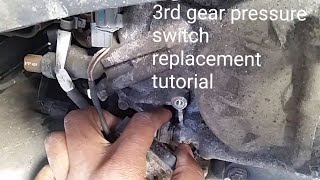
- Honda / Acura Odyssey, Accord, MDX, TL (2008-2012) — The 5-speed automatic uses externally mounted pressure switches that are a common, easy-to-access failure point.
- Dodge / Chrysler / Jeep Grand Caravan, Town & Country, Ram 1500, Grand Cherokee (2008-2017) — The 62TE transmission sets this code due to a faulty pressure switch integrated into the internal solenoid pack.
- Chevrolet / GMC Silverado, Sierra, Tahoe, Suburban (2007-2013) — On 6L80 transmissions, this code triggers from low fluid, a clogged filter, or internal TEHCM wiring issues.
- Ford Focus, Fiesta, Kuga, Mondeo (2010-2018) — Common on DPS6/PowerShift transmissions, often related to the pressure sensor on the valve body or a faulty TCM.
- Toyota Camry, RAV4, Highlander (2007-2014) — Occurs in high-mileage U660E 6-speed transmissions due to a short in the sensor wiring.
- Hyundai / Kia Elantra, Optima, Sorento, Sonata (2011-2019) — Diagnosis follows the standard path of checking fluid, wiring, and the valve-body-mounted sensor.
- Subaru Outback, Forester, Impreza, Crosstrek (2012-2020) — On TR580/TR690 CVTs, P0846 indicates a failing torque converter lock-up duty solenoid, requiring valve body replacement.
Manufacturer-Specific Notes
- Nissan (Jatco): Pressure sensors are integrated into the valve body and not sold separately. TSB NTB17-034h links P0846 with CVT judder, requiring valve body or full transmission replacement.
- Honda / Acura: Uses multiple pressure switches mounted on the exterior of the transmission case, making them cheap and easy to replace.
- Dodge / Chrysler / Jeep: In the 62TE transmission, the pressure sensor is part of the main solenoid pack inside the oil pan, requiring pan removal to replace.
- Subaru: Linked to a faulty lock-up duty solenoid within the valve body. Subaru's diagnostic procedure mandates replacing the entire valve body assembly.
Real Owner Stories
2012 Dodge Grand Caravan at 170k miles
Check Engine Light and TCS light were on, accompanied by hard shifts and no overdrive. Code P0846 was present.
Outcome: The community suggested a fluid and filter change as the logical first step. Burnt fluid or debris would point towards a more serious internal issue.
Lesson: On high-mileage vehicles with no service history, start with basic maintenance. Old, degraded fluid causes pressure-related codes.
2012 Nissan Versa with CVT
Check Engine Light on with code P0846. A mechanic replaced the valve body for $700, but the dealership claimed they couldn't reprogram it because the code remained.
Outcome: The owner was out $880 and facing a full transmission replacement.
Lesson: On Nissan CVTs, P0846 is often a sign of major internal failure. Replacing the valve body is a gamble; clarify warranty terms before authorizing this repair.
2011 Jeep Wrangler JKU
After replacing a bad solenoid pack to fix a limp mode issue, code P0846 appeared a week later.
Outcome: The second replacement with a different part resolved the issue.
Lesson: Be wary of rebuilt electronic parts from discount stores. If a code appears shortly after replacing a component, the new part itself is likely defective.
2012 Nissan Micra K13 (CVT) at 50k KM
Car jerked on acceleration and the check engine light was on with code P0846.
Outcome: Forum feedback indicated that on Jatco CVTs, P0846 points to a failing valve body or internal mechanical issues. A fluid flush will not solve the fault.
Lesson: Even at low mileage, a P0846 code on a Jatco CVT is a serious warning that precedes major transmission failure.
How to Prevent This Code From Triggering
- Regular Transmission Fluid and Filter Changes (Every 30,000-60,000 miles, or per owner's manual for 'severe' service.) — Clean fluid maintains hydraulic pressure, cools components, and prevents sludge that clogs sensors and valve bodies.
- Use ONLY the Manufacturer-Specified Fluid (Every fluid change) — Using a 'universal' or incorrect fluid alters hydraulic pressures and triggers performance codes like P0846.
- Install an Auxiliary Transmission Cooler (Once, especially if you tow or live in a hot climate.) — An auxiliary cooler reduces fluid temperature, extending the life of the fluid, seals, and electronic components.
- Address Engine/Cooling System Overheating Immediately (As needed) — An overheating engine quickly overheats the transmission fluid, causing it to break down and leading to sensor and clutch failure.
Frequently Asked Questions
Is it safe to drive my car with a P0846 code?
No. Driving destroys your transmission from overheating and slipping clutches. The vehicle shifts erratically or gets stuck in one gear, creating a safety hazard. Tow the vehicle to a shop.
How much does it cost to fix code P0846?
A simple fluid and filter change costs $200-$450. Replacing an external sensor costs $150-$450. If the sensor is internal or part of the valve body, expect to pay $800 to over $1,500.
Why did the P0846 code come back after replacing the sensor?
This means the sensor was not the root cause. The problem is a persistent circuit issue (corroded connector), a hydraulic restriction (clogged filter), or a mechanical fault in the valve body. A thorough live-data diagnosis prevents this.
Can a clogged transmission filter cause P0846?
Yes. Any restriction in the hydraulic circuit causes a pressure drop. A clogged filter or blocked external cooler starves the system of fluid, triggering a P0846 code.
Does P0846 always mean the transmission is bad?
No. The code indicates a problem in the pressure sensor's circuit or the hydraulic system it measures. However, ignoring the code quickly destroys a healthy transmission.
What does the 'B' in 'Sensor B' mean?
Automatic transmissions have multiple hydraulic circuits and sensors. The letters 'A', 'B', 'C', etc., are labels used by the manufacturer to distinguish one specific sensor circuit from another.
What are the most common misdiagnosis mistakes for P0846?
The biggest mistake is immediately replacing the pressure sensor without checking the fluid or wiring. Technicians report that many people overlook low fluid or hydraulic blockages. Always verify the sensor's live voltage data before replacing it.
Key Takeaways
- Code P0846 flags a voltage irregularity in the transmission fluid pressure sensor 'B' circuit, directly compromising hydraulic pressure control and shift quality.
- Stop driving immediately and tow the vehicle; driving in limp mode with low hydraulic pressure destroys clutch packs and turns a $150 sensor fix into a $3,000 transmission rebuild.
- Start diagnosis by checking the transmission fluid level and condition, as low or burnt fluid causes 40% of P0846 codes.
- Verify sensor failure using a scan tool's live data stream before replacing parts; a reading stuck at 0V or 5V confirms a hard electrical fault.
- Expect repair costs to range from $200 for a fluid change to over $1,500 if the sensor is integrated into a failing valve body, common in Nissan and Subaru CVTs.
Helpful Videos


The information in this article is provided for general reference and educational purposes only. Vehicle specifications, procedures, and part compatibility can vary by production date, trim level, and region. Always consult your vehicle's factory service manual and verify part numbers before purchasing or performing repairs. Safety-critical components such as airbags, seat belts, and braking systems should be installed by a qualified professional.
- 🎬 Helpful Videos
- What Does P0846 Mean?
- Can I Drive With P0846?
- Common Causes
- Symptoms
- Diagnostic Flowchart
- Common Fixes & Costs
- DIY vs Professional
- Used vs. New Parts: Buying Guide
- What Happens If You Wait — Timeline
- Cost of Not Fixing It
- Diagnosis Steps
- When This Code Triggers (Freeze-Frame Conditions)
- Related Codes
- Climate & Environmental Factors
- How to Talk to a Mechanic About This Code
- Where to Take It: Dealer vs Independent vs Chain
- When to Walk Away From the Repair
- What Scan Tool You Need for This Code
- How to Clear the Code After You Fix It
- Will This Fail Emissions / State Inspection?
- Most Commonly Affected Vehicles
- Manufacturer-Specific Notes
- Real Owner Stories
- 2012 Dodge Grand Caravan at 170k miles
- 2012 Nissan Versa with CVT
- 2011 Jeep Wrangler JKU
- 2012 Nissan Micra K13 (CVT) at 50k KM
- How to Prevent This Code From Triggering
- Frequently Asked Questions
- Is it safe to drive my car with a P0846 code?
- How much does it cost to fix code P0846?
- Why did the P0846 code come back after replacing the sensor?
- Can a clogged transmission filter cause P0846?
- Does P0846 always mean the transmission is bad?
- What does the 'B' in 'Sensor B' mean?
- What are the most common misdiagnosis mistakes for P0846?
- Key Takeaways
- 🎟️ Get 5% Off