

OBD-II Code P0845: Transmission Fluid Pressure Sensor 'B' Circuit High
The Ultimate Guide to Meaning, Diagnosis, and Repair
- Stop driving immediately; P0845 forces the transmission into 'limp mode' (locked in 2nd or 3rd gear), and continuing to drive causes catastrophic internal damage costing over $3,000.
- Check your transmission fluid level and condition first, as contaminated fluid clogging the sensor screen accounts for over 30% of these faults.
- Test the sensor circuit with a multimeter before replacing parts; a signal wire reading stuck above 4.69 volts confirms a short-to-power or a dead sensor.
- Search for Technical Service Bulletins (TSBs) for your specific VIN, as manufacturers like Hyundai (TSB 23-AT-010H) and Nissan have documented exact fixes that prevent unnecessary $1,500 valve body replacements.
What Does P0845 Mean?

P0845 signifies your vehicle's Powertrain Control Module (PCM) or Transmission Control Module (TCM) detects a critical error in the transmission fluid pressure sensor 'B' circuit. Automatic transmissions use pressurized fluid to change gears; this sensor reports that pressure to the computer. The 'Circuit High' designation means the sensor sends a continuous high voltage signal when the computer expects a different reading (e.g., low or fluctuating pressure). The computer invalidates the sensor data and triggers the Check Engine Light to protect the transmission from severe damage.
Technical definition: The official SAE/OBD-II definition is "Transmission Fluid Pressure (TFP) Sensor/Switch 'B' Circuit High". This indicates the Powertrain Control Module (PCM) or Transmission Control Module (TCM) registers a continuous high voltage signal from the 'B' transmission fluid pressure sensor circuit. This reading contradicts the expected pressure value for the current operating state (e.g., commanded gear, engine RPM). For example, systems set this code if the sensor voltage remains above 4.69 volts for more than 5 seconds.
Can I Drive With P0845?
No — Do Not Drive. Do not drive with this code. The transmission enters a protective 'limp mode,' limiting speed and locking into a single gear. Continuing to drive forces the transmission to operate with incorrect hydraulic pressures, quickly turning a $100 sensor repair into catastrophic internal damage costing over $3,000.
Common Causes

- Low, Dirty, or Burnt Transmission Fluid (Very Common) — This is the primary cause. Low fluid prevents the system from building correct pressure, while old, burnt, or contaminated fluid turns to sludge that clogs the sensor's screen or internal passages, causing false high-pressure readings.
- Faulty Transmission Fluid Pressure Sensor (TFPS) (Common) — The sensor itself is a frequent failure point. It develops an internal short circuit or wears out, getting stuck sending a high voltage signal regardless of actual fluid pressure.
- Damaged Wiring or Corroded Connectors (Common) — The wiring harness is vulnerable to damage. Wires melt from hot exhaust components, and connectors corrode from moisture and road salt, creating high resistance and altering the voltage signal sent to the TCM.
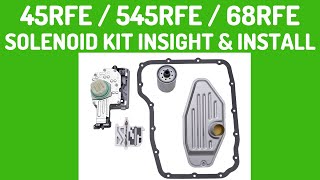
- Valve Body or Solenoid Pack Failure (Common) — Debris causes mechanical valves within the transmission valve body to stick, leading to abnormally high pressure readings. Additionally, many vehicles integrate the pressure sensor into a larger solenoid pack; a failure within this pack triggers P0845 and requires replacing the entire unit. 🎬 Watch: Step-by-step solenoid block service for Dodge and Jeep transmissions.
- Internal Hydraulic Leakage (Less Common) — A leak in an internal transmission seal or a cracked housing disrupts hydraulic pressure flow, causing pressure to spike in one area while dropping in another, confusing the sensor.
- Malfunctioning or Incompatible TCM (Rare) — The TCM itself fails or misinterprets a correct sensor signal due to internal circuitry faults. Alternatively, installing an incompatible TCM or valve body during a previous repair causes immediate sensor circuit codes due to software mismatches.
Symptoms

- Transmission Stuck in 'Limp Mode' — The most common symptom. The vehicle feels extremely sluggish as the transmission locks into a single gear (usually 2nd or 3rd) to prevent further damage.
- Check Engine Light is On — A solid or flashing Check Engine Light is always present on the dashboard to alert you to the fault detected by the PCM/TCM.
- Burnt Transmission Fluid Odor — A smell like burnt toast coming from the vehicle indicates the transmission is overheating due to high hydraulic pressures and friction caused by the fault.
- Decreased Fuel Economy — With the transmission unable to shift into the most efficient gear, the engine runs at higher RPMs, consuming significantly more fuel.
- Harsh Shifting or Slipping (also visible on scanner) — You feel a sudden, violent thud as the transmission attempts to shift, or the engine RPMs increase without the vehicle's speed increasing, indicating the gear is not fully engaged.
Diagnostic Flowchart
Tap your situation to follow the diagnostic path that matches what you're seeing on this code.
Common Fixes & Costs
- Transmission Fluid and Filter Change — Parts: $50-$150, Labor: $80-$200, ~1.5 hr book time (DIY)
- Replace Transmission Fluid Pressure Sensor/Switch
— Parts: $20-$110, Labor: $150-$450, ~2.5 hr book time
(Intermediate)
Honda Accord/Civic/Odyssey: OEM 28600-RCR-004 (3rd Clutch Pressure Switch) (Alt: Standard Motor Products PS498, Dorman 917-677)
Nissan Altima/Rogue/Sentra (CVT): OEM 31936-50X0B (often part of valve body assembly) (Alt: Dorman 926-442, Rostra 50-1040-00-00)
Hyundai Elantra/Kona (IVT): OEM 48885-02300 (Alt: N/A - OEM Recommended by TSB) - Repair Wiring Harness/Connector — Parts: $10-$50, Labor: $100-$300, ~2 hr book time (Intermediate)
- Replace Transmission Solenoid Pack or Valve Body
— Parts: $250-$850, Labor: $200-$500, ~3.5 hr book time
(Professional)
Dodge/Chrysler/Jeep (45RFE, 545RFE): OEM 52119435AF (Solenoid Block) (Alt: Dorman 609-040, Rostra 52-0531)
Nissan Altima/Maxima (CVT): OEM RE0F10A/JF011E Valve Body Assembly (Alt: Sunbelt Valve Bodies (remanufactured), various online sellers)
GM (6T40/6T70): OEM ACDelco 24256523 (TEHCM) (Alt: Dorman 609-000 (remanufactured)) - Replace Transmission Control Module (TCM) — Parts: $200-$1,000, Labor: $100-$300, ~2 hr book time (Professional)
DIY vs Professional
- Transmission Fluid and Filter Change — Beginner:
Tools: Socket set, drain pan, funnel, torque wrench, new fluid and filter. - Replace External Transmission Fluid Pressure Sensor/Switch — Beginner:
Tools: Socket set, torque wrench, new sensor. - Repair or Replace Wiring Harness/Connector — Beginner:
Tools: Multimeter, soldering iron, heat shrink tubing, wire strippers, pin extraction tools, dielectric grease. - Replace Internal Sensor or Solenoid Pack/Valve Body — Beginner:
Tools: Extensive socket set, torque wrench (inch-pounds and foot-pounds), drain pan, service manual, transmission-specific tools.
Used vs. New Parts: Buying Guide
When a used part is worth it: For externally mounted sensors on high-mileage vehicles (>150k miles) where budget is the primary concern. A used solenoid pack or valve body from a low-mileage, accident-damaged vehicle is viable if the part number matches exactly and includes a warranty.
Donor-vehicle mileage cap: roughly under 70000 miles for the part to have meaningful remaining life.
Donor quality checklist:
- Verify the donor vehicle was not scrapped due to transmission failure.
- Match the OEM part number precisely; superseded parts are often incompatible.
- Avoid electronic components from flood-damaged or rust-belt vehicles.
Decision logic:
- If The part is a simple, external pressure switch and the vehicle is over 10 years old. → A new aftermarket part is cheap enough to be the best choice, but a used OEM part is acceptable.
- If The part is an internal solenoid pack or valve body. → Favor a new OEM or high-quality remanufactured part. The labor to install it is high; do not risk premature failure with a questionable used part.
- If The vehicle's value is low and you just need it to run for another year. → A used part with a 30-90 day warranty is a pragmatic, budget-conscious choice.
Warranty tradeoff: Used parts typically offer a 30-90 day warranty on the part only, not labor. New aftermarket parts offer a 1-year to limited lifetime warranty. A remanufactured valve body or solenoid pack comes with a 1 to 3-year warranty and is dyno-tested before shipping.
Worst-case if a used part fails: $500 - $1500 if a used internal part fails, as you pay for labor a second time plus the cost of another part.
What Happens If You Wait — Timeline
- 0-100 miles (First occurrence): Code P0845 is set. The Check Engine Light illuminates, and the transmission is forced into 'limp mode,' locking in 2nd or 3rd gear. Shifting feels harsh or non-existent. (MPG impact: 15-25%% · Added cost: $0)
- 100-500 miles: Driving in a single gear at incorrect RPMs causes the transmission fluid to rapidly overheat. The fluid breaks down, losing lubricating properties and turning dark and burnt. (MPG impact: 15-25%% · Added cost: $250 - $450 (Requires a full fluid flush and filter replacement in addition to the original repair).)
- 500-1,000 miles: Burnt fluid leads to glazing and burning of internal clutch packs. The transmission starts slipping even in its locked gear. Damage to internal seals and the valve body begins. (MPG impact: 20-30%% · Added cost: $1,500 - $2,500 (The initial issue causes internal damage requiring a partial rebuild or valve body replacement).)
- 1,000+ miles: Catastrophic failure. Clutch packs are destroyed, the valve body is warped or clogged, and hard parts are damaged from excessive heat. The transmission requires a complete rebuild or replacement. (MPG impact: N/A (Vehicle likely immobile)% · Added cost: $3,500 - $7,000+ (Cost of a remanufactured transmission and labor).)
Cost of Not Fixing It
- Immediate (0-100 miles): Vehicle is forced into 'limp mode,' resulting in poor acceleration, being stuck in one gear, and a 15-25% drop in fuel economy. Increased stress on the single engaged gear. (Added cost: Negligible, but vehicle is unsafe and unreliable.)
- Short-Term (100-500 miles): Operating with incorrect line pressure overheats the transmission fluid, causing it to burn and lose lubricating properties. This accelerates wear on clutches and seals. (Added cost: $200 - $400 for a transmission fluid flush if caught early.)
- Long-Term (500+ miles): Catastrophic internal transmission damage. Burnt clutches, warped valve body, and failed seals. The initial sensor/wiring problem becomes a full transmission failure requiring a rebuild or replacement. (Added cost: $2,500 - $6,000+ for a remanufactured transmission or a complete rebuild.)
Diagnosis Steps

- Scan for All Codes and Review TSBs
Use an OBD-II scanner to confirm P0845 and look for related codes. Codes for other sensors (P0840-P0844) or solenoids point to a shared electrical or hydraulic problem. Always check for Technical Service Bulletins (TSBs) for your specific VIN, as manufacturers provide known fixes.
Tools: OBD-II Scanner (Beginner) - Check Transmission Fluid Level and Condition
With the vehicle warm and on a level surface, check the transmission fluid. If the dipstick shows it is low, top it off. If the fluid is dark brown/black, gritty, or smells burnt, it is contaminated and requires changing. This simple step often resolves the issue.
Tools: Rag, Transmission Fluid (Beginner) - Inspect Wiring and Connectors
Perform a thorough visual inspection of the wiring harness between the TCM and the transmission pressure sensor. Look for chafed, melted, or broken wires. Unplug the main transmission connector and the sensor connector to inspect for bent or corroded pins (green crust).
Tools: Flashlight, Electrical Contact Cleaner, Dielectric Grease (Intermediate) - Pro Tip: Analyze Live Data PIDs
A bidirectional scanner lets you view live transmission data. Graph the 'Desired' vs. 'Actual' pressure from sensor 'B'. If 'Actual' pressure is stuck at a maximum value (e.g., 255 PSI) or voltage is stuck high (e.g., 5.0V) while 'Desired' pressure changes with RPM, it confirms a faulty sensor or a short in the signal circuit.
Tools: Advanced Bidirectional Scanner (Advanced) - Pro Tip: Test Sensor Circuit Voltage and Ground
With the sensor unplugged and the key on (engine off), use a digital multimeter to test the connector. You must find a reference voltage (typically 5V or 12V) on one pin and a good ground (less than 0.1V) on another. A 'Circuit High' code results from the signal wire shorting to this reference voltage wire. A voltage reading above 4.7V on the signal circuit triggers this code.
Tools: Digital Multimeter, Vehicle Service Manual (Advanced) - Pro Tip: Check Sensor Resistance and Signal Wire Integrity
With the connector unplugged, measure the resistance across the sensor's terminals and compare it to the manufacturer's specification. Next, check for a short to ground on the signal wire by measuring resistance between the signal pin on the harness and the negative battery terminal; it must be an open circuit ('OL' on the multimeter).
Tools: Digital Multimeter, Vehicle Service Manual (Advanced) - Check for Internal Hydraulic Issues
If all electrical tests pass, the issue is internal. Drop the transmission pan to visually inspect the valve body for sludge or debris. A professional connects a manual pressure gauge to directly measure hydraulic pressure in the specific clutch circuit to confirm a blockage or leak.
Tools: Manual Pressure Gauge, Hydraulic Pressure Diagram, Socket Set (Professional)
When This Code Triggers (Freeze-Frame Conditions)
- Engine Coolant Temp: 180-200°F (Vehicle at full operating temperature.)
- Engine RPM: 1500-2500 RPM (During or immediately after a gear shift command under light to moderate acceleration.)
- Vehicle Speed: 25-45 MPH (Often triggered during city driving conditions involving frequent shifting.)
- Commanded Gear: 2nd, 3rd, or 4th (The fault logs when the TCM commands a shift and the resulting pressure reading is illogical.)
Related Codes
- P0700 — This is a generic transmission fault code; the TCM is telling the main computer to turn on the Check Engine Light. P0700 is the messenger; P0845 is the specific message. You must use a scanner capable of reading transmission codes to find P0845.
- P0840, P0841, P0842, P0843 — These codes indicate faults in the Transmission Fluid Pressure Sensor 'A' circuit. Seeing one of these alongside P0845 confirms a systemic problem like low/dirty fluid, a faulty valve body, or a shared power/ground wire issue, rather than two independently failed sensors.
- P0846 — This code indicates 'Circuit Range/Performance', not 'Circuit High'. P0845 means the voltage is stuck high. P0846 means the voltage is illogical for the current gear. P0845 points to an electrical short or failed sensor, while P0846 points to an intermittent wiring fault or hydraulic blockage.
- P0847 — This is the direct opposite of P0845, indicating 'Transmission Fluid Pressure Sensor 'B' Circuit Low'. P0845 is caused by a short to power, while P0847 is caused by a signal wire shorting to ground or an open circuit.
Climate & Environmental Factors
- Road Salt / High Humidity: In regions using road salt or experiencing high humidity, moisture penetrates wiring harness connectors. Salt acts as an electrolyte, accelerating corrosion on delicate pins. This corrosion creates high resistance or short circuits, a primary cause of the 'Circuit High' fault.
- Extreme Cold: Extremely cold temperatures cause transmission fluid to become thicker than usual. This leads to temporary, abnormally high pressure readings on startup, triggering a P0845 code. If the code persists after reaching operating temperature, it indicates a hard fault.
How to Talk to a Mechanic About This Code
Say this: "My car has a P0845 check engine light code and is in limp mode. I need to schedule a diagnostic. I'd like you to start by checking the fluid condition, and testing the pressure sensor circuit and wiring for shorts before quoting major component replacement."
This signals you understand the common failure points. It directs the technician toward a logical diagnostic path (fluid, wiring, sensor) and discourages them from immediately quoting an expensive, unnecessary valve body or transmission replacement.
Avoid saying:
- 'My transmission is acting weird, can you fix it?' (This is too vague and invites a worst-case-scenario quote).
- 'Just replace the pressure sensor.' (The sensor may not be the problem; proper diagnosis is needed).
- Don't agree to a transmission teardown just for an estimate.
Questions to ask before authorizing the repair:
- What were the results of the electrical tests on the sensor circuit? Was there a short to power or ground?
- Did you check for any Technical Service Bulletins (TSBs) for this code on my vehicle model?
- Can you show me the old part? (This ensures the work was actually done).
- What is the warranty on this repair, and does it cover both parts and labor?
Where to Take It: Dealer vs Independent vs Chain
- Dealer:
A good option if your car is under warranty or has a specific TSB, but the most expensive choice for an out-of-warranty repair.
Best for: Vehicles under warranty., Vehicles with known issues covered by a specific Technical Service Bulletin (TSB) requiring specialized software or parts., Complex, late-model vehicles where only the dealer has access to the latest diagnostic software.
Downsides: Highest labor rates, often 1.5x to 2x more than independent shops., Defaults to replacing large, expensive assemblies (like a full valve body or transmission) instead of repairing smaller components. (Typical cost: +50% vs. baseline) - Chain Shop:
AVOID for diagnosing P0845. The risk of misdiagnosis and being sold an unnecessary, expensive repair is very high. This code requires specialized diagnostic expertise.
Best for: Simple fluid changes (use with caution).
Downsides: Technician skill and experience with complex diagnostics vary dramatically., High pressure to upsell; recommends full transmission replacement or rebuild without proper diagnostics., Reputation for inconsistent quality. (Typical cost: -10% vs. baseline)
When to Walk Away From the Repair
If the estimated repair cost for the P0845 fault exceeds 50% of your car's private-party market value, sell or trade it in.
- Car worth $5000, fix is $800: Fix it. The repair cost is well below the 50% threshold and restores the vehicle's function.
- Car worth $4000, fix is $2500: Borderline. This repair is over 60% of the car's value. Get a second opinion, and if the cost is firm, consider selling the car 'as-is' to a private buyer or a service like CarBrain.
- Car worth $3000, fix is $3500: Walk away. The repair costs more than the car is worth. You will not recoup this expense. Sell it for parts or scrap.
What Scan Tool You Need for This Code
Minimum: A scanner that reads manufacturer-specific transmission codes and views live data PIDs for the transmission module.
A basic $20 code reader only shows the P0700 generic transmission code, not the specific P0845. To properly diagnose this, you MUST see live data, specifically the 'Desired' vs. 'Actual' transmission fluid pressure PIDs, to determine if the sensor is faulty or if there's a wiring/hydraulic issue.
Budget: BlueDriver Pro Scan Tool (~$100) — Connects to your smartphone via Bluetooth. It reads specific transmission codes like P0845 and displays live data for many vehicle makes, allowing you to graph the pressure sensor's output.
Mid-range: Foxwell NT510 Elite (~$200) — A powerful handheld scanner that provides deep, dealer-level diagnostics, including reading live transmission pressure data, and offers bi-directional controls to test solenoids and components.
Professional: Autel MaxiCOM MK808 / XTOOL D8S (~$500-800) — Professional-grade tablet scanners offering full bidirectional control, comprehensive live data graphing, and advanced service functions. For P0845, they perform transmission 'quick learn' procedures after a repair and display data in advanced topology maps.
How to Clear the Code After You Fix It
- Use an OBD-II scan tool to clear the P0845 code from the TCM/PCM.
- Disconnecting the battery for 30 minutes clears codes but resets all vehicle readiness monitors.
- Perform a transmission adaptive learning drive cycle.
Drive cycle (~20 minutes): Cold start the vehicle. Drive at a steady speed between 40-55 mph for at least 5-10 minutes. Perform several light-to-moderate accelerations and decelerations to allow the transmission to shift through all gears. Come to a complete stop and allow the vehicle to idle in Drive.
Readiness monitors affected: Comprehensive Component Monitor, Transmission-related monitors
Before emissions retest: drive at least 50 miles to fully set monitors.
Watch out for:
- Clearing the code with a scanner without performing a drive cycle causes the code to return quickly if the TCM hasn't verified the repair.
- Disconnecting the battery erases all readiness monitors, causing an automatic failure at an emissions testing station until reset through driving.
Will This Fail Emissions / State Inspection?
Yes — this code typically fails an OBD-II emissions inspection.
- California: An active P0845 code and illuminated Check Engine Light is an automatic failure. After repair, all applicable readiness monitors must be set to 'Ready' before the vehicle can be re-tested.
- New York: The NYS DMV vehicle inspection includes an OBD-II scan. An illuminated Malfunction Indicator Lamp (Check Engine Light) for any reason results in an emissions test failure.
- Texas: In counties requiring emissions testing, an illuminated Check Engine Light is an automatic fail. Inspectors see the active P0845 DTC when connecting to the OBD-II port.
Most Commonly Affected Vehicles
- Nissan Altima, Sentra, Maxima, Rogue (with CVT) (2007-2016) — Extremely common on CVT models. The pressure sensor is a separate, replaceable part within the valve body, requiring pan removal. TSB NTB19-040c addresses related pressure codes and dictates valve body or CVT assembly replacement.
- Honda Civic, Accord, Odyssey, Pilot (2005-2014) — Pressure switch failures are very common. Multiple switches are located on the outside of the transmission case, making them easy to access and replace without removing the pan. The 3rd clutch pressure switch (OEM 28600-RCR-004) is a frequent culprit.
- Dodge/Chrysler/Jeep Ram 1500, Grand Caravan, Charger, 300, Durango (2004-2017) — The sensor is integrated into the main solenoid pack (e.g., on 45RFE, 545RFE, 68RFE transmissions), making repair complex and costly. The OEM part number for the updated solenoid block is 52119435AF.
- Hyundai / Kia Elantra, Accent, Kona, Venue (with IVT) (2020-2022) — A known issue on Intelligent Variable Transmission (IVT) models. TSB 23-AT-010H specifically advises replacing only the oil pressure sensor (Part No. 48885-02300) if P0845 is present without other drivability symptoms.
- Ford Focus, Fiesta, F-150 (2011-2018) — Focus and Fiesta models with the DSP6 PowerShift transmission experience TCM failures manifesting as sensor circuit codes. On the F-150, wiring and sensor failures are more common.
- Chevrolet/GM Silverado, Cruze, Equinox, Malibu (2010-2017) — On many 6-speed automatic transmissions (6T40/6T70), pressure sensors are integrated into the Transmission Electro-Hydraulic Control Module (TEHCM), located inside the transmission and replaced as a single unit.
- Toyota Corolla, Camry, RAV4 (2006-2018) — High-mileage Toyotas experience this code due to a failed sensor or wiring harness issues, particularly chafing or corrosion where the harness routes near the chassis.
- Subaru Outback, Forester, Impreza (with CVT) (2012-2018) — Subaru CVTs experience this code due to internal valve body issues or failure of the solenoid/sensor assembly. Repair requires replacing the entire valve body, a costly procedure.
Manufacturer-Specific Notes
- Hyundai / Kia: TSB 23-AT-010H is critical for 2020-2022 IVT models. It explicitly states that if P0845, P0846, or P0867 are stored without drivability issues, technicians must only replace the oil pressure sensor (Part No. 48885-02300), not the entire transmission assembly.
- Nissan: Nissan faces class-action lawsuits and extended warranties for CVT transmissions due to sensor and valve body failures. TSB NTB19-040c provides a diagnostic flowchart for pressure-related DTCs resulting in replacing the control valve or the entire CVT assembly.
- General Motors (GM) / Dodge: For many GM and Dodge/Chrysler/Jeep vehicles, the pressure sensor is not sold separately. It is integrated into the TEHCM (GM) or the solenoid pack (Dodge/Chrysler), forcing a complex and expensive module replacement.
- Honda: Honda offers warranty extensions for transmission issues like the torque converter on 2017-2019 models. The Honda Plus extended warranty often covers pressure switch failures, which are common and easily accessible on the transmission exterior.
Real Owner Stories
2011 Honda Odyssey at 115K miles - The Simple Fix
Check Engine Light came on with code P0845. Transmission shifted harshly and 'bumped' between gears, especially when downshifting.
What they tried:
- Owner checked transmission fluid, which was full but slightly dark.
- Based on forum research, they decided to replace the 3rd and 4th gear pressure switches, located externally on the transmission case.
Outcome: Replaced two pressure switches (OEM 28600-RCR-004) in the driveway in under an hour. Total cost was $80. After clearing the code, harsh shifting vanished and the code did not return.
Lesson: For many Honda vehicles, pressure switch failure is a common and inexpensive DIY fix. Always check if the sensor is external before agreeing to invasive repairs.
2013 Nissan Altima (CVT) at 95K miles - The Misdiagnosis
Car suddenly went into limp mode on the highway with a P0845 code. The dealership quoted $4,000+ for a full CVT replacement, citing it as a non-serviceable unit.
What they tried:
- Got a second opinion from an independent transmission shop.
- The independent shop dropped the transmission pan and found dark fluid with metallic sheen.
- The tech replaced the single, internal pressure sensor located on the valve body, a known issue with these CVTs.
Outcome: The tech replaced the sensor, performed a full fluid flush with Nissan NS-3 fluid, and reset the TCM. Total cost was $750. The car drove perfectly, saving the owner over $3,200.
Lesson: On Nissan CVTs, P0845 is often just a small sensor inside the valve body. Never accept a full transmission replacement quote without a second opinion from a CVT specialist.
2008 Dodge Ram 1500 at 140K miles - The Wiring Gremlin
P0845 code appeared intermittently for weeks, causing the truck to get stuck in gear. It drove fine for days, then suddenly entered limp mode.
What they tried:
- A shop replaced the transmission fluid pressure sensor, but the code returned a week later.
- The shop replaced the entire solenoid pack/valve body assembly for over $1,000. The code returned two days later.
- The owner took it to a shop specializing in electrical diagnostics.
Outcome: The second technician found the wiring harness running over the transmission chafed against the chassis, causing the signal wire to intermittently short to ground. The tech repaired the harness for $250.
Lesson: Intermittent electrical codes are often caused by wiring issues, not faulty components. If replacing a sensor fails, thoroughly inspect the wiring harness before replacing expensive parts.
How to Prevent This Code From Triggering
- Regular Transmission Fluid and Filter Changes (Every 30,000-60,000 miles) — Clean fluid maintains correct hydraulic properties and prevents sludge buildup that clogs sensors and sticks valves. For severe use (towing, mountains), shorten the interval to 30,000 miles.
- Use ONLY Manufacturer-Specified Fluid (Every fluid change) — Using generic fluid leads to improper friction characteristics and fluid breakdown, causing overheating and pressure issues. Cost savings are not worth the risk of transmission damage.
- Inspect and Clean Wiring Harness Connectors (Every 2-3 years, especially in rust-belt areas) — Moisture and road salt cause corrosion on connector pins, leading to high resistance and faulty signals. Unplugging, cleaning, and applying dielectric grease prevents this electrical failure.
- Install an Auxiliary Transmission Cooler (Once, for vehicles used for towing or in hot climates) — Excess heat destroys automatic transmissions. A cooler keeps fluid temperatures stable (around 175°F), preventing fluid breakdown and extending the life of internal components and electronic sensors.
- Proactively Replace External Pressure Switches (on applicable models) (Every 60,000-80,000 miles) — On many Honda and Acura models, pressure switches are a known failure point but are cheap and easy to replace externally. Replacing them prevents future rough shifting and codes.
Frequently Asked Questions
What does the 'B' Circuit actually mean in code P0845?
Modern automatic transmissions use multiple hydraulic circuits and pressure sensors to monitor clutch engagement. The 'B' designates the second sensor in the series, tied to a specific function like the 2-4 clutch pack.
Can I just clear the P0845 code and keep driving?
No. Clearing the code does not fix the underlying issue. The PCM/TCM detects the same fault immediately, returning the vehicle to limp mode and risking severe internal damage.
What is the most common misdiagnosis for P0845?
The most frequent mistake is replacing an expensive solenoid pack or valve body without testing the wiring. A simple short circuit or corroded pin is often the true culprit. Always verify electrical integrity before replacing hard parts.
I replaced the pressure sensor and the P0845 code is still there. What now?
If a new sensor fails to resolve P0845, the fault lies in the wiring harness or the TCM. Perform continuity and short-to-power tests on the signal, reference, and ground wires. If the wiring is perfect, suspect a faulty TCM.
How much does it cost to diagnose a P0845 code?
Most repair shops charge a diagnostic fee between $125 and $185. This covers the initial scan, live data analysis, and basic visual inspection. Shops often credit this fee toward the final repair cost if you proceed with them.
What's the difference between P0845 (Circuit High) and P0847 (Circuit Low)?
Both indicate a problem with the 'B' sensor circuit but point to opposite electrical faults. P0845 (High) is caused by a signal wire shorting to a power source. P0847 (Low) is caused by a signal wire shorting to ground or an open circuit.
What is 'Limp Mode'?
Limp Mode is a self-preservation strategy programmed into the vehicle's computer. When a critical fault like P0845 occurs, the computer limits engine power and locks the transmission in a single gear (usually 2nd or 3rd). This prevents catastrophic failure and allows you to drive slowly to a repair shop.
Key Takeaways
- Stop driving immediately; P0845 forces the transmission into 'limp mode' (locked in 2nd or 3rd gear), and continuing to drive causes catastrophic internal damage costing over $3,000.
- Check your transmission fluid level and condition first, as contaminated fluid clogging the sensor screen accounts for over 30% of these faults.
- Test the sensor circuit with a multimeter before replacing parts; a signal wire reading stuck above 4.69 volts confirms a short-to-power or a dead sensor.
- Search for Technical Service Bulletins (TSBs) for your specific VIN, as manufacturers like Hyundai (TSB 23-AT-010H) and Nissan have documented exact fixes that prevent unnecessary $1,500 valve body replacements.
Helpful Videos


The information in this article is provided for general reference and educational purposes only. Vehicle specifications, procedures, and part compatibility can vary by production date, trim level, and region. Always consult your vehicle's factory service manual and verify part numbers before purchasing or performing repairs. Safety-critical components such as airbags, seat belts, and braking systems should be installed by a qualified professional.
- 🎬 Helpful Videos
- What Does P0845 Mean?
- Can I Drive With P0845?
- Common Causes
- Symptoms
- Diagnostic Flowchart
- Common Fixes & Costs
- DIY vs Professional
- Used vs. New Parts: Buying Guide
- What Happens If You Wait — Timeline
- Cost of Not Fixing It
- Diagnosis Steps
- When This Code Triggers (Freeze-Frame Conditions)
- Related Codes
- Climate & Environmental Factors
- How to Talk to a Mechanic About This Code
- Where to Take It: Dealer vs Independent vs Chain
- When to Walk Away From the Repair
- What Scan Tool You Need for This Code
- How to Clear the Code After You Fix It
- Will This Fail Emissions / State Inspection?
- Most Commonly Affected Vehicles
- Manufacturer-Specific Notes
- Real Owner Stories
- 2011 Honda Odyssey at 115K miles - The Simple Fix
- 2013 Nissan Altima (CVT) at 95K miles - The Misdiagnosis
- 2008 Dodge Ram 1500 at 140K miles - The Wiring Gremlin
- How to Prevent This Code From Triggering
- Frequently Asked Questions
- What does the 'B' Circuit actually mean in code P0845?
- Can I just clear the P0845 code and keep driving?
- What is the most common misdiagnosis for P0845?
- I replaced the pressure sensor and the P0845 code is still there. What now?
- How much does it cost to diagnose a P0845 code?
- What's the difference between P0845 (Circuit High) and P0847 (Circuit Low)?
- What is 'Limp Mode'?
- Key Takeaways
- 🎟️ Get 5% Off