

P0843 on 2001-2008 GMC Sierra 2500: Transmission Pressure Switch 'A' Circuit High Causes and Fixes
On a 2001-2008 GMC Sierra 2500, code P0843 is most often caused by a failed Transmission Fluid Pressure Switch Manifold (PSM) in the 4L80-E transmission, or a faulty Pressure Control Solenoid in the Allison 1000. Both are located inside the transmission oil pan. This is an electrical fault, not a major mechanical failure. The fix involves replacing the specific component and is often done along with a transmission fluid and filter change.
- P0843 on a Sierra 2500 points to an electrical fault, not a major mechanical failure.
- The most likely cause is a failed Transmission Fluid Pressure Switch Manifold (PSM) located inside the transmission oil pan.
- Repair requires dropping the pan. It is best practice to replace the PSM, internal wiring harness, filter, and fluid at the same time.
- Symptoms include harsh shifting and the transmission entering 'limp mode'.
- Do not replace the entire transmission; this is a fixable component-level issue.
What's Unique About the 2001-2008 Gmc SIERRA 2500

The 2001-2008 Sierra 2500 HD models use robust transmissions like the GM 4L80-E or the Allison 1000. A key difference is how they handle pressure sensing. The 4L80-E integrates the pressure switches into a single plastic component called a Pressure Switch Manifold (PSM). The Allison 1000, however, uses individual pressure switches/solenoids. In both cases, the components are located on the valve body inside the transmission oil pan, protecting them from external damage but requiring pan removal for service. The fault is almost always electrical within the pan (the switch/manifold or internal harness) rather than a catastrophic internal mechanical failure.
Diagnostic Flowchart
Tap your situation to follow the diagnostic path that matches what you're seeing on this vehicle.
Generation note: This range covers the end of the first generation (GMT800, 2001-2007 Classic) and the beginning of the second generation (GMT900, 2007.5-2008). Both generations used heavy-duty transmissions like the 4L80-E and Allison 1000 where this fault is common. The underlying cause and repair procedure are similar for both generations, with the main distinction being which transmission is in the truck.
Symptoms You May Notice
- Harsh, abrupt, or delayed shifting.
- Transmission is stuck in one gear (limp mode), often 2nd or 3rd.
- Check Engine Light is on.
- Inability to engage reverse, as noted in TSB #PIP4379N.
- Sluggish acceleration.
- Transmission warning light may be illuminated.
- Replacing the entire transmission. This is an electrical code and rarely indicates a need for a full transmission rebuild. The problem is usually a relatively inexpensive component inside the oil pan.
Most Likely Causes

- Failed Transmission Fluid Pressure Switch Manifold (PSM) or Solenoid 🔴 High Probability The PSM (in the 4L80-E) is a plastic component submerged in hot transmission fluid, and over time, heat and vibration can cause the internal electronics or diaphragms to fail, leading to an open circuit. The Allison pressure solenoids are also subject to failure from heat and age.
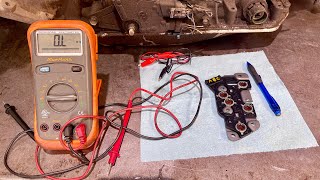
How to confirm: After confirming the external wiring is intact, the next step is to test the component itself, which requires dropping the transmission pan. A multimeter can be used to check for an open circuit or incorrect resistance across the switch/solenoid pins. 🎬 Watch: How to test the 4L80E pressure switch and solenoids. For the Allison, resistance can vary with temperature.
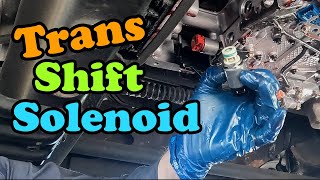
Typical fix: For the 4L80-E, replace the Pressure Switch Manifold. For the Allison 1000, replace the specific faulty pressure solenoid. 🎬 See this DIY walkthrough for replacing Allison shift solenoids. It is highly recommended to replace the internal transmission wiring harness at the same time on either transmission.
Est. part cost: $80-$250 - Wiring or Connector Issue 🟡 Medium Probability The main external connector on the transmission (especially the 4L80-E) can be exposed to moisture and road grime, and its plastic locking tabs are known to become brittle and break, causing a loose connection. The internal harness inside the pan can also become brittle from constant heat cycles.
How to confirm: Visually inspect the main transmission electrical connector for corrosion, bent pins, or broken locking tabs. Test the circuit for an open or short between the TCM and the transmission connector.
Typical fix: Clean or repair the external connector. If the fault is internal, the internal wiring harness, which is often serviced with the PSM/solenoid, needs to be replaced.
Est. part cost: $50-$150 - Low or Contaminated Transmission Fluid ⚪ Low Probability As noted in TSB PIP4379N, a low fluid level, often occurring after a fluid service or due to a leak, can cause a loss of pump prime on cold starts, triggering P0843 and other codes.
How to confirm: Check the transmission fluid level and condition using the dipstick per the factory 'Hot Check' procedure. The fluid should be at the correct level, red in color, and not smell burnt.
Typical fix: Top off the fluid to the correct level or perform a complete transmission fluid and filter change.
Est. part cost: $75-$150
Rare But Worth Checking
- Faulty Transmission Control Module (TCM) or Powertrain Control Module (PCM): This is very rare. TSB PIP4379L explicitly states that replacing the TCM is unlikely to correct this code. The module should only be suspected after all other possibilities, including the sensor, internal and external wiring, and connectors, have been thoroughly tested and ruled out.
Diagnosis Steps
- Check the transmission fluid level and condition using the proper 'Hot Check' procedure outlined in the service manual. A low level is a known cause per TSB PIP4379N.
- Scan the TCM for all stored trouble codes. If P0701 is present alongside P0843, begin diagnostics for P0701 first.
- Perform a thorough visual inspection of the main external transmission wiring harness and connector. On 4L80-E models, pay close attention to the large round connector for broken locking tabs, corrosion, or fluid intrusion.
- Using a scan tool, observe the live data for the transmission pressure switches. A switch showing a constant high/open status when it should be closed is suspect.
- If external wiring is good, drop the transmission oil pan to access the internal components.
- Visually inspect the internal wiring harness and the Pressure Switch Manifold (PSM) or solenoids for any obvious damage.
- Test the circuit and the component according to the factory service manual. For the 4L80-E, test for continuity across the PSM pins. For the Allison, test the resistance of the solenoid, keeping in mind that the reading will change with temperature.
- If the PSM or solenoid is faulty, replace it. It is best practice to also replace the internal wiring harness at the same time.
- Replace the transmission filter, reinstall the pan with a new gasket, and refill with the correct type and amount of transmission fluid (e.g., DEXRON-VI for most applications).
- Clear all trouble codes, program the new component if required (for some Allison solenoids), and perform a test drive to verify the repair.
Parts You'll Likely Need

- Transmission Fluid Pressure Switch Manifold (PSM) (For 4L80-E)
(OEM #24229854)— This is the most common point of failure for a P0843 code on the 4L80-E transmission. The internal electronics fail from heat and age, causing an open circuit.
Trusted brands: ACDelco, Dorman, Standard Motor Products (SMP)
OEM price range: $150-$250
Aftermarket price range: $80-$150 - Pressure Control Solenoid Valve (For Allison 1000)
(OEM #29541895)— This is the equivalent failing component on the Allison transmission. It's an individual solenoid, not a manifold. Note: This part may require programming upon installation.
Trusted brands: GM Genuine, ACDelco
OEM price range: $130-$200
Aftermarket price range: $90-$150 - Internal Transmission Wiring Harness
(OEM #24232327 (For some 4L80-E))— The internal harness can become brittle and fail along with the PSM/solenoid. It is highly recommended to replace it at the same time to prevent a repeat repair.
Trusted brands: ACDelco, Dorman, Rostra
OEM price range: $70-$120
Aftermarket price range: $50-$90 - Transmission Pan Gasket and Filter Kit — This repair requires removing the transmission oil pan, so a new gasket and filter are necessary for reassembly.
Trusted brands: ACDelco, Wix, ATP
OEM price range: $40-$70
Aftermarket price range: $25-$50
Related Codes That Often Appear With This One
- P0701 — As cited in TSB #PIP4379N, P0701 (Transmission Control System Range/Performance) is a general transmission fault code that can be triggered by specific electrical faults like P0843. The TSB advises diagnosing P0701 first if it is present.
- P0848, P0873, P0877 — These are codes for other transmission pressure switches ('C', 'D', 'E'). Since the switches are part of a single manifold assembly on the 4L80-E, it's common for multiple switch circuits to fail or set codes together.
- P0751, P0756, P0761 — These are codes for shift solenoids. The TCM may set solenoid codes if it cannot verify the correct gear state due to a faulty pressure switch reading.
Technical Service Bulletins (TSBs) & Recalls
- PIP4379N / PIP4379L: Mentions P0843 in a list of codes that can occur with symptoms like no reverse or a range inhibit. It strongly suggests that a low fluid level (especially after a fluid change or from a leak) or a loss of pump prime on a cold start can be the cause. It advises checking the fluid level properly and diagnosing code P0701 first if it is also present. It specifically notes that replacing the TCM is not a likely fix.
Platform-Specific Known Issues
- 4L80-E vs. Allison 1000 Component Difference: It is critical to identify which transmission your truck has. The 4L80-E (typically on 6.0L gas models) uses a single plastic Pressure Switch Manifold (PSM) that contains multiple switches. The Allison 1000 (on Duramax diesel and 8.1L gas models) uses individual solenoids and a separate pressure switch assembly. The failing component and part number will be different.
Mechanic-Grade Diagnostic Values
- 4L80-E Shift Solenoid A/B Resistance — expected: 20 - 22 Ohms. Failure: Reading outside this range, especially infinite resistance (open), indicates a failed solenoid.
- 4L80-E Pressure Control (EPC) Solenoid Resistance — expected: 3.5 - 5.5 Ohms. Failure: A reading outside this range indicates a faulty EPC solenoid.
- Allison 1000 Trim Solenoid Resistance (2003+) — expected: 5.5 - 8.0 Ohms. Failure: A reading outside this range suggests a faulty trim solenoid.
- 4L80-E Line Pressure at Idle (In Drive) — expected: 40 - 70 PSI. Failure: Significantly lower or higher pressure can indicate a hydraulic pump issue, valve body problem, or major leak.
- 4L80-E Line Pressure at Stall Speed (In Reverse) — expected: 300 - 330 PSI. Failure: Failure to reach this pressure under load points to a serious hydraulic issue (pump, valve body, or internal seals).
- TFP Sensor 'A' Circuit Voltage — expected: Typically 0V (closed) or 5V (open), depending on gear state.. Failure: A constant high voltage (typically > 4.5V) when the switch should be closed triggers the P0843 code.
Hidden / Shadow Codes Worth Checking
- Manufacturer-Specific Fault Logic: While not a hidden code, GM's factory diagnostic tools (Tech2/GDS2) provide detailed fault criteria. For example, a related Allison code (P0842) sets only if a pressure switch indicates 'stroked' for more than 2 seconds after the valve has been commanded 'destroked'. This level of detail helps a technician understand the precise failure condition beyond the generic P-code. (see via GM Tech2 or GDS2 diagnostic scanner under transmission-specific data and fault logs.)
Scan Tool Commands That Help
- Tech2 / GDS2 or equivalent professional scanner: Live Data - Transmission Pressure Switch State — This is the primary method to confirm the fault. A technician can watch the ON/OFF status of Switch 'A' while commanding gears or performing a 'jumper wire test' on the harness. If grounding the signal wire in the harness causes the state to change on the scanner, the wiring and TCM are good, proving the sensor has failed.
- Tech2 / GDS2: Solenoid Control / Output Control — Allows a technician to command the various solenoids on and off to verify their mechanical and electrical operation without a test drive. For the 4L80-E, this is particularly useful for testing the Pressure Control (PC) solenoid through its duty cycle range.
- Tech2 / GDS2: Solenoid Programming / Relearn Procedure — Required after replacing certain solenoids on the Allison 1000 transmission to ensure the TCM has the correct calibration data for the new component, ensuring proper shift quality.
Wiring & Ground Locations
- 4L80-E Main Case Connector — Large, round connector on the driver's side of the 4L80-E transmission case.. This is the primary external test point for all internal electronics. Pin N, R, and P are the signal wires for the pressure switches. A 'Circuit High' fault can be diagnosed by checking for voltage or continuity at these pins relative to the TCM.
- Allison TCM Connector J2 (Red) — This is one of the main connectors at the Transmission Control Module (TCM).. The pressure switch assembly signals are wired directly to this connector. For example, the reverse pressure switch signal goes to Pin 21 of this connector. A wiring diagram is essential to trace the specific circuit for switch 'A' back to this point.
- Engine/Transmission Grounds (e.g., G105, G106) — Typically located on the engine block, cylinder heads, or on the frame rail near the engine.. A poor ground connection for the TCM or the transmission sensors can cause floating voltages and erratic signals, potentially leading to a 'Circuit High' code. Ensuring these main grounds are clean and tight is a crucial preliminary step in any electrical diagnosis.
Real Owner Repair Stories
- The Truck Stop forum user (1994 P30 Chassis with 7.4L and 4L80-E) — Transmission went into limp mode (stuck in 2nd gear).
❌ Tried (didn't work) Checking the external connector for fluid showed a small amount but cleaning it did not resolve the issue.
✅ What actually fixed it The user diagnosed an electrical fault by testing the pressure switch circuits. They found 13.11 volts on all three pressure switch signal wires at the PCM, regardless of gear selection. This reading confirmed an open circuit (the definition of a 'Circuit High' fault), pointing directly to a failed Pressure Switch Manifold or internal harness inside the transmission, rather than a PCM or external wiring issue.
OEM Part Supersession History
29541895→29541895 (current)— This is the long-standing part number for the Allison 1000 Pressure Control Solenoid Valve 'A'.
Heads up: This part is often stamped with an 'A' for identification. Critically, GM service information states this part requires programming and/or special setup procedures with a factory scan tool after installation to ensure proper operation.N/A→29546972— This is the OEM part number for the complete Allison Manifold Pressure Switch Assembly, which contains multiple switches.
Heads up: If multiple pressure switch codes are present on an Allison, replacing this entire assembly may be more effective than replacing an individual solenoid. This fits all 5-speed and 6-speed Allison 1000 transmissions from 2001-2018.
Model Year Variations Within This Range
- 2006-2008: For the 2006 model year (paired with the LBZ Duramax), the Allison 1000 was upgraded from a 5-speed to a 6-speed automatic. This added a second overdrive gear and introduced manual gear selection ('tap-shift'). The internal controls, TCM logic, and some solenoids are different from the earlier 5-speed (2001-2005) models.
- 2002-2008: The 4L85-E transmission was introduced in 2002 as a higher-torque capacity version of the 4L80-E, often found behind the 8.1L V8. It features stronger 5-pinion planetary gearsets compared to the 4L80-E's 4-pinion sets. However, the electrical components, including the Pressure Switch Manifold (PSM) and internal harness relevant to P0843, are generally interchangeable.
- 2006-2008: In 2006, GM began specifying DEXRON-VI as the required automatic transmission fluid for the 4L80-E/4L85-E, superseding all previous DEXRON fluids for these applications. Using the correct, modern fluid is critical for proper performance and longevity.
- 2004-2005: Allison transmissions transitioned from 'Generation 3' to 'Generation 4' controls around this time, introducing more sensors and enhanced diagnostic capabilities. While the root cause of P0843 is similar, the TCM's ability to monitor and report the fault became more sophisticated.
Helpful Videos
We Have This Part in Stock


The information in this article is provided for general reference and educational purposes only. Vehicle specifications, procedures, and part compatibility can vary by production date, trim level, and region. Always consult your vehicle's factory service manual and verify part numbers before purchasing or performing repairs. Safety-critical components such as airbags, seat belts, and braking systems should be installed by a qualified professional.
- Gmc SIERRA 2500:
- 🎬 Helpful Videos
- 🛍️ Shop This Part
- What's Unique About the 2001-2008 Gmc SIERRA 2500
- Diagnostic Flowchart
- Symptoms You May Notice
- Most Likely Causes
- Rare But Worth Checking
- Diagnosis Steps
- Parts You'll Likely Need
- Related Codes That Often Appear With This One
- Technical Service Bulletins (TSBs) & Recalls
- Platform-Specific Known Issues
- Mechanic-Grade Diagnostic Values
- Hidden / Shadow Codes Worth Checking
- Scan Tool Commands That Help
- Wiring & Ground Locations
- Real Owner Repair Stories
- OEM Part Supersession History
- Model Year Variations Within This Range
- 🎟️ Get 5% Off