

P0841 on 2012-2018 Subaru Impreza: CVT Pressure Fault Causes and Fixes
On a 2012-2018 Subaru Impreza, code P0841 is almost always caused by a faulty CVT control valve body, not the sensor itself. This is a known issue addressed by Subaru in multiple Technical Service Bulletins (TSBs). The fix is typically a new, redesigned valve body, which is a complex repair costing $1,500-$2,500. Before any repair, owners must check if their vehicle is covered by Subaru's 10-year/100,000-mile CVT warranty extension.
- P0841 on a 2012-2018 Impreza is a known issue, most often caused by a faulty CVT valve body, not the sensor itself.
- Before any repair, check with a Subaru dealer for warranty coverage (10yr/100k mile extension) and for a possible TCM software update (TSB 16-111-18R).
- Do not let a mechanic replace only the pressure sensor without following Subaru's specific diagnostic procedure (TSB 16-102-16) to rule out the valve body.
- This is an expensive repair, typically costing $1,500-$2,500, and should only be performed by a qualified Subaru technician or transmission specialist.
What's Unique About the 2012-2018 Subaru IMPREZA

This code is a well-documented problem on Subaru models equipped with the TR580 Lineartronic CVT, including the Impreza. The issue is so common that Subaru issued several Technical Service Bulletins (TSBs). TSB #16-119-19 acknowledges that a design flaw in the original control valve assembly (valve body) can cause air bubbles to form in the transmission fluid, leading to incorrect pressure readings and falsely triggering the P0841 code. The bulletin states the shape of internal fluid circuits was changed in the new part to prevent this aeration. Another TSB, #16-111-18R, notes that fluid contamination can affect a solenoid valve and that a TCM software update can help manage the issue. This means the code often points to a faulty valve body or a software issue, rather than a simple bad sensor.
Diagnostic Flowchart
Tap your situation to follow the diagnostic path that matches what you're seeing on this vehicle.
Generation note: This range covers the fourth generation (2012-2016) and the start of the fifth generation (2017-2018) Impreza. Both generations use the TR580 CVT, and the P0841 issue related to the valve body is common to both, as confirmed by TSBs and owner reports.
Symptoms You May Notice
- Flashing 'AT OIL TEMP' light on the dashboard
- Check Engine Light is on
- Vehicle enters 'limp mode' with reduced power and acceleration
- Harsh or erratic shifting
- Hesitation or slipping during acceleration
- Inability to remove the key from the ignition (in some related cases)
- Abrupt increase in engine speed during shift events.
- Vehicle is jumpy or jerky from a stop.
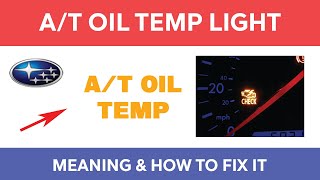
- ABS, Hill Assist, and Traction Control lights may also illuminate. 🎬 See what causes the AT Oil Temp light to flash.
- Replacing only the secondary oil pressure sensor without first ruling out the valve body. The TSBs from Subaru make it clear that the valve body assembly is the most common root cause due to the fluid aeration issue.
- Assuming a complete transmission replacement is needed. In most cases of P0841, only the valve body needs to be replaced, which is significantly less expensive than a full CVT replacement.
Most Likely Causes

- Faulty CVT Control Valve Body Assembly 🔴 High Probability A design flaw in the original valve body can cause aeration (air bubbles) in the CVT fluid, leading to incorrect pressure readings. Subaru acknowledged this in TSB #16-119-19 and released an updated part with redesigned internal passages to prevent this.
How to confirm: A technician must follow the specific diagnostic flowchart in TSB #16-102-16. If wiring and sensor tests pass, and a software update does not resolve the issue, the valve body is the presumed cause.
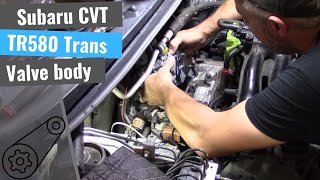
Typical fix: Replace the original control valve body with the updated OEM part. This requires 🎬 Watch: A detailed walkthrough of the TR580 valve body replacement. partially disassembling the transmission and must be followed by a CVT relearn procedure.
Est. part cost: $900-$1300 - Outdated Transmission Control Module (TCM) Software 🟡 Medium Probability Subaru released a software update (TSB #16-111-18R) with improved logic to help the pressure solenoid operate in a way that can discharge contamination, preventing the code. This should always be checked before hardware replacement.
How to confirm: A Subaru dealer can check the current TCM software version against the latest available version for the vehicle's VIN.
Typical fix: Reprogram the TCM with the latest software update. This is often the first step a dealer will take.
Est. part cost: $0 (if under warranty) - $200 - Low, Dirty, or Incorrect CVT Fluid 🟡 Medium Probability The TSBs mention that 'aerated fluid' and 'contamination' are direct causes. Low, old, or non-genuine Subaru fluid is more likely to cause these pressure-related issues. Many owners report dealers claiming the fluid is 'lifetime,' but severe use or high mileage necessitates changes.
How to confirm: Check the CVT fluid level and condition. This must be done by a technician, as there is no dipstick. The fluid should not be dark, burnt, or contain metallic debris. The first step in the official diagnostic procedure is checking the fluid.
Typical fix: Perform a CVT fluid drain and fill using only genuine Subaru High Torque CVT Fluid (HT-CVTF). This is often a first diagnostic step but may not solve a valve body issue.
Est. part cost: $100-$200 - Faulty Transmission Fluid Pressure Sensor or Wiring ⚪ Low Probability While the code names the sensor circuit, on this platform it is rarely the root cause. However, wiring damage or a failed sensor can still occur. A loose or corroded connector at the sensor is a possible point of failure.
How to confirm: A technician can test the sensor's electrical circuit for continuity, shorts, and proper voltage as per the service manual and TSB #16-102-16. In one documented case, wiggling the sensor connector caused the signal to cut in and out, confirming a bad connection.
Typical fix: Repair the damaged wiring or replace the secondary oil pressure sensor. In one forum post, a user's co-worker solved the code by replacing the sensor with one from a salvage yard. 🎬 Watch: Understanding the P0841 sensor circuit and common fixes.
Est. part cost: $50-$150
Diagnosis Steps
- Check with a Subaru dealer to see if your vehicle's VIN is covered under the 10-year/100,000-mile CVT warranty extension. This could cover the entire repair cost. This is the most critical first step.
- Scan the TCM for all stored codes. Note and save the Freeze Frame Data. P0700 is often stored with P0841.
- Check for applicable TSBs, especially #16-111-18R for a potential TCM software update. This is the least invasive and least expensive potential fix.
- Have a technician inspect the CVT fluid level and condition. If low or dirty, a fluid service with genuine Subaru HT-CVTF should be performed.
- Follow the detailed diagnostic flow chart from TSB #16-102-16, which includes checking the wiring harness and connector for the pressure sensor.
- If all electrical tests pass and the fluid is good, the diagnosis points to a faulty control valve assembly as described in TSB #16-119-19.
- After repair, perform the required CVT relearn procedure and a drive cycle to confirm the fix.
Parts You'll Likely Need

- CVT Control Valve Body Assembly
(OEM #31706AA033)— This is the most common cause of P0841 due to a design flaw in the original part, as acknowledged by Subaru in TSB #16-119-19. Part numbers may supersede (e.g., to 31706AA034 or 31706AA331), so always verify with a dealer using your VIN.
Trusted brands: Subaru (OEM)
OEM price range: $900-$1300
Aftermarket price range: Not Recommended - Subaru High Torque CVT Fluid (HT-CVTF)
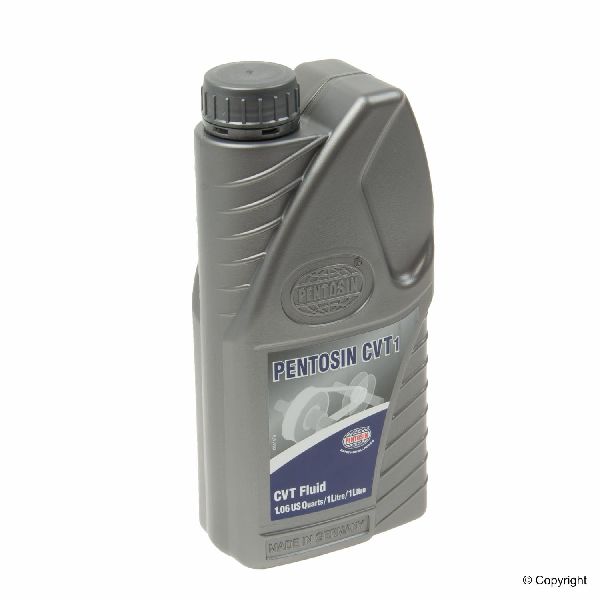
(OEM #SOA427V1660)— The correct fluid is required any time the transmission is serviced, especially when replacing the valve body. Using incorrect fluid can cause severe damage. A drain and fill requires approximately 4-6 quarts.
Trusted brands: Subaru (OEM)
OEM price range: $20-$30 per quart
Aftermarket price range: Not Recommended
Related Codes That Often Appear With This One
- P0700: This is a generic code that simply means the Transmission Control Module (TCM) has stored a fault code. It will almost always appear alongside a more specific transmission code like P0841.
Technical Service Bulletins (TSBs) & Recalls

- 16-119-19: Announces a redesigned control valve assembly (valve body) to prevent false P0841 codes caused by aerated fluid.
- 16-111-18R: Details a TCM software update to help solenoids clear contamination that can cause P0841.
- 16-102-16: Provides the official, updated diagnostic flow chart for troubleshooting DTC P0841.
- 16-115-18: Details the CVT warranty extension to 10 years/100,000 miles for 2016-17 models, including the Impreza.
Platform-Specific Known Issues
- Subaru extended the CVT warranty to 10 years or 100,000 miles for many vehicles due to known issues. TSBs like 16-115-18 and others detail this extension for various model years. Owners should always check with a dealer if their vehicle is covered before paying for repairs.
- TSB #16-119-19 confirms that a redesigned valve body is available to prevent false P0841 codes caused by fluid aeration.
- TSB #16-111-18R provides a software update for the TCM to help prevent P0841 caused by fluid contamination affecting a solenoid.
- TSB #16-102-16 provides the official, detailed diagnostic procedure that technicians should follow to avoid misdiagnosis.
Mechanic-Grade Diagnostic Values
- Secondary Pressure Sensor Voltage (Key On, Engine Off) — expected: Approx. 0.5 V. Another TSB specifies a range of 0.45V to 0.55V.. Failure: A voltage outside this range can indicate a faulty sensor or wiring issue.
- Secondary Pressure Sensor Voltage (Engine Idling in Park/Neutral) — expected: Approx. 0.8 V.. Failure: A reading that doesn't match the expected value suggests a performance issue with the sensor or hydraulic circuit.
- Secondary Pressure Sensor Power Supply (at TCM connector B54, pins #2 to #15) — expected: 4.8V to 5.2V (Key On, Engine Off).. Failure: If voltage is out of range, the TSB suggests the TCM is damaged and the CVT assembly may also be damaged due to chain slippage.
- Secondary Hydraulic Pressure (Idling in P/N) — expected: 0.5 — 1.5 MPa (72 — 218 psi).. Failure: Pressure outside this range indicates a hydraulic fault, potentially in the control valve.
- Secondary Hydraulic Pressure (Stall Test in D/R) — expected: 4.5 — 6.0 MPa (652 — 870 psi).. Failure: This is a reference value; if it's out of spec and the idle pressure is also wrong, it points towards a control valve malfunction.
- Secondary Pressure Sensor Installation Torque — expected: 39 N·m (28.8 ft-lb).. Failure: Incorrect torque could lead to leaks or damage to the sensor/O-ring.
Scan Tool Commands That Help
- Subaru Select Monitor (SSM) or equivalent: Clear AT Learning Data — This function is mandatory after replacing the CVT valve body or TCM. It erases the stored adaptive values for clutch engagement and hydraulic pressures.
- Subaru Select Monitor (SSM) or equivalent: AT Learning Mode — This is the compulsory relearn procedure performed immediately after clearing the AT learning data. The vehicle must be lifted, warmed to 40-65°C (104-149°F), and the tool guides the technician through shifting ranges (P, R, D) to allow the TCM to learn the new valve body's characteristics.
- Subaru Select Monitor (SSM) or equivalent: Confirmation of 'Clear AT Learning Data' — After running the clear command and cycling the ignition, the 'AT OIL TEMP' light should flash 4 times in 2 seconds. If it doesn't, the clear procedure was unsuccessful and must be repeated.
Wiring & Ground Locations
- Secondary Pressure Sensor Connector — Located on the transmission valve body, accessible only after removing the transmission fluid pan.. This is the direct connection to the sensor. Corrosion or a loose pin here will directly cause a P0841.
- TCM Connector B54 — The Transmission Control Module (TCM) is typically located on the left side of the dashboard.. This is where the sensor circuit terminates. TSB 16-85-12R specifies testing at Pin #2 (Power Supply), Pin #15 (Ground), and Pin #17 (Signal Output) to diagnose the circuit from the control unit side.
- Main Transmission Harness Connector (e.g., T4) — An external connector on the transmission case that contains the pins for the internal valve body harness.. This allows for testing of the internal sensor and solenoid circuits without removing the pan. More importantly, a loose pin in this main connector can cause an intermittent P0841, as documented in a real-world repair.
- Secondary Pressure Sensor Wires — In the harness leading to the sensor.. The wire colors have been identified as Yellow/Red (5V reference), Pink (signal), and Green/Black (ground), which is critical for accurate circuit testing.
Real Owner Repair Stories
- YouTube channel 'THIS IS YOUR TRANSMISSION' (2012 Subaru Outback (same TR580 CVT)) — Check Engine Light with codes P0841 and P0842.
❌ Tried (didn't work) Changing the transmission fluid., Replacing the pressure switch with a used one.
✅ What actually fixed it The root cause was a loose pin within the main transmission connector on top of the transmission. Pushing on the connector caused the secondary pulley pressure reading on the scan tool to appear and disappear. Securing the connector pin resolved the codes without replacing any major parts. - Ultimate Subaru Message Board user 'lmdew' (2012 Impreza 2.0i Premium with 216k miles) — Stored P0841 with flashing AT Oil Temp light, poor acceleration, and abrupt engine speed increases.
❌ Tried (didn't work) The thread primarily discusses diagnosis, not failed fixes.
✅ What actually fixed it While the original poster did not follow up, another user in the thread stated their co-worker had a similar issue and solved the code by replacing the secondary pressure sensor with one from a salvage yard, contradicting the common belief that the sensor is never the cause.
When the Usual Fixes Don't Work
- While the vast majority of P0841 codes on this platform are caused by the CVT valve body, it is not the only possible cause. There are documented cases where the root cause was much simpler and cheaper to fix. One confirmed repair showed a loose pin in the main transmission harness connector was the sole cause, identified by wiggling the connector while watching live scan tool data. Another report indicated that simply replacing the external secondary pressure sensor with a used unit resolved the code. These cases underscore the importance of performing thorough electrical diagnostics, including wiggle tests and connector inspections, before defaulting to the expensive valve body replacement.
OEM Part Supersession History
31706AA030→31706AA031 -> 31706AA032 -> 31706AA033 -> 31706AA034 -> 31706AA331— Progressive design updates to address the fluid aeration and solenoid contamination issues outlined in TSBs.
Heads up: Always use the latest available part number when replacing the valve body. Using an older, non-updated part will likely result in the same P0841 failure recurring.
Helpful Videos


Used OEM Parts in Stock

New Aftermarket Parts Available

The information in this article is provided for general reference and educational purposes only. Vehicle specifications, procedures, and part compatibility can vary by production date, trim level, and region. Always consult your vehicle's factory service manual and verify part numbers before purchasing or performing repairs. Safety-critical components such as airbags, seat belts, and braking systems should be installed by a qualified professional.
- Subaru IMPREZA:
- 🎬 Helpful Videos
- 🛍️ Shop This Part
- What's Unique About the 2012-2018 Subaru IMPREZA
- Diagnostic Flowchart
- Symptoms You May Notice
- Most Likely Causes
- Diagnosis Steps
- Parts You'll Likely Need
- Related Codes That Often Appear With This One
- Technical Service Bulletins (TSBs) & Recalls
- Platform-Specific Known Issues
- Mechanic-Grade Diagnostic Values
- Scan Tool Commands That Help
- Wiring & Ground Locations
- Real Owner Repair Stories
- When the Usual Fixes Don't Work
- OEM Part Supersession History
- 🎟️ Get 5% Off