

P0841 on 2014-2021 Subaru Forester: CVT Valve Body and Sensor Issues Explained
On a 2014-2021 Forester, code P0841 almost always points to a problem with the Continuously Variable Transmission (CVT), specifically the valve body. Before authorizing any repair, check if your vehicle is covered by Subaru's 10-year/100,000-mile CVT warranty extension. If not covered, the most common fix is replacing the entire valve body assembly, an expensive repair costing between $1,700 and $2,500. In some cases, a dealer-performed software update may resolve the issue first.
- P0841 on a 2014-2021 Forester is a known issue related to the TR580 CVT, officially addressed by Subaru.
- The most likely culprit is a faulty CVT valve body, not the pressure sensor itself.
- Before attempting any expensive repairs, ensure a dealer or specialist checks for and applies any available TCM software updates per TSB #16-111-18R.
- This is a complex and expensive repair that should be handled by a professional, preferably a Subaru dealership familiar with the TSBs.
- Expect a repair cost in the range of $1,700 to $2,500 for a valve body replacement.
What's Unique About the 2014-2021 Subaru FORESTER

This code is a well-documented issue on Subaru models equipped with the TR580 CVT, including the 2014-2021 Forester. Subaru has acknowledged the problem through multiple Technical Service Bulletins (TSBs). The root cause is often not the sensor itself, but a design flaw in the original CVT valve body. TSB #16-119-19 specifies that air bubbles can enter pressure circuits, causing incorrect pressure calculations. To fix this, Subaru released redesigned valve bodies with modified internal passages to prevent this aeration, along with software updates to help manage fluid contamination.
Diagnostic Flowchart

Tap your situation to follow the diagnostic path that matches what you're seeing on this vehicle.
Generation note: This issue affects both the SJ (2014-2018) and SK (2019-2021) generations of the Forester, as they both use versions of the TR580 CVT. TSB 16-119-19 notes the redesigned valve body was incorporated into Forester 2.5L production starting with VIN HH445682, meaning earlier models are more susceptible to the original design flaw.
Symptoms You May Notice

- Check Engine Light is on
- AT OIL TEMP light is flashing
- Vehicle hesitates or shudders on acceleration
- Harsh or delayed shifting
- Vehicle may enter 'limp mode' with reduced power
- Cruise control indicator flashing and disabled
- Replacing only the transmission fluid pressure sensor without addressing the underlying valve body or software issue.
- Replacing the high-pressure transmission pump when the issue is electronic or related to the valve body. Forum users have reported shops making this expensive misdiagnosis.
- Performing a simple fluid change and expecting it to solve the problem permanently. While helpful, it doesn't fix the root mechanical or software issue.
Most Likely Causes

- Faulty CVT Control Valve Body 🔴 High Probability Subaru released a redesigned valve body (per TSB #16-119-19) specifically to fix an issue where air bubbles in the fluid caused false pressure readings. Internal solenoids on the valve body are also a known failure point, leading to various pressure-related codes.
How to confirm: A technician will follow the diagnostic flowchart in TSB #16-102-16R. If software updates and circuit checks do not resolve the code, and the vehicle is out of warranty, the valve body is the presumptive cause.
Typical fix: Replacement of the entire CVT valve body assembly and fresh CVT fluid. This should only be done after checking for warranty coverage.
Est. part cost: $800-$1200 - Outdated Transmission Control Module (TCM) Software 🟡 Medium Probability TSB #16-111-18R introduced new TCM logic specifically to help the transmission manage and discharge internal contamination that can trigger P0841. The new logic allows the solenoids to operate in a way that purges debris.
How to confirm: A Subaru dealer or specialist with a Subaru Select Monitor (SSM) tool can check the current software calibration ID and see if an update is available.
Typical fix: Reprogramming the TCM to the latest software version. This is often the first step a dealer will take.
Est. part cost: $0 (if part of a diagnostic fee or warranty) - Contaminated or Aerated Transmission Fluid 🟡 Medium Probability TSBs #16-111-18R and #16-119-19 directly cite fluid contamination and aeration (air bubbles) as causes for false P0841 detection.
How to confirm: Visual inspection of the fluid condition. However, aeration may only occur under specific operating conditions and not be visible during a static check. A fluid change alone is unlikely to be a permanent fix.
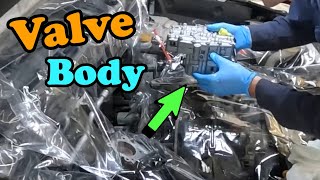
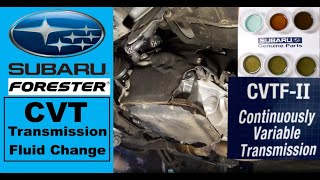
Typical fix: Performing a CVT fluid drain and fill 🎬 See: Proper fluid change and level check procedure for Foresters is a starting point, but this often doesn't resolve the issue if the root cause is the valve body or software.
Est. part cost: $150-$250 - Failed Transmission Fluid Pressure Sensor ⚪ Low Probability While the code directly names the sensor, Subaru's own TSBs focus heavily on the valve body and software as the primary failure points. The sensor is part of the valve body assembly and is rarely the independent point of failure; it is usually correctly reporting a pressure problem caused by the valve body itself.
How to confirm: Testing the sensor's circuit and voltage output against specifications. However, since the sensor is integrated into the valve body, this is part of the larger valve body diagnosis.
Typical fix: Replacement of the entire valve body assembly. Replacing just the sensor is not feasible or recommended.
Est. part cost: $100-$200
Rare But Worth Checking
- Wiring Harness Damage: Damage to the wiring or connector for the pressure sensor can cause an open or short, triggering the code. A visual inspection of the harness leading to the transmission is prudent before component replacement.
- Faulty Transmission Control Module (TCM): A failure of the TCM itself is very uncommon but possible if all other causes have been ruled out.
Diagnosis Steps
- Scan the TCM for all stored trouble codes and save the Freeze Frame Data. Note the presence of P0700 alongside P0841.
- Interview the driver about specific symptoms like shuddering, hesitation, or noises.
- CRITICAL: Perform a Vehicle Coverage Inquiry on Subarunet (or have a dealer do it) to determine eligibility for the 10-year/100,000-mile CVT warranty extension.
- If not under warranty, proceed. Check for applicable TSBs using the vehicle's VIN. Specifically look for #16-102-16R, #16-111-18R, and #16-119-19.
- Check the TCM software version. If an update is available per TSB #16-111-18R, perform the update first, clear codes, and re-test.
- If the code returns, follow the detailed diagnostic flowchart provided in TSB #16-102-16R, which includes electrical circuit checks for the sensor.
- Inspect the transmission fluid level and condition. Note any burnt smell or excessive metal particles.
- If all software and electrical checks pass, the most likely cause is a faulty CVT valve body, which requires replacement.
Parts You'll Likely Need
- CVT Control Valve Assembly (Valve Body)
(OEM #31825AA055 (for 2019+ SK Forester, verify by VIN for all models))— This is the most common cause of P0841 on this vehicle, as documented by multiple TSBs and extensive owner reports. The assembly contains the solenoids and passages that fail. TSB 16-119-19 announced a redesigned part, which should be used for replacement.
Trusted brands: Subaru (OEM)
OEM price range: $800-$1200
Aftermarket price range: Not Recommended - Subaru High-Torque CVT Fluid (HT-CVTF)
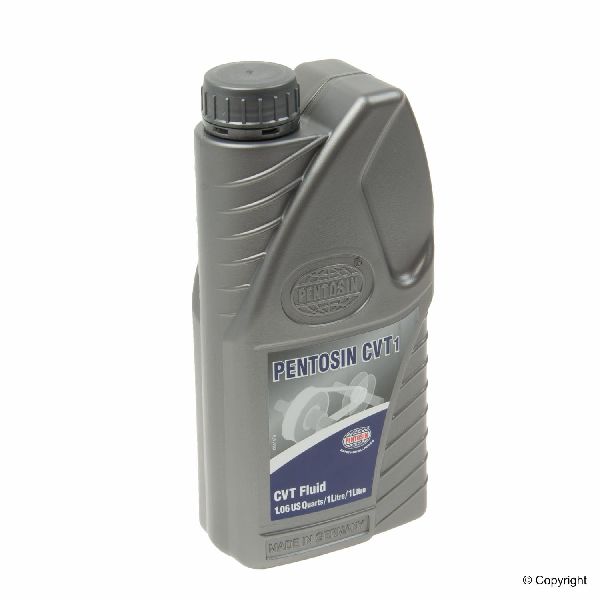
(OEM #SOA748V0200)— The correct, manufacturer-specified fluid must be used when replacing the valve body or servicing the transmission to prevent further damage.
Trusted brands: Subaru (OEM)
OEM price range: $20-$30 per quart
Aftermarket price range: Not Recommended
Related Codes That Often Appear With This One
- P2764 — This code relates to the Torque Converter Clutch Pressure Control Solenoid, which is part of the same valve body assembly. Seeing them together strongly indicates a valve body failure.
- P0971 — This code points to a pressure control solenoid circuit. Like P2764, its presence alongside P0841 reinforces the diagnosis of a faulty valve body.
- P0700 — This is a generic Transmission Control System Malfunction code. It is a general indicator that the TCM has stored a specific, more detailed code like P0841. It will almost always be present with any transmission-specific DTC.
Technical Service Bulletins (TSBs) & Recalls

- 16-119-19: Announces a new control valve assembly (valve body) with redesigned internal passages to prevent false P0841 codes caused by aerated fluid.
- 16-111-18R: Provides a TCM software update with new logic that helps the solenoids discharge contamination that can cause P0841.
- 16-102-16R: Provides an updated diagnostic flowchart for troubleshooting P0841.
- 16-107-17 / 16-115-18: Announce the CVT warranty extension to 10 years or 100,000 miles for various model years.
Platform-Specific Known Issues
- Subaru has issued multiple Technical Service Bulletins (TSBs) for this exact code on the Forester, indicating a known problem. The issues range from software logic needing an update to deal with fluid contamination (TSB #16-111-18R) to design issues with the original valve body allowing air bubbles to cause false readings (TSB #16-119-19).
- Due to the prevalence of this and other CVT issues, Subaru extended the CVT warranty to 10 years/100,000 miles for many affected model years, which can cover the cost of this repair entirely.
Mechanic-Grade Diagnostic Values
- Secondary Pressure Sensor Voltage (Key On, Engine Off) — expected: Approx. 0.5 V. Failure: Voltage significantly higher or lower than 0.5V. A TSB for older models suggests a reading outside 0.45V-0.55V indicates a damaged sensor and possible internal CVT damage.
- Secondary Pressure Sensor Voltage (Engine Idling in P or N) — expected: Approx. 0.8 V. Failure: Voltage not matching the expected value at idle.
- Secondary Pressure Sensor Power Supply at TCM Connector — expected: 4.8 V to 5.2 V. Failure: Voltage outside this range may indicate a faulty TCM or a short in the harness.
- Secondary Line Pressure at Idle (P or N range) — expected: 0.5 - 1.5 MPa (72 - 218 psi). Failure: Pressure reading (from a mechanical gauge) outside this range indicates a hydraulic issue (e.g., valve body, pump). A significant discrepancy between the mechanical gauge and the sensor's reported value points to a bad sensor.
- Secondary Line Pressure at Stall Speed (D range) — expected: 4.5 - 6.0 MPa (652 - 870 psi). Failure: Pressure reading outside this range during a stall test indicates a significant internal hydraulic problem.
Scan Tool Commands That Help
- Subaru Select Monitor (SSM): Read 'Secondary Pressure Sensor Voltage' — This is the primary live data PID to monitor when diagnosing P0841. It should be checked with Key On/Engine Off and at idle to compare against specified values.
- Subaru Select Monitor (SSM): Work Support > Clear AT Learning Data — After replacing the valve body or performing any major transmission repair, the TCM's learned values must be cleared. Failure to do so can result in harsh shifting or persistent codes.
- Subaru Select Monitor (SSM): Work Support > Compulsory Learning Mode — After clearing the learned values, this function must be performed to force the TCM to relearn the hydraulic characteristics of the new or repaired components. The vehicle is lifted and the procedure is followed on-screen without driving.
Wiring & Ground Locations
- Secondary Pressure Sensor Connector [AT6] — On the outside of the transmission case. To access it, the vehicle must be lifted and the front undercover removed.. This is the primary connector to inspect for corrosion or damage and to perform electrical tests directly at the sensor.
- TCM Connector [T10] — Inside the vehicle, typically requiring access to the Transmission Control Module (TCM).. This is where circuit tests are performed to check the integrity of the wiring harness between the sensor and the control module. For example, TSB 16-102-16 specifies checking power supply voltage at pins T10-Pin33 and T10-Pin2.
- Main Engine/Transmission Ground Points — Key grounds are located where the negative battery cable meets the chassis, on the alternator housing, and on the top of the intake manifold.. The entire engine control system, including the TCM and its sensors, relies on solid ground connections. A poor ground on the intake manifold, where ECU grounds are often consolidated, can cause erratic sensor readings and phantom codes.
Real Owner Repair Stories
- YouTube video by 'Repairs and Rides' (2012 Subaru Outback (Uses TR580 CVT, similar diagnosis)) — Check Engine Light with codes P0841 and P0842.
❌ Tried (didn't work) Replacing the secondary pressure switch with a used part did not resolve the issue.
✅ What actually fixed it The technician found a wiring issue at the main transmission harness connector on top of the transmission. Wiggling the connector caused the sensor voltage to drop to zero on the scan tool. The final fix was to bypass or repair the faulty wiring within that connector, not replace the sensor or valve body. - Reddit user on r/SubaruForester (2018 Subaru Forester 2.5i Premium, ~147k miles) — Initially a solenoid-related code, then after a valve body replacement, new codes including P0841 appeared along with harsh engagement into Drive and rough low-speed behavior.
❌ Tried (didn't work) Replacing the valve body with a remanufactured unit., Performing a full fluid drain/refill with OEM fluid., Performing a TCM relearn procedure with a bidirectional scan tool.
✅ What actually fixed it The user's post is a diagnostic query, not a final resolution. However, it highlights a critical failure pattern: new, more severe symptoms (including P0841) appearing *after* a valve body replacement. This strongly suggests the remanufactured valve body was faulty or incompatible, a common risk with non-OEM or improperly rebuilt units.
OEM Part Supersession History
31825AA050, 31825AA051, 31825AA052, 31825AA053, 31825AA054→31825AA055— The original valve body design was prone to allowing air bubbles (aeration) into hydraulic circuits, causing false P0841 codes (per TSB 16-119-19). Later revisions also included an enhanced valve sleeve for durability to address other codes like P2757 (per TSB 16-156-25).
Heads up: Using an older part number (e.g., from a salvaged vehicle) will re-introduce the original design flaw and is not recommended. Always use the latest superseded part number for replacement.
Model Year Variations Within This Range
- 2014-2018 (SJ Generation, pre-facelift): Models built before VIN HH445682 are more likely to have the original valve body design that is prone to aeration and triggering P0841, as noted in TSB 16-119-19.
- 2014-2021: While the core TR580 transmission is used across these years, there are many internal variations in valve bodies, electronics, and software. A valve body from one year may physically fit another but be electronically incompatible, causing codes and drivability issues. It is critical to verify the correct part number by VIN.
Helpful Videos
Used OEM Parts in Stock

New Aftermarket Parts Available




The information in this article is provided for general reference and educational purposes only. Vehicle specifications, procedures, and part compatibility can vary by production date, trim level, and region. Always consult your vehicle's factory service manual and verify part numbers before purchasing or performing repairs. Safety-critical components such as airbags, seat belts, and braking systems should be installed by a qualified professional.
- Subaru FORESTER:
- 🎬 Helpful Videos
- 🛍️ Shop This Part
- What's Unique About the 2014-2021 Subaru FORESTER
- Diagnostic Flowchart
- Symptoms You May Notice
- Most Likely Causes
- Rare But Worth Checking
- Diagnosis Steps
- Parts You'll Likely Need
- Related Codes That Often Appear With This One
- Technical Service Bulletins (TSBs) & Recalls
- Platform-Specific Known Issues
- Mechanic-Grade Diagnostic Values
- Scan Tool Commands That Help
- Wiring & Ground Locations
- Real Owner Repair Stories
- OEM Part Supersession History
- Model Year Variations Within This Range
- 🎟️ Get 5% Off