

P0841 on 2007-2017 Jeep Compass 2.4L: Transmission Pressure Sensor Causes and Fixes
This code on a 2007-2017 Jeep Compass most often points to a problem with the CVT transmission, starting with low or dirty fluid. If a fluid and filter change doesn't fix it, the issue is likely a faulty transmission fluid pressure sensor located inside the transmission pan, or a failing valve body.
- P0841 on a 2007-2017 Jeep Compass points to a transmission fluid pressure problem, which is serious.
- The first and most important step is to check the condition and level of the CVT fluid, which can be difficult on models without a dipstick.
- The most common parts to fail are the fluid itself, the pressure sensor inside the transmission pan, or the valve body.
- Due to the complexity of accessing internal components and the special procedures for sealed transmissions, this code is best handled by a professional mechanic or transmission shop.
- Do not ignore this code, as continued driving can lead to severe and expensive transmission damage.
What's Unique About the 2007-2017 Jeep Compass
The 2007-2017 Jeep Compass with the 2.4L engine is equipped with a Jatco JF011E Continuously Variable Transmission (CVT), also used in the Dodge Caliber and Jeep Patriot. Unlike traditional automatic transmissions with fixed gears, these CVTs are known to be sensitive to fluid condition and level. Many of these models have a 'sealed' transmission without a dipstick, making a simple fluid level check more complex. The procedure involves removing a fill plug and checking for a small stream of fluid at a specific operating temperature. Problems with the valve body, which houses the pressure sensors and control solenoids, are also a known issue in these units.
Symptoms You May Notice
- Check Engine Light is on
- Transmission warning light is on
- Erratic or harsh shifting/engagement
- Vehicle may feel sluggish or underpowered
- Transmission may get stuck in a single 'gear' (limp mode)
- Decreased fuel economy
- Whining or clunking noises from the transmission
- Replacing the entire transmission without first diagnosing the fluid, sensor, or valve body. Many shops may recommend a full replacement as it's easier than internal diagnosis, but this is often unnecessary and much more expensive.
- Replacing the pressure sensor when the actual problem is a worn valve body or clogged fluid filter causing a legitimate pressure issue that the sensor is correctly reporting.
Most Likely Causes
- Low or Dirty Transmission Fluid 🔴 High Probability The Jatco JF011E CVT is highly sensitive to fluid quality and level. The fluid degrades over time and can become contaminated, affecting hydraulic pressure and causing pressure sensor codes.
How to confirm: Check the transmission fluid level and condition. On these 'sealed' units, this requires the vehicle to be level and the transmission fluid to be at a specific temperature (usually checked with a scan tool). The fill plug is removed, and a small trickle of fluid should come out. If nothing comes out, it's low. If it gushes, it may be overfilled. Dirty, dark, or burnt-smelling fluid indicates a need for service.
Typical fix: Perform a transmission fluid and filter(s) change. The JF011E has a main filter in the pan and often an external canister or cooler filter. Use only CVT-specific fluid meeting the Mopar CVTF+4 specification.
Est. part cost: $75-$150 - Faulty Transmission Fluid Pressure Sensor (TFPS) 🟡 Medium Probability The sensor is an electronic component located on the valve body inside the transmission, exposed to heat and fluid, and can fail electronically or provide incorrect readings.
How to confirm: After confirming the fluid is correct, a technician uses a scan tool to monitor the sensor's voltage. If readings are stuck, erratic, or do not correspond to actual pressure changes commanded by the TCM, the sensor is likely faulty. This requires dropping the transmission pan to access the valve body.
Typical fix: Replace the transmission fluid pressure sensor. The sensors are often sold as a small block or harness assembly that bolts to the valve body.
Est. part cost: $50-$120 - Faulty Valve Body ⚪ Low Probability The valve body is a complex hydraulic control center. Its solenoids and mechanical valves can wear or get clogged with debris, leading to pressure regulation problems that a sensor correctly identifies, triggering the code.
How to confirm: This is typically diagnosed after ruling out fluid issues, the pressure sensor, and wiring. A transmission specialist may need to perform hydraulic pressure tests or inspect the valve body for worn bores and sticking valves.
Typical fix: Repair or replace the transmission valve body. This is a major repair that involves removing the pan and carefully disconnecting and replacing the entire assembly.
Est. part cost: $400-$1000+ - Wiring or Connector Issue ⚪ Low Probability The wiring harness to the transmission can be damaged by road debris, heat from the exhaust, or corrosion at the main connector, leading to an open or short in the sensor circuit.
How to confirm: Visually inspect the external wiring harness leading to the transmission for any signs of damage, chafing, or corrosion. A technician can perform a continuity test on the sensor circuit from the TCM connector to the transmission connector to isolate a wiring fault.
Typical fix: Repair the damaged section of the wiring harness or clean/replace the corroded connector.
Est. part cost: $20-$100
Rare But Worth Checking
- Faulty Powertrain Control Module (PCM): While rare, the PCM can fail and misinterpret sensor data. This should only be considered after all other possibilities, including wiring, have been exhaustively tested by a professional.
- Failing Internal Oil Pump: A worn oil pump can fail to generate sufficient line pressure, which can trigger pressure-related codes like P0841 and P0868. This is often accompanied by a distinct whining noise that changes with engine RPM.
Diagnosis Steps
- Scan the vehicle for all stored trouble codes and freeze-frame data to see the conditions under which the code was set.
- Check for any relevant Technical Service Bulletins (TSBs) for your vehicle's year and model that relate to P0841 or transmission issues.
- Perform a thorough check of the transmission fluid level and condition. This is the most critical first step. On these sealed CVTs, this must be done at a specific fluid temperature (e.g., 95-113°F or 35-45°C), with the engine running and the vehicle level.
- If the fluid is low, top it off with Mopar CVTF+4 or equivalent and inspect for leaks. If the fluid is dark, burnt, or contains debris, perform a fluid and filter(s) change.
- Inspect the external transmission wiring harness and main connector for any visible damage, corrosion, or loose connections. Pay close attention to areas near the exhaust.
- Using an advanced scan tool, monitor the live data from the Transmission Fluid Pressure Sensor 'A'. Observe the voltage as the engine is running. The reading should be stable at idle and change smoothly and logically in response to RPM and gear selection.
- If the sensor reading is stuck at 0 volts, maximum voltage, or is erratic, the problem is likely the sensor or its circuit.
- Test the sensor's circuit for proper voltage (typically a 5V reference), ground, and signal integrity at the transmission connector. This will isolate a wiring problem from an internal sensor problem.
- If the sensor circuit and fluid are confirmed to be good, the issue is likely an internal mechanical problem. This could be the pressure sensor itself, the valve body, or the oil pump. At this point, professional diagnosis is strongly recommended as it requires removing the transmission pan for further inspection.
Parts You'll Likely Need
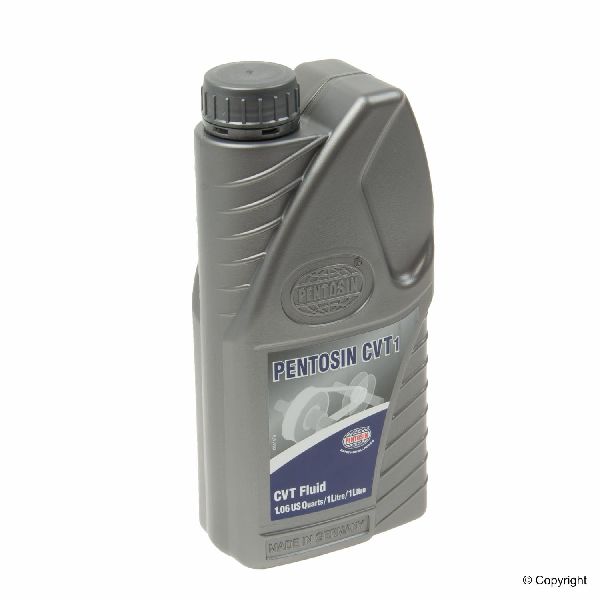
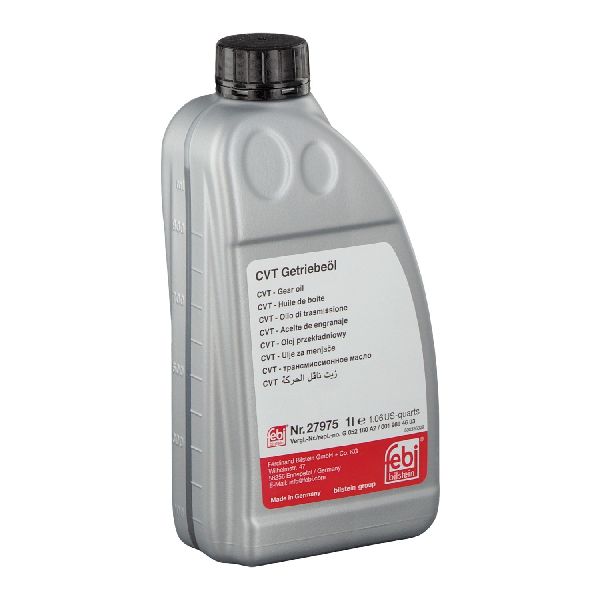
- CVT Fluid
(OEM #68002518AA)— Incorrect or degraded fluid is a primary cause of pressure issues in these CVTs. Using the correct fluid is mandatory.
Trusted brands: Mopar (CVTF+4), Idemitsu CVTF Type N, ENEOS ECO CVT
OEM price range: $25-$35 per quart
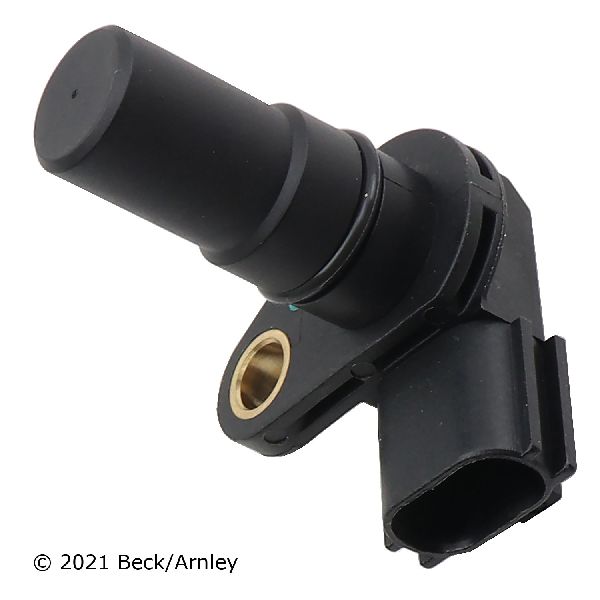
Aftermarket price range: $15-$25 per quart - Transmission Fluid Pressure Sensor
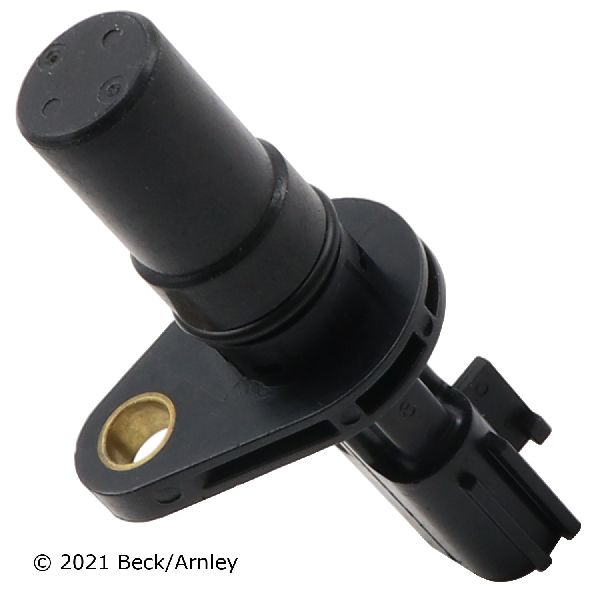
(OEM #33417N (Common Aftermarket Number))— This sensor is the component that directly reports the pressure reading. If it fails, it will trigger this code. It is located on the valve body.
Trusted brands: Mopar (often part of valve body assembly), NTK/NGK, Rostra
Related Codes That Often Appear With This One
- P0868 — P0868 indicates 'Transmission Fluid Pressure Low'. This code often appears with P0841 because a failing sensor can report incorrect low pressure, or an actual low-pressure condition (from low fluid or a bad pump) can cause the sensor's readings to be out of the expected range. They frequently point to the same root causes.
- P0741 — P0741 relates to the Torque Converter Clutch Circuit Performance. Hydraulic pressure problems originating from a bad pump, valve body, or low fluid can prevent the torque converter from locking up correctly, triggering this code alongside P0841.
- P0846 — This code is for the 'Transmission Fluid Pressure Sensor/Switch 'B' Circuit'. The JF011E transmission has both a primary and secondary pressure sensor. A failure in the valve body or a widespread electrical issue could cause codes for both sensors to appear.
Technical Service Bulletins (TSBs) & Recalls
- TSB 21-013-08: This TSB was issued for some 2008 Jeep models and addresses P0841 (LR Pressure Switch Rationality) on different transmissions (42RLE), but highlights that software updates and wiring checks are common factory procedures for pressure rationality codes.
- Subaru TSB 16-102-16: While for a Subaru, it details diagnosing P0841 on a CVT, providing excellent transferable logic. It emphasizes comparing mechanical gauge pressure to sensor data and checking for whining noises that could indicate an internal failure, suggesting this is a good practice for the similar Jatco CVT in the Jeep.
Platform-Specific Known Issues
- Customer Satisfaction Notification W84 was issued for some 2017 models to update PCM and TCM software, partly to address issues that could lead to engine stalls. While not directly for P0841, ensuring your vehicle's software is up-to-date is a good practice as control logic can affect transmission behavior.
Mechanic-Grade Diagnostic Values
- TFPS Sensor Circuit Voltage (Key On, Engine Off) — expected: 5V reference or 12V, depending on the specific circuit design for the year.. Failure: Voltage that is significantly lower than 5V, or 0V, indicates an open or short to ground. Voltage higher than expected could be a short to power.
- Line Pressure at Stall — expected: Approaching 826-900 psi (58.14 bar).. Failure: Significantly lower pressure at stall indicates a weak oil pump, major internal leak, or severely clogged filter.
- Line Pressure at Idle — expected: Around 108-140 psi.. Failure: Pressure well below this range points to fluid level issues, a clogged pan filter, or a failing pump.
- TCM C2 Harness Connector Test — expected: When jumping B(+) to the Primary Pressure Sensor Signal circuit at the transmission connector, a test light connected to ground at the TCM C2 connector should illuminate brightly.. Failure: A dim or non-illuminated light indicates high resistance or an open in the signal wire between the transmission and the TCM.
Scan Tool Commands That Help
- wiTECH (Chrysler Dealer Tool): Quick Learn / Valve Body Solenoid Learn — This procedure is required to match the TCM's electrical system with the solenoids after replacing the valve body or TCM. It should NOT be performed for a simple transmission assembly replacement, as it erases factory calibration settings.
- wiTECH (Chrysler Dealer Tool): Adaptation Learn Procedure — This is a drive-learn procedure required after clearing adaptation memory cells (with a Quick Learn) or replacing the transmission assembly. It allows the TCM to relearn clutch fill times and pressures to ensure shift quality.
Wiring & Ground Locations
- G102 / G103 — Located on the top of the transmission housing.. These are primary ground points for various engine and transmission components. A corroded or loose ground here can cause erratic sensor readings and communication issues with the TCM.
- G305 — Located in the left kick panel, near the base of the 'A' pillar.. This is a major interior ground point. The Transmission Control Module (TCM) is located nearby, and a poor ground here could affect the TCM's operation and its interpretation of sensor data.
- TCM Location — Inside the vehicle, in the driver's side footwell, up behind the kick panel and brake pedal area.. Technicians need to access the TCM connectors to perform pin-out tests on the sensor circuit to differentiate between a wiring fault, a sensor fault, or a module fault.
- Transmission Harness Chafe Point — On some newer generation (2023+) Compass models, the harness can rub against a sharp edge of the PCM bracket.. While this TSB is for a newer generation, harness routing near sharp brackets is a common issue. It's worth inspecting the harness for chafing anywhere it passes near metal brackets or the engine block on the 2007-2017 models as well.
Real Owner Repair Stories
- Jeep KJ and KK Liberty Forum (2003 Jeep Liberty (Different model, but relevant pressure codes P0841, P0876)) — Transmission would not engage gear without high revs, clunky movement, top speed of 40 mph.
❌ Tried (didn't work) Initial diagnosis pointed towards fluid/filter change or a bad pressure sensor based on codes.
✅ What actually fixed it The internal oil cooler return filter had 'unscrewed' itself and was loose in the transmission pan, causing a massive pressure loss. The fix was to clean the pan, reinstall the filter correctly, install a new pan filter, and refill with fluid. - JK-Forum.com (2009 Jeep Wrangler (Sarah)) — P0841 code present, transmission acts like it's in Drive when in Neutral, no Reverse gear.
❌ Tried (didn't work) Replaced rusted-through transmission pan, changed filter, and refilled fluid. The P0841 code went away after ensuring the fluid level was correct, but the mechanical symptoms remained.
✅ What actually fixed it The ultimate diagnosis from multiple shops was a failed transmission requiring replacement. The initial P0841 was likely caused by the massive fluid leak from the rusted pan, but severe internal mechanical damage had already occurred.
OEM Part Supersession History
Valve Body with 2 Pressure Sensors (e.g., 200-01B)→Valve Body with 1 Pressure Sensor (e.g., 200-01A)— Cost reduction and design simplification in later models.
Heads up: A 1-sensor valve body (from a 2010+ model) CANNOT be used in an older vehicle that requires two sensors. However, a 2-sensor valve body CAN be used in a newer, 1-sensor application (the second sensor will just be ignored by the TCM). All Chrysler applications of the JF011E (Jeep/Dodge) used the 2-sensor valve body.
Model Year Variations Within This Range
- 2014-2017: For the 2014 model year, Jeep began replacing the CVT in most trims with a conventional 6-speed automatic transmission. However, the CVT remained in some configurations, such as base models or those with the Freedom Drive II off-road package. It is critical to verify which transmission the specific vehicle is equipped with before ordering parts.
- 2011-2013: For the 2011 model year, the Compass received a facelift and a revised suspension. For 2012, the CVT was recalibrated for better response. While the core P0841 issue remains the same, software updates may be available for these years that could affect transmission behavior.
Diagnostic Flowchart
Other Known Issues on This Vehicle
Issues unrelated to this code that are worth knowing about as an owner of this generation:
- Front and Rear Subframe Rust 🔴 High — Very common, especially in regions that use road salt. Can occur after 5-10 years. Failure can be catastrophic. (Ref: No recall, but numerous NHTSA complaints and forum discussions exist.)
- Sunroof Drain Clogs and Water Leaks 🟠 Medium — Common issue where clogged drain tubes cause water to leak into the cabin through the dome light or A-pillars. Requires periodic cleaning.
- TIPM (Totally Integrated Power Module) Failure 🟠 Medium — Affects many 2007-2017 Chrysler/Jeep/Dodge vehicles. Can cause a wide range of random electrical issues, including no-start conditions, fuel pump failure, and erratic operation of lights or wipers. (Ref: No recall, but it is a widely documented failure point.)
- Alternator Failure 🟡 Low — Alternators can fail prematurely, often between 80,000 and 120,000 miles, leading to battery charging issues and potential stalling.
Used vs. New Parts: Buying Guide for This Vehicle
When a used part is the smart pick: A complete used transmission assembly from a low-mileage donor can be a cost-effective alternative to a full rebuild, especially if the failure is major internal mechanical damage beyond the valve body.
Donor-vehicle mileage cap: roughly under 80000 miles for the part to have meaningful remaining life.
What to inspect on the donor part:
- Check the donor vehicle's VIN for any reported accidents, especially front-end collisions.
- If possible, ask for a video of the donor car running and shifting to check for noises or harsh engagement.
- Inspect the fluid from the donor transmission. If it's dark black, burnt, or full of metal, reject the part.
- Ensure the donor vehicle matches the transmission type (CVT vs. 6-speed automatic, which became common after 2014).
OEM-only on this vehicle (don't cheap out):
- Transmission Control Module (TCM): Used TCMs can be problematic due to VIN-locking and software incompatibilities. A new or professionally remanufactured and programmed module is the safest bet.
Aftermarket brands forum-validated for this vehicle:
- Valve Body: Sonnax (for rebuild kits/valves), Rostra (for solenoids/sensors).
- Fluid: Idemitsu CVTF Type N, ENEOS ECO CVT (as alternatives to Mopar CVTF+4).
Brands owners have reported issues with on this vehicle:
- Unbranded, generic pressure sensors from online marketplaces can have high failure rates and incorrect calibrations. Stick to known brands like NTK, NGK, or Rostra.
Real Owner Stories
Aggregated from forums and TSBs cited above. Mileages and costs reflect what owners reported in those sources.
2014 Jeep Compass
Symptoms: Vehicle triggered codes P0841 and P0868.
What fixed it: The shop recommended a valve body replacement.
Cost: $2,000-$2,100
Source hint: CarGurus.com discussion titled 't35203_ds798031'
Jeep Liberty (referenced for P0841 logic)
Symptoms: Transmission went into limp mode.
What fixed it: Diagnostic process involved checking for metal debris in the pan and considering a solenoid pack replacement.
Source hint: jeepkj.com thread 'p0841.67962'
Jeep JK (referenced for P0841 logic)
Symptoms: Experienced P0841 after replacing a rusted-through transmission pan.
What fixed it: Discussion focused on potential internal transmission failure.
Source hint: jk-forum.com thread 'p0841-359935'
Related OBD-II Codes
Frequently Asked Questions
Does TSB 21-013-08 apply to my 2008 Jeep Compass with code P0841?
What specific transmission fluid should I use for my 2007-2017 Jeep Compass to fix P0841?
Is there a software update for the 2017 Jeep Compass that might help with transmission-related issues?
Can I check the transmission fluid level myself on this 'sealed' unit?
Are there other filters besides the one in the transmission pan I should replace?
Used OEM Parts in Stock

New Aftermarket Parts Available

The information in this article is provided for general reference and educational purposes only. Vehicle specifications, procedures, and part compatibility can vary by production date, trim level, and region. Always consult your vehicle's factory service manual and verify part numbers before purchasing or performing repairs. Safety-critical components such as airbags, seat belts, and braking systems should be installed by a qualified professional.
- Jeep Compass:
- 🛍️ Shop This Part
- What's Unique About the 2007-2017 Jeep Compass
- Symptoms You May Notice
- Most Likely Causes
- Rare But Worth Checking
- Diagnosis Steps
- Parts You'll Likely Need
- Related Codes That Often Appear With This One
- Technical Service Bulletins (TSBs) & Recalls
- Platform-Specific Known Issues
- Mechanic-Grade Diagnostic Values
- Scan Tool Commands That Help
- Wiring & Ground Locations
- Real Owner Repair Stories
- OEM Part Supersession History
- Model Year Variations Within This Range
- Diagnostic Flowchart
- Other Known Issues on This Vehicle
- Used vs. New Parts: Buying Guide for This Vehicle
- Real Owner Stories
- 2014 Jeep Compass
- Jeep Liberty (referenced for P0841 logic)
- Jeep JK (referenced for P0841 logic)
- Related OBD-II Codes
- Frequently Asked Questions
- 🎟️ Get 5% Off