

OBD-II Code P0838: Four Wheel Drive (4WD) Switch Circuit Low
What P0838 means, why it triggers, and how to fix it
- Code P0838 indicates the 4WD switch circuit voltage dropped below the 5-volt minimum threshold, blinding the computer to the transfer case's current gear.
- Replacing a faulty transfer case position sensor or in-dash 4WD switch resolves this code in over 70% of cases.
- Driving a vehicle stuck in 4WD on dry pavement causes severe drivetrain binding, leading to $1,500+ in transfer case and axle damage.
- Always test the circuit with a multimeter and check the 4WD system fuses before spending $200+ on a new Transfer Case Control Module.
What Does P0838 Mean?
Your Powertrain Control Module (PCM) or Transmission Control Module (TCM) detects a low voltage signal from the four-wheel drive (4WD) selector switch. This electrical fault means the computer cannot determine the transfer case gear (2-High, 4-High, or 4-Low), directly disabling 4WD operation and disrupting transmission shift patterns.
Technical definition: The SAE/OBD-II definition is "Four Wheel Drive (4WD) Switch Circuit Low". The PCM or TCM detects a voltage from the 4WD switch circuit below the specified minimum threshold. The control module expects a specific voltage drop on a 5-volt reference circuit for each 4WD switch position. A 'low' condition means the voltage is near zero, almost always caused by a short to ground or a completely failed sensor.
Can I Drive With P0838?
Yes, But With Caution. You can drive, but your four-wheel drive system will fail to engage or lock in one mode. This causes harsh transmission shifting and poses a safety risk in low-traction conditions. Ignoring the issue leads to severe drivetrain binding on dry pavement if stuck in 4WD, destroying the transfer case, axles, and tires, adding $1,200-$3,500 to repair costs. Diagnose and repair it immediately.
Common Causes
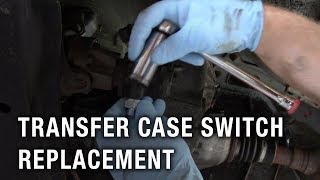
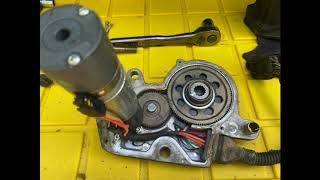
- Faulty 4WD Selector Switch or Transfer Case Position Sensor (Very Common) — The dash switch or transfer case sensor is the most frequent culprit. 🎬 Watch: How to replace the transfer case position sensor. Internal contacts wear out or short to ground, sending a near-zero voltage signal.
- Damaged or Corroded Wiring/Connectors (Common) — Exposed undercarriage wiring harnesses break, short out, or suffer connector pin corrosion from moisture and road debris.
- Poor Ground Connections (Common) — A loose or corroded ground strap for the control module or switch circuit causes a severe voltage drop.
- Blown Fuse (Less Common) — A blown 4WD system fuse severs the circuit entirely, dropping voltage to zero.
- Faulty Transfer Case Control Module (TCCM) (Rare) — The module managing the 4WD system fails internally or requires a software update.
- Low Battery Voltage (Rare) — A failing alternator or dead battery drops system-wide voltage, triggering false circuit codes.
- Low or Dirty Transfer Case Fluid (Rare) — Contaminated fluid causes mechanical binding, forcing the position sensor to report an implausible or stuck signal.
- Internal Transfer Case Malfunction (Rare) — Mechanical failure inside the transfer case prevents gear engagement, accompanied by grinding noises.
Symptoms
- Check Engine Light is on — The Malfunction Indicator Lamp (MIL) illuminates on your dashboard.
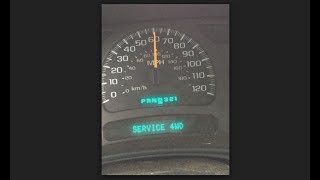
- Service 4WD Light is on or Flashing — The specific warning light for the four-wheel drive system illuminates or flashes. 🎬 Watch: Step-by-step diagnosis for a Service 4WD light.
- 4WD system is inoperative or stuck — You cannot switch between 2WD and 4WD, or the system locks in one mode.
- Harsh or erratic shifting — The transmission shifts hard or at the wrong times because it lacks transfer case status data.
- Reduced Fuel Economy — Improper transmission shifting decreases fuel efficiency by 2-5%.
- Vehicle stalls when stopping — The engine stalls when stopping after highway driving due to torque converter lockup issues.
Diagnostic Flowchart
Tap your situation to follow the diagnostic path that matches what you're seeing on this code.
Common Fixes & Costs
- Replacing the Transfer Case Position Sensor/Switch
— Parts: $30-$150, Labor: $100-$250, ~1.5 hr book time
(DIY)
Jeep Liberty/Cherokee/Ram: OEM Mopar 05083138AA, 68071234AA, 68402289AA (Alt: Standard Motor Products TCA-61, Dorman 600-399)
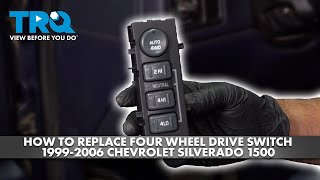
Chevrolet Silverado/GMC Sierra: OEM GM 12474401, 84115497 (Alt: Dorman 600-910, Cardone 48-1000) - Replacing the 4WD Selector Switch (in-dash)
— Parts: $30-$120, Labor: $50-$150, ~0.8 hr book time
(DIY)
Ford F-150: OEM Ford 4L3T-7Z155, 6L3T-7Z155 (Alt: Dorman 601-602, SKP SKTCA110)
Chevrolet Silverado/GMC Sierra: OEM GM 19259313 (Alt: Dorman 901-072, Standard Motor Products FWD70) - Repairing or Replacing Wiring Harness — Parts: $10-$100, Labor: $100-$300, ~1.5 hr book time (Intermediate)
- Updating TCCM Software — Parts: $0, Labor: $100-$200, ~1 hr book time (Professional)
- Replacing the Transfer Case Control Module (TCCM) — Parts: $200-$500, Labor: $100-$200, ~1 hr book time (Professional)
DIY vs Professional
- Replacing a Blown Fuse — Beginner: Yes
Tools: Fuse puller (often included in fuse box), owner's manual - Replacing the 4WD Selector Switch (in-dash) — Beginner: Yes
Tools: Trim removal tools, screwdriver set, socket set - Replacing the Transfer Case Position Sensor — Beginner: Yes, with caution
Tools: Jack and jack stands, socket set, wrenches, penetrating oil - Repairing Damaged Wiring — Beginner: No
Tools: Multimeter, wire strippers, crimpers, heat shrink tubing, soldering iron (recommended) - Replacing the TCCM — Beginner: No
Tools: Socket set, advanced scan tool for programming
Used vs. New Parts: Buying Guide
When a used part is worth it: A used in-dash 4WD selector switch from a salvage yard is cost-effective. Avoid used transfer case position sensors due to their exposure to harsh under-vehicle conditions.
Donor-vehicle mileage cap: roughly under 100000 miles for the part to have meaningful remaining life.
Donor quality checklist:
- Verify the exact part number, as identical-looking switches have different internal resistance values.
- Inspect sensor connectors for corrosion and plastic housings for heat cracks.
- Prefer donors from dry, southern climates to avoid salt-corroded parts.
Decision logic:
- If The cost of a new OEM or quality aftermarket part is less than $100 → buy new for the warranty and peace of mind.
- If The vehicle is older (10+ years) and the budget is the primary concern → a used switch is an acceptable risk from a trusted source.
- If The failure is intermittent or difficult to diagnose → buy a new part to eliminate it as a variable.
Warranty tradeoff: Used parts carry a 30-90 day warranty. New aftermarket parts offer 1-year to lifetime warranties. New OEM parts carry 1-2 year warranties.
Worst-case if a used part fails: $150-$300 if a used part fails after the warranty period, requiring repeat labor costs.
Cost of Not Fixing It
- 0-1 month: Inconsistent or complete failure of 4WD engagement, causing safety issues in adverse conditions and harsh shifting. (Added cost: $0)
- 1-6 months: If stuck in 4WD High or Low, driving on dry surfaces causes significant drivetrain binding, prematurely wearing tires, axles, and the transfer case. (Added cost: $400-$1500)
- 6+ months: Catastrophic failure of the transfer case due to continuous drivetrain binding, leading to a complete loss of power. (Added cost: $2000-$4000)
Diagnosis Steps
- Read the Codes and Freeze Frame Data
Use an OBD-II scanner to confirm P0838. Note related codes (P0700, P0836, P0837, P0839) to pinpoint the problem. Record freeze frame data to see vehicle conditions when the code set.
Tools: OBD-II Scanner (Beginner) - Inspect Fuses and Relays
Check the cabin and under-hood fuse boxes for blown fuses related to the 4WD system, TCCM, or TCM.
Tools: Owner's Manual, Fuse Puller or Pliers (Beginner) - Visually Inspect Wiring, Connectors, and Grounds
Trace the wiring from the transfer case position sensor. Look for broken wires, melted plastic, or corroded connector pins. Verify the ground wire connection to the chassis is clean and tight.
Tools: Flashlight, Safety Glasses (Intermediate) - [PRO TIP] Live Data Scan Tool Analysis
Monitor the '4WD Switch Position' PID on an advanced scan tool. The reading must match the selected gear (2H, 4H, 4L). If the scanner shows 'Invalid' or sticks in one position, the TCCM is receiving a faulty circuit signal.
Tools: Advanced OBD-II Scan Tool (with live data) (Professional) - Check Reference Voltage and Ground at the Sensor
Verify the transfer case position sensor receives the correct 5-volt reference from the TCCM using a multimeter. A reading below 4.8V indicates an upstream problem. Ensure the ground wire reads less than 100mV.
Tools: Digital Multimeter, Vehicle-Specific Wiring Diagram (Advanced) - Test the 4WD Switch/Sensor Signal Circuit
Back-probe the signal wire at the transfer case sensor. Have a helper cycle through 4WD modes. Voltage must change distinctly with each position. Consistently low voltage (under 0.5V) confirms a faulty sensor or shorted signal wire.
Tools: Digital Multimeter, Vehicle-Specific Repair Manual (Advanced) - [PRO TIP] Resistance Test of the Selector Switch
Test the in-dash selector switch by measuring its resistance across the middle pins. Resistance must change per mode (e.g., Ford switches read ~3.9kΩ in 2H, 1.1kΩ in 4H, 360Ω in 4L). Incorrect values mean the switch is dead.
Tools: Digital Multimeter, Vehicle-Specific Repair Manual (Advanced) - [PRO TIP] Circuit Resistance and Short-to-Ground Test
Disconnect the TCCM and sensor. Check signal wire resistance end-to-end; anything over 5.0 ohms is excessive. Measure resistance between the signal wire and chassis ground. A reading under 10kΩ confirms a short to ground.
Tools: Digital Multimeter, Vehicle-Specific Wiring Diagram (Advanced) - Check the Transfer Case Control Module (TCCM)
If wiring and sensors pass, the TCCM is faulty. Use an advanced scan tool to check for internal module faults. Dealership software updates often fix this without replacing the hardware.
Tools: Advanced Scan Tool (Professional) - [PRO TIP] Oscilloscope Waveform Analysis
For intermittent issues, connect an oscilloscope to the signal and ground wires. Cycle the 4WD system to verify clean, stable voltage changes. Glitches or dropouts indicate failing sensors or wiring faults missed by multimeters.
Tools: Oscilloscope, Wiring Diagram (Professional)
When This Code Triggers (Freeze-Frame Conditions)
- Engine Coolant Temp: 170-210°F (Engine at normal operating temperature)
- RPM: 600-800 (At idle or during low-speed driving shortly after a gear shift attempt)
- Engine Load: 15-40% (Low to moderate load, not under heavy acceleration)
- Vehicle Speed: 0-25 mph (Triggers when stationary and attempting to shift 4WD modes, or at low city speeds)
Related Codes
- P0700 — Indicates 'Transmission Control System Malfunction'. It is an informational code set by the PCM when the TCM stores a fault. Seeing P0700 with P0838 confirms the issue is transmission-related.
- P0836 — A generic code for 'Four Wheel Drive (4WD) Switch Circuit'. It sets if the signal is missing entirely or irrational, whereas P0838 specifically flags low voltage.
- P0837 — Indicates 'Four Wheel Drive (4WD) Switch Circuit Range/Performance'. The signal is present but incorrect for the selected gear, often appearing alongside P0838 during circuit failure.
- P0839 — Indicates 'Four Wheel Drive (4WD) Switch Circuit High', the direct opposite of P0838. Seeing both indicates an intermittent short or a failing control module.
Climate & Environmental Factors
- High Humidity / Heavy Rain: Moisture penetrates weathered wiring insulation or unsealed connectors, causing pin corrosion. This increases resistance or creates a short to ground, triggering P0838.
- Cold Climates / Snow Belt Regions: Corrosive road salt and brine accelerate the degradation of the transfer case position sensor, connectors, and exposed ground straps.
- Off-Roading / Mud: Driving through mud and rough terrain physically stresses the wiring harness, snagging wires and packing connectors with debris.
How to Clear the Code After You Fix It
- Use an OBD-II scan tool to clear the P0838 code.
- Disconnecting the battery for 15-30 minutes clears the code, but is not the preferred method.
- Perform a 4WD system functional test by cycling through all modes (2H, 4H, 4L) to ensure the code does not immediately return.
Drive cycle (~20 minutes): Start the engine cold and idle for 2-3 minutes. Drive in mixed city conditions (25-40 mph) for 10 minutes with several stops. Drive at a steady highway speed (55-60 mph) for 5-8 minutes to allow the system to self-test.
Readiness monitors affected: Comprehensive Component Monitor
Before emissions retest: drive at least 50 miles to fully set monitors.
Watch out for:
- Clearing the code without confirming the fix. If the electrical fault exists, the code returns immediately upon 4WD activation.
- Failing to verify mechanical 4WD engagement. The dash light may turn off, but the system could remain non-functional.
Will This Fail Emissions / State Inspection?
Yes — this code typically fails an OBD-II emissions inspection.
- California: An illuminated Check Engine Light results in an automatic failure of the Smog Check inspection.
- Texas: Vehicles fail the OBDII test if the Malfunction Indicator Lamp (MIL) is commanded on in the 17 testing counties.
- New York: The NYVIP2 inspection fails any vehicle with an active Check Engine Light due to codes like P0838.
Most Commonly Affected Vehicles
- Jeep Liberty (2002-2007) — The transfer case position switch (Mopar Part #05083138AA) is a highly common failure item, triggering P0837 and P0838 codes.
- Ford F-150 (2004-2018) — Issues with the shift motor and position sensor are well-documented. For 2017-2019 models with 10-speed transmissions, harsh shifting often requires a TCCM software update.
- Chevrolet Silverado 1500 (2008-2016) — The transfer case encoder motor position sensor is a known weak point. TSB 22-NA-187 addresses water intrusion at the transfer case actuator connector causing corrosion.
- Dodge Ram 1500/2500 (2006-2018) — Wiring issues and transfer case position sensor failures are common. The sensor uses a resistive multiplexed circuit to send specific resistance values to the PCM.
- Jeep Cherokee (2014-2018) — Safety recall S55 (NHTSA 16V-529) addresses insufficient wire terminal crimps on the transaxle range sensor harness, which directly causes this code.
- Toyota Tacoma (2005-2015) — Transmission range sensor failures trigger this code. Weak batteries exacerbate the issue by dropping system voltage.
- Nissan Titan/Frontier (2004-2023) — Often related to the transfer case position switch or wiring. A voluntary service campaign was issued for the transfer case range sensor on 2023 models.
- Subaru Outback/Forester (2010-2018) — Points to issues within the transmission range sensor circuit, often accompanied by P0700. Subaru's extended CVT warranties may cover related repairs.
Manufacturer-Specific Notes
- Jeep: On early 2000s Liberty models, the transfer case position sensor is a guaranteed failure point. For 2014-2015 Cherokees, verify completion of safety recall S55 (NHTSA Campaign 16V-529) for bad wire terminal crimps.
- General Motors (Chevrolet/GMC): A 'Service 4WD' message is standard. The issue is rarely the dash switch; it is usually the transfer case encoder motor assembly or water intrusion at the actuator connector (TSB 22-NA-187).
- Ford: On F-150s, this code is frequently caused by a software glitch in the Transfer Case Control Module (TCCM). TSBs dictate reprogramming the TCCM as the first diagnostic step.
- Dodge/Ram: On Ram trucks with manual transfer case shifters, a flashing 4WD light with codes P0837 and P0838 points directly to the transfer case position sensor mounted on top of the unit.
Frequently Asked Questions
What is the most common mistake when diagnosing a P0838 code?
The most common mistake is replacing the 4WD switch or transfer case without performing a thorough electrical diagnosis. Technicians and DIYers often ignore simple wiring issues, corroded connectors, or bad grounds. Always test the circuit with a multimeter before buying expensive parts.
Can a software update really fix a P0838 code?
Yes. For certain Ford and GM vehicles, the Transfer Case Control Module (TCCM) misinterprets valid sensor signals due to software glitches. A dealership software reflash corrects this logic and resolves the code for about $150.
Can I fix a P0838 code myself?
Yes, if the problem is a blown fuse, a bad in-dash 4WD selector switch, or an accessible transfer case sensor. Stop DIYing and consult a professional shop if the issue involves complex wiring shorts or requires TCCM module programming.
How much does it cost to fix a P0838 code in 2024?
Costs range from $5 for a fuse to over $700 for a new Transfer Case Control Module. Most common repairs, like replacing a sensor or fixing a wire, cost between $150 and $400 at a repair shop. Expect a diagnostic fee of $100 to $150 before repairs begin.
What happens if I ignore the P0838 code?
Ignoring this code makes your 4WD system completely unreliable. You risk getting stuck in 4WD, which causes severe drivetrain binding and damage on dry pavement, or you lose 4WD capability entirely, posing a safety risk in bad weather.
Will a P0838 code cause my car to fail an emissions test?
Yes, an illuminated Check Engine Light automatically fails an emissions inspection in most states.
Is the 4WD switch the same as the transfer case position sensor?
They work together but are distinct components. The 4WD switch is the cabin control knob used by the driver. The transfer case position sensor mounts on the transfer case to confirm the actual mechanical gear engagement to the computer.
Can a bad ground wire cause a P0838 code?
Absolutely. A poor or corroded ground connection increases circuit resistance, dropping the return voltage signal below the expected threshold. Checking grounds is a critical diagnostic step that solves many P0838 codes.
Key Takeaways
- Code P0838 indicates the 4WD switch circuit voltage dropped below the 5-volt minimum threshold, blinding the computer to the transfer case's current gear.
- Replacing a faulty transfer case position sensor or in-dash 4WD switch resolves this code in over 70% of cases.
- Driving a vehicle stuck in 4WD on dry pavement causes severe drivetrain binding, leading to $1,500+ in transfer case and axle damage.
- Always test the circuit with a multimeter and check the 4WD system fuses before spending $200+ on a new Transfer Case Control Module.
Helpful Videos
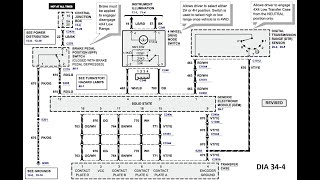

The information in this article is provided for general reference and educational purposes only. Vehicle specifications, procedures, and part compatibility can vary by production date, trim level, and region. Always consult your vehicle's factory service manual and verify part numbers before purchasing or performing repairs. Safety-critical components such as airbags, seat belts, and braking systems should be installed by a qualified professional.
- 🎬 Helpful Videos
- What Does P0838 Mean?
- Can I Drive With P0838?
- Common Causes
- Symptoms
- Diagnostic Flowchart
- Common Fixes & Costs
- DIY vs Professional
- Used vs. New Parts: Buying Guide
- Cost of Not Fixing It
- Diagnosis Steps
- When This Code Triggers (Freeze-Frame Conditions)
- Related Codes
- Climate & Environmental Factors
- How to Clear the Code After You Fix It
- Will This Fail Emissions / State Inspection?
- Most Commonly Affected Vehicles
- Manufacturer-Specific Notes
- Frequently Asked Questions
- What is the most common mistake when diagnosing a P0838 code?
- Can a software update really fix a P0838 code?
- Can I fix a P0838 code myself?
- How much does it cost to fix a P0838 code in 2024?
- What happens if I ignore the P0838 code?
- Will a P0838 code cause my car to fail an emissions test?
- Is the 4WD switch the same as the transfer case position sensor?
- Can a bad ground wire cause a P0838 code?
- Key Takeaways
- 🎟️ Get 5% Off