

OBD-II Code P0816: Downshift Switch Circuit Malfunction
What P0816 means, why it triggers, and how to fix it
- Code P0816 indicates an electrical fault in the manual downshift circuit, disabling paddle shifters or manual lever control.
- Inspect the center console for spilled drinks first; liquid damage to the shifter circuit board is the number one cause of this code.
- On 2004-2008 Honda and Acura models, replace the external Transmission Range Sensor (part #28900-RJB-043) before disassembling the interior shifter.
- Do not replace the Transmission Control Module (TCM) without first testing the switch for continuity and verifying 5V or 12V reference voltage at the connector.
- Expect to pay $0 to $15 for DIY contact cleaner to fix a sticky switch, or up to $400 for a shop to replace a damaged shifter assembly.
What Does P0816 Mean?
Code P0816 means the Powertrain Control Module (PCM) or Transmission Control Module (TCM) detects an electrical fault in the downshift switch circuit. This switch is the button, lever, or paddle used to manually select a lower gear. The code triggers when the switch signal is missing, shorted, or outside the expected voltage range.
Technical definition: The SAE/OBD-II definition is "Downshift Switch Circuit Malfunction." The PCM/TCM sets this code when it receives an implausible voltage or resistance signal from the downshift switch circuit for a predetermined time. For example, the system triggers P0816 if the switch reads 'ON' continuously for 60 seconds, indicating a short circuit or stuck button.
Can I Drive With P0816?
Yes, But With Caution. Yes, but immediate attention is recommended. The manual downshift function fails, and the transmission often unexpectedly enters 'limp mode,' locking you into 2nd or 3rd gear. Driving in limp mode for extended periods stresses transmission components and creates a safety hazard due to unpredictable power loss.
Common Causes
- Spilled liquid in the shifter assembly (Very Common) — Drinks spilled in the center console short out the downshift switch's circuit board or wiring. This is the most frequent cause and is often overlooked.
- Faulty Transmission Range Switch (Neutral Safety Switch) (Common) — On Honda, Acura, and Ford models, a faulty external Transmission Range Switch triggers P0816, rather than the interior shifter.
- Damaged or corroded wiring/connectors (Common) — Frayed, broken, or corroded wires interrupt the signal between the shifter and the TCM. This occurs frequently at the transmission housing connector due to road salt and moisture.
- Defective downshift switch (Common) — The physical switch inside the gear lever or paddle shifter fails from mechanical wear or internal electrical faults.
- Faulty Clock Spring (Paddle Shifters) (Less Common) — On vehicles with paddle shifters, a worn steering wheel clock spring breaks the electrical connection to the downshift paddle.
- Low Battery Voltage or Bad Ground (Less Common) — A weak battery or poor TCM ground connection causes widespread electrical noise, triggering false codes like P0816.
- Improperly installed aftermarket components (Rare) — Remote starters or security systems spliced into transmission harnesses create voltage irregularities that trigger the code.
- Faulty Transmission Control Module (TCM) (Rare) — The module controlling the transmission fails internally. Stop DIY and take the vehicle to a specialist if multimeter testing confirms the switch and wiring are perfect.
Symptoms
- Check Engine Light is on — The Malfunction Indicator Lamp illuminates on the dashboard.
- Manual shift mode is disabled — The vehicle ignores manual downshift inputs from the gear lever or paddle shifters.
- Vehicle enters 'limp mode' — The transmission defaults to 2nd or 3rd gear to prevent damage, severely limiting acceleration and top speed.
- Flashing transmission warning light — A specific transmission warning light or flashing 'D' illuminates on the instrument cluster.
- Harsh or erratic shifting — The vehicle exhibits harsh shifts or delayed downshifts in automatic mode due to conflicting TCM data.
Diagnostic Flowchart
Tap your situation to follow the diagnostic path that matches what you're seeing on this code.
Common Fixes & Costs
- Cleaning the shifter assembly — Parts: $0-$15, Labor: $75-$200, ~1.2 hr book time (DIY)
- Replacing the Transmission Range Sensor (Neutral Safety Switch)
— Parts: $50-$150, Labor: $100-$250, ~1.5 hr book time
(Intermediate)
: OEM
: OEM - Repairing or replacing damaged wiring/connectors — Parts: $10-$50, Labor: $150-$300, ~1.5 hr book time (Intermediate)
- Replacing the downshift switch or shifter assembly
— Parts: $75-$500, Labor: $125-$350, ~2 hr book time
(Intermediate)
: OEM
: OEM - Professional Diagnosis — Parts: $0, Labor: $150-$165, ~1 hr book time (Professional)
- Reprogramming or replacing the TCM — Parts: $500-$1500, Labor: $150-$300, ~2.5 hr book time (Professional)
Used vs. New Parts: Buying Guide
When a used part is worth it: Buy new for simple electronic switches like a Transmission Range Sensor to ensure longevity and warranty coverage. Buy used for complex mechanical shifter assemblies to save significant money, provided the donor part shows no liquid damage.
Donor-vehicle mileage cap: roughly under 80000 miles for the part to have meaningful remaining life.
Donor quality checklist:
- Verify the part number matches exactly; superseded numbers may not be compatible.
- Inspect shifter assemblies for signs of liquid spills, stickiness, or physical damage.
- Avoid parts from rust-belt states due to hidden connector corrosion.
Decision logic:
- If The part is a simple electronic switch like a Transmission Range Sensor → Buy new. The cost difference is small, and you get a full warranty.
- If The part is a complex mechanical/electronic assembly (e.g., shifter) → A used part from a reputable salvage yard with a warranty is a reasonable choice to save money.
- If The vehicle is a high-value or newer model → Favor new OEM parts to ensure perfect compatibility and longevity.
Warranty tradeoff: Used parts typically come with a 30-90 day warranty covering the part only. New aftermarket parts offer a 1-year to limited lifetime warranty. New OEM parts offer a 1-2 year warranty.
Worst-case if a used part fails: $200-$500 if a used part fails shortly after installation, primarily due to repeated labor costs.
What Happens If You Wait — Timeline
- 0-2 weeks: Check Engine Light illuminates. Manual downshift function is disabled. (MPG impact: 0%% · Added cost: $0)
- 2 weeks - 3 months: Vehicle intermittently enters 'limp mode,' locking the transmission in 2nd or 3rd gear. (MPG impact: 0-5%% · Added cost: $0-$50)
- 3-8 months: Erratic shifting stresses transmission mounts and internal clutch packs. (MPG impact: 0-5%% · Added cost: $100-$400)
- 8+ months: Short circuits overheat the wiring harness and permanently damage the TCM driver circuit. (MPG impact: 0-5%% · Added cost: $500-$2000+)
Cost of Not Fixing It
- 0-1 month: Inconvenience from disabled manual shifting. High risk of suddenly entering 'limp mode' in traffic. (Added cost: $0)
- 1-6 months: Erratic shifting places stress on transmission mounts. Frequent limp mode events cause premature wear on the default gear. (Added cost: $0-$500)
- 6+ months: Severe short circuits overheat the wiring harness and permanently damage the Transmission Control Module (TCM). (Added cost: $200-$2500+)
Diagnosis Steps
- Read the Trouble Codes
Use an OBD-II scanner to confirm P0816 and check for companion codes like P0815. Note the freeze frame data to see vehicle conditions when the code triggered.
Tools: OBD-II Scanner (Beginner) - Visually Inspect the Shifter Area
Inspect the gear shifter and center console for spilled liquids, stickiness, or physical damage. Clean any residue before proceeding.
Tools: Flashlight (Beginner) - Inspect Wiring and Connectors
Check the wiring harness and connectors at the shifter assembly and transmission range sensor. Look for broken wires, chafing, or green corrosion. Disconnect and reconnect to ensure proper seating.
Tools: Flashlight, Trim removal tools (Intermediate) - Test the Downshift Switch
Use a digital multimeter (DVOM) to test the switch for continuity. It must show near-zero resistance when pressed and infinite resistance when released.
Tools: Digital Multimeter (DVOM), Service manual (Intermediate) - Check for Voltage and Ground
With the key on (engine off), verify the switch receives the correct reference voltage (typically 5V or 12V) from the TCM and has a solid ground. Missing voltage indicates a broken wire.
Tools: Digital Multimeter (DVOM), Service manual (Advanced) - Check Switch Signal Voltage
Backprobe the signal wire. Voltage must sit at the reference level (e.g., 5V) and drop to near 0V when pressing the switch. A stuck voltage confirms a bad switch or shorted wire.
Tools: Digital Multimeter (DVOM), T-pins or back-probes (Advanced) - Use Live Data and Wiggle Test
Monitor the downshift switch PID on a scan tool. Gently wiggle the wiring harness. If the 'Off/On' status flickers without pressing the button, locate and repair the intermittent short.
Tools: Professional OBD-II Scan Tool (Advanced) - Scope the Signal Circuit
Connect an oscilloscope to the signal wire. A clean square wave must appear when operating the switch. A noisy waveform indicates a failing switch or poor ground.
Tools: Automotive Oscilloscope, Service manual (Professional) - Test the TCM Circuit
If the switch and wiring test perfectly, the TCM is suspect. Stop DIY testing and take the vehicle to a transmission specialist to prevent module damage.
Tools: Digital Multimeter (DVOM), Service manual, Pinout diagrams (Professional)
When This Code Triggers (Freeze-Frame Conditions)
- Engine Coolant Temp: 170-210°F (Code typically sets when the engine reaches full operating temperature.)
- Engine RPM: 1200-3000 RPM (Fault detects during steady-state driving, not at idle.)
- Vehicle Speed: 25-60 mph (Triggers at city and highway cruising speeds.)
- Calculated Load: 20-50% (Occurs under normal driving load, not during heavy acceleration or towing.)
Related Codes
- P0815 — Companion code for the Upshift Switch. If both appear, the fault is a shared component like the shifter circuit board or main ground, not an individual switch.
- P0705 — Transmission Range Sensor Circuit malfunction. Seeing this with P0816 confirms the external range sensor is the root cause.
- P2780 — Downshift Switch Circuit Low. Indicates a constant low signal voltage, specifically pointing to a short to ground.
- P2781 — Downshift Switch Circuit High. Indicates a constant high signal voltage, specifically pointing to an open circuit or short to power.
Climate & Environmental Factors
- High Humidity / Water Exposure: Direct water ingress accelerates corrosion on external connectors, wicking into terminals and causing short circuits.
- Road Salt (Winter Climates): Salty water acts as an electrolyte, rapidly degrading copper wires and connector pins on undercarriage components like the Transmission Range Sensor.
- Extreme Cold: Freezing temperatures make plastic wiring insulation brittle, causing cracks that allow moisture to enter and corrode the circuit.
How to Talk to a Mechanic About This Code
Say this: "I have a P0816 code and manual shift is disabled. Please perform a one-hour diagnostic to test the downshift switch, wiring, and transmission range sensor before quoting major parts."
This signals you are an informed customer. It directs the technician to the most likely fixes first, preventing them from immediately quoting an expensive part like a new shifter assembly or TCM without proper testing.
Avoid saying:
- 'My check engine light is on, can you look at it?'
- 'The transmission is acting weird.'
- 'Just fix whatever is wrong, I need it back today.'
Questions to ask before authorizing the repair:
- Did you find any evidence of a liquid spill in the center console or shifter?
- Did you test the downshift switch itself with a multimeter for continuity and resistance?
- Were you able to see the switch status change using live data on a scan tool?
- If you're recommending a part replacement, can you explain how you ruled out a simple wiring or connector problem?
Where to Take It: Dealer vs Independent vs Chain
- Dealer:
Best for vehicles under warranty or covered by a TSB; otherwise, it's an expensive option.
Best for: Vehicles still under powertrain warranty., Known manufacturer-specific issues covered by a TSB or special coverage program (like on some Cadillac models)., Complex electrical issues on German brands (BMW, VW, Audi) where a factory scan tool is required.
Downsides: Highest labor rates, often 1.5-2x more than an independent shop., May default to replacing an entire assembly when only a small component has failed. (Typical cost: +50% vs. baseline) - Independent Shop:
Best fit for most situations. Efficiently diagnoses common electrical faults at a reasonable cost.
Best for: Out-of-warranty vehicles where cost is a factor., Diagnosing common electrical faults, which P0816 usually is., Vehicles with well-known fixes, like the transmission range sensor on Hondas.
Downsides: Diagnostic skill varies greatly. Look for shops with ASE-certified technicians. (Typical cost: +0% vs. baseline) - Chain Shop:
Avoid. Likely to misdiagnose electrical issues or recommend expensive parts without proper multimeter testing.
Best for: Simple, routine maintenance like oil changes or brake jobs.
Downsides: Technician skill can be inconsistent., Often lack the advanced diagnostic tools or experience for anything beyond basic code reading., Business model can pressure upselling unnecessary services. (Typical cost: -10% vs. baseline)
When to Walk Away From the Repair
If the repair cost exceeds 50% of the car's value, sell or trade it in.
- Car worth $4000, fix is $2200: Walk away. The repair cost is over 50% of the car's value. It's not a sound financial decision.
- Car worth $12000, fix is $450: Fix it. This is a relatively minor repair cost compared to the car's value and is well below the threshold.
- Car worth $2500, fix is $1500: Walk away. At 60% of the car's value, this repair is too expensive. The money is better put towards a replacement vehicle.
What Scan Tool You Need for This Code
Minimum: A scanner that can read and clear transmission codes and display live data PIDs (Parameter IDs).
A basic $20 code reader will only give you the P0816 code. It cannot show you the live status of the downshift switch ('On'/'Off'). This live data is essential for performing a 'wiggle test' on the wiring harness to find intermittent shorts.
Budget: BlueDriver Pro (~$100) — Reads P0816 and displays live data for the downshift switch to perform a wiggle test.
Mid-range: Foxwell NT510 Elite (~$180) — Provides OE-level diagnostics and bi-directional tests to manually command components.
Professional: Autel MaxiCOM MK808 / MK808BT (~$450-600) — Offers full bi-directional control, OE-level diagnostics, and detailed data logging.
Rent vs buy: For a one-time diagnosis, most auto parts stores will lend you a basic OBD-II scanner for free. However, their loaner tools may not support the live data needed for a full diagnosis. If you plan to do any future DIY repairs, buying a tool like the BlueDriver is a worthwhile investment.
How to Clear the Code After You Fix It
- Use an OBD-II scan tool to clear the diagnostic trouble codes (DTCs).
- Perform a complete drive cycle to run the vehicle's readiness monitors.
- Some vehicles require a specific TCM relearn procedure using a scan tool.
Drive cycle (~30 minutes): Start with a cold engine (coolant below 122°F). Idle for 2-3 minutes. Drive a mix of city (stop-and-go) and highway (steady cruise at 55 mph for 5-10 minutes) speeds. Perform several moderate accelerations and decelerations. Allow the vehicle to cool completely and repeat if necessary.
Readiness monitors affected: Comprehensive Component Monitor (CCM), Catalyst (CAT) Monitor, Oxygen (O2) Sensor Monitor
Before emissions retest: drive at least 50 miles to fully set monitors.
Watch out for:
- Disconnecting the battery clears the code but resets all readiness monitors to 'Not Ready', guaranteeing an emissions test failure.
- The code returns immediately if the root cause of the electrical fault is not repaired.
- Failing to meet specific drive cycle conditions (e.g., fuel level between 15-85%) prevents monitors from setting.
Will This Fail Emissions / State Inspection?
Yes — this code typically fails an OBD-II emissions inspection.
- California: An active Check Engine Light causes an automatic smog check failure. All readiness monitors must be 'Ready' after clearing the code.
- New York: The NYS DMV OBD-II scan automatically fails any vehicle with an active P0816 code.
- Texas: In the 17 emissions-testing counties, an illuminated Check Engine Light results in a failed inspection.
Most Commonly Affected Vehicles
- Acura / Honda TL, Accord, various models (2004-2008) — P0816 often appears with P0815 and P1717. The cause is almost always a faulty Transmission Range Switch (part 28900-RJB-043) on the transmission housing, not the interior shifter.
- BMW 3-Series (E90/E92), 5-Series, X5 (2006-2013) — On vehicles with ZF automatic transmissions, shifting issues stem from faults within the mechatronic unit or fluid leaks at the main connector sleeve.
- Cadillac ATS (2014-2015) — A known issue causes the vehicle to downshift unexpectedly, setting codes P0816 and P1876. GM issued Special Coverage Adjustment N182182280 for shifter replacement.
- Chevrolet / GMC Silverado, Sierra (2009-2018) — On trucks with 'TAP Shift', the Body Control Module sets P0816 if it detects the downshift switch stuck 'ON' for just 3 seconds, usually due to a faulty shifter handle button.
- Ford Focus (2005-2011) — This code is commonly triggered by a faulty inhibitor switch (neutral safety switch, part 7A247) on the side of the 4F27E automatic gearbox.
- Mitsubishi Lancer, Outlander (2008-2015) — On models with paddle shifters, the code sets if the TCM detects the downshift paddle switch stuck in the 'ON' position for more than 60 seconds.
- Jaguar S-Type, X-Type, XJ (2002-2010) — The 'J-gate' shifter assembly frequently fails due to spilled liquids damaging the internal circuit board.
- Volkswagen/Audi Various models with Tiptronic shifters (2004-2012) — Often caused by a faulty magnet or Hall effect sensor within the Tiptronic shifter assembly, or liquid damage to the circuit board.
Manufacturer-Specific Notes
- General Motors (Cadillac, Chevrolet): On 2014 Cadillac ATS models, a fault forces the car into first or second gear (Special Coverage N182182280). On Silverado/Sierra trucks, the BCM sets the code if the TAP Shift button sticks for just 3 seconds.
- Ford: On 2005-2011 Focus models, the actual cause is the external neutral safety switch (inhibitor switch) on the transmission housing, not the interior cabin switch.
- Mitsubishi: The TCM sets P0816 if it detects the downshift paddle held continuously for 60 seconds, treating it as a stuck switch.
- Acura / Honda: P0816 frequently appears alongside P0815 and P1717. This specific trio points directly to a failed external Transmission Range Switch (TSB 06-030).
Real Owner Stories
2005 Acura TL with 150K miles
Check Engine Light and flashing 'D' indicator light came on. Manual sport-shift mode was disabled. Codes P0816, P0815, and P1717 were present.
What they tried:
- A mechanic replaced a solenoid, but codes returned.
- A second mechanic suggested replacing pressure switches, which did not solve the problem.
Outcome: The owner replaced the Transmission Range Sensor (part # 28900-RJB-043) themselves. The codes cleared and did not return.
Lesson: On Honda/Acura vehicles, the combination of P0816, P0815, and P1717 points to the Transmission Range Sensor, not internal transmission components.
2005 Ford Focus with ~100K miles
'Transmission Malfunction' message appeared when selecting Reverse or Neutral. Code P0816 was stored. The car drove normally in 'D'.
What they tried:
- The owner suspected a problem with the interior shifter assembly.
Outcome: The owner replaced the external inhibitor switch (part reference 7A247) to resolve the issue.
Lesson: For certain Ford models, P0816 is misleading. The fault lies with the external transmission range switch, not the interior shifter.
2010 Jaguar XF after a drink spill
Soda was spilled into the 'J-gate' shifter console. Days later, the Check Engine Light came on with code P0816, and paddle shifters stopped working.
What they tried:
- The owner tried clearing the code, but it returned immediately.
- A shop quoted over $1,200 to replace the entire shifter assembly.
Outcome: The owner cleaned the sticky, dried soda residue off the shifter's internal circuit board with electronics cleaner. Paddle shifter function was restored.
Lesson: Always investigate for spilled liquids before authorizing expensive repairs. A simple cleaning often fixes the problem.
How to Prevent This Code From Triggering
- Use spill-proof mugs and avoid open containers in the car. (Daily habit) — Use spill-proof mugs to prevent liquid from shorting out the shifter assembly circuit board.
- Periodically clean the center console and shifter area. (Every 6 months) — Clean the center console every 6 months to prevent debris from binding the shifter buttons.
- Apply dielectric grease to external connectors. (When replacing related parts) — Apply dielectric grease to external transmission connectors to block moisture and road salt.
- Ensure the battery terminals are clean and tight. (Annually) — Clean battery terminals annually to prevent low voltage spikes that trigger false TCM codes.
Frequently Asked Questions
Can a spilled coffee really cause the P0816 code?
Yes, absolutely. Liquid seeps into the shifter assembly and shorts out the electronic components and wiring inside. This is the most common real-world cause.
What are the most common misdiagnosis mistakes for P0816?
The biggest mistake is immediately suspecting a faulty Transmission Control Module (TCM). Always start by checking for spilled liquids and testing the switch with a multimeter. Condemning an expensive control module without testing simpler components wastes money.
Is P0816 an electrical or mechanical problem?
P0816 is strictly an electrical circuit code. It indicates an open, short, or invalid voltage signal from the downshift switch. It does not mean your transmission has internal mechanical damage like a worn clutch.
Can a bad clock spring cause the P0816 code?
Yes. On vehicles with steering wheel paddle shifters, the wiring passes through a clock spring. A broken clock spring interrupts the downshift paddle signal, triggering the P0816 code.
What is 'limp mode'?
Limp mode is a fail-safe feature where the computer limits engine power and locks the transmission in 2nd or 3rd gear. It prevents further drivetrain damage when an electrical fault is detected. You can drive to a shop, but highway speeds are impossible.
Will my car still shift automatically in 'Drive'?
Yes. P0816 specifically disables the manual downshift function. The transmission continues to shift normally in standard 'Drive' unless the fault triggers limp mode.
Can I fix the P0816 code myself?
Yes, if you have a multimeter and basic electrical knowledge. You can clean a sticky switch or replace an external transmission range sensor yourself. Stop DIY and go to a shop if testing points to a faulty Transmission Control Module (TCM).
Can a bad battery cause a P0816 code?
Yes. A failing battery causes low voltage during startup, triggering random trouble codes across multiple modules. If P0816 appeared immediately after a dead battery, clear the code and see if it returns after fully charging the system.
Key Takeaways
- Code P0816 indicates an electrical fault in the manual downshift circuit, disabling paddle shifters or manual lever control.
- Inspect the center console for spilled drinks first; liquid damage to the shifter circuit board is the number one cause of this code.
- On 2004-2008 Honda and Acura models, replace the external Transmission Range Sensor (part #28900-RJB-043) before disassembling the interior shifter.
- Do not replace the Transmission Control Module (TCM) without first testing the switch for continuity and verifying 5V or 12V reference voltage at the connector.
- Expect to pay $0 to $15 for DIY contact cleaner to fix a sticky switch, or up to $400 for a shop to replace a damaged shifter assembly.
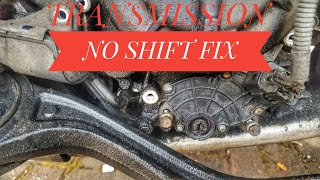
Helpful Videos

The information in this article is provided for general reference and educational purposes only. Vehicle specifications, procedures, and part compatibility can vary by production date, trim level, and region. Always consult your vehicle's factory service manual and verify part numbers before purchasing or performing repairs. Safety-critical components such as airbags, seat belts, and braking systems should be installed by a qualified professional.
- 🎬 Helpful Videos
- What Does P0816 Mean?
- Can I Drive With P0816?
- Common Causes
- Symptoms
- Diagnostic Flowchart
- Common Fixes & Costs
- Used vs. New Parts: Buying Guide
- What Happens If You Wait — Timeline
- Cost of Not Fixing It
- Diagnosis Steps
- When This Code Triggers (Freeze-Frame Conditions)
- Related Codes
- Climate & Environmental Factors
- How to Talk to a Mechanic About This Code
- Where to Take It: Dealer vs Independent vs Chain
- When to Walk Away From the Repair
- What Scan Tool You Need for This Code
- How to Clear the Code After You Fix It
- Will This Fail Emissions / State Inspection?
- Most Commonly Affected Vehicles
- Manufacturer-Specific Notes
- Real Owner Stories
- 2005 Acura TL with 150K miles
- 2005 Ford Focus with ~100K miles
- 2010 Jaguar XF after a drink spill
- How to Prevent This Code From Triggering
- Frequently Asked Questions
- Can a spilled coffee really cause the P0816 code?
- What are the most common misdiagnosis mistakes for P0816?
- Is P0816 an electrical or mechanical problem?
- Can a bad clock spring cause the P0816 code?
- What is 'limp mode'?
- Will my car still shift automatically in 'Drive'?
- Can I fix the P0816 code myself?
- Can a bad battery cause a P0816 code?
- Key Takeaways
- 🎟️ Get 5% Off