

OBD-II Code P0809: Clutch Position Sensor Circuit Intermittent
The Ultimate 2026 Guide: What P0809 Means, Why It Triggers, and How to Fix It
- Diagnose code P0809 immediately, as the intermittent signal drop in the clutch position sensor circuit will strand you with a no-start condition.
- On 2012-2017 Ford Focus and Fiesta models, P0809 exclusively points to a failed internal sensor within the lower 'B' transmission clutch actuator, requiring a $450-$800 replacement.
- Never replace the starter motor for a P0809 no-start symptom; the fault lies in the 5-volt safety interlock circuit that authorizes the starter to engage.
- Confirm a faulty switch-type pedal sensor using a digital multimeter; a working sensor reads under 5 ohms when pressed and Open Line (OL) when released.
- Swap the identical 'A' and 'B' clutch actuators on a Ford DPS6 transmission; if the code changes from P0809 to P0805, you have isolated the faulty $150 actuator.
What Does P0809 Mean?

Code P0809 indicates the Powertrain Control Module (PCM) or Transmission Control Module (TCM) detects an unstable or dropping signal from the clutch position sensor. This sensor tells the computer whether the clutch is engaged or disengaged. The PCM uses this 5-volt signal for the starter safety interlock, cruise control operation, and optimizing gear shifts in dual-clutch transmissions.
Technical definition: The SAE/ISO definition for P0809 is "Clutch Position Sensor 'A' Circuit Intermittent". This indicates the clutch position sensor signal is unstable, dropping out, or failing to perform within a specific timeframe. The PCM/TCM continuously monitors sensor voltage and triggers this code when the signal becomes unpredictable rather than consistently high or low.
Can I Drive With P0809?
No — Do Not Drive. Do not drive. On a standard manual transmission, you risk being stranded by a no-start condition or causing an accident if the engine starts in gear. On Ford Focus and Fiesta models with the DPS6 transmission, driving causes erratic shifting, violent shuddering, and sudden power loss in traffic. Continued driving destroys the clutch assembly, adding over $1,000 to the repair cost.
Common Causes

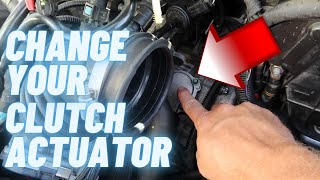
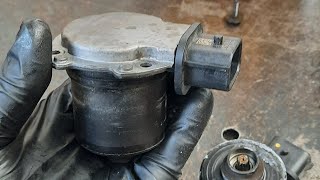
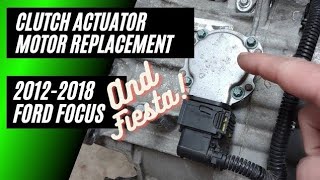
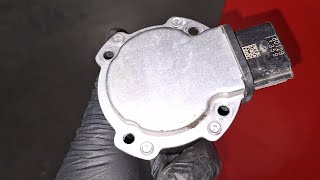
- Failed transmission clutch actuator (Ford specific) (Very Common) — On 2012-2017 Ford Focus and Fiesta models with the DPS6 transmission, P0809 exclusively points to a failed internal position sensor within the 'B' (lower) clutch actuator motor, not a foot pedal sensor. 🎬 See this explanation of Ford clutch position sensor faults.
- Defective clutch position sensor (Very Common) — The sensor is a mechanical switch or Hall effect sensor that wears out internally after thousands of pedal presses, sending a bouncing or erratic signal to the PCM.
- Damaged wiring or connectors (Common) — Foot traffic near the clutch pedal frays wires and breaks internal strands. Moisture and debris corrode connectors, causing intermittent signal drops.
- Loose or corroded ground strap (Common) — A loose or corroded ground strap introduces voltage fluctuations. On Ford models, a corroded ground point under the battery tray directly causes this intermittent fault.
- Misadjusted clutch position sensor (Common) — The sensor must align perfectly to detect full clutch pedal travel. If knocked loose or installed improperly, it only sends a signal intermittently at the extreme end of the pedal's stroke.
- Foreign object obstruction (Less Common) — A thick or bunched-up floor mat prevents the clutch pedal from fully depressing. This stops the sensor from sending a consistent 'clutch down' signal.
- Blown fuse or faulty fusible link (Rare) — A hairline fracture in the fuse powering the clutch position sensor circuit causes an intermittent electrical connection during vehicle vibration.
- Faulty Powertrain Control Module (PCM) (Very Rare) — The vehicle's main computer fails to process the sensor signal correctly. Replace the PCM only after exhaustively testing all wiring, grounds, and sensors.
Symptoms

- Engine will not start (no crank) — The engine refuses to crank because the computer does not receive a stable signal confirming the clutch pedal is depressed.
- Erratic shifting, shuddering, or stalling (Ford DPS6) — Affected Ford models experience harsh shifts, missed gears, severe shuddering, and stalling as the transmission struggles to engage the clutches.
- Check Engine Light is on — The PCM illuminates the Malfunction Indicator Lamp (MIL) immediately upon detecting the intermittent fault.
- Engine starts without pressing the clutch — The sensor fails in the 'closed' position, allowing the vehicle to start in gear and lurch forward or backward unexpectedly.
- Cruise control does not work — The cruise control system disables itself as a safety precaution because it cannot rely on the clutch sensor to disengage automatically.
- Transmission overheating warnings (Ford DPS6) — Incorrect clutch engagement caused by the faulty actuator generates excessive heat, triggering a dashboard warning message.
Diagnostic Flowchart
Tap your situation to follow the diagnostic path that matches what you're seeing on this code.
Common Fixes & Costs
- Replace Both Transmission Clutch Actuators (Ford DPS6) — Parts: $200-$400, Labor: $250-$400, ~2.5 hr book time (Professional)
- Replace Clutch Position Sensor — Parts: $15-$70, Labor: $100-$150, ~0.8 hr book time (DIY)
- Repair or Replace Damaged Wiring/Connector — Parts: $5-$30, Labor: $120-$250, ~1.5 hr book time (Intermediate)
- Adjust or Re-secure Clutch Position Sensor — Parts: $0, Labor: $50-$100, ~0.5 hr book time (DIY)
- Clean or Repair Main Ground Connection — Parts: $1-$10, Labor: $75-$125, ~0.7 hr book time (DIY)
DIY vs Professional
- Replace Both Transmission Clutch Actuators (Ford DPS6) — Beginner:
Tools: Socket set, E8 external Torx socket, torque wrench, jack, advanced scan tool. - Replace Clutch Position Sensor — Beginner:
Tools: Basic hand tools, flashlight, multimeter. - Repair or Replace Damaged Wiring/Connector — Beginner:
Tools: Multimeter, wire strippers, soldering iron, heat shrink tubing. - Adjust or Re-secure Clutch Position Sensor — Beginner:
Tools: Basic hand tools, flashlight. - Clean or Repair Main Ground Connection — Beginner:
Tools: Socket set, wire brush, sandpaper, dielectric grease.
Used vs. New Parts: Buying Guide
When a used part is worth it: Buy a used pedal sensor from a salvage yard only for older, high-mileage manual vehicles on a strict budget. Never buy a used Ford DPS6 actuator due to its high failure rate.
Donor-vehicle mileage cap: roughly under 60000 miles for the part to have meaningful remaining life.
Donor quality checklist:
- Verify the part number exactly, as superseded electronic parts lack backward compatibility.
- Ensure the plastic housing is intact and connector pins are straight and free of green corrosion.
- Avoid used Ford DPS6 actuators entirely; their internal wear is invisible and guarantees premature failure.
Decision logic:
- If The part is a Ford DPS6 clutch actuator (AE8Z-7C604-A) → Buy new OEM (Motorcraft) or high-quality aftermarket. Used parts carry an unacceptable risk of repeat labor costs.
- If The part is a simple clutch pedal switch and the vehicle is over 10 years old → A used part is acceptable, though new aftermarket parts are often only slightly more expensive.
- If The new OEM part costs less than $100 → Buy new. The warranty and reliability outweigh the minimal savings of a used component.
Warranty tradeoff: Used parts offer a 30-day warranty. New aftermarket parts provide 1-year to lifetime warranties. New OEM parts include a 1-2 year warranty.
Worst-case if a used part fails: $300-$500. If a used electronic part fails, you pay for the replacement part and full labor costs a second time.
What Happens If You Wait — Timeline
- 0-1 month: Initial intermittent fault. Check Engine Light illuminates. Manual cars experience occasional no-starts. Ford DPS6 models exhibit slight hesitation. (MPG impact: 0%% · Added cost: $0)
- 1-3 months: Fault frequency increases. Manual cars strand drivers. Ford DPS6 models shudder harshly and display 'Transmission Overheating' warnings in traffic. (MPG impact: 0-5%% · Added cost: $150 (Towing))
- 3-6 months (Ford DPS6): Actuator failure causes violent shifting and unexpected stalling. Improper clutch engagement severely wears the clutch forks and clutch pack. (MPG impact: 5-10%% · Added cost: $1500-$2500 (Clutch pack and fork replacement required))
- 6+ months (Ford DPS6): Catastrophic transmission failure. The vehicle gets stuck in gear or fails to engage entirely, requiring a complete transmission replacement. (MPG impact: 10-20%% · Added cost: $3500-$5000 (Full transmission replacement))
Cost of Not Fixing It
- Immediate: Stranded by a no-start condition or experiencing a severe safety hazard if the vehicle starts in gear. (Added cost: $100-$200 (Towing))
- 1-3 months (Ford DPS6): Driving with a faulty actuator causes improper clutch engagement, leading to excessive wear on the clutch forks and clutch pack. (Added cost: $1500-$2500 (Clutch pack and fork replacement))
- 3+ months (Ford DPS6): Catastrophic failure of the dual-clutch assembly. Constant stress from the malfunctioning actuator destroys internal transmission components. (Added cost: $3500-$5000 (Full transmission replacement))
Diagnosis Steps

- Read the Code and Freeze Frame Data
Use an OBD-II scanner to confirm P0809. Analyze freeze frame data to identify vehicle speed and engine load when the code triggered. Check for sister codes like P0805, P0806, or P087A.
Tools: OBD-II Scanner (Beginner) - Check Technical Service Bulletins (TSBs)
Search for TSBs and recalls for your specific VIN. Ford issued multiple TSBs (16-0109) and Customer Satisfaction Programs (20B23) covering this exact DPS6 transmission failure.
Tools: Internet access (Beginner) - Ford DPS6 Actuator Swap Diagnosis
For 2012-2017 Ford Focus/Fiesta models, swap the identical upper (Clutch 'A') and lower (Clutch 'B') actuators. Clear codes and drive. If P0809 changes to P0805, the actuator you moved is faulty.
Tools: Basic hand tools (sockets, wrenches, E8 Torx socket) (Advanced) - Visual Inspection
Inspect the clutch pedal assembly with a flashlight. Verify the sensor is securely mounted, wiring is intact, and floor mats are not obstructing pedal travel.
Tools: Flashlight (Beginner) - Perform a "Wiggle Test"
With the ignition on and a scanner displaying live data for the clutch sensor, gently wiggle the wiring harness. If the data reading jumps or cuts out, you found the intermittent connection break.
Tools: OBD-II Scanner (with live data) (Intermediate) - Test the Sensor Circuit with a Multimeter
Disconnect the sensor and turn the ignition on. Test the connector for a 5V reference (or 12V) and a ground wire reading near 0 ohms. Missing power or ground indicates a wiring or PCM fault.
Tools: Digital Multimeter (Intermediate) - Test Sensor Resistance
Disconnect a two-wire clutch switch and set a multimeter to Ohms (Ω). The reading must be Open Line (OL) when released and under 5 ohms when pressed. Any other reading confirms a faulty switch.
Tools: Digital Multimeter (Advanced) - Ford DPS6 Actuator Circuit Test
Disconnect the 6-pin lower actuator connector (C1634). With the key on, verify a 5V reference on Pin 5 and ground on Pin 3. Incorrect readings point to the wiring harness or TCM.
Tools: Digital Multimeter, Wiring Diagram (Advanced) - Scan Tool Live Data Analysis
Monitor the clutch position PID on a live data scanner. The value must toggle cleanly between 'On' and 'Off' or change smoothly as a percentage. Erratic jumping indicates a circuit fault.
Tools: Advanced OBD-II Scanner (with live data) (Advanced) - Analyze Sensor Signal with an Oscilloscope
Back-probe the sensor's signal wire. Slowly press the clutch pedal. A faulty sensor shows a noisy signal with voltage spikes and dropouts, confirming an internal failure a multimeter misses.
Tools: Oscilloscope (Advanced)
When This Code Triggers (Freeze-Frame Conditions)
- Engine Coolant Temp: 170-210°F (Fully warmed up. Intermittent electrical faults often manifest after components reach operating temperature.)
- RPM: 0 or 700-800 (During engine start attempt (cranking) or at idle, when the clutch position signal is critical.)
- Engine Load: 15-30% (Low load, such as idling or steady-state cruising, where signal fluctuations trigger the code.)
- Vehicle Speed: 0 mph (When attempting to start the vehicle. This is when the starter interlock relies entirely on the sensor.)
Related Codes
- P0805 — Refers to the 'A' circuit for the clutch position sensor. On Ford DPS6 transmissions, swapping the 'A' and 'B' actuators changes a P0809 code to P0805, confirming a faulty actuator.
- P0806 — Indicates a 'Range/Performance' issue. While P0809 is an intermittent signal drop, P0806 means the signal is present but outside the expected voltage range for the pedal's physical position.
- P0807 — Indicates 'Circuit Low'. P0809 is an intermittent fault, while P0807 is a hard fault caused by a permanent short to ground or a completely dead sensor.
- P0808 — Indicates 'Circuit High'. P0809 describes a signal cutting in and out, whereas P0808 indicates a constant high voltage state due to a short to power.
Climate & Environmental Factors
- High Humidity: Accelerates corrosion on electrical pins and ground points. Coastal salt air creates a highly conductive electrolyte, speeding up contact degradation and causing intermittent signals.
- Temperature Cycles: Expanding and contracting air draws moisture into wiring harnesses. Overnight condensation on metal surfaces corrodes internal connector pins.
- Winter Road Salt: Corrosive slush sprays into the engine bay, severely corroding ground straps and external transmission connectors, particularly the clutch actuator connectors on Ford models.
How to Talk to a Mechanic About This Code
Say this: "For a Ford Focus/Fiesta: "I have a P0809 code indicating a DPS6 transmission clutch actuator fault. Please diagnose the actuator circuit and check my VIN for Ford programs 20B23 and 14M02." For manual cars: "I have a P0809 code and an intermittent no-start. Please test the clutch pedal position sensor circuit, including wiring and grounds.""
Directs the mechanic to the exact component, preventing expensive misdiagnoses like starter motor replacements. It also prompts the shop to check for Ford warranty coverage.
Avoid saying:
- My car won't start, I think it's the starter.
- My check engine light is on, can you just fix it?
- The transmission is acting weird.
Questions to ask before authorizing the repair:
- Did you confirm the failure via a wiring test or an actuator swap?
- Will you perform the transmission adaptive learning procedure after replacing the Ford actuators?
- Is the fault isolated to the sensor, the connector, or a ground point?
- What is the warranty on the replacement parts?
Where to Take It: Dealer vs Independent vs Chain
- Dealer:
Highly Recommended for Ford Focus/Fiesta. Dealers possess the specific expertise and scan tools required for DPS6 transmission repairs and warranty claims.
Best for: Ford Focus/Fiesta (2012-2017) with code P0809., Vehicles covered by warranty extensions or customer satisfaction programs.
Downsides: Highest labor rates., Often replaces entire assemblies rather than repairing specific wiring faults. (Typical cost: +50% vs. baseline) - Independent Shop:
Best Fit for manual transmission cars. Ensure the shop has the correct scan tool before authorizing Ford DPS6 repairs.
Best for: Standard manual transmission vehicles., Out-of-warranty Ford DPS6 repairs at specialized transmission shops.
Downsides: May lack the advanced scan tool required for Ford transmission adaptive learning procedures. (Typical cost: +0% vs. baseline) - Chain Shop:
AVOID. Intermittent electrical faults and Ford DPS6 complexities exceed the capabilities of general chain shops.
Best for: Simple parts replacement where the diagnosis is already confirmed.
Downsides: High risk of misdiagnosing P0809 as a starter motor failure., Lacks the expertise and tools for Ford DPS6 transmission relearn procedures. (Typical cost: -10% vs. baseline)
When to Walk Away From the Repair
If the estimated repair cost exceeds 50% of the vehicle's current private-party value, sell or trade in the vehicle.
- Car worth $3500, fix is $220: Fix it. The repair cost is minor relative to the vehicle's value.
- Car worth $4000, fix is $800: Fix it. The repair resolves a major drivability issue and keeps the vehicle operational.
- Car worth $2500, fix is $2500: Walk away. The repair cost equals the vehicle's value.
What Scan Tool You Need for This Code
Minimum: OBD-II reader with Live Data streaming.
Basic readers only display the code. Diagnosing an intermittent fault requires Live Data to monitor the sensor's signal in real-time while pressing the pedal or wiggling wires.
Budget: BlueDriver Pro (~$120) — Streams live data to your smartphone, allowing you to verify pedal sensor operation on standard manual vehicles.
Mid-range: Foxwell NT510 Elite (~$180) — Provides bidirectional controls and performs the mandatory 'Transmission Adaptive Learning' procedure required after replacing Ford DPS6 clutch actuators.
Professional: Autel MaxiCOM MK808 (~$500) — Delivers professional-level live data graphing to spot intermittent drops and reliably executes all manufacturer-specific relearn procedures.
Rent vs buy: Rent a basic scanner for manual pedal sensors. Buy a mid-range scanner for Ford Focus/Fiesta repairs, as the adaptive learning procedure is mandatory.
How to Clear the Code After You Fix It
- Use an OBD-II scan tool to clear the P0809 code.
- For Ford DPS6 transmissions, perform the 'Transmission Adaptive Learning' procedure using an advanced scan tool.
- Perform a complete drive cycle to set readiness monitors.
Drive cycle (~30 minutes): A drive cycle requires a cold start (sitting 8+ hours), 3 minutes of idling, 15 minutes of mixed city driving with stops, and 5 minutes of steady highway cruising at 55-60 mph.
Readiness monitors affected: Comprehensive Component Monitor (CCM), Catalyst (CAT) Monitor, Evaporative System (EVAP) Monitor
Before emissions retest: drive at least 50 miles to fully set monitors.
Watch out for:
- Disconnecting the battery clears the code but resets all readiness monitors, guaranteeing an emissions test failure.
- The code returns immediately if you fail to repair the underlying intermittent wiring fault.
- Skipping the adaptive learning procedure on Ford DPS6 transmissions results in continued harsh shifting.
Will This Fail Emissions / State Inspection?
Yes — this code typically fails an OBD-II emissions inspection.
- California: An active Check Engine Light from P0809 is an automatic failure. You must complete a full drive cycle to set readiness monitors after repair.
- New York: The NYS DMV OBD-II scan fails any vehicle with an illuminated Check Engine Light, including P0809.
- Texas: In emissions-testing counties, an illuminated Check Engine Light is an automatic failure. Clearing the code without setting readiness monitors results in a rejection.
Most Commonly Affected Vehicles
- Ford Focus (2012-2017) — Extremely common due to DPS6 transmission clutch actuator motor failures. Check VIN for Ford Customer Satisfaction Programs 20B23 or 14M02.
- Ford Fiesta (2012-2017) — Shares the problematic DPS6 transmission with the Focus. The diagnostic actuator swap is the definitive test for this model.
- Chevrolet Cruze (2011-2016) — Prone to 3-terminal clutch pedal position sensor switch wear. The part is inexpensive and easily accessible on the pedal assembly.
- Hyundai Veloster (2012-2017) — Frequent clutch pedal switch failures cause intermittent no-start conditions and cruise control deactivation.
- Volkswagen Golf/Jetta (2010-2018) — Internal contacts in the clutch pedal sensor wear out, triggering P0809 and disabling the start-stop system.
- Subaru Impreza/WRX (2008-2014) — Uses two clutch switches. The lower switch controls the starter interlock (causing P0809), while the upper switch disengages cruise control.
- Dodge Dart (2013-2016) — Clutch pedal position sensor failures prevent the car from starting. This is a common and straightforward DIY replacement.
- General Motors Cobalt / G5 / HHR (2005-2010) — The shared clutch pedal position sensor platform is a known failure point causing intermittent no-crank symptoms.
Manufacturer-Specific Notes

- Ford: On 2012-2017 Focus and Fiesta models, P0809 indicates a failure of the lower transmission clutch actuator motor, not a pedal sensor. Ford issued Customer Satisfaction Program 20B23 to address this specific actuator failure.
- Subaru: Manual models feature two separate clutch pedal switches. Diagnosing the correct lower switch is essential, as the upper switch only controls cruise control.
- General Motors: The clutch position sensor integrates into a larger pedal assembly or shares a connector with the brake pedal sensor. A fault in this shared harness triggers codes for both systems simultaneously.
- Toyota: On Multi-Mode Transmission (MMT) models, P0809 points to a failing clutch actuator electrical motor or the TCM, mirroring the Ford DPS6 issue.
Real Owner Stories
2015 Ford Focus SE at 136k miles - The Sudden Failure
Following a routine battery replacement, the car developed severe shifting issues, transmission overheating warnings, and codes P0809 and P2872.
What they tried:
- The owner attempted a TCM reset procedure found online, assuming the battery swap caused a computer glitch.
Outcome: Replacing both clutch actuators resolved all error codes and shifting problems. The battery swap merely exposed actuators that were already on the verge of failure.
Lesson: A sudden loss of battery power on a Ford DPS6 triggers underlying actuator weaknesses. Test the actuators before assuming a complex TCM failure.
2014 Ford Focus at 76k miles - The Misdiagnosis
The vehicle exhibited erratic shifting and a Check Engine Light with codes P0806 and P0809. The owner initially suspected a failed Transmission Control Module (TCM).
What they tried:
- Instead of replacing the $800 TCM, the owner replaced the upper and lower clutch actuators.
Outcome: Replacing the actuators permanently cleared the codes and restored normal shifting.
Lesson: Do not immediately condemn the expensive TCM. For P0809, the clutch actuators are the most likely root cause. Replacing them first saves significant diagnostic costs.
Manual Transmission Chevy Cruze - The Simple Fix
The car intermittently refused to crank, though all dashboard lights functioned normally. The owner suspected a dead starter.
What they tried:
- After scanning code P0809, the owner inspected the clutch pedal position sensor circuit instead of replacing the starter.
Outcome: The clutch pedal position switch was loose in its bracket. Re-securing the sensor solved the no-start condition for $0.
Lesson: Always perform a visual inspection before buying parts for a no-crank symptom. Verify the sensor is securely mounted and unobstructed.
How to Prevent This Code From Triggering
- Clean and protect electrical connectors (Every 30,000 miles or 2 years) — Applying dielectric grease prevents moisture and road salt from corroding connector pins, eliminating intermittent signal drops.
- Change transmission fluid on Ford DPS6 transmissions (Every 30,000-50,000 miles) — Clean fluid maintains the health of the internal gear-shifting mechanisms and actuators, preventing premature failure.
- Inspect and secure wiring harnesses (During any under-dash or engine bay work) — Securing harnesses in their clips prevents chafing against sharp edges, eliminating intermittent shorts.
- Address fluid leaks promptly (As soon as noticed) — Engine oil or coolant degrades wiring insulation and penetrates connectors, causing shorts in externally mounted DPS6 actuators.
Frequently Asked Questions
Can a bad clutch position sensor cause my car not to start?
Yes. The sensor acts as a safety switch ensuring the engine only starts when the clutch is disengaged. If it fails, the computer blocks the starter from engaging.
Is it safe to drive with a P0809 code?
No. You risk being stranded by a no-start condition or the car starting in gear and lurching unexpectedly. On Ford DPS6 models, it causes dangerous stalling and erratic shifting in traffic.
How much does it cost to fix P0809?
Replacing a manual clutch pedal sensor costs $115 to $220 for parts and labor. Replacing both clutch actuators on a Ford Focus or Fiesta costs $450 to $800 at an independent shop. Check your VIN for Ford warranty extensions that cover this repair.
What is the most common misdiagnosis for a P0809 code?
The most common mistake is replacing the starter motor or solenoid when the engine refuses to crank. Code P0809 indicates a failure in the signal telling the starter to engage, not a mechanical starter failure. On Fords, mechanics mistakenly hunt for a non-existent clutch pedal sensor instead of checking the transmission actuator.
Can I fix the P0809 code myself?
Yes, replacing a clutch pedal position sensor is a straightforward DIY repair requiring basic hand tools and a multimeter. Replacing a Ford DPS6 actuator is more complex but manageable for an experienced DIYer. You must use an advanced scan tool to perform a transmission adaptive relearn after the Ford repair.
My car has an automatic transmission, why do I have a clutch sensor code?
Dual-clutch transmissions (DCTs), like the Ford PowerShift DPS6, use two electronically controlled mechanical clutches. Code P0809 refers to a sensor inside the transmission's lower clutch actuator motor, not a foot pedal. In a traditional fluid-driven automatic, this code indicates a PCM programming error or neutral safety switch fault.
What's the difference between P0809 and P0805 on a Ford Focus?
Code P0809 refers to the Clutch Position Sensor 'B' circuit located in the lower actuator. Code P0805 refers to the 'A' circuit in the upper actuator. Swapping these identical actuators is the definitive diagnostic test; if P0809 becomes P0805, the actuator is bad.
Can I bypass the clutch position sensor to start my car?
Do not bypass the clutch position sensor. Bypassing it disables a critical safety interlock, allowing the car to start in gear and lurch forward, causing severe accidents.
Will a bad clutch sensor cause stalling?
In a standard manual car, stalling is unlikely because the sensor primarily controls starting and cruise control. On a Ford DPS6 transmission, a bad actuator sensor directly causes stalling. The TCM loses track of the clutch position and fails to disengage the clutch when coming to a stop.
Key Takeaways
- Diagnose code P0809 immediately, as the intermittent signal drop in the clutch position sensor circuit will strand you with a no-start condition.
- On 2012-2017 Ford Focus and Fiesta models, P0809 exclusively points to a failed internal sensor within the lower 'B' transmission clutch actuator, requiring a $450-$800 replacement.
- Never replace the starter motor for a P0809 no-start symptom; the fault lies in the 5-volt safety interlock circuit that authorizes the starter to engage.
- Confirm a faulty switch-type pedal sensor using a digital multimeter; a working sensor reads under 5 ohms when pressed and Open Line (OL) when released.
- Swap the identical 'A' and 'B' clutch actuators on a Ford DPS6 transmission; if the code changes from P0809 to P0805, you have isolated the faulty $150 actuator.
Helpful Videos

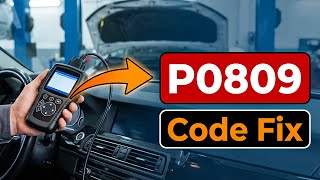

The information in this article is provided for general reference and educational purposes only. Vehicle specifications, procedures, and part compatibility can vary by production date, trim level, and region. Always consult your vehicle's factory service manual and verify part numbers before purchasing or performing repairs. Safety-critical components such as airbags, seat belts, and braking systems should be installed by a qualified professional.
- 🎬 Helpful Videos
- What Does P0809 Mean?
- Can I Drive With P0809?
- Common Causes
- Symptoms
- Diagnostic Flowchart
- Common Fixes & Costs
- DIY vs Professional
- Used vs. New Parts: Buying Guide
- What Happens If You Wait — Timeline
- Cost of Not Fixing It
- Diagnosis Steps
- When This Code Triggers (Freeze-Frame Conditions)
- Related Codes
- Climate & Environmental Factors
- How to Talk to a Mechanic About This Code
- Where to Take It: Dealer vs Independent vs Chain
- When to Walk Away From the Repair
- What Scan Tool You Need for This Code
- How to Clear the Code After You Fix It
- Will This Fail Emissions / State Inspection?
- Most Commonly Affected Vehicles
- Manufacturer-Specific Notes
- Real Owner Stories
- 2015 Ford Focus SE at 136k miles - The Sudden Failure
- 2014 Ford Focus at 76k miles - The Misdiagnosis
- Manual Transmission Chevy Cruze - The Simple Fix
- How to Prevent This Code From Triggering
- Frequently Asked Questions
- Can a bad clutch position sensor cause my car not to start?
- Is it safe to drive with a P0809 code?
- How much does it cost to fix P0809?
- What is the most common misdiagnosis for a P0809 code?
- Can I fix the P0809 code myself?
- My car has an automatic transmission, why do I have a clutch sensor code?
- What's the difference between P0809 and P0805 on a Ford Focus?
- Can I bypass the clutch position sensor to start my car?
- Will a bad clutch sensor cause stalling?
- Key Takeaways
- 🎟️ Get 5% Off