

P0806 on 2016-2017 Ford Focus: Clutch Position Sensor Causes and Fixes
On a 2016-2017 Ford Focus, code P0806 almost always points to a failed clutch actuator motor on the DPS6 PowerShift automatic transmission. This is a well-documented issue confirmed by Ford's own technical service bulletins. The fix is to replace one or both clutch actuators, which contain the integrated position sensors.
- P0806 on a 2016-2017 Focus is almost certainly a problem with the DPS6 PowerShift automatic transmission.
- The most likely cause is a failed clutch actuator motor, a known issue confirmed by Ford TSB #20B23.
- A simple and effective diagnostic is to swap the upper and lower clutch actuators to see if the code follows the part (changes to P0809).
- If the actuator is not the cause, the Transmission Control Module (TCM) is the next most likely culprit.
- Always use high-quality OEM (Motorcraft) parts for this repair, as aftermarket components are known to be unreliable.
What's Unique About the 2016-2017 Ford FOCUS

This code is deeply tied to the infamous DPS6 "PowerShift" transmission in the third-generation Focus. Unlike a traditional automatic, the DPS6 is an automated manual (also known as a direct-shift gearbox or DSG) that uses two dry clutches and electric actuator motors. These components, specifically the clutch actuator motors and the Transmission Control Module (TCM), are known to have high failure rates, leading to class-action lawsuits and numerous customer satisfaction programs from Ford. Therefore, P0806 on a Focus is rarely a simple sensor issue and almost always points to the larger, well-documented problems with the PowerShift transmission's core components.
Diagnostic Flowchart

Tap your situation to follow the diagnostic path that matches what you're seeing on this vehicle.
Symptoms You May Notice

- Check Engine Light is on
- Erratic or harsh shifting
- Shuddering or vibration on acceleration
- Missed or delayed gear shifts
- Vehicle takes off in second gear, skipping first.
- "Transmission Overheating, Wait 5 Minutes" message on the dash.
- Complete loss of power or inability to move
- Replacing the entire clutch assembly when the fault is purely electronic (actuator or TCM).
- Replacing just the clutch position sensor, which is not possible as it is integrated into the actuator motor assembly.
- Replacing the starter motor due to a no-start condition, when the root cause is the clutch position sensor circuit preventing the starter from engaging.
Most Likely Causes

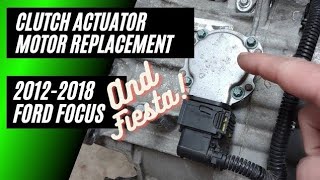
- Failed Clutch Actuator Motor 🔴 High Probability This is a known high-failure part on the DPS6 transmission. The internal electronics of the integrated position sensor fail. Ford issued Customer Satisfaction Program #20B23 specifically identifying clutch actuator motor failure as the cause for P0806 and other related codes.
How to confirm: A definitive diagnostic step is to swap the upper (Clutch A) and lower (Clutch B) actuator motors, as they are identical. Clear the codes and drive. If the code changes from P0806 (Clutch A) to P0809 (Clutch B), the actuator is confirmed to be faulty. This is a widely accepted diagnostic method in owner forums and technician videos.
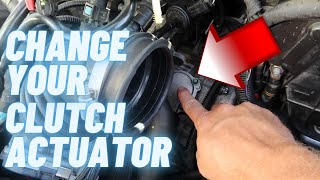
Typical fix: Replace the faulty clutch actuator motor. It is strongly recommended to replace both actuators at the same time using OEM Motorcraft parts to prevent a repeat failure of the other original unit. After replacement, a transmission adaptive learning procedure is required.
Est. part cost: $140-$250 per OEM actuator - Faulty Transmission Control Module (TCM) 🟡 Medium Probability The TCM is another well-documented, high-failure component on these vehicles, subject to recalls and extended warranties from Ford. Internal solder joint failures are common, leading to false sensor codes and communication issues.
How to confirm: If swapping the actuators does not change the code (P0806 returns), and the wiring is confirmed to be good, the TCM is the next likely culprit. Check with a Ford dealer using your VIN for any open warranty extensions, specifically Customer Satisfaction Program 14M02, which extended the TCM warranty to 10 years or 150,000 miles.
Typical fix: Replace the TCM and have it programmed for the vehicle. This often requires a dealership or a specialized shop with access to Ford's diagnostic software.
Est. part cost: $400-$700 for a programmed OEM unit - Damaged Wiring or Poor Ground Connection ⚪ Low Probability While less common than component failure, wiring can become chafed or corroded. There are critical ground points located under the airbox that can loosen over time and cause various electrical issues with the transmission.
How to confirm: Visually inspect the wiring harness between the TCM and the clutch actuators for any signs of damage. Locate the ground studs under the air filter housing and ensure they are clean, tight, and free of corrosion. A technician may perform a continuity test on the harness wires.
Typical fix: Repair the damaged section of the wiring harness or clean and tighten the ground connections.
Est. part cost: $10-$50 for wiring supplies
Rare But Worth Checking
- Weak or Failing Battery:
Diagnosis Steps
- Read all diagnostic trouble codes (DTCs) with an OBD-II scanner.
- Check for any applicable Technical Service Bulletins (TSBs) or Customer Satisfaction Programs like 20B23 (actuators) and 14M02 (TCM) using the vehicle's VIN.
- Inspect the wiring harness and connectors between the TCM and the two clutch actuators for any visible damage, corrosion, or loose connections.
- Inspect the main transmission ground points under the air filter box to ensure they are clean and tight.
- Perform the actuator swap test: Label and swap the positions of the upper (A) and lower (B) clutch actuators. They are identical parts. Clear the codes and test drive.
- If the code changes to P0809 (for clutch 'B'), the actuator is faulty and should be replaced.
- If the P0806 code returns after the swap, the actuator is likely good. The problem is more likely the TCM or a wiring issue.
- As an advanced step, a technician may perform a clutch fork test by removing the actuator and manually turning the fork mechanism with a special tool to ensure it moves smoothly and springs back, ruling out a mechanical issue with the clutch forks themselves.
- If the TCM is suspected, contact a Ford dealership with your VIN to check for warranty extensions before ordering a replacement.
Parts You'll Likely Need
- Clutch Actuator Motor
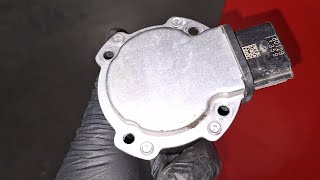
(OEM #AE8Z-7C604-A)— This is the most common failure part for code P0806, as confirmed by Ford's TSBs. The position sensor is integrated into this unit. This part fits both the upper (A) and lower (B) positions.
Trusted brands: Motorcraft
OEM price range: $140-$210
Aftermarket price range: $80-$150 - Transmission Control Module (TCM)
(OEM #AE8Z-7Z369-F)— This is the second most common cause, due to a high rate of internal electronic failures on this platform. It was subject to warranty extension 14M02.
Trusted brands: Motorcraft
OEM price range: $400-$700
Aftermarket price range: $250-$450
Related Codes That Often Appear With This One
- P0809 — This is the corresponding code for the Clutch Position Sensor 'B' circuit. Seeing P0806 and P0809 together strongly points to an issue affecting both actuators, such as a failing TCM, a bad ground, or a widespread actuator failure, as reported by owners.
- P0805 — This is an alternate code for the Clutch Position Sensor 'A' circuit. The TSBs from Ford group these codes together as symptoms of the same failure.
- P087A — This is an alternate code for the Clutch Position Sensor 'B' circuit, also listed in Ford's TSB 20B23 for actuator failure.
- P0900 — This code for 'Clutch Actuator 'A' Circuit/Open' is directly related and often appears with P0806, indicating an electrical fault in the actuator motor itself.
Technical Service Bulletins (TSBs) & Recalls
- 20B23 / 20B23-S1: 'Replacement of Clutch Actuator Motors' - Directly links P0806 to clutch actuator motor failure on 2016-2017 Focus models and instructs dealers to replace both motors.
- 16-0109: 'Excessive Transmission Clutch Shudder And/Or Transmission Fluid Leak' - Addresses shudder issues and fluid leaks that also plague the DPS6 transmission, someti
Platform-Specific Known Issues
- Ford Customer Satisfaction Program 20B23: Issued for certain 2016-2017 Focus models built between June 1, 2016, and September 1, 2016, for clutch actuator motor failure. It instructed dealers to replace both clutch actuator motors free of charge. The program was in effect through July 31, 2021.
- Ford Customer Satisfaction Program 14M02: This program extended the warranty on the Transmission Control Module (TCM) to 10 years or 150,000 miles for certain 2012-2016 Focus and 2011-2015 Fiesta vehicles due to intermittent loss of engagement, no-start, or lack of power.
- PowerShift Transmission Class-Action Lawsuits: Multiple lawsuits were filed against Ford regarding the DPS6 transmission, alleging the company knowingly sold vehicles with a defective design that caused shuddering, hesitation, and premature failure of clutches, actuators, and the TCM. A settlement in 2020 involved vehicle buybacks and cash reimbursements for owners of 2011-2016 Fiestas and 2012-2016 Focuses.
Mechanic-Grade Diagnostic Values
- Ground path resistance from negative battery cable to transmission actuator case — expected: Less than 1.0 Ω, ideally around 0.5 Ω after cleaning ground points.. Failure: A reading higher than 1.0 Ω (e.g., 2.6 Ω) indicates a poor ground connection that needs to be cleaned.
- Continuity of harness between clutch actuator and TCM — expected: Below 1 Ω.. Failure: Resistance above 1 Ω or an open circuit (OL) indicates a break in the wire that needs repair.
- Clutch Position Sensor signal voltage (backprobed at sensor) — expected: A smooth sweep from approximately 0.5V to 4.5V as the clutch actuator moves through its range. A specific test shows at 0° angle, voltage should be ~2.25V with a 4.5V supply.. Failure: Voltage that is stuck, jumps, drops out, or is outside the expected range indicates a failed sensor inside the actuator.
Scan Tool Commands That Help
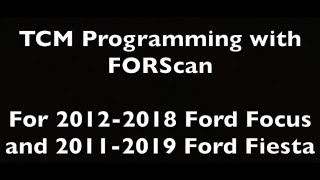
- FORScan / Ford IDS / Snap-On: TCM Adaptive Learning / Clutch Adaptive Learn — This procedure is required after replacing the clutch actuators, the TCM, or the clutch assembly. It allows the TCM to learn the new component's travel limits and clutch engagement points. It can also be used to resolve shifting quirks, like a delayed 1-2 shift, by resetting learned values and forcing a new learn cycle.
- FORScan: Reset all adaptations — This is a more aggressive reset used before performing the 'TCM Adaptive Learning'. It clears all learned values from the TCM memory, which can be necessary when troubleshooting persistent shifting issues that a standard relearn does not fix.
Wiring & Ground Locations
- Transmission Grounds — Two ground studs, typically with 10mm nuts, located on the chassis frame rail directly underneath the air filter housing.. These are critical grounds for the transmission electronics. Corrosion or a loose connection here is a known cause of erratic behavior and false actuator/sensor codes. They must be clean and tight.
- Main Chassis Ground — The main negative battery cable connection point on the driver's side strut tower area.. The factory paint under this connection point can inhibit a perfect ground. For persistent, hard-to-diagnose electronic issues, technicians recommend removing the terminal, sanding the paint off the chassis for a bare metal connection, and reapplying with dielectric grease to prevent corrosion.
- TCM Connector — The TCM has two large multi-pin connectors located on the side of the transmission, below the battery.. The signal from the clutch position sensor travels through this connector. A visual inspection for corrosion or pushed-out pins is necessary if a wiring fault is suspected after the actuator and grounds have been checked.
Real Owner Repair Stories
- Reddit user in r/FordFocus (Ford Focus, 76,000 miles) — P0806 and P0809 codes, 'Transmission Overheating Wait 5 Minutes' message, erratic shifting, and immediate Check Engine Light after clearing codes.
❌ Tried (didn't work) Initially suspected the TCM., Clearing the codes did not work; the light came back on instantly.
✅ What actually fixed it Replacing both the upper (A) and lower (B) clutch actuator motors resolved all symptoms and the Check Engine Light stayed off. - Reddit user 'GoodYellowLemon' in r/FordFocus (2012 Ford Focus Titanium) — P0806 code returned one year after a previous repair.
❌ Tried (didn't work) Both clutch actuators had been replaced a year prior to the code returning.
✅ What actually fixed it The user was advised that since the actuators were already replaced and the problem returned, the fault was now most likely the Transmission Control Module (TCM). The final resolution was a trip to the dealer, implying a TCM replacement.
"I Checked Everything" — The Actual Cause
- The electronic equivalent for this code is when the standard 'actuator swap test' fails to resolve the issue. If the upper (A) and lower (B) actuators are swapped, but the P0806 (Clutch A) code returns instead of changing to P0809 (Clutch B), it confirms the actuator is not the source of the problem. In these cases, the actual cause is almost always a faulty Transmission Control Module (TCM) or, more rarely, a bad ground connection or a damaged wiring harness.
When the Usual Fixes Don't Work
- While replacing the clutch actuators is the most common fix for P0806, it is not always a permanent solution. There are documented cases where the code returned within a year after replacing both actuators. This indicates that an underlying issue, most often a failing Transmission Control Module (TCM), was the true root cause, eventually causing the new actuators to report faults or fail. If P0806 returns after actuator replacement, the TCM should be considered the primary suspect.
OEM Part Supersession History
AE8Z-7C604-A→AE8Z-7C604-A— No supersession found. This part number appears to be the consistent OEM number for the entire model range.
Model Year Variations Within This Range
- Late 2016 (after June), 2017-2018: On these later model years, actuator-related codes (including P0806, P0902, P090C) are much more likely to be caused by a failed clutch actuator motor itself. Ford had an extended coverage program specifically for these actuators on these model years.
- 2012 - Early 2016: On earlier models, the same actuator-related codes are statistically more likely to be caused by a failure of the Transmission Control Module (TCM) rather than the actuator motor.
Helpful Videos

We Have This Part in Stock


The information in this article is provided for general reference and educational purposes only. Vehicle specifications, procedures, and part compatibility can vary by production date, trim level, and region. Always consult your vehicle's factory service manual and verify part numbers before purchasing or performing repairs. Safety-critical components such as airbags, seat belts, and braking systems should be installed by a qualified professional.
- Ford FOCUS:
- 🎬 Helpful Videos
- 🛍️ Shop This Part
- What's Unique About the 2016-2017 Ford FOCUS
- Diagnostic Flowchart
- Symptoms You May Notice
- Most Likely Causes
- Rare But Worth Checking
- Diagnosis Steps
- Parts You'll Likely Need
- Related Codes That Often Appear With This One
- Technical Service Bulletins (TSBs) & Recalls
- Platform-Specific Known Issues
- Mechanic-Grade Diagnostic Values
- Scan Tool Commands That Help
- Wiring & Ground Locations
- Real Owner Repair Stories
- "I Checked Everything" — The Actual Cause
- When the Usual Fixes Don't Work
- OEM Part Supersession History
- Model Year Variations Within This Range
- 🎟️ Get 5% Off