

P0805 on 2012-2017 Ford Focus: Clutch Position Sensor 'A' Circuit Causes and Fixes
On a 2012-2017 Ford Focus, P0805 almost always points to a problem with the notoriously problematic DPS6 'PowerShift' automatic transmission. The most likely causes are a failed clutch actuator motor or a faulty Transmission Control Module (TCM). This is not a simple DIY fix and requires professional diagnosis, though a common DIY diagnostic is to swap the two external clutch actuators to see if the fault code changes.
- P0805 on a 2012-2017 Focus is a serious transmission code, almost always related to the DPS6 PowerShift transmission.
- The most likely cause is a failed clutch actuator motor ('A'), followed by a failed Transmission Control Module (TCM).
- A definitive diagnostic step is to swap the upper and lower clutch actuators to see if the fault code follows the part.
- Do NOT use cheap aftermarket actuators or TCMs; OEM (Motorcraft) parts are strongly recommended by mechanics and owners.
- Before paying for any repairs, always check with a Ford dealer for any open recalls or extended warranty coverage for your vehicle's VIN.
What's Unique About the 2012-2017 Ford FOCUS

The 2012-2017 Ford Focus is infamous for issues with its DPS6 'PowerShift' transmission. This is not a traditional automatic; it's an automated dual-clutch manual transmission, also known as the 6DCT250. Its design, particularly the clutch actuator motors and the external Transmission Control Module (TCM), is prone to failure. Code P0805 is a very common symptom of these well-documented systemic issues, which have led to class-action lawsuits and numerous customer satisfaction programs from Ford, such as 19N08 which extended clutch warranties.
Diagnostic Flowchart

Tap your situation to follow the diagnostic path that matches what you're seeing on this vehicle.
Symptoms You May Notice

- Check Engine Light and/or Transmission Warning Light illuminated.
- Erratic, harsh, or delayed shifting.
- Hesitation or shuddering on acceleration, especially from a stop.
- Vehicle fails to accelerate or move, may feel like it's stuck in neutral.
- Transmission overheating warning message on the dash, often telling the driver to pull over.
- Loss of odd-numbered gears (1, 3, 5), as the car may try to start in 2nd gear.
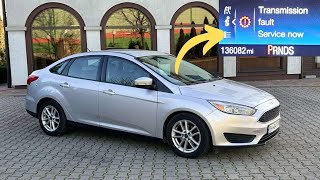
- Car fails to crank or start, with a 'Transmission Fault' message displayed.
- Replacing the entire transmission when only an external component like the clutch actuator or TCM has failed.
- Replacing the clutch pack itself when the issue is electronic (actuator/TCM). While clutch shudder is a related issue, P0805 specifically points to the control system.
- Replacing only one clutch actuator. The second original actuator often fails soon after, requiring the job to be done again.
Most Likely Causes
- Failed Clutch Actuator Motor 'A' 🔴 High Probability The clutch actuator motors are a known high-failure part on the DPS6 transmission. Ford issued TSBs #20B23 and #20B23-S1 specifically linking P0805 to clutch actuator motor failure and instructing dealers to replace both motors.
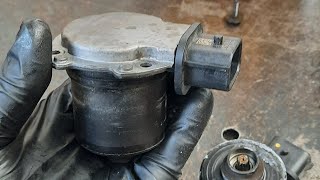
How to confirm: A common and effective diagnostic step 🎬 Watch: A professional diagnosis of the P0805 code in action. is to swap the upper (A) and lower (B) actuator motors. They are physically identical. After swapping, clear the codes and drive. If the code changes to P0806 (Clutch Position Sensor 'B' Circuit), the actuator is confirmed bad.
Typical fix: Replace the faulty clutch actuator motor. It is highly recommended to replace both actuators at the same time using genuine OEM parts (Motorcraft) to prevent near-future failure of the other original actuator.
Est. part cost: $100-$250 per actuator - Faulty Transmission Control Module (TCM) 🔴 High Probability The TCM on these models is another well-documented failure point, subject to extended warranties (e.g., 14M02) and recalls. Internal solder joints can fail, causing false sensor codes and erratic transmission behavior.
How to confirm: If swapping the actuators does not change the code from P0805, and the wiring and grounds are confirmed to be good, the TCM is the most likely culprit. This is a common outcome reported by owners.
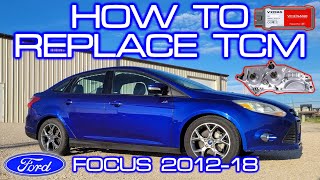
Typical fix: Replace the TCM and program it to the vehicle. 🎬 Watch: How to replace and program a new TCM. It is critical to check with a Ford dealer for any applicable warranty extensions first, as Ford has extended coverage for the TCM on many of these vehicles to 10 years or 150,000 miles.
Est. part cost: $300-$900 - Damaged Wiring or Loose Connectors ⚪ Low Probability While less common than component failure, the wiring harness to the transmission can be damaged, or ground connections can become loose or corroded. The main grounds are located under the air filter box and are a known spot to check.
How to confirm: Visually inspect the wiring harness between the TCM and the clutch actuators for any signs of damage, chafing, or corrosion. Check the main ground points under the airbox to ensure they are clean, tight, and free of corrosion.
Typical fix: Repair the damaged section of the wiring harness or clean and tighten the ground connections.
Est. part cost: $10-$100
Rare But Worth Checking
- Weak or Failing Battery:
- Internal Clutch Fork Failure:
Diagnosis Steps
- Scan the TCM for all stored trouble codes. Note any codes that appear alongside P0805, especially P2872 or codes for clutch 'B'.
- Check battery health. Perform a load test on the battery and ensure terminals and main grounds are clean and tight before proceeding. A weak battery can cause false codes.
- Inspect the wiring and connectors at both clutch actuators and the TCM for any visible damage, corrosion, or looseness. Pay close attention to the harness grounds located under the air filter box.
- If possible, use a scan tool like FORScan to monitor the live data for the clutch position sensors. Observe the readings for clutch 'A' to see if they are erratic, non-responsive, or frozen.
- Perform the actuator swap test: Remove the airbox for access. Label and swap the positions of the upper (A) and lower (B) clutch actuators. They are held by four E8 (external Torx) bolts each. Clear the codes and drive the vehicle, focusing on stop-and-go conditions to force shifts.
- Rescan for codes. If P0806 (Clutch Position Sensor 'B' Circuit) now appears, the actuator you moved is faulty and must be replaced.
- If the original P0805 code returns after the swap, the problem is likely not the actuator. The next step is to suspect the TCM or a wiring issue.
- Optional but recommended: Before replacing parts, perform a clutch fork test. With the actuator removed, use a splined tool to try and rotate the fork. It should rotate smoothly counter-clockwise about 10-14 times and then spring back instantly. It should not rotate clockwise at all. If it fails this test, the transmission has internal damage.
- Before paying for a new TCM, contact a Ford dealership with your VIN to check for any open recalls or extended warranty coverage on the TCM (e.g., Customer Satisfaction Program 14M02) or clutch system (19N08).
Parts You'll Likely Need
- Clutch Actuator Motor
(OEM #AE8Z-7C604-A)— This is one of the most common failure points on the DPS6 transmission and is directly implicated by Ford's TSBs for code P0805. It is recommended to replace both at the same time. 🎬 See this walkthrough on how to replace the clutch actuators.
Trusted brands: Motorcraft (OEM)
OEM price range: $140-$250
Aftermarket price range: $80-$150 (Quality is often questionable, OEM is strongly recommended by owners). - Transmission Control Module (TCM)
(OEM #AE8Z-7Z369-F)— The TCM is another extremely common failure point, known for internal connection failures that cause false sensor codes. Ford has multiple warranty extensions for this part.
Trusted brands: Motorcraft (OEM)
OEM price range: $750-$900
Aftermarket price range: $300-$600 (Remanufactured)
Related Codes That Often Appear With This One
- P2872 — Clutch 'A' Stuck Engaged. This often appears with P0805, indicating a mechanical or control problem preventing the clutch from disengaging.
- P0806 — Clutch Position Sensor 'B' Circuit. This code appearing after swapping the A and B actuators is a definitive sign that the actuator motor itself is the failed component.
- P087A — Clutch Position Sensor 'B' Circuit. The presence of codes for both sensors simultaneously often points towards a failing TCM or a widespread electrical issue like a bad ground.
- P0900 — Clutch Actuator 'A' Circuit/Open. This is another code directly related to the electronic control of the clutch actuator and is listed alongside P0805 in Ford's TSBs.
Technical Service Bulletins (TSBs) & Recalls
- Bulletin #20B23-S1: For 2017 models, links P0805 and other codes to clutch actuator motor failure and advises replacing both.
- Bulletin #20B23: For 2016 models, also links P0805 to clutch actuator motor failure and advises replacing both.
- Bulletin #ASI-44686: Lists P0805 among many other codes related to intermittent or delayed shifting issues on 2012-2014 models, indicating early acknowledgment of the electronic control problems.
Platform-Specific Known Issues
- Ford issued Technical Service Bulletin (TSB) #20B23 and #20B23-S1 for 2016-2017 models, noting that codes including P0805 could be caused by clutch actuator motor failure and instructing dealers to replace both motors.
- An owner of a 2014 Focus reported code P0805 occurred when the vehicle failed to accelerate. The dealer performed a repair under recall number 19N08, but the issue returned. [OWNER COMPLAINT] NHTSA ODI #11509893
- An owner of a 2013 Focus reported code P0805:00-68, which was described as 'clutch position sensor A circuit', leading to transmission failure. [OWNER COMPLAINT] NHTSA ODI #11470119
- Ford's Customer Satisfaction Program 19N08 extended the warranty on the clutch assembly for shudder issues to 7 years or 100,000 miles on certain 2014-2016 models. While not directly for P0805, it highlights the transmission's known issues.
- Ford also has a warranty extension for the TCM (Program 14M02) to 10 years / 150,000 miles for many of these vehicles, which is a critical factor to check before paying for a TCM replacement.
Mechanic-Grade Diagnostic Values
- TCM Ground Circuit Resistance — expected: Less than 5 ohms. Failure: A resistance reading higher than 5 ohms indicates a poor ground connection that needs to be repaired.
- Clutch Actuator Motor 'A' (Clutch Motor 1) Connector C1633 Pin 1 Voltage — expected: 5 volts (Key On). Failure: No voltage or incorrect voltage points to an issue with the supply circuit from the TCM or the TCM itself.
- Clutch Actuator Motor 'A' (Clutch Motor 1) Connector C1633 Pin 5 Resistance to Ground — expected: Continuity (less than 5 ohms). Failure: High or infinite resistance indicates an open in the ground circuit for the actuator.
- Clutch Adaptive Learn Travel Range (IDS Scan Tool) — expected: 9-14mm for both Clutch A and Clutch B. Failure: Values outside this range after a successful touch-point learn can indicate a fault with the clutch assembly or engagement mechanism.
Hidden / Shadow Codes Worth Checking
- P0805:00-68: This is a Ford-specific sub-code. The ':00' indicates no specific subtype information, while the '-68' is a failure type code that indicates an event has been stored in continuous memory. It confirms the fault has occurred and been logged by the TCM, even if it's not currently active. (see via This type of extended code is visible on Ford's dealer-level IDS (Integrated Diagnostic System) or advanced aftermarket scan tools like FORScan.)
Scan Tool Commands That Help
- Ford IDS (or FORScan): TCM Adaptive Learning — This procedure is mandatory after replacing the TCM, clutch assembly, or clutch actuators. It clears old adaptive data and performs a series of tests to relearn clutch touch points and shift drum positions. Failure to perform this can result in erratic shifting and driveability concerns.
- Ford IDS (or FORScan): Reset All Adaptations — This function returns all learned values for adaptive systems to their factory default settings. It is often performed before the main TCM Adaptive Learning procedure or as a troubleshooting step to resolve poor shift quality by clearing corrupt learned data.
- Ford IDS: Clutch System Test — This is a basic function test that verifies the TCM can operate the clutch engagement system (actuators, forks, etc.) through their full range of travel. A failure in this test points directly to a mechanical or electrical fault in the clutch engagement components.
Wiring & Ground Locations
- Main Chassis Ground Post — Located on the driver's side strut tower, under the air filter box. The main negative battery cable connects to this post.. This is the primary grounding point for the vehicle's electrical system, including the TCM. The factory design relies on the threads of the bolt for a ground connection, as the surrounding area is painted. Corrosion or looseness here can cause poor grounding, leading to erratic TCM behavior and a host of transmission codes, including P0805.
- TCM Connector C1750A — This is one of the main connectors on the Transmission Control Module, which is located on the side of the transmission, accessible from the driver's side wheel well after removing the airbox.. Pins 3, 4, 5, and 6 on this connector are the ground circuits for the TCM. A diagnostic step is to measure the resistance of these pins to ground to verify the integrity of the ground connection.
- Clutch Actuator 'A' Connector C1633 — This is the 8-pin electrical connector on the upper clutch actuator motor (Actuator A), located on top of the transmission case.. This connector carries the 5V power, ground, and sensor signal circuits between the TCM and the actuator's integrated position sensor. Testing for voltage and ground at this connector is a key step in diagnosing if the fault is in the actuator, wiring, or TCM.
Real Owner Repair Stories
- Focus-Power forum user (2014 Ford Focus with 60,000 miles) — Severe shuddering and jumping 'like a jack rabbit' on takeoff, 2-3 days a week. The issue would temporarily improve for about two weeks after every dealer re-flash of the TCM.
❌ Tried (didn't work) Multiple clutch replacements by the dealer., Multiple software re-flashes by the dealer, which only provided temporary relief.
✅ What actually fixed it Installing an aftermarket performance tune from 'Tom' (Focus-Power). The owner reported that the tune completely eliminated the shudder, even with the 'bad' clutches still installed. When the tune was removed and the car returned to the stock program, the shudder came back instantly. Reinstalling the tune fixed it again, suggesting the root cause was the factory TCM logic.
OEM Part Supersession History
AE8Z-7Z369-B, AE8Z-7Z369-D→AE8Z-7Z369-F— The original TCMs were prone to failure due to internal compliant pin connections that would loosen over time. The updated/remanufactured versions often feature soldered connections for critical components to improve durability and prevent the failures that cause codes like P0805.
Heads up: While physically interchangeable, TCMs are calibrated differently for 2012-2014 and 2015-2018 models. If you install a TCM from a different year range, it must be reprogrammed with the correct calibration for your vehicle's model year to function properly.
Model Year Variations Within This Range
- 2012-2014 vs 2015-2018: The TCM calibration is different between these two groups. Additionally, the input shaft speed sensor shims on the side of the transmission have different thicknesses. Early models (2012-2014) use thicker shims (approx. 3.2-3.5mm), while later models (2015-2018) use thinner shims (approx. 1.5-2.0mm). Swapping a transmission between these ranges requires using the corresponding TCM or reprogramming the existing one to match the hardware.
Helpful Videos

We Have This Part in Stock



The information in this article is provided for general reference and educational purposes only. Vehicle specifications, procedures, and part compatibility can vary by production date, trim level, and region. Always consult your vehicle's factory service manual and verify part numbers before purchasing or performing repairs. Safety-critical components such as airbags, seat belts, and braking systems should be installed by a qualified professional.
- Ford FOCUS:
- 🎬 Helpful Videos
- 🛍️ Shop This Part
- What's Unique About the 2012-2017 Ford FOCUS
- Diagnostic Flowchart
- Symptoms You May Notice
- Most Likely Causes
- Rare But Worth Checking
- Diagnosis Steps
- Parts You'll Likely Need
- Related Codes That Often Appear With This One
- Technical Service Bulletins (TSBs) & Recalls
- Platform-Specific Known Issues
- Mechanic-Grade Diagnostic Values
- Hidden / Shadow Codes Worth Checking
- Scan Tool Commands That Help
- Wiring & Ground Locations
- Real Owner Repair Stories
- OEM Part Supersession History
- Model Year Variations Within This Range
- 🎟️ Get 5% Off