

OBD-II Code P0798: Pressure Control Solenoid 'C' Electrical
The Ultimate 2026 Guide to Diagnosing and Fixing P0798
- P0798 triggers 'limp mode,' locking your transmission in 2nd or 3rd gear and capping your speed under 40 mph.
- A failed 'C' solenoid causes roughly 70% of P0798 codes, but damaged wiring harnesses and faulty TCMs account for the rest.
- Driving more than 10 miles with this code overheats the transmission, turning a $400 solenoid replacement into a $3,000+ complete rebuild.
- Test the circuit resistance directly from the TCM connector (typically 5.0-5.6 Ω) before dropping the transmission pan to prevent buying unnecessary parts.
What Does P0798 Mean?

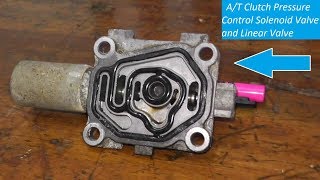
P0798 means the Transmission Control Module (TCM) detects a critical electrical fault with the 'C' pressure control solenoid. This solenoid is an electronic valve that manages transmission fluid pressure to enable smooth gear changes. Because of the electrical fault—like a severed wire or a short circuit—the computer cannot control hydraulic pressure, causing immediate shifting failure.
Technical definition: The TCM detects that the voltage or resistance in the 'C' pressure control solenoid circuit is outside the manufacturer's specified range. This indicates a hard electrical fault, such as an open circuit, a short to ground, or a short to voltage, typically triggering when current draw exceeds 4 amps or resistance tops 100k ohms.
Can I Drive With P0798?
No — Do Not Drive. Do not drive. Your transmission is in 'limp mode,' locked in a single gear (usually 2nd or 3rd) to prevent further damage. Driving more than a few miles causes the torque converter and clutch packs to slip excessively, overheating the transmission. This turns a $400 solenoid repair into a $3,000+ complete transmission rebuild. Tow the vehicle to a repair shop.
Common Causes

- Failed Pressure Control Solenoid 'C' (Very Common) — The solenoid's internal electromagnetic coil breaks down over time. It develops an open circuit (a broken internal wire) or a short circuit, completely disabling the valve.
- Wiring or Connector Damage (Common) — The wiring harness connecting the TCM to the solenoid is compromised. This includes frayed external wires, corroded transmission plug pins, or brittle, cracked insulation on the internal harness submerged in hot transmission fluid.
- Failed Transmission Control Module (TCM) (Less Common) — The internal driver circuit within the TCM that sends power to the solenoid burns out. This is the primary culprit on 2012-2018 Ford Focus and Fiesta models.
- Contaminated Transmission Fluid (Less Common) — Fluid heavily contaminated with microscopic metal shavings creates unintended conductive pathways. This shorts out the solenoid's electrical connections or clogs the valve, leading to coil burnout.
- Low System Voltage or Bad Ground (Rare) — A failing alternator, weak battery, or corroded chassis ground strap drops the voltage supplied to the transmission below the required 9-12V threshold, tricking the TCM into logging a circuit fault.
Symptoms

- Transmission Stuck in Gear (Limp Mode) — The vehicle locks into a single gear (often 2nd or 3rd) and refuses to upshift or downshift, capping your speed under 40 mph.
- Check Engine Light Illuminated — The Malfunction Indicator Lamp (MIL) or a dedicated transmission warning gear icon lights up immediately on the dashboard.
- Harsh or Violent Shifting — Right before entering limp mode, the transmission slams into gear aggressively or hesitates for several seconds before engaging.
- Transmission Slipping — The engine revs high when pressing the gas pedal, but the vehicle barely accelerates, feeling like it slipped into neutral.
Diagnostic Flowchart
Tap your situation to follow the diagnostic path that matches what you're seeing on this code.
Common Fixes & Costs
- Replace Pressure Control Solenoid 'C' — Parts: $50-$250, Labor: $200-$500, ~2.5 hr book time (Professional)
- Repair Wiring or Connectors — Parts: $10-$50, Labor: $150-$400, ~2.0 hr book time (Intermediate)
- Replace Transmission Control Module (TCM) — Parts: $300-$900, Labor: $150-$350, ~1.5 hr book time (Professional)
- Transmission Fluid and Filter Service — Parts: $50-$150, Labor: $100-$250, ~1.5 hr book time (DIY)
Used vs. New Parts: Buying Guide
When a used part is worth it: Never buy a used solenoid. The labor cost to drop the transmission pan is too high to risk installing a part that may fail next week. Only consider a used TCM if a new one is on national backorder.
Donor-vehicle mileage cap: roughly under 50000 miles for the part to have meaningful remaining life.
Donor quality checklist:
- Verify the donor vehicle was not scrapped due to transmission failure.
- Match the TCM part number exactly; visual similarities guarantee programming failure.
Decision logic:
- If You are paying a shop for labor. → Always buy a new OEM or premium aftermarket part. Labor costs dwarf the part savings.
- If The part is a sealed solenoid pack. → Buy new. One failed solenoid in a pack guarantees the others are at the end of their lifespan.
Warranty tradeoff: Salvage yards offer 30-day part-only warranties. New OEM parts carry 1-2 year warranties covering both the part and the labor if it fails.
Worst-case if a used part fails: $500 (Paying labor twice to replace a faulty used part)
What Happens If You Wait — Timeline
- 0-10 miles: Code P0798 sets. The transmission enters limp mode, locking into 2nd or 3rd gear. Acceleration is severely restricted. (MPG impact: 20%% · Added cost: $0)
- 10-50 miles: Driving in a non-optimal gear forces the torque converter to slip constantly. Fluid temperatures exceed 250°F (120°C), destroying its lubricating properties. (MPG impact: 30%% · Added cost: $250 (Requires a full fluid flush to remove burnt fluid))
- 50-200 miles: Overheated fluid causes internal seals to harden. Clutch pack friction material delaminates, clogging the valve body and starving the pump of fluid. (MPG impact: 40%% · Added cost: $1,200 (Requires valve body replacement and deep cleaning))
- 200+ miles: Complete loss of hydraulic pressure. Clutches burn out entirely, and the vehicle stops moving. A full transmission rebuild is mandatory. (MPG impact: N/A% · Added cost: $3,000+)
Cost of Not Fixing It
- Immediate (0-10 miles): Vehicle is forced into limp mode. Acceleration is dangerously slow, and fuel economy drops by 20%. (Added cost: $0)
- Short Term (10-50 miles): Driving in a single gear causes excessive slipping of internal clutch packs, rapidly overheating and degrading the transmission fluid. (Added cost: $250)
- Long Term (50+ miles): Catastrophic transmission failure. Burnt clutch material clogs the valve body, starving the transmission of hydraulic pressure and destroying hard parts. (Added cost: $3,000+)
Diagnosis Steps

- Scan for All Codes & Review Live Data
Use an OBD-II scanner to confirm P0798. Look for P0700 (a generic TCM fault indicator, which is normal). View live data PIDs to monitor the TCM's commanded state and voltage for Solenoid 'C'. A mismatch confirms a control circuit problem.
Tools: OBD-II Scanner with Live Data (Beginner) - Test Solenoid Circuit Resistance from the TCM Connector
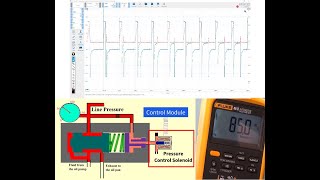
Disconnect the TCM. Use a wiring diagram to find the pins for the 'C' solenoid. Measure resistance between these pins. This tests the wiring and solenoid simultaneously. A reading outside spec (typically 5.0-5.6 Ω) confirms a fault. Infinite resistance means an open circuit; near-zero means a short.
Tools: Multimeter, Vehicle-specific wiring diagram (Intermediate) - Check Transmission Fluid Condition
Pull the dipstick. If the fluid is black, smells like burnt toast, or contains silver metallic flakes, stop diagnosing the electrical system. The transmission has catastrophic mechanical damage requiring a rebuild.
Tools: Rag, Transmission Dipstick (Beginner) - Inspect External Wiring and Connectors
Trace the wiring harness from the TCM to the transmission. Look for melted insulation, rodent damage, or chafing. Unplug the main transmission connector and check for green corrosion or pushed-back pins.
Tools: Flashlight, Electrical Contact Cleaner (Intermediate) - Check for Shorts to Power or Ground
With the TCM and transmission harnesses unplugged, measure resistance between the solenoid control wire and the vehicle chassis (should be infinite/over 10k Ω). Then, turn the key ON and test the wire for voltage (should be 0V). Any continuity or voltage indicates a shorted wire.
Tools: Multimeter, Wiring Diagram (Advanced) - Test the Solenoid Directly
If the circuit tested bad at the TCM, drop the transmission pan to access the solenoid. Unplug it and test its resistance directly across its pins. If it tests bad here, the solenoid is dead. If it tests good, the internal or external wiring harness is broken.
Tools: Socket set, Drain pan, Multimeter, Gasket scraper (Advanced) - Perform a Solenoid 'Click Test'
While the solenoid is accessible, briefly apply 12V power and ground to its pins using fused jumper wires. You must hear a sharp, distinct 'click'. A weak click or silence means the valve is mechanically seized.
Tools: Fused Jumper Wires, 12V Power Source (Advanced) - Test the TCM
If the solenoid, internal harness, and external wiring all pass resistance and short tests perfectly, the TCM's internal driver has failed. This is a diagnosis by elimination. Replace or rebuild the TCM.
Tools: Advanced Scan Tool, Multimeter (Professional)
When This Code Triggers (Freeze-Frame Conditions)
- Engine Coolant Temp: 175-210°F (80-99°C) (The engine is at full operating temperature when the TCM performs its continuous circuit checks.)
- Vehicle Speed: 25-55 mph (The code frequently sets while cruising at city or highway speeds, as the TCM attempts to command shifts.)
- Engine Load: 20-50% (Moderate engine load during normal driving triggers the fault.)
Related Codes
- P0700 — A generic Transmission Control System Malfunction code. It simply tells the engine computer to turn on the Check Engine Light because the TCM found a specific fault (like P0798).
- P0796 — Pressure Control Solenoid 'C' Performance/Stuck Off. P0798 is an electrical failure; P0796 is a mechanical failure where the valve is physically jammed.
- P0797 — Pressure Control Solenoid 'C' Stuck On. The mechanical opposite of P0796. The solenoid receives power but refuses to close.
- P0799 — Pressure Control Solenoid 'C' Intermittent. The electrical fault comes and goes, usually caused by a loose connector or a wire that only shorts out over bumps.
Climate & Environmental Factors
- High Humidity and Road Salt: Moisture and salt accelerate corrosion on external wiring connectors and chassis ground points, increasing circuit resistance and triggering the code.
- Extreme Cold: Sub-zero temperatures thicken transmission fluid, putting immense physical strain on aging solenoids during startup and snapping brittle internal wiring.
How to Talk to a Mechanic About This Code
Say this: "I have a P0798 'Pressure Control Solenoid C Electrical' code and the transmission is in limp mode. I need a diagnostic to test the entire circuit—the solenoid, the wiring, and the TCM—before any parts are replaced."
This proves you understand P0798 is an electrical fault that could be in multiple locations. It forces the shop to perform a real diagnosis rather than blindly replacing the solenoid, saving you money if the fault is just a broken wire.
Avoid saying:
- 'My transmission is acting weird, can you fix it?'
- 'Just replace the solenoid.'
- 'I got a cheap quote over the phone from another shop.'
Questions to ask before authorizing the repair:
- What were the results of the resistance test on the solenoid circuit from the TCM connector?
- If you're recommending a TCM replacement, how did you rule out the wiring and the solenoid?
- Does your quote include a new filter, pan gasket, and the manufacturer-specified fluid?
- Is a transmission 'relearn' procedure required after this repair, and is it included in the cost?
Where to Take It: Dealer vs Independent vs Chain
- Dealer:
Recommended only for warranty work or known manufacturer issues. Otherwise, too expensive for a common repair.
Best for: Vehicles under powertrain warranty., Vehicles with known recalls or TSBs (e.g., Ford Focus TCM)., Complex TCM programming.
Downsides: Highest labor rates, often $150-$200+ per hour., Defaults to replacing entire expensive assemblies instead of smaller components. (Typical cost: +50% vs. baseline) - Independent Shop:
Acceptable if they have a strong reputation for electrical diagnostics, but a transmission specialist is safer.
Best for: General maintenance and repairs.
Downsides: Lacks specialized tools for in-depth transmission diagnostics., May outsource complex transmission work to a specialist, adding a markup. (Typical cost: -10% vs. baseline) - Chain Shop:
AVOID. The risk of misdiagnosis or being sold an unnecessary $3,000 repair is very high.
Best for: Routine services like oil changes or brake jobs.
Downsides: Technician skill with complex transmission issues is highly variable., High pressure to upsell unnecessary full transmission replacements. (Typical cost: -15% vs. baseline)
When to Walk Away From the Repair
If the estimated repair cost exceeds 50% of the car's private-party value, it is time to sell or trade in the vehicle.
- Car worth $5000, fix is $3000: Walk away. The repair cost is 60% of the car's value, indicating a full rebuild is needed. Sell it as-is.
- Car worth $12000, fix is $600: Fix it. A $600 repair for a new solenoid pack is well below the threshold for a $12,000 vehicle.
What Scan Tool You Need for This Code
Minimum: A scanner that reads manufacturer-specific transmission codes and views live data, such as solenoid commanded state.
A basic $20 code reader only shows a generic P0700 'Transmission Fault'. It cannot provide the specific P0798 code or the live data needed to see if the solenoid is receiving a signal.
Budget: BlueDriver Pro (~$100) — Reads enhanced transmission codes like P0798 and displays live data from the TCM to monitor solenoid voltage.
Mid-range: Foxwell NT510 Elite (~$180) — Offers brand-specific software with deep transmission diagnostics and bidirectional controls to manually command the solenoid.
Professional: Autel MaxiCOM MK808S (~$450) — Provides full bidirectional control, runs system tests, and performs mandatory transmission adaptive relearn procedures after a repair.
Rent vs buy: Rent a basic scanner from an auto parts store to confirm the code for free. To properly diagnose P0798, you must see live data, making the BlueDriver a mandatory purchase for DIYers.
How to Clear the Code After You Fix It
- Use an OBD-II scan tool to erase the diagnostic trouble codes from the TCM.
- Perform a transmission adaptive pressure relearn procedure (mandatory after solenoid or TCM replacement).
- Conduct a complete drive cycle to allow the vehicle's readiness monitors to run.
Drive cycle (~30 minutes): A generic drive cycle includes a cold start, 3 minutes of idling, 15 minutes of stop-and-go city driving, followed by 15 minutes of steady highway driving between 50-60 mph.
Readiness monitors affected: Comprehensive Component Monitor
Before emissions retest: drive at least 50 miles to fully set monitors.
Watch out for:
- Disconnecting the battery clears the code but resets all readiness monitors, guaranteeing an emissions test failure.
- The code returns immediately upon the next key cycle if the electrical fault was not properly repaired.
- Skipping the manufacturer-specific relearn procedure causes harsh shifting even with a brand new solenoid.
Will This Fail Emissions / State Inspection?
Yes — this code typically fails an OBD-II emissions inspection.
- California: An active P0798 code is an automatic failure. After repair, all readiness monitors must read 'Ready', requiring up to 100 miles of driving.
- New York: The NYS DMV emissions inspection fails any vehicle with an active transmission code. The vehicle cannot be inspected until repaired and cleared.
- Texas: In emissions-testing counties, P0798 fails the OBD portion. You must complete a full drive cycle after repair before re-inspection.
Most Commonly Affected Vehicles
- Ford Focus, Fiesta (2012-2018) — The DPS6 transmission is notorious for TCM failures. P0798 is almost always a symptom of a dead TCM, not the solenoid. Ford extended warranties on these TCMs.
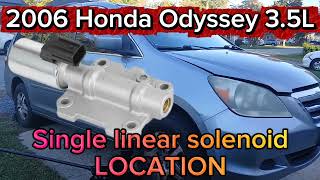
- Honda Odyssey, Pilot, Accord (2002-2013) — The 'C' solenoid is part of a linear solenoid assembly. Debris clogging the internal screens mimics an electrical failure. Clean the assembly before replacing it.
- Toyota Camry, Highlander, RAV4 (2005-2015) — Toyota defines this code as 'Shift Solenoid Valve SL3 Electrical'. Diagnosis requires verifying a precise resistance of 5.0-5.6 Ω at 68°F.
- Dodge/Chrysler/Jeep Grand Caravan, Town & Country, Journey (62TE) (2007-2017) — The 'C' solenoid is integrated into a single, non-serviceable solenoid pack. The entire block must be replaced as a unit.
- Chevrolet Silverado, Traverse, Equinox (2008-2017) — The TCM (TEHCM) is located inside the transmission on the valve body, making replacement highly labor-intensive.
- Nissan Altima, Maxima, Murano (2007-2015) — P0798 on these CVTs points to a failure within the entire valve body assembly, requiring a complete valve body replacement.
- Subaru Outback, Forester, Impreza (2010-2019) — TSB 16-102-16R addresses valve body replacement for related codes, indicating the solenoid is rarely the sole root cause.
Manufacturer-Specific Notes

- Ford: On Focus/Fiesta models, P0798 is a massive red flag for a failed TCM. Do not replace the solenoid without checking Ford Customer Satisfaction Program 14M02.
- Toyota/Lexus: The repair manual mandates a highly specific resistance test (5.0-5.6 Ω at 68°F) and a functional 'click test' to condemn the solenoid.
- Dodge/Chrysler/Jeep: Solenoids are fused into a single block. You cannot buy or replace just the 'C' solenoid; you must replace the entire $200 pack.
Real Owner Stories
2014 Ford Focus DPS6 at 85K miles
Car suddenly showed 'Transmission Fault' on the dash and went into limp mode. Code P0798 was stored.
What they tried:
- Owner researched the code and initially planned to drop the transmission pan to replace the solenoid.
- Discovered Ford's Customer Satisfaction Program 14M02 regarding widespread TCM failures.
Outcome: The dealer confirmed the TCM was dead, not the solenoid. They replaced the TCM for free under the extended warranty, resolving the P0798 code entirely.
Lesson: On Ford Focus/Fiesta models with the DPS6 transmission, P0798 almost always points to a failed TCM. Check your VIN for warranty extensions before touching the transmission.
2010 Dodge Grand Caravan (62TE) at 130K miles
Vehicle experienced erratic shifting and got stuck in 2nd gear with a P0798 code.
What they tried:
- A local mechanic quoted $300 to replace the single 'C' solenoid.
- The owner learned the solenoids on the 62TE are integrated into a single, non-serviceable block.
Outcome: The owner replaced the entire solenoid pack (Dorman 609-043), filter, and fluid for $700. This permanently fixed the shifting issue.
Lesson: On Dodge/Chrysler minivans, solenoids are part of a unified pack. Replace the entire assembly, as one failure guarantees the others will follow shortly.
2013 Honda Odyssey at 110K miles
Transmission shifted harshly, triggering limp mode and code P0798.
What they tried:
- A shop replaced the 'C' solenoid, but the code returned the next day.
Outcome: A transmission specialist found debris clogging the tiny filter screens within the linear solenoid assembly. They cleaned the assembly, replaced the gasket, and flushed the fluid for $450, fixing the issue.
Lesson: On Hondas, debris in the solenoid screens mimics an electrical failure. Thoroughly clean the assembly and replace the gasket before buying a new solenoid.
How to Prevent This Code From Triggering
- Change Transmission Fluid and Filter (Every 30,000 to 60,000 miles) — Clean fluid prevents clutch material and metal shavings from accumulating, which clogs solenoid screens and causes electrical shorts.
- Use Only OEM-Specified Transmission Fluid (Every fluid change) — Using incorrect fluid alters hydraulic pressure and lacks the proper dielectric properties, accelerating solenoid coil burnout.
- Clean Chassis Ground Connections (Every 60,000 miles) — Corrosion on the main transmission ground strap creates resistance, causing the TCM to misread voltages and trigger false electrical codes.
Frequently Asked Questions
What is the most common misdiagnosis for P0798?
The most common mistake is replacing the solenoid without testing the wiring and TCM. Because P0798 is an electrical code, the fault frequently lies in a broken wire or corroded connector. Always test circuit resistance from the TCM connector first to isolate the problem.
I replaced the solenoid, but the P0798 code came back. What now?
If the code returns immediately, the fault is in the wiring harness or the Transmission Control Module (TCM). You must re-test the entire circuit for continuity and shorts. If the wiring tests perfectly, the TCM's internal driver circuit has failed and requires replacement.
Can I just clear the P0798 code and keep driving?
No. P0798 indicates a 'hard' electrical fault (like a broken wire), so the code returns immediately upon the next key cycle. The computer detects the open or shorted circuit during its self-test and instantly forces the car back into limp mode.
Will a transmission fluid flush fix code P0798?
No. A fluid flush cannot fix an electrical problem like an open circuit or shorted wire. While clean fluid prevents future mechanical wear, it will not resolve an active P0798 code.
What's the difference between P0798 and P0796?
P0798 is an electrical fault, meaning the circuit itself has failed (open/short). P0796 is a performance fault, meaning the solenoid receives power but is mechanically stuck or clogged.
How much does it cost to fix P0798?
A simple solenoid replacement typically costs between $250 and $750. A wiring repair runs $150 to $400. If the TCM has failed, expect to pay $500 to $1,200 for parts and programming.
Is replacing a pressure control solenoid a DIY job?
It is possible for advanced DIYers comfortable with dropping the transmission pan and working in a sterile environment. However, due to the precision required and the risk of contaminating the valve body, most owners should tow the vehicle to a transmission specialist.
Key Takeaways
- P0798 triggers 'limp mode,' locking your transmission in 2nd or 3rd gear and capping your speed under 40 mph.
- A failed 'C' solenoid causes roughly 70% of P0798 codes, but damaged wiring harnesses and faulty TCMs account for the rest.
- Driving more than 10 miles with this code overheats the transmission, turning a $400 solenoid replacement into a $3,000+ complete rebuild.
- Test the circuit resistance directly from the TCM connector (typically 5.0-5.6 Ω) before dropping the transmission pan to prevent buying unnecessary parts.
Helpful Videos


The information in this article is provided for general reference and educational purposes only. Vehicle specifications, procedures, and part compatibility can vary by production date, trim level, and region. Always consult your vehicle's factory service manual and verify part numbers before purchasing or performing repairs. Safety-critical components such as airbags, seat belts, and braking systems should be installed by a qualified professional.
- 🎬 Helpful Videos
- What Does P0798 Mean?
- Can I Drive With P0798?
- Common Causes
- Symptoms
- Diagnostic Flowchart
- Common Fixes & Costs
- Used vs. New Parts: Buying Guide
- What Happens If You Wait — Timeline
- Cost of Not Fixing It
- Diagnosis Steps
- When This Code Triggers (Freeze-Frame Conditions)
- Related Codes
- Climate & Environmental Factors
- How to Talk to a Mechanic About This Code
- Where to Take It: Dealer vs Independent vs Chain
- When to Walk Away From the Repair
- What Scan Tool You Need for This Code
- How to Clear the Code After You Fix It
- Will This Fail Emissions / State Inspection?
- Most Commonly Affected Vehicles
- Manufacturer-Specific Notes
- Real Owner Stories
- 2014 Ford Focus DPS6 at 85K miles
- 2010 Dodge Grand Caravan (62TE) at 130K miles
- 2013 Honda Odyssey at 110K miles
- How to Prevent This Code From Triggering
- Frequently Asked Questions
- What is the most common misdiagnosis for P0798?
- I replaced the solenoid, but the P0798 code came back. What now?
- Can I just clear the P0798 code and keep driving?
- Will a transmission fluid flush fix code P0798?
- What's the difference between P0798 and P0796?
- How much does it cost to fix P0798?
- Is replacing a pressure control solenoid a DIY job?
- Key Takeaways
- 🎟️ Get 5% Off