

OBD-II Code P0797: Pressure Control Solenoid 'C' Stuck On
What P0797 means, why it triggers, and how to fix it
- Dirty transmission fluid is the #1 cause of P0797, physically jamming the solenoid valve with metal shavings and clutch debris.
- Stop driving immediately to prevent a $300 solenoid replacement from escalating into a $3,500+ complete transmission rebuild.
- Always start diagnosis by checking the transmission fluid level and condition; burnt or black fluid guarantees internal mechanical damage.
- Verify the electrical circuit with a multimeter before replacing parts, as a $20 corroded wiring harness connector mimics a failed solenoid perfectly.
What Does P0797 Mean?

The Transmission Control Module (TCM) detects a problem with the 'Pressure Control Solenoid C'. This computer-controlled valve manages transmission fluid flow to change gears. Code P0797 means this valve is stuck open, causing excessive fluid pressure in a specific hydraulic circuit.
Technical definition: The SAE/OBD-II definition is "Pressure Control Solenoid 'C' Stuck On". 🎬 Watch: A quick overview of fixing the P0797 error code. This indicates the Powertrain Control Module (PCM) or TCM detects actual hydraulic pressure does not match commanded pressure because the 'C' solenoid remains energized. The TCM flags a discrepancy between the commanded state and the actual pressure reported by the fluid pressure sensor.
Can I Drive With P0797?

No — Do Not Drive. Do not drive. Your transmission will shift harshly, get stuck in one gear, or overheat, quickly leading to severe damage. Driving for more than a few miles overheats the transmission fluid, burning out clutch packs and warping internal components. This turns a sub-$500 solenoid repair into a $3,000+ transmission rebuild.
Common Causes

- Low or Dirty Transmission Fluid (Very Common) — Old, dirty fluid contains tiny bits of metal and clutch material that jam the solenoid's internal valve, preventing it from moving freely. Low fluid levels also cause pressure drops that trigger solenoid fault codes.
- Faulty Pressure Control Solenoid 'C' (Very Common) — The solenoid fails electrically (the internal coil burns out or shorts) or mechanically (the valve gets physically stuck open due to wear).
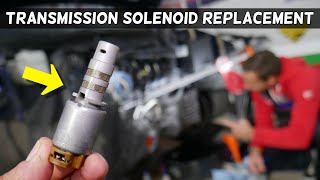
- Damaged Wiring or Corroded Connectors (Common) — Electrical wires leading to the solenoid get damaged, or connector pins corrode. A short circuit to power keeps the solenoid energized ('stuck on') continuously. This occurs in the external harness or the internal transmission harness. 🎬 See this walkthrough on how to replace a transmission solenoid.
- Clogged Transmission Filter or Blocked Passages (Common) — A clogged transmission filter restricts fluid flow, leading to severe pressure problems. Debris also blocks the small passages inside the transmission's valve body, causing the solenoid to stick.
- Faulty Transmission Valve Body (Less Common) — The solenoid mounts to the valve body, the hydraulic control center of the transmission. The valve body develops worn bores, cracked passages, or severe clogs, causing multiple pressure-related issues.
- Internal Transmission Mechanical Failure (Less Common) — Wear on internal components like clutch packs, seals, and the torque converter generates excessive debris. This debris contaminates the fluid, overwhelms the filter, and jams solenoids.
- Incorrect Transmission Fluid Type (Rare) — Using a transmission fluid not specified for your vehicle alters hydraulic properties, causing foaming, premature breakdown, and solenoid failure.
- Defective Transmission Pump (Rare) — The transmission pump creates the primary hydraulic pressure. A failing pump causes erratic pressure readings, though it more commonly triggers low-pressure codes.
- Faulty Transmission Control Module (TCM) (Rare) — The computer controlling the transmission fails and sends a continuous, incorrect 12V signal to the solenoid, forcing it to remain on.
Symptoms

- Check Engine Light On — The primary indicator is the check engine light illuminating on your dashboard. A transmission-specific warning light or gear icon also illuminates on many vehicles.
- Harsh, Erratic, or Delayed Shifting — The car slams into gear, shifts at the wrong times, or hesitates before shifting as the transmission struggles with incorrect fluid pressure.
- Transmission Stuck in Gear or 'Limp Mode' — The transmission locks itself into a single gear (often 2nd or 3rd) to prevent further internal damage, allowing you to 'limp' to a repair shop.
- Transmission Slipping or Overheating — The engine revs up, but the car fails to accelerate properly. Incorrect pressure causes clutches to slip, generating excessive heat and overheating the transmission.
- Engine Stalls When Coming to a Stop — Incorrect pressure forces the torque converter to remain partially engaged, stalling the engine when the vehicle comes to a complete stop.
- Decreased Fuel Economy — Inefficient shifting forces the engine to work harder, burning 5-15% more fuel.
Diagnostic Flowchart
Tap your situation to follow the diagnostic path that matches what you're seeing on this code.
Common Fixes & Costs
- Transmission Fluid and Filter Change — Parts: $50-$120, Labor: $100-$200, ~1.5 hr book time (Intermediate)
- Replace Pressure Control Solenoid 'C'
— Parts: $20-$100, Labor: $200-$450 (includes fluid and gasket), ~2.5 hr book time
(Intermediate)
Honda Accord/CR-V: OEM
Honda Accord/CR-V: OEM
Ford Escape (6F35): OEM - Repair or Replace Wiring Harness — Parts: $20-$150, Labor: $100-$350, ~2 hr book time (Intermediate)
- Replace Transmission Valve Body
— Parts: $300-$900, Labor: $350-$1,200, ~4 hr book time
(Professional)
Ford/GM (6F35/6T40): OEM - Replace Transmission Control Module (TCM)
— Parts: $250-$1000, Labor: $200-$600 (includes programming), ~2.5 hr book time
(Professional)
GM 6L80/6L90 (TEHCM): OEM
Used vs. New Parts: Buying Guide
When a used part is worth it: For a simple solenoid replacement, buying a used part is never recommended due to the high labor cost of installation versus the low cost of a new part. However, if the failure requires replacing the entire valve body or a solenoid pack, a low-mileage used unit from a reputable salvage yard is a cost-effective option for older, high-mileage vehicles.
Donor-vehicle mileage cap: roughly under 70000 miles for the part to have meaningful remaining life.
Donor quality checklist:
- Verify the donor vehicle was not scrapped due to transmission failure.
- Match the part number exactly; internal calibrations vary by year and model.
- Ask for the donor vehicle's VIN to check for compatibility and relevant service bulletins.
Decision logic:
- If The fix is a single, inexpensive solenoid → Always buy new. The savings from a used part are minimal and not worth the risk of premature failure.
- If The fix requires a complete valve body or solenoid pack and the vehicle is over 100,000 miles → A used part from a low-mileage donor is a reasonable choice to save money, but accept it has a shorter expected lifespan.
- If The part is for a vehicle with known transmission issues (e.g., certain CVT models) → Strongly favor a new or remanufactured part with updated components, as a used part likely has the same original design flaw.
Warranty tradeoff: Used parts typically come with a 30-90 day warranty on the part only, not labor. New aftermarket parts carry a 1-year to limited lifetime warranty. New OEM parts usually have a 1-year warranty.
Worst-case if a used part fails: $400 - $800. If a used solenoid or valve body fails after installation, you pay for the labor a second time, plus the cost of another replacement part.
What Happens If You Wait — Timeline
- 0-1 month: Code P0797 is set, and the Check Engine Light is on. Shifting becomes harsh or erratic, especially when cold. The transmission enters 'limp mode,' getting stuck in one gear. (MPG impact: 5-10%% · Added cost: $0 - $50 in wasted fuel. At this stage, the problem is confined to the solenoid, wiring, or fluid.)
- 1-3 months: Continued driving with incorrect line pressure causes clutch packs to slip excessively. This generates extreme heat, breaking down and burning the transmission fluid, turning it dark and smelly. (MPG impact: 10-15%% · Added cost: $500 - $1,200. The slipping clutches are damaged and require replacement. Burnt fluid circulates debris throughout the valve body, complicating the repair.)
- 3-6 months: Catastrophic heat damage begins. Burnt fluid and debris from failing clutches score and damage the bores within the valve body. Internal seals become hardened and brittle, causing cross-leaks between hydraulic circuits. (MPG impact: 15-25%% · Added cost: $1,800 - $3,500. A simple solenoid swap is impossible. The transmission requires a full rebuild, including new clutches, seals, and a remanufactured valve body.)
- 6+ months: Total transmission failure. Extreme heat and debris warp internal hard parts like clutch drums and planetary gear sets. The torque converter is contaminated and destroyed. The vehicle stops moving altogether. (MPG impact: >25% (or vehicle is undrivable)% · Added cost: $4,000 - $8,000+. The transmission is beyond a standard rebuild. A complete replacement with a remanufactured or new unit is mandatory.)
Cost of Not Fixing It
- Immediate (0-1 month): Erratic shifting, entering 'limp mode,' and a 5-15% drop in fuel economy. The vehicle stalls when stopping. (Added cost: Negligible, besides increased fuel consumption.)
- Short-Term (1-3 months): Continued driving with incorrect line pressure causes clutch packs to slip, generating extreme heat. This overheats and burns the transmission fluid, accelerating wear on all internal components. (Added cost: $800 - $1,500. A simple solenoid fix escalates into needing new clutch packs and a valve body service due to heat damage and debris.)
- Long-Term (3+ months): Catastrophic transmission failure. Burnt clutches, warped internal hard parts (drums, planetary gears), and a failed torque converter occur. The transmission requires a complete rebuild or replacement. (Added cost: $2,500 - $5,000+. The initial, less expensive solenoid repair is no longer an option; a full transmission rebuild or replacement is mandatory.)
Diagnosis Steps

- Read the Trouble Codes
Use an OBD-II scanner to confirm P0797. Check for related transmission codes (like P0700, P0868, or P0970), which provide critical clues to the root cause. Document the freeze frame data.
Tools: OBD-II Scanner (Beginner) - Check for Technical Service Bulletins (TSBs)
Before touching a wrench, check for TSBs for your specific VIN. Manufacturers frequently release bulletins for known P0797 issues, providing a shortcut to the exact repair (e.g., a known valve body flaw or TCM software update).
Tools: Internet Access, Vehicle Information (Beginner) - Check Transmission Fluid Level and Condition
Check the fluid level on the dipstick with the engine running in Park/Neutral per the manual. Healthy fluid is bright red. Dark brown or black fluid smelling of burnt toast indicates serious internal wear. Metal shavings guarantee severe damage requiring a rebuild.
Tools: Rag, Gloves (Beginner) - Inspect Wiring and Connectors
Visually inspect the wiring harness going to the transmission. Look for chafing, melting, or corrosion on the main connector pins. A short to voltage holds the solenoid on. Disconnect the connector and inspect for bent pins.
Tools: Flashlight (Intermediate) - Test Solenoid Circuit Resistance
Using a digital multimeter, test the solenoid's internal coil resistance (usually requires removing the transmission pan). Disconnect the solenoid and measure resistance between its pins, comparing it to service manual specs (e.g., a Ford 6F35 SSC reads 4.00-5.89 ohms at 68-86°F). An open circuit (infinite resistance) or short circuit (zero resistance) confirms a failed solenoid.
Tools: Digital Multimeter, Socket Set, Drain Pan, Service Manual (Advanced) - Command the Solenoid (Bi-Directional Scan Tool)
Use an advanced bi-directional scan tool to command the 'C' solenoid on and off manually while monitoring the transmission fluid pressure (TFP) sensor data. If pressure fails to change when commanded, it confirms a mechanical solenoid failure, wiring fault, or hydraulic blockage.
Tools: Advanced Bi-Directional Scan Tool (Professional) - Inspect the Valve Body
If the fluid, wiring, and solenoid test perfectly, the problem is deeper. Remove the valve body and inspect for stuck valves, scored bores, or blockages. Stop DIY diagnosis here and take the vehicle to a transmission specialist.
Tools: Full Mechanic's Tool Set, Vehicle-Specific Service Manual (Professional) - Advanced Electrical Signal Analysis (Oscilloscope)
For intermittent issues, backprobe the solenoid's control wire at the TCM. When commanded on, you must see a square wave pattern (Pulse Width Modulation). A flat line at 12V indicates a short to power; a flat line at 0V indicates a short to ground or open circuit.
Tools: Oscilloscope, Backprobe Kit, Service Manual (Professional)
When This Code Triggers (Freeze-Frame Conditions)
- Engine Coolant Temp: 180-210°F (Vehicle is at full operating temperature.)
- RPM: 1500-2500 RPM (During a gear shift or while cruising at a steady speed.)
- Engine Load: 25-70% (Under moderate acceleration or steady-state driving.)
- Vehicle Speed: 30-60 mph (Typically occurs during city or highway driving when shifts are commanded.)
Related Codes
- P0796 — The direct opposite of P0797. It means Pressure Control Solenoid 'C' is 'Stuck Off' or has a performance problem. Diagnosis differentiates by looking for a lack of pressure versus a solenoid that is always on.
- P0970, P0971 — Electrical circuit codes for the same solenoid. P0970 (Low) and P0971 (High) point specifically to wiring or electrical coil issues. P0797 is a performance code, requiring mechanical and hydraulic checks if the electrical circuit passes.
- P0700 — A generic 'messenger' code. It means the TCM detected a fault (like P0797) and asked the main engine computer to turn on the Check Engine Light. P0700 requires retrieving the specific transmission codes to diagnose.
- P0868 — Means 'Transmission Fluid Pressure Low'. A failing transmission pump or major leak causes system-wide low pressure, triggering erratic behavior and fault codes for individual solenoids. If present with P0797, investigate the pump and overall pressure first.
Climate & Environmental Factors
- Cold Weather: Extremely cold temperatures cause transmission fluid to thicken, increasing hydraulic resistance. This strains the solenoids and causes delayed shifting, triggering P0797. Metal parts also contract, causing temporary leaks from hardened seals.
- High Humidity / Salt: In humid or salt-belt regions, moisture accelerates corrosion on external wiring harness connectors and grounding points. A corroded connector causes high resistance or a short in the solenoid circuit, leading to erratic operation.
How to Talk to a Mechanic About This Code
Say this: "I have a P0797 code, and my car is experiencing [mention specific symptoms like 'harsh shifting' or 'getting stuck in gear']. I'd like to schedule a diagnostic. I've already checked the transmission fluid, and it's [mention condition, e.g., 'at the correct level and red' or 'dark and smells burnt']. Please start by testing the pressure control solenoid 'C' circuit and checking for any related TSBs before recommending major work."
This signals you're an informed customer. You've stated the specific code, described the symptoms, and mentioned a preliminary check. Asking them to test the specific circuit and check for bulletins directs them toward a logical diagnostic path, rather than starting with expensive, broad assumptions. It prevents immediate upselling to a transmission rebuild.
Avoid saying:
- 'My check engine light is on, can you fix it?' (This is too vague and invites a wide, potentially expensive, range of diagnostics).
- 'My transmission is acting weird.' (This is a symptom, not a diagnosis. Start with the code).
- 'Just replace the P0797 solenoid.' (The solenoid itself might not be the root cause; the problem is often wiring, fluid, or the valve body).
- 'Do whatever you think is best.' (This gives up all control and makes you an easy target for upselling).
Questions to ask before authorizing the repair:
- What was the result of the solenoid resistance test? What was the reading in ohms?
- Did you test the solenoid with a bi-directional scanner? Did the pressure change when you commanded it on and off?
- Is the wiring to the solenoid getting the correct voltage and ground signal from the TCM?
- Did you find any metal shavings or debris in the transmission pan?
- What is the warranty on the parts and labor for this repair?
Where to Take It: Dealer vs Independent vs Chain
- Dealer:
Recommended if the vehicle is under warranty or has a known, complex manufacturer-specific issue (e.g., Subaru CVT, Chevy Volt).
Best for: Vehicles under powertrain warranty (the repair is free)., Complex, vehicle-specific issues like those on a Chevy Volt or Subaru with a CVT, where TSBs and proprietary knowledge are mandatory., When a TCM replacement and programming is required.
Downsides: Highest labor rates, often 1.5-2x more than independent shops., Defaults to replacing larger, more expensive assemblies (like a whole valve body or TEHCM) instead of smaller components. (Typical cost: +50% vs. baseline) - Independent Shop:
Best fit for most scenarios. A good independent transmission shop is the most cost-effective choice for a competent P0797 diagnosis and repair.
Best for: Most out-of-warranty vehicles., Straightforward solenoid or wiring repairs on common vehicles (Honda, Ford, Dodge)., Getting a second opinion on a dealer's expensive quote.
Downsides: Quality and diagnostic capabilities vary widely. Ensure the shop is a transmission specialist or has strong reviews for transmission work., Lacks access to the very latest manufacturer TSBs or specialized programming tools. (Typical cost: +0% vs. baseline) - Chain Shop:
AVOID for P0797 diagnosis and repair. The risk of misdiagnosis or an improper repair is too high for this code.
Best for: Only a transmission fluid and filter change, and only if you are confident in their procedure.
Downsides: Technician skill varies dramatically., High pressure to upsell services like unnecessary flushes., Lacks the specialized diagnostic tools and experience for in-depth transmission work beyond fluid changes. (Typical cost: -10% vs. baseline)
When to Walk Away From the Repair
If the estimated repair cost exceeds 50% of the car's private-party value, it's time to seriously consider walking away.
- Car worth $4000, fix is $2500: Walk away. A $2,500 repair for a full transmission rebuild on a $4,000 car is not a sound financial decision.
- Car worth $12000, fix is $750: Fix it. A $750 solenoid replacement is well below the threshold and restores the vehicle's full value.
- Car worth $3000, fix is $450: Fix it. The repair cost is low compared to the car's value.
What Scan Tool You Need for This Code
Minimum: A scanner that reads manufacturer-specific transmission codes (not just generic P-codes) and views live transmission fluid temperature data.
A basic $20 code reader only shows the P0797 code. It cannot read live data, access the TCM, or command solenoids, which is essential for proper diagnosis. You will be guessing at the cause.
Budget: BlueDriver Pro (~$100) — Reads and clears transmission codes, provides freeze-frame data, and graphs live data like transmission fluid temperature. It provides repair reports suggesting common fixes for a P0797 on your specific vehicle.
Mid-range: Foxwell NT510 Elite (~$180) — Offers all features of the budget pick, plus bi-directional control. This allows you to manually command the 'C' solenoid on and off from the scanner to see if it's working, a critical diagnostic step.
Professional: Autel MaxiCOM MK808 / MK906BT (~$450-1200) — Provides full, dealer-level diagnostics. It has powerful bi-directional controls, performs advanced functions like TCM programming/coding, and offers detailed live data graphing to analyze the solenoid's performance in real-time.
Rent vs buy: For P0797, a basic parts store loaner tool is insufficient. If you are a serious DIYer, buying a mid-range tool with bi-directional capabilities like the Foxwell NT510 Elite is a worthwhile investment. If this is a one-time repair, it's more cost-effective to pay a professional for their diagnostic time.
How to Clear the Code After You Fix It
- Use an OBD-II scan tool to clear the P0797 trouble code.
- Refill transmission fluid to the correct level if it was drained.
- Perform a complete OBD-II drive cycle to allow the readiness monitors to run.
Drive cycle (~30 minutes): Start the engine from cold and let it idle for 2-3 minutes. Drive in stop-and-go city traffic for about 15 minutes, including several full stops. Accelerate to a steady highway speed of 55-60 mph for at least 5-10 minutes. Coast down to 20 mph without braking. Allow the vehicle to cool completely before re-checking for codes.
Readiness monitors affected: Comprehensive Component Monitor, Transmission
Before emissions retest: drive at least 100 miles to fully set monitors.
Watch out for:
- Simply disconnecting the battery clears the code but resets all readiness monitors, causing an immediate emissions test failure.
- The code returns immediately if the underlying mechanical or electrical fault is not properly repaired.
- Failing to complete a full drive cycle leaves readiness monitors in a 'Not Ready' state, preventing the vehicle from passing an emissions test.
Will This Fail Emissions / State Inspection?
Yes — this code typically fails an OBD-II emissions inspection.
- California: An illuminated Check Engine Light results in an automatic failure of the smog check. After repairs, a full drive cycle must be completed to set all readiness monitors before re-testing.
- New York: A vehicle automatically fails the emissions portion of the state inspection if the Check Engine Light is on. After clearing the code, the vehicle must be driven through a drive cycle to set readiness monitors to 'Ready'.
- Texas: In counties requiring emissions testing, an active P0797 code with an illuminated Check Engine Light causes the vehicle to fail the OBD-II portion of the annual state inspection.
Most Commonly Affected Vehicles
- Honda Accord, Odyssey, CR-V, Civic, Pilot (2011-2022) — Various Honda models trigger P0797 due to a faulty clutch pressure control solenoid, contaminated fluid, or a blocked transmission strainer. On some models, a specific resistance of 13.8-17.1 Ohms is expected for a good solenoid.
- Chevrolet / GM Volt, Silverado, Sierra, Tahoe, Yukon (2010-2018) — On the Volt (2011-2014), GM TSB PIP4831E points to debris inside the 4ET50 hybrid transaxle's valve body, requiring professional service. On trucks with 6L80/6L90 transmissions, this code is triggered by internal debris or TEHCM issues.
- Ford / Lincoln Fusion, Escape, Explorer, MKZ (2010-2019) — Vehicles with 6F35 and 6F50 transmissions are prone to solenoid and valve body issues triggering P0797. A TSB provides temperature-based resistance charts; at room temp (68-86°F), the solenoid must read 4.00-5.89 ohms.
- Dodge / Ram Ram 1500/2500/3500, Durango, Grand Caravan (with 545RFE/68RFE/62TE) (2004-2018) — These vehicles use a replaceable solenoid 'pack' or 'block' that is a common failure point. The pack is replaced by removing the transmission pan and valve body.
- Nissan GTR, Altima, Maxima, Rogue (2009-2020) — On the GTR, P0797 appears with a flashing gear light, related to a faulty valve body assembly or wiring issues within the dual-clutch transmission. On CVT models, solenoid failure within the valve body is common.
- Chevrolet Orlando (2012-2014) — This code is a known issue on the Chevy Orlando, pointing directly to a fault within the transmission's control solenoid valve assembly.
- Subaru Outback, Forester, Impreza, Crosstrek (2012-2020) — These models suffer widespread CVT issues related to the valve body and solenoids, leading Subaru to issue a 10-year/100,000-mile warranty extension. This code is likely covered.
- Toyota / Lexus Camry, RAV4, ES350, RX350 (2007-2017) — On models equipped with the U660E/U760E 6-speed automatic transmission, solenoid performance codes arise from wear in the valve body bores or solenoid failure itself.
Manufacturer-Specific Notes
- General Motors (GM): On hybrid models like the Chevy Volt and trucks like the Silverado, TSB PIP4831E states internal debris is the primary cause for P0797. The fix requires removing, disassembling, and inspecting the valve body for debris and stuck valves.
- Honda: On affected models like the Odyssey, the transmission enters a failsafe mode that locks the transmission in a single gear to prevent further damage while allowing the vehicle to be driven to a safe location.
- Subaru: Due to common Lineartronic CVT transmission issues, Subaru extended the powertrain warranty to 10 years or 100,000 miles for many 2012-2020 models (TSBs 16-107-17, 16-115-18). Check with a dealer using your VIN to see if your repair is free.
- Dodge / Ram / Chrysler: Many trucks and minivans use a consolidated solenoid 'pack' or 'block' containing multiple solenoids in one assembly. If one fails, the entire pack is replaced as a single unit.
Real Owner Stories
2005 Honda CR-V at 153K miles - The Easy Fix
Check engine light came on with code P0797. The owner experienced transmission slipping and trouble with upshifts for a few years, which progressively worsened.
What they tried:
- The owner replaced the dual linear solenoid with an inexpensive part from eBay (~$50).
Outcome: The repair resulted in instantly better pickup and smooth shifting at lower speeds. However, some slipping at higher RPMs remained, and a new fluid leak appeared due to an improperly sealed gasket.
Lesson: For high-mileage vehicles with classic P0797 symptoms, replacing the correct solenoid is a straightforward fix. However, using cheap parts leads to incomplete results, and care must be taken during reassembly to avoid creating new leaks.
2012 Chevy Volt - A Misdiagnosis Story
P0797 code appeared, causing harsh shifting and the vehicle entering 'limp mode'. The owner was concerned about a major transmission failure.
What they tried:
- The initial thought was to replace the 'C' solenoid itself, assuming it failed electrically.
Outcome: A professional diagnosis revealed the actual cause was debris within the 4ET50 transaxle's valve body, as pointed out by GM TSB PIP4831E. The fix required a professional to disassemble and clean the valve body. Replacing just the solenoid would have failed.
Lesson: Don't assume the part named in the code is the root cause. Always check for TSBs, as manufacturers provide shortcuts to diagnosing known issues, saving you from replacing the wrong parts.
2005 Acura RL - The Unusual Root Cause
After replacing two other solenoids, a new code, P0797, appeared. The car jerked into gear, even though a scan tool test showed the solenoid was 'not faulty'.
What they tried:
- The owner had already replaced other transmission solenoids. The next logical step seemed to be replacing the 'C' solenoid as well.
Outcome: The problem was a compatibility issue or a problem introduced during the previous repair. The code appearing *after* a repair suggests a wiring issue, an incorrect part, or debris introduced into the system during the job.
Lesson: If a new code appears immediately after a repair, the first suspect is the repair itself. Re-check all connections, verify part numbers, and ensure no debris entered the system. A scan tool showing a solenoid is 'not faulty' only checks the electrical circuit, missing mechanical problems.
How to Prevent This Code From Triggering
- Regular Transmission Fluid and Filter Changes (Every 30,000-60,000 miles, or per owner's manual.) — Clean fluid is the single most important factor. It removes contaminants and metal shavings that clog passages and physically jam the solenoid's internal valve. Fresh fluid maintains correct viscosity and heat-transfer properties.
- Use ONLY the Manufacturer-Specified Fluid (Every time fluid is added or changed.) — Different fluids have different frictional properties and additive packages. Using the wrong type (e.g., a generic fluid in a Honda) causes poor shifting performance, clutch slippage, and damages seals and solenoids.
- Install an External Transmission Cooler (Once, especially for vehicles used for towing or in hot climates.) — Heat is the #1 killer of automatic transmissions. An external cooler provides extra cooling capacity, keeping fluid temperature stable. This prevents fluid breakdown and protects electronic components like solenoids from heat-related failure.
- Avoid Aggressive Driving and Heavy Towing Beyond Capacity (Daily habit.) — Hard acceleration, frequent kick-downs, and excessive loads put immense strain on the transmission's hydraulic system. This generates heat and accelerates wear, leading to more debris in the fluid and a higher chance of solenoid failure.
- Check for and Repair Leaks Promptly (During regular oil changes or inspections.) — A low fluid level causes the transmission pump to suck in air, leading to a drop in hydraulic pressure and overheating. This starves the solenoids and clutches of fluid, causing rapid wear and failure.
Frequently Asked Questions
What does 'stuck on' actually mean for a solenoid?
It means the solenoid valve is stuck in the open position, allowing transmission fluid to flow continuously when it should be stopped. This is caused by an electrical short keeping it powered on, or internal debris physically jamming the valve open.
Where is the Pressure Control Solenoid 'C' located?
The pressure control solenoid is located inside the automatic transmission, bolted to the valve body assembly. To access it, you must drain the transmission fluid and remove the transmission oil pan. Verify the exact location with a vehicle-specific service manual.
Can I just change my transmission fluid to fix P0797?
If the cause is dirty or low fluid, a fluid and filter change fixes it. However, if the solenoid is electrically damaged or debris is heavily lodged in the valve, changing the fluid alone fails. It remains a crucial first step in diagnosis and maintenance.
What are common misdiagnosis mistakes for P0797?
A frequent mistake is replacing the pressure control solenoid without testing its circuit. The actual problem is often a simple wiring short, debris in the valve body, or a faulty computer signal. Replacing the transmission's hydraulic pump is another expensive, incorrect guess.
Is P0797 an electrical or a mechanical problem?
It is either, making diagnosis critical. The problem is electrical, like a shorted wire or faulty computer signal keeping the solenoid energized. It is also mechanical, such as a physically jammed valve inside the solenoid due to debris.
How can I prevent code P0797 from happening?
The single best prevention is changing your transmission fluid and filter according to the schedule in your owner's manual. Using the exact manufacturer-specified fluid is equally important. Clean, correct fluid is essential for the health of all transmission components.
What is a solenoid 'pack' or 'block'?
Some vehicles, like many Dodge, Ram, and Chrysler models, group several solenoids into a single, replaceable module called a solenoid pack. This makes replacement easier and more cost-effective than dealing with individual solenoids.
Can a bad battery or alternator cause P0797?
Yes. The Transmission Control Module (TCM) and solenoids are highly sensitive to voltage. A weak battery or failing alternator causes low or unstable voltage, leading to erratic electronic behavior and triggering false diagnostic codes.
Key Takeaways
- Dirty transmission fluid is the #1 cause of P0797, physically jamming the solenoid valve with metal shavings and clutch debris.
- Stop driving immediately to prevent a $300 solenoid replacement from escalating into a $3,500+ complete transmission rebuild.
- Always start diagnosis by checking the transmission fluid level and condition; burnt or black fluid guarantees internal mechanical damage.
- Verify the electrical circuit with a multimeter before replacing parts, as a $20 corroded wiring harness connector mimics a failed solenoid perfectly.
Helpful Videos


The information in this article is provided for general reference and educational purposes only. Vehicle specifications, procedures, and part compatibility can vary by production date, trim level, and region. Always consult your vehicle's factory service manual and verify part numbers before purchasing or performing repairs. Safety-critical components such as airbags, seat belts, and braking systems should be installed by a qualified professional.
- 🎬 Helpful Videos
- What Does P0797 Mean?
- Can I Drive With P0797?
- Common Causes
- Symptoms
- Diagnostic Flowchart
- Common Fixes & Costs
- Used vs. New Parts: Buying Guide
- What Happens If You Wait — Timeline
- Cost of Not Fixing It
- Diagnosis Steps
- When This Code Triggers (Freeze-Frame Conditions)
- Related Codes
- Climate & Environmental Factors
- How to Talk to a Mechanic About This Code
- Where to Take It: Dealer vs Independent vs Chain
- When to Walk Away From the Repair
- What Scan Tool You Need for This Code
- How to Clear the Code After You Fix It
- Will This Fail Emissions / State Inspection?
- Most Commonly Affected Vehicles
- Manufacturer-Specific Notes
- Real Owner Stories
- 2005 Honda CR-V at 153K miles - The Easy Fix
- 2012 Chevy Volt - A Misdiagnosis Story
- 2005 Acura RL - The Unusual Root Cause
- How to Prevent This Code From Triggering
- Frequently Asked Questions
- What does 'stuck on' actually mean for a solenoid?
- Where is the Pressure Control Solenoid 'C' located?
- Can I just change my transmission fluid to fix P0797?
- What are common misdiagnosis mistakes for P0797?
- Is P0797 an electrical or a mechanical problem?
- How can I prevent code P0797 from happening?
- What is a solenoid 'pack' or 'block'?
- Can a bad battery or alternator cause P0797?
- Key Takeaways
- 🎟️ Get 5% Off