

OBD-II Code P0794: Intermediate Shaft Speed Sensor 'A' Circuit Intermittent
The Ultimate Guide to What P0794 Means, Why It Triggers, and How to Fix It
- Code P0794 indicates the Transmission Control Module (TCM) is receiving an erratic signal from the intermediate shaft speed sensor, causing harsh shifts and limp mode.
- Over 60% of P0794 cases stem from frayed wiring harnesses or corroded connectors, rather than a failed sensor.
- Driving with an active P0794 code risks sudden downshifts at highway speeds and causes over $3,000 in internal transmission damage if ignored.
- Always test the sensor circuit with a multimeter and live scan tool data before replacing parts, as many modern vehicles integrate this sensor into expensive internal assemblies.
What Does P0794 Mean?
The Transmission Control Module (TCM) is receiving an unstable, on-and-off signal from the Intermediate Shaft Speed Sensor 'A'. This sensor measures the rotational speed of a middle shaft inside the transmission. When the signal drops out intermittently, the TCM loses track of the transmission's internal speed, fails to control hydraulic pressure correctly, and triggers erratic gear shifts.
Technical definition: The SAE/OBD-II definition is "Intermediate Shaft Speed Sensor 'A' Circuit Intermittent". This indicates the Powertrain Control Module (PCM) or TCM detects a sporadic, irregular, or unstable voltage signal from the intermediate shaft speed sensor circuit. The TCM requires this continuous data, alongside input and output speeds, to calculate precise shift points.
Can I Drive With P0794?
Yes, But With Caution. You can drive, but it is highly unsafe. The transmission shifts harshly, gets stuck in limp mode, or suddenly downshifts at highway speeds, creating a serious risk of losing control. Ignoring the code causes escalating internal transmission damage from incorrect hydraulic pressures, turning a minor electrical issue into a $3,000+ rebuild.
Common Causes
- Damaged or Corroded Wiring/Connectors (Very Common) — This is the primary cause. Wires in the sensor's circuit fray, melt against exhaust components, short to ground, or corrode at the connector. This creates a loose connection, causing the signal to drop in and out as the vehicle vibrates.
- Low or Contaminated Transmission Fluid (Common) — Old, dirty, or low fluid causes the transmission to overheat, damaging wiring and sensors. Contaminated fluid full of metallic particles coats the magnetic sensor tip, physically blocking it from reading the reluctor ring.
- Faulty Intermediate Shaft Speed Sensor (Common) — The sensor fails internally due to prolonged heat exposure and thermal cycling. The internal copper windings break down, causing the sensor to stop transmitting a signal once it reaches operating temperature.
- Internal Mechanical Transmission Failure (Less Common) — A damaged reluctor ring (the toothed wheel the sensor reads) or excessive play in the shaft bearings causes the gap between the sensor and ring to fluctuate. A sensor showing physical scrape marks confirms this internal mechanical failure.
- Outdated TCM Software (Rare) — The TCM's factory software is sometimes too sensitive and misinterprets a borderline signal as a fault. Manufacturers release software updates via Technical Service Bulletins (TSBs) to widen these tolerances.
- Failing Transmission Control Module (TCM) (Rare) — The TCM develops internal faults, such as cracked solder joints or failed driver circuits, preventing it from reading a perfectly good sensor signal. This is the absolute last component to suspect.
Symptoms
- Harsh, Erratic, or Delayed Shifting — The transmission slams into gear, shifts at the wrong times, or hesitates significantly when shifting from Park to Drive.
- Stuck in Gear (Limp Mode) — The transmission locks into a single gear (usually 2nd or 3rd) to prevent internal damage, severely limiting top speed and acceleration.
- Check Engine & Transmission Warning Lights — The Check Engine Light illuminates immediately. Many vehicles also trigger a flashing transmission-specific warning light or a wrench icon.
- Sudden Downshifting at Highway Speeds — The vehicle violently drops into 1st or 2nd gear while driving at 50+ mph, causing the tires to chirp and creating a massive safety hazard.
- Fluctuating Speedometer or RPM (also visible on scanner) — The speedometer needle flickers or drops to zero randomly. Engine RPM surges erratically as the transmission hunts for the correct gear.
Common Fixes & Costs
- Repair Wiring or Connector — Parts: $10-$30, Labor: $50-$150, ~1.0 hr book time (Intermediate)
- Transmission Fluid and Filter Service — Parts: $50-$150, Labor: $100-$200, ~1.0 hr book time (Intermediate)
- Replace Intermediate Shaft Speed Sensor
— Parts: $25-$100, Labor: $80-$170, ~1.0 hr book time
(DIY)
: OEM 31935-1XF0C (Alt: Dorman 917-658)
: OEM 28810-PPW-013 (Alt: Standard Motor Products SC235) - Replace Molded Lead Frame / TEHCM
— Parts: $250-$500, Labor: $400-$800, ~4.5 hr book time
(Professional)
: OEM AL3Z-7G276-D (Alt: Dorman 926-149) - Replace Solenoid Pack (Dodge/Ram)
— Parts: $300-$650, Labor: $200-$400, ~2.5 hr book time
(Professional)
: OEM 68353383AC (Alt: RevMax) - Replace Transmission Control Module (TCM) — Parts: $600-$900, Labor: $150-$300, ~2.0 hr book time (Professional)
DIY vs Professional
- Repair Wiring or Connector — Beginner:
Tools: Multimeter, wire strippers, crimpers, heat shrink tubing, soldering iron. - Replace External Speed Sensor — Beginner:
Tools: Basic socket/ratchet set, torque wrench, rags. - Transmission Fluid and Filter Service — Beginner:
Tools: Socket set, torque wrench, drain pan, fluid pump, new fluid and filter. - Replace Molded Lead Frame / TEHCM — Beginner:
Tools: Extensive socket set, inch-pound torque wrench, drain pan, fluid pump.
Used vs. New Parts: Buying Guide
When a used part is worth it: For external sensors on vehicles over 150,000 miles, a used OEM part from a salvage yard is a cost-effective option. Never buy used internal components like lead frames or TEHCMs.
Donor-vehicle mileage cap: roughly under 80000 miles for the part to have meaningful remaining life.
Donor quality checklist:
- Verify the donor vehicle was not scrapped due to a front-end collision that damaged the transmission.
- Match the part number exactly; electronic modules are not interchangeable.
- Avoid parts covered in heavy grease or burnt fluid.
Decision logic:
- If The part is an external sensor and the vehicle is over 150K miles → A used OEM sensor is a reasonable budget choice.
- If The part is an internal electronic unit (lead frame, TEHCM, solenoid pack) → Buy new or remanufactured to avoid high failure rates and repeat labor costs.
- If The vehicle is a Ford with a 6R80 or GM with a 6L80 → Buy a brand new OEM assembly, as original designs had known factory flaws.
Warranty tradeoff: Used parts offer a 30-day warranty on the part only. Remanufactured parts offer 1-year warranties. New OEM parts carry full manufacturer warranties.
Worst-case if a used part fails: $1,500 if a used internal lead frame fails, as you must pay for the 4.5 hours of labor a second time.
What Happens If You Wait — Timeline
- 0-1 month: Intermittent Check Engine Light with occasional harsh shifts. The issue resolves itself temporarily but always returns. Limp mode engages sporadically. (MPG impact: 0-5%% · Added cost: $0-$50 in wasted fuel.)
- 1-4 months: Shifting problems become severe. Incorrect hydraulic pressure causes accelerated wear on internal clutch packs. Transmission fluid darkens and smells burnt. (MPG impact: 5-10%% · Added cost: $500-$1,500 (Valve body or solenoid pack damage begins).)
- 4-8 months: Vehicle is regularly stuck in limp mode. Clutch packs slip, generating excessive heat and metal shavings that circulate and destroy other internal components. (MPG impact: 10-15%% · Added cost: $1,500-$2,800 (Valve body destroyed; clutch pack replacement required).)
- 8+ months: Catastrophic internal failure. Clutches are completely burnt, and hard parts are damaged from violent shifting. The vehicle will not move. (MPG impact: 15-25%% · Added cost: $3,000-$5,000+ (Full transmission replacement required).)
Cost of Not Fixing It
- 0-1 month: Continued harsh shifting and getting stranded in 'limp mode'. Fuel economy decreases by 5-10% due to inefficient gear selection. (Added cost: $50)
- 1-6 months: Incorrect hydraulic pressure causes accelerated wear on internal clutches and solenoids, turning a simple sensor issue into a major internal failure. (Added cost: $800-$2,800)
- 6+ months: Catastrophic internal transmission failure. Burnt clutches and metal contamination require a complete transmission rebuild or replacement. (Added cost: $3,000-$5,000+)
Diagnosis Steps
- Scan for Codes & Review Freeze Frame Data
Use an OBD-II scanner to confirm P0794 and check for related codes (P0700, P0793). Review the freeze-frame data to note the exact RPM, vehicle speed, and engine load when the intermittent fault occurred.
Tools: OBD-II Scanner (Beginner) - Check Transmission Fluid Condition
Inspect the transmission fluid. It should be reddish and translucent. If it is black, smells burnt, or is full of metallic glitter, the transmission has severe internal damage causing the sensor fault.
Tools: Rag, Dipstick (if equipped) (Beginner) - Analyze Live Data with a Scan Tool
Monitor the 'Intermediate Shaft Speed' PID on a live data scanner while driving. The RPM should increase smoothly with vehicle speed. If the reading drops to zero randomly, you have confirmed an intermittent electrical fault.
Tools: Advanced OBD-II Scanner (Advanced) - Visually Inspect Wiring and Connectors
Locate the sensor on the transmission case. Inspect the entire wiring harness for chafing, melted insulation, or fluid contamination. Unplug the connector and check for green corrosion or bent pins.
Tools: Flashlight (Intermediate) - Perform a Harness Wiggle Test
While watching the live sensor data on your scanner (engine running, in Park), aggressively wiggle the wiring harness from the sensor up to the TCM. If the RPM reading spikes or drops, you have found the exact location of the broken wire.
Tools: Advanced OBD-II Scanner, Gloves (Advanced) - Inspect and Clean the Sensor
Remove the sensor from the transmission. Wipe away any metallic paste built up on the magnetic tip. If the plastic tip is physically scraped or gouged, internal transmission bearings have failed.
Tools: Socket Set, Ratchet, Brake Cleaner, Rag (Intermediate) - Test Sensor Resistance
Use a multimeter to measure the internal resistance across the sensor's two pins. Most sensors read between 250-700 Ω (check your service manual). A reading of 'OL' (infinity) means the sensor is internally broken and must be replaced.
Tools: Multimeter, Service Manual (Advanced) - Test Sensor Circuit for Voltage and Continuity
Check for a 5V or 12V reference voltage at the harness connector. Test for continuity on the signal wire between the sensor connector and the TCM. High resistance indicates a broken wire inside the harness.
Tools: Multimeter, Wiring Diagram (Advanced) - Analyze Sensor with an Oscilloscope
Connect an oscilloscope to the signal wire. A healthy sensor produces a clean square-wave signal. If the waveform shows static or dropouts, the sensor is failing. Stop DIY diagnosis here if you do not own an oscilloscope.
Tools: Oscilloscope, Back-probe Pins (Professional) - Test the Transmission Control Module (TCM)
If the sensor, wiring, and oscilloscope waveform are perfect, the TCM itself is failing to process the signal. This requires a professional shop to perform module-level diagnostics and reprogramming.
Tools: Professional Scan Tool, OEM Software (Professional)
When This Code Triggers (Freeze-Frame Conditions)
- Engine Coolant Temp: 180-200°F (The fault typically appears after the vehicle fully warms up. Heat expands metal and degrades failing wire insulation, exposing intermittent electrical breaks.)
- Vehicle Speed: 35-55 mph (Highway or arterial road speeds are common trigger points, often occurring exactly when the transmission attempts a 3-4 or 4-5 upshift.)
- Engine Load: 30-60% (Moderate engine load, such as climbing a slight incline, exposes intermittent signal dropouts that remain hidden during idle.)
- RPM: 1500-2500 (Triggers frequently during steady cruising when the TCM expects a perfectly stable speed sensor signal.)
Related Codes
- P0793 — Indicates 'Intermediate Shaft Speed Sensor Circuit No Signal'. While P0794 is an intermittent drop-out, P0793 means the signal is completely dead, pointing to a severed wire or destroyed sensor.
- P0722 — Indicates 'Output Shaft Speed Sensor No Signal'. The TCM compares intermediate speed to output speed. If both codes appear together, suspect a failed internal assembly like a lead frame.
- P0700 — A generic informational code set by the Engine Control Module (ECM) to alert you that the Transmission Control Module (TCM) has stored a specific fault like P0794.
- P0791 — Indicates a general fault in the Intermediate Shaft Speed Sensor circuit. P0794 is simply the intermittent version of this exact same circuit failure.
Climate & Environmental Factors
- High Heat: Excessive engine bay heat degrades wire insulation, making it brittle. Heat also pushes a failing sensor past its operational limit, causing the signal to drop out only when the vehicle is fully warmed up.
- Moisture and Road Salt: Water intrusion into connectors causes green corrosion on the pins. This creates high electrical resistance, disrupting the low-voltage sensor signal, especially in winter climates.
- Extreme Cold: Wiring and connectors become stiff and brittle in sub-zero temperatures. Thermal contraction causes marginal electrical connections to temporarily pull apart, triggering the code at startup.
How to Talk to a Mechanic About This Code
Say this: "I have a P0794 code and my car is shifting harshly. I know this can be wiring, the sensor, or an internal assembly like a lead frame. I'd like to schedule a diagnostic to check the wiring harness and view the sensor signal with live data before replacing parts."
This proves you understand the code's complexity. It prevents the shop from blindly replacing the sensor and forces them to perform a proper electrical diagnosis.
Avoid saying:
- 'My transmission is slipping, just fix it.'
- 'Just replace the speed sensor.'
- 'My check engine light is on, can you look at it?'
Questions to ask before authorizing the repair:
- Did you inspect the wiring harness and connector for damage?
- Can you show me the live data from the scan tool that shows the sensor signal dropping out?
- If you recommend an internal part, what led you to rule out a simpler wiring issue?
- Does the warranty cover both parts and labor if the code returns?
Where to Take It: Dealer vs Independent vs Chain
- Dealer:
Recommended only if the vehicle is under warranty or has a known TSB/recall requiring proprietary software.
Best for: Vehicles under powertrain warranty., Vehicles with known recalls (e.g., Ford lead frame)., Repairs requiring manufacturer-specific software flashing (GM TEHCM).
Downsides: Highest labor rates and parts costs., May recommend a full transmission replacement instead of a targeted repair. (Typical cost: +50% vs. baseline) - Independent Shop:
Risky. A general independent shop is likely out of its depth if the problem requires internal transmission work.
Best for: Simpler P0794 causes like an external sensor or visible wiring damage.
Downsides: General mechanics lack the specific tools for deep transmission diagnostics., High risk of misdiagnosing internal transmission faults. (Typical cost: +0% vs. baseline) - Chain Shop:
AVOID. The complexity of this code is far beyond what chain shops are equipped to handle.
Best for: Simple maintenance like oil changes.
Downsides: Technicians are not specialized in complex transmission diagnostics., High risk of misdiagnosis and wasted money. (Typical cost: -10% vs. baseline)
When to Walk Away From the Repair
If the estimated repair cost exceeds 40-50% of the car's private-party value, it is time to sell or trade in the vehicle.
- Car worth $4000, fix is $2200: Walk away. A major transmission repair on a low-value car is a poor investment.
- Car worth $15000, fix is $1200: Fix it. The repair cost is well below the 40% threshold and restores a valuable asset.
- Car worth $3000, fix is $800: Borderline. Consider the car's overall health. If it needs other work soon, it is better to sell.
What Scan Tool You Need for This Code
Minimum: A scanner that reads manufacturer-specific transmission codes and displays live data for transmission PIDs (Input, Intermediate, and Output shaft speeds).
A basic $20 code reader only tells you the code exists. It cannot show the live sensor signal, which is essential to see intermittent dropouts and confirm the fault.
Budget: BlueDriver Pro (~$100) — Connects to your smartphone to read enhanced transmission codes and graph live data, allowing you to watch the sensor signal.
Mid-range: Foxwell NT510 Elite (~$180) — Offers dealer-level diagnostics for specific brands. It reads deep codes, views live data, and performs bidirectional tests useful for Ford, GM, or Nissan vehicles.
Professional: Autel MaxiCOM MK808S (~$450) — A professional tablet scanner with comprehensive diagnostics and extensive live data graphing needed to confidently diagnose the entire sensor circuit.
Rent vs buy: Buy. Auto parts store rental scanners are often basic models that lack the necessary live data function required to diagnose an intermittent P0794 code.
How to Clear the Code After You Fix It
- Use an OBD-II scan tool to clear the P0794 code.
- Perform a complete drive cycle to allow the vehicle's readiness monitors to run.
- Rescan the vehicle to ensure the code does not return.
Drive cycle (~30 minutes): A drive cycle requires a cold start, 3 minutes of idling, mixed city driving (25-40 mph) with several stops, and 10 minutes of steady highway driving (55-60 mph). This forces the TCM to test the sensor across all gear shifts.
Readiness monitors affected: Comprehensive Component Monitor
Before emissions retest: drive at least 50 miles to fully set monitors.
Watch out for:
- Clearing the code resets all emissions monitors to 'Not Ready', guaranteeing an automatic emissions test failure until a drive cycle is completed.
- Disconnecting the battery clears the code but also erases the transmission's adaptive shift learning, causing harsh shifts until the TCM relearns your driving habits.
- If the intermittent wiring short was not properly soldered, the code will return the moment you hit a bump on the highway.
Will This Fail Emissions / State Inspection?
Yes — this code typically fails an OBD-II emissions inspection.
- California: P0794 is an automatic failure for a smog check. All readiness monitors must be set to 'Ready' after repair before re-testing.
- New York: An active Check Engine Light for P0794 results in an immediate NYS inspection failure.
- Texas: In emissions-testing counties, P0794 is an automatic failure. You must drive 50-100 miles after clearing the code to reset monitors.
Most Commonly Affected Vehicles
- Ford F-150, Expedition, Mustang (2009-2017) — Vehicles with the 6R80 transmission suffer from a faulty molded lead frame. Ford issued recalls (19S07, 24S37) for sudden downshifting caused by this exact component.
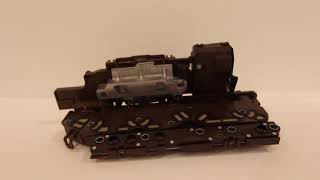
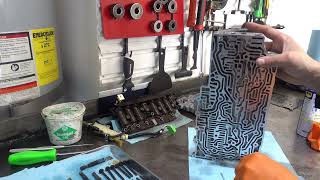
- Nissan Altima, Rogue, Sentra (2007-2015) — JATCO CVT transmissions trigger this code due to failing valve bodies, not just the sensor. TSB NTB12-103 addresses the associated shuddering complaints. 🎬 Watch: How to replace a Nissan CVT valve body and solenoids.
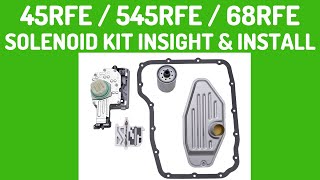
- Dodge / Ram Ram 2500/3500 (2007-2018) — Trucks with the 68RFE transmission experience this code due to internal solenoid pack failure. Replacing the solenoid pack (Mopar 68353383AC) is the standard fix. 🎬 Watch: Step-by-step guide to installing a Dodge RFE solenoid block kit.
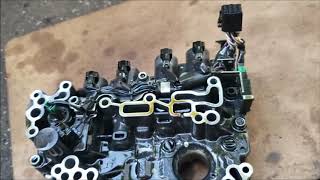
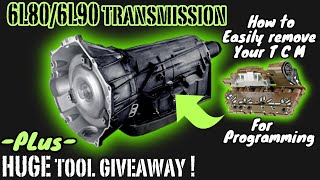
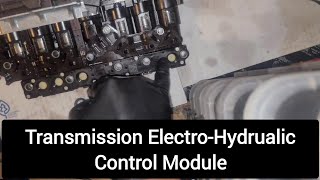
- Chevrolet / GMC Silverado, Sierra, Tahoe (2009-2018) — Models using the 6L80 transmission set this code due to failure of the internal TEHCM, which houses the sensors and requires dealer programming upon replacement. 🎬 See this essential walkthrough for removing a 6L80 TCM and TEHCM.
- Honda / Acura Accord, Odyssey, MDX (2003-2007) — These 5-speed automatics use external speed sensors that are highly accessible and easy to replace. The sensor part number is often 28810-PPW-013.
Manufacturer-Specific Notes
- Ford: On 6R80 transmissions, the speed sensors are permanently integrated into the internal 'molded lead frame'. You cannot replace the sensor alone; you must replace the entire $300 assembly and drop the valve body.
- Nissan: On JATCO CVTs, P0794 is rarely the sensor. It is almost always a symptom of a failing valve body causing incorrect hydraulic pressures. Replacing the sensor is a waste of money.
- General Motors (Chevy/GMC): On 6L80 transmissions, the sensors are built into the Transmission Electro-Hydraulic Control Module (TEHCM). Replacing it requires specialized software to program the new unit to the vehicle's VIN.
- Dodge / Ram: On 68RFE transmissions, a worn solenoid switch valve inside the transmission causes incorrect pressure readings that the TCM misinterprets as a P0794 speed sensor fault.
Real Owner Stories
2012 Ford F-150 with 6R80 Transmission at 110K miles
While driving at 65 mph, the truck suddenly downshifted to 1st gear, locking the rear wheels momentarily. The wrench light illuminated, storing P0794 and P0722.
What they tried:
- The owner planned to replace the external speed sensor, unaware it was an internal component.
Outcome: A transmission shop diagnosed a failed molded lead frame, a notorious 6R80 flaw. The shop replaced the lead frame assembly (AL3Z-7G276-D) and reprogrammed the PCM for $1,100, permanently resolving the issue.
Lesson: On Ford 6R80 transmissions, P0794 with sudden downshifts guarantees a failed internal molded lead frame. Check your VIN against Ford Recall 19S07 before paying out of pocket.
2013 Nissan Altima with JATCO CVT at 85K miles
The car shuddered violently during light acceleration. The check engine light showed P0794, and fuel economy dropped by 20%.
What they tried:
- A general mechanic replaced the external intermediate speed sensor for $250. The code and shudder returned three days later.
Outcome: A Nissan specialist referenced TSB NTB12-103, diagnosing a faulty valve body causing incorrect pressures, which triggered the sensor code. Replacing the valve body and reprogramming the TCM cost $1,500 but fixed the shudder.
Lesson: In Nissan CVTs, P0794 is a symptom of a failing valve body, not the root cause. Never replace the sensor on a Nissan CVT without checking TSBs first.
2008 Dodge Ram 2500 with 68RFE Transmission at 150K miles
The truck shifted harshly and locked into 3rd gear (limp mode). The scanner pulled P0794. The fluid was full but dark.
What they tried:
- The owner cleaned the magnetic speed sensor, which was coated in metallic paste, and changed the fluid. Shifting improved for a week before the code returned.
Outcome: The owner replaced the internal solenoid pack (Mopar 68353383AC) themselves for $450. The new solenoid pack restored proper hydraulic pressure, clearing the code permanently.
Lesson: On a Ram 68RFE, if cleaning the sensor and changing fluid fails, the solenoid pack is the culprit. Metallic paste on the sensor indicates internal clutch wear stressing the solenoids.
How to Prevent This Code From Triggering
- Perform Regular Transmission Fluid Services (Every 30,000-60,000 miles) — Clean fluid lubricates components and maintains correct hydraulic pressure. Contaminated fluid causes abrasive wear, damaging sensors and clogging solenoids.
- Use Exact OEM-Specified Transmission Fluid (Every fluid change) — Modern transmissions require specific friction modifiers (e.g., Mercon LV, Nissan NS-3). Universal fluids cause improper shifting, overheating, and premature sensor failure.
- Check for TCM Software Updates (During routine dealer service visits) — Manufacturers release software updates to improve shift logic and adjust sensor tolerances, preventing false P0794 codes.
- Maintain the Engine Cooling System (Per vehicle maintenance schedule) — The engine radiator cools the transmission fluid. An overheating engine degrades transmission fluid rapidly, destroying electronic sensors and wiring.
Frequently Asked Questions
Can I just replace the sensor to fix P0794?
Sometimes, but not always. The fault is frequently found in the wiring harness or connector, not the sensor itself. Furthermore, on many modern Fords and GMs, the sensor is built into an expensive internal assembly and cannot be replaced individually.
How much does it cost to fix code P0794?
A simple external sensor replacement costs $105 to $270. A wiring repair runs $60 to $180. However, if the vehicle requires an internal molded lead frame or TEHCM replacement, expect to pay $650 to $1,300.
What is the most common misdiagnosis for P0794?
A common mistake is immediately replacing the sensor without testing the wiring circuit. Another frequent misdiagnosis is blaming the sensor when the transmission fluid is heavily contaminated with metal particles, which blinds the magnetic sensor.
Will clearing the code make it go away?
No. Clearing the code turns off the light temporarily, but the underlying electrical or mechanical problem remains. The code will return as soon as the TCM detects the erratic signal again.
Is a P0794 code serious?
Yes, it is highly serious. Ignoring it leads to severe internal transmission damage from incorrect hydraulic pressures and causes unpredictable, unsafe shifting in traffic.
What's the difference between an intermediate and an output speed sensor?
The intermediate sensor measures the speed of a middle shaft to verify correct gear changes. The output sensor measures the final shaft speed, which correlates directly with vehicle speed. The TCM compares these to ensure the transmission operates without slipping.
Where is the intermediate shaft speed sensor located?
Location varies by vehicle. On older cars, it is bolted to the outside of the transmission case. On modern trucks from Ford and GM, it is located inside the transmission oil pan as part of a larger assembly.
What does the 'A' in 'Sensor A Circuit' mean?
The 'A' designation distinguishes between different circuits when a vehicle has more than one. Since the intermediate shaft usually has only one sensor, 'A' is the default identifier used in service manuals.
Key Takeaways
- Code P0794 indicates the Transmission Control Module (TCM) is receiving an erratic signal from the intermediate shaft speed sensor, causing harsh shifts and limp mode.
- Over 60% of P0794 cases stem from frayed wiring harnesses or corroded connectors, rather than a failed sensor.
- Driving with an active P0794 code risks sudden downshifts at highway speeds and causes over $3,000 in internal transmission damage if ignored.
- Always test the sensor circuit with a multimeter and live scan tool data before replacing parts, as many modern vehicles integrate this sensor into expensive internal assemblies.
Helpful Videos

The information in this article is provided for general reference and educational purposes only. Vehicle specifications, procedures, and part compatibility can vary by production date, trim level, and region. Always consult your vehicle's factory service manual and verify part numbers before purchasing or performing repairs. Safety-critical components such as airbags, seat belts, and braking systems should be installed by a qualified professional.
- 🎬 Helpful Videos
- What Does P0794 Mean?
- Can I Drive With P0794?
- Common Causes
- Symptoms
- Common Fixes & Costs
- DIY vs Professional
- Used vs. New Parts: Buying Guide
- What Happens If You Wait — Timeline
- Cost of Not Fixing It
- Diagnosis Steps
- When This Code Triggers (Freeze-Frame Conditions)
- Related Codes
- Climate & Environmental Factors
- How to Talk to a Mechanic About This Code
- Where to Take It: Dealer vs Independent vs Chain
- When to Walk Away From the Repair
- What Scan Tool You Need for This Code
- How to Clear the Code After You Fix It
- Will This Fail Emissions / State Inspection?
- Most Commonly Affected Vehicles
- Manufacturer-Specific Notes
- Real Owner Stories
- 2012 Ford F-150 with 6R80 Transmission at 110K miles
- 2013 Nissan Altima with JATCO CVT at 85K miles
- 2008 Dodge Ram 2500 with 68RFE Transmission at 150K miles
- How to Prevent This Code From Triggering
- Frequently Asked Questions
- Can I just replace the sensor to fix P0794?
- How much does it cost to fix code P0794?
- What is the most common misdiagnosis for P0794?
- Will clearing the code make it go away?
- Is a P0794 code serious?
- What's the difference between an intermediate and an output speed sensor?
- Where is the intermediate shaft speed sensor located?
- What does the 'A' in 'Sensor A Circuit' mean?
- Key Takeaways
- 🎟️ Get 5% Off