

OBD-II Code P0791: Intermediate Shaft Speed Sensor 'A' Circuit Malfunction
The Ultimate Guide for P0791: What it means, why it triggers, and how to fix it for good
- A faulty intermediate shaft speed sensor or a broken wire in its harness causes over 80% of P0791 codes.
- The vehicle immediately enters 'limp mode,' restricting speeds to 30-50 mph and locking the transmission in 2nd or 3rd gear to prevent internal damage.
- Driving more than 5 miles with an active P0791 code risks destroying the transmission's internal clutch packs, turning a $150 sensor replacement into a $3,500 rebuild.
- Verify the sensor's live data using an OBD-II scanner before buying parts; a reading of 0 RPM while moving confirms a dead sensor or severed wire.
What Does P0791 Mean?

P0791 means your Transmission Control Module (TCM) detected an electrical malfunction in the Intermediate Shaft Speed Sensor 'A' circuit. This sensor measures the rotational speed of a specific shaft inside your transmission. The TCM compares this speed to the engine speed and final drive speed to execute smooth gear shifts. When the signal is lost, intermittent, or nonsensical, the TCM cannot make correct shifting decisions, triggering the code and a protective 'limp mode'.
Technical definition: The official SAE/OBD-II definition for P0791 is "Intermediate Shaft Speed Sensor 'A' Circuit Malfunction". This indicates the Powertrain Control Module (PCM) or Transmission Control Module (TCM) detected an open, short, intermittent, or invalid electrical signal from the transmission intermediate shaft speed sensor 'A' circuit. The module expected a specific voltage pattern or frequency but received none, or the signal received was electrically impossible (e.g., a voltage reading greater than 1.9V or less than 0.1V for over 2 seconds).
Can I Drive With P0791?
Yes, But With Caution. You can drive, but we strongly advise against it. The vehicle enters 'limp mode,' limiting speed to 30-50 mph and RPMs below 3,000 to prevent catastrophic damage. Driving more than a few miles to a repair shop is a significant risk. Continuing to operate the vehicle turns a $150 sensor repair into a $3,000 transmission rebuild by destroying internal clutch packs and the valve body.
Common Causes

- Damaged Wiring or Corroded Connectors (Very Common) — The wiring harness leading to the sensor is the primary culprit for circuit codes. Wires break internally, chafe against the chassis, or melt from exhaust heat. Connector pins corrode from moisture, instantly killing the signal.
- Faulty Intermediate Shaft Speed Sensor (Very Common) — The magnetic pickup sensor weakens over time or suffers internal electrical shorts. Constant exposure to extreme transmission heat and vibration degrades its internal coil.
- Contaminated Transmission Fluid & Magnetic Debris (Common) — The sensor is magnetic. Fine metal shavings from normal transmission wear accumulate on the sensor's tip, disrupting the magnetic field and blocking the signal. Old, burnt fluid accelerates this wear.
- Faulty Transmission Control Module (TCM) (Less Common) — An internal fault in the TCM's circuitry, such as a failed driver or a bad solder joint, prevents it from reading the signal from a perfectly good sensor.
- Internal Transmission Mechanical Failure (Rare) — A damaged or slipping reluctor wheel (the toothed ring the sensor reads) inside the transmission causes this code. This is accompanied by loud mechanical noises or a complete loss of movement.
- Failing Related Speed Sensors (Input/Output) (Rare) — If the input (TSS) or output (OSS) speed sensor fails and provides irrational data, the TCM sometimes flags the intermediate sensor's signal as the incorrect one, setting a false P0791.
- TCM Software or Calibration Errors (Rare) — A corrupted software file or an outdated calibration in the TCM leads to misinterpretation of valid sensor data. A dealership software update (reflash) resolves this.
Symptoms

- Vehicle Enters 'Limp Mode' — The transmission defaults to a single gear (usually 2nd or 3rd) to prevent further damage, resulting in poor acceleration and high RPMs at highway speeds.
- Harsh, Jerky, or Delayed Shifting — The car bangs into gear, hesitates before shifting, or refuses to shift out of a certain gear entirely.
- Check Engine & Transmission Warning Lights On — The Malfunction Indicator Lamp (MIL) illuminates. Some vehicles also trigger a separate gear-shaped transmission warning light.
- Decreased Fuel Economy — Because the transmission is stuck in a lower gear, the engine runs at higher RPMs than normal, consuming significantly more fuel.
- Erratic Speedometer or RPM Fluctuation — The speedometer behaves erratically or engine RPMs surge unexpectedly as the TCM struggles to determine the correct gear ratio.
Diagnostic Flowchart
Tap your situation to follow the diagnostic path that matches what you're seeing on this code.
Common Fixes & Costs
- Replace Intermediate Shaft Speed Sensor — Parts: $25 - $150, Labor: $80 - $275, ~1.5 hr book time (DIY)
- Repair Damaged Wiring or Clean Connectors — Parts: $10 - $50, Labor: $100 - $300, ~2 hr book time (Intermediate)
- Transmission Fluid and Filter Change — Parts: $50 - $110, Labor: $80 - $200, ~1.5 hr book time (Intermediate)
- Replace Internal Transmission Wiring Harness — Parts: $150 - $400, Labor: $300 - $600, ~4 hr book time (Professional)
- Replace/Reprogram Transmission Control Module (TCM) — Parts: $600 - $1500, Labor: $150 - $300, ~2.5 hr book time (Professional)
DIY vs Professional
- Replace Intermediate Shaft Speed Sensor — Beginner: Yes, if the sensor is externally mounted.
Tools: Basic socket set, ratchet, flashlight, digital multimeter. - Repair Damaged Wiring or Clean Connectors — Beginner: No. Recommended for intermediate DIYers.
Tools: Digital multimeter, wire strippers, crimpers, soldering iron, heat shrink tubing. - Transmission Fluid and Filter Change — Beginner: No. Recommended for intermediate DIYers.
Tools: Socket set, drain pan, funnel, torque wrench. - Replace Internal Transmission Wiring Harness / TCM — Beginner: No. Professional only.
Tools: Extensive toolset, torque wrench, transmission jacks, diagnostic scan tool with programming capabilities.
Used vs. New Parts: Buying Guide
When a used part is worth it: Buying a used external speed sensor is never worth the minimal savings. A used part only makes sense if it is integrated into a larger, expensive assembly (like a complete valve body) being replaced for other reasons.
Donor-vehicle mileage cap: roughly under 50000 miles for the part to have meaningful remaining life.
Donor quality checklist:
- Verify the donor vehicle's mileage; lower is mandatory for electronic parts.
- Ensure the part number is an exact match.
- Avoid parts from vehicles scrapped due to transmission failure or flood damage.
Decision logic:
- If The part is an external speed sensor (under $150) → Always buy new. The labor cost to replace it again outweighs any savings.
- If The sensor is part of an internal leadframe or valve body assembly (over $400) → A used assembly from a low-mileage, rear-ended vehicle is a cost-effective option.
Warranty tradeoff: Used sensors typically come with a 30-day parts-only warranty. New aftermarket sensors carry a 1-year to lifetime warranty.
Worst-case if a used part fails: $200 - $500 (repeat labor cost if the used part fails).
What Happens If You Wait — Timeline
- 0-4 weeks: Check Engine Light illuminates. Occasional harsh shifts occur, especially when cold. The issue may disappear and reappear. (MPG impact: 0-5%% · Added cost: $0)
- 1-3 months: Shifting becomes consistently harsh. Vehicle enters 'limp mode' frequently, locking into 2nd or 3rd gear. Fuel economy drops noticeably. (MPG impact: 10-25%% · Added cost: $50 - $200 in wasted fuel)
- 3-6 months: Vehicle is permanently in limp mode. Constant high-RPM driving and harsh shifting destroys clutch material, contaminating the fluid and overheating the transmission. (MPG impact: 25-40%% · Added cost: $1,800 - $3,500 (Requires transmission rebuild))
- 6+ months: Catastrophic internal failure. The transmission stops moving entirely. Widespread damage to clutch packs, the valve body, and the torque converter. (MPG impact: 100% (vehicle is undrivable)% · Added cost: $3,500 - $7,000+)
Cost of Not Fixing It
- Short-Term (0-3 months): Erratic shifting, reduced fuel economy, and the vehicle locking into 'limp mode'. Driving is unsafe and unpredictable. (Added cost: $0)
- Medium-Term (3-6 months): Harsh shifting causes excessive wear on internal clutch packs and bands. Transmission fluid overheats and degrades rapidly. (Added cost: $1,800 - $3,500)
- Long-Term (6+ months): Catastrophic internal transmission failure requiring a complete rebuild or replacement. (Added cost: $3,500 - $7,000+)
Diagnosis Steps

- Scan for Codes & Review Live Data
Use an OBD-II scanner to confirm P0791. Switch to the live data function and monitor the 'Intermediate Shaft Speed' PID. It must read 0 RPM when stopped and increase smoothly as you accelerate. A reading of 0 RPM while moving, or erratic jumps, confirms a hard fault in the sensor or wiring.
Tools: OBD-II Scanner with Live Data capability (Beginner) - Check Transmission Fluid
Check the transmission fluid level and condition. The fluid must be at the 'Full' mark when hot, pinkish-red, and not smell burnt. Black, burnt fluid indicates internal damage that a new sensor will not fix.
Tools: Rag, Flashlight (Beginner) - Visually Inspect Sensor and Wiring
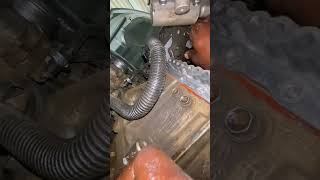
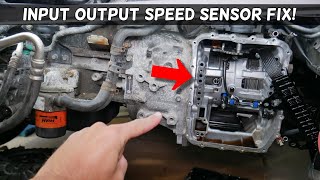
Locate the intermediate shaft speed sensor on the transmission case. Inspect the sensor, its connector, and the wiring harness for frayed wires, fluid leaks, or green corrosion on the connector pins. Trace the harness up to the TCM looking for chafe marks.
Tools: Flashlight, Inspection Mirror (Intermediate) - Test the Sensor's Electrical Resistance
Disconnect the sensor. Use a multimeter set to Ohms (Ω) to measure resistance between the sensor's pins. Compare this to the manufacturer's spec (typically 300-600 Ω for 2-wire sensors). Infinite resistance (open) or near-zero resistance (short) means the sensor is dead. Remove the sensor and wipe any metal shavings off its magnetic tip.
Tools: Digital Multimeter, Socket Set (Intermediate) - Test the Circuit for Voltage, Ground, and Pull-Up
With the sensor disconnected and key ON (engine off), probe the harness connector. For 3-wire sensors, verify 5V reference voltage and a solid ground (<0.1 Ohms). For 2-wire sensors, look for a 3.2V to 5V 'pull-up' voltage on the signal wire. This pull-up voltage proves the TCM and wiring to that point are intact.
Tools: Digital Multimeter, Backprobe Pins (Advanced) - Analyze the Sensor Signal with an Oscilloscope
Backprobe the signal wire with an oscilloscope while the wheels are turning. A 2-wire sensor produces an AC sine wave; a 3-wire produces a DC square wave. A missing or noisy waveform confirms a faulty sensor or a damaged internal reluctor wheel.
Tools: Automotive Oscilloscope, Jack Stands (Professional) - Stop DIY and Consult a Professional
If the sensor, wiring, and TCM signals all test perfectly, the fault lies deep inside the transmission (e.g., a shattered reluctor wheel or failing clutch drum). Tow the vehicle to a transmission specialist for internal teardown.
Tools: Tow Truck (Professional)
When This Code Triggers (Freeze-Frame Conditions)
- Vehicle Speed: 20-50 mph (The fault triggers during city or suburban driving while the transmission is actively shifting gears.)
- Engine RPM: 1200-2500 RPM (Occurs during light to moderate acceleration.)
- Transmission Fluid Temperature: 150-200°F (Indicates the transmission is at normal operating temperature when the signal drops out.)
Related Codes
- P0700 — P0700 is a generic code indicating the TCM has stored a fault. It acts as a 'Check Engine Light' for the transmission and always accompanies specific codes like P0791.
- P0792 — P0792 indicates an erratic or irrational signal, whereas P0791 points to a complete electrical failure (no signal, open, or short). P0792 is often caused by metal debris on the sensor tip.
- P0793 — P0793 specifically indicates the TCM is receiving absolutely no signal when one is expected. It is a more specific version of P0791, pointing directly to a severed wire or dead sensor.
- P0730 — P0730 (Incorrect Gear Ratio) is a symptom of P0791. The TCM sets P0730 because it cannot verify the gear ratio without the intermediate speed data. Fixing P0791 resolves P0730.
Climate & Environmental Factors
- High Humidity & Road Salt ('Salt Belt' Regions): Moisture and salt accelerate corrosion on the sensor's connector pins, increasing electrical resistance and directly causing the P0791 code.
- Extreme Cold/Heat Cycles: Repeated temperature swings make plastic wire insulation brittle. The insulation cracks, exposing copper wire to moisture and causing electrical shorts.
How to Talk to a Mechanic About This Code
Say this: "I have a P0791 code and transmission shifting issues. Please start by checking the live data from the intermediate speed sensor and perform a full electrical circuit test for continuity before recommending a sensor replacement."
This signals you know P0791 is a 'circuit' code. It forces the shop to perform a proper diagnosis instead of blindly replacing the sensor, saving you money if the issue is just a broken wire.
Avoid saying:
- 'My car is shifting funny, can you fix it?'
- 'My check engine light is on, just do whatever it takes.'
- 'I think I need a new transmission sensor, can you just swap it out?'
Questions to ask before authorizing the repair:
- What did the live data show for the intermediate shaft speed? Was it zero or erratic?
- Did you find a problem with the sensor, the wiring, or the connector?
- Is the sensor externally mounted or is it inside the transmission?
- If the wiring is the issue, will you be repairing the harness or replacing it?
Where to Take It: Dealer vs Independent vs Chain
- Dealer:
Best for: Vehicles under warranty, Known manufacturer-specific issues covered by a TSB or recall (like Ford's molded leadframe), Complex internal repairs requiring TCM programming
Downsides: Highest labor rates, often 1.5-2x more than independent shops., Dealers prefer replacing expensive assemblies rather than performing cheaper wiring repairs. (Typical cost: +50% vs. baseline) - Independent Shop:
Best overall fit. A reputable independent transmission shop has the right balance of diagnostic skill and cost-effectiveness to repair a P0791 circuit fault without unnecessary upselling.
Best for: Out-of-warranty vehicles where cost is a factor., Electrical diagnosis and wiring repairs.
Downsides: Quality varies widely; look for ASE certifications in transmission repair., May lack access to the latest manufacturer software updates. (Typical cost: +0% vs. baseline) - Chain Shop:
Avoid for initial diagnosis. They are unlikely to properly trace the complex electrical issues this code involves.
Best for: Simple, routine maintenance like oil changes.
Downsides: Technician skill is inconsistent., Lack the advanced diagnostic tools for complex electrical or internal transmission work., Quick to recommend expensive part replacement without thorough diagnosis. (Typical cost: -10% vs. baseline)
When to Walk Away From the Repair
If the estimated repair cost exceeds 50% of the car's private-party market value, it is not worth repairing.
- Car worth $4000, fix is $2200: Walk away. The repair cost is over 50% of the car's value. Put that money toward a reliable replacement vehicle.
- Car worth $15000, fix is $1400: Fix it. The repair cost is well below the 50% threshold and restores the vehicle's function.
- Car worth $3000, fix is $1600: Walk away. A $1600 repair on a $3000 car is a poor investment, as other age-related failures will occur soon.
What Scan Tool You Need for This Code

Minimum: An OBD-II scanner that reads and displays **live data** for transmission PIDs.
A basic $20 code reader only shows the 'P0791' code. It cannot show live data from the sensor. Without live data, you cannot tell if the sensor is dead (reading 0 RPM) or functioning correctly, making diagnosis impossible.
Budget: BlueDriver Pro or ANCEL BD310 (~$100) — Pairs with your smartphone to graph live data from the transmission sensors. This is the minimum tool required to see what the sensor is doing in real-time.
Mid-range: Foxwell NT510 Elite or Innova 5610 (~$180) — Offers manufacturer-specific diagnostics, providing detailed live data and basic bidirectional controls to test components.
Professional: Autel MaxiCOM MK808S or Launch X431 (~$400-600) — Offers full bidirectional control to command solenoids and test circuits, providing the deepest insight into the transmission's behavior short of using an oscilloscope.
Rent vs buy: Auto parts stores loan basic scanners for free, but these loaner tools rarely support live data. Buying a budget-pick scanner is a mandatory investment for diagnosing P0791.
How to Clear the Code After You Fix It
- Use an OBD-II scan tool to erase the P0791 code from the TCM and PCM.
- Perform a transmission drive cycle to allow the TCM to relearn shift points and confirm the repair.
Drive cycle (~20 minutes): Start the engine and idle for 3 minutes. Drive the vehicle, accelerating gently to allow the transmission to shift through all forward gears up to 60 mph. Hold a steady speed for 5 minutes. Safely come to a complete stop. Repeat this sequence 3 times.
Readiness monitors affected: Comprehensive Component Monitor
Before emissions retest: drive at least 50 miles to fully set monitors.
Watch out for:
- Clearing the code without performing a drive cycle does not confirm the fix; the code returns immediately once the TCM attempts to read the sensor.
- Disconnecting the battery erases all OBD-II readiness monitors, causing an automatic failure at an emissions testing station.
Will This Fail Emissions / State Inspection?
Yes — this code typically fails an OBD-II emissions inspection.
- California: A P0791 code is an automatic failure. The Check Engine Light must be off, and all required readiness monitors must be set to 'Ready'.
- New York: An active P0791 code causes the vehicle to fail the emissions portion of the NYS DMV inspection.
- Texas: In the 17 Texas counties requiring emissions testing, an illuminated Check Engine Light and active P0791 code results in an immediate failure.
Most Commonly Affected Vehicles
- Dodge / Chrysler / Jeep Grand Caravan, Journey, Town & Country (2010-2018) — Extremely common on the 62TE transmission. Caused by wiring issues near the main transmission connector or a faulty sensor pack.
- Ford F-150, Super Duty, Explorer (2009-2020) — On 2011-2013 F-150s (6R80 transmission), the sensor is part of a molded leadframe prone to failure, covered under Customer Satisfaction Program 19N01.
- Honda Accord, Odyssey, Pilot (2008-2015) — Corrosion hidden deep within the wiring harness loom is a known point of failure for this code, requiring continuity testing to locate.
- Hyundai / Kia Sonata, Elantra, Tucson, Santa Fe (2010-2020) — Frequently caused by a faulty internal transmission wiring harness. TSB 20-AT-011H addresses replacing this harness (Part No. 46307-3B650).
- Chevrolet / GMC Silverado, Sierra, Equinox (2007-2021) — Caused by wire chafing issues (TSB 21-NA-149). On 4WD trucks, a loose snap ring in the transfer case alters the sensor air gap, causing erratic signals (TSB PIT5677E).
- Nissan Altima, Maxima, Rogue (2007-2016) — CVT transmissions are highly susceptible to speed sensor faults. Failure often requires replacing the entire valve body assembly.
Manufacturer-Specific Notes
- Dodge / Chrysler: On the 62TE transmission, the wiring for the speed sensor pack frequently breaks or corrodes right at the main connector. Always pull back the wire loom to inspect the wires before replacing the sensor.
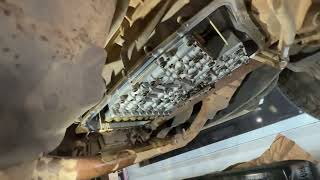
- Ford: The Intermediate Shaft Speed Sensor is rarely a standalone part. It is integrated into the Turbine Shaft Speed (TSS) sensor assembly or built into an internal molded leadframe requiring valve body removal.
- Hyundai / Kia: A known defect involves the internal transmission wiring harness degrading from heat and fluid exposure. TSB 20-AT-011H mandates replacing this entire harness to fix speed sensor codes.
Real Owner Stories
2016 Dodge Grand Caravan (62TE) at 110K miles
Check engine light came on with harsh shifting, and the van felt stuck in a single gear.
What they tried:
- A shop scanned the code and found P0791.
- Initial diagnosis suggested a faulty sensor, but the technician performed a circuit test first.
Outcome: The technician found a broken ground wire in the harness near the PCM/TCM. Repairing the wire restored normal transmission function. The original sensor was perfectly fine.
Lesson: Never blindly replace the sensor. P0791 is a 'circuit' code, making wiring a highly probable culprit. A full circuit test prevents wasting money on unneeded parts.
2013 Ford F-150 (6R80) at 140K miles
While driving 60 mph, the truck violently downshifted to 1st gear, illuminating the check engine light.
What they tried:
- Owner discovered Ford's Customer Satisfaction Program 19N01 for the molded leadframe, but the truck was outside the 10-year/150,000-mile warranty window.
Outcome: An independent shop replaced the internal molded leadframe assembly (which houses the speed sensors) for $1,500. The dealership quote was $2,200.
Lesson: On many modern Fords, speed sensors are integrated into an internal leadframe. Always check for TSBs and warranty extensions like 19N01 to confirm known manufacturer defects.
2010 Honda Accord with erratic shifting
Vehicle shifted erratically and threw code P0791.
What they tried:
- A visual inspection of the sensor and its immediate connector showed no obvious issues.
Outcome: A continuity test revealed corrosion hidden deep inside the wiring harness loom. Splicing in a new section of wire resolved the code.
Lesson: Corrosion hides inside the wire loom, far from the actual sensor connector. A simple visual check isn't enough; a multimeter continuity test is mandatory.
How to Prevent This Code From Triggering
- Perform transmission fluid and filter changes at recommended intervals (Every 30,000-60,000 miles, or per manufacturer's 'severe service' schedule.) — Clean fluid prevents overheating and removes suspended metallic particles that contaminate magnetic speed sensors.
- Periodically clean transmission electrical connectors (Every 2-3 years, especially in 'Salt Belt' regions.) — Spraying electrical contact cleaner and applying dielectric grease to the main transmission harness prevents the corrosion that directly causes P0791.
- Maintain the vehicle's cooling system (Annual inspection; coolant flush every 5 years or 100,000 miles.) — The engine's radiator cools the transmission fluid. A failing cooling system overheats the transmission, melting internal seals and sensor electronics.
Frequently Asked Questions
What is the most common mistake when diagnosing P0791?
The most common mistake is immediately replacing the sensor without testing the circuit. Technicians frequently find the actual problem is a broken wire or corroded connector. Always test the wiring for power, ground, and continuity first.
Can I clean a speed sensor instead of replacing it?
Yes, if the sensor's magnetic tip is covered in metallic fuzz, wiping it clean temporarily restores function. However, excessive metal shavings indicate severe internal transmission wear. If the code returns quickly, the sensor or transmission is failing.
Is the Intermediate Shaft Speed Sensor always a separate part?
No. On many modern vehicles, particularly Fords, the sensor is integrated into a larger internal assembly like a molded leadframe or valve body.
Will changing the transmission fluid fix a P0791 code?
No. While clean fluid prevents future sensor contamination, it will not fix a sensor that has already failed electrically or a wire that is broken.
How much does it cost to diagnose a P0791 code?
Repair shops charge a diagnostic fee between $125 and $185. This covers the initial scan, live data review, and preliminary circuit testing.
What is the difference between an input, intermediate, and output speed sensor?
The Input Speed Sensor measures engine RPM entering the transmission, while the Output Speed Sensor measures the final output shaft speed. The Intermediate Speed Sensor measures the speed of an internal gearset mid-way through. The TCM compares all three to ensure correct, smooth shifting.
Can a bad battery cause a P0791 code?
While a dying battery causes random electronic glitches, it is rarely the direct cause of P0791. This code specifically points to a hard fault within the sensor's dedicated circuit.
Key Takeaways
- A faulty intermediate shaft speed sensor or a broken wire in its harness causes over 80% of P0791 codes.
- The vehicle immediately enters 'limp mode,' restricting speeds to 30-50 mph and locking the transmission in 2nd or 3rd gear to prevent internal damage.
- Driving more than 5 miles with an active P0791 code risks destroying the transmission's internal clutch packs, turning a $150 sensor replacement into a $3,500 rebuild.
- Verify the sensor's live data using an OBD-II scanner before buying parts; a reading of 0 RPM while moving confirms a dead sensor or severed wire.
Helpful Videos


The information in this article is provided for general reference and educational purposes only. Vehicle specifications, procedures, and part compatibility can vary by production date, trim level, and region. Always consult your vehicle's factory service manual and verify part numbers before purchasing or performing repairs. Safety-critical components such as airbags, seat belts, and braking systems should be installed by a qualified professional.
- 🎬 Helpful Videos
- What Does P0791 Mean?
- Can I Drive With P0791?
- Common Causes
- Symptoms
- Diagnostic Flowchart
- Common Fixes & Costs
- DIY vs Professional
- Used vs. New Parts: Buying Guide
- What Happens If You Wait — Timeline
- Cost of Not Fixing It
- Diagnosis Steps
- When This Code Triggers (Freeze-Frame Conditions)
- Related Codes
- Climate & Environmental Factors
- How to Talk to a Mechanic About This Code
- Where to Take It: Dealer vs Independent vs Chain
- When to Walk Away From the Repair
- What Scan Tool You Need for This Code
- How to Clear the Code After You Fix It
- Will This Fail Emissions / State Inspection?
- Most Commonly Affected Vehicles
- Manufacturer-Specific Notes
- Real Owner Stories
- 2016 Dodge Grand Caravan (62TE) at 110K miles
- 2013 Ford F-150 (6R80) at 140K miles
- 2010 Honda Accord with erratic shifting
- How to Prevent This Code From Triggering
- Frequently Asked Questions
- What is the most common mistake when diagnosing P0791?
- Can I clean a speed sensor instead of replacing it?
- Is the Intermediate Shaft Speed Sensor always a separate part?
- Will changing the transmission fluid fix a P0791 code?
- How much does it cost to diagnose a P0791 code?
- What is the difference between an input, intermediate, and output speed sensor?
- Can a bad battery cause a P0791 code?
- Key Takeaways
- 🎟️ Get 5% Off