

P0776 on 2017-2018 Nissan Sentra: CVT Solenoid Causes and Fixes
On a 2017-2018 Nissan Sentra, code P0776 almost always points to a problem inside the CVT transmission, often requiring a valve body replacement. This is a complex repair and can be a sign of impending transmission failure, which is a widely documented issue for this vehicle.
- P0776 on a 2017-2018 Sentra is a serious transmission code indicating a problem with a pressure control solenoid within the CVT.
- This is a known issue, and Nissan has a specific TSB (NTB18-077C) that dictates the repair path.
- The repair will be, at minimum, a valve body replacement, but could require a full CVT replacement if internal belt damage is found.
- This is not a DIY-friendly repair. Professional diagnosis and service are strongly recommended due to the complexity of the CVT.
- Do not ignore this code. Driving with it can lead to catastrophic transmission failure and significantly higher repair costs.
What's Unique About the 2017-2018 Nissan SENTRA

The 2017-2018 Nissan Sentra uses a Jatco-produced CVT (often the JF016E / RE0F10D family) that is known for having a high rate of premature failure. Code P0776 is a very common trouble code associated with these transmissions and is often one of the first signs of a significant internal problem. Nissan has issued specific technical service bulletins (notably NTB18-077C) that outline a mandatory diagnostic path for this code. [⭐] This procedure requires a technician to use a borescope to inspect the CVT's internal drive belt for damage. The result of this inspection determines whether the fix is a valve body replacement or a full (and very expensive) CVT assembly replacement. This is not a simple solenoid swap; the code is a symptom of a larger systemic issue within the transmission.
Diagnostic Flowchart

Tap your situation to follow the diagnostic path that matches what you're seeing on this vehicle.
Symptoms You May Notice
- Hesitation or lack of power 🎬 Watch: A quick tip to try before committing to major repairs. [⭐]
- Harsh, jerky, or erratic shifting
- Transmission slipping, where engine RPMs rev up without an increase in speed
- Vehicle entering 'limp mode' with severely limited speed
- Delayed engagement when shifting from Park or Neutral
- Inability to shift into higher gears
- Check Engine Light is on
- Simply replacing the CVT fluid without addressing the underlying mechanical or electrical fault. If the valve body is failing or there is internal damage, a fluid change will not fix the P0776 code long-term.
- Replacing only the individual solenoid. The solenoids are integrated into the valve body, and the issue is often contamination or a fault in the valve body itself, not just one solenoid. Nissan's procedure calls for replacing the entire assembly.
Most Likely Causes

- Defective Transmission Valve Body 🔴 High Probability The valve body, which houses the pressure control solenoids, is a known failure point in this vehicle's Jatco CVT. Debris from normal (and abnormal) wear can contaminate the fluid and clog the fine passages within the valve body, or the solenoids themselves can fail electronically or mechanically, getting stuck.
How to confirm: A technician will follow Nissan's diagnostic procedure outlined in TSB NTB18-077C, which involves checking for other codes, inspecting the CVT belt for slippage with a borescope, and potentially testing solenoid circuits. [⭐] If the belt is not damaged, the valve body is the presumed culprit.
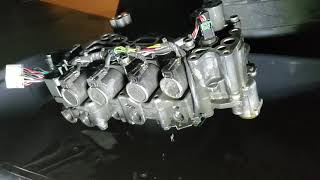
Typical fix: Replace the entire control valve assembly (valve body) and reprogram the Transmission Control Module (TCM) using the calibration data provided with the new part. 🎬 Watch: A step-by-step walkthrough of the valve body replacement process. [1, 6, ⭐]
Est. part cost: $700-$1200 - Internal CVT Failure (Belt Slippage) 🟡 Medium Probability The steel push belt used in these CVTs can wear, stretch, or break. This is a very common failure mode. The resulting metal debris contaminates the entire system, destroying the valve body and scoring the pulleys, which necessitates a full replacement.
How to confirm: As per TSB NTB18-077C, a technician will remove the valve body and use a borescope to inspect the sides of the CVT belt for signs of slippage, scoring, or damage. [5, ⭐] Finding significant metal shavings in the transmission pan is also a strong indicator of this level of failure.
Typical fix: Complete replacement of the CVT assembly is required. [5, ⭐] Repairing or rebuilding is generally not recommended by Nissan for this failure.
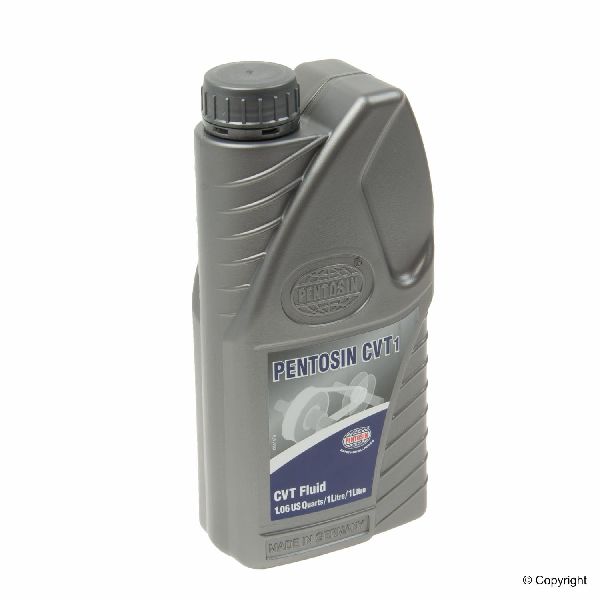
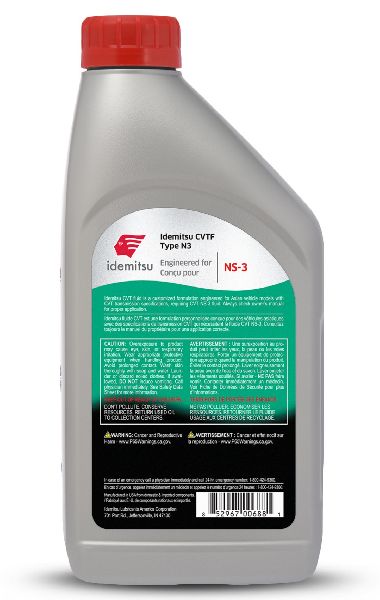
Est. part cost: $3500-$5500+ - Low or Contaminated CVT Fluid ⚪ Low Probability While rarely the root cause on its own, low or degraded fluid (Nissan specifies NS-3 fluid) accelerates wear and can cause pressure issues, leading to solenoid and valve body problems. By the time P0776 appears, the damage is usually already done, and a simple fluid change is not a fix.
How to confirm: Check the CVT fluid level and condition. The fluid should be a translucent green (NS-3) and at the correct level. Dark, burnt-smelling fluid or fluid with visible metal particles indicates a severe internal problem.
Typical fix: A fluid and filter change is a maintenance item, not a repair for this code. If performed, the pan should be dropped and the magnets cleaned. However, if significant wear has already occurred, this will not solve the P0776 code.
Est. part cost: $200-$400
Rare But Worth Checking
- Faulty Transmission Control Module (TCM): While rare, the TCM can fail and incorrectly report a solenoid issue. This should only be considered after all mechanical and wiring issues have been ruled out.
- Damaged Wiring Harness: The wiring to the transmission valve body can become damaged, causing a loss of communication with the solenoid. This is uncommon but should be inspected for opens or shorts before replacing expensive hard parts.
Diagnosis Steps
- Verify the code with a professional OBD-II scanner that can read transmission-specific codes.
- Check for any other stored DTCs. Note that TSB NTB18-077C does not apply if codes like P0744, P0746, P0841, P0965, P2813, or P17F0 are present, as they point to different diagnostic paths. [⭐]
- Check the CVT fluid level and condition. Look for signs of heavy contamination, a burnt smell, or excessive metal debris.
- CRITICAL: Follow the diagnostic flowchart in Nissan TSB NTB18-077C. This is the manufacturer-mandated procedure for this specific vehicle and code. [⭐]
- The procedure involves removing the transmission oil pan and control valve (valve body).
- Using a borescope (Nissan specifies Essential Tool J-51951), inspect the CVT belt for any evidence of slippage, scoring, or damage on its sides. [11, ⭐]
- If belt slippage or damage is found, the entire CVT assembly must be replaced. Authorization from Nissan may be required for warranty claims. [5, ⭐]
- If the belt inspection shows no damage, the recommended repair is to replace the control valve assembly. [⭐]
- After replacing the valve body or the entire CVT, the TCM must be reprogrammed with the latest software using the calibration data file that comes with the new part.
- Perform a final fluid level check using the correct procedure for a sealed transmission and test drive the vehicle to ensure the repair was successful.
Parts You'll Likely Need
- Control Valve Assembly (Valve Body)
(OEM #31705-28X2B)— This is the most common repair prescribed by Nissan's TSB when there is no evidence of CVT belt damage. The solenoids are integrated into this assembly. This part number supersedes 31705-28X0D.
Trusted brands: Nissan (OEM)
OEM price range: $700-$1300
Aftermarket price range: $500-$900 - CVT Assembly — If the diagnostic procedure reveals CVT belt slippage, a complete transmission replacement is the only approved fix by Nissan. [5, ⭐] This is a frequent outcome for the P0776 code.
Trusted brands: Nissan (OEM), Jatco (Remanufactured)
OEM price range: $4000-$5500
Aftermarket price range: $3000-$4500
Related Codes That Often Appear With This One
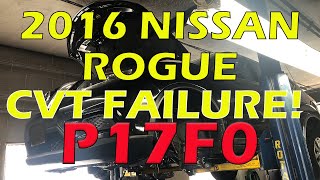
- P1715 — This code for 'Input Speed Sensor' is frequently stored along with P0776, as noted in Nissan's TSB NTB18-077C. The erratic operation and potential slipping caused by the pressure solenoid issue can lead to implausible readings from the speed sensors. Its presence reinforces the P0776 diagnosis rather than 🎬 See how these codes appear during a real transmission failure diagnosis. indicating a separate problem. [5, 27, ⭐]
Technical Service Bulletins (TSBs) & Recalls

- NTB18-077C: 'MIL ON WITH DTC P0776, P1715 AND MAY HAVE HESITATION AND/OR LACK OF POWER'. This is the primary document for diagnosing this code on this vehicle, outlining the critical procedure to inspect the CVT belt with a borescope and decide between replacing the valve body or the entire CVT assembly. [⭐]
- NTB18-077: An earlier version of the same bulletin with similar information. [⭐]
- NTB16-110 series: A similar TSB for Altimas and Rogues with the same P0776 code, showing the widespread nature of this failure across Nissan's CVT-equipped lineup.
Platform-Specific Known Issues
- Nissan has issued multiple Technical Service Bulletins (TSBs) related to CVT problems, with NTB18-077C directly addressing DTC P0776 for this model. [⭐]
- An owner complaint filed with the NHTSA (ODI #11364577) for a 2017 Sentra documented a P0776 code that was diagnosed by a specialist as requiring a full transmission replacement. []
- A class-action lawsuit, Martinez v. Nissan North America Inc., was filed concerning CVT transmission defects in 2017-2018 Sentra and Altima models, citing issues that lead to codes like P0776.
Mechanic-Grade Diagnostic Values
- Pressure Control Solenoid 'B' Coil Resistance — expected: 3 to 15 Ohms (Ω). Varies by specific solenoid; always verify with OEM service manual if possible.. Failure: A reading of infinite resistance (open circuit) or zero resistance (short circuit). A reading significantly outside the expected range also indicates a fault.
- Solenoid 'B' Command Voltage (Live Data) — expected: A Pulse-Width Modulated (PWM) signal from the TCM, typically cycling between 0V (off) and ~12V (fully on) depending on driving conditions.. Failure: A complete absence of voltage when a gear change is commanded by the TCM can indicate a wiring or TCM driver issue.
Hidden / Shadow Codes Worth Checking
- P17F0 / P17F1: CVT Judder (Incorrect gear ratio). These codes are not typically present with P0776 initially, but can appear *after* a valve body has been replaced. They indicate the TCM has not accepted the calibration data for the new hardware. (see via These codes will appear on a standard OBD-II scanner but, critically, they often cannot be cleared by normal means. They indicate a failed or incomplete programming/calibration procedure.)
Scan Tool Commands That Help

- Nissan CONSULT-III Plus: ERASE / WRITE CALIBRATION DATA — This function is mandatory when replacing the entire CVT assembly or the control valve (valve body). It uses a calibration file from a CD or QR code supplied with the new part to write the precise factory flow-rate data to the TCM.
- Nissan CONSULT-III Plus: CLUTCH POINT LEARNING — This procedure is required after replacing the valve body. Failure to perform this step correctly can result in the vehicle not moving when put into gear.
- Nissan CONSULT-III Plus: Select Learning (Drive / Reverse Learning) — This relearn procedure is required after replacing the valve body or the complete CVT assembly to ensure smooth engagement.
Real Owner Repair Stories
- YouTube video by channel 'Fix It All' (Nissan Rogue (uses a similar Jatco CVT)) — Transmission slipping, went into limp mode, and code P0776 was stored.
❌ Tried (didn't work) The owner went straight to a more involved repair rather than trying simple fixes first.
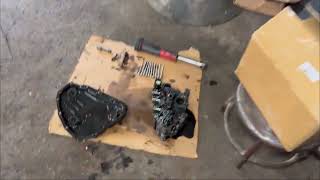
✅ What actually fixed it The owner drained the fluid and dropped the transmission pan, noting there were no significant metal fragments on the magnets. He then removed the valve body, took out each solenoid, cleaned them with electronics cleaner, and tested them. After reassembly with new filters and fresh fluid, the code was resolved and the transmission functioned normally. This represents a best-case scenario where internal damage had not yet occurred.
When the Usual Fixes Don't Work
- While the dominant and manufacturer-recommended path for P0776 points to replacing the valve body or the entire CVT, some owner experiences suggest a less invasive fix may be possible. In a documented case on a similar Nissan vehicle, the code was resolved without replacing major components. The owner found no metal debris in the transmission pan (a key indicator that catastrophic wear has not yet occurred), and was able to fix the issue by removing the valve body, thoroughly cleaning the individual solenoids, replacing the transmission filters, and refilling with new fluid. This suggests that if the code is caught very early and the issue is related to minor contamination or a sticky solenoid rather than a widespread mechanical or electronic failure, a deep cleaning and service might be a viable first step before committing to a multi-thousand dollar component replacement.
OEM Part Supersession History
31705-28X0D→31705-28X2B— Internal revisions by the manufacturer to improve reliability or address known failure modes.
Heads up: The most critical incompatibility issue is not with the part itself, but the required programming. A new valve body is shipped with a unique calibration data file (on a CD or QR code). This data MUST be written to the TCM using the 'ERASE / WRITE CALIBRATION DATA' function in a Nissan CONSULT tool. Failure to do so will result in improper operation, and may set non-clearable codes like P17F0 (CVT Judder).
Helpful Videos

We Have This Part in Stock

The information in this article is provided for general reference and educational purposes only. Vehicle specifications, procedures, and part compatibility can vary by production date, trim level, and region. Always consult your vehicle's factory service manual and verify part numbers before purchasing or performing repairs. Safety-critical components such as airbags, seat belts, and braking systems should be installed by a qualified professional.
- Nissan SENTRA:
- 🎬 Helpful Videos
- 🛍️ Shop This Part
- What's Unique About the 2017-2018 Nissan SENTRA
- Diagnostic Flowchart
- Symptoms You May Notice
- Most Likely Causes
- Rare But Worth Checking
- Diagnosis Steps
- Parts You'll Likely Need
- Related Codes That Often Appear With This One
- Technical Service Bulletins (TSBs) & Recalls
- Platform-Specific Known Issues
- Mechanic-Grade Diagnostic Values
- Hidden / Shadow Codes Worth Checking
- Scan Tool Commands That Help
- Real Owner Repair Stories
- When the Usual Fixes Don't Work
- OEM Part Supersession History
- 🎟️ Get 5% Off