

P0776 on 2016-2018 Nissan NV200: CVT Pressure Control Solenoid 'B' Failure Guide
On a 2016-2018 Nissan NV200, code P0776 almost always indicates a significant internal failure of the CVT transmission, not a simple sensor fix. The most common repairs, outlined in Nissan Technical Service Bulletins, are replacing the CVT valve body or the entire transmission assembly, which can be very costly. This is a well-documented pattern failure on Nissan vehicles with this generation of CVT.
- P0776 on a 2016-2018 NV200 is a serious transmission code that should be addressed immediately.
- This code is covered by specific Nissan Technical Service Bulletins (TSBs) that detail a known failure pattern.
- The problem is almost always internal to the CVT, requiring either a valve body replacement or a full transmission replacement.
- This is not a cheap or simple DIY fix. Professional diagnosis with Nissan-specific tools is highly recommended.
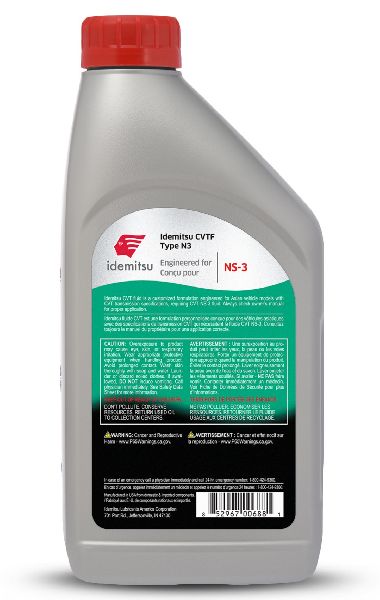
- Always use genuine Nissan NS-3 fluid in this transmission; using other fluids can cause severe damage.
What's Unique About the 2016-2018 Nissan NV200
The 2016-2018 Nissan NV200 uses an XTRONIC CVT (specifically, the RE0F11A, also known as the JF015E), similar to those in many Nissan passenger cars of the same era which are known for specific wear-related issues. Nissan has acknowledged these problems by issuing multiple Technical Service Bulletins (TSBs) that directly address code P0776. Unlike other vehicles where this code might point to a simple electrical fault, on the NV200 it is very frequently a symptom of a more serious mechanical failure within the transmission. The diagnostic procedure outlined by Nissan in TSBs NTB18-077 and NTB19-060D requires a physical inspection of the CVT drive belt 🎬 Watch: What a damaged CVT belt looks like under inspection. with a borescope before any other repair is attempted. If the belt shows damage, the entire transmission must be replaced. This procedural requirement highlights the known failure pattern: the valve body issue causes pressure drops, which in turn causes the belt to slip and damage itself and the pulleys.
Diagnostic Flowchart
Tap your situation to follow the diagnostic path that matches what you're seeing on this vehicle.
Symptoms You May Notice
- Check Engine Light (MIL) is on
- Hesitation during acceleration.
- Lack of power.
- Transmission slipping, jerking, or juddering.
- Vehicle enters 'limp mode' with reduced speed.
- Transmission overheating.
- Harsh or delayed gear engagement, sometimes with a 'clunk'.
- RPMs revving high without a corresponding increase in speed (RPM flare).
- Replacing only a single pressure control solenoid (they are integral to the valve body and sold as a unit).
- Blaming engine performance for the lack of power without checking for transmission codes.
- Using incorrect (non-NS-3) transmission fluid, which can cause severe damage to the CVT.
- Replacing the valve body without first performing the TSB-required borescope inspection of the belt. If the belt is damaged, a new valve body will fail quickly. 🎬 See why buying cheap aftermarket valve bodies can be risky.
Most Likely Causes
- Defective CVT Control Valve Body 🔴 High Probability This is the most common failure point identified in multiple Nissan TSBs for this code. The solenoids are integrated into the valve body, and internal wear or contamination from degrading fluid causes them to fail to maintain pressure.
How to confirm: A technician will follow the diagnostic flowchart in TSB NTB18-077 or NTB19-060D. This begins with a borescope inspection of the CVT belt. If the belt is NOT damaged, the TSB directs the replacement of the valve body.
Typical fix: Replacement of the entire CVT control valve body assembly, followed by TCM reprogramming with new calibration data supplied with the part, and a full fluid flush with NS-3 fluid.
Est. part cost: $200-$500 - Internal CVT Assembly Failure (Belt/Pulley Damage) 🟡 Medium Probability The steel belts and pulleys in the CVT can wear, slip, or break, especially when the valve body fails to provide adequate clamping pressure. This slippage creates scoring on the pulleys and generates metallic debris that clogs the valve body and fluid passages, causing a cascade of failures.
How to confirm: A technician will use a borescope to inspect the CVT belt for slippage marks, gouges, or damage as per the procedure in TSB NTB18-077. Evidence of metallic debris on the pan magnets is also a strong indicator. Any evidence of belt or pulley damage requires full transmission replacement.
Typical fix: Complete replacement of the CVT assembly. 🎬 Watch: Full walkthrough of a Nissan NV200 transmission replacement. Rebuilding is often not recommended by Nissan once belt damage has occurred.
Est. part cost: $3500-$5500 - Low or Contaminated CVT Fluid ⚪ Low Probability While rarely the root cause itself, degraded or low fluid can cause pressure regulation problems, overheating, and accelerate wear on all internal components, leading to the valve body and belt failure. Many owners report issues arise in summer heat, which exacerbates fluid breakdown.
How to confirm: Check the level and condition of the CVT fluid. The fluid should be a transparent green color, not dark brown/black, burnt-smelling, or containing visible metallic particles.
Typical fix: Perform a CVT fluid drain and fill using only Nissan NS-3 CVT fluid. This is often a preliminary step or part of a larger repair, but is unlikely to fix P0776 on its own if the code is already present.
Est. part cost: $100-$200
Rare But Worth Checking
- Faulty Transmission Control Module (TCM): This is very rare. The TCM is more likely to be the source of the problem if there are communication codes or if it fails to accept reprogramming after a valve body replacement.
- Damaged Wiring Harness: Corrosion or damage to the wiring between the TCM and the transmission valve body can cause this code, but it's much less common than internal mechanical failure. The TSB diagnostic flow rules this out early.
Diagnosis Steps
- Verify the Check Engine Light is on and retrieve codes with an OBD-II scanner. Confirm P0776 is present, and note any other codes (e.g., P1715, P17F0).
- Check for applicable Nissan Technical Service Bulletins, specifically NTB18-077 and NTB19-060D.
- Inspect the CVT fluid level and condition. Look for dark, burnt fluid or metallic particles on the dipstick or drain plug magnet.
- Follow the diagnostic flowchart in the relevant TSB. This MANDATES using a borescope (like Nissan's J-51951 tool) to inspect the entire surface of the CVT belt for scoring, gouges, or other damage.
- If any belt damage is found, the CVT assembly must be replaced. Do not proceed with a valve body replacement.
- If the belt is confirmed to be in good condition, the TSB directs the replacement of the CVT control valve body.
- After replacing the valve body, the new calibration data (provided on a QR code or CD with the new part) must be written to the TCM using a Nissan-compatible scan tool like CONSULT.
- If the entire transmission was replaced, the TCM may still require programming.
- Perform a final fluid level check using the proper procedure for this sealed transmission and conduct a road test to confirm the repair. This includes performing 'Select Learning' procedures as detailed in service bulletins.
Parts You'll Likely Need
- CVT Control Valve Body
(OEM #31705-28X2B)— This is the most common repair prescribed by Nissan TSBs when the CVT belt is intact.
Trusted brands: Nissan (OEM)
OEM price range: $400-$700
Aftermarket price range: $200-$500 - CVT Assembly (Transmission) — Required if the internal CVT belt shows any signs of damage or slippage during the TSB inspection. A remanufactured unit is the typical replacement.
Trusted brands: Nissan (OEM Remanufactured)
OEM price range: $4000-$6000
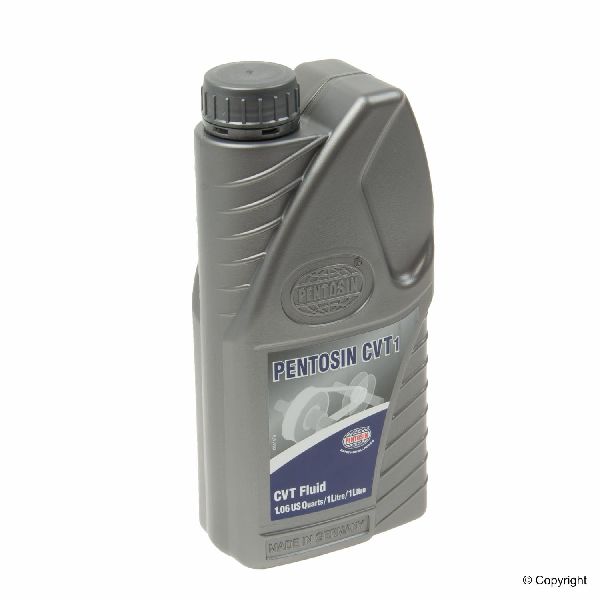
Aftermarket price range: $3000-$5000 - Nissan NS-3 CVT Fluid
(OEM #999MP-NS300P)— This is the only approved fluid for this transmission. Any repair will require between 5-8 quarts for a drain/fill or valve body replacement.
Trusted brands: Nissan (OEM)
OEM price range: $20-$25 per quart
Related Codes That Often Appear With This One
- P1715 — This Input Speed Sensor code is frequently stored with P0776, as noted in Nissan TSB NTB18-077. It is part of the same known failure pattern.
- P17F0 — Often related to CVT judder and is listed alongside P0776 in TSB NTB19-060D as indicating a need for internal CVT inspection. This is a strong sign of mechanical damage.
- P17F1 — Another CVT judder code, grouped with P0776 in TSB NTB19-060D, pointing towards a valve body or CVT assembly issue.
- P0841 — This code for the Transmission Fluid Pressure Sensor is also listed in TSB NTB19-060D, indicating a related pressure circuit fault.
- P2813 — Pressure Control Solenoid 'G' performance, also listed in TSB NTB19-060D, suggesting a wider valve body problem affecting multiple solenoids.
- P0965 — Pressure Control Solenoid 'B' Control Circuit Range/Performance. This code is often seen with P0776 and points to the same solenoid circuit, as seen in owner repair stories.
Technical Service Bulletins (TSBs) & Recalls
- NTB19-060D: Groups P0776 with P17F0, P17F1, P2813, P1715, and/or P0841, providing a diagnostic flowchart for CVT repair that prioritizes a borescope inspection of the belt.
- NTB18-077: Specifically addresses MIL ON with DTC P0776 and P1715, noting symptoms of hesitation and lack of power, and details the procedure for inspecting the CVT belt and replacing the valve body or entire CVT.
Platform-Specific Known Issues
- The 2016-2018 Nissan NV200 is subject to multiple TSBs (NTB18-077, NTB19-060D) for a cluster of CVT-related codes including P0776, indicating a known pattern failure requiring specific diagnostic steps involving a borescope.
Mechanic-Grade Diagnostic Values
- Pressure Control Solenoid 'B' (Primary Pressure Solenoid) Resistance — expected: 5.3 Ω at 20°C (68°F), 6.0 Ω at 50°C (122°F), 6.7 Ω at 80°C (176°F). Failure: A reading outside of these ranges, or an open/short circuit, indicates a failed solenoid coil.
- CVT Fluid Temperature Sensor Resistance — expected: 6.5 kΩ at 20°C (68°F), 2.2 kΩ at 50°C (122°F), 0.87 kΩ at 80°C (176°F). Failure: Resistance values that deviate significantly can cause incorrect pressure calculations by the TCM.
Scan Tool Commands That Help
- Nissan CONSULT-III Plus: ERASE / WRITE CALIBRATION DATA — This function is mandatory when a complete CVT assembly or a new valve body is installed. It uses a CD or QR code supplied with the new part to write factory calibration data to the TCM.
- Nissan CONSULT-III Plus: SAVE / WRITE CALIBRATION DATA — This is used when only the TCM is being replaced. It saves the existing calibration data from the old TCM and writes it to the new one.
- Nissan CONSULT-III Plus: CLUTCH POINT LEARNING — This procedure must be performed after replacing the valve body. Failure to perform this correctly can result in the vehicle not moving when placed in gear.
- Nissan CONSULT-III Plus: Select Learning (Drive / Reverse Learning) — This is a final adaptation step after major CVT repairs. It involves shifting between N, D, and R ten times each to allow the TCM to learn engagement points.
- Generic OBD-II Scanner (Advanced): Transmission Fluid Reset / Adaptive Learning Reset — After replacing components, this function should be used to clear old adaptive pressure maps from the TCM's memory. Skipping this can cause erratic shifting even with new parts.
Wiring & Ground Locations
- TCM (Transmission Control Module) — The TCM is located at grid reference E4 / F46 in Nissan's service diagrams for the NV200.. This is the computer that controls the transmission and logs the P0776 code. All wiring for the solenoids originates here, making it a central point for electrical diagnosis.
- Engine Ground — A primary engine ground is located at grid reference C5 / F45 in service diagrams.. A poor ground connection to the TCM or transmission can cause erratic sensor readings and incorrect solenoid operation, potentially leading to pressure control fault codes.
- Transmission Case Connector — This is the main external electrical connector on the CVT assembly where the vehicle harness connects to the internal transmission harness. It is a multi-pin connector, often with a slide-locking tab for security.. This connector is a common point for corrosion or pin damage. A bad connection here can interrupt the signal to the Pressure Control Solenoid 'B', causing the P0776 code.
Real Owner Repair Stories
- YouTube channel 'GTSAMAUTO' (2016 Nissan Sentra (uses a similar CVT and has the same failure patterns)) — Transmission issues, BCM code B2604 for park/neutral switch, no gear indicator on the dash for P or N, no engagement in Drive.
❌ Tried (didn't work) Replacing the valve body with a non-OEM (eBay) part., Attempting to program the non-OEM valve body with a KINGBOLEN K7 scanner., Taking the vehicle to a Nissan dealer, who was unable to communicate with or program the aftermarket valve body using the official CONSULT tool.
✅ What actually fixed it The diagnosis concluded that the aftermarket valve body was defective or incompatible, causing a new solenoid switch code and preventing communication. The resolution requires replacing the faulty aftermarket valve body with a genuine Nissan OEM part that can be properly programmed. - Reddit user in r/Nissan (2021 Nissan Versa with high mileage) — P0776 code popped.
❌ Tried (didn't work) The user was considering a valve body replacement but was warned against it as a standalone fix.
✅ What actually fixed it The consensus from experienced technicians in the thread was that by the time code P0776 appears, the CVT belt has likely slipped and damaged the pulleys. While a valve body replacement *might* fix it temporarily, the high-probability fix for a lasting repair is a complete CVT assembly replacement, as this is what Nissan would recommend for a high-mileage vehicle.
OEM Part Supersession History
31705-28X0D→31705-28X2B— Part revision and improvement by the manufacturer.
Heads up: The newer part number is the correct service part. Using older stock or incompatible aftermarket versions can lead to programming failures.31705-3VX4A→31705-28X2A— Part consolidation and revision. Note that this part number may apply to other Nissan models like the Altima/Rogue Sport but shares the same design lineage.
Heads up: It is critical to use the exact part number specified for the NV200 (31705-28X2B) or its direct supersession, as valve bodies for other models may physically fit but have different calibration requirements.
Helpful Videos

We Have This Part in Stock

The information in this article is provided for general reference and educational purposes only. Vehicle specifications, procedures, and part compatibility can vary by production date, trim level, and region. Always consult your vehicle's factory service manual and verify part numbers before purchasing or performing repairs. Safety-critical components such as airbags, seat belts, and braking systems should be installed by a qualified professional.
- Nissan NV200:
- 🎬 Helpful Videos
- 🛍️ Shop This Part
- What's Unique About the 2016-2018 Nissan NV200
- Diagnostic Flowchart
- Symptoms You May Notice
- Most Likely Causes
- Rare But Worth Checking
- Diagnosis Steps
- Parts You'll Likely Need
- Related Codes That Often Appear With This One
- Technical Service Bulletins (TSBs) & Recalls
- Platform-Specific Known Issues
- Mechanic-Grade Diagnostic Values
- Scan Tool Commands That Help
- Wiring & Ground Locations
- Real Owner Repair Stories
- OEM Part Supersession History
- 🎟️ Get 5% Off