

P0776 on 2008-2012 GMC Sierra Denali: Pressure Control Solenoid 'B' Causes and Fixes
This code indicates that Pressure Control Solenoid 'B' (also known as PC Solenoid 2) in the 6L80/6L90 automatic transmission is stuck off. This solenoid controls the 3-5-R clutch. Common causes are low/dirty fluid, a failed solenoid/TEHCM, or internal mechanical issues like a cracked clutch housing. Expect to start with a fluid check, but diagnosis often leads to dropping the pan to inspect the valve body, solenoids, and potentially a full transmission teardown for internal hard parts.
- P0776 on a 2008-2012 Sierra Denali points to a problem with the Pressure Control Solenoid 'B' in the transmission.
- Always check the transmission fluid level and condition first; low or dirty fluid is a primary cause of solenoid issues.
- Symptoms typically include harsh shifting, slipping, and potentially the vehicle entering a 'limp mode'.
- While a faulty solenoid is a common fix, be aware of GM Technical Service Bulletin #09-07-30-004J, which identifies a more serious internal cracked clutch housing as a possible cause.
- Due to the complexity of internal transmission work, professional diagnosis and repair are strongly recommended.
What's Unique About the 2008-2012 Gmc SIERRA DENALI
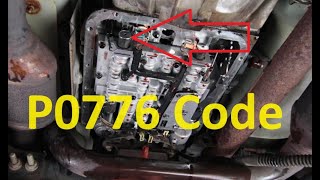
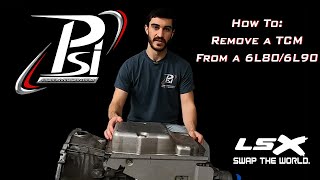
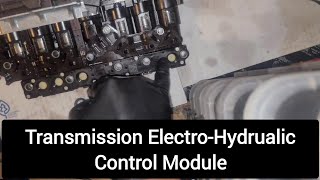
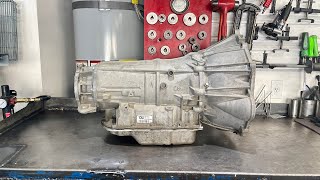
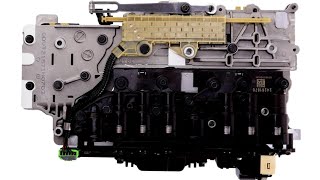
The 2008-2012 GMC Sierra Denali often uses the 6L80 or 6L90 automatic transmission. While generally robust, these transmissions are known for several specific failure points that can trigger a P0776 code. 🎬 Watch: Common causes and fixes for the P0776 code. The solenoids are integrated into the Transmission Electro-Hydraulic Control Module (TEHCM), which also contains the TCM. This means a single solenoid failure often requires replacing the entire TEHCM assembly, which is located inside the transmission on the valve body. 🎬 See how to remove the TCM from your transmission. Furthermore, a well-documented issue covered by GM TSB #09-07-30-004J is a cracked 1-2-3-4 / 3-5-R clutch housing, which causes a loss of hydraulic pressure to the exact circuit controlled by solenoid 'B', mimicking a solenoid fault. This makes diagnosis more complex than in other vehicles where a solenoid is just a simple, externally-accessible part.
Diagnostic Flowchart
Tap your situation to follow the diagnostic path that matches what you're seeing on this vehicle.
Symptoms You May Notice
- Harsh, jerky, or delayed shifts, especially between 2nd and 3rd gear.
- Vehicle enters 'limp mode,' often getting stuck in 3rd gear.
- Transmission slipping, where the engine RPMs increase without a corresponding increase in vehicle speed, particularly when trying to engage 3rd, 5th, or Reverse.
- Delayed or no engagement into Reverse.
- Illuminated Check Engine Light or transmission warning light.
- Reduced fuel economy.
- Inability to shift into higher gears.
- Transmission overheating.
- Replacing the entire transmission when only a single solenoid or the valve body is at fault. A thorough diagnosis is key to avoiding unnecessary expense.
- Replacing the TEHCM (solenoid pack) when the actual root cause is a mechanical failure like the cracked 1-2-3-4 / 3-5-R clutch housing, which presents with identical symptoms.
Most Likely Causes
- Low or Contaminated Transmission Fluid 🔴 High Probability Transmissions like the 6L80/6L90 are sensitive to fluid level and cleanliness. Old, burnt, or debris-filled fluid can cause solenoids and valves to stick or clog passages within the valve body.
How to confirm: Check the transmission fluid level and condition via the dipstick. The fluid should be bright red and not smell burnt. Dark, brown, or gritty fluid indicates a problem. Excessive metal shavings on the pan magnet are a sign of severe internal wear.
Typical fix: Perform a transmission fluid and filter change. Use only the manufacturer-specified fluid (ACDelco DEXRON-VI). This is often a first step, but may not solve the problem if components are already damaged.
Est. part cost: $75-$150 - Faulty TEHCM (Solenoid/TCM Assembly) 🔴 High Probability In the 6L80/6L90, the pressure control solenoids are integrated into the TEHCM. These units are submerged in hot fluid and are a known failure point. An electrical fault or mechanical failure (sticking) of PC Solenoid 2 within the TEHCM will trigger P0776.
How to confirm: A technician uses a bi-directional scan tool to command the solenoid on and off to check its response. Since the solenoid is internal and part of the TEHCM, diagnosis often concludes that the entire module is faulty if wiring is confirmed to be good.
Typical fix: Replace the entire TEHCM unit, which is bolted to the valve body inside the transmission. The new TEHCM must be programmed to the vehicle's VIN.
Est. part cost: $300-$800 - Cracked 1-2-3-4 / 3-5-R Clutch Housing 🟡 Medium Probability A known issue documented in GM TSB #09-07-30-004J for the 6L80/6L90. A crack in the housing's fusion weld causes a loss of hydraulic pressure in the 3-5-R clutch circuit, directly causing P0776 and symptoms like no reverse or slipping in 3rd/5th.
How to confirm: This requires transmission disassembly. The TSB outlines a procedure to apply soap and compressed air to the housing to check for bubbles at the weld, confirming a crack.
Typical fix: The transmission must be removed and disassembled to replace the cracked clutch housing. GM now offers complete, pre-assembled clutch housing assemblies to simplify the repair.
Est. part cost: $200-$400 for the housing (Part #24238694 mentioned in an older TSB version), but labor costs will be very high. - Torn Valve Body Spacer Plate Screen ⚪ Low Probability Documented in GM TSB #22-NA-258, particularly for vehicles in cold climates. A screen on the valve body spacer plate can tear, allowing debris to cause a valve to stick, which can lead to P0776 and a 'No Reverse when cold' condition.
How to confirm: Visual inspection of the valve body spacer plate after removing the valve body from the transmission.
Typical fix: The official fix is to replace the entire control valve body assembly and update the TCM software.
Est. part cost: $400-$900 for the valve body assembly.
Rare But Worth Checking
- Damaged Wiring or Connectors: The wiring harness to the transmission is exposed to heat and road debris. A visual inspection can sometimes reveal a frayed wire or corroded pin at the main transmission connector that could be causing an intermittent electrical fault.
- Clogged Transmission Valve Body: Sludge and debris from old fluid can clog the small passages within the valve body, preventing proper hydraulic pressure even if the solenoid is working correctly.
- Torque Converter Failure: A major known failure point on 6L80 transmissions is the torque converter clutch lining disintegrating. This sends a large amount of metallic debris throughout the transmission, which can clog the valve body, damage the TEHCM, and cause various codes including P0776.
Diagnosis Steps
- Check and record any and all DTCs stored in the TCM/PCM. Note if P0700 is present with P0776.
- Inspect the transmission fluid level and condition. If low, top it off. If dark, burnt, or full of metallic debris, a major internal failure is likely.
- Use a professional scan tool to monitor live data, observing the commanded vs. actual state of Pressure Control Solenoid 2 (B) and transmission fluid pressure.
- Perform a bi-directional test to command the solenoid on and off, listening for a click from the transmission and watching for a pressure change if gauges are connected.
- Inspect the main transmission wiring harness and the 16-pin connector for any visible damage, corrosion, or loose connections.
- If wiring is good and the solenoid does not respond to commands, the next step is to drop the transmission pan to inspect for excessive metal shavings (indicative of torque converter or clutch failure) and to access the TEHCM/valve body.
- If the TEHCM is replaced and the problem persists, the cause is almost certainly mechanical. The transmission must be removed to inspect for a cracked 1-2-3-4 / 3-5-R clutch housing per TSB 09-07-30-004J or a torn spacer plate screen per TSB 22-NA-258.
Parts You'll Likely Need
- TEHCM (Control Solenoid and TCM Assembly)
(OEM #24256523 (Verify with VIN, this is for 6T40/45 but often cross-referenced, actual 6L80 part may differ))— The pressure control solenoids are integrated into this module. It is the most common electrical component to fail and cause this code. Replacement requires programming.
Trusted brands: ACDelco
OEM price range: $400-$800
Aftermarket price range: $300-$600 - Transmission Filter and Gasket Kit — Must be replaced whenever the transmission pan is removed for service, such as when replacing the TEHCM or valve body.
Trusted brands: ACDelco, Wix, ATP
OEM price range: $50-$90
Aftermarket price range: $30-$60
Related Codes That Often Appear With This One
- P0751 — Shift Solenoid 'A' Performance/Stuck Off. Multiple solenoid codes often point to a common cause like bad fluid, a wiring issue, or a failing TEHCM.
- P2715 — Pressure Control Solenoid 'D' Stuck On. This code is specifically mentioned alongside P0776 in GM TSB #09-07-30-004J, pointing to the cracked clutch housing as a common cause for both.
- P0700 — Transmission Control System Malfunction. This is a generic code indicating the TCM has stored a specific fault code (like P0776). It's almost always present when any other transmission code is logged.
- P2723 — Pressure Control Solenoid 'E' Stuck On. Also mentioned in GM TSBs, suggesting a related internal hydraulic circuit issue, often stemming from the same root cause like the cracked clutch housing. [1, Bulletin #PIP4379M]
Technical Service Bulletins (TSBs) & Recalls
- PIP4379M: Mentions P0776 in a long list of transmission codes that may occur with a range inhibit or no reverse condition.
- 09-07-30-004J: Details a primary cause for P0776 being a cracked 1-2-3-4 / 3-5-R clutch housing, leading to slips, delayed engagement, or no reverse.
- 22-NA-258: Describes a condition where a torn screen on the valve body spacer plate (often related to cold weather) causes valves to stick, resulting in P0776 and loss of reverse.
- 20-NA-112: Notes a rare calibration anomaly where P0776 can be falsely set when descending a grade in 4WD Low. This does not require a repair.
Platform-Specific Known Issues
- A known issue for the 6L80/6L90 transmission is a cracked 1-2-3-4 / 3-5-R clutch housing, which can cause P0776 along with reverse engagement issues or harsh 2-3 shifts. This is documented in GM TSB #09-07-30-004J.
- Failure of the integrated TEHCM (solenoid/TCM pack) is very common, leading to various solenoid performance codes.
- Torque converter clutch failure is a prevalent issue that contaminates the entire transmission with debris, leading to secondary failures of the valve body and TEHCM.
- TSB 22-NA-258 points to torn screens on the valve body spacer plate, especially after cold weather events, causing valves to stick and trigger P0776.
Mechanic-Grade Diagnostic Values
- Pressure Control Solenoid (PWM) Resistance — expected: 3-8 Ohms. Failure: A reading outside this range indicates a failed solenoid coil.
- Shift Solenoid (On/Off) Resistance — expected: 20-40 Ohms. Failure: A reading outside this range indicates a failed solenoid coil.
- Pressure Control Solenoid (PWM) Current Draw — expected: 1.5 - 4.0 Amps at 12V. Failure: Incorrect amperage suggests a failed solenoid. This test should be performed quickly to avoid overheating the solenoid.
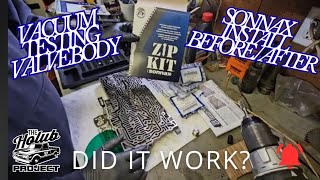
- Valve Body Solenoid Air Test Pressure — expected: 90-100 PSI. Failure: When cycling a solenoid with a scan tool, the pressure gauge on the test plate should change. If it doesn't, the solenoid or its corresponding valve is stuck.
- Pressure Switch Resistance (on TEHCM) — expected: Approx. 10 Ohms (when pressed), OL (when not pressed). Failure: Readings that do not change when pressure is applied (e.g., with a pencil eraser) indicate a failed pressure switch membrane.
Scan Tool Commands That Help
- GM GDS2 / Tech2: Control Solenoid Valve and Transmission Control Module Assembly Solenoid Performance Test — This is the primary bidirectional function used to command each solenoid on and off individually. It is used with the valve body on a test plate with air pressure to confirm mechanical solenoid operation.
- GM GDS2 / Tech2: Solenoid Automated Cleaning Process — If a solenoid performance DTC is present and debris is suspected, this function can be run with the transmission in the vehicle. It automatically cycles all solenoids to flush out contaminants before deciding to replace the TEHCM.
- GM GDS2 / Tech2: Transmission Fast Learn — After replacing the TEHCM or valve body, this procedure must be performed to reset and quickly re-establish the adaptive pressure values for proper shifting.
Wiring & Ground Locations
- Transmission Case Connector (X1/J1) — On the passenger side of the transmission case, towards the rear.. This 16-pin twist-lock connector is the sole communication and power link to the internal TEHCM. It is a common failure point where terminals can back out or the connector isn't fully seated, leading to communication loss (U-codes) and limp mode. Pin 5 is the ground, Pin 4 is Battery +, and Pins 10 & 11 are the main GMLAN CAN bus circuit.
- Terminal Position Assurance (TPA) Lock — A plastic lock on the 16-pin transmission case connector.. GM TSB #08-07-30-021H highlights that if this TPA is not fully seated, pins can back out, causing intermittent loss of communication with the TEHCM, which can manifest as shifting defaults and various transmission-related symptoms.
"I Checked Everything" — The Actual Cause
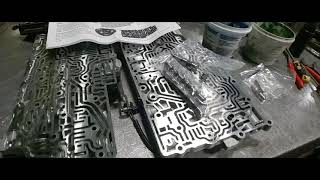
- A common scenario is when electrical tests on the TEHCM solenoids pass, yet symptoms of P0776 (like no Reverse) persist. The root cause is often a small, worn plastic check ball inside the valve body. Specifically, the #5 check ball for the 3-5-Reverse clutch circuit can shrink, get stuck in the separator plate, and block hydraulic pressure, perfectly mimicking a failed solenoid. This is missed because it requires disassembling the valve body and inspecting the small check balls, which may not be done if the focus is purely on the electronics.
OEM Part Supersession History
Various, e.g., 24256939, 24257213, 24259835→Remanufactured units like Sonnax GM6L-TEHCM-C6 (for 2011+ models)— GM has had numerous hardware and software revisions for the TEHCM over the years. Remanufactured units are updated to correct common OE flaws.
Heads up: TEHCMs are year- and model-specific. Installing a TEHCM from a different year range, even if it physically fits, will often result in a no-start condition, immediate limp mode, or multiple communication codes. The unit MUST be programmed to the vehicle's VIN after installation.
Model Year Variations Within This Range
- 2008-2013: Valve bodies in this range originally used seven check balls.
- 2014+: Starting in 2014, GM added an eighth checkball to the valve body near the center to address a clunking sensation. The separator plate was also changed. A technician servicing a 2008-2012 model should expect to find only seven checkballs.
- 2010-Earlier vs 2010-Later: There are casting differences in the valve body and different separator plates used before and after 2010. Early plates (e.g., OE #24246916) may need to be updated to a later design when installing certain valve body repair kits.
Helpful Videos
We Have This Part in Stock



The information in this article is provided for general reference and educational purposes only. Vehicle specifications, procedures, and part compatibility can vary by production date, trim level, and region. Always consult your vehicle's factory service manual and verify part numbers before purchasing or performing repairs. Safety-critical components such as airbags, seat belts, and braking systems should be installed by a qualified professional.
- Gmc SIERRA DENALI:
- 🎬 Helpful Videos
- 🛍️ Shop This Part
- What's Unique About the 2008-2012 Gmc SIERRA DENALI
- Diagnostic Flowchart
- Symptoms You May Notice
- Most Likely Causes
- Rare But Worth Checking
- Diagnosis Steps
- Parts You'll Likely Need
- Related Codes That Often Appear With This One
- Technical Service Bulletins (TSBs) & Recalls
- Platform-Specific Known Issues
- Mechanic-Grade Diagnostic Values
- Scan Tool Commands That Help
- Wiring & Ground Locations
- "I Checked Everything" — The Actual Cause
- OEM Part Supersession History
- Model Year Variations Within This Range
- 🎟️ Get 5% Off