

P0776 on 2001-2008 GMC Sierra 2500: Pressure Control Solenoid 'B' Fixes
On a 2001-2008 GMC Sierra 2500, especially those with the Allison transmission, code P0776 usually points to a faulty Pressure Control Solenoid 'B' (a trim solenoid) or issues within the valve body. The fix often involves dropping the transmission pan to replace the solenoid. However, this code can also be a serious indicator of internal clutch failure, where the TCM flags the solenoid after failing to compensate for mechanical slippage.
- P0776 on a GMC Sierra 2500 indicates a problem with the Pressure Control Solenoid 'B', which controls gear shifting.
- Common symptoms include harsh shifting, getting stuck in gear (limp mode), and the check engine light.
- The most likely causes are a failed solenoid, dirty transmission fluid, or a problem in the valve body.
- On these trucks, the issue is often most noticeable during cold starts, where the transmission may fail to complete the 3-4 shift.
- Due to the complexity of internal transmission work, professional diagnosis and repair are strongly recommended.
What's Unique About the 2001-2008 Gmc SIERRA 2500
For the GMC Sierra 2500, particularly models equipped with the robust Allison 5-speed or 6-speed automatic transmission, this code often surfaces during cold weather. Owners report that the truck may fail the 3-4 shift and get stuck in 3rd gear (limp mode) after a cold start, but will operate normally after a restart. This specific behavior points towards an issue that is sensitive to fluid temperature and viscosity, possibly related to aging internal seals or a sticking solenoid within the Allison's valve body. Critically, on the Allison, P0776 is often a 'mechanically generated' code. This means a mechanical problem, like worn C2/C3 clutches, causes a gear ratio error. The TCM tries to correct the slip by commanding maximum pressure from the solenoid. When the slip continues, the TCM logs P0776, blaming the solenoid for being 'stuck off' when the real fault is internal mechanical wear.
Diagnostic Flowchart
Tap your situation to follow the diagnostic path that matches what you're seeing on this vehicle.
Generation note: This year range covers two generations of the GMC Sierra 2500: the first generation (GMT800, 2001-2007 'Classic') and the second generation (GMT900, 2007-2008). Both generations commonly used Allison 1000 series transmissions (5-speed until 2005, 6-speed from 2006) in the 2500HD models. The causes and fixes for P0776 are largely similar, though some internal parts and valve bodies differ between the 5-speed and 6-speed versions.
Symptoms You May Notice
- Transmission gets stuck in one gear (often 3rd gear).
- Harsh, jerky, or delayed shifts.
- Failure to shift into higher gears, particularly the 3-4 shift.
- Transmission slipping between gears, sometimes described as a 'zing' or engine flare with no engagement.
- Illuminated Check Engine Light.
- Vehicle enters 'limp mode'.
- Symptom appears mainly during cold starts and may resolve after restarting the engine.
- Replacing the entire transmission when only a solenoid or valve body service is needed.
- Replacing only the solenoid when the code is actually being caused by worn-out clutches slipping internally.
- Replacing the TCM/PCM when the actual fault is in the wiring, the solenoid, or the transmission's mechanical components.
Most Likely Causes
- Faulty Pressure Control Solenoid 'B' (PCS/Trim Solenoid) 🔴 High Probability Solenoids are electro-mechanical parts that wear out. In the Allison, the two trim solenoids (A and B) are identical and responsible for adjusting clutch apply pressure. They can fail electrically or get stuck mechanically from debris.
How to confirm: A professional scan tool can command the solenoid on and off to check its response. The solenoid's electrical resistance can also be tested with a multimeter after accessing it in the valve body (resistance should be within manufacturer specs).
Typical fix: Replace the faulty solenoid, which is located on the valve body. This requires draining the transmission fluid, removing the pan, and removing the valve body to access the solenoid. Both trim solenoids are often replaced at the same time.
Est. part cost: $50-$150 - Low or Dirty Transmission Fluid 🟡 Medium Probability Degraded fluid loses its hydraulic properties and can't protect parts from wear. Contamination from clutch material is a key issue; this debris can clog the small passages and screens in the solenoids and valve body, causing them to stick.
How to confirm: Check the transmission fluid level and condition. The fluid should be at the correct level on the dipstick when hot, be reddish in color, and not smell burnt. Finding significant metal or friction material in the fluid is a sign of serious internal damage.
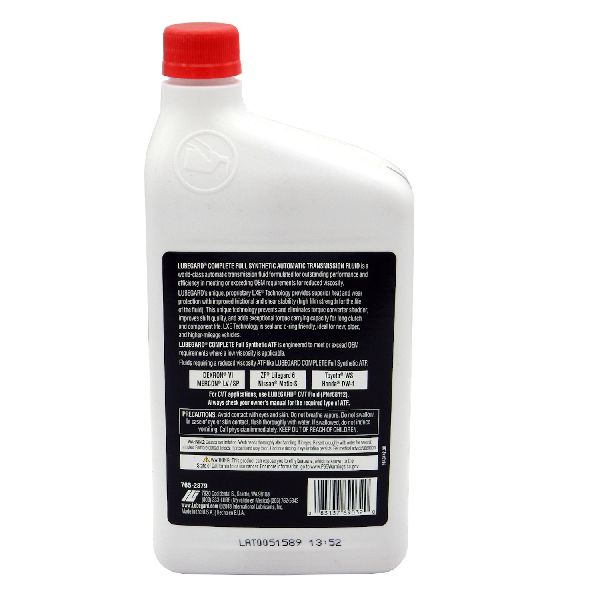
Typical fix: Perform a transmission fluid and filter change using the correct fluid (e.g., DEXRON-VI). If the fluid is very dirty, this is often a temporary fix or a first step before a more involved repair.
Est. part cost: $75-$200 - Defective Transmission Valve Body 🟡 Medium Probability The valve body's bores can wear over time, causing hydraulic leaks. Valves can also stick due to debris. This prevents correct pressure regulation even with a good solenoid. Aftermarket kits like the Transgo Jr. are often installed to address known wear points in the valve body.
How to confirm: This is typically diagnosed after replacing the solenoid doesn't fix the issue. A technician may inspect the valve body for scoring or stuck valves when the pan is off. Pressure testing specific ports can also isolate a valve body issue.
Typical fix: The valve body may need to be professionally cleaned, rebuilt with an upgrade kit (like a Transgo kit), or replaced entirely.
Est. part cost: $300-$1000+ - Wiring or Connector Issues ⚪ Low Probability The main transmission case connector can leak fluid, causing poor contact. The internal wiring harness is submerged in hot fluid and can become brittle or damaged over time, leading to a short or open circuit.
How to confirm: Visually inspect the external wiring harness and the main round connector at the transmission for damage or fluid leaks. The internal harness should be inspected and its continuity tested when the transmission pan is removed.
Typical fix: Repair the damaged section of the harness or replace the affected connector. The internal harness is also a replaceable part.
Est. part cost: $20-$200
Rare But Worth Checking
- Internal Mechanical Transmission Failure: This is a very common underlying cause for P0776 on the Allison. The code is often set because the C2 and/or C3 clutches are burnt and slipping. In more severe cases, it can indicate a stripped P2 planetary hub spline. Finding friction material in the pan is a definitive sign of this failure. A transmission rebuild is required.
- Faulty Transmission Control Module (TCM) or Powertrain Control Module (PCM): This is a rare cause. TSB PIP4379N specifically states that replacing the TCM is not likely to correct this code. It should only be considered after all other possibilities have been exhausted.
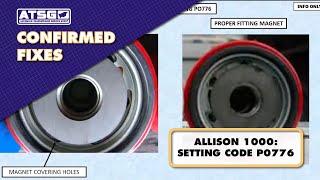
- Incorrect Spin-On Transmission Filter: Using a substandard aftermarket external spin-on filter can trigger P0776. Some filters have poorly designed flow holes that get obstructed by the filter magnet, restricting fluid flow and causing pressure issues.
- Damaged Output Speed Sensor (OSS) Tone Wheel: A chipped tooth on the OSS tone wheel inside the transmission can cause an erratic signal. The TCM may misinterpret this as a gear ratio error and set a P0776 code, even without setting a specific code for the speed sensor itself.
Diagnosis Steps
- Check the transmission fluid level and condition. Note any burnt smell or visible debris.
- Use a professional OBD-II scanner to check for other transmission-related codes, especially slipping codes like P0894.
- With a bi-directional scanner, command the Pressure Control Solenoid 'B' on and off to check for a response. Monitor line pressure PIDs to see if the pressure changes as commanded.
- Inspect the external transmission wiring harness and the main case connector for any visible damage, corrosion, or fluid leaks.
- If the issue persists, drain the fluid and remove the transmission pan. Carefully inspect the fluid and pan magnet for metal shavings or clutch material.
- Visually inspect the internal wiring, solenoids, and valve body for any obvious issues.
- Test the resistance of the solenoid with a multimeter and compare it to the manufacturer's specifications (typically around 3-7 ohms for Allison solenoids).
- If the solenoid and wiring test good, but symptoms persist (especially slipping), the problem is almost certainly internal mechanical wear (clutches, seals) or a worn valve body, requiring transmission removal.
Parts You'll Likely Need
- Pressure Control Solenoid (Trim Solenoid)
(OEM #ACDelco 29536833 / Allison 29536833) - Allison Transmission Internal Wiring Harness
(OEM #29541371 (for 2001-Early 2004, 6-solenoid)) - Transmission Filter (Internal and External)
- Transmission Pan Gasket
- DEXRON-VI Automatic Transmission Fluid
Related Codes That Often Appear With This One
- P0700 — P0700 is a general transmission fault code that indicates the TCM has stored a specific code, like P0776. It often appears alongside more detailed transmission codes.
- P0751, P0756, P0761, etc. — These are codes for other shift or pressure control solenoids. The provided TSB #PIP4379N lists P0776 with many of these, suggesting a common underlying cause like a valve body, fluid, or electrical issue affecting multiple solenoids.
- P0894 — This code for 'Transmission Component Slipping' often accompanies P0776 and is a strong indicator that the root cause is mechanical, such as burnt clutches, rather than an electrical solenoid failure.
Technical Service Bulletins (TSBs) & Recalls
- Bulletin #PIP4379N: Mentions P0776 in a list of codes related to transmission range inhibit or no reverse, suggesting a potential internal hydraulic or electrical fault. It advises following diagnostics for code P0701 and ensuring fluid level is correct. It also notes the condition may be more pronounced on a cold start.
Platform-Specific Known Issues
- A known issue on Allison transmissions involves symptoms appearing primarily during cold starts, where the transmission fails to shift from 3rd to 4th gear and enters limp mode, setting code P0776. A simple engine restart often temporarily resolves the issue by resetting the TCM's learned adapts.
- On Duramax forums, P0776 is often called a 'feared code' because it frequently points to a 'tie-up' (two gears trying to engage at once) or significant internal damage like a failed C2 clutch hub and P2 planet, especially if the 3-4 shift fails completely.
- A user on DuramaxDiesels.com detailed a classic cold-start failure on their 8.1L Gas with the Allison 5-speed. The truck would fail the 3-4 shift and go into limp mode, but work perfectly after a restart, highlighting the intermittent, temperature-sensitive nature of the problem in its early stages.
Mechanic-Grade Diagnostic Values
- Pressure Control Solenoid 'A' and 'B' (Trim Solenoids) Resistance — expected: 5.5 - 6.5 Ohms. Failure: A reading outside this range, or an open/short circuit, indicates a failed solenoid.
- Shift Solenoid 'C', 'D', 'E' Resistance (5-speed models) — expected: 22 - 24.5 Ohms. Failure: A reading outside this range indicates a failed shift solenoid. While not the direct cause of P0776, a related fault could exist.
- Torque Converter Clutch (TCC) Solenoid Resistance — expected: 10.5 - 11.5 Ohms. Failure: An incorrect resistance can indicate a TCC solenoid issue, which can sometimes occur alongside other transmission codes.
- Transmission Fluid Temperature for Adaptive Learn Procedure — expected: 105°F or warmer. Failure: Attempting the relearn procedure when the fluid is too cold may result in it failing to complete.
Scan Tool Commands That Help
- Tech2 / GDS2 / Allison DOC: Reset Adaptive Shift Parameters / Fast Learn — This procedure is critical after replacing the transmission, valve body, or solenoids. It clears the learned clutch apply pressures (taps) and forces the TCM to relearn them. Failing to do this can result in harsh shifts or continued codes, as the TCM will be using incorrect data from the previously failing parts.
- Tech2 / GDS2 / High-End Bidirectional Scanner: Solenoid Test — This allows a technician to command individual solenoids, including PCS 'B', on and off with the engine running to verify mechanical and hydraulic response. It's a primary step to confirm if the solenoid is physically stuck or if the hydraulic circuit is responding to commands.
Wiring & Ground Locations
- G101 / G102 — On the GMT800 platform, G101 is located on the lower front of the engine block, while G102 is on the right side of the engine block.. G101 is a primary ground for the Engine Control Module (ECM) and Transmission Control Module (TCM). A poor connection here can cause erratic behavior, incorrect sensor readings, and false solenoid codes like P0776.
- G104 — Located on the left rear of the engine block.. This ground is also part of the engine's grounding scheme. Corrosion or looseness at any of the main engine or frame grounds can introduce electrical noise and interfere with TCM operation.
- Transmission Case Connector — The main round electrical connector on the side of the Allison transmission case.. This connector is the single point of failure for all electronic communication to the transmission's internal components. It is known to leak transmission fluid, which can wick into the pins, causing corrosion and poor connections for the solenoid circuits, directly leading to codes like P0776. The internal wiring harness connected to it can also become brittle from heat and fluid exposure.
Real Owner Repair Stories
- DuramaxDiesels.com forum user (2001-2005 era GMC/Chevy with 5-speed Allison, running a PPE tune) — Truck felt like it 'limped' (stuck in 3rd gear) and threw a Check Engine Light. The code was P0776 - PCS B Stuck Off.
❌ Tried (didn't work) The initial fear was a simple clogged spin-on filter, but forum experts immediately warned this was unlikely.
✅ What actually fixed it The user later confirmed the issue was severe internal damage. The P0776 code was a symptom of a destroyed P2 planetary and C2 hub, a catastrophic failure requiring a full transmission rebuild. This highlights that P0776 on a tuned or hard-driven Allison is often a sign of major mechanical failure, not just a bad solenoid. - Transmission Repair YouTube Channel (2006 with 6-speed Allison LCT 1000) — Slipped going into 4th gear under heavy acceleration, then would fail-safe into 3rd gear. Code P0776 was present (mislabeled as P0775 in video narration but corrected in context).
❌ Tried (didn't work) The diagnosis immediately pointed past just the solenoid because the TCM sets the code when it can no longer compensate for slip.
✅ What actually fixed it A teardown revealed burnt C2 and C3 clutch frictions. The fix was a complete overhaul kit, two new trim solenoids (A and B), and an updated Transgo kit for the trim valves. This confirms that by the time P0776 is set due to slipping, clutch material has likely contaminated the fluid and a rebuild is necessary.
OEM Part Supersession History
N/A→Allison 29541896— This is the specific B-Trim Pressure Control Solenoid for the 6-speed Allison transmission (2006-onwards).
Heads up: The solenoids for the 6-speed Allison are different from the 5-speed. Part number 29536833 is for the 5-speed shift solenoids, while 29541896 is specifically the B-Trim solenoid for 6-speed models.N/A→Allison 29541371— This is the internal wiring harness for the early 5-speed Allison (2001-early 2004) with six solenoids.
Heads up: Later 5-speeds (2004-2005) and all 6-speeds use a seven-solenoid valve body with a different harness. It is critical to identify the transmission year and solenoid count before ordering a replacement harness.
Model Year Variations Within This Range
- 2001-2005: These models used a 5-speed Allison 1000. The valve body had six solenoids from 2001-2003, and a seventh solenoid ('G' solenoid) was added for 2004-2005. The trim solenoids (A/B) are generally interchangeable in this range.
- 2006-2008: These models feature the 6-speed Allison 1000. The valve body is different, using two fluid tubes on the bottom instead of one. The pressure control solenoids (PCS1/PCS2, equivalent to A/B) and the TCC solenoid are different parts from the 5-speed versions. Diagnosis and parts are not always interchangeable with the earlier 5-speed models.
Helpful Videos

We Have This Part in Stock


The information in this article is provided for general reference and educational purposes only. Vehicle specifications, procedures, and part compatibility can vary by production date, trim level, and region. Always consult your vehicle's factory service manual and verify part numbers before purchasing or performing repairs. Safety-critical components such as airbags, seat belts, and braking systems should be installed by a qualified professional.
- Gmc SIERRA 2500:
- 🎬 Helpful Videos
- 🛍️ Shop This Part
- What's Unique About the 2001-2008 Gmc SIERRA 2500
- Diagnostic Flowchart
- Symptoms You May Notice
- Most Likely Causes
- Rare But Worth Checking
- Diagnosis Steps
- Parts You'll Likely Need
- Related Codes That Often Appear With This One
- Technical Service Bulletins (TSBs) & Recalls
- Platform-Specific Known Issues
- Mechanic-Grade Diagnostic Values
- Scan Tool Commands That Help
- Wiring & Ground Locations
- Real Owner Repair Stories
- OEM Part Supersession History
- Model Year Variations Within This Range
- 🎟️ Get 5% Off