

P0776 on 2006-2010 Chevrolet Silverado: Causes and Fixes for Pressure Control Solenoid 'B'
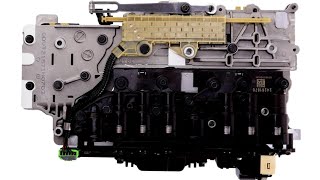
On a 2007-2010 Silverado with the 6-speed 6L80 transmission, P0776 almost always points to a failed pressure control solenoid inside the transmission. This typically requires replacing the entire Transmission Electro-Hydraulic Control Module (TEHCM), which houses the solenoids. Expect a shop cost of $800-$1,500+ due to the part cost and required programming.
- P0776 on a 2007-2010 Silverado almost always points to a problem inside the 6-speed 6L80 transmission.
- The most common cause is a failed pressure control solenoid, which is part of the integrated TEHCM unit.
- This is not a simple DIY fix; it requires dropping the transmission pan and programming the new TEHCM.
- Always check transmission fluid level and condition first, but expect the ultimate fix to be TEHCM replacement.
- Driving with this code can lead to severe transmission damage, so it should be addressed promptly.
What's Unique About the 2006-2010 Chevrolet SILVERADO
The 2006-2010 Silverado model years span two distinct generations: the GMT800 ('Classic' models, mostly 2006) and the GMT900 (2007-2013). While the code exists for both, it is predominantly an issue on the GMT900 trucks equipped with the 6L80 6-speed automatic transmission. On these models, the pressure control solenoids are not individually serviceable; they are integrated into the Transmission Electro-Hydraulic Control Module (TEHCM). A very common cause of failure is the laminate substrate of the TEHCM's internal circuit board cracking from thermal cycles, causing an intermittent electrical connection to the solenoid. A very common failure point is the internal laminate circuit board cracking due to heat and vibration, causing intermittent electrical faults. This design means a single solenoid failure often requires the replacement and programming of the entire, more expensive TEHCM unit.
Diagnostic Flowchart
Tap your situation to follow the diagnostic path that matches what you're seeing on this vehicle.
Generation note: The 2006-2010 range covers the end of the GMT800 platform ('Classic' models sold in 2006 and early 2007) and the GMT900 platform (late 2007-2010). GMT800s typically used a 4-speed (e.g., 4L60-E) where solenoids might be individually replaceable. This guide focuses on the more common issue in GMT900s with the 6L80 6-speed transmission, where the P0776 code points to a failure within the integrated TEHCM.
Symptoms You May Notice
- Check Engine Light is on
- Harsh, jerky, or delayed shifts, especially between 1st and 2nd gear or 2nd and 3rd.
- Transmission slipping between gears, where engine RPMs flare up without an increase in speed.
- Vehicle enters 'limp mode,' getting stuck in one gear (often 3rd) to prevent further damage.
- Inability to shift into higher gears.
- Transmission overheating.
- Delayed engagement when shifting from Park to Drive or Reverse.
- Replacing only one solenoid. On 6L80 transmissions, the solenoids are part of the complete TEHCM assembly and are not sold or serviced individually.
- Assuming the transmission needs a full rebuild immediately. While P0776 can be a sign of a larger failure (like a cracked clutch housing or failed torque converter), it is often resolved by addressing the TEHCM or fluid condition first.
- Replacing the TEHCM without checking for a failing torque converter. If the torque converter is shedding debris, a new TEHCM will quickly fail from contamination.
Most Likely Causes
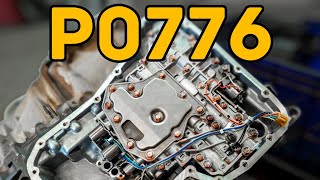
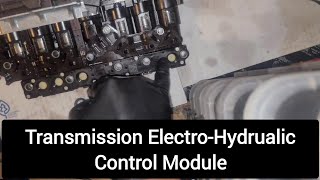
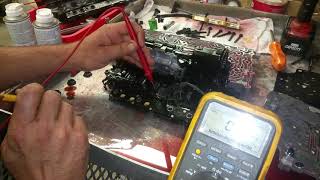
- Failed Pressure Control Solenoid 'B' / TEHCM Assembly 🔴 High Probability On the 6L80 transmission, the solenoids are integrated into the TEHCM. 🎬 Watch: How to rebuild and test the TEHCM internal circuits. A common failure point is the internal laminate circuit board cracking due to heat and vibration, causing intermittent electrical faults. Debris in the fluid can also clog the fine screens on the solenoids themselves.
How to confirm: A professional technician will use a scan tool (like a GM Tech 2) to monitor solenoid commands and performance. If the solenoid is commanded on/off but the pressure doesn't change, its voltage reads as a constant 0V, or is out of spec, the TEHCM is faulty. This is often confirmed with a 'Control Solenoid Valve and Transmission Control Module Assembly Solenoid Performance Test'.
Typical fix: Replace the entire Control Solenoid Valve and Transmission Control Module Assembly (TEHCM). The new module must be programmed to the vehicle's VIN.
Est. part cost: $400-$1200 - Dirty or Low Transmission Fluid 🟡 Medium Probability Over time, transmission fluid degrades and clutch material can contaminate it, leading to sludge and debris that can clog solenoid screens and valve body passages, causing valves to stick.
How to confirm: Check the transmission fluid level and condition. If the fluid is dark brown/black, smells burnt, or contains excessive metallic shavings on the pan magnet, it indicates a problem.
Typical fix: Perform a transmission fluid (DEXRON-VI) and filter change. If the fluid is heavily contaminated, this may be a temporary fix or a sign of a larger internal failure like a failing torque converter.
Est. part cost: $50-$150 - Clogged or Damaged Valve Body ⚪ Low Probability Debris from normal wear or torque converter failure can get stuck in the small passages of the valve body, causing valves to stick and preventing proper hydraulic pressure regulation. TSB 22-NA-258 notes that spacer plate screens can tear, especially after cold weather events, causing valves to stick.
How to confirm: After dropping the transmission pan, the valve body must be removed and inspected for scoring, sticking valves, or clogged passages. This is a job for a transmission specialist. 🎬 See how to disassemble and clean the 6L80 valve body.
Typical fix: The valve body can sometimes be cleaned and serviced with updated parts (e.g., from Sonnax), but if it is scored or damaged, it will need to be replaced.
Est. part cost: $300-$800
Rare But Worth Checking
- Torque Converter Failure: A failing torque converter clutch can disintegrate, sending a large amount of metallic debris throughout the transmission. This debris quickly clogs the filter, valve body, and TEHCM, leading to P0776 and other codes. This is a major failure requiring a transmission rebuild or replacement.
- Cracked 1-2-3-4 / 3-5-R Clutch Housing: GM TSB #09-07-30-004J specifically mentions that a cracked weld on this internal clutch housing can cause slips, delayed engagement, and set code P0776. This requires a full transmission teardown 🎬 Watch: Common 6L80 problems that lead to total transmission failure. to inspect and replace the housing.
- Internal Wiring Harness Damage: The wiring inside the transmission can become brittle from heat cycles and fluid exposure, leading to intermittent shorts or open circuits. This should be inspected when the pan is off.
- Faulty Transmission Control Module (TCM): While the solenoid driver is part of the TEHCM, in rare cases the logic portion of the module can fail, causing false codes. This is uncommon compared to the mechanical or solenoid failure.
Diagnosis Steps
- Check the transmission fluid level and condition. Ensure it is filled to the correct level with DEXRON-VI fluid and does not appear burnt or full of debris.
- Use a professional scan tool to check for other transmission-related trouble codes. Note any codes like P0700, P0751, or P0796.
- Monitor live data from the TCM. Key parameters are 'PC Solenoid 2 Commanded State' and 'PC Solenoid 2 Pressure'. Compare the commanded state (On/Off) to the actual pressure reading to see if it responds. Check solenoid voltage; a constant 0V when commanded on indicates a fault.
- If fluid is okay and the solenoid appears unresponsive, drop the transmission pan and inspect for excessive metal debris on the magnet. A large amount of metallic, spiky material points to torque converter or other hard part failure.
- Visually inspect the internal wiring harness for any signs of damage or brittle insulation.
- If no other issues are found, the most likely cause is a faulty TEHCM. Replace the TEHCM assembly.
- Program the new TEHCM to the vehicle's VIN using specialized software (GM SPS).
- Clear all codes, perform the Transmission Service Fast Learn procedure if available, and perform a test drive to verify the repair.
Parts You'll Likely Need
- Transmission Electro-Hydraulic Control Module (TEHCM)
(OEM #24275872 (supersedes 24256861, 24241890, 24041873))— This assembly contains the pressure control solenoids, which are the primary cause of code P0776 in 6L80 transmissions. The solenoids are not individually serviceable. It is critical to verify the correct part number with the vehicle's VIN.
Trusted brands: ACDelco GM Genuine Parts
OEM price range: $500-$1200
Aftermarket price range: $400-$900 - Transmission Fluid and Filter Kit
(OEM #24236933 (Filter))— This is required whenever the transmission pan is removed for service. Only DEXRON-VI fluid should be used.
Related Codes That Often Appear With This One
- P0700 — This is a generic code that simply means the Transmission Control Module (TCM) has stored a fault. It acts as a 'check engine light' for the transmission and will almost always accompany a specific code like P0776.
- P0751 — This code for 'Shift Solenoid A Stuck Off' often appears with P0776 because both solenoids are housed in the same TEHCM and are subject to the same failure modes like debris or electronic faults from a cracked laminate plate.
- P0796 — This code for 'Pressure Control Solenoid C Stuck Off' is also frequently seen for the same reason as P0751; it points to a common failure within the TEHCM assembly.
- P2723 — This code for 'Pressure Control Solenoid E Stuck Off' is mentioned in TSB 09-07-30-004J along with P0776 as a possible result of a cracked 1-2-3-4 / 3-5-R clutch housing.
Technical Service Bulletins (TSBs) & Recalls
- PIP4379K: A general bulletin that lists P0776 among many other codes related to various transmission issues, indicating it's a known fault pattern to GM.
- 09-07-30-004J: A critical TSB that identifies a cracked 1-2-3-4 / 3-5-R clutch housing as a specific mechanical cause for P0776, along with other codes like P2723. This requires a transmission teardown.
- 16-NA-019: Discusses various harsh shifts and flares, and outlines the 'Transmission Service Fast Learn' procedure required after repairs like a TEHCM replacement to relearn adaptive values.
- 22-NA-258: Points to torn screens on the valve body spacer plate, often triggered by extreme cold, as a cause for sticking valves and DTC P0776. The fix is to replace the control valve body.
Platform-Specific Known Issues
- Real-World Repair Story: TEHCM Replacement: On silveradosierra.com, a user with a 2009 Silverado described experiencing harsh shifting and getting stuck in gear, accompanied by code P0776. After confirming the fluid was clean, a dealership diagnosed a failed TEHCM. The repair involved replacing the TEHCM and programming it, which resolved all shifting issues. The total cost was approximately $1,300, aligning with typical estimates for this specific repair.
- TSB for Cracked Clutch Housing: GM Technical Service Bulletin 09-07-30-004J directly links DTC P0776 to a potentially cracked 1-2-3-4 / 3-5-R clutch housing. This is a more severe mechanical failure that presents with similar symptoms but requires a full transmission teardown to fix, not just a TEHCM replacement.
- Cold Weather Failures: TSB 22-NA-258, while for newer models, highlights a relevant failure mode where extreme cold can cause screens on the valve body spacer plate to tear. This debris can then cause valves to stick, leading to codes like P0776, sometimes months after the cold weather event occurred.
Mechanic-Grade Diagnostic Values
- Pressure Control Solenoid (PWM) Resistance — expected: 3.0-8.0 Ohms. Failure: A reading outside this range indicates a failed solenoid coil within the TEHCM.
- Shift Solenoid (On/Off) Resistance — expected: 20-40 Ohms. Failure: While not the direct cause of P0776, an incorrect reading on other solenoids points to a general TEHCM failure.
- Pressure Control Solenoid (PWM) Current Draw — expected: 1.5-4.0 Amps at 12V. Failure: Incorrect amperage suggests a failed solenoid. This test should be performed quickly to avoid overheating the coil.
- Solenoid Feed Voltage from TCM — expected: 8.3-9.3 Volts. Failure: Incorrect feed voltage from the TCM indicates an internal TEHCM fault.
- PC Solenoid 2 Commanded Voltage (Live Data) — expected: Pulse-width modulated signal, ranging from 0V (off) to ~12V (fully on).. Failure: Absence of voltage or a signal that doesn't change when a shift is commanded points to a TCM driver or wiring issue.
Scan Tool Commands That Help
- GM GDS2 / Tech 2: Control Solenoid Valve and Transmission Control Module Assembly Solenoid Performance Test — This is the primary bidirectional test used to isolate a faulty solenoid. It is performed with the TEHCM removed and mounted to a special test plate (J-47825-1) with 90-100 PSI of shop air. The technician commands each solenoid on and off to verify it actuates and holds pressure.
- GM GDS2 / Tech 2: Solenoid Automated Cleaning Process — If debris is suspected of causing a solenoid to stick, this function can be run with the transmission in Park. It cycles all solenoids to attempt to flush out contaminants. If the code returns after cleaning, the TEHCM likely needs replacement.
- GM GDS2 / Tech 2: Service Fast Learn — This procedure must be performed after replacing the TEHCM or valve body. It allows the TCM to learn the apply characteristics of the clutches to ensure smooth shifts. Failure to perform this can result in harsh shifting even with new parts.
Wiring & Ground Locations
- TCM 80-Way Connector (X2), Pin 36 — The main 80-pin connector on the Transmission Control Module (TEHCM) itself, located inside the transmission oil pan.. Pin 36, with a Brown/White wire, is the specific circuit for 'Pressure Control Solenoid 2 (PCS2) Low'. A diagnostic test would involve checking continuity and for shorts on this wire between the connector and the solenoid's internal trace on the TEHCM.
- G103 / G104 — Main chassis grounds located on the frame near the front of the vehicle, under the radiator support area. The negative battery cable often connects directly here.. Poor chassis grounds can cause floating voltages and insufficient power for various modules, including the TCM. Corroded or loose grounds here can lead to a host of intermittent electronic issues, including false solenoid codes.
- Engine Block to Firewall Ground Strap — Typically runs from the rear of the driver's side cylinder head or engine block to the firewall.. This is a primary ground path for the engine and its associated sensors and modules. A broken or corroded strap can cause the starter and other components to seek a ground path through sensitive electronics like the TCM, potentially causing damage or erratic behavior.
- Frame Ground (Driver's Side) — Located on the driver's side frame rail, often near the fuel pump control module.. This is a critical ground point for multiple systems, including the fuel pump. While not directly tied to the transmission, a bad ground here can introduce electrical noise into the entire vehicle system, affecting module communication.
Real Owner Repair Stories
- Bob Is The Oil Guy forum user (2011 LML (Duramax, Allison 1000 transmission, slightly newer but uses similar TEHCM architecture)) — Vehicle went into limp mode, lost the PRNDL gear indicator, and multiple trouble codes appeared.
❌ Tried (didn't work) Rebooting transmission faults with a tuner, clearing codes with a Snap-On scanner (faults returned within 5 minutes).
✅ What actually fixed it The issue was diagnosed as a failed Transmission Control Module (TCM/TEHCM). The vehicle was repaired by replacing the module with the new, upgraded part number (19431596) after an 18-month parts backorder was resolved.
OEM Part Supersession History
24256861→19431596 (as a replacement kit), also related to 24275872— The original TEHCMs were prone to failure. During a period of significant supply chain shortages (approx. 2021-2023), part number 24256861 became unavailable for over a year. GM later released an updated part.
Heads up: TEHCMs are not universally interchangeable between years. Installing a 2008 TEHCM into a 2007 or older 6L80 can cause a 2-3 shift flare or 3-5-R clutch failure due to internal piston design changes. Always verify the correct part number and Tag ID for the specific vehicle VIN.
Model Year Variations Within This Range
- 2007 vs. 2008+: TSB 09-07-30-004J notes a design change in the 1-2-3-4 piston, 1-2-3-4 piston housing, and the 3-5-R piston for the 2008 model year 6L80. Installing a complete 2008 clutch housing assembly into a 2007 or older transmission may result in shift flares or clutch distress.
- 2006-2010 vs. 2011+: Early generation TEHCMs (approx. 2006-2010) were more prone to TCC slip and pressure switch failures. Later revisions, such as those found in part number 24256863, featured improved solenoids and an updated pressure manifold gasket.
Helpful Videos




We Have This Part in Stock



The information in this article is provided for general reference and educational purposes only. Vehicle specifications, procedures, and part compatibility can vary by production date, trim level, and region. Always consult your vehicle's factory service manual and verify part numbers before purchasing or performing repairs. Safety-critical components such as airbags, seat belts, and braking systems should be installed by a qualified professional.
- Chevrolet SILVERADO:
- 🎬 Helpful Videos
- 🛍️ Shop This Part
- What's Unique About the 2006-2010 Chevrolet SILVERADO
- Diagnostic Flowchart
- Symptoms You May Notice
- Most Likely Causes
- Rare But Worth Checking
- Diagnosis Steps
- Parts You'll Likely Need
- Related Codes That Often Appear With This One
- Technical Service Bulletins (TSBs) & Recalls
- Platform-Specific Known Issues
- Mechanic-Grade Diagnostic Values
- Scan Tool Commands That Help
- Wiring & Ground Locations
- Real Owner Repair Stories
- OEM Part Supersession History
- Model Year Variations Within This Range
- 🎟️ Get 5% Off