

P0776 on 2006-2013 Chevrolet Silverado 1500: Causes, Fixes, and Costs
P0776 on a 2006-2013 Silverado indicates the Pressure Control Solenoid 'B' is stuck off or not performing correctly. The most common causes are dirty transmission fluid, debris in the valve body, or a failed solenoid. A transmission fluid and filter change is the first step, but often the solenoid itself, the valve body, or the entire TCM/solenoid assembly requires replacement, especially in the 6L80 transmission.
- P0776 is a serious transmission code indicating a problem with hydraulic pressure control, which can lead to severe drivability issues and further damage.
- The most common causes on a 2006-2013 Silverado are dirty fluid, a contaminated valve body, or a failed solenoid.
- Always start diagnosis by checking the transmission fluid level and condition.
- Due to the complexity of internal transmission work and the need for special tools, this repair is best left to a professional.
- Simply replacing the solenoid may not be a permanent fix; the entire valve body should be inspected for debris as per GM's own service bulletins.
What's Unique About the 2006-2013 Chevrolet SILVERADO 1500
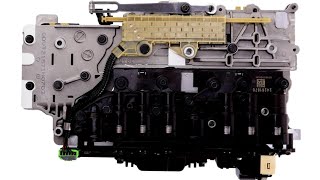
For the 2006-2013 Silverado, particularly models equipped with the 6-speed 6L80 automatic transmission (common in the GMT900 generation from late 2007-2013), this code is frequently linked to internal transmission issues beyond just a single bad solenoid. Manufacturer bulletins specifically point to problems like debris contaminating the valve body, which can cause multiple solenoids to malfunction. Furthermore, the Transmission Control Module (TCM) and the solenoids are integrated into a single assembly (known as the TEHCM) inside the transmission pan. This design makes them susceptible to heat and vibration, and a failure often requires replacing the entire unit, not just one solenoid.
Diagnostic Flowchart
Tap your situation to follow the diagnostic path that matches what you're seeing on this vehicle.
Generation note: This range covers the end of the GMT800 generation (2006, and 2007 'Classic' models) and the entire GMT900 generation (late 2007-2013). GMT800s typically used 4-speed transmissions (4L60-E, 4L65-E), while GMT900s increasingly used 6-speed transmissions (6L80, 6L90). The P0776 code is very common on the 6-speed 6L80, and TSBs often point to valve body and TEHCM issues specific to this transmission family. On the 4L65-E, P0776 often relates to the 2-3 Shift Solenoid 'B', whereas on the 6L80 it refers to Clutch Pressure Control Solenoid 2.
Symptoms You May Notice
- Harsh, jerky, or delayed shifting, especially between mid-range gears like 2-3.
- Transmission slipping between gears.
- Vehicle stuck in one gear (limp mode), often 2nd or 3rd.
- Failure to shift into higher gears.
- No reverse gear.
- Check Engine Light is on.
- Reduced fuel economy.
- Speedometer behaving erratically when the issue occurs.
- Replacing only the Pressure Control Solenoid without cleaning or inspecting the valve body. If debris is the root cause, the new solenoid may fail again shortly after installation.
- Replacing a single solenoid when the entire TEHCM (solenoid/TCM pack) is faulty. This leads to a repeat repair. On the 6L80, individual solenoids are not considered serviceable as they are integrated into the TEHCM.
Most Likely Causes
- Low or Dirty Transmission Fluid 🔴 High Probability Trucks used for towing or heavy hauling break down transmission fluid faster, creating sludge and debris that can clog solenoid passages and the filter.
How to confirm: Check the transmission fluid level and condition via the dipstick (if equipped). The fluid should be bright red and clear, not brown, black, or smell burnt. Many 6L80-equipped trucks lack a dipstick, requiring inspection via a fill plug on the side of the transmission.
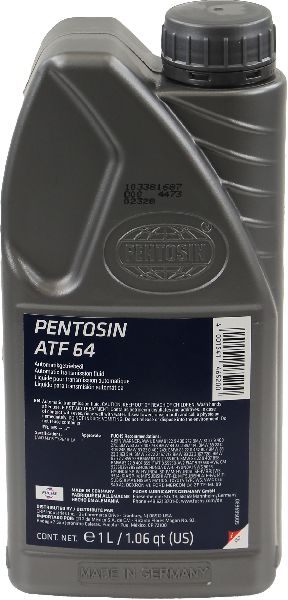
Typical fix: Perform a transmission fluid and filter change. This is the essential first step in diagnosis and repair.
Est. part cost: $75-$150 - Debris in the Transmission Valve Body 🔴 High Probability As cited in GM Technical Service Bulletin #PIP4831E, debris in the valve body is a known issue that can cause P0776 and other related solenoid codes. This debris can cause valves and solenoids to stick.
How to confirm: This requires removing the transmission pan and inspecting the valve body for metallic shavings or other contaminants. This is best done by a professional.
Typical fix: The valve body must be removed, cleaned, and inspected. 🎬 Watch: How to disassemble and clean the 6L80 valve body. In many cases, a remanufactured valve body with updated components is installed to prevent recurrence.
Est. part cost: $300-$800 - Failed Pressure Control Solenoid 'B' 🟡 Medium Probability The solenoid itself can fail electrically or mechanically (sticking). While it's a common cause, on these trucks, it's often a symptom of the wider debris issue or a failing TEHCM unit.
How to confirm: A professional scan tool can command the solenoid on and off to check for a response. The solenoid's electrical resistance can also be tested with a multimeter.
Typical fix: Replace the faulty solenoid. On a 6L80, the solenoids are part of the TEHCM (solenoid body/TCM assembly) and are often replaced as a complete unit.
Est. part cost: $50-$120 for a single solenoid, $400-$700 for the TEHCM assembly. - Faulty Transmission Control Module (TCM) ⚪ Low Probability TSB #PIP4831E specifically advises technicians to review the date code on the TCM, indicating that some modules are prone to failure. On 6L80 transmissions, the TCM is located inside the transmission (as part of the TEHCM) and is subject to heat and vibration, which can lead to failure.
How to confirm: This is a process-of-elimination diagnosis. If all other components (fluid, solenoid, wiring, valve body) check out, the TCM is the likely culprit. Requires advanced diagnostics.
Typical fix: Replace the TCM, which on a 6L80 means replacing the entire TEHCM/valve body assembly. This requires programming the new module to the vehicle's VIN.
Est. part cost: $400-$700
Rare But Worth Checking
- Internal Wiring Harness Damage: The wiring harness inside the transmission can become brittle from heat and fluid exposure, leading to shorts or open circuits that can trigger solenoid codes.
- Failed Internal Transmission Pump: A failing pump can cause low line pressure throughout the transmission, which can mimic the symptoms of a faulty solenoid and trigger this code.
Diagnosis Steps
- Check the transmission fluid level and condition. If low, top it off. If dark or burnt-smelling, a fluid and filter change is necessary.
- Use a professional OBD-II scanner to check for other transmission-related codes. The presence of multiple solenoid codes (e.g., P0751, P0796) points towards a systemic issue.
- With the scanner, monitor the live data for the commanded state of Pressure Control Solenoid 'B' versus its actual state while driving.
- Drop the transmission oil pan and inspect for excessive metal shavings or debris, which indicates internal wear.
- Inspect the internal wiring harness and connectors for any signs of damage or corrosion.
- Test the resistance of the solenoid with a multimeter to see if it's within the manufacturer's specifications. For the 6L80, PC solenoids should read between 3-8 ohms.
- If possible, use the scanner's bi-directional controls to command the solenoid on and off while listening for a click.
- If the solenoid and wiring are good, the next step is to inspect the valve body for stuck valves or contamination.
- If all other components are verified to be working, the final step is to diagnose the Transmission Control Module (TCM), which is part of the TEHCM assembly on the 6L80.
Parts You'll Likely Need
- Pressure Control Solenoid
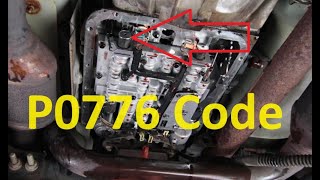
(OEM #Part of the TEHCM assembly, but individual solenoids are sometimes available. Shift solenoids are often cited with part number 24230298, but PC solenoids are different.)— This solenoid is directly identified by the code. 🎬 See this breakdown of P0776 causes and potential fixes. It can fail electrically or become stuck from debris. On the 6L80, it's often more practical to replace the entire solenoid block/TEHCM.
Trusted brands: ACDelco, Bosch
OEM price range: $80-$150
Aftermarket price range: $40-$90 - Transmission Filter and Gasket Kit
(OEM #ACDelco 24236933 (Filter Kit))— Required for any repair that involves dropping the transmission pan. A clogged filter can cause pressure issues itself.
Trusted brands: ACDelco, Wix, ATP
OEM price range: $50-$80
Aftermarket price range: $25-$50 - Transmission Valve Body with TEHCM
(OEM #Varies by year/model. Example: ACDelco 24256716 for some models.)— Often the root cause on these trucks due to contamination, warping, or TCM failure, as noted in GM TSBs. Replacement is a more certain fix than cleaning.
Trusted brands: ACDelco, Sonnax
OEM price range: $500-$800
Aftermarket price range: $350-$600
Related Codes That Often Appear With This One
- P0700 — This is a generic Transmission Control System Malfunction code. It's an informational code that indicates the TCM has stored a specific fault, like P0776. It almost always appears alongside other transmission codes.
- P0751 — This code for Shift Solenoid 'A' Stuck Off often appears with P0776, as both can be caused by the same underlying issues like debris in the valve body or low fluid pressure, as noted in TSB #PIP4831E.
- P0796 — This code for Pressure Control Solenoid 'C' Performance also points to a hydraulic control issue. Seeing it with P0776 strengthens the diagnosis of a systemic problem like a contaminated valve body or failing TCM, as mentioned in TSB #PIP4831E.
Technical Service Bulletins (TSBs) & Recalls
- PIP4831E: Advises technicians to check for debris in the valve body and review the TCM date code for a range of solenoid performance codes including P0776.
- PIP4379M: Lists P0776 among a large group of DTCs that can be set due to various internal transmission faults, directing technicians to follow standard diagnostics.
Platform-Specific Known Issues
- TEHCM Failure: On the 6L80 transmission, the Transmission Electro-Hydraulic Control Module (TEHCM) which houses the TCM and solenoids is a very common point of failure. Owners report that replacing the entire TEHCM assembly is often the final fix after trying individual solenoids or fluid changes. This part is located inside the oil pan, bolted to the valve body.
- Torque Converter Shudder Preceding Code: Some owners report experiencing a noticeable transmission shudder at highway speeds (often called torque converter shudder) for weeks or months before the P0776 code appears. This suggests that degrading fluid and clutch material from the torque converter may be the source of the debris that ultimately clogs the valve body and solenoids.
Mechanic-Grade Diagnostic Values
- 6L80/6L90 Pressure Control (PC) Solenoid Resistance — expected: 3-8 ohms. Failure: A reading outside this range, or an open/short circuit, indicates a failed solenoid.
- 6L80/6L90 Shift Solenoid (On/Off type) Resistance — expected: 20-40 ohms. Failure: A reading outside this range indicates a failed on/off shift solenoid. This is for context, as P0776 refers to a PC solenoid.
- 6L80/6L90 PC Solenoid Current Draw — expected: 1.5 - 4.0 amps at 12 volts. Failure: Incorrect amperage draw when the solenoid is activated points to an internal failure.
Scan Tool Commands That Help
- GDS2 / Tech2: Control Solenoid Valve and Transmission Control Module Assembly Solenoid Performance Test — This function allows a technician to command each solenoid on and off individually to verify mechanical operation. It is used with a special test plate (DT-47825) and shop air to check if a solenoid is stuck open or closed when the TEHCM is removed from the transmission.
- GDS2: Transmission Service Fast Learn — After replacing the TEHCM or valve body, this procedure must be performed to reset and relearn the transmission adaptive pressure values. Failure to do this will result in poor shift quality.
- J2534 Passthrough Device (with GM SPS2/Techline Connect): Module Reprogramming — This is required to program a new TEHCM with the vehicle's specific VIN and software calibration. The vehicle will not operate correctly, and may not start, until the new module is programmed.
Wiring & Ground Locations
- G110 — Located on the right rear of the engine, typically on a stud at the back of the passenger-side cylinder head.. This is a critical ground point for the engine and transmission control systems. A loose or corroded G110 ground can cause erratic sensor readings, incorrect solenoid commands, and phantom trouble codes, including transmission codes like P0776.
- TEHCM Main Connector — The main electrical connector that passes through the transmission case to the internal TEHCM.. This connector is the sole communication link to the TCM and solenoids. Fluid wicking or intrusion past the seal can short out pins, causing loss of communication and multiple solenoid codes. The connector pins and seal should be inspected for any signs of fluid leakage or corrosion.
Real Owner Repair Stories
- DuramaxDiesels.com forum (Silverado with 5-speed Allison transmission (Note: Not a 6L80, but illustrates a common root cause pattern)) — Vehicle went into limp mode, stuck in 3rd gear, with code P0776. Seemed to slip on the 3-4 shift.
❌ Tried (didn't work) Initial suspicion was a clogged spin-on filter.
✅ What actually fixed it The root cause was found to be burned C2 and C3 clutch frictions. The P0776 code was a symptom of the TCM maxing out adaptive pressure to compensate for the slipping clutches. The final fix was a complete transmission overhaul with new clutches and related valve body components.
OEM Part Supersession History
Varies by year (e.g., 24241350 for 2006-2009)→Multiple revisions exist (e.g., 24256939, 24261870, 24275873)— Hardware and software updates to improve reliability and address common failure points like pressure switch cracking and solenoid sticking.
Heads up: TEHCM units are not backward or forward compatible. Installing a TEHCM from a different year range or with the wrong Tag ID will cause a no-start or immediate limp mode condition, even if it physically fits. The correct part number for the vehicle's VIN must be used and programmed.
Model Year Variations Within This Range
- 2006-2007 'Classic' (GMT800): These models primarily used the 4-speed 4L60-E/4L65-E. For these transmissions, P0776 often corresponds to the '2-3 Shift Solenoid B'. The solenoids are individual components that can be replaced separately after dropping the pan and valve body.
- 2007 'New Body Style' - 2013 (GMT900): These models primarily use the 6-speed 6L80 transmission. P0776 refers to 'Clutch Pressure Control Solenoid 2'. This solenoid is an integral, non-serviceable part of the TEHCM (Transmission Electro-Hydraulic Control Module). A failure requires replacement of the entire TEHCM assembly, which must then be programmed to the vehicle.
- 2006-2010 vs 2011+: Early generation 6L80 TEHCMs (approx. 2006-2010) are known to be more prone to certain failures like TCC slip and pressure switch degradation due to heat. Later revisions featured improved hardware and software.
Helpful Videos
Used OEM Parts in Stock

New Aftermarket Parts Available





The information in this article is provided for general reference and educational purposes only. Vehicle specifications, procedures, and part compatibility can vary by production date, trim level, and region. Always consult your vehicle's factory service manual and verify part numbers before purchasing or performing repairs. Safety-critical components such as airbags, seat belts, and braking systems should be installed by a qualified professional.
- Chevrolet SILVERADO 1500:
- 🎬 Helpful Videos
- 🛍️ Shop This Part
- What's Unique About the 2006-2013 Chevrolet SILVERADO 1500
- Diagnostic Flowchart
- Symptoms You May Notice
- Most Likely Causes
- Rare But Worth Checking
- Diagnosis Steps
- Parts You'll Likely Need
- Related Codes That Often Appear With This One
- Technical Service Bulletins (TSBs) & Recalls
- Platform-Specific Known Issues
- Mechanic-Grade Diagnostic Values
- Scan Tool Commands That Help
- Wiring & Ground Locations
- Real Owner Repair Stories
- OEM Part Supersession History
- Model Year Variations Within This Range
- 🎟️ Get 5% Off