

OBD-II Code P0774: Shift Solenoid E Intermittent
The Ultimate Guide to P0774: What it means, why it triggers, and how to fix it for good
- P0774 indicates an intermittent electrical fault in shift solenoid 'E', meaning the circuit drops out unpredictably, often due to heat expansion or vibration.
- Check your transmission fluid first; dirty or low fluid causes over 40% of solenoid-related codes by clogging the valve body's microscopic hydraulic passages.
- Stop driving the vehicle immediately; driving more than 50 miles with slipping gears accelerates clutch wear and turns a $200 wiring fix into a $3,500 transmission rebuild.
- Never replace the solenoid without testing the wiring first; use a multimeter to perform a loaded voltage drop test to rule out a frayed $20 wire harness.
- Expect to pay between $300 and $800 if the solenoid requires replacement, though modern vehicles often require a full $1,200 valve body assembly instead.
What Does P0774 Mean?
P0774 means your Powertrain Control Module (PCM) or Transmission Control Module (TCM) detects an intermittent electrical fault in the transmission's 'E' shift solenoid circuit. This solenoid is a computer-controlled valve directing transmission fluid to change gears. An erratic signal triggers P0774, indicating the transmission cannot reliably shift into the correct gear.
Technical definition: Shift Solenoid 'E' Intermittent. The PCM/TCM has detected an intermittent open or short in the electrical circuit controlling shift solenoid 'E'.
Can I Drive With P0774?
Yes, But With Caution. You can drive, but we strongly advise against it. The transmission will likely shift harshly, slip, lock into a single gear, or momentarily lose power, making the vehicle unsafe. Driving more than 50 miles with this code accelerates clutch pack wear and overheats the fluid. This turns a $200 moderate repair into a $3,500+ catastrophic transmission rebuild.
Common Causes
- Low or Contaminated Transmission Fluid (Very Common) — Fluid that is low, old, or contaminated with debris is the most frequent cause. Dirty fluid clogs the microscopic passages in the solenoid and valve body, preventing the solenoid from moving correctly or causing it to stick intermittently.
- Damaged Wiring or Connectors (Common) — The electrical circuit is a frequent failure point. This includes frayed wires, internal wire breaks, or corroded/loose pins at the solenoid connector, main transmission harness connector, or TCM.
- Faulty Shift Solenoid E (Common) — The solenoid itself fails electrically or mechanically. The internal coil winding develops an intermittent short or open circuit that only appears when hot, or the internal valve mechanism sticks from wear.
- Unstable System Voltage or Poor Grounds (Less Common) — A failing alternator, bad battery, or corroded engine/chassis ground straps cause fluctuating voltage levels. The TCM interprets a momentary voltage drop as an intermittent solenoid fault.
- Faulty Transmission Control Module (TCM) (Rare) — The computer controlling the transmission fails. Internal issues like cracked solder joints, moisture damage, or driver circuit failure cause it to send erratic signals to the solenoid or misinterpret the return signal.
- Faulty Transmission Pump (Rare) — A worn transmission pump produces inconsistent hydraulic pressure. This starves the solenoids of the pressure needed to actuate properly under load, mimicking a solenoid fault.
- Software or Calibration Glitches (Rare) — The logic within the TCM is flawed. Manufacturers release software updates (reflashes) to correct overly sensitive diagnostic parameters that falsely trigger a P0774 code.
Symptoms
- Intermittent Loss of Drive — The vehicle feels like it momentarily shifts into neutral, especially when coming to a stop or under light throttle, before re-engaging.
- Check Engine Light On — The Malfunction Indicator Lamp (MIL) illuminates on your dashboard, often accompanied by a transmission warning light.
- Decreased Fuel Economy — When the transmission isn't in the optimal gear, the engine works harder and consumes more fuel.
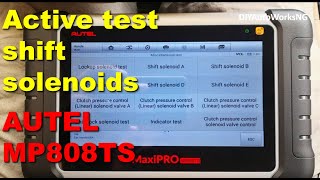
- Harsh, Delayed, or Erratic Shifting (also visible on scanner) 🎬 Watch: How to test shift solenoids using an active scan tool. — The car slams into gear, hesitates before shifting, shifts at the wrong times, or unexpectedly downshifts while coasting.
- Transmission Slipping (also visible on scanner) — Engine RPMs increase without a corresponding increase in vehicle speed, indicating the gear isn't fully engaged.
- Vehicle Enters 'Limp Mode' (also visible on scanner) — The transmission locks into a single gear (often 2nd or 3rd) to prevent further damage, severely limiting acceleration.
- Transmission Overheating (also visible on scanner) — Slipping and incorrect gear selection generate excessive heat, causing the transmission to overheat and trigger a warning light.
Diagnostic Flowchart
Tap your situation to follow the diagnostic path that matches what you're seeing on this code.
Common Fixes & Costs
- Change Transmission Fluid and Filter — Parts: $75-$150, Labor: $150-$300, ~1.5 hr book time (Intermediate)
- Repair Damaged Wiring or Connectors — Parts: $20-$60, Labor: $150-$400, ~2 hr book time (Intermediate)
- Replace Shift Solenoid E
— Parts: $50-$200, Labor: $250-$600, ~3 hr book time
(Advanced)
: OEM Varies by specific solenoid function, check with dealer. (Alt: Dorman, Standard Motor Products (SMP), ATP) - Replace Shift Solenoid Pack / Valve Body
— Parts: $300-$800, Labor: $300-$650, ~3.5 hr book time
(Professional)
: OEM ['JF016E / 3170E-28X0B', 'JF017E / 31705-29X6D'] (Alt: Rostra, Maval)
: OEM Mopar Solenoid Block/Pack (e.g., 68RFE) (Alt: Dorman, Standard Motor Products (SMP)) - Replace Transmission Control Module (TCM)
— Parts: $500-$1200, Labor: $200-$400, ~2.5 hr book time
(Professional)
: OEM GM TEHCM (TCM and Solenoid assembly) Part #135728 or similar. (Alt: Dorman (Remanufactured), Cardone (Remanufactured)) - Full Transmission Rebuild or Replacement — Parts: $1500-$3500, Labor: $2000-$4500, ~10 hr book time (Professional)
DIY vs Professional
- Change Transmission Fluid and Filter — Beginner: Yes
Tools: Socket set, drain pan, funnel, new fluid, new filter/gasket. - Repair Damaged Wiring or Connectors — Beginner: No
Tools: Multimeter, soldering iron/heat shrink connectors, wire strippers, vehicle wiring diagram. - Replace Shift Solenoid / Solenoid Pack — Beginner: No
Tools: Extensive socket/wrench set, torque wrench, drain pan, service manual, potentially specialized valve body tools. - Replace Transmission Control Module (TCM) — Beginner: No
Tools: Basic hand tools to access the module.
Used vs. New Parts: Buying Guide
When a used part is worth it: For a high-mileage vehicle (>150k miles) where budget is the primary concern, a used solenoid pack or valve body from a low-mileage donor vehicle is a viable, cost-effective option.
Donor-vehicle mileage cap: roughly under 80000 miles for the part to have meaningful remaining life.
Donor quality checklist:
- Verify the donor vehicle's mileage; reputable sellers provide this information.
- Ensure the part number matches exactly; identical-looking parts have different internal calibrations.
- Ask if the part comes from a vehicle in an accident versus one scrapped for transmission failure.
Decision logic:
- If The vehicle has low mileage (<80k miles) and you plan to keep it long-term. → Buy a new or remanufactured part. The longer warranty and assured reliability are worth the extra cost.
- If The vehicle is older (>150k miles) and you need a budget-friendly repair to keep it running. → A used part is an acceptable risk, but understand its lifespan is uncertain.
- If The specific part (e.g., Nissan CVT valve body) is a known high-failure item. → Favor a remanufactured unit over a used one, as remanufacturers correct original design flaws.
Warranty tradeoff: Used parts from salvage yards typically offer a 30-90 day functional warranty. New aftermarket parts come with a 1-year to limited lifetime warranty. Remanufactured parts usually carry a 1-3 year warranty, offering a balance of cost and security.
Worst-case if a used part fails: $400-$1000 if a used part fails after installation, primarily due to the repeated labor cost to access and replace it again.
What Happens If You Wait — Timeline
- 0-1 month: Intermittent fault. Check Engine Light comes on, maybe a single harsh shift or brief slip when hot. The code may clear itself temporarily. No permanent damage yet. (MPG impact: 0-5%% · Added cost: $0)
- 1-3 months: Fault becomes more frequent. Harsh shifting is common. Noticeable transmission slipping begins. The slipping clutch packs generate excessive heat, degrading the transmission fluid. (MPG impact: 5-10%% · Added cost: $50-$150 in wasted fuel and accelerated fluid degradation.)
- 3-6 months: Sustained slipping overheats and burns the clutch packs. Friction material flakes off, contaminating the fluid and clogging the filter and valve body passages. Shifting is erratic in all gears, and the vehicle frequently enters 'limp mode'. (MPG impact: 10-20%% · Added cost: $1,000-$2,000. The initial solenoid issue has caused clutch pack failure, requiring a partial rebuild.)
- 6+ months: Catastrophic failure. The clogged filter starves the transmission pump of fluid, causing a complete loss of hydraulic pressure. Metal shavings from burnt clutches circulate throughout the unit, scoring the valve body, pump, and torque converter. The car stops moving. (MPG impact: >20% (or vehicle is undrivable)% · Added cost: $3,500-$8,000+. The transmission is beyond a simple repair and requires a complete rebuild or a full replacement with a remanufactured unit.)
Cost of Not Fixing It
- 0-1 month: Noticeable decrease in fuel economy (5-15%), harsh shifting, and the vehicle unexpectedly enters 'limp mode', creating an unsafe driving condition. (Added cost: Negligible, besides increased fuel cost.)
- 1-6 months: Continued slipping and harsh shifting generates excessive heat, degrading the transmission fluid and accelerating wear on internal clutch packs and bands. This leads to widespread hydraulic issues. (Added cost: $800-$1,500 for a valve body replacement if debris scores internal components.)
- 6+ months: Catastrophic internal transmission failure. Worn clutches shed friction material, clogging the filter, starving the pump, and causing a complete loss of hydraulic pressure. Metal shavings contaminate the entire system. (Added cost: $3,500-$8,000+ for a complete transmission rebuild or replacement.)
Diagnosis Steps
- Scan for Codes and Review Freeze Frame Data
Use an OBD-II scanner to confirm P0774 is present and check for related transmission codes. Document the freeze-frame data showing the vehicle's conditions (speed, temperature, RPM) when the fault occurred. This is crucial for replicating intermittent faults.
Tools: OBD-II Scanner (Beginner) - Check Transmission Fluid Level and Condition
With the engine warm and running in Park or Neutral, check the transmission fluid. It must be at the correct level and appear clean and reddish/pink. Low, brown, burnt-smelling fluid, or fluid containing metallic shavings indicates a serious problem beyond a single solenoid.
Tools: Rag, Gloves (Beginner) - Inspect External Wiring and Connectors
Visually inspect the entire wiring harness going to the transmission. Look for chafing against the chassis, melting near the exhaust, or corrosion. Disconnect the battery, unplug the main harness connector, and check for bent, pushed-out, or corroded pins.
Tools: Flashlight, Safety Glasses (Intermediate) - PRO TIP: Monitor Live Solenoid Data
Using an advanced scan tool, monitor live data PIDs for 'Shift Solenoid E Command' and 'Solenoid E Feedback'. Command the solenoid on and off or drive the vehicle to replicate freeze-frame conditions. Watch for dropouts, erratic voltage, or a mismatch between commanded state and feedback, confirming a control circuit issue.
Tools: Advanced Bi-directional Scan Tool (Advanced) - Test the Solenoid Circuit with a Multimeter
Using a digital multimeter and wiring diagram, check for proper voltage and ground at the transmission connector. Check for continuity and resistance in the wiring between the TCM and transmission connectors. Wiggle the harness during testing to expose intermittent opens or shorts.
Tools: Digital Multimeter, Vehicle-specific Wiring Diagram (Advanced) - ADVANCED TEST: Voltage Drop Test
This pinpoints high resistance invisible to a simple continuity check. Connect your multimeter in parallel between the TCM connector's solenoid pin and the corresponding transmission harness pin. Command the solenoid ON. A voltage drop exceeding 0.5 volts indicates excessive resistance requiring repair.
Tools: Digital Multimeter, Advanced Scan Tool, Back-probe Pins (Advanced) - Test the Shift Solenoid Itself
Remove the transmission oil pan to access the solenoid. Measure the solenoid's internal resistance with a multimeter and compare it to manufacturer specifications (typically 10-30 ohms). A reading of infinity (OL) indicates an open circuit; near zero indicates a short. Briefly apply fused 12V power to listen for an audible 'click', confirming mechanical operation.
Tools: Socket Set, Drain Pan, Digital Multimeter, Gasket, Service Manual (Advanced) - Check Internal Transmission Pressure
If circuit and solenoid tests are inconclusive, the issue is hydraulic. Connect a transmission pressure gauge to the test port on the transmission case. With the engine running, compare pressure readings at specified RPMs in different gears to the service manual chart. Low line pressure indicates a failing pump or pressure regulator.
Tools: Transmission Pressure Gauge Set, Service Manual (Professional) - PRO TIP: Use a Lab Scope for Definitive Diagnosis
For hard-to-find intermittent faults, connect an oscilloscope to the solenoid's command wire. Drive the vehicle and record the waveform. Look for hash, voltage drops, or complete signal dropouts in the pattern coinciding with the shifting problem. This definitively distinguishes a wiring issue from a failing solenoid or TCM.
Tools: Oscilloscope (Lab Scope), Back-probe Pins (Professional)
When This Code Triggers (Freeze-Frame Conditions)
- Engine/Transmission Temp: 180-210°F (The fault often appears only when the transmission is fully warmed up. Heat causes failing electronic components or wiring to expand, creating an open circuit.)
- RPM: 1500-2500 RPM (The code frequently sets during steady-state cruising or light acceleration when the transmission commands a shift into or out of an overdrive gear.)
- Engine Load: 20-50% (Moderate engine load during city or highway driving is a common trigger, as opposed to heavy acceleration or idle.)
- Vehicle Speed: 35-55 mph (This speed range corresponds to shifts involving overdrive gears, often controlled by the 'E' solenoid.)
Related Codes
- P0770 — This is a general malfunction code for the 'E' solenoid circuit. P0774 is more specific, telling you the fault is intermittent. Diagnosis for P0770 often begins by looking for the cause of an intermittent fault.
- P0771 — This means Shift Solenoid 'E' is 'Stuck Off'. The PCM commanded the solenoid ON, but the expected gear ratio change didn't happen. This points to a mechanical jam or a permanent open circuit.
- P0772 — This means Shift Solenoid 'E' is 'Stuck On'. The PCM commanded the solenoid OFF, but it remained hydraulically active. This indicates a mechanical jam in the 'on' position or an electrical short to power.
- P0750 - P076E — This range relates to other shift solenoids (A, B, C, D, F). If you have multiple solenoid codes simultaneously, suspect a common point of failure, such as low/dirty fluid, a bad ground, a compromised main harness connector, or a failing TCM.
- P0974 — This code indicates a high voltage condition in the Shift Solenoid 'A' circuit, but on some vehicles, the underlying cause (e.g., a faulty TCM) also triggers intermittent faults in other solenoid circuits like P0774.
Climate & Environmental Factors
- Cold Weather: Extremely cold temperatures cause transmission fluid to thicken, increasing hydraulic resistance. This causes delayed or harsh shifting and triggers a fault if the mechanical system cannot respond as expected. It also causes seals to contract and harden, leading to leaks.
- High Humidity / Salty Climates: High humidity and exposure to road salt accelerate corrosion on electrical connector pins. This corrosion creates high resistance or intermittent open circuits, a direct cause of electrical faults like P0774.
- Heat Soak: Since P0774 is an intermittent fault, it is often triggered by heat. As the transmission reaches operating temperature, a hairline crack in a wire or a failing coil inside the solenoid opens up and breaks the circuit, causing the fault to appear after driving for some time.
How to Talk to a Mechanic About This Code
Say this: "I have a P0774 code and intermittent shifting issues. I need a diagnostic appointment. Since this is an intermittent electrical fault, please focus on testing the wiring harness and connectors for opens, shorts, or corrosion before recommending a solenoid or valve body replacement."
This language signals you understand the fault's nature. It directs the shop to perform a proper electrical diagnosis first, preventing them from immediately recommending an expensive part replacement that ignores the underlying wiring issue.
Avoid saying:
- 'My transmission is acting weird, just fix it.'
- 'My check engine light is on, can you look at it?'
- 'Just do whatever you think is best.'
Questions to ask before authorizing the repair:
- Did you perform a loaded voltage drop test on the solenoid circuit while hot to check for high resistance?
- Were you able to replicate the fault while monitoring live data from the solenoid's command and feedback circuits?
- If the solenoid needs replacement, is the internal wiring harness a known failure point we should replace simultaneously?
- What is the warranty on the parts and labor for this repair?
Where to Take It: Dealer vs Independent vs Chain
- Dealer:
Best for: Vehicles under warranty, Vehicles with known TSBs or required software updates (e.g., Nissan CVTs, Ford lead frames), Complex European brands (BMW, VW)
Downsides: Highest labor rates (often 1.5-2x independent shops), Routinely recommends replacing a whole assembly (valve body) when only a component is needed. (Typical cost: +50% vs. baseline) - Independent Shop:
Best Fit. A dedicated transmission specialist has the deep expertise and specific tools to accurately diagnose an intermittent fault like P0774, saving time and money. They perform detailed circuit testing before replacing expensive parts.
Best for: Out-of-warranty vehicles where cost is a factor, Accurate diagnosis of complex electrical and hydraulic issues
Downsides: Quality varies greatly; you must verify they are an ASE-certified 'transmission specialist', not a general mechanic. (Typical cost: +0% vs. baseline) - Chain Shop:
High Risk / Not Recommended. The diagnostic complexity of an intermittent electrical code like P0774 is poorly suited to the chain shop model. You risk misdiagnosis or being sold an unnecessary transmission rebuild.
Best for: Simple fluid and filter changes ONLY.
Downsides: Business model relies on upselling to expensive rebuilds based on a 'free' initial diagnosis., Technician diagnostic capability for complex electrical faults is highly inconsistent. (Typical cost: -10% vs. baseline)
When to Walk Away From the Repair
If the estimated repair cost exceeds 50% of the car's private-party value (e.g., from Kelley Blue Book), sell or trade in the vehicle instead of repairing it.
- Car worth $8000, fix is $850: Fix it. This repair is well below the 50% threshold and provides several more years of service.
- Car worth $4000, fix is $1800: Borderline. At 45% of the car's value, get a second opinion and assess the car's overall health before proceeding.
- Car worth $3000, fix is $3500: Walk away. The repair cost exceeds the vehicle's value. It is not financially sensible.
What Scan Tool You Need for This Code
Minimum: A scanner that reads manufacturer-specific transmission codes and displays live data PIDs for shift solenoid command and feedback status.
A basic $20 code reader only shows the P0774 code. It cannot show the live electrical signals to and from the solenoid, which is essential for diagnosing an intermittent fault. Without seeing if the voltage drops out or the commanded state matches the actual state, you are guessing.
Budget: BlueDriver Pro (~$100) — Excellent for reading freeze-frame data and graphing live data PIDs on your phone. Helps spot a signal dropout from the solenoid circuit as the fault occurs during a test drive.
Mid-range: Foxwell NT510 Elite / Autel MaxiCOM MK808 (~$180-350) — The sweet spot for DIY diagnosis. Offers bi-directional control, allowing you to command the 'E' solenoid on and off while testing the circuit with a multimeter to confirm mechanical operation and wiring integrity.
Professional: Autel MaxiPRO MP900BT / Launch X431 Series (~$600-1200) — Provides full OE-level bidirectional controls, transmission adaptation relearn procedures after a repair, and advanced ECU coding functions. Performs any function a dealer can.
Rent vs buy: Auto parts store 'loaner' tools are basic readers insufficient for this code. You must buy a mid-range scanner with live data and bidirectional control or pay for a professional diagnosis.
How to Clear the Code After You Fix It
- Reconnect battery if it was disconnected.
- Use an OBD-II scan tool to clear stored Diagnostic Trouble Codes (DTCs).
- Perform a complete drive cycle to allow the vehicle's computers to relearn parameters and run readiness monitors.
Drive cycle (~30 minutes): A general drive cycle includes a cold start (sitting for 8+ hours), 2-3 minutes of idling, 15 minutes of mixed city driving (stop-and-go), and 10 minutes of steady highway speed (around 55 mph). This allows the TCM to relearn shift points and confirm the repair.
Readiness monitors affected: Comprehensive Component Monitor, Catalyst Monitor, Oxygen Sensor Monitor
Watch out for:
- Disconnecting the battery clears the code but resets all readiness monitors to 'Not Ready', causing an automatic emissions test failure.
- The code returns immediately or within a few drive cycles if the root cause of the intermittent fault was not properly diagnosed and fixed.
Will This Fail Emissions / State Inspection?
Yes — this code typically fails an OBD-II emissions inspection.
- California: An illuminated Check Engine Light results in an automatic failure of the smog check. After repair, a full drive cycle must be completed to set all readiness monitors to 'Ready' before a re-test is possible.
- New York: The NYS DMV emissions inspection includes an OBD-II scan. Any active trouble code, including P0774, causes the vehicle to fail the inspection.
- Texas: In counties requiring emissions testing, an active P0774 code and illuminated Check Engine Light is an automatic failure. Inspectors reject vehicles if codes were recently cleared until readiness monitors are set.
Most Commonly Affected Vehicles
- Nissan Altima, Rogue, Pathfinder, Sentra (2007-2015) — Commonly associated with CVT transmissions. TSB NTB15-014c addresses CVT judder and related codes. The fix involves replacing the entire valve body assembly, not just an individual solenoid. For 2013-2014 models, a TCM reprogram is required.
- Hyundai Elantra, Accent, Santa Fe, Sonata (2011-2019) — Affects models with the A6GF1/A6MF1 6-speed automatic. TSBs (e.g., 20-AT-008H, 18-AT-007) mandate replacing the specific solenoid and the internal wire harness together, as the harness insulation degrades.
- Chevrolet Cruze, Sonic, Malibu, Equinox (2010-2017) — Vehicles with GM 6T30/6T40/6T45 transmissions are prone to solenoid failures. P0774 occurs due to wiring failures inside the transmission side cover or a faulty TCM.
- Volkswagen Jetta, GTI, Passat, Beetle (2005-2015) — The Aisin 09G 6-speed automatic transmission is notorious for valve body and solenoid issues causing harsh shifting. Replace all solenoids as a set due to their high failure rate from heat degradation.
- Honda Accord, Civic, Odyssey, CR-V (2000-2012) — Often related to fluid contamination. On many 5-speed automatics from this era, the linear solenoids have screens that can be removed and cleaned as a temporary fix, though replacement is the long-term solution.
- Ford Focus, Fusion, Escape, Explorer (2000-2013) — The 4F27E and 6F35 transmissions are known for solenoid body issues. On the 6F35, the molded lead frame connector on the valve body is a common failure point causing various solenoid codes. Ford issued an extended warranty (14M02) for this part.
- Dodge/Chrysler/Jeep Ram 1500, Grand Caravan, Charger, Grand Cherokee (2004-2014) — Vehicles with 42RLE, 545RFE, and 68RFE transmissions have issues with the solenoid pack (or block). This requires replacing the entire pack mounted to the valve body.
- BMW 3-Series, 5-Series, X3, X5 (2002-2013) — Models using ZF 6HP transmissions log solenoid faults due to a leaking mechatronics sealing sleeve, faulty solenoids, or cracks in the valve body itself. The plastic fluid pan and filter are a single unit and must be replaced during service.
Manufacturer-Specific Notes
- Nissan: For models with a Continuously Variable Transmission (CVT), P0774 is a symptom of a failing valve body. TSB NTB15-014c recommends replacing the entire control valve assembly and reprogramming the TCM; individual solenoids are not available separately.
- Hyundai/Kia: On 6-speed automatics, TSB 18-AT-007 mandates replacing the internal transmission wiring harness whenever a shift solenoid is replaced. The harness is a known failure point and replacing only the solenoid does not provide a permanent fix.
- Ford: On the 6F35 transmission, the molded lead frame containing the wiring for the solenoids and speed sensors is a common failure item. It cracks and causes intermittent connections, setting various solenoid codes. Ford acknowledged this with Customer Satisfaction Program 14M02.
- General: On modern vehicles, shift solenoids are integrated into a single 'solenoid pack' or are part of the valve body itself (mechatronics). You cannot replace just one faulty solenoid; the entire assembly must be replaced, significantly increasing repair costs.
Real Owner Stories
2012 Hyundai Elantra at 110K miles
Check engine light came on with harsh shifting, especially when the transmission was warm. The car would sometimes feel like it was slipping out of gear.
What they tried:
- A local quick-lube shop recommended a transmission flush, which did not solve the problem and made the shifting feel worse.
- Owner took the car to a transmission specialist who scanned the code P0774.
Outcome: The specialist diagnosed the issue as a failed shift solenoid. Instead of just replacing the one solenoid, they followed Hyundai TSB 18-AT-007 and replaced the faulty solenoid AND the internal wiring harness. Total cost was ~$750. The transmission has shifted smoothly for over a year since the repair.
Lesson: Don't just treat the symptom. A flush won't fix a bad electrical part. Following manufacturer TSBs, like replacing the harness with the solenoid, is key to a long-term fix.
2014 Nissan Rogue at 85K miles
Vehicle started to 'judder' or vibrate on light acceleration. The check engine light eventually came on, storing P0774 and a CVT-specific code P17F1.
What they tried:
- The owner first thought it was an engine misfire and replaced spark plugs with no change.
- A dealership diagnosed the issue using Nissan's specific diagnostic procedure for CVT judder (NTB15-014c).
Outcome: The diagnosis pointed to a failing valve body, not just a single solenoid. Because the vehicle was under 10 years/120k miles, the repair was partially covered by Nissan's extended CVT warranty. The valve body was replaced and the TCM was reprogrammed. The judder was eliminated and the code did not return.
Lesson: On vehicles with known high-failure components like Nissan CVTs, always check for TSBs and extended warranties before paying for a repair. A general code like P0774 is often a symptom of a larger, known issue.
2010 Chevy Equinox at 130K miles
Intermittent P0774 code that would only appear on hot days after 30+ minutes of driving. Symptoms were harsh 3-4 shifts and occasional slipping.
What they tried:
- Mechanic #1 replaced the 'E' shift solenoid. The code returned a week later under the same conditions.
- Mechanic #2 suspected a wiring issue and tested the harness between the TCM and transmission, finding no faults.
Outcome: After replacing the solenoid failed to fix it, the owner took it to a transmission specialist. The specialist identified that on GM 6T40/6T45 transmissions, the TCM itself is located inside the transmission and is prone to heat failure. They replaced the entire Transmission Control Module (which includes the solenoids as an assembly). The repair cost around $1,200 but permanently solved the heat-related intermittent fault.
Lesson: Intermittent, heat-related electrical faults are the hardest to diagnose. If replacing an external component doesn't work, the problem is often the control module itself, especially if the module is located in a high-heat area like inside the transmission.
How to Prevent This Code From Triggering
- Regular Transmission Fluid and Filter Changes (Every 30,000-60,000 miles, or per manufacturer's 'severe' schedule.) — Clean fluid maintains correct hydraulic pressure and lubrication. Old, broken-down fluid is the #1 cause of solenoid sticking and valve body wear, which directly leads to codes like P0774.
- Use ONLY the Manufacturer-Specified OEM Fluid (At every fluid change.) — Modern transmissions are designed with specific friction modifiers and additives in their fluid. Using a 'universal' or 'compatible' fluid leads to incorrect clutch engagement, overheating, and solenoid chatter.
- Install an External Transmission Cooler (Once, especially for vehicles used for towing or in hot climates.) — Heat is the primary enemy of transmissions, accelerating fluid breakdown and causing electrical components like solenoids to fail. An external cooler lowers operating temperatures by 20-50°F, dramatically extending the life of the fluid and internal components.
- Address Leaks Immediately (As soon as they are noticed.) — A low fluid level starves the transmission pump, causing low line pressure. This forces solenoids and clutches to slip, generating excessive heat and debris, which quickly leads to a cascade of failures.
Frequently Asked Questions
What is the most common misdiagnosis for P0774?
The most common mistake is immediately replacing the shift solenoid without thoroughly testing the entire circuit. Because P0774 is an intermittent electrical fault, the problem often lies in a frayed wire, a loose pin, or a poor ground that fails under heat or vibration. Replacing the solenoid won't fix these underlying wiring issues.
What does shift solenoid 'E' actually do?
Shift solenoid 'E' is an electronically controlled valve that directs pressurized transmission fluid. This fluid acts on a clutch pack or band to engage or disengage a specific gear set. The 'E' solenoid is a critical part of the sequence required to achieve different gear ratios.
Can a bad battery or alternator cause a P0774 code?
Yes, the TCM requires a stable voltage to operate correctly. A failing alternator produces voltage spikes, and a weak battery causes low voltage during high-load situations. The TCM misinterprets these voltage fluctuations as a fault within the solenoid circuit, triggering P0774.
What does it mean if there are metal shavings in the transmission fluid?
Finding metal shavings or 'glitter' in the transmission fluid is a definitive sign of severe internal mechanical damage. It means hard parts like gears, bearings, or clutch drums are grinding against each other. At this point, replacing a solenoid is useless; the transmission requires a complete rebuild or replacement.
Can I replace just one shift solenoid?
It depends entirely on the vehicle's design. On older transmissions, you can replace individual solenoids easily. However, modern transmissions often integrate solenoids into a single 'solenoid pack' or directly into the valve body, requiring you to replace the entire assembly.
How much does it cost to diagnose P0774?
A professional diagnostic check typically costs between $100 and $200. This fee covers reading the codes, checking fluid, and performing initial electronic circuit tests. Most shops credit this diagnostic fee toward the total repair cost if you authorize them to perform the work.
Will a transmission flush fix P0774?
A transmission flush sometimes fixes the problem if a small piece of debris intermittently blocks the solenoid. However, if the solenoid is electrically faulty or the wiring is damaged, a flush does nothing. On high-mileage transmissions, a power flush often dislodges settled debris and causes new problems, making a simple fluid and filter change the safer first step.
Key Takeaways
- P0774 indicates an intermittent electrical fault in shift solenoid 'E', meaning the circuit drops out unpredictably, often due to heat expansion or vibration.
- Check your transmission fluid first; dirty or low fluid causes over 40% of solenoid-related codes by clogging the valve body's microscopic hydraulic passages.
- Stop driving the vehicle immediately; driving more than 50 miles with slipping gears accelerates clutch wear and turns a $200 wiring fix into a $3,500 transmission rebuild.
- Never replace the solenoid without testing the wiring first; use a multimeter to perform a loaded voltage drop test to rule out a frayed $20 wire harness.
- Expect to pay between $300 and $800 if the solenoid requires replacement, though modern vehicles often require a full $1,200 valve body assembly instead.
Helpful Videos

The information in this article is provided for general reference and educational purposes only. Vehicle specifications, procedures, and part compatibility can vary by production date, trim level, and region. Always consult your vehicle's factory service manual and verify part numbers before purchasing or performing repairs. Safety-critical components such as airbags, seat belts, and braking systems should be installed by a qualified professional.
- 🎬 Helpful Videos
- What Does P0774 Mean?
- Can I Drive With P0774?
- Common Causes
- Symptoms
- Diagnostic Flowchart
- Common Fixes & Costs
- DIY vs Professional
- Used vs. New Parts: Buying Guide
- What Happens If You Wait — Timeline
- Cost of Not Fixing It
- Diagnosis Steps
- When This Code Triggers (Freeze-Frame Conditions)
- Related Codes
- Climate & Environmental Factors
- How to Talk to a Mechanic About This Code
- Where to Take It: Dealer vs Independent vs Chain
- When to Walk Away From the Repair
- What Scan Tool You Need for This Code
- How to Clear the Code After You Fix It
- Will This Fail Emissions / State Inspection?
- Most Commonly Affected Vehicles
- Manufacturer-Specific Notes
- Real Owner Stories
- 2012 Hyundai Elantra at 110K miles
- 2014 Nissan Rogue at 85K miles
- 2010 Chevy Equinox at 130K miles
- How to Prevent This Code From Triggering
- Frequently Asked Questions
- What is the most common misdiagnosis for P0774?
- What does shift solenoid 'E' actually do?
- Can a bad battery or alternator cause a P0774 code?
- What does it mean if there are metal shavings in the transmission fluid?
- Can I replace just one shift solenoid?
- How much does it cost to diagnose P0774?
- Will a transmission flush fix P0774?
- Key Takeaways
- 🎟️ Get 5% Off