

P0771 on 2020-2023 Lincoln Aviator: Shift Solenoid 'E' Causes and Fixes
On a 2020-2023 Lincoln Aviator, code P0771 almost always indicates a mechanical failure within the 10-speed automatic transmission, not just a bad solenoid. The most common cause is sticking valves in the main control (valve body), requiring a valve body overhaul or replacement. A secondary, but also common, cause is a known failure of the CDF clutch drum sleeve. This is a complex repair best left to a professional.
- P0771 on a 2020-2023 Aviator is a serious transmission code that points to a known mechanical issue, not a simple sensor failure.
- Do not replace just the 'E' shift solenoid; the actual cause is almost always a faulty main control (valve body) or an internal hydraulic leak at the CDF drum.
- Reference the latest Ford/Lincoln TSBs for the most accurate diagnosis and repair procedures.
- This is a complex and expensive repair that should be performed by a professional technician familiar with Ford's 10-speed transmissions.
- Driving with these symptoms can lead to more severe transmission damage and a much higher repair bill.
What's Unique About the 2020-2023 Lincoln AVIATOR
The 2020-2023 Lincoln Aviator uses a 10R60 or 10R80 10-speed automatic transmission, which is known for specific hydraulic and mechanical issues and is the subject of class-action lawsuits. Ford and Lincoln have issued numerous Technical Service Bulletins (TSBs) acknowledging that symptoms like harsh shifts, delayed engagement, and codes like P0771 are often caused by sticking valves in the main control valve body or internal hydraulic leaks from a faulty CDF clutch cylinder sleeve. Unlike on many other vehicles where P0771 might point to a simple solenoid swap, on the Aviator it's a symptom of a deeper, well-documented platform issue affecting many Ford and Lincoln models.
Diagnostic Flowchart
Tap your situation to follow the diagnostic path that matches what you're seeing on this vehicle.
Symptoms You May Notice
- Harsh, jerky, or delayed shifts.
- Transmission gets stuck in one gear (limp mode).
- Illuminated Malfunction Indicator Lamp (Check Engine Light).
- Loud clunking or banging noises during shifts.
- Vehicle hesitates or lunges.
- Transmission may feel like it's slipping.
- Delayed engagement when shifting from Park to Drive or Reverse.
- Replacing only the 'E' shift solenoid. The TSBs and extensive owner experiences make it clear that the solenoid itself is rarely the point of failure. The problem is almost always the valve body or another internal hydraulic leak.
- Resetting the adaptive learning tables without a hardware fix. This may provide a very temporary improvement, but the harsh shifting and codes will quickly return as the system cannot adapt to a mechanical failure.
Most Likely Causes
- Sticking Valves in the Main Control (Valve Body) 🔴 High Probability Multiple official Ford/Lincoln TSBs (including TSB 20-2403 and TSB 24-2252) directly name sticking valves as the primary cause for a group of codes that includes P0771 on this platform. Debris or design characteristics can cause the intricate spool valves to bind in their bores, preventing correct hydraulic pressure routing.
How to confirm: A technician will follow TSB diagnostic procedures, which starts with a software-based 'Transmission Accelerated Main Control Break In' routine to attempt to free the valves. If that fails, the valve body must be removed for inspection or replacement.
Typical fix: Replacement of the main control valve body assembly, followed by a fluid fill and mandatory adaptive learning procedure.
Est. part cost: $800-$1500 - Internal Hydraulic Leak at CDF Clutch Cylinder Sleeve 🟡 Medium Probability TSB 24-2252 and others identify a design flaw in 10R80 transmissions built on or before August 15, 2022, where a sleeve within the CDF (Clutch 'F') drum can move axially (walk out). This uncovers fluid passages, causing a significant loss of hydraulic pressure that affects multiple clutch circuits and triggers various shift codes.
How to confirm: This requires a specific hydraulic/vacuum test procedure using special tools (VCMM with pressure transducers) as outlined in TSB 24-2252. This is not a simple visual inspection and requires dropping the transmission pan and valve body.
Typical fix: Requires significant transmission disassembly to replace the CDF clutch cylinder with an updated part. Ford has released updated drums (e.g., part number L1MZ-7H351-B) with a machined lip to prevent the sleeve from moving, providing a permanent fix.
Est. part cost: $300-$500 for the drum, but labor is significant. - Low or Contaminated Transmission Fluid ⚪ Low Probability The 10R80 is extremely sensitive to fluid level and condition, requiring Motorcraft MERCON ULV. While low or dirty fluid is rarely the root cause for P0771, it can accelerate wear and exacerbate existing mechanical issues like sticking valves.
How to confirm: Check the transmission fluid level and condition according to the manufacturer's procedure. This requires a lift as there is no dipstick, and the fluid must be at a specific temperature (206-215°F).
Typical fix: Perform a transmission fluid and filter change using only Motorcraft MERCON ULV fluid.
Est. part cost: $150-$300
Rare But Worth Checking
- Faulty Shift Solenoid 'E': While the code directly names the solenoid, on the 2020-2023 Aviator it is rarely the true cause. The solenoid itself is usually functioning, but the hydraulic or mechanical problem in the valve body or CDF drum prevents the commanded action from being completed successfully. Replacing a single solenoid is a common misdiagnosis.
- Powertrain Control Module (PCM) Software Issue: Some shifting issues on these vehicles can be related to software. TSBs often recommend reprogramming the PCM/TCM to the latest calibration as a first step, especially if no other codes are present. However, with a hard performance code like P0771, a mechanical fault is more likely the ultimate cause.
Diagnosis Steps
- Check for any Technical Service Bulletins (TSBs) related to the vehicle's VIN. There are numerous TSBs for this issue (e.g., TSB 20-2403, TSB 24-2252).
- Use a professional scan tool (like Ford IDS) to verify the P0771 code and check for any other related transmission codes.
- Check the transmission fluid level and condition. Ensure the correct Motorcraft MERCON ULV fluid is used.
- Follow the diagnostic procedures outlined in the relevant TSB. This typically starts with a PCM/TCM software update.
- If the issue persists, perform the 'PCM - Transmission Accelerated Main Control Break In' routine using the scan tool to try and free sticking valves.
- If software and break-in routines fail, the next step is a hydraulic/vacuum test of the CDF drum circuits if the vehicle falls within the TSB date range (built on or before 15-Aug-2022).
- If tests point to the valve body, it will need to be removed, inspected, and likely replaced or overhauled.
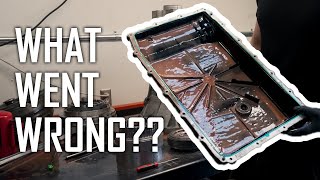
- If tests confirm a leak at the CDF drum, the transmission will need to be removed and disassembled for repair. 🎬 Watch: See a full 10R80 transmission removal and teardown.
Parts You'll Likely Need
- Main Control Valve Body Assembly
(OEM #L1MZ-7A100-C (for Hybrid/10R80-MHT))— This is the most common cause of P0771 on this platform, as identified by multiple manufacturer TSBs due to sticking valves.
Trusted brands: Motorcraft
OEM price range: $800-$1500
Aftermarket price range: $600-$1200 - CDF Clutch Cylinder / Drum Assembly
(OEM #L1MZ-7H351-B (Updated Part))— A known failure point where an internal sleeve moves, causing hydraulic leaks that trigger various shift codes, including P0771. This is a major internal repair.
Trusted brands: Motorcraft
OEM price range: $300-$500 - Automatic Transmission Fluid (Mercon ULV)
(OEM #XT-12-QULV)— Required for any repair involving the valve body or internal transmission components. The 10R80 is highly sensitive to the correct fluid type.
Trusted brands: Motorcraft
OEM price range: $10-$15 per quart
Aftermarket price range: $8-$12 per quart
Related Codes That Often Appear With This One
- P0751, P0756, P0761, P0766, P2700-P2708 — Ford/Lincoln groups P0771 with a large family of other shift solenoid and clutch performance codes in their TSBs because the root cause (faulty valve body or CDF drum leak) affects multiple hydraulic circuits at once.
- P0729, P0731-P0736 — These codes indicate incorrect gear ratios. They are often triggered alongside P0771 because the failure of a shift solenoid to operate correctly, or a loss of hydraulic pressure, directly leads to the transmission being in the wrong gear or slipping.
Technical Service Bulletins (TSBs) & Recalls
- TSB 20-2403: Addresses harsh/delayed shifts and a list of DTCs including P0771, pointing to sticking valves in the main control.
- TSB 24-2252: Supersedes earlier TSBs, providing diagnostic procedures for the moving CDF clutch cylinder sleeve on vehicles built on or before 15-Aug-2022.
- TSB 21-2434: For 2020-2022 models, also cites sticking valves in the main control for harsh shifts and DTCs.
- TSB 22-2428: A major bulletin, later superseded, that groups P0771 with dozens of other codes pointing to the valve body or CDF drum.
Platform-Specific Known Issues
- The 10R80 transmission used in the Aviator is the subject of numerous TSBs and a class-action lawsuit for harsh/erratic shifting, hesitation, and sudden gear changes.
- TSB 20-2403 specifically addresses harsh shifts and DTCs like P0771 on the 2020 Aviator, pointing to sticking valves in the main control body and prescribing a 'break-in' routine before replacement.
- Later TSBs like 24-2252 expand the diagnosis for vehicles built before mid-August 2022 to include potential hydraulic leaks from the CDF clutch cylinder sleeve, requiring more advanced diagnostics.
Mechanic-Grade Diagnostic Values
- Shift Solenoid (A-F) Resistance — expected: 5.0 - 5.4 Ohms at 68°F (20°C). Failure: A reading of infinite resistance (open circuit) or near zero ohms (short circuit).
- Transmission Fluid Temperature (for level check) — expected: 206°F - 215°F (97°C - 102°C). Failure: Checking the fluid level when it is too cold or too hot will result in an inaccurate reading, potentially masking a low-fluid condition.
Scan Tool Commands That Help
- Ford IDS/FDRS or FORScan: Clear Transmission Adaptive Tables — This service function erases the transmission's learned shift patterns. It is mandatory after replacing the valve body or the entire transmission to allow the TCM to relearn shift points with the new hardware. It can also be used as a temporary fix for harsh shifting, but the issue will return if a mechanical fault exists.
- Ford IDS/FDRS: PCM - Transmission Strategy Download — This is a mandatory programming function required when a new main control (valve body) or transmission assembly is installed. The technician must enter the 13-digit solenoid strategy number from the new part into the PCM/TCM for the transmission to function correctly.
- Ford IDS/FDRS: Solenoid Actuation Test — This bidirectional test allows a technician to command a specific solenoid on and off to see if it responds. While it can help identify a completely dead solenoid, it may not detect mechanical binding or hydraulic issues that cause performance codes like P0771.
- Ford IDS/FDRS: PCM - Transmission Accelerated Main Control Break In — This is a specific diagnostic routine mentioned in TSBs to attempt to free up sticking valves within the main control valve body before resorting to replacement.
Wiring & Ground Locations
- C175T — The main electrical connector on the transmission case.. This is the primary connection point for all solenoids and sensors within the transmission. Any corrosion, moisture, or pushed-out pins in this connector can cause an electrical fault for one or more solenoids, triggering codes like P0771.
- Battery Ground Cable — Connects the negative battery terminal to the vehicle's chassis/frame, typically on the front left side of the engine bay area.. A poor or corroded main ground connection can cause a variety of unpredictable electrical issues across the vehicle, including erratic behavior from control modules like the PCM/TCM, which could potentially lead to incorrect diagnostic codes.
Real Owner Repair Stories
- Mustang6G.com forum user (2019 Ford Mustang (shared 10R80 transmission), 21k miles) — Harsh engagements, delayed upshifts and downshifts, jolting on every shift.
❌ Tried (didn't work) Dealership reprogrammed the transmission., Dealership performed an overhaul on the valve body.
✅ What actually fixed it The user's issue was not resolved by the initial TSB-guided repairs (reprogram and valve body overhaul), indicating a deeper or recurring problem. The thread highlights the frustration of owners even when following official procedures, with other users suggesting checking for low fluid as a next step.
OEM Part Supersession History
Unknown, multiple prior revisions→L1MZ-7H351-B— The original CDF clutch cylinder/drum assembly was prone to an internal sleeve walking out of position, causing a major hydraulic leak. The updated part, L1MZ-7H351-B, features a machined lip that acts as a hard stop to prevent the sleeve from moving.
Heads up: Vehicles built on or before August 15, 2022, are prone to the original part's failure, as noted in TSB 24-2252. The updated part is the required fix.
Model Year Variations Within This Range
- 2020-2022: Vehicles built on or before August 15, 2022, are susceptible to the CDF clutch drum sleeve failure. TSB 24-2252 outlines the diagnostic and repair procedure for this specific issue, which involves replacing the drum with an updated part (L1MZ-7H351-B). Vehicles built after this date should have the updated component from the factory.
- 2021 (Hybrid): A specific TSB for the 10R80 MHT (Hybrid) transmission addresses a harsh 1-3 upshift or harsh electric-to-gas transition for vehicles built on or before April 23, 2021. The fix is a PCM software reprogram, indicating software logic differences for the hybrid powertrain.
Helpful Videos
We Have This Part in Stock


The information in this article is provided for general reference and educational purposes only. Vehicle specifications, procedures, and part compatibility can vary by production date, trim level, and region. Always consult your vehicle's factory service manual and verify part numbers before purchasing or performing repairs. Safety-critical components such as airbags, seat belts, and braking systems should be installed by a qualified professional.
- Lincoln AVIATOR:
- 🎬 Helpful Videos
- 🛍️ Shop This Part
- What's Unique About the 2020-2023 Lincoln AVIATOR
- Diagnostic Flowchart
- Symptoms You May Notice
- Most Likely Causes
- Rare But Worth Checking
- Diagnosis Steps
- Parts You'll Likely Need
- Related Codes That Often Appear With This One
- Technical Service Bulletins (TSBs) & Recalls
- Platform-Specific Known Issues
- Mechanic-Grade Diagnostic Values
- Scan Tool Commands That Help
- Wiring & Ground Locations
- Real Owner Repair Stories
- OEM Part Supersession History
- Model Year Variations Within This Range
- 🎟️ Get 5% Off