

P0767 on 2019-2023 Ford Ranger: Shift Solenoid 'D' Stuck On Causes and Fixes
On a 2019-2023 Ford Ranger, code P0767 indicates Shift Solenoid 'D' is stuck on, a serious issue for the 10R80 transmission. This code rarely points to a simple solenoid failure. Instead, it's a strong symptom of deeper, well-documented mechanical or hydraulic problems, primarily a faulty main valve body or a failed CDF clutch drum. Ford has issued multiple Technical Service Bulletins (TSBs) addressing these root causes. Repair is complex, often requiring valve body replacement or a full transmi
- P0767 on a 2019-2023 Ranger indicates a serious transmission problem, not just a simple sensor failure.
- The root cause is often a faulty main valve body or a mechanical failure of the CDF clutch drum, both known issues with the 10R80 transmission.
- Do not simply replace the shift solenoid; a full diagnosis is required to find the true cause.
- This is not a DIY-friendly repair. Seek a qualified transmission specialist who is familiar with the Ford 10R80.
- Check for other transmission codes, as P0767 rarely appears alone when the cause is mechanical.
What's Unique About the 2019-2023 Ford RANGER
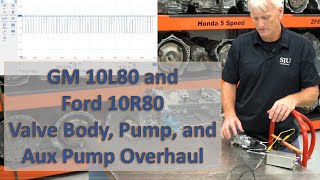
The 2019-2023 Ford Ranger uses the 10-speed 10R80 automatic transmission, which is shared with other popular Ford vehicles like the F-150 and Mustang. While P0767 can be an electrical or solenoid issue on any vehicle, on this specific platform, it is frequently a symptom of a larger mechanical problem. Ford has issued multiple Technical Service Bulletins (TSBs) for harsh or delayed shifting associated with a wide range of transmission codes, including P0767. These issues often trace back to two primary, well-documented failures: sticking valves within the main control valve body 🎬 Watch: A complete overhaul of the 10R80 valve body and pump. or the axial movement of a sleeve inside the CDF (Clutch D/F) clutch drum. This sleeve movement uncovers hydraulic passages, causing a significant pressure loss that triggers solenoid and gear ratio diagnostic codes.
Diagnostic Flowchart
Tap your situation to follow the diagnostic path that matches what you're seeing on this vehicle.
Symptoms You May Notice
- Harsh or delayed shifts between gears, particularly noted by some owners on 3-4 or 3-5 shifts.
- Transmission gets stuck in one gear or feels like it's in neutral between shifts.
- Delayed or harsh engagement when shifting from Park to Drive or Reverse.
- Illuminated Malfunction Indicator Lamp (Check Engine Light).
- Vehicle enters 'limp mode,' limiting power and available gears.
- Transmission overheating, with fluid temperatures consistently over 210°F during normal driving.
- A noticeable 'flare' or slip where RPMs jump briefly during a shift.
- Clunky or jerky downshifts, sometimes described as feeling like being lightly rear-ended.
- Replacing only Shift Solenoid 'D' without inspecting the valve body or CDF drum. The solenoid code is often a symptom of the underlying hydraulic or mechanical failure.
- Performing a transmission fluid flush without addressing the root cause of the contamination (e.g., failing clutches from the CDF drum issue).
Most Likely Causes
- Faulty Main Control Valve Body 🔴 High Probability The 10R80 transmission is known for valve body issues, including cross-leaks and sticking valves (specifically the TCC valve), which can cause pressure losses and trigger solenoid codes. Ford's TSBs for these symptoms often lead to valve body replacement as a primary corrective action.
How to confirm: A technician will use a high-end scan tool (like Ford's FDRS) to monitor solenoid commands versus the actual gear state and review transmission data. A detailed pressure test and inspection of the valve body for scoring or damage after dropping the pan are also key steps.
Typical fix: Replacement of the entire main control valve body assembly with an updated part. This is often done as a complete unit including solenoids.
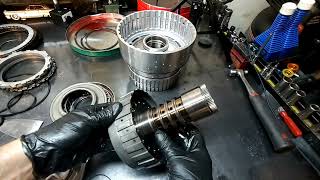
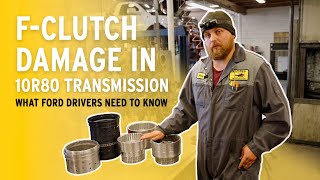
Est. part cost: $800-$1500 - Internal CDF Clutch Drum Failure 🔴 High Probability A widely documented weakness in the 10R80 transmission is the CDF (Clutch D/F) drum. An internal sleeve can 'walk' or shift out of position, exposing fluid passages and causing a major hydraulic leak. This leads to pressure loss for multiple clutch packs, resulting in erratic shifting, flares, and various DTCs, including P0767. Ford has released updated drum designs with a machined lip to prevent the sleeve from moving.
How to confirm: This is a diagnosis of exclusion requiring transmission disassembly. If the valve body and electronics are confirmed good, the transmission must be removed and opened to inspect the CDF drum for a shifted sleeve. Significant metal shavings or clutch material in the transmission pan are a strong indicator of this level of internal failure.
Typical fix: Complete transmission disassembly to replace the CDF drum with an updated part. Aftermarket solutions also exist to repair a damaged drum. Often, a full transmission rebuild or replacement is the most practical approach.
Est. part cost: $300-$500 for the drum, but labor is extensive (10+ hours). - Low or Contaminated Transmission Fluid 🟡 Medium Probability
How to confirm: Check the transmission fluid level and condition per the owner's manual. The fluid must be Motorcraft MERCON ULV. It should be bright red and not smell burnt. Dark, burnt fluid or fluid with a glittery appearance (metal particles) indicates a severe internal problem, likely related to the CDF drum or other clutches.
Typical fix: Perform a transmission fluid drain and fill. If the fluid is heavily contaminated, a full flush may be attempted, but internal damage is likely already present and this will not be a permanent fix.
Est. part cost: $150-$300 for fluid and filter. - Failed Shift Solenoid 'D' ⚪ Low Probability
How to confirm: A technician can use a multimeter to check the solenoid's resistance (typically 10-25 ohms for on/off solenoids). It can also be commanded on/off with a scan tool to verify mechanical function. This requires dropping the transmission pan and accessing the valve body.
Typical fix: Replace the individual shift solenoid. However, this is often not the root cause on the 10R80 and may only be a temporary fix if the underlying valve body or CDF drum issue is not addressed.
Est. part cost: $50-$150
Rare But Worth Checking
- Wiring Harness Damage: The internal transmission wiring harness can become brittle from heat cycles or damaged during service, leading to shorts or open circuits that can cause a solenoid to stick on.
- Faulty Transmission Control Module (TCM): In rare cases, the driver circuit within the TCM can fail, sending a constant voltage to the solenoid. This usually requires replacing and reprogramming the TCM.
Diagnosis Steps
- Verify the transmission fluid level is correct and inspect the fluid's condition for darkness, a burnt smell, or metal shavings. The correct fluid is MERCON ULV.
- Use a professional OBD-II scanner (Ford FDRS recommended) to check for other pending or active transmission-related codes and to review live data.
- Review applicable Technical Service Bulletins (TSBs like 22-2428, 24-2046) to see if the specific symptoms and code patterns match known issues.
- Inspect the external transmission wiring harness and connectors for any visible damage, corrosion, or loose connections.
- Perform a transmission pressure test to check for low line pressure, which could indicate a failing pump or major internal leak from the CDF drum.
- Drop the transmission pan to access the valve body. Inspect the fluid and pan magnet for excessive debris ('glitter' is a bad sign).
- Test the resistance of Shift Solenoid 'D' with a multimeter and command it with a scan tool to check for an audible click.
- If other tests are inconclusive and symptoms persist, the transmission must be removed for inspection of the CDF drum for a shifted internal sleeve.
Parts You'll Likely Need
- Transmission Main Control Valve Body
(OEM #HL3Z-7A100-B, JL3Z-7A100-B (Part number varies by specific vehicle configuration and build date, always verify with VIN).)— This is the most common fix for a cluster of shifting issues and solenoid codes on the 10R80 transmission, addressing potential hydraulic leaks and sticking valves.
Trusted brands: Motorcraft
OEM price range: $1000-$1500
Aftermarket price range: $800-$1200 - Transmission Overhaul Kit / Rebuild Kit — If the CDF drum has failed, a full rebuild is necessary. A kit includes new clutches, steels, seals, and gaskets required for the job.
Trusted brands: Motorcraft
OEM price range: $500-$900
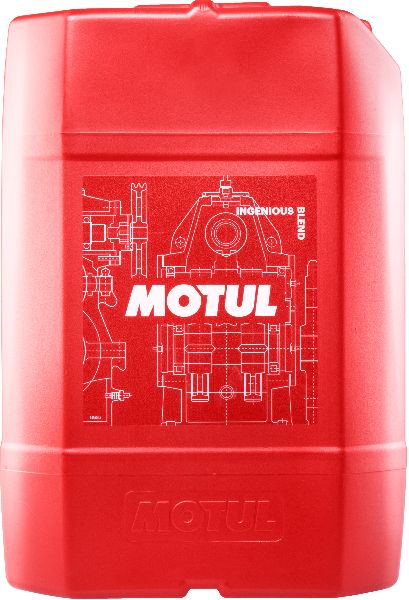
Aftermarket price range: $400-$700 - Motorcraft MERCON ULV Automatic Transmission Fluid
(OEM #XT-12-QULV)— This is the required fluid for any service on the 10R80 transmission. Using the correct fluid is critical for proper operation of the solenoids and clutches.
Related Codes That Often Appear With This One
- P0751, P0756, P0761, P0766 — These are codes for other shift solenoids ('A', 'B', 'C', 'E'). When multiple solenoid codes appear together, it strongly points to a systemic issue like a faulty valve body, low fluid, or major internal failure, rather than multiple individual solenoids failing at once. The provided TSBs list these codes together.
- P0729, P0731-P0736 — These codes indicate incorrect gear ratios. They often accompany solenoid codes because if a solenoid is stuck, the transmission cannot achieve the correct gear, causing a mismatch between the commanded gear and the actual gear ratio detected by the sensors.
Technical Service Bulletins (TSBs) & Recalls
- TSB 22-2428: Supersedes several previous TSBs and addresses harsh/delayed shifts and engagements for a wide range of Ford vehicles with the 10R80, including the 2019-2023 Ranger. It explicitly mentions that the cause may be software, sticking valves in the main control body, or axial movement of the CDF clutch cylinder sleeve.
- TSB 24-2046: A newer bulletin that also covers harsh/delayed shifts on the 2019-2023 Ranger, pointing to the same potential causes: solenoid strategy, sticking valves in the valve body, and CDF clutch cylinder sleeve movement.
- TSB 20-2117: Specifically addresses DTCs P0741 and P1744 on earlier 10R80 models due to a sticking TCC valve, with the prescribed fix being a main control valve body replacement. While for different codes, it establishes the precedent of valve body failure.
Platform-Specific Known Issues
- Owner Experience with CDF Drum Failure: A user on Reddit with a 2018 F-150 (same 10R80 transmission) at 145k miles experienced 'crazy shift problems.' After a fluid relearn and valve body replacement didn't work, the issue was diagnosed as the CDF drum sleeve having moved, which was confirmed by TSB 22-2428.
- Forum Discussion on Ranger5G.com: A 2019 Ranger owner with 62,000 miles reported harsh shifting from 1st to 3rd and getting stuck in 4th gear. Another forum member suggested this sounds like a 'true CDF Bushing slip' requiring a rebuild or new transmission.
- Cold Weather Shifting: Multiple owners on Ranger5G.com report that harsh shifting, particularly in lower gears (1-2, 3-4), is much more pronounced or only occurs when the transmission is cold. While some of this is related to the adaptive learning strategy, it can also be an early symptom of the more serious mechanical issues.
Mechanic-Grade Diagnostic Values
- Shift Solenoid (A-F) Resistance — expected: Approximately 5.0 Ohms. Failure: A reading significantly higher or lower than 5.0 Ohms, or an open circuit (infinite resistance).
Scan Tool Commands That Help
- Ford IDS/FDRS, FORScan: Clear Transmission Adaptive Tables — This function must be performed after replacing the valve body or rebuilding the transmission. It resets the learned hydraulic parameters, allowing the TCM to relearn clutch fill times and pressures with the new components.
- Ford IDS/FDRS: Adaptive Learning Drive Cycle — This is a specific, multi-step driving procedure that must be followed after clearing the adaptive tables. It involves a sequence of gentle accelerations, stops, and gear selections to allow the TCM to properly learn the characteristics of the transmission. Failure to perform this procedure can result in continued harsh shifting even after repairs are made.
Wiring & Ground Locations
- C175T — The main electrical connector at the transmission case.. This connector is the primary interface between the main vehicle harness and the transmission's internal components, including all solenoids. Damage or corrosion here can cause numerous transmission codes.
- C175T, Pin 10 — Pin 10 on the main transmission connector (C175T).. According to wiring diagrams, this specific pin carries the control signal for Shift Solenoid 'D' (SSD). A technician can test for voltage and continuity at this pin to diagnose issues with the wiring harness or the solenoid driver in the TCM without opening the transmission.
Real Owner Repair Stories
- Reddit user on r/f150 (2018 Ford F-150 EcoBoost with 145k miles (Same 10R80 transmission and known issues)) — Crazy shift problems, floating between gears then slamming into others.
❌ Tried (didn't work) Transmission relearn procedure, Valve body replacement
✅ What actually fixed it The user ultimately diagnosed a failed CDF drum, referencing TSB 22-2428. The previous attempts did not work because the root cause was the major mechanical failure of the drum, not just the valve body.
OEM Part Supersession History
HL3Z-7A100-B→JL3Z-7A100-B / JL3Z-7A100-C (Varies by column or electronic shift)— Superseded parts were released to address issues with sticking valves (specifically the TCC valve) and hydraulic cross-leaks within the main control valve body.
Heads up: Always use the latest part number specified for the vehicle's VIN and configuration (e.g., column shift vs. electronic shift). Installing the wrong version can lead to operational issues.
Model Year Variations Within This Range
- 2019 - Mid-2022: Transmissions built on or before August 15, 2022, are more susceptible to the CDF clutch drum internal sleeve walking out of position. Later production models (late 2022 and 2023) received an updated CDF drum with a machined lip or staked sleeve to prevent this movement, making the failure less common on the newest vehicles in this range.
Helpful Videos
We Have This Part in Stock


The information in this article is provided for general reference and educational purposes only. Vehicle specifications, procedures, and part compatibility can vary by production date, trim level, and region. Always consult your vehicle's factory service manual and verify part numbers before purchasing or performing repairs. Safety-critical components such as airbags, seat belts, and braking systems should be installed by a qualified professional.
- Ford RANGER:
- 🎬 Helpful Videos
- 🛍️ Shop This Part
- What's Unique About the 2019-2023 Ford RANGER
- Diagnostic Flowchart
- Symptoms You May Notice
- Most Likely Causes
- Rare But Worth Checking
- Diagnosis Steps
- Parts You'll Likely Need
- Related Codes That Often Appear With This One
- Technical Service Bulletins (TSBs) & Recalls
- Platform-Specific Known Issues
- Mechanic-Grade Diagnostic Values
- Scan Tool Commands That Help
- Wiring & Ground Locations
- Real Owner Repair Stories
- OEM Part Supersession History
- Model Year Variations Within This Range
- 🎟️ Get 5% Off