

P0767 on 2018-2023 Ford Mustang: Shift Solenoid 'D' Stuck On Causes and Fixes
P0767 on a 2018-2023 Mustang with the 10-speed 10R80 automatic transmission almost always indicates a known internal transmission issue. The most common fix is replacing the entire main control valve body, a repair guided by multiple Ford Technical Service Bulletins (TSBs). Expect a shop cost of $1,500-$3,000+. This is a widespread issue affecting many Ford models with the 10R80 transmission.
- P0767 on a 2018-2023 Mustang is a serious code that points to a well-known issue with the 10R80 10-speed automatic transmission.
- Do not assume it's just a single bad solenoid. The root cause is almost always the main control valve body, as documented in multiple Ford TSBs.
- This is not a simple or cheap fix. It requires specialized knowledge and is not recommended for a DIY mechanic without transmission repair experience.
- Always use the specified Motorcraft MERCON ULV fluid. The wrong fluid can cause severe damage.
- When getting a repair quote, ask if the fix addresses the issues mentioned in the latest Ford TSBs for the 10R80 transmission.
What's Unique About the 2018-2023 Ford MUSTANG
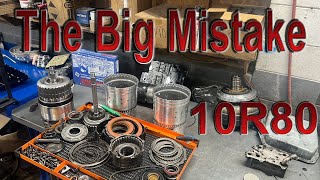
The 2018-2023 Mustang uses the Ford 10R80 10-speed automatic transmission, which is known for experiencing a range of shifting problems. 🎬 Watch: A breakdown of the four most common 10R80 failures. Code P0767 is rarely an isolated failure of just the 'D' solenoid. Instead, it's typically a symptom of a larger, well-documented problem with the transmission's main control valve body or the CDF clutch drum. Ford has issued numerous Technical Service Bulletins (TSBs) that group P0767 with many other transmission codes, all pointing toward a common repair: replacing the entire valve body assembly. The widespread nature of these issues has also led to class-action lawsuits against Ford.
Diagnostic Flowchart
Tap your situation to follow the diagnostic path that matches what you're seeing on this vehicle.
Symptoms You May Notice
- Harsh or delayed shifts, particularly between 3rd, 4th, and 5th gears.
- Harsh or delayed engagement into Drive or Reverse.
- Transmission getting stuck in one gear (limp mode).
- Illuminated Malfunction Indicator Lamp (Check Engine Light).
- Illuminated Powertrain Malfunction (Wrench) Light.
- Vehicle jerking, lunging, or clunking between gears.
- A flare or slip in RPMs during shifts.
- Transmission overheating.
- Replacing only the individual Shift Solenoid 'D' instead of the entire valve body assembly. The TSBs and common field experience indicate the problem usually lies within the valve body itself (sticking valves, cross-leaks), and replacing a single solenoid is often an incomplete and temporary fix.
- Performing only a fluid flush. While dirty fluid can cause issues, if the code is present with other drivability symptoms, it usually indicates a mechanical fault has already occurred that a fluid change alone will not resolve.
Most Likely Causes
- Faulty Main Control Valve Body 🔴 High Probability The 10R80 transmission is known for issues with sticking valves and cross-leaks within the main control body, as documented in numerous Ford TSBs. Debris or internal wear can cause solenoids or valves to malfunction, leading to pressure losses and erratic shifting.
How to confirm: A technician will follow the diagnostic procedure outlined in Ford TSBs like 24-2176. This often involves checking for a wide array of related transmission codes and, in some cases, performing specific hydraulic pressure tests on the valve body.
Typical fix: Replace the entire main control valve body assembly with the latest revised part. This is the official Ford-recommended repair for this pattern of failure. The new valve body must be programmed to the vehicle's computer.
Est. part cost: $600-$1000 - Low or Contaminated Transmission Fluid 🟡 Medium Probability While not specific to this platform, low fluid levels can cause pressure drops and shifting issues in any automatic transmission. Contaminated or burnt fluid can cause valves and solenoids to stick.
How to confirm: Check the transmission fluid level and condition. The 10R80 has a specific check procedure, often requiring the vehicle to be at operating temperature. The fluid should be at the correct level and appear clean and red (MERCON ULV is red), not dark, burnt-smelling, or full of debris.
Typical fix: Perform a transmission fluid and filter change using only the specified Motorcraft MERCON ULV fluid. This is a good first step but may not solve an underlying mechanical issue like a faulty valve body or CDF drum.
Est. part cost: $120-$250 for 10-12 quarts of fluid. - Internal Transmission Mechanical Failure (CDF Drum) ⚪ Low Probability Early 10R80 transmissions had a known issue with a bushing/sleeve in the CDF (Clutch 'D'/'F') drum that could walk out of position, uncovering fluid passages and causing a seal to fail. This leads to pressure loss and severe shifting problems. Ford TSBs address this specific failure.
How to confirm: This requires significant transmission disassembly to inspect the CDF clutch cylinder sleeve. This is typically diagnosed after a valve body replacement does not fix the issue. The updated Ford part has a machined lip to prevent the sleeve from moving.
Typical fix: Requires a partial or full transmission rebuild to replace the CDF clutch drum with an updated part (Part number JL3Z-7H351-B was an early update). This is an extensive and expensive repair.
Est. part cost: $400-$800 for the part, but labor is extensive.
Rare But Worth Checking
- Wiring Harness or Connector Issue: Damage to the transmission wiring harness or the main connector could cause a short or open circuit to the solenoid, but this is far less common than the widespread internal mechanical and hydraulic faults of the 10R80.
- Faulty Powertrain/Transmission Control Module (PCM/TCM): While a failed control module driver circuit can cause a solenoid to be stuck on, it is extremely rare compared to the mechanical issues in the 10R80 transmission. Module failure should only be considered after all other possibilities are exhausted.
Diagnosis Steps
- Check and verify the transmission fluid level and condition. Ensure the fluid is clean, at the proper level, and does not smell burnt. This is a critical first step.
- Use an OBD-II scanner to check for any other accompanying transmission-related trouble codes. The presence of multiple solenoid or gear ratio codes is a key indicator of the common 10R80 failure pattern.
- Consult Ford Technical Service Bulletins (TSBs) like TSB 24-2176, TSB 23-2250, and their predecessors to see if the vehicle's symptoms and codes match the known issue.
- Using a professional scan tool, command the shift solenoids on and off to check their electrical response and monitor solenoid data.
- Inspect the transmission wiring harness and connectors for any visible damage, corrosion, or loose connections, particularly the main connector at the transmission case.
- If fluid is good and TSBs apply, the next step is to drop the transmission pan and replace the main control valve body assembly.
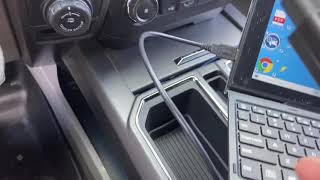
- After replacement, the new solenoid body strategy ID must be programmed into the PCM/TCM using a Ford-specific diagnostic tool (like FDRS) or a capable aftermarket tool like FORScan. 🎬 Watch: How to program the solenoid strategy using FORScan.
- Finally, the transmission adaptive learning tables must be reset, followed by a specific relearn drive cycle to allow the transmission to adapt to the new components.
Parts You'll Likely Need
- Transmission Main Control Valve Body Assembly
(OEM #JL3Z-7A100-D (supersedes JL3Z-7A100-B))— This is the most common failure point for this code on the 10R80 transmission, as identified in multiple Ford TSBs. The entire assembly, including solenoids, is replaced as a unit. Part number JL3Z-7A100-B has been superseded by JL3Z-7A100-D.
Trusted brands: Motorcraft (Ford OEM)
OEM price range: $700-$1100
Aftermarket price range: $500-$800 - Motorcraft MERCON ULV Automatic Transmission Fluid
(OEM #XT-12-QULV)— This is the only fluid specified for the 10R80 transmission. Using any other type of fluid can cause damage. A valve body replacement requires draining and refilling approximately 10-11 quarts of fluid.
Trusted brands: Motorcraft
OEM price range: $10-$18 per quart - Transmission Pan Gasket
(OEM #BL3Z-7A191-C)— The transmission pan must be removed to access the valve body, and the gasket is typically a one-time-use part that should be replaced to prevent leaks.
Trusted brands: Motorcraft, Fel-Pro
OEM price range: $30-$50
Aftermarket price range: $20-$40
Related Codes That Often Appear With This One
- P0751, P0756, P0761, P0766, P2700-P2708 — These are all shift solenoid and clutch performance codes for the 10R80 transmission. The presence of multiple codes from this list strongly points to the common valve body failure described in Ford's TSBs.
- P0729, P0731-P0736 — These codes indicate incorrect gear ratios. They often accompany solenoid performance codes when the transmission fails to achieve the commanded gear, which is a direct consequence of a malfunctioning valve body or internal clutch circuit.
Technical Service Bulletins (TSBs) & Recalls
- TSB 24-2176: Supersedes previous bulletins, addresses harsh/delayed shifts and a long list of DTCs including P0767, pointing to software, valve body, or CDF clutch cylinder issues.
- TSB 23-2250: An earlier bulletin that also supersedes previous versions, covering a wide range of models and years with the 10R80, listing the same DTCs and symptoms.
- TSB 22-2428: An earlier version of the bulletin for harsh/delayed shifts on 10R80 transmissions, also listing P0767 as a potential DTC.
Platform-Specific Known Issues
- Ford has issued a series of superseding TSBs over several years to address the harsh/delayed shifting issues in the 10R80 transmission, indicating an evolving understanding and repair process for the problem. TSB 24-2176 is one of the latest, covering software, valve body, and CDF clutch cylinder issues.
Mechanic-Grade Diagnostic Values
- Shift Solenoid Resistance (General Ford, not 10R80 specific) — expected: 22-40 Ohms. Failure: Readings significantly outside this range, such as 4 or 11 Ohms, indicate a faulty solenoid.
- Solenoid Connector Voltage (Key On) — expected: 12V only when commanded by the TCM.. Failure: A constant 12V reading at the solenoid connector indicates a stuck-on driver in the TCM or a shorted solenoid.
Hidden / Shadow Codes Worth Checking
- P163E / P163F: These codes indicate a Transmission Solenoid Body Identification/Strategy data mismatch or corruption. They often appear after replacing a valve body without correct programming or if a tuning file corrupts the data. (see via Standard OBD-II scanner, often appears after loading a custom tune or incorrect programming attempt.)
Scan Tool Commands That Help
- Ford IDS/FDRS or FORScan: PCM – Transmission Strategy Download / Transmission Characterization Update — This function is mandatory after replacing the main control valve body. It is used to write the 13-digit solenoid body strategy number from the new part into the vehicle's control module. Failure to do this will result in poor shifting and other fault codes.
- Ford IDS/FDRS or FORScan: Clear Transmission Adaptive Tables — This should be performed after replacing the valve body and programming the new strategy. It resets the transmission's learned shift patterns, allowing it to perform an adaptive learning drive cycle with the new hardware.
- Ford IDS/FDRS: Adaptive Learning Drive Cycle — After clearing the adaptive tables, a specific drive cycle must be performed to allow the transmission to learn the unique parameters of the new valve body for optimal shift quality.
Wiring & Ground Locations
- Solenoid Strategy ID Sticker — A tag/sticker on the driver's side of the transmission case. A new tag is also supplied with the replacement valve body kit.. This sticker contains the mandatory 13-digit solenoid body strategy number and 12-digit ID that must be programmed into the PCM/TCM after a valve body replacement.
- Engine-to-Frame Ground Strap — On many Mustangs, a primary ground strap connects from the engine block (often near a motor mount) to the vehicle's frame/chassis on the driver's side.. While not a primary cause for this specific code, a poor engine or transmission ground can cause a wide range of phantom electrical issues and erratic behavior from control modules and sensors. Ensuring this ground is clean and secure is a fundamental electrical diagnostic step.
Real Owner Repair Stories
- Reddit user in r/f150 (2019 F-150 2.7L (10R80 Transmission)) — Initially harsh upshifts/downshifts. Later developed a 2-3 second delay when shifting from Park to Drive or Reverse.
❌ Tried (didn't work) A PCM reflash and replacement of some parts per a TSB initially addressed the harsh shifting but not the engagement delay.
✅ What actually fixed it The engagement delay was fixed by replacing the CDF drum. However, this was followed by very hard shifts into 3rd gear, which was then resolved by replacing the valve body assembly. The user noted the transmission still had noticeable shifts during cold starts a year later.
OEM Part Supersession History
HL3Z-7H351-A, JL3Z-7H351-A→JL3Z-7H351-B (and later revisions)— The original CDF clutch drum design had a sleeve/bushing that could 'walk' out of position, exposing hydraulic passages and causing pressure loss. The updated part has a machined lip to prevent this movement.
Heads up: Vehicles built on or before August 15, 2022, may have the original, failure-prone CDF drum design.
Model Year Variations Within This Range
- 2018-2022: Mustang models built on or before August 15, 2022, are specifically called out in TSBs as being at risk for the CDF clutch cylinder sleeve failure. Vehicles built after this date are expected to have the updated drum with a machined lip that prevents the sleeve from moving.
Helpful Videos

We Have This Part in Stock


The information in this article is provided for general reference and educational purposes only. Vehicle specifications, procedures, and part compatibility can vary by production date, trim level, and region. Always consult your vehicle's factory service manual and verify part numbers before purchasing or performing repairs. Safety-critical components such as airbags, seat belts, and braking systems should be installed by a qualified professional.
- Ford MUSTANG:
- 🎬 Helpful Videos
- 🛍️ Shop This Part
- What's Unique About the 2018-2023 Ford MUSTANG
- Diagnostic Flowchart
- Symptoms You May Notice
- Most Likely Causes
- Rare But Worth Checking
- Diagnosis Steps
- Parts You'll Likely Need
- Related Codes That Often Appear With This One
- Technical Service Bulletins (TSBs) & Recalls
- Platform-Specific Known Issues
- Mechanic-Grade Diagnostic Values
- Hidden / Shadow Codes Worth Checking
- Scan Tool Commands That Help
- Wiring & Ground Locations
- Real Owner Repair Stories
- OEM Part Supersession History
- Model Year Variations Within This Range
- 🎟️ Get 5% Off