

P0766 on 2018-2023 Ford Mustang: Shift Solenoid 'D' Causes and Fixes
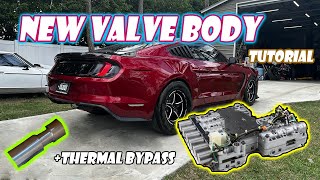
On 2018-2023 Ford Mustangs with the 10R80 transmission, P0766 is almost always caused by a known issue with the main control valve body. The official fix, outlined in Ford TSBs, is to overhaul or replace the valve body assembly, which is a costly, labor-intensive repair. A secondary, but also common, cause is a failure of the CDF clutch drum.
- P0766 on a 2018-2023 Mustang is a serious transmission code indicating a problem with Shift Solenoid 'D'.
- The most likely cause is not the solenoid itself, but a known issue with the main control valve body in the 10R80 transmission, as documented by Ford.
- Symptoms include harsh shifting, delayed gear engagement, and the check engine light.
- Repair is complex and expensive, typically involving the replacement of the entire valve body assembly and requiring professional service.
- Check for applicable TSBs with your dealer, as they provide a clear diagnostic path for this known issue.
What's Unique About the 2018-2023 Ford MUSTANG
The 2018-2023 Mustang uses the 10-speed 10R80 automatic transmission, which is known for specific issues related to its complex valve body and internal components. Ford has issued multiple Technical Service Bulletins (TSBs) acknowledging that symptoms like harsh or delayed shifts, accompanied by a host of codes including P0766, are often due to sticking valves within the main control valve body. 🎬 Watch: A breakdown of Ford's harsh shifting TSB for the 10R80. Another significant, documented issue is the axial movement or failure of the CDF clutch cylinder (drum), which can cause severe shifting problems and may also trigger this code. These known mechanical failure points make a faulty valve body or CDF drum a much more common cause on this platform than a simple solenoid failure.
Diagnostic Flowchart
Tap your situation to follow the diagnostic path that matches what you're seeing on this vehicle.
Symptoms You May Notice
- Harsh or delayed shifts, particularly 1-2 and 3-4/3-5 upshifts.
- Jerky or clunky gear changes.
- Transmission slipping between gears.
- Vehicle enters "limp mode," restricting gear selection.
- Illuminated Malfunction Indicator Lamp (Check Engine Light).
- Failure to engage reverse or forward gears, vehicle may not move.
- Increased fuel consumption.
- A buzzing or vibration from the transmission at low RPM.
- Replacing only the 'D' solenoid when the root cause is a sticking valve or blocked passage in the main valve body.
- Replacing the entire transmission when only the valve body is faulty.
- Performing a fluid change without addressing the underlying mechanical issue in the valve body or CDF drum.
Most Likely Causes
- Faulty Main Control Valve Body 🔴 High Probability Ford TSBs TSB 24-2176, TSB 24-2046, and others specifically identify sticking valves in the main control as a primary cause for a group of codes including P0766 on the 10R80 transmission. Debris or wear can cause spool valves to bind within their bores.
How to confirm: A technician will follow the diagnostic path in the relevant TSB, which involves checking DTCs, fluid, and may require valve body removal for inspection or replacement.
Typical fix: Overhaul or complete replacement of the main control valve body assembly. A PCM/TCM software update and adaptive learning procedure is required after replacement.
Est. part cost: $800-$1500 - CDF Clutch Drum Failure 🔴 High Probability A widely documented failure on the 10R80 is the sleeve within the CDF (Clutch D/F) drum migrating out of position. This exposes fluid passages, causing pressure loss and erratic shifting. Ford has released updated parts to correct this design flaw.
How to confirm: This requires transmission disassembly to visually inspect the CDF drum. Symptoms often include severe shifting issues between gears 3, 4, and 5.
Typical fix: Replacement of the CDF drum with the updated part (Part No. JL3Z-7H351-B). 🎬 See why the CDF hub fails and how the updated part fixes it. This is a major repair requiring transmission removal and overhaul.
Est. part cost: $250-$400 for the drum itself, but labor is extensive. - Low or Contaminated Transmission Fluid 🟡 Medium Probability Dirty or low fluid can cause poor hydraulic pressure and lead to solenoid and valve body issues. Many 10R80 transmissions have reportedly been under-filled from the factory.
How to confirm: Check the transmission fluid level and condition. The fluid should be at the correct level when at operating temperature (180-195°F), red in color, and not smell burnt.
Typical fix: Perform a transmission fluid and filter change using the correct Motorcraft MERCON ULV fluid. A full fluid exchange is recommended over a simple drain and fill.
Est. part cost: $100-$200 - Faulty Shift Solenoid 'D' ⚪ Low Probability While the solenoid itself can fail, it's more common for the issue to be within the larger valve body assembly or the CDF drum on this platform. The code often points to a mechanical or hydraulic issue rather than an electrical solenoid failure.
How to confirm: A technician can test the solenoid's resistance with a multimeter after accessing the valve body. This is rarely the root cause.
Typical fix: Replace the individual shift solenoid. However, most shops will recommend replacing the entire valve body/solenoid pack assembly due to the high likelihood of a larger issue.
Est. part cost: $50-$150 for a single solenoid
Rare But Worth Checking
- Wiring Harness Issue: Damage to the wiring harness between the TCM and the transmission can cause communication errors, mimicking a solenoid failure. Check for corrosion or loose pins at the main transmission connector.
- Damaged Valve Body to Oil Pump Seal: Technicians on forums report that P0766 combined with P0756 (Solenoid B Stuck Off) and a no-move condition (no reverse, no forward) can be caused by a damaged, dislodged, or missing seal between the valve body and the oil pump, often occurring after a recent repair.
- Faulty Transmission Control Module (TCM): In rare cases, the TCM itself can fail, sending incorrect signals or falsely reporting a solenoid issue. This is uncommon and should be the last item to check.
Diagnosis Steps
- Verify the code with a professional OBD-II scanner that can read transmission codes.
- Check the transmission fluid level and condition. If the fluid is low, dark, or smells burnt, it indicates a problem that needs further investigation.
- Inspect the main transmission wiring harness connector for any signs of damage, corrosion, or loose pins.
- Consult Ford's Technical Service Bulletins (TSBs) for this specific code and vehicle. TSBs 24-2176, 24-2046, and 22-2428 are highly relevant and point towards a valve body or CDF drum issue.
- If initial checks are inconclusive, the transmission pan must be removed to access the valve body.
- Follow the diagnostic procedures in the relevant TSB, which will likely lead to testing and replacing the main control valve body assembly.
- If a valve body replacement does not resolve the issue or if symptoms are severe (e.g., harsh 3-5 shifts), further diagnosis points towards transmission removal to inspect the CDF clutch drum for sleeve migration.
Parts You'll Likely Need
- Transmission Main Control Valve Body Assembly
(OEM #JL3Z-7A100-C (or newer revision))— This is the most common failure point for the 10R80 transmission that causes code P0766, as documented in multiple Ford TSBs. Part numbers are frequently superseded.
Trusted brands: Motorcraft
OEM price range: $1000-$1500
Aftermarket price range: $600-$1200 - CDF Clutch Drum Assembly
(OEM #JL3Z-7H351-B)— The original CDF drum is prone to a sleeve failure causing major shifting issues. This is the updated part designed by Ford to permanently fix the issue.
Trusted brands: Motorcraft
OEM price range: $250-$400 - Motorcraft MERCON ULV Automatic Transmission Fluid
(OEM #XT-12-QULV)— This is the required fluid for the 10R80 transmission. A fluid and filter change is necessary when replacing the valve body or overhauling the transmission.
Trusted brands: Motorcraft
OEM price range: $15-$25 per quart - Transmission Filter and Pan Gasket — Should be replaced any time the transmission pan is removed for service.
Trusted brands: Motorcraft
OEM price range: $50-$100
Aftermarket price range: $30-$70
Related Codes That Often Appear With This One
- P0751, P0756, P0761, etc. — These are all codes for other shift solenoids ('A', 'B', 'C', etc.). Ford TSBs list a large group of these codes together as they all point to the same root cause: a faulty main control valve body. P0756 is commonly seen with P0766.
- P0729, P0731, P0732, etc. — These codes indicate incorrect gear ratios. They often appear with solenoid codes because a malfunctioning solenoid or hydraulic circuit prevents the transmission from achieving the correct gear, leading to a mismatch between engine speed and output speed.
Technical Service Bulletins (TSBs) & Recalls
- TSB 24-2176: Mentions P0766 in a list of DTCs related to harsh/delayed shifts.
- TSB 24-2046: Supersedes previous TSBs and lists P0766 as a potential code for harsh/delayed shifts due to sticking valves in the main control or axial movement of the CDF clutch cylinder sleeve.
- TSB 22-2428: An earlier TSB that also includes P0766 with other codes indicating a potential valve body or CDF drum issue.
- TSB 25-2018: Associates P0766 with harsh/delayed engagements and shifts.
- TSB 24-2254: Connects P0766 to harsh/delayed shifts and recommends a valve body repair.
Platform-Specific Known Issues
- Ford has released a series of Technical Service Bulletins (TSBs) for the 10R80 transmission used in 2018-2023 Mustangs. TSB 24-2176, TSB 24-2046, and TSB 22-2428 all mention that harsh/dela
Scan Tool Commands That Help
- FORScan or Ford IDS: Clear Transmission Adaptive Tables / Reset KAM — This service function is required after replacing the valve body, overhauling the transmission, or performing a fluid change. It erases the learned values that compensate for wear, allowing the TCM to start fresh.
- FORScan or Ford IDS: Adaptive Learning Drive Cycle — After clearing the adaptive tables, a specific drive cycle must be performed to allow the transmission to relearn shift pressures and timing correctly. This involves a sequence of light-throttle accelerations, stops, and gear selections.
- FORScan: Halt/Stop Use of Transmission Adaptive Learning — Some owners and shops choose to disable the adaptive learning feature to maintain a more consistent shift feel, especially after a valve body replacement. This prevents the TCM from re-learning habits that may have contributed to harsh shifting.
Wiring & Ground Locations
- C1575 / CONN-101387 — The main 26-pin electrical connector on the transmission case of the 10R80.. This is the primary interface between the TCM and all internal transmission electronics, including the shift solenoids. Any diagnosis of electrical faults for P0766 would involve checking for voltage, ground, and signal integrity at the pins corresponding to Shift Solenoid 'D' on this connector.
Real Owner Repair Stories
- Mustang6G.com user 'schmeky' (2018 Mustang GT, 21,000 miles (7,000 with supercharger)) — Began with a 5-6 shift flare at light throttle, progressed to hard 3-4 downshifts, and would bounce between 3rd and 4th gear in drag mode.
❌ Tried (didn't work) Initial symptoms were present before the final repair.
✅ What actually fixed it A new, VIN-appropriate Ford valve body was installed, a fluid/filter change was performed, the KAM (Keep Alive Memory) was reset, and the Adaptive Learning Strategy (ALS) was disabled using a 'halt' command. The user reported the transmission then drove and shifted perfectly. - Mustang6G.com user 'rsibs' (2018+ Mustang (year not specified)) — Lurching from reverse to drive, hard shifts from 2-1 and 6-5, and delayed upshifting.
❌ Tried (didn't work) User did not specify prior attempts.
✅ What actually fixed it The dealership service center was able to replicate the issue, diagnosed a faulty valve body, and replaced it. Another user in the same thread confirmed this was the fix for their identical symptoms.
OEM Part Supersession History
JL3Z-7A100-A→JL3Z-7A100-C— Updated valve body assembly to address issues with sticking valves and harsh shifting outlined in Ford TSBs.
Heads up: JL3Z-7A100-C is the current recommended replacement for earlier versions.HL3Z-7H351-A, JL3Z-7H351-A→JL3Z-7H351-B— The revised CDF clutch drum adds an integrated retention lip to prevent the internal bushing/sleeve from 'walking' out of position, which was a common failure causing major pressure loss.
Heads up: JL3Z-7H351-B is the definitive fix for the CDF drum sleeve migration issue and should be used in all repairs.
Model Year Variations Within This Range
- 2018-2020: Earlier models of the 10R80 are more frequently cited by owners for having harsh shifting and clunky behavior from the factory. While the core mechanical issues (valve body, CDF drum) span the entire 2018-2023 range, Ford issued numerous software updates and TSBs over the years to refine the transmission's adaptive learning and shift logic, which may have improved behavior in later models off the assembly line.
Helpful Videos


We Have This Part in Stock


The information in this article is provided for general reference and educational purposes only. Vehicle specifications, procedures, and part compatibility can vary by production date, trim level, and region. Always consult your vehicle's factory service manual and verify part numbers before purchasing or performing repairs. Safety-critical components such as airbags, seat belts, and braking systems should be installed by a qualified professional.
- Ford MUSTANG:
- 🎬 Helpful Videos
- 🛍️ Shop This Part
- What's Unique About the 2018-2023 Ford MUSTANG
- Diagnostic Flowchart
- Symptoms You May Notice
- Most Likely Causes
- Rare But Worth Checking
- Diagnosis Steps
- Parts You'll Likely Need
- Related Codes That Often Appear With This One
- Technical Service Bulletins (TSBs) & Recalls
- Platform-Specific Known Issues
- Scan Tool Commands That Help
- Wiring & Ground Locations
- Real Owner Repair Stories
- OEM Part Supersession History
- Model Year Variations Within This Range
- 🎟️ Get 5% Off