

OBD-II Code P0766: Shift Solenoid 'D' Performance or Stuck Off
What P0766 means, why it triggers, and how to fix it
- Code P0766 means the transmission's Shift Solenoid 'D' is not performing as commanded, locking the vehicle into a single gear or causing harsh shifts.
- Always check the transmission fluid level and condition first; dirty or low fluid is the leading cause of solenoid performance codes.
- Do not drive with an active P0766 code; continuing to drive overheats the transmission and turns a $300 repair into a $4,000 complete rebuild.
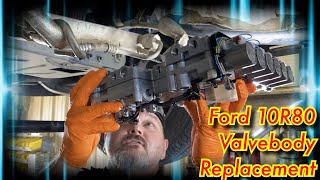
- On 2017+ Ford vehicles (F-150, Ranger, Mustang), P0766 almost always indicates a failed main control valve body or CDF clutch drum requiring a $1,500+ repair, not a simple bad solenoid.
What Does P0766 Mean?

Code P0766 means your Transmission Control Module (TCM) detects a problem with 'Shift Solenoid D'. This solenoid acts as an electronic gatekeeper for transmission fluid. When the TCM commands a gear change requiring Solenoid 'D', it monitors input and output speed sensors to confirm the shift. If the calculated gear ratio doesn't match the expected ratio, the computer concludes the solenoid is 'stuck off' or failing mechanically, triggering the code.
🎬 Watch: A quick guide to diagnosing and fixing P0766 errors.Technical definition: The SAE/OBD-II definition is "Shift Solenoid 'D' Performance or Stuck Off". The Transmission Control Module (TCM) detects the actual gear position (determined by comparing engine speed to output shaft speed) differs from the commanded gear position for the 'D' shift solenoid circuit. The TCM sends a pulse-width modulated (PWM) signal to the solenoid; if the expected mechanical ratio change is absent, it sets the fault.
Can I Drive With P0766?
No — Do Not Drive. Driving is not recommended. Your vehicle will likely enter 'limp mode,' locking it into a single gear (usually 2nd or 3rd), causing harsh, unpredictable shifts, or failing to move entirely. Continuing to drive causes a domino effect of damage, including accelerated clutch wear, valve body damage, and transmission overheating. This turns a moderate repair into a complete transmission rebuild costing thousands. Drive only as far as a repair facility.
Common Causes

- Low, dirty, or contaminated transmission fluid (Very Common) — This is the most frequent and easily checked cause. Old, burnt, or low fluid cannot provide the necessary hydraulic pressure for shifts. Contaminated fluid clogs the tiny passages in the solenoids and valve body, causing them to stick.
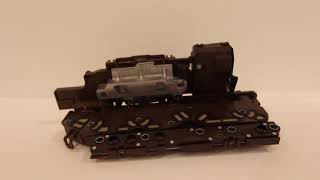
- Faulty transmission valve body (Common) — The valve body is the hydraulic control center housing the solenoids. Its intricate passages clog with debris, valves stick, or the body itself warps, causing pressure loss. On many modern Ford and GM vehicles, this is the primary cause of P0766.
- Faulty Shift Solenoid 'D' (Common) — The solenoid itself fails electrically (a burnt-out internal coil) or mechanically (a stuck internal plunger) from age and wear. This is a primary suspect when the fluid and wiring are in good condition.
- Wiring or electrical issues (Common) — A frayed wire, corroded connector pin, or a loose connection between the TCM and the solenoid interrupts the electrical signal, preventing the solenoid from activating and triggering the code.
- Clogged transmission filter (Common) — The transmission filter becomes clogged with clutch material and debris from normal wear. A clogged filter restricts fluid flow, starving the solenoids and pump of the pressure they need to operate.
- Internal mechanical transmission failure (Less Common) — Especially in certain Ford models, this code points to a deeper mechanical problem like a failed clutch pack, a faulty selectable one-way clutch (SOWC), or a failing CDF clutch drum, rather than a solenoid issue.
- Faulty transmission pump (Rare) — A failing transmission pump cannot generate the required hydraulic pressure to operate the clutches and bands. This system-wide low pressure mimics the symptoms of a faulty solenoid.
- Faulty Transmission Control Module (TCM) (Rare) — The computer that controls the transmission fails rarely. A faulty driver circuit within the TCM prevents it from sending the correct voltage to the solenoid. Consider this only after exhaustively ruling out all other possibilities.
Symptoms

- Harsh, delayed, or erratic shifting — The vehicle bangs into gear, hesitates noticeably before shifting, or shifts at incorrect times. This is the most common and obvious symptom.
- Transmission stuck in one gear or fails to shift (Limp Mode) — The TCM intentionally puts the transmission into a 'fail-safe' mode, remaining in a single gear (typically 2nd or 3rd) to prevent further damage. In severe cases, the vehicle refuses to move in Drive or Reverse.
- Check Engine Light or Transmission Warning Light is on — The TCM requests the illumination of the Check Engine Light (Malfunction Indicator Lamp) or a dedicated transmission warning light on your dashboard.
- Transmission slipping — The engine RPMs flare up without a corresponding increase in vehicle speed. This indicates the clutches are not engaging properly due to incorrect hydraulic pressure.
- Increased fuel consumption (also visible on scanner) — When the transmission cannot shift into the optimal gear for the current speed, the engine is forced to run at higher RPMs, significantly increasing fuel consumption.
Diagnostic Flowchart
Tap your situation to follow the diagnostic path that matches what you're seeing on this code.
Common Fixes & Costs
- Transmission Fluid and Filter Change — Parts: $50-$150, Labor: $100-$250, ~1.5 hr book time (DIY)
- Replace Transmission Valve Body — Parts: $700-$1500, Labor: $500-$1500, ~4.5 hr book time (Professional)
- Replace Shift Solenoid 'D' — Parts: $25-$100, Labor: $200-$500, ~3 hr book time (Intermediate)
- Repair Wiring Harness or Connector — Parts: $10-$50, Labor: $150-$400, ~2.5 hr book time (Intermediate)
- Replace or Rebuild Transmission — Parts: $2000-$4500, Labor: $1500-$2500, ~10 hr book time (Professional)
Used vs. New Parts: Buying Guide
When a used part is worth it: A used valve body or solenoid pack is a viable option for an older, high-mileage vehicle where the repair cost with a new part exceeds the car's value. It's a budget-conscious choice to keep a car running for another 1-2 years.
Donor-vehicle mileage cap: roughly under 100000 miles for the part to have meaningful remaining life.
Donor quality checklist:
- Verify the donor vehicle was not scrapped due to transmission failure.
- Match part numbers exactly; slight variations cause incompatibility.
- Obtain a part from a reputable salvage yard offering at least a 90-day warranty.
Decision logic:
- If Vehicle is less than 8 years old or has under 100k miles → Buy a new OEM or quality remanufactured part. The long-term reliability is worth the cost.
- If Vehicle is over 15 years old and budget is the primary concern → A used part is an acceptable risk, but understand its lifespan is unpredictable.
- If The part is a known high-failure item (like Ford 10R80 valve bodies) → Favor a new or remanufactured part updated to correct original design flaws.
Warranty tradeoff: Used parts typically come with a 30-90 day warranty covering the part only. A remanufactured part has a 1-3 year warranty that may include labor coverage. A new OEM part has a 12-month/12,000-mile warranty.
Worst-case if a used part fails: $800-$1500 if a used part fails after installation, as you pay for repeat labor plus another part.
What Happens If You Wait — Timeline
- 0-1 month: Check Engine Light is on. Shifting feels slightly off, with occasional hesitation or a slightly harsh shift. The issue is intermittent. (MPG impact: 0-5%% · Added cost: $0-$50 in wasted fuel.)
- 1-3 months: Shifting becomes consistently harsh and delayed. The transmission slips between gears. The vehicle enters 'limp mode' intermittently. Fluid begins to overheat and degrade. (MPG impact: 5-15%% · Added cost: $200-$500 in accelerated clutch wear and degraded fluid.)
- 3-6 months: Slipping and harsh shifting cause significant wear on internal clutch packs. Burnt clutch material contaminates the fluid, clogging the filter and valve body passages, starving the system of pressure. (MPG impact: 15-25%% · Added cost: $1,500-$3,000 as the problem escalates to requiring a valve body replacement or major internal repair.)
- 6+ months: Catastrophic internal failure. The transmission fails to engage any gear, leaving the vehicle stranded. Widespread damage to clutches, bands, and hard parts occurs. A complete rebuild is the only option. (MPG impact: N/A (Vehicle may be undrivable)% · Added cost: $3,500-$7,000+ for a replacement or rebuilt transmission.)
Cost of Not Fixing It
- 0-1 month: Continued harsh shifting, potential to be stranded by 'limp mode', and a 5-15% drop in fuel economy. (Added cost: $50-$150 in extra fuel costs.)
- 1-6 months: Accelerated wear on clutch packs and bands due to slipping and harsh engagement. Transmission fluid overheats and degrades, losing lubricating properties. This turns a solenoid repair into a significant internal repair. (Added cost: $1500-$3000, escalating a minor fix to a major one.)
- 6+ months: Catastrophic internal transmission failure. Worn clutches shed material that clogs the filter and valve body, starving the system of pressure. Hard parts are damaged. A complete transmission rebuild or replacement is required. (Added cost: $3500-$7000+.)
Diagnosis Steps

- Check the Transmission Fluid
Check the fluid level on the dipstick (engine running, warm, in Park or Neutral per manufacturer specs). Healthy fluid is bright red and smells sweet. Dark brown, black, or burnt-smelling fluid indicates internal wear. Look for metal shavings; fine dust is normal, but larger flakes signal serious internal damage.
Tools: Rag or paper towel, Clear container (Beginner) - Scan for Other Codes and Review TSBs
Use an OBD-II scanner to check for other codes. P0766 often appears with other solenoid codes (P0767, P0756) or pressure control codes (P2714), pointing to a shared electrical or hydraulic issue. Crucially, check for Technical Service Bulletins (TSBs) for your vehicle, as manufacturers have specific, known issues related to this code.
Tools: OBD-II Scanner (Beginner) - Inspect Wiring and Connectors
Visually inspect the entire wiring harness leading to the transmission's main connector. Look for frayed wires, melting, or corrosion. Pay close attention to the connector itself for bent or pushed-out pins. A poor connection is a common and often overlooked cause.
Tools: Flashlight, Mirror (Intermediate) - Command the Solenoid On and Off
Use a professional-level bi-directional scan tool to command the 'D' solenoid to turn on and off while the engine is running. Listen for an audible 'click' from the transmission pan to confirm mechanical actuation. The scan tool's live data shows commanded vs. actual state, providing definitive proof of a functional or failed circuit.
Tools: Bi-directional scan tool (Professional) - Test the Solenoid's Resistance
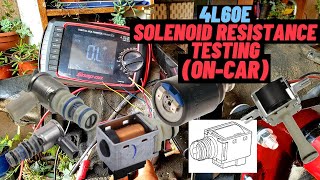
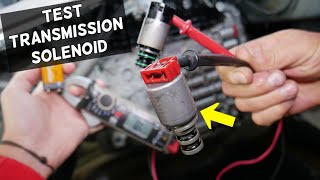
Disconnect the harness and use a multimeter set to Ohms to measure resistance across the solenoid's pins. Compare this to the exact OEM specification at 68°F (20°C). Common specs: Ford 10R80 (5.0-5.4 Ohms), GM 6L80 (20-40 Ohms), Toyota S4 (11-15 Ohms). A reading of infinity (OL) means an open coil, while near zero means a short.
Tools: Multimeter, Vehicle-specific service manual (Advanced) - Perform a Voltage Drop Test
Connect one lead of your multimeter (set to DC Volts) to the battery positive post and the other to the power supply pin for Solenoid 'D' at the transmission connector. With the circuit energized, a reading over 0.5 volts indicates excessive resistance in the power-side circuit. Repeat on the ground side. Continuity alone does not guarantee the wire carries necessary current under load.
Tools: Multimeter, Vehicle-specific wiring diagram (Advanced) - Check Transmission Line Pressure
If electrical tests pass, attach a pressure gauge set to specific ports on the transmission case. Run the vehicle through the gears and compare pressure readings to manufacturer charts (e.g., 80-100 PSI at idle, 170-230 PSI at stall). Low pressure indicates a failing pump, clogged filter, or internal valve body leak.
Tools: Transmission pressure gauge set, Service manual with pressure charts (Professional)
When This Code Triggers (Freeze-Frame Conditions)
- Engine Coolant Temp: 180-210°F (The fault is most often detected when the vehicle is fully warmed up and has been running for several minutes.)
- RPM: 1500-2500 (The code sets during a commanded gear shift under light to moderate acceleration, not at idle or full throttle.)
- Engine Load: 25-60% (Occurs under normal driving conditions, as the TCM compares expected vs. actual gear ratios.)
- Vehicle Speed: 30-55 mph (The fault is commonly triggered during shifts that occur at city or highway cruising speeds, for example, a 3-4 or 4-5 shift.)
Related Codes
- P0700 — This is a general transmission fault code. It means the TCM has stored a specific code, like P0766, and requested the check engine light turn on. It provides no diagnostic information on its own.
- P0767 — This code means 'Shift Solenoid D Stuck On', the direct opposite of P0766 ('Stuck Off'). P0766 means the solenoid failed to activate, while P0767 means it failed to deactivate.
- P2714 — This code is for 'Pressure Control Solenoid D Performance/Stuck Off'. Seeing P0766 and P2714 together strongly suggests a widespread hydraulic circuit problem (valve body contamination, failing pump) rather than two separate component failures.
- P0756 — This code is for 'Shift Solenoid 'B' Performance/Stuck Off'. When multiple solenoid performance codes appear together, the diagnostic focus shifts to a common point of failure: low/dirty fluid, a clogged filter, or a bad ground connection.
Climate & Environmental Factors
- Cold Weather: Extremely cold temperatures increase transmission fluid viscosity. This causes delayed shifts or sluggish solenoid operation upon startup, worsening a pre-existing mechanical or hydraulic issue before the transmission reaches operating temperature.
- High Humidity / Water Intrusion: High humidity or water exposure leads to corrosion in external wiring harnesses and connectors. This corrosion increases electrical resistance, interrupting the signal to the solenoid and triggering a performance code.
How to Talk to a Mechanic About This Code
Say this: "I have a P0766 shift solenoid code and I'm experiencing harsh shifting. I'd like to schedule a diagnostic. Can you please start by checking the fluid level and condition, and check for any TSBs related to this code for my vehicle before recommending parts replacement?"
This signals you understand P0766 is not always a bad solenoid. It directs the shop to perform the cheapest diagnostic steps first and check for known manufacturer issues, preventing them from jumping to an expensive and incorrect repair.
Avoid saying:
- 'My transmission is acting weird, can you fix it?'
- 'My check engine light is on, just do whatever it takes.'
- 'I think I need a new shift solenoid.'
Questions to ask before authorizing the repair:
- What was the condition of the transmission fluid? Was it low, burnt, or did it contain debris?
- Did you find any Technical Service Bulletins (TSBs) for this code on my specific vehicle?
- If you are recommending a solenoid replacement, what electrical tests (resistance, voltage drop, active command) did you perform to confirm the solenoid itself is the point of failure?
- Is this a repair you do in-house, or do you outsource transmission work?
- What is the warranty on the parts and labor for this specific repair?
Where to Take It: Dealer vs Independent vs Chain
- Dealer:
Recommended if under warranty or if the vehicle is a newer model with a known, complex TSB for this code (e.g., Ford 10R80).
Best for: Vehicles under powertrain warranty, Newer Ford, GM, or other vehicles with known TSBs for P0766, as the dealer has direct experience with these specific procedures.
Downsides: Highest labor rate, Defaults to replacing large, expensive assemblies (like a full valve body or TEHCM) rather than diagnosing a smaller component. (Typical cost: +50% vs. baseline) - Independent Shop:
A transmission specialist is the best choice for out-of-warranty repairs. They have the specific tools to diagnose the issue accurately. Avoid general mechanics who don't specialize in transmissions.
Best for: Out-of-warranty vehicles where cost is a major factor, Older, more common vehicles where the fix is likely a standard solenoid or fluid issue.
Downsides: Quality and expertise vary dramatically. A general mechanic lacks the deep expertise for complex transmission diagnostics. (Typical cost: +0% vs. baseline) - Chain Shop:
AVOID for diagnosing P0766. Their business model is not set up for in-depth electrical and hydraulic testing. Go here for a fluid change only after a proper diagnosis is made elsewhere.
Best for: Fluid and filter changes ONLY, and only if you are certain that is the needed repair.
Downsides: Technicians lack specialized training for complex transmission diagnostics., High pressure to upsell services; misdiagnoses lead to unnecessary repairs. (Typical cost: -10% vs. baseline)
When to Walk Away From the Repair
If the total estimated repair cost exceeds 40-50% of your car's private-party value, sell or trade it in.
- Car worth $15000, fix is $2200: Fix it. The repair cost is well under the 40% threshold.
- Car worth $5000, fix is $2500: Borderline. This is 50% of the car's value. Get a second opinion on the diagnosis and repair cost before proceeding.
- Car worth $3000, fix is $4000: Walk away. The repair costs more than the car is worth. Do not fix it.
What Scan Tool You Need for This Code
Minimum: A scanner that reads manufacturer-specific transmission codes (TCM codes) and views live transmission data. A basic engine code reader is NOT enough.
A cheap $20 scanner only reads generic 'P' codes and won't access the transmission control module (TCM). It cannot read the specific fault, view live data, or perform bi-directional tests to activate the solenoid.
Budget: FOXWELL NT604 Elite (~$60-100) — Reads engine, ABS, SRS, and transmission codes, which is the minimum requirement for basic code retrieval.
Mid-range: BlueDriver Pro / XTOOL A30M (~$100-220) — Offers full system diagnostics and limited bi-directional control. Commands the shift solenoid on and off, allowing you to hear it click and confirm if it's mechanically stuck or electrically dead.
Professional: Autel MaxiCOM MK808 / Foxwell NT809BT (~$450-600) — Provides full bi-directional control, extensive live data graphing, and access to advanced service functions like transmission adaptive value resets, required after a repair.
Rent vs buy: Auto parts stores scan codes for free, but their tools will not perform the bi-directional tests needed for a full P0766 diagnosis. Investing in a mid-range scanner with bi-directional capabilities is highly recommended.
How to Clear the Code After You Fix It
- Use a professional OBD-II scan tool to clear the code.
- For many modern vehicles, perform a 'Clear Transmission Adaptive Tables' procedure with a scan tool.
- Perform the manufacturer-specific relearn drive cycle.
Drive cycle (~20 minutes): Start the engine and idle for 2 minutes. Drive the vehicle, accelerating gently through all gears up to 55 mph. Maintain a steady speed for 5-10 minutes. Gently decelerate to a stop, allowing the transmission to downshift through all gears. Repeat the cycle 5-10 times to allow the TCM to relearn shift points.
Readiness monitors affected: Comprehensive Component Monitor, Catalyst Monitor
Before emissions retest: drive at least 50 miles to fully set monitors.
Watch out for:
- Disconnecting the battery clears the code but won't reset the transmission's adaptive learning tables, leading to continued poor shifting.
- The code returns immediately if the root mechanical or electrical cause has not been fixed.
- Failing to perform the relearn drive cycle results in harsh or erratic shifting even after the repair is complete.
Will This Fail Emissions / State Inspection?
Yes — this code typically fails an OBD-II emissions inspection.
- California: An illuminated Check Engine Light from code P0766 is an automatic failure of the smog check. All readiness monitors must be set to 'Ready' to pass, which is prevented by this active fault.
- New York: The NYS vehicle inspection includes an OBD-II scan. A P0766 code causes the vehicle to fail the emissions portion of the inspection.
- Texas: In counties requiring emissions testing, an active P0766 code and illuminated Check Engine Light result in an automatic inspection failure.
Most Commonly Affected Vehicles

- Ford F-150, Mustang, Ranger, Expedition (2017-2023) — On models with the 10R80 transmission, P0766 rarely indicates a bad solenoid. It points to a faulty main control valve body or a failed CDF clutch cylinder sleeve causing internal hydraulic leaks. Ford issued TSBs 23-2250 and 24-2046 for this exact issue.
- Ford Maverick, Bronco Sport, Escape (2020-2025) — On models with the 8F24/8F35 transmission, this code often indicates a failure of the selectable one-way clutch (SOWC), not the solenoid. This is a major internal repair documented in TSBs 21-2421 and 26-2058.
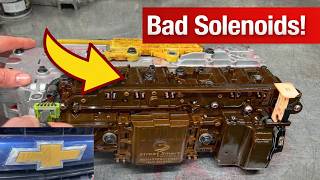
- Chevrolet Silverado, Malibu, Tahoe (2007-2016) — For the Silverado with the 6L80 transmission, solenoids are integrated into the TEHCM (Transmission Electrical Hydraulic Control Module). A solenoid fault requires replacement of the entire TEHCM assembly.
- Dodge Ram, Charger, Journey (2006-2014) — The cause is often a faulty solenoid pack or wiring issues at the main connector. A solenoid pack replacement for a 68RFE transmission costs between $500 and $800.
- Honda Civic, Accord (2006-2015) — Hondas are highly sensitive to fluid type and condition. A triple fluid drain-and-fill using genuine Honda ATF is the standard diagnostic first step before replacing parts.
- Toyota Tundra, Camry (2005-2013) — Toyota's diagnostic logic notes that a stuck-OFF 'S4' solenoid (their 'D') is mimicked by a stuck-ON 'SL2' solenoid. The S4 solenoid requires a resistance of 11-15 Ohms at 68°F.
- Hyundai Genesis (2009-2014) — Triggered when the TCM detects a mismatch between the commanded gear and the actual gear ratio. The specified resistance for the solenoid is 11-16 Ohms.
- Mazda 3, 6 (2006-2013) — P0766 is caused by a faulty solenoid, but is also heavily linked to issues with the TCM or intermittent shorts in the wiring harness.
Manufacturer-Specific Notes
- Ford: On newer models with 8-speed (8F35) and 10-speed (10R80) transmissions, P0766 is rarely a bad solenoid. It indicates a known internal mechanical failure. For the 10R80, TSB 23-2250 points to a faulty valve body or CDF clutch drum. For the 8F35, it points to a failed selectable one-way clutch (SOWC).
- Honda: Hondas are notoriously sensitive to transmission fluid quality. Using anything other than genuine Honda ATF causes shifting problems and triggers solenoid codes. A series of three consecutive fluid drain-and-fills is the accepted diagnostic first step.
- Toyota: Toyota's diagnostic procedure notes that P0766 is triggered by a stuck-OFF Shift Solenoid S4 OR a stuck-ON Shift Solenoid SL2, indicating a complex hydraulic relationship requiring careful diagnosis with a bi-directional scanner.
- General Motors (Chevrolet/GMC): On many GM trucks with 6L80 transmissions, solenoids are integrated into the Transmission Electrical Hydraulic Control Module (TEHCM). The internal wiring harness becomes brittle, causing intermittent shorts. The entire TEHCM assembly is replaced as a single unit.
Real Owner Stories
2018 Ford F-150 (10R80) at 75K miles
Check engine light came on with harsh, delayed shifting, especially the 3-5 shift. Code P0766 was present.
Outcome: The root cause was a known valve body issue. The entire main control valve body was replaced per TSB 23-2250 for $2,200. After replacement and an adaptive learning drive cycle, shifting issues resolved.
Lesson: On modern Fords with the 10R80, P0766 is rarely a simple solenoid failure. Always check for TSBs first to avoid wasting money on incorrect diagnoses.
2013 Toyota Tundra at 224K miles
Truck suddenly downshifted on the highway and the check engine light came on. Codes P0766 and P0776 were stored. Dealer quoted $5,000 for a new transmission.
Outcome: The fluid exchange did not resolve the issue. Further diagnosis at an independent shop determined the solenoid itself was faulty. Replacing the solenoid was a much cheaper repair than a full transmission replacement.
Lesson: For high-mileage vehicles, get a second opinion from an independent transmission specialist before agreeing to a full replacement, as it could be an accessible component like a solenoid.
2004 Ford Super Duty (5R110) with Intermittent P0766
Truck intermittently entered limp mode with flashing tow/haul light, particularly in wet weather. After sitting, it drove normally again.
Outcome: The intermittent nature in wet conditions pointed to an electrical issue. The cause was a wiring harness issue sensitive to moisture changes.
Lesson: Intermittent faults appearing in specific weather are often electrical. Thoroughly inspect wiring harnesses for hidden corrosion or breaks before replacing expensive hard parts.
2012 Honda CR-V at 110K miles
P0766 code appeared with noticeable hesitation between shifts.
Outcome: After the third drain-and-fill, shifting behavior returned to normal and the P0766 code did not return. Total cost was under $100.
Lesson: Honda transmissions are extremely sensitive to fluid type and condition. A fluid change is a cheap and highly effective first step that often resolves solenoid codes.
How to Prevent This Code From Triggering
- Regular Transmission Fluid and Filter Changes (Every 30,000-60,000 miles, or per owner's manual.) — Clean fluid maintains correct hydraulic pressure and lubrication, preventing sludge that clogs solenoids and valve bodies. Old fluid is the #1 cause of solenoid failure.
- Use Only OEM-Specified Transmission Fluid (Every fluid change.) — Different transmissions require specific fluid properties. Using the wrong type causes seals to degrade and solenoids to operate incorrectly.
- Install an External Transmission Cooler (Once, especially if you tow, haul heavy loads, or live in a hot climate.) — Heat is the primary enemy of an automatic transmission. An external cooler significantly reduces fluid temperature, extending the life of all internal components.
- Avoid Aggressive Driving and Heavy Towing Beyond Capacity (Daily habit.) — Hard acceleration and excessive loads generate extreme heat and put immense strain on the transmission's hydraulic system, accelerating fluid breakdown.
- Address Minor Leaks Immediately (As needed.) — A small leak leads to a low fluid level, causing pressure drops, slipping, and overheating. This starves the solenoids of hydraulic pressure.
Frequently Asked Questions
What is the most common mistake when diagnosing P0766?
The most common mistake is immediately replacing Shift Solenoid 'D' without a full diagnosis. The actual cause is frequently simpler, like dirty transmission fluid, or more complex, like a known valve body failure on certain Ford models. Always check fluid, wiring, and TSBs first.
Can a bad shift solenoid damage my transmission?
Yes. Driving with a faulty solenoid causes overheating, increased friction, and accelerated wear on internal clutches and bands. What starts as a solenoid issue quickly cascades into complete transmission failure if ignored.
I found metal shavings in my transmission pan. What does that mean?
A fine, metallic powder on the pan magnet is normal wear. However, visible flakes or sharp chunks of metal indicate serious internal mechanical failure, such as a disintegrating clutch pack. If you see chunks, the transmission requires a complete rebuild or replacement.
Can I just replace the shift solenoid to fix P0766?
You can, but it often does not fix the problem, especially on newer vehicles where this code points to a known mechanical issue covered by a TSB. The real issue is frequently old fluid, a bad wire, or a faulty valve body. Always diagnose the root cause first.
What does 'Shift Solenoid D' actually do?
It is a small, electronically controlled valve inside your transmission's valve body. The car's computer sends it a signal to open or close, directing the flow of high-pressure transmission fluid to engage or disengage a specific gear set.
How much does it cost to fix code P0766?
A professional diagnostic is typically $100-$200, while a fluid change runs $150-$400. Replacing a single solenoid costs $300-$700, but a Ford valve body replacement reaches $1,500-$3,000. A full transmission rebuild for major mechanical failure costs $3,500-$7,000 or more.
Will clearing the code make it go away?
Clearing the code turns the check engine light off temporarily, but it is not a fix. The code returns as soon as the TCM runs its self-test and detects the fault again, usually within a few minutes of driving.
Can I clean a shift solenoid?
Spraying solenoids with electrical contact cleaner is not a reliable or long-term fix. The failure is usually an internal burnt coil, or the clogging is a symptom of system-wide contamination that quickly fouls the solenoid again. Replacement is the only recommended repair.
Key Takeaways
- Code P0766 means the transmission's Shift Solenoid 'D' is not performing as commanded, locking the vehicle into a single gear or causing harsh shifts.
- Always check the transmission fluid level and condition first; dirty or low fluid is the leading cause of solenoid performance codes.
- Do not drive with an active P0766 code; continuing to drive overheats the transmission and turns a $300 repair into a $4,000 complete rebuild.
- On 2017+ Ford vehicles (F-150, Ranger, Mustang), P0766 almost always indicates a failed main control valve body or CDF clutch drum requiring a $1,500+ repair, not a simple bad solenoid.
Helpful Videos

The information in this article is provided for general reference and educational purposes only. Vehicle specifications, procedures, and part compatibility can vary by production date, trim level, and region. Always consult your vehicle's factory service manual and verify part numbers before purchasing or performing repairs. Safety-critical components such as airbags, seat belts, and braking systems should be installed by a qualified professional.
- 🎬 Helpful Videos
- What Does P0766 Mean?
- Can I Drive With P0766?
- Common Causes
- Symptoms
- Diagnostic Flowchart
- Common Fixes & Costs
- Used vs. New Parts: Buying Guide
- What Happens If You Wait — Timeline
- Cost of Not Fixing It
- Diagnosis Steps
- When This Code Triggers (Freeze-Frame Conditions)
- Related Codes
- Climate & Environmental Factors
- How to Talk to a Mechanic About This Code
- Where to Take It: Dealer vs Independent vs Chain
- When to Walk Away From the Repair
- What Scan Tool You Need for This Code
- How to Clear the Code After You Fix It
- Will This Fail Emissions / State Inspection?
- Most Commonly Affected Vehicles
- Manufacturer-Specific Notes
- Real Owner Stories
- 2018 Ford F-150 (10R80) at 75K miles
- 2013 Toyota Tundra at 224K miles
- 2004 Ford Super Duty (5R110) with Intermittent P0766
- 2012 Honda CR-V at 110K miles
- How to Prevent This Code From Triggering
- Frequently Asked Questions
- What is the most common mistake when diagnosing P0766?
- Can a bad shift solenoid damage my transmission?
- I found metal shavings in my transmission pan. What does that mean?
- Can I just replace the shift solenoid to fix P0766?
- What does 'Shift Solenoid D' actually do?
- How much does it cost to fix code P0766?
- Will clearing the code make it go away?
- Can I clean a shift solenoid?
- Key Takeaways
- 🎟️ Get 5% Off