

OBD-II Code P0765: Shift Solenoid 'D' Malfunction
The Ultimate Expert Guide to Diagnosing and Fixing P0765
- P0765 flags an electrical failure in the 'D' shift solenoid circuit, immediately locking your transmission into a single gear (limp mode).
- Replacing the solenoid pack resolves this code in 70% of cases, particularly on 2008-2023 Chrysler, Dodge, and Ram vehicles.
- Driving with P0765 overheats the transmission fluid within miles, turning a $300 electrical repair into a $4,000 complete transmission rebuild.
- Never replace the solenoid without first performing a voltage drop test on the wiring harness, as corroded connectors cause over 20% of false P0765 codes.
What Does P0765 Mean?

P0765 means your car's computer, the Powertrain Control Module (PCM) or Transmission Control Module (TCM), detected an electrical problem with the 'D' shift solenoid. This solenoid is a small, electronically controlled valve inside your automatic transmission that helps it shift gears smoothly by directing the flow of transmission fluid. When this solenoid malfunctions, the transmission cannot shift correctly, disabling higher gears like 4th, 5th, or overdrive and causing severe drivability issues.
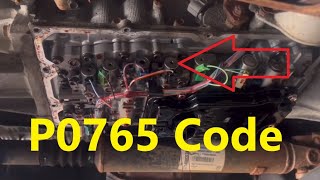
Technical definition: The official SAE/OBD-II definition is 🎬 Watch: A quick overview of P0765 causes and fixes. "Shift Solenoid 'D' Malfunction." The Powertrain Control Module (PCM) or Transmission Control Module (TCM) detected a fault in the electrical circuit of the shift solenoid designated as 'D'. The TCM continuously tests the solenoid circuits; it sends a command and expects to see a specific voltage response or an inductive spike when the solenoid's magnetic field collapses. If this expected electrical signature is missing after several consecutive tests, the code is set and the Check Engine Light illuminates.
Can I Drive With P0765?
no_not_recommended. Driving with P0765 is strongly discouraged. Your transmission enters a protective 'limp mode,' locking into a single gear (often 2nd or 3rd). This causes extremely poor acceleration and forces the engine to run at high RPMs, rapidly overheating the transmission fluid. Continuing to drive turns a relatively minor solenoid issue into catastrophic transmission failure (e.g., warped clutch plates, valve body damage), adding $2,000-$4,000+ in repair costs. It is safe only for an emergency trip to a nearby repair shop.
Common Causes

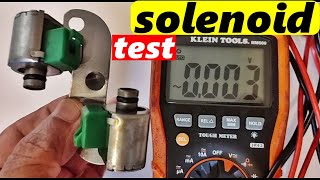
- Faulty Shift Solenoid 'D' or Solenoid Pack (Very Common) — The solenoid itself fails electrically (open or short circuit in its coil 🎬 See how to test a shift solenoid with a multimeter.) or mechanically (plunger gets stuck). In many modern vehicles, this solenoid is integrated into a larger assembly called a solenoid pack. If one solenoid fails, the entire pack must be replaced.
- Wiring or Connector Issues (Common) — The wiring harness leading to the transmission is exposed to extreme heat and vibration. Wires chafe, break, or short to ground. The main transmission connector is a frequent culprit, suffering from corrosion, bent pins, or moisture intrusion, which interrupts the signal to the solenoid.
- Degraded Transmission Fluid or Clogged Filter (Common) — Transmission fluid is the lifeblood of the system. Low fluid cannot create the hydraulic pressure needed for the solenoid to work. Old, burnt fluid or a clogged internal filter restricts flow, starving the solenoid of hydraulic pressure and triggering the code even if the solenoid is electrically sound.
- Faulty Transmission Valve Body (Less Common) — The valve body is the hydraulic brain of the transmission where the solenoids are mounted. Its intricate fluid passages become clogged with sludge or scored by debris, preventing the solenoid from directing fluid correctly.
- Weak Battery or Charging System Issue (Less Common) — Transmission solenoids and the TCM require a stable and correct voltage to operate. A weak battery or a failing alternator causes low system voltage, leading to erratic behavior and false diagnostic codes, including P0765. Always verify battery health before diving into complex transmission diagnostics.
- Faulty Transmission Control Module (TCM) or PCM (Rare) — The computer that controls the transmission fails due to an internal software glitch, a failed driver transistor for the solenoid circuit, or physical damage like a leaking capacitor. Sometimes, a simple software update (reflash) from the dealer fixes the issue, especially on newer vehicles.
- Internal Mechanical Transmission Failure (Rare) — Severe internal mechanical problems, such as a failing transmission pump or a damaged clutch pack, prevent the hydraulic system from building pressure correctly. The TCM interprets this lack of a pressure change after commanding the solenoid as a solenoid circuit fault.
Symptoms
- Harsh, Delayed, or Failed Shifts — The transmission shifts very roughly, hesitates before changing gears, or fails to shift into a specific gear altogether, preventing access to higher gears like overdrive.
- Check Engine Light On — The most obvious symptom is an illuminated Check Engine Light or a dedicated transmission warning lamp on your dashboard.
- Decreased Fuel Economy — When the transmission cannot shift into higher gears, the engine is forced to run at a much higher RPM, causing a significant drop in fuel efficiency.
- Vehicle Stuck in Limp Mode (also visible on scanner) — The transmission enters a protective "limp-home" mode, getting stuck in a single gear (often 3rd or 4th) to prevent further damage. This results in very slow acceleration from a stop and high engine RPMs at speed.
- Transmission Slipping (also visible on scanner) — The engine revs up unexpectedly without a corresponding increase in vehicle speed. This indicates the transmission is failing to engage a gear properly due to incorrect fluid pressure regulated by the faulty solenoid.
- Transmission Overheating (also visible on scanner) — Being stuck in the wrong gear and experiencing high RPMs or slipping generates excessive friction and heat within the transmission, leading to overheating and further internal damage.
Diagnostic Flowchart
Tap your situation to follow the diagnostic path that matches what you're seeing on this code.
Common Fixes & Costs
- Replace Shift Solenoid 'D' (or Solenoid Pack)
— Parts: $50-$500, Labor: $200-$800, ~2.5 hr book time
(Professional)
Ram 2500/3500 (68RFE): OEM Mopar #68456067AB (supersedes #68456067AA, #68367309AA) (Alt: Revmax, Sonnax (often included with valve body kits))
Dodge Grand Caravan (62TE): OEM Mopar #68371508AB (replaces #5078709AA, #68376696AA) (Alt: Dorman 609-040, Rostra, ATP) - Repair Wiring or Replace Connector
— Parts: $20-$150, Labor: $150-$400, ~2 hr book time
(Intermediate)
Ford Explorer (5R55S/W): OEM Varies by specific damage. Often requires a generic pigtail kit that is spliced in. (Alt: Dorman 645-203 (Solenoid Connector), various pigtail kits) - Transmission Fluid and Filter Change — Parts: $50-$150, Labor: $100-$250, ~1 hr book time (Intermediate)
- Replace Transmission Valve Body — Parts: $300-$800, Labor: $350-$1,000, ~3.5 hr book time (Professional)
- Replace or Reprogram Transmission Control Module (TCM) — Parts: $250-$1000, Labor: $100-$300, ~1.5 hr book time (Professional)
DIY vs Professional
- Transmission Fluid and Filter Change — Beginner:
Tools: Socket set, drain pan, funnel, torque wrench, fluid pump (for sealed transmissions). - Replace Shift Solenoid / Solenoid Pack — Beginner:
Tools: Full socket set, torque wrench (in-lbs), drain pan, rags, service manual, possibly snap-ring pliers. - Repair Wiring or Replace Connector — Beginner:
Tools: Multimeter, wire strippers, wire crimpers, heat shrink tubing, soldering iron (optional), wiring diagrams. - Replace Transmission Valve Body — Beginner:
Tools: Extensive toolset, clean working environment, service manual, torque wrench, scan tool.
Used vs. New Parts: Buying Guide
When a used part is worth it: For a P0765 fix, the main part is a shift solenoid pack or valve body. Buying used makes sense for older, high-mileage vehicles (>150k miles) where the cost of a new part is a significant fraction of the car's value and the budget is tight.
Donor-vehicle mileage cap: roughly under 80000 miles for the part to have meaningful remaining life.
Donor quality checklist:
- Verify the donor vehicle's mileage is under 80,000 miles.
- Ensure the part number matches exactly; superseded numbers from the manufacturer are acceptable, but aftermarket cross-references are risky.
- Ask for photos to check for corrosion or physical damage to connectors.
- Prefer sellers who offer at least a 30-90 day warranty.
Decision logic:
- If Vehicle is less than 8 years old or has under 100k miles → Buy new OEM or high-quality aftermarket. The risk of premature failure of a used part outweighs the savings.
- If The cost of a new solenoid pack/valve body exceeds 30% of the vehicle's market value → A low-mileage used part is a reasonable financial decision.
- If The specific transmission model is known for solenoid/valve body issues (e.g., Chrysler 62TE, Ram 68RFE) → Favor new, as even low-mileage used parts have latent defects. Many new parts are updated designs that fix the original flaw.
Warranty tradeoff: Used parts typically come with a 30-90 day part-only warranty. New aftermarket parts often have a 1-year to limited lifetime warranty. New OEM parts carry a 12-month/12,000-mile warranty if installed by a dealer.
Worst-case if a used part fails: $500-$1200 if a used part fails after installation, primarily due to the repeated labor cost to remove and replace it, plus the cost of another part.
What Happens If You Wait — Timeline
- 0-1 week: Check Engine Light illuminates. Vehicle enters 'limp mode,' locking into a single gear (e.g., 4th). Acceleration is severely limited. Restarting the car temporarily clears the issue, but it returns quickly. (MPG impact: 15-30%% · Added cost: $0-$50 in wasted fuel)
- 1 week - 2 months: Continued driving in limp mode at high RPMs causes the transmission fluid to overheat. The fluid begins to break down, losing its lubricating properties and turning from red to brown. (MPG impact: 20-35%% · Added cost: $200-$400 (Cost of a fluid flush, but damage is already occurring))
- 2-4 months: Degraded, burnt fluid leads to sludge buildup in the valve body and scoring of internal seals and passages. The transmission begins to slip even in its locked gear, and shifts become harsh or delayed if it attempts to shift at all. (MPG impact: 30-40%% · Added cost: $800 - $2,000 (Valve body replacement is now likely required in addition to fixing the original P0765 cause))
- 4+ months: Catastrophic internal failure. The combination of extreme heat and contaminated fluid burns out the clutch packs and warps hard parts. The transmission eventually fails to engage any gear, leaving the vehicle immobile. (MPG impact: N/A (Vehicle is likely undrivable)% · Added cost: $3,500 - $7,000+ (The original solenoid issue is now irrelevant; a complete transmission rebuild or replacement is the only option))
Cost of Not Fixing It
- Immediate (0-1 month): Vehicle stuck in 'limp mode' with poor acceleration and high RPMs. Significant drop in fuel economy (15-30%). Increased stress on engine and transmission components. (Added cost: Negligible, but high risk of further damage.)
- Short-Term (1-3 months): Transmission fluid overheats and degrades due to high RPMs and slipping, losing its lubricating properties. This causes scoring on the valve body and damage to internal seals. (Added cost: $800 - $2,000 (Valve body replacement, fluid flush))
- Long-Term (3+ months): Catastrophic transmission failure. The overheated fluid and constant slipping burn up clutch packs and warp metal components. The transmission eventually fails to engage any gear, requiring a complete rebuild or replacement. (Added cost: $3,500 - $7,000+ (Transmission rebuild or replacement))
Diagnosis Steps

- Scan for Codes & Review Freeze Frame Data
Use an OBD-II scanner to confirm the P0765 code and check for any other related transmission or engine codes. Critically, analyze the freeze-frame data, which provides a snapshot of the vehicle's speed, RPM, engine load, and temperature when the code was set. This context is vital for diagnosis.
Tools: OBD-II Scanner (Beginner) - Check Transmission Fluid
Check the transmission fluid level and condition. The fluid should be at the correct level on the dipstick (if equipped) and appear bright red, not brown, black, or smell burnt. Many modern cars have a sealed transmission without a dipstick, requiring a specific procedure to check the fluid level. If the fluid is low or dirty, this is often the root cause.
Tools: Rag, Transmission Dipstick (if equipped) (Beginner) - Inspect Wiring and Connectors
Perform a thorough visual inspection of the wiring harness running to the transmission. Look for signs of chafing against the frame, burnt or melted sections from exhaust heat, and corrosion or moisture in the main connector where the harness plugs into the transmission case.
Tools: Flashlight, Inspection Mirror (Intermediate) - Check for Power and Ground at the Connector
With the key on, engine off, use a multimeter to verify that the solenoid is receiving power. Backprobe the power supply pin for the solenoid at the transmission connector. You should see a voltage reading close to battery voltage (typically 9-12V). Then, check the ground circuit for continuity to a known good ground. Lack of power or a bad ground points to a wiring or TCM issue.
Tools: Multimeter, Vehicle Service Manual, Backprobe Kit (Advanced) - Test the Solenoid's Internal Resistance
Using a multimeter set to Ohms, test the resistance of the shift solenoid 'D' at the transmission connector pins. Consult your vehicle's service manual for the correct pins and resistance specification. Values vary widely: a Chrysler 68RFE solenoid is ~1.3 ohms, while many other solenoids fall in the 6-30 ohm range. A reading of infinite resistance (O.L.) indicates an open circuit, while a reading near zero indicates a short. An out-of-spec reading points to a faulty solenoid.
Tools: Multimeter, Vehicle Service Manual (Advanced) - Command the Solenoid with a Bidirectional Scanner
If you have a professional-grade bidirectional scan tool, directly command the 'D' solenoid on and off while the engine is running. You should hear a distinct 'click' from the transmission pan area as the solenoid actuates. If you command the solenoid on and hear no click, and you already verified the wiring and power are good, the solenoid itself failed.
Tools: Bidirectional Scan Tool (Advanced) - Pro Tip: Perform a Voltage Drop Test
A standard continuity test does not detect a corroded wire that cannot handle the electrical load. With the circuit connected and the key on, connect one lead of your multimeter (in DC Volts) to the battery positive post and the other to the power supply pin for solenoid 'D' at the transmission connector. A reading of more than 0.5 volts indicates excessive resistance in the power-side wiring. Repeat this process on the ground side (battery negative post to the solenoid ground pin). This test pinpoints hidden wiring issues that other tests miss.
Tools: Multimeter, Vehicle Service Manual, Alligator Clip Wires (Professional) - Pro Tip: Analyze the Solenoid Waveform with an Oscilloscope
For a definitive diagnosis, use an oscilloscope to view the solenoid's electrical signature. Connect the scope to the solenoid's control wire. When the TCM commands the solenoid, you should see a square wave pattern. Critically, when the TCM turns the solenoid off, you should see a sharp vertical spike of high voltage, known as an 'inductive kick.' A healthy inductive kick (often over 50V) proves the solenoid's coil is creating a magnetic field and is not shorted or open. The absence of this kick confirms a failed solenoid or an open circuit in the wiring.
Tools: Oscilloscope, Vehicle Service Manual (Professional) - Inspect the Valve Body
If diagnosis leads you to remove the transmission oil pan, inspect the valve body. Look for obvious signs of sludge, metal shavings, or debris in the fluid passages that cause a valve to stick. Significant debris points to a larger internal transmission problem.
Tools: Flashlight, Drain Pan, Socket Set (Advanced) - Pro Tip: Check for a 'Quick Learn' Procedure
After replacing a solenoid pack or valve body on many vehicles, especially Chrysler/Dodge/Ram products, a 'Quick Learn' or 'Clutch Volume Index (CVI)' relearn procedure is required. This is performed with a bidirectional scan tool and allows the TCM to adapt to the new components. Failure to perform this step results in harsh shifting or persistent codes even with good parts.
Tools: Bidirectional Scan Tool (Professional)
When This Code Triggers (Freeze-Frame Conditions)
- Engine Coolant Temp: 180-200°F (The engine is fully warmed up to normal operating temperature.)
- RPM: 1500-2500 RPM (During steady-state cruising or light acceleration when a shift into a higher gear (like 4th or 5th) is commanded by the TCM.)
- Engine Load: 30-60% (Moderate engine load, consistent with highway cruising or climbing a slight incline.)
- Vehicle Speed: 35-55 mph (The fault is logged when the transmission attempts to shift into its overdrive gear at highway speeds.)
Related Codes
- P0766, P0767, P0768, P0769 — These codes are all specific to Shift Solenoid 'D'. P0765 is a general malfunction. P0766 ('Stuck Off') and P0767 ('Stuck On') indicate a mechanical problem where the solenoid valve is not moving. P0768 ('Electrical') points specifically to a circuit issue like an open or short. These more specific codes are extremely helpful in narrowing down the diagnosis.
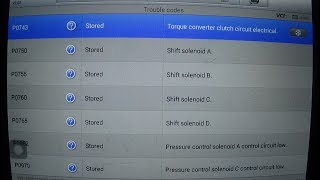
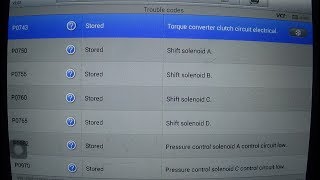
- P0750, P0755, P0760 — These are malfunction codes for shift solenoids 'A', 'B', and 'C'. Seeing multiple solenoid codes together (a 'full house') rarely means all solenoids failed. This pattern strongly points to a common cause, such as a bad main power/ground wire, a corroded bulk connector, a failed solenoid pack, or a faulty TCM/PCM.
- P0871 — This code for 'Transmission Fluid Pressure Sensor/Switch 'C' Circuit Performance' appears with P0765, particularly in Ram trucks. When they show up together, it strongly suggests an issue within the solenoid pack assembly where both components are located, or a major hydraulic leak inside the transmission.
- P0711 — This code indicates a fault with the 'Transmission Fluid Temperature Sensor'. A faulty temperature sensor provides incorrect data to the TCM, affecting shift strategy. More importantly, transmission overheating (caused by a P0765 condition) also triggers a P0711 code, indicating the transmission is dangerously hot.
Climate & Environmental Factors
- High Humidity / Rain: Moisture penetrates poorly sealed transmission connectors, causing corrosion and short circuits. This is a primary cause of the well-known issue on Ford Explorers where the A/C drain drips directly onto the harness connector.
- Road Salt (Winter Climates): Salt spray accelerates corrosion on any exposed wiring, connectors, and the transmission case itself. This degrades the electrical connection to the solenoid over time, leading to intermittent faults and eventually a P0765 code.
- Extreme Cold: While P0765 is an electrical code, extreme cold thickens transmission fluid, exacerbating an existing mechanical issue with a sticking solenoid plunger. This is sometimes a contributing factor but is rarely the root cause.
How to Talk to a Mechanic About This Code
Say this: "Hello, my car is showing a P0765 Shift Solenoid 'D' Malfunction code and is stuck in limp mode. I'd like to schedule a diagnostic appointment. Please start by checking for any related TSBs and performing a full electrical diagnosis of the solenoid circuit, including the external wiring and connector, before recommending any internal part replacements."
This signals that you understand P0765 is an electrical code and that common causes are external wiring, connectors, or software issues, not just a bad solenoid. It directs the shop to perform a proper diagnosis rather than immediately quoting an expensive internal repair.
Avoid saying:
- 'My transmission is acting funny, can you fix it?'
- 'My check engine light is on, just do whatever it takes.'
- 'I think I need a new transmission.'
Questions to ask before authorizing the repair:
- What were the results of the electrical tests on the solenoid circuit (resistance, power, and ground)?
- Did you inspect the main transmission connector and wiring harness for corrosion or damage?
- Are there any Technical Service Bulletins for this code on my vehicle? If so, does it recommend a software update?
- If the solenoid or pack needs to be replaced, what is the warranty on the part and the labor?
- Does this repair require a 'relearn' procedure with a scan tool afterward?
Where to Take It: Dealer vs Independent vs Chain
- Dealer:
Best for: Vehicles under powertrain warranty., Late-model vehicles where a software update (TSB) is the likely fix (e.g., 2019+ Ram trucks)., Complex European brands (Mercedes, BMW, Audi) with proprietary transmission systems.
Downsides: Highest labor rates, typically 1.5x to 2x an independent shop., Defaults to replacing larger, more expensive assemblies rather than performing detailed wiring repairs. (Typical cost: +50% vs. baseline) - Independent Shop:
Best overall choice for most out-of-warranty vehicles, IF it is a reputable, independent *transmission specialty* shop. Their daily experience with these issues is invaluable.
Best for: Out-of-warranty vehicles where cost is a major factor., Diagnosing and repairing common failures on domestic and Asian vehicles., Shops that specialize specifically in transmission repair will have deep expertise.
Downsides: Quality and diagnostic capabilities vary widely; vetting is crucial., A general mechanic lacks the specific tools or experience for internal transmission work and outsources it anyway. (Typical cost: +0% vs. baseline) - Chain Shop:
Avoid. The risk of a misdiagnosis or being sold an unnecessary, expensive repair is very high for a complex electrical code like P0765.
Best for: Simple fluid and filter changes, but only if you are certain that is the issue.
Downsides: High-pressure sales environment leads to upselling a full transmission rebuild when a less expensive repair is needed., Technician skill and experience with complex electrical diagnostics are highly inconsistent between locations., General chains (e.g., Midas, Pep Boys) are not equipped for this level of diagnosis. (Typical cost: -10% vs. baseline)
When to Walk Away From the Repair
If the total estimated repair cost for the P0765 code exceeds 50% of your vehicle's private-party market value (from a source like Kelley Blue Book), strongly consider not fixing it.
- Car worth $4000, fix is $1800: Borderline. At 45% of the car's value, the repair is a significant investment. If the rest of the car is in excellent condition, it is worth it. Get a second opinion before authorizing.
- Car worth $15000, fix is $1200: Fix it. The repair cost is well under the threshold at only 8% of the car's value and restores its function and worth.
- Car worth $2500, fix is $3500: Walk away. The repair cost is more than the car is worth. Do not invest in this repair.
What Scan Tool You Need for This Code

Minimum: A scanner that reads manufacturer-specific transmission codes (not just generic P-codes) and displays live data streams for the transmission control module (TCM).
A $20 basic code reader only tells you the P0765 code exists. It cannot command the solenoid on and off for testing (bidirectional control), nor can it perform the mandatory 'quick learn' or 'relearn' procedure after the repair on many vehicles. Using a basic reader leads to guessing and replacing the wrong parts.
Budget: Foxwell NT604 Elite / Ancel BD310 (~$90) — Reads and clears codes from the Engine, Transmission, ABS, and SRS systems. It allows you to see some live transmission data, which is a step above basic readers, but lacks the critical bidirectional control needed for a full diagnosis.
Mid-range: Innova 5610 / Foxwell NT510 Elite (~$350) — This is the sweet spot for a serious DIYer. These tools offer bidirectional control, allowing you to command the 'D' solenoid directly from the scanner to confirm if it clicks. They also perform transmission service functions like relearn procedures.
Professional: Autel MaxiCOM MK808 / MK906BT (~$500-1200) — Provides full, dealership-level bidirectional control for all vehicle systems. You run advanced tests, view detailed live data graphs, and perform any required TCM programming or adaptation functions with ease.
Rent vs buy: Buy. The free rental scanners available at auto parts stores are basic code readers and are insufficient for diagnosing P0765. To properly diagnose and confirm the repair, you need a bidirectional scanner, making it a necessary purchase for anyone attempting this as a DIY job.
How to Clear the Code After You Fix It
- Use an OBD-II scan tool to clear the P0765 and any related fault codes.
- Disconnecting the battery for 30 minutes also clears codes, but a scanner is preferred.
- Perform a complete drive cycle to allow the vehicle's readiness monitors to become 'Ready'.
Drive cycle (~30 minutes): A general drive cycle includes: 1) Cold start after the vehicle has sat for 8+ hours. 2) Idle for 2-3 minutes. 3) 15-20 minutes of mixed city/suburban driving with several stops. 4) 10-15 minutes of steady-speed highway driving (55-65 mph). 5) Safely coasting to a lower speed without braking. This process allows the TCM to relearn shift adapts and run its internal diagnostics.
Readiness monitors affected: Comprehensive Component Monitor (CCM), Catalyst Monitor, Oxygen Sensor Monitor
Before emissions retest: drive at least 100 miles to fully set monitors.
Watch out for:
- Clearing the code with a scanner resets the emissions readiness monitors to 'Not Ready'. You cannot pass an emissions test until they are set.
- The code returns immediately if the underlying mechanical or electrical fault was not properly fixed.
- Some vehicles, particularly from Chrysler/Stellantis, require a specific 'Quick Learn' procedure with a bidirectional scan tool after the repair; a simple drive cycle is not sufficient.
Will This Fail Emissions / State Inspection?
Yes — this code typically fails an OBD-II emissions inspection.
- California: An illuminated Check Engine Light for P0765 is an automatic failure. After repair, you must complete a drive cycle to set all readiness monitors to 'Ready' before you can pass the smog check.
- New York: The NYS DMV inspection includes an OBD-II scan. A P0765 code causes an automatic failure. The issue must be repaired and the code cleared before the vehicle can be re-inspected.
- Texas: In counties requiring an emissions test (like Harris, Dallas, Travis), an active P0765 code and illuminated Check Engine Light is an automatic failure. After clearing the code, you must complete a drive cycle, as Texas allows for only one or two 'Not Ready' monitors depending on vehicle age.
Most Commonly Affected Vehicles
- Ram 2500/3500 (2019-2023) — Very common on trucks with the 68RFE transmission. The cause is often a failed solenoid pack (Mopar part #68456067AB is a common replacement). TSBs #S2121000008RevC and #9004380 address this. On some models, TSBs like #18-005-23 suggest the code is caused by a PCM software bug, requiring a reflash. The solenoid is often referred to as the 'UD' (Underdrive) solenoid.
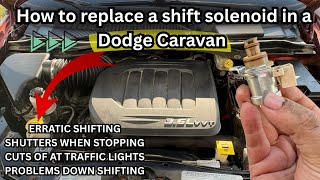
- Dodge Grand Caravan / Chrysler Town & Country (2008-2016) — Prone to this code due to failures in the 62TE transmission's solenoid pack (Mopar part #68371508AB). The pack is located on the front of the transmission and is more accessible than on many other vehicles, but still requires significant labor.
- Ford Explorer / Mercury Mountaineer (2006-2010) — On the 5R55S/W transmission, P0765 often appears with a full set of other solenoid codes. This is rarely multiple failed solenoids. The primary cause is a corroded or damaged main solenoid pack connector, often due to water from the A/C drain dripping directly onto it. The fix involves replacing the connector pigtail and rerouting the A/C drain hose.
- Chevrolet / GMC Silverado / Sierra (2007-2019) — Frequently experiences P0765, often due to a faulty shift solenoid, internal wiring harness damage (especially on 6L80/6L90 transmissions), or a worn valve body causing pressure loss.
- Honda Accord / Odyssey / Pilot (2003-2015) — Commonly affected by P0765. Honda transmissions often use linear solenoids that fail or become clogged. Using genuine Honda ATF is critical, as aftermarket fluids cause shifting problems and trigger solenoid codes.
- Toyota RAV4 / Camry (2001-2007) — Owners report this code when the transmission fails to shift into higher gears. While the solenoid is the cause, some cases trace back to a failing PCM/ECM after other parts were replaced.
- Jeep Grand Cherokee (2005-2010) — On models with the 545RFE transmission, this code points to a failed solenoid pack. Service information specifies that P0765 is a strictly electrical fault, advising against replacing the valve body unless electrical tests pass.
- Mercedes-Benz Various Models (1996-2020) — On Mercedes vehicles, P0765 is caused by a faulty conductor plate (which houses the solenoids and sensors) inside the 722.6 or 722.9 transmission. This is a common failure item.
Manufacturer-Specific Notes
- Ram/Dodge/Jeep (Chrysler/Stellantis): On vehicles with the 68RFE or 62TE transmission, P0765 is very frequently caused by a failure of the entire solenoid pack. Before replacing, check for Technical Service Bulletins (TSBs) related to software updates, as a PCM reflash resolves false codes, especially on 2019+ Ram HD trucks. TSB #9004380 and #S2121000008RevC directly address P0765 on 2019-2021 Ram trucks.
- Ford: On 2006-2010 Explorers with the 5R55S/W transmission, it is extremely common for P0765 to appear with all other solenoid codes. The cause is almost always water from the A/C drain leaking onto the main transmission harness connector, causing severe corrosion. The fix is to replace the connector pigtail and install a simple hose to reroute the A/C drain away from the transmission.
- General Motors (Chevrolet/GMC): On many GM transmissions (e.g., 4L60E, 6L80), P0765 is a symptom of a worn torque converter clutch (TCC) regulator valve bore in the valve body. This wear causes a hydraulic leak that affects overall line pressure, leading the TCM to flag a solenoid performance code.
- Honda/Acura: Honda often uses dual or triple linear solenoids mounted externally on the transmission case. A P0765-equivalent code is caused by one of these solenoids failing or by debris caught in the small screens beneath them. Using only genuine Honda ATF is highly recommended, as the system is sensitive to fluid viscosity and additives.
Real Owner Stories
2009 Ram 3500 (68RFE) stuck in 4th gear
While driving, the truck suddenly went into limp mode and was stuck in 4th gear. The check engine light came on with code P0765 (UD Solenoid Control).
What they tried:
- Read online forums suggesting replacing the TCM or the entire solenoid pack, which costs hundreds of dollars.
- Performed electrical diagnostics based on the factory service manual, checking for resistance, short to ground, and short to power on the UD solenoid circuit (T159). All tests passed.
- Visually inspected the wiring harness running from the TCM to the transmission.
Outcome: Found a section of the wiring harness where the yellow/light blue wire for the UD solenoid chafed against a bracket, wearing through the insulation. Repaired the damaged wire with heat shrink tubing. The code was cleared and did not return, fixing the issue for $0 in parts.
Lesson: P0765 is defined as an electrical fault. Always perform a thorough visual and electrical inspection of the wiring harness from end to end before spending hundreds on a new solenoid pack or TCM.
2009 Dodge Grand Caravan (62TE) with 120K miles
Vehicle had a transmission rebuild 8 months prior. Began throwing code P0765 (UD Solenoid Circuit) and intermittently stalling when shifting from reverse to drive.
What they tried:
- Replaced the battery and checked wiring for shorts/resistance per the service manual; all checked out.
- Used an oscilloscope to watch the PCM command the solenoid; the signal appeared erratic just before the code was set.
- Suspected either the solenoid pack or the PCM driver was at fault.
Outcome: Replaced the entire valve body, which included a new solenoid pack. After the replacement and performing a 'quick learn' procedure with a scan tool, the P0765 code was resolved.
Lesson: On the 62TE transmission, even if wiring checks out, the solenoid pack itself is a very common failure point. Replacing the entire valve body with an integrated pack is often the most definitive repair and resolves intermittent electrical issues that are hard to trace.
2019 Ram 2500 (68RFE) with P0765 and other codes
Truck went into limp mode with P0765, but also had other seemingly unrelated codes like P0299 (Turbo Underboost).
What they tried:
- Initial thought was a bad solenoid pack, which is a common failure on the 68RFE transmission.
Outcome: The owner discovered multiple Technical Service Bulletins (TSBs), including #18-005-23 and #1802423, which state that when P0765 appears with certain other codes, the root cause is a software bug in the Powertrain Control Module (PCM). A dealer reflash of the PCM with updated software resolved all codes.
Lesson: Before replacing expensive hardware on late-model vehicles, always check for TSBs. A simple and relatively inexpensive ($100-$200) PCM software update is often the correct fix, especially when multiple, seemingly unrelated codes appear together.
Ford Explorer with multiple solenoid codes (P0750, P0755, P0765)
Check engine light on with a 'full house' of shift solenoid codes, including P0765. Transmission was shifting erratically.
What they tried:
- An inexperienced mechanic might assume the entire solenoid pack or transmission failed.
Outcome: The owner found forum posts describing a common Ford issue where the A/C drain tube drips water directly onto the main transmission harness connector. This causes severe corrosion inside the connector, disrupting the signals for all solenoids. The fix was to replace the connector pigtail and reroute the drain hose. The cost was under $100 for parts.
Lesson: When multiple solenoid circuit codes (P0750, P0755, P0760, P0765, etc.) appear at once, the problem is almost never multiple failed solenoids. The cause is a shared failure point, most commonly the main connector, a power/ground wire, or the TCM itself.
How to Prevent This Code From Triggering
- Change transmission fluid and filter regularly (Every 30,000 to 60,000 miles) — Clean, correct-spec fluid maintains hydraulic pressure and prevents sludge and debris from clogging solenoid valves and passages. Old, degraded fluid loses its lubricating properties, causing wear that creates debris.
- Install an auxiliary transmission cooler (One-time installation, especially for vehicles that tow or operate in hot climates) — Heat is the #1 killer of automatic transmissions. An auxiliary cooler keeps fluid temperatures stable, preventing fluid breakdown and protecting sensitive electronic components like solenoids from heat-related failure.
- Use only OEM or specified ATF (Every fluid change) — Transmission solenoids and clutch packs are designed for a specific fluid viscosity and friction coefficient. Using a 'universal' or incorrect fluid causes shifting problems, overheating, and leads to solenoid performance codes.
- Inspect and protect wiring harnesses (Every 15,000 miles or during oil changes) — Periodically check the transmission wiring harness for signs of chafing, proximity to hot exhaust pipes, or corrosion. Applying a corrosion-inhibiting spray to connectors in salty climates and securing loose sections with high-temp wire loom prevents electrical faults.
- Check for TCM software updates (During routine dealer service visits) — Manufacturers often release software updates to fix bugs that cause false diagnostic codes like P0765. A simple reflash improves shift logic and prevents unnecessary parts replacement.
Frequently Asked Questions
What is the most common misdiagnosis for P0765?
The most common mistake is immediately replacing the shift solenoid without performing a complete electrical diagnosis. Technicians often find the actual problem is a corroded connector, a broken wire in the harness, or a faulty computer. Always test the entire circuit before replacing expensive internal parts.
I replaced the shift solenoid, but the P0765 code came back. What now?
If a new solenoid fails to clear the code, the fault lies in the wiring harness or the TCM. Perform a voltage drop test to find hidden resistance and verify the TCM is sending the command signal. On some vehicles, you must also perform a 'quick learn' procedure with a scan tool after replacement.
Can a bad battery cause a P0765 code?
Yes, the TCM and shift solenoids are sensitive electronics that rely on stable voltage. A weak battery causes voltage drops during engine cranking, leading the TCM to misinterpret signals and set false codes. Always ensure your battery and charging system are healthy before diagnosing transmission codes.
What does shift solenoid 'D' actually do?
Shift solenoid 'D' is an electronically controlled valve that directs transmission fluid to engage or disengage a specific clutch pack or band. By controlling which hydraulic circuits are pressurized, it works with other solenoids to achieve a specific gear ratio.
Will a transmission fluid change fix a P0765 code?
It only works if the problem is caused by low or contaminated fluid making the solenoid stick mechanically. If the solenoid failed electrically or there is a wiring issue, a fluid change will not solve the problem.
What does 'limp mode' mean?
Limp mode is a self-preservation strategy where the vehicle's computer limits engine power and locks the transmission in a single, safe gear (usually 2nd or 3rd). This prevents catastrophic damage while allowing you to drive to a repair facility. It results in very slow acceleration and high engine speeds.
Why is the repair so expensive if a solenoid is a small part?
The cost is primarily driven by labor, as the solenoid is located inside the transmission. The technician must drain the fluid, remove the oil pan, and often remove the entire valve body to access it. On many modern cars, the solenoid is part of a larger, expensive solenoid pack that cannot be serviced individually.
Key Takeaways
- P0765 flags an electrical failure in the 'D' shift solenoid circuit, immediately locking your transmission into a single gear (limp mode).
- Replacing the solenoid pack resolves this code in 70% of cases, particularly on 2008-2023 Chrysler, Dodge, and Ram vehicles.
- Driving with P0765 overheats the transmission fluid within miles, turning a $300 electrical repair into a $4,000 complete transmission rebuild.
- Never replace the solenoid without first performing a voltage drop test on the wiring harness, as corroded connectors cause over 20% of false P0765 codes.
Helpful Videos

The information in this article is provided for general reference and educational purposes only. Vehicle specifications, procedures, and part compatibility can vary by production date, trim level, and region. Always consult your vehicle's factory service manual and verify part numbers before purchasing or performing repairs. Safety-critical components such as airbags, seat belts, and braking systems should be installed by a qualified professional.
- 🎬 Helpful Videos
- What Does P0765 Mean?
- Can I Drive With P0765?
- Common Causes
- Symptoms
- Diagnostic Flowchart
- Common Fixes & Costs
- DIY vs Professional
- Used vs. New Parts: Buying Guide
- What Happens If You Wait — Timeline
- Cost of Not Fixing It
- Diagnosis Steps
- When This Code Triggers (Freeze-Frame Conditions)
- Related Codes
- Climate & Environmental Factors
- How to Talk to a Mechanic About This Code
- Where to Take It: Dealer vs Independent vs Chain
- When to Walk Away From the Repair
- What Scan Tool You Need for This Code
- How to Clear the Code After You Fix It
- Will This Fail Emissions / State Inspection?
- Most Commonly Affected Vehicles
- Manufacturer-Specific Notes
- Real Owner Stories
- 2009 Ram 3500 (68RFE) stuck in 4th gear
- 2009 Dodge Grand Caravan (62TE) with 120K miles
- 2019 Ram 2500 (68RFE) with P0765 and other codes
- Ford Explorer with multiple solenoid codes (P0750, P0755, P0765)
- How to Prevent This Code From Triggering
- Frequently Asked Questions
- What is the most common misdiagnosis for P0765?
- I replaced the shift solenoid, but the P0765 code came back. What now?
- Can a bad battery cause a P0765 code?
- What does shift solenoid 'D' actually do?
- Will a transmission fluid change fix a P0765 code?
- What does 'limp mode' mean?
- Why is the repair so expensive if a solenoid is a small part?
- Key Takeaways
- 🎟️ Get 5% Off