

OBD-II Code P0764: Shift Solenoid 'C' Intermittent
What P0764 means, why it triggers, and how to fix it for good
- Code P0764 indicates an intermittent electrical failure in the 'C' shift solenoid circuit, meaning the solenoid itself is only the root cause about 50% of the time.
- Check your transmission fluid first; dark, burnt, or low fluid causes pressure drops that trigger this exact code and require immediate attention.
- Perform a voltage drop test across the solenoid circuit, as a standard multimeter resistance check misses up to 80% of intermittent wiring faults.
- Stop driving immediately; continuing for more than 50 miles with slipping clutches escalates a $300 solenoid repair into a $3,500 complete transmission rebuild.
- Search for Technical Service Bulletins (TSBs) before buying parts, as vehicles like the 2008-2019 Dodge Grand Caravan require a complete $400 solenoid pack replacement rather than a single valve.
What Does P0764 Mean?
P0764 means the Powertrain Control Module (PCM) detects an intermittent or irregular electrical signal from the 'C' shift solenoid. This solenoid is an electronically controlled valve directing transmission fluid to engage or disengage clutch packs. When the PCM commands the solenoid to activate and sees an erratic, delayed, or unstable response, it logs P0764.
Technical definition: Shift Solenoid 'C' Intermittent. The Transmission Control Module (TCM) sets this code when it detects an intermittent electrical fault within the shift solenoid 'C' control circuit. The TCM commands the solenoid on or off to direct hydraulic fluid; an intermittent fault means this command fails sporadically due to voltage drops, high resistance, or mechanical sticking.
Can I Drive With P0764?
Yes, But With Caution. You can drive, but do not exceed 50 miles. The transmission shifts harshly, gets stuck in limp mode, or fails to shift unexpectedly, creating a severe safety hazard in traffic. Continued driving generates excessive heat from slipping clutches, rapidly degrading transmission fluid and destroying internal components. Ignoring this turns a $300 solenoid repair into a $3,500 transmission rebuild.
Common Causes
- Low or Dirty Transmission Fluid (Very Common) — Low, old, or contaminated transmission fluid is the primary cause. Dirty fluid makes the solenoid's mechanical valve stick, while low fluid levels cause pressure drops that starve the solenoid, leading to intermittent operation. A clogged transmission filter produces the exact same fluid starvation effect.
- Faulty Shift Solenoid 'C' (Common) — The solenoid's internal coil windings develop an open or short circuit that only manifests at specific operating temperatures. Alternatively, the mechanical pintle valve inside the solenoid sticks, causing sporadic operation.
- Wiring or Connector Issues (Common) — The wiring harness degrades from heat, engine vibration, or chafing. Corroded connectors, bent pins, or transmission fluid wicking into the main connector interrupt the electrical signal, causing an intermittent fault.
- Worn Internal Valve Body or Passages (Less Common) — The valve body houses the solenoids and intricate fluid passages. Debris or mechanical wear creates blockages or internal leaks, preventing the solenoid from controlling fluid pressure effectively even if the solenoid itself works perfectly.
- Inadequate Power Supply or Poor Ground (Less Common) — A weak battery, failing alternator, or a corroded ground strap causes voltage drops across the electrical system. Solenoids require a stable 12V supply to actuate; insufficient power makes them behave intermittently under load.
- Failing TCM/PCM (Rare) — The computer controlling the transmission fails. Outdated software, a failing internal processor, or a burnt driver circuit misinterprets signals from a healthy solenoid and triggers the code.
Symptoms
- Decreased Fuel Economy — The engine works harder to compensate for suboptimal gear selection and lack of torque converter lockup, increasing fuel consumption by 10-15%.
- Check Engine Light or Transmission Warning Light On (also visible on scanner) — The Malfunction Indicator Lamp (MIL) or a specific transmission gear icon illuminates immediately on the dashboard.
- Harsh, Delayed, or Erratic Shifting (also visible on scanner) — The vehicle hesitates, jerks, or feels 'stuck' in a gear before abruptly shifting. Shifts feel inconsistent—sometimes smooth, sometimes violent.
- Transmission Stuck in Gear (Limp Mode) (also visible on scanner) — The TCM locks the vehicle into a single gear (usually 2nd or 3rd) to prevent further internal damage.
- Transmission Slipping (also visible on scanner) — Engine RPMs spike without a corresponding increase in vehicle speed, indicating the gear is not fully engaged.
- Transmission Overheating (also visible on scanner) — Inefficient shifting and slipping generate excess friction. This overheats the transmission, triggering a warning light and rapidly destroying the fluid.
Diagnostic Flowchart
Tap your situation to follow the diagnostic path that matches what you're seeing on this code.
Common Fixes & Costs
- Transmission Fluid and Filter Change — Parts: $50-$150, Labor: $100-$250, ~1.5 hr book time (Intermediate)
- Replace Shift Solenoid 'C'
— Parts: $20-$110, Labor: $150-$400, ~3 hr book time
(Advanced)
Honda Accord (2003-2007): OEM 28500-P6H-013 (Alt: Standard Motor Products TCS89)
Ford F-150 (2010-2018): OEM Varies by specific transmission (Alt: Rostra 52-0532) - Replace Shift Solenoid Pack
— Parts: $150-$450, Labor: $200-$500, ~3.5 hr book time
(Professional)
Dodge Grand Caravan (2008-2019, 62TE Trans): OEM 68376696AA (Alt: Dorman 609-043) - Repair Wiring Harness or Connector — Parts: $20-$100, Labor: $100-$300, ~2 hr book time (Intermediate)
- Replace or Reprogram Transmission Control Module (TCM) — Parts: $400-$1000, Labor: $150-$300, ~1.5 hr book time (Professional)
Used vs. New Parts: Buying Guide
When a used part is worth it: A used shift solenoid or solenoid pack from a low-mileage donor vehicle is a cost-effective option for older, high-mileage vehicles where new parts are prohibitive. It makes the most sense if the part is external and easy to replace.
Donor-vehicle mileage cap: roughly under 80000 miles for the part to have meaningful remaining life.
Donor quality checklist:
- Verify the donor vehicle was not scrapped due to transmission failure.
- Match the part number exactly; do not rely on visual similarity.
- Purchase from a reputable salvage yard offering at least a 30-90 day warranty.
Decision logic:
- If The part is a single, inexpensive solenoid (<$50) and the vehicle is newer → Buy new. The small cost saving is not worth the risk of premature failure or incorrect diagnosis.
- If The part is an expensive solenoid pack (>$300) and the vehicle is over 150K miles → A used part from a low-mileage donor is a reasonable gamble to save significant money.
- If The part requires extensive labor to access (e.g., internal solenoid pack) → Strongly favor a new OEM or high-quality aftermarket part to avoid paying for the same labor twice if the used part fails.
Warranty tradeoff: Used parts typically come with a 30-90 day functional warranty covering the part only, not labor. New aftermarket parts offer a 1-year to limited lifetime warranty. New OEM parts carry a 1-year warranty.
Worst-case if a used part fails: $300-$800 if a used internal part fails after installation, primarily due to repeated labor costs.
What Happens If You Wait — Timeline
- 0-1 month: Intermittent fault detected. Check Engine Light on. You notice an occasional harsh shift or slight hesitation, especially when the transmission is hot. Symptoms disappear when the car is restarted. (MPG impact: 0-5%% · Added cost: $0)
- 1-3 months: The intermittent fault becomes frequent. Harsh shifts and delayed engagement are common. The transmission slips occasionally. Transmission fluid begins to darken due to increased heat from slipping. (MPG impact: 5-10%% · Added cost: $50-$100 in wasted fuel. The window for a simple, inexpensive fix is closing.)
- 3-6 months: Slipping becomes severe, and the vehicle enters 'limp mode' frequently. The fluid is dark brown and smells burnt, indicating clutch material is contaminating the system. Valve body passages become clogged. (MPG impact: 10-20%% · Added cost: $300-$900. A simple solenoid replacement is no longer enough. The valve body needs replacement, and a full fluid flush is mandatory.)
- 6+ months: Catastrophic internal damage. The clutch packs are destroyed from constant slipping and overheating. The torque converter is damaged from contaminated fluid. The transmission fails to engage any gear. (MPG impact: 20%+% · Added cost: $2,500-$5,000+. The only solution is a complete transmission rebuild or replacement. The initial minor electrical problem has caused a major mechanical failure.)
Cost of Not Fixing It
- 0-1 Month: Noticeable decrease in fuel economy (5-15%), harsh shifting, and potential to get stuck in limp mode. Risk of being stranded is moderate. (Added cost: Negligible, besides increased fuel cost.)
- 1-6 Months: Continued slipping and harsh shifting cause excessive heat, leading to burnt transmission fluid and accelerated wear on clutch packs and internal seals. Transmission overheating becomes frequent. (Added cost: $200-$500 for a transmission service with a fluid flush and filter change, which no longer solves the problem.)
- 6+ Months: Catastrophic internal transmission damage is highly likely. This includes destroyed clutch packs, a damaged valve body, and a failed torque converter due to fluid contamination and overheating. (Added cost: $2,500-$5,000+ for a complete transmission rebuild or replacement.)
Diagnosis Steps
- Check Transmission Fluid Level and Condition
Check the transmission fluid with the engine running and in Park. Ensure the fluid reaches the correct level on the dipstick. Bright red fluid is healthy; dark, gritty, or burnt-smelling fluid indicates severe internal wear requiring more than a solenoid replacement.
Tools: Rag or paper towel (Beginner) - Scan for Codes, Review TSBs, and Analyze Live Data
Use an OBD-II scanner to confirm P0764 and check for related codes like P0730. Search for Technical Service Bulletins (TSBs) for your specific VIN. Use a professional scan tool to monitor the commanded state versus the actual state of shift solenoid 'C' during a test drive.
Tools: OBD-II Scanner (Beginner) - Inspect Wiring and Connectors
Visually inspect the transmission wiring harness for chafing, melting, or corrosion. Disconnect the main transmission connector and TCM connector. Look for bent pins or transmission fluid wicking into the connector, which indicates a leaking internal seal.
Tools: Flashlight, Electrical Contact Cleaner (Intermediate) - Perform a Solenoid Activation Test
Use a bi-directional scan tool to command the solenoid on and off while listening for a distinct 'click'. Alternatively, apply a fused 12V power source directly to the solenoid. No click means the solenoid is mechanically stuck or electrically dead.
Tools: Bi-directional Scan Tool or 12V Power Source with Jumper Wires (Advanced) - Test the Solenoid's Resistance
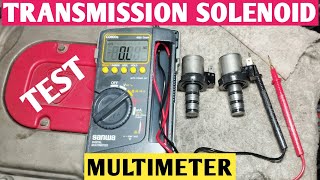
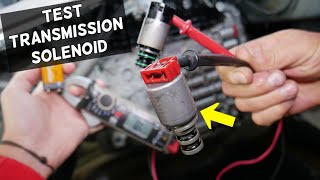
Measure the resistance across the solenoid's terminals using a digital multimeter. Compare the reading to manufacturer specifications (typically 10-30 ohms). An infinite reading (OL) means an open circuit, and a near-zero reading indicates a short.
Tools: Digital Multimeter, Socket Set, Drain Pan (Advanced) - Perform a Voltage Drop Test (Pro Tip)
Connect one multimeter lead to the battery positive post and the other to the power wire at the solenoid connector. Command the solenoid ON. A voltage drop greater than 0.5 volts indicates excessive resistance in the wiring. Repeat on the ground side; a drop over 0.2 volts indicates a poor ground.
Tools: Digital Multimeter with long leads, Bi-directional Scan Tool (Professional) - Check Transmission Line Pressure
Connect a pressure gauge to the transmission case test port. Compare pressure readings at idle and in various gears to manufacturer specifications. Low pressure (e.g., below 50 PSI at idle in Drive) indicates a failing pump or internal leaks.
Tools: Transmission Pressure Gauge Kit, Vehicle-specific Service Manual (Professional) - Analyze Solenoid Waveform with Oscilloscope (Pro Tip)
Monitor the voltage and amperage of the solenoid circuit while driving. A healthy solenoid shows a clean square wave. Voltage drops, amperage spikes, or a missing pintle hump reveal intermittent shorts or sticking internal parts.
Tools: Automotive Oscilloscope, Amperage Clamp (Professional) - Check for a Faulty TCM/PCM
If the solenoid, wiring, and hydraulic pressure test perfectly, the Transmission Control Module is faulty. Take the vehicle to a transmission specialist to check for software updates or perform advanced module diagnostics.
Tools: Advanced Diagnostic Scanner, Manufacturer-specific diagnostic tools (Professional)
When This Code Triggers (Freeze-Frame Conditions)
- Engine Coolant Temp: 180-210°F (82-99°C) (The fault appears after the vehicle reaches full operating temperature, as heat increases electrical resistance and alters fluid viscosity.)
- Engine RPM: 1500-2500 RPM (The code triggers during steady-state cruising or light acceleration when the transmission attempts a specific upshift (e.g., 2-3 or 3-4).)
- Vehicle Speed: 35-55 mph (56-88 km/h) (This fault occurs at city and highway cruising speeds, corresponding to the RPM and load conditions where the 'C' solenoid activates.)
- Engine Load: 25-60% (The intermittent fault manifests under moderate engine load, rarely during hard acceleration or deceleration.)
Related Codes
- P0700 — This is a general transmission fault code that appears with P0764. P0700 simply means the TCM stored a fault and requested the Check Engine Light to turn on.
- P0761 — Shift Solenoid 'C' Performance/Stuck Off. This indicates a hard failure where the solenoid is not activating. P0764 is for an intermittent electrical fault, while P0761 suggests a constant mechanical or hydraulic issue.
- P0762 — Shift Solenoid 'C' Stuck On. This indicates the solenoid is not deactivating, likely due to a mechanical blockage. A P0764 fault disappears when the car cools down, whereas a P0762 fault is persistent.
- P0730 — Incorrect Gear Ratio. This code is a direct symptom of a P0764 fault. P0764 points to the electrical circuit issue, while P0730 sets when the TCM detects the transmission physically slipping.
Climate & Environmental Factors
- Cold Weather: Cold, thick transmission fluid exacerbates issues with a mechanically sticky solenoid, making symptoms more pronounced during the first few minutes of operation. Electrical resistance in wiring also changes with temperature, causing intermittent faults to appear or disappear.
- High Humidity / Water Exposure: Humidity and water intrusion accelerate corrosion on wiring connectors and pins, leading to intermittent signal loss. This is a common cause in regions with high humidity or salted winter roads.
- High Altitude: Reduced air density at high altitude decreases the efficiency of the transmission cooler. This leads to higher operating temperatures over time, contributing to fluid breakdown and eventual solenoid failure.
How to Talk to a Mechanic About This Code
Say this: "I have a P0764 code with intermittent harsh shifting. I'd like to schedule a diagnostic. Please start by checking for TSBs and testing the solenoid 'C' circuit, including its wiring and connectors, before recommending a part replacement."
This signals you know that P0764 is often a wiring or connection issue, not just a bad solenoid. It directs the technician to perform a proper electrical diagnosis instead of immediately quoting for a new part, potentially saving you money on misdiagnosis.
Avoid saying:
- 'My transmission is acting weird.'
- 'My check engine light is on, can you just fix it?'
- 'I think I need a new transmission.'
Questions to ask before authorizing the repair:
- Did you find any Technical Service Bulletins for this issue on my vehicle?
- What were the results of the solenoid's resistance test?
- Did you perform a voltage drop test on the power and ground sides of the circuit?
- If you are recommending a solenoid replacement, is the new part OEM or aftermarket, and what is the warranty on both the part and the labor?
Where to Take It: Dealer vs Independent vs Chain
- Dealer:
Best for: Vehicles under powertrain warranty., Repairs involving known manufacturer TSBs or recalls (e.g., Ford lead frames, GM TEHCMs)., Complex diagnostics requiring manufacturer-specific software for programming.
Downsides: Significantly higher labor rates (often 50-100% more than independent shops)., May recommend replacing a larger assembly (e.g., entire valve body) when only a single component has failed. (Typical cost: +50% vs. baseline) - Independent Shop:
Best fit. An independent shop specializing in transmissions is the ideal choice for a P0764 code. They offer the right balance of expertise and value for this type of electrical and hydraulic diagnosis.
Best for: Out-of-warranty vehicles where cost is a major factor., Diagnosing and repairing common transmission issues like solenoid or wiring faults., Finding a transmission specialist with deep experience across many vehicle makes.
Downsides: Quality and expertise vary widely; finding a reputable *transmission specialist* is key., May not have access to the very latest manufacturer software updates. (Typical cost: +0% vs. baseline) - Chain Shop:
AVOID for diagnosis. While they perform fluid changes, they are not recommended for diagnosing an intermittent electrical fault like P0764. Misdiagnosis is highly likely.
Best for: Simple fluid and filter changes.
Downsides: Technicians often lack the specialized training for in-depth transmission diagnostics., High pressure to upsell services, which leads to recommending a full transmission rebuild when a minor repair is all that's needed. (Typical cost: -10% vs. baseline)
When to Walk Away From the Repair
If the estimated repair cost exceeds 50% of your car's private-party market value, sell the vehicle as-is.
- Car worth $4000, fix is $950: Fix it. A solenoid or solenoid pack replacement is well below the 50% threshold and restores the car's function.
- Car worth $4000, fix is $2800: Walk away. The repair requires a full transmission rebuild, which costs 70% of the car's value. This is not a sound investment.
- Car worth $15000, fix is $1500: Fix it. A more complex repair like a Ford lead frame is still only 10% of the vehicle's value and is a worthwhile repair.
What Scan Tool You Need for This Code
Minimum: A scanner that reads transmission-specific codes and views live data PIDs (Parameter IDs) for the transmission.
A cheap $20 code reader only shows the P0764 code. It cannot display live data, such as the commanded state of the solenoid versus its actual state, which is essential for diagnosing whether the problem is the solenoid, the wiring, or the computer.
Budget: BlueDriver Pro (~$100) — Reads transmission-specific codes, provides freeze-frame data, and allows you to graph live data for the shift solenoids during a test drive to spot intermittent dropouts.
Mid-range: Foxwell NT530/NT650 Elite or Innova 5610 (~$180) — Includes all budget features plus bi-directional control. This allows you to manually command the 'C' solenoid on and off while the engine is running to listen for a 'click', which is a critical step to confirm if the solenoid is mechanically stuck or electrically dead.
Professional: Autel MaxiCOM MK808/MK900BT or LAUNCH X431 Series (~$500-1200) — Offers full bi-directional control, advanced ECU coding and programming (for replacing a TCM), and displays data with near-dealership-level detail.
Rent vs buy: Rent a basic scanner from a parts store like AutoZone to confirm the code for free. However, to diagnose an intermittent issue like P0764, you need to monitor live data during a drive, making owning a scanner (at least a budget pick) a much more practical option.
How to Clear the Code After You Fix It
- Use an OBD-II scan tool to clear the diagnostic trouble codes (DTCs).
- Perform a TCM relearn/reset procedure if applicable (some vehicles require this after component replacement).
- Conduct a complete drive cycle to allow the readiness monitors to run.
Drive cycle (~20 minutes): A general drive cycle includes: 1) Cold start and idle for 2-3 minutes. 2) Drive in stop-and-go city traffic for about 5 minutes. 3) Accelerate to a steady highway speed of 55-60 mph for 10-15 minutes. 4) Safely coast to a lower speed (under 20 mph) without braking. 5) Come to a stop and idle for 1-2 minutes. This process allows the TCM to relearn shift points and verify the repair.
Readiness monitors affected: Comprehensive Component Monitor (CCM), Transmission-related monitors
Before emissions retest: drive at least 50 miles to fully set monitors.
Watch out for:
- Simply disconnecting the battery clears codes but resets all readiness monitors, causing an immediate emissions test failure.
- The code returns quickly if the root cause of the intermittent fault was not correctly identified and repaired.
- Not performing a full drive cycle leaves monitors 'Not Ready', preventing an emissions pass.
Will This Fail Emissions / State Inspection?
Yes — this code typically fails an OBD-II emissions inspection.
- California: An illuminated Check Engine Light results in an automatic failure of the smog check. After repair, a full drive cycle must be completed to set all required readiness monitors before a retest.
- New York: The NYS inspection includes an OBD-II scan. An active P0764 code causes an automatic failure. If the code is cleared, the vehicle cannot be tested until the readiness monitors are set.
- Texas: In counties where emissions testing is required, an active P0764 code and illuminated Check Engine Light result in an automatic failure of the OBD-II portion of the inspection.
Most Commonly Affected Vehicles
- Honda Accord, Odyssey, Pilot (2003-2008) — These models are known for transmission issues, including solenoid failures and clogged passages in the valve body. The solenoids are mounted externally, making them significantly easier and cheaper to replace.
- Ford F-150, Focus, Fusion, Escape (2010-2018) — On 6R80 and 10R80 transmissions in F-150s, solenoid codes point to a failing lead frame (conductor plate) or a faulty main control valve body, which is a $1,500+ repair.
- Chrysler/Dodge/Jeep Grand Caravan, Town & Country, Journey (2008-2019) — The 62TE transmission is notorious for solenoid pack failures. The entire pack must be replaced. On ProMaster vans, the mounting bolts are single-use and must be replaced.
- Chevrolet/GMC Silverado, Cruze, Malibu, Equinox (2010-2018) — Commonly reported on 6-speed automatic transmissions (6T40, 6L80). Causes range from bad solenoids to a failing TEHCM (Transmission Electro-Hydraulic Control Module).
- Hyundai/Kia Elantra, Sonata, Optima, Sorento (2011-2019) — This code relates to internal harness temperature sensor issues or the solenoids themselves. The repair involves replacing the entire internal wiring harness.
- Nissan Altima, Maxima, Rogue (2007-2015) — Vehicles with CVTs log this code due to valve body or TCM faults. The repair requires replacing the entire valve body assembly.
- Toyota Camry, RAV4, Corolla (2002-2011) — Older models experience solenoid failure due to age and fluid contamination. A simple solenoid replacement usually resolves the issue.
- Volkswagen/Audi Jetta, Golf, A4 (2009-2016) — On DSG models, this points to a problem with the expensive mechatronics unit, which houses the solenoids and control module.
Manufacturer-Specific Notes
- Honda: On many popular Honda/Acura models, the linear shift solenoids are mounted externally on the transmission case. This makes them far easier to access and replace compared to internal solenoids.
- Chrysler/Dodge/Jeep: These manufacturers bundle the shift solenoids into a single 'solenoid pack' for transmissions like the 62TE. If one solenoid fails, the entire pack must be replaced (e.g., TSB 21-016-11).
- Ford: For vehicles with the 6R80 transmission, solenoid codes are frequently caused by a failure of the 'lead frame' or conductor plate that sits on the valve body. Check your VIN for warranty extensions.
- General Motors (GM): On many GM 6-speed front-wheel-drive transmissions, the TCM is located inside the transmission on the valve body (TEHCM). The internal wiring on this module is a common failure point.
Real Owner Stories
2011 Dodge Grand Caravan at 115K miles
Check engine light came on, vehicle went into 'limp mode' and was stuck in 2nd gear. Shifting was harsh leading up to the failure.
What they tried:
- A local shop quoted $1,200 to replace the solenoid pack.
- Owner researched and found this is a very common issue with the 62TE transmission.
Outcome: Owner purchased an OEM solenoid pack (Mopar 68376696AA) for $400 and paid an independent mechanic $300 for labor. Total cost was $700. The repair fixed the issue completely.
Lesson: For Chrysler/Dodge vehicles with the 62TE transmission, P0764 almost always points to a failed solenoid pack. Replacing the whole pack is standard procedure and can be done much cheaper than initial quotes.
2007 Honda Odyssey at 160K miles
P0764 code appeared along with a flashing 'D' light on the dash. Experienced jerky shifting, especially when the vehicle was warm.
What they tried:
- Initially tried a 3x drain-and-fill with Honda DW-1 fluid, which made the shifting smoother temporarily, but the code returned.
- Tested the 'C' solenoid's resistance and found it was out of spec when hot.
Outcome: Replaced the single, externally-mounted Shift Solenoid 'C'. The part cost was under $100 for an OEM equivalent. The replacement took less than an hour with basic tools. The code was cleared and did not return.
Lesson: On many Hondas, the solenoids are external and easy to access. A simple fluid change is a good first step, but if the problem is temperature-related, suspect the solenoid itself.
2012 Ford F-150 (6R80 Trans) at 95K miles
Intermittent harsh shifting between 3rd and 4th gear, and eventually a P0764 code. Symptoms were worse after driving for 30+ minutes.
What they tried:
- A transmission shop diagnosed a bad 'C' solenoid and replaced it, costing $450. The problem returned within a week.
- The owner took the truck to a dealership for a second opinion.
Outcome: The dealership identified the true culprit as a faulty transmission lead frame (conductor plate). There was a Ford warranty extension for this known issue. The lead frame was replaced under warranty at no cost.
Lesson: Misdiagnosis is common. On Ford trucks with the 6R80 transmission, solenoid codes are very often caused by the lead frame, not the solenoid itself. Always check for TSBs and warranty extensions.
How to Prevent This Code From Triggering
- Perform regular transmission fluid and filter changes (Every 30,000-60,000 miles) — Clean fluid maintains its hydraulic properties and prevents debris from clogging solenoid valves and valve body passages. This is the single most effective way to prevent solenoid failure.
- Use only the manufacturer-specified transmission fluid (OEM) (Every fluid change) — Modern transmissions are highly sensitive to fluid viscosity and additive packages. Using a 'universal' or incorrect fluid causes seals to swell or shrink and affects solenoid actuation time.
- Install an auxiliary transmission cooler (Once, especially if you tow or live in a hot climate) — Heat is the number one enemy of an automatic transmission. An external cooler keeps fluid temperatures stable (ideally 175-200°F), preventing fluid breakdown and protecting delicate electronics.
- Address fluid leaks immediately (As needed) — Driving with low fluid levels causes the pump to suck in air, leading to pressure drops and overheating. This starves the solenoids of hydraulic pressure and quickly leads to internal damage.
Frequently Asked Questions
What is the most common misdiagnosis for P0764?
The most common mistake is replacing the shift solenoid without testing the circuit. An 'intermittent' fault frequently stems from a wiring issue, a poor connection, or an unstable power supply. Perform a voltage drop test to rule out these issues before condemning the solenoid.
Can I just clear the P0764 code and keep driving?
You can clear the code, but it returns quickly. Because it is an 'intermittent' fault, it disappears briefly, but the underlying frayed wire or sticking valve remains. Ignoring it risks turning a $300 repair into a $3,500 transmission rebuild.
Is replacing a shift solenoid a DIY job?
It is an intermediate to advanced repair depending on the vehicle. External solenoids (common on Hondas) are a simple bolt-on repair taking under an hour. Internal solenoids require draining fluid, removing the transmission pan, and working in a sterile environment.
Will a transmission flush fix a P0764 code?
A fluid change solves the problem if the cause is dirty fluid or a slightly sticky solenoid. However, if the solenoid is electrically faulty or the wiring is damaged, new fluid changes nothing. Avoid high-pressure flushes, as they dislodge debris and destroy the valve body.
What does 'Shift Solenoid C' do?
Shift Solenoid 'C' controls the hydraulic pressure that engages a specific gear's clutch pack. Depending on the transmission design, it manages the 2-3 shift, 3-4 shift, or torque converter lockup.
What's the difference between a shift solenoid and a solenoid pack?
A shift solenoid is an individual, replaceable component. A solenoid pack is an assembly housing multiple solenoids in a single unit. Many Chrysler, Dodge, and Jeep vehicles use a solenoid pack, requiring full replacement even if only one solenoid fails.
Can a bad ground wire cause a P0764 code?
Yes. A poor ground connection to the engine, transmission, or TCM causes intermittent voltage drops in the solenoid circuit. The TCM interprets this voltage fluctuation as a faulty solenoid, making ground checks a mandatory diagnostic step.
Key Takeaways
- Code P0764 indicates an intermittent electrical failure in the 'C' shift solenoid circuit, meaning the solenoid itself is only the root cause about 50% of the time.
- Check your transmission fluid first; dark, burnt, or low fluid causes pressure drops that trigger this exact code and require immediate attention.
- Perform a voltage drop test across the solenoid circuit, as a standard multimeter resistance check misses up to 80% of intermittent wiring faults.
- Stop driving immediately; continuing for more than 50 miles with slipping clutches escalates a $300 solenoid repair into a $3,500 complete transmission rebuild.
- Search for Technical Service Bulletins (TSBs) before buying parts, as vehicles like the 2008-2019 Dodge Grand Caravan require a complete $400 solenoid pack replacement rather than a single valve.
Helpful Videos




![What is P0764 Engine Code [Quick Guide]](https://img.youtube.com/vi/wK2j72Turis/mqdefault.jpg)

The information in this article is provided for general reference and educational purposes only. Vehicle specifications, procedures, and part compatibility can vary by production date, trim level, and region. Always consult your vehicle's factory service manual and verify part numbers before purchasing or performing repairs. Safety-critical components such as airbags, seat belts, and braking systems should be installed by a qualified professional.
- 🎬 Helpful Videos
- What Does P0764 Mean?
- Can I Drive With P0764?
- Common Causes
- Symptoms
- Diagnostic Flowchart
- Common Fixes & Costs
- Used vs. New Parts: Buying Guide
- What Happens If You Wait — Timeline
- Cost of Not Fixing It
- Diagnosis Steps
- When This Code Triggers (Freeze-Frame Conditions)
- Related Codes
- Climate & Environmental Factors
- How to Talk to a Mechanic About This Code
- Where to Take It: Dealer vs Independent vs Chain
- When to Walk Away From the Repair
- What Scan Tool You Need for This Code
- How to Clear the Code After You Fix It
- Will This Fail Emissions / State Inspection?
- Most Commonly Affected Vehicles
- Manufacturer-Specific Notes
- Real Owner Stories
- 2011 Dodge Grand Caravan at 115K miles
- 2007 Honda Odyssey at 160K miles
- 2012 Ford F-150 (6R80 Trans) at 95K miles
- How to Prevent This Code From Triggering
- Frequently Asked Questions
- What is the most common misdiagnosis for P0764?
- Can I just clear the P0764 code and keep driving?
- Is replacing a shift solenoid a DIY job?
- Will a transmission flush fix a P0764 code?
- What does 'Shift Solenoid C' do?
- What's the difference between a shift solenoid and a solenoid pack?
- Can a bad ground wire cause a P0764 code?
- Key Takeaways
- 🎟️ Get 5% Off