

P0762 on 2018-2023 Ford Mustang: Shift Solenoid 'C' Stuck On Causes & Fixes
On a 2018-2023 Ford Mustang with the 10R80 automatic transmission, code P0762 is almost always caused by a faulty main control valve body. This is a known issue covered by multiple Ford TSBs. The fix requires replacing the entire valve body assembly, a professional repair costing between $1,500 and $2,500. In many cases, the root cause is a failure of the CDF clutch drum, which leads to valve body problems.
- P0762 on a 2018-2023 Mustang points to a stuck shift solenoid 'C' in the 10-speed (10R80) automatic transmission.
- This is a very common and well-documented problem, with Ford issuing multiple Technical Service Bulletins (TSBs) for the symptoms of harsh and delayed shifting associated with this code.
- The most common and recommended fix is not to replace the individual solenoid, but the entire transmission main control (valve body) assembly.
- This is not a DIY-friendly repair. It requires specialized tools and knowledge and should be performed by a qualified transmission technician.
- Do not ignore this code. Continued driving can lead to more severe and expensive internal transmission damage.
What's Unique About the 2018-2023 Ford MUSTANG
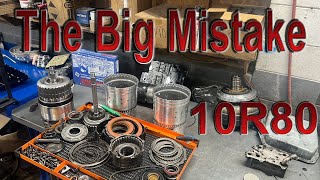
The 2018-2023 Mustang uses the 10R80 10-speed automatic transmission, which is known for experiencing harsh and delayed shifting issues. Ford has released numerous Technical Service Bulletins (TSBs) that directly address these problems across Mustangs, F-150s, and other platforms using this transmission. Code P0762 is frequently listed in these TSBs. A common underlying cause is a design flaw related to the CDF clutch drum sleeve 🎬 Watch: Understanding how the CDF clutch drum sleeve fails, which can move axially and cause hydraulic leaks, leading to a cascade of shifting problems and solenoid codes. Due to this known systemic issue, the manufacturer-recommended repair is often a complete valve body replacement, as simply replacing one solenoid is unlikely to fix the root cause.
Diagnostic Flowchart
Tap your situation to follow the diagnostic path that matches what you're seeing on this vehicle.
Symptoms You May Notice
- Harsh or jerky shifts, particularly the 3-4, 3-5, or 5-4 shifts.
- Delayed shifts or engagement when putting the car in gear (Park to Drive).
- Transmission getting stuck in one gear (limp mode).
- Illuminated Malfunction Indicator Lamp (MIL) or Check Engine Light.
- A feeling of being rear-ended as the transmission shifts.
- Unusual whining or clunking sounds from the transmission.
- RPM flare or slip between shifts.
- Transmission overheating.
- Replacing only the single Shift Solenoid 'C' when the entire valve body is faulty. This may not resolve the issue if the problem lies in the hydraulic passages, other solenoids, or a warped valve body casting.
- Performing only a transmission fluid flush. While clean fluid is critical, it will not fix a mechanically or electrically failed solenoid, a warped valve body, or a failed CDF drum.
- Ignoring the underlying CDF drum issue. If only the valve body is replaced without addressing a leaking CDF drum, the problem may return.
Most Likely Causes
- Faulty Main Control (Valve Body) Assembly 🔴 High Probability The 10R80 transmission has a known history of valve body issues, as documented in multiple Ford TSBs (e.g., TSB 24-2176, TSB 22-2428). Internal wear, sticking valves, or flaws in the valve body can cause solenoids to stick or hydraulic pressure to be misdirected. Often, this is a secondary failure caused by a problematic CDF clutch drum.
How to confirm: A technician will use a high-end scan tool to monitor solenoid commands vs. actual states and perform pressure tests. Given the number of TSBs, if symptoms and codes match, the valve body is the prime suspect. An owner on an Expedition forum reported a dealer found excessive metal shavings in the pan, leading to a transmission replacement under warranty for similar symptoms.
Typical fix: Complete replacement of the transmission main control (valve body) assembly with a new or remanufactured unit, followed by a PCM/TCM reprogram and adaptive learning drive cycle.
Est. part cost: $800-$1500 - CDF Clutch Drum Failure 🔴 High Probability A widely documented failure point in the 10R80 is the CDF (Clutch 'D'/'F') drum. A sleeve inside the drum can walk out of position, causing a loss of hydraulic pressure to the clutch pack. This pressure loss triggers the harsh shifts and can lead to solenoid-related codes like P0762 as the TCM tries to compensate. Forum users on Mustang6G.com have discussed this specific failure in detail.
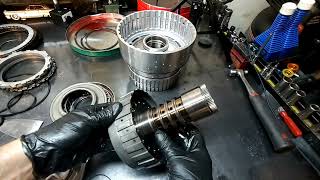
How to confirm: This requires transmission disassembly to inspect 🎬 Watch: A teardown showing internal CDF drum failure the CDF drum and its sleeve. A technician may first perform a pressure test as outlined in TSBs to identify a hydraulic leak in this circuit. Worn bushings are often the root cause of the sleeve movement.
Typical fix: Replacement of the CDF clutch drum assembly, which is a major transmission repair. Often done in conjunction with a valve body replacement.
Est. part cost: $200-$400 for the drum, but labor is significant. - Failed Shift Solenoid 'C' 🟡 Medium Probability The solenoid is part of the valve body, which is a known weak point. The solenoid itself can fail electrically or mechanically, causing it to stick. However, on the 10R80, the issue is more often systemic to the valve body or CDF drum rather than an isolated solenoid failure.
How to confirm: After dropping the transmission pan, a technician can test the solenoid's resistance with a multimeter to check for an electrical fault. A scan tool can also be used to command the solenoid on and off to check its mechanical function.
Typical fix: While the solenoid can be replaced individually, it is often replaced as part of the entire valve body assembly due to the high probability of a wider valve body issue.
Est. part cost: $50-$150 - Low or Contaminated Transmission Fluid ⚪ Low Probability While not specific to this platform, low fluid levels can cause pressure drops, and contaminated fluid (often with clutch material from internal wear) can cause any solenoid or valve to stick. The 10R80 is sensitive to fluid condition.
How to confirm: Check the transmission fluid level and condition. The 10R80 has a specific, complex procedure for this that does not use a traditional dipstick. A fluid change alone will not fix the mechanical issue but is a common first step for dealers.
Typical fix: Perform a transmission fluid drain and fill with the correct Motorcraft MERCON ULV fluid and replace the filter. This is always done as part of a valve body replacement.
Est. part cost: $150-$250
Rare But Worth Checking
- Wiring Harness Issue: Damage to the wiring harness inside or outside the transmission can cause a short to power, leading to a solenoid being constantly powered. This is less common than an internal component failure but should be checked, especially for corrosion at connectors.
- PCM/TCM Failure: In very rare cases, the Powertrain or Transmission Control Module can fail, sending a continuous signal to the solenoid. This usually triggers other fault codes as well.
Diagnosis Steps
- Verify the transmission fluid level and condition using the manufacturer's specified procedure. Note that this is complex on the 10R80 and does not involve a dipstick.
- Use a professional OBD-II scanner (like Ford's IDS) to confirm P0762 and check for any other related transmission codes listed in Ford's TSBs.
- Review live data from the scan tool to monitor the commanded state of Shift Solenoid 'C' versus its actual state.
- Consult the latest Ford Technical Service Bulletins (TSBs) like TSB 24-2176 or its successors. The diagnostic path is heavily guided by these documents.
- Inspect the transmission's external wiring harness and connectors for any visible damage, corrosion, or loose connections.
- If external checks pass, the TSBs often direct the technician to drop the transmission oil pan to access the valve body.
- Visually inspect the valve body, solenoids, and wiring for any obvious issues. Check for excessive metal debris in the pan.
- Based on TSB guidance, the next step is typically to replace the entire main control (valve body) assembly and perform a PCM/TCM software update.
- If the issue persists or if specific symptoms point to it, a more intensive repair involving the CDF clutch drum may be necessary.
- After repairs, perform the transmission adaptive learning drive cycle as specified by Ford.
Parts You'll Likely Need
- Transmission Main Control (Valve Body)
(OEM #HL3Z-7A100-B)— This is the most common failure point for shift-related issues in the 10R80 transmission, as documented by numerous Ford TSBs. It contains all the solenoids and control valves. The part number HL3Z-7A100-B supersedes HL3Z-7A100-A.
Trusted brands: Motorcraft
OEM price range: $800-$1500
Related Codes That Often Appear With This One
- P0751 — Shift Solenoid 'A' Performance/Stuck Off. All solenoid codes (P0751, P0756, P0761, P0766, etc.) are listed together in Ford TSBs for the 10R80, pointing to a common valve body or hydraulic supply issue.
- P0756 — Shift Solenoid 'B' Performance/Stuck Off. Often appears with other solenoid codes, indicating a systemic problem.
- P2700 — Transmission Friction Element 'A' Apply Time Range/Performance. This indicates a clutch application timing issue, often a direct result of the solenoid/valve body malfunction.
- P0729 - P0736 — These codes indicate incorrect gear ratios, which are a direct symptom of the transmission's inability to shift properly due to the underlying solenoid, valve body, or CDF drum fault.
Technical Service Bulletins (TSBs) & Recalls
- TSB 24-2176: Supersedes earlier TSBs. Addresses harsh/delayed shifts and lists P0762 among many other DTCs, pointing to potential software, valve body, or CDF clutch cylinder sleeve issues.
- TSB 24-2254: A later TSB that also addresses harsh/delayed shifts and the same list of DTCs, specifically mentioning axial movement of the CDF clutch cylinder sleeve. This TSB notes that it supersedes TSB 24-2176.
- TSB 22-2428: An earlier, widely-referenced TSB covering the same harsh shift conditions and DTCs across a wide range of Ford models with the 10R80 transmission. It also points to the valve body and CDF clutch cylinder sleeve as potential causes.
Platform-Specific Known Issues
- The 10R80 10-speed automatic transmission is the subject of multiple Ford Technical Service Bulletins (TSBs) for harsh shifting, delayed engagement, and related trouble codes, including P0762.
- The primary fix recommended in these TSBs is often the replacement of the entire main control valve body, not just an individual solenoid, indicating a known design or manufacturing issue with the assembly.
- A deeper root cause for many 10R80 issues is a flaw in the CDF clutch drum, where a sleeve can move and cause hydraulic leaks, leading to the symptoms that trigger solenoid codes.
Mechanic-Grade Diagnostic Values
- Shift Solenoid Resistance — expected: 5.0 - 5.4 ohms at 68°F (20°C). Failure: A reading outside this range indicates a faulty solenoid coil.
Scan Tool Commands That Help
- Ford IDS or FORScan: PCM – Transmission Strategy Download / Transmission Characterization Update — This is required after replacing the transmission or the main control (valve body). It involves entering the 13-digit solenoid body strategy and 12-digit solenoid body ID from the new part's tag into the PCM. Failure to do so will result in poor shifting and can damage the new valve body.
- Ford IDS or FORScan: Clear Transmission Adaptive Tables — This should be performed after replacing the valve body or any time erratic shifting is experienced. It resets the PCM's learned values for clutch application times, forcing it to relearn with the new hardware.
- Ford IDS: PCM - Transmission Accelerated Main Control Break In — Mentioned in TSB 20-2403 for some 2020 models, this is a dealer-level routine to address sticking valves in the main control body as an alternative to immediate replacement.
Wiring & Ground Locations
- Main Transmission Case Connector — On the exterior of the 10R80 transmission case, connecting the internal transmission harness to the main vehicle harness.. This is the primary electrical interface for all solenoids. Corrosion or damage to the pins related to Shift Solenoid 'C' or its power/ground supply at this connector can cause the P0762 code. A pinout diagram is needed to test continuity for the specific solenoid circuit.
Real Owner Repair Stories
- YouTube user Zoom Automotive (2017 Ford F-150 3.5L EcoBoost) — Shifting issues and a solenoid 'A' code (related issue).
❌ Tried (didn't work) Initial diagnostic troubleshooting.
✅ What actually fixed it The technician tore down the valve body and found a sticking actuator. Replacing the main control (valve body) assembly and programming the new solenoid strategy into the PCM resolved the issue. The video emphasizes that programming the new strategy is mandatory to prevent damage to the new part. - Reddit user Bemi_911 (2018 Mustang GT (out of warranty)) — Rough, clunky, lurching shifts in Sport mode, especially in gears 1-5.
❌ Tried (didn't work) Dealer diagnostics and potential PCM fix were quoted at ~$400, which the owner declined.
✅ What actually fixed it The owner used FORScan software and an OBD adapter to perform two service functions: "Clear Transmission Adaptive Tables" and "Stop Use of Transmission Adaptive." This resulted in a "night and day" difference with smooth shifting. This suggests software and learned behavior can be a cause of harsh shifting, though it may not always resolve a specific DTC like P0762.
OEM Part Supersession History
HL3Z-7A100-A→HL3Z-7A100-B— This is a common revision update for a part with known issues. The newer part number typically includes design or manufacturing improvements to enhance reliability and address the problems (like sticking valves) noted in TSBs.
Heads up: The parts are interchangeable as long as the correct solenoid strategy for the new part is programmed into the PCM. Failure to program the new strategy can lead to shifting problems or damage.
Model Year Variations Within This Range
- 2018-2020: Early versions of the 10R80 transmission are widely considered more prone to the harsh shifting and CDF drum issues. While the fundamental design is the same through 2023, anecdotal evidence from owners and technicians suggests that software updates and potential minor hardware revisions in later years (2021+) may have mitigated some of the harshness, though the underlying potential for valve body or CDF drum failure remains.
Helpful Videos

We Have This Part in Stock


The information in this article is provided for general reference and educational purposes only. Vehicle specifications, procedures, and part compatibility can vary by production date, trim level, and region. Always consult your vehicle's factory service manual and verify part numbers before purchasing or performing repairs. Safety-critical components such as airbags, seat belts, and braking systems should be installed by a qualified professional.
- Ford MUSTANG:
- 🎬 Helpful Videos
- 🛍️ Shop This Part
- What's Unique About the 2018-2023 Ford MUSTANG
- Diagnostic Flowchart
- Symptoms You May Notice
- Most Likely Causes
- Rare But Worth Checking
- Diagnosis Steps
- Parts You'll Likely Need
- Related Codes That Often Appear With This One
- Technical Service Bulletins (TSBs) & Recalls
- Platform-Specific Known Issues
- Mechanic-Grade Diagnostic Values
- Scan Tool Commands That Help
- Wiring & Ground Locations
- Real Owner Repair Stories
- OEM Part Supersession History
- Model Year Variations Within This Range
- 🎟️ Get 5% Off