

P0761 on 2001-2005 Chevrolet Silverado: Shift Solenoid 'C' Causes and Fixes
P0761 on a 2001-2005 Silverado indicates a performance issue with Shift Solenoid 'C', which on 4L60-E/4L80-E transmissions is the 2-3 Shift Solenoid ('B'). The code means the solenoid is stuck off. This commonly results in the truck being unable to shift past 2nd gear. The most frequent fix is replacing the faulty 2-3 shift solenoid and the internal wiring harness inside the transmission pan, along with a fluid and filter change. DIY cost is around $100-$200.
- P0761 means the transmission's Shift Solenoid 'C' is stuck off or not working correctly.
- Always check the transmission fluid level and condition first; this is the simplest and cheapest potential fix.
- The most common repair is replacing the faulty Shift Solenoid 'C', which is located inside the transmission oil pan.
- Driving with this code can lead to being stuck in gear and may cause more severe, expensive damage to the transmission.
- This repair is best left to an experienced DIYer or a professional, as it involves accessing internal transmission components.
What's Unique About the 2001-2005 Chevrolet SILVERADO
The 2001-2005 Silverado (GMT800 platform) primarily uses the 4L60-E or the heavy-duty 4L80-E transmission. For these models, P0761 almost always points to a problem with the 2-3 shift solenoid ('B'), the internal wiring harness, or contaminated fluid. Unlike later models with 6-speed transmissions (like the 6L80), the solenoids are simple, individual components and not integrated into a large, expensive control module (TEHCM). This makes the repair much more straightforward and affordable, as you can replace just the single failed solenoid.
Diagnostic Flowchart
Tap your situation to follow the diagnostic path that matches what you're seeing on this vehicle.
Symptoms You May Notice
- Check Engine Light is on
- Transmission gets stuck in one gear (limp mode), typically 2nd gear.
- Failure to shift into 3rd or 4th gear.
- Harsh or delayed shifting before the failure becomes permanent.
- Inability to engage reverse (less common, but possible if other issues are present).
- Increased fuel consumption due to high RPMs.
- Transmission overheating. 🎬 Watch: 11 common symptoms of a failing shift solenoid
- Replacing only the shift solenoid without also replacing the aging and likely brittle internal wiring harness, leading to a repeat failure.
- Replacing the transmission without first attempting to replace the inexpensive solenoids and harness, which often resolves the issue.
- Assuming the transmission is mechanically destroyed when it is an electrical control problem.
Most Likely Causes
- Faulty 2-3 Shift Solenoid ('B'/'C') 🔴 High Probability The electronic solenoids inside the transmission are a known failure point. They can fail electrically (open/shorted coil) or mechanically (stuck plunger) after many heat cycles and millions of actuations.
How to confirm: After dropping the transmission pan, test the solenoid's resistance with a multimeter. For a 4L60-E/4L80-E, it should be 20-40 ohms. A reading of infinity (open) or zero (short) confirms a bad solenoid. The 1-2 and 2-3 solenoids are identical and interchangeable for testing purposes.
Typical fix: Replace the faulty shift solenoid. It is highly recommended to replace both the 1-2 ('A') and 2-3 ('B') solenoids at the same time as they are inexpensive and have endured the same conditions.
Est. part cost: $20-$50 per solenoid - Low or Dirty Transmission Fluid 🔴 High Probability High mileage, towing, and infrequent service can cause fluid to break down and become contaminated with clutch material. This debris can clog the tiny passages in the valve body or cause the solenoid plunger to stick.
How to confirm: Check the transmission fluid level and condition using the dipstick. The fluid should be bright red and clear, not brown, black, or smelling burnt. Metal shavings on the dipstick magnet are a sign of severe internal wear.
Typical fix: Perform a transmission fluid and filter change. This is often the first step, but if the solenoid has already failed, a fluid change alone will not fix it.
Est. part cost: $50-$100 - Wiring or Connector Issues 🟡 Medium Probability The internal wiring harness lives in a harsh environment of hot fluid and can become brittle, causing wires to break or insulation to crack. The main external transmission connector can also leak fluid, causing corrosion on the pins.
How to confirm: Unplug the main round connector on the transmission case and inspect for corrosion or transmission fluid. After dropping the pan, visually inspect the internal harness for brittle, cracked, or broken wires leading to the solenoids.
Typical fix: If fluid has contaminated the main connector or if internal wires are damaged, the entire internal wiring harness/conductor plate must be replaced. This is a very common repair to perform along with the solenoids.
Est. part cost: $50-$150 - Clogged or Faulty Valve Body ⚪ Low Probability Debris from normal wear can clog the small passages within the valve body, preventing proper hydraulic pressure from reaching the clutches, even if the solenoid is working.
How to confirm: This is typically diagnosed after replacing the solenoid(s) and harness with no change in symptoms. Inspecting the valve body passages requires significant disassembly and expertise.
Typical fix: Clean the valve body passages or replace the valve body assembly. This is often part of a more comprehensive transmission rebuild.
Est. part cost: $200-$500
Rare But Worth Checking
- Faulty Transmission Control Module (TCM): This is very rare. The TCM is a robust component. Before condemning the TCM, all other possibilities (fluid, solenoid, wiring) must be exhaustively ruled out. A faulty TCM would likely set other codes and cause more widespread issues.
Diagnosis Steps
- Check the transmission fluid level and condition. If it's low, top it off. If it's dark, burnt, or contains debris, a fluid and filter change is necessary, but the underlying cause must still be found.
- Scan the computer for any other transmission-related codes. Multiple codes may point to a larger electrical or hydraulic issue.
- Inspect the external wiring harness and the main round connector at the transmission for any visible damage, corrosion, or fluid intrusion.
- If the fluid and external wiring are good, drop the transmission pan to access the internal components.
- Locate the 2-3 Shift Solenoid ('B'). In a 4L60-E, it is one of the two identical solenoids at the front of the valve body.
- Visually inspect the internal wiring harness for brittleness, cracking, or broken wires, especially at the solenoid connectors.
- Test the resistance of the 2-3 Shift Solenoid with a multimeter. A reading outside the 20-40 ohm specification confirms a bad solenoid.
- If the solenoid tests good, the problem is likely in the wiring harness or, more rarely, the valve body or TCM.
Parts You'll Likely Need
- Transmission Shift Solenoid (A & B Kit)
(OEM #24230298)— This is the component directly implicated by the code. It's best practice to replace both the 1-2 (A) and 2-3 (B) solenoids as a pair since they are identical, inexpensive, and have the same amount of wear.
Trusted brands: ACDelco, Delphi
OEM price range: $40-$60 for a kit of two
Aftermarket price range: $25-$45 for a kit of two - Internal Transmission Wiring Harness / Conductor Plate
(OEM #24229422 (Interchange for 2003+))— This is a very common point of failure. The plastic and wiring become brittle from heat and age, causing intermittent connections or open circuits. It is highly recommended to replace this along with the solenoids. Note that the harness design changed in 2003.
Trusted brands: ACDelco, Rostra (e.g., 350-0061 for 2003-2006), GM Genuine
OEM price range: $70-$120
Aftermarket price range: $40-$80 - Transmission Filter and Gasket Kit — This is required for any repair that involves dropping the transmission pan. It's a critical part of the service to ensure clean fluid is circulating.
Trusted brands: ACDelco, Wix, Fram
OEM price range: $30-$50
Aftermarket price range: $15-$30
Related Codes That Often Appear With This One
- P0700 — This is a general transmission fault code. It simply means the TCM has detected a problem and has requested the main engine computer to turn on the Check Engine Light. 🎬 Watch: How to replace shift solenoids on Allison transmissions
- P0756 — This is the code for Shift Solenoid 'B' Performance/Stuck Off, which is the correct code for the 2-3 solenoid. Seeing P0761 ('C') can sometimes be a misinterpretation by the scanner, but both point to the same physical part and problem on a 4L60-E/4L80-E.
- P0751 — This is a code for Shift Solenoid 'A' (1-2 Shift Solenoid). If multiple solenoid codes appear together, it points strongly towards a widespread electrical issue (like a failed internal harness), a major hydraulic blockage, or a problem with the TCM. [PIP4379K]
Technical Service Bulletins (TSBs) & Recalls
- PIP4379K: Mentions that DTC P0761 can be set along with a host of other transmission codes, potentially indicating a range inhibit or no reverse engagement, and advises following standard diagnostics.
Platform-Specific Known Issues
- A common owner experience is driving normally, then suddenly the truck will not shift out of 2nd gear, with the RPMs climbing high without a 2-3 shift. This is the classic symptom of this code.
- Many successful DIY repairs involve replacing both shift solenoids (A and B), the TCC lockup solenoid, and the internal wiring harness as a complete kit to prevent near-future failures of the other aged components.
Mechanic-Grade Diagnostic Values
- 1-2 & 2-3 Shift Solenoid Resistance — expected: 20-40 Ohms. Failure: Reading of 0 Ohms (short) or infinite/OL (open circuit).
- Pressure Control (PC) Solenoid Resistance — expected: 3.5-8.0 Ohms. Failure: Reading outside of the specified range.
- TCC Solenoid Resistance (non-PWM) — expected: 20-40 Ohms. Failure: Reading outside of the specified range.
- Voltage Supply at Main Connector Pin E — expected: 12 Volts (or battery voltage) with key on. Failure: Low or no voltage indicates a problem with the power supply to the transmission.
- Solenoid Control Pin Voltage (Pin A or B) — expected: Should show 12V when solenoid is OFF and drop to near 0V when commanded ON by the PCM/TCM.. Failure: Voltage does not change when solenoid is commanded on, indicating a wiring or PCM driver issue.
Scan Tool Commands That Help
- Tech 2 / GDS2 (or equivalent professional scanner): Solenoid Test / Actuator Test — With the engine off but key on, or engine running in park, a technician can command a specific solenoid (e.g., Shift Solenoid B) on and off. This allows the tech to listen for an audible 'click' from inside the transmission pan, confirming the solenoid is mechanically actuating. It also allows for checking the voltage change at the corresponding pin.
Wiring & Ground Locations
- Main Transmission Case Connector (Delphi Micro-Pack 100W) — Passenger side of the transmission case, vertical connection.. This is the central point for all electrical tests. Pin E is the 12V+ power feed for the shift solenoids. Pin A is the PCM control (ground) for the 1-2 Shift Solenoid. Pin B is the PCM control (ground) for the 2-3 Shift Solenoid ('C'). Testing at these pins can isolate a problem to the external harness, internal harness, or PCM.
- Transmission Ground — The transmission case itself is grounded to the chassis/engine block. For testing purposes, the transmission drain plug can serve as a reliable ground point.. A poor ground connection for the transmission can cause a variety of electrical issues and erratic solenoid behavior. Verifying a good ground is a fundamental step in electrical diagnosis.
Real Owner Repair Stories
- Scotty's Hobbies YouTube Channel (2001 Chevrolet Tahoe with 4L60-E (similar platform and transmission)) — Transmission was not shifting out of second gear.
❌ Tried (didn't work) Initial suspicion was on the shift solenoids.
✅ What actually fixed it The shift solenoids were tested with a multimeter and a 9V battery and found to be working correctly (clicking and within 20-30 ohm spec). The actual cause of the no-shift condition was determined to be worn 3-4 clutch packs, which resulted from a leaking check ball in the valve body accumulator. This highlights that even with classic solenoid code symptoms, the root cause can be mechanical/hydraulic. - Tahoe Yukon Forum User (High-mileage (215,000 miles) GM SUV with 4L60-E) — Transmission was 'kicking' and shifting harshly.
❌ Tried (didn't work) Not specified, but the issue was internal.
✅ What actually fixed it The owner found that several steel check balls in the valve body had worn their seats in the aluminum separator plate, nearly pushing through. This causes internal hydraulic leaks. The fix was installing a Transgo SK4L60E shift kit, which includes a new, more durable separator plate and seals. After the repair, the transmission was 'butter smooth'.
When the Usual Fixes Don't Work
- While P0761 most commonly points to a failed shift solenoid or its related wiring, it's critical for technicians to understand that it can also be a symptom of a deeper mechanical or hydraulic issue. In one documented case involving a 2001 GM vehicle, the shift solenoids tested perfectly fine both for resistance and actuation. The root cause was a worn check ball in the valve body, which led to a hydraulic leak and destroyed the 3-4 clutch pack, preventing the 2-3 shift. This demonstrates that if replacing the solenoids and harness does not fix the problem, the next step should be a thorough inspection of the valve body and separator plate for wear and hydraulic integrity before condemning the entire transmission.
OEM Part Supersession History
Varies by year (pre-2003 harness)→Varies by year (2003+ harness, e.g., Rostra 350-0061 / GM 24229422)— In 2003, the design of the Pressure Control (EPC) solenoid changed, which required a different connector on the internal wiring harness.
Heads up: A harness for a 2001-2002 model will not have the correct EPC solenoid connector for a 2003-2005 model, and vice-versa. Although the main 13-pin case connector is the same, this internal difference is critical. Always verify the harness by model year.
Model Year Variations Within This Range
- 2003-2005: These years use a different Pressure Control (EPC) solenoid than the 2001-2002 models. This change also mandated a different internal wiring harness with a smaller connector for the EPC solenoid. While the main case connector remained a 13-pin design, the internal harness is not directly interchangeable with earlier years without changing the EPC solenoid as well.
- 2001+: Models equipped with the 6.0L V8 engine may have the 4L65-E (RPO M32) transmission instead of the 4L60-E. The 4L65-E features stronger internal components like 5-pinion planetaries. However, for the purposes of diagnosing a P0761 code, the electrical components like the shift solenoids, harness, and diagnostic procedure are identical to the 4L60-E of the same year.
Helpful Videos

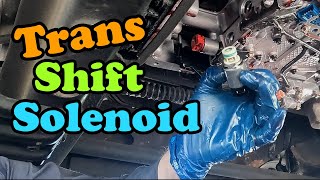
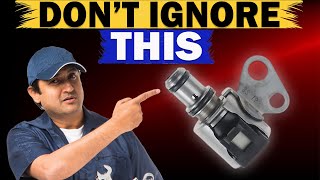
We Have This Part in Stock


The information in this article is provided for general reference and educational purposes only. Vehicle specifications, procedures, and part compatibility can vary by production date, trim level, and region. Always consult your vehicle's factory service manual and verify part numbers before purchasing or performing repairs. Safety-critical components such as airbags, seat belts, and braking systems should be installed by a qualified professional.
- Chevrolet SILVERADO:
- 🎬 Helpful Videos
- 🛍️ Shop This Part
- What's Unique About the 2001-2005 Chevrolet SILVERADO
- Diagnostic Flowchart
- Symptoms You May Notice
- Most Likely Causes
- Rare But Worth Checking
- Diagnosis Steps
- Parts You'll Likely Need
- Related Codes That Often Appear With This One
- Technical Service Bulletins (TSBs) & Recalls
- Platform-Specific Known Issues
- Mechanic-Grade Diagnostic Values
- Scan Tool Commands That Help
- Wiring & Ground Locations
- Real Owner Repair Stories
- When the Usual Fixes Don't Work
- OEM Part Supersession History
- Model Year Variations Within This Range
- 🎟️ Get 5% Off