

P0761 on 2014-2017 Chevy Silverado 1500: Shift Solenoid 'C' & TEHCM Guide
On a 2014-2017 Silverado, P0761 usually means the transmission is failing to shift correctly. After checking for low or burnt fluid, the most common cause is a failure of the entire Transmission Electro-Hydraulic Control Module (TEHCM), which houses both the solenoids and the computer. A failing torque converter is often the root cause, contaminating the fluid. This is a professional repair costing $800-$2500, and may require replacing the torque converter as well.
- P0761 on a 2014-2017 Silverado indicates a serious shifting problem that makes the truck unsafe to drive.
- Always check the transmission fluid level and condition first, as low or burnt fluid is a possible and simple fix.
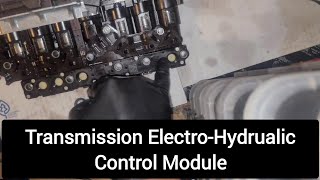
- The most likely cause is a failed Transmission Electro-Hydraulic Control Module (TEHCM), which contains the solenoids and computer in one unit.
- Replacing the TEHCM is a complex job that requires dropping the valve body and programming the new part to your truck's VIN.
- This is not a recommended DIY repair; professional diagnosis with a proper scan tool is essential to avoid replacing expensive parts unnecessarily.
What's Unique About the 2014-2017 Chevrolet SILVERADO 1500
The 2014-2017 Silverado 1500 primarily uses the 6-speed (6L80) and 8-speed (8L90) automatic transmissions. Unlike older designs with easily replaceable individual solenoids, these models feature an integrated Transmission Electro-Hydraulic Control Module (TEHCM). This single assembly houses the transmission computer (TCM) and all the shift solenoids. Therefore, a code for a single solenoid like P0761 often indicates a failure within this entire TEHCM unit, requiring its complete replacement and programming. Furthermore, a known issue with the 6L80 is premature wear of the torque converter clutch (TCC), which contaminates the fluid with metallic debris, leading to TEHCM failure.
🎬 Watch: Learn the real causes of 6L80 failure and how to address them.Diagnostic Flowchart
Tap your situation to follow the diagnostic path that matches what you're seeing on this vehicle.
Symptoms You May Notice
- Check Engine Light is on
- Transmission stuck in one gear (limp mode), often 3rd gear.
- Delayed, harsh, or erratic shifting, especially the 2-3 shift.
- Failure to shift into certain gears, particularly 3rd or 4th.
- Inability to engage Reverse. [Bulletin #PIP4379M]
- Poor acceleration and high engine RPMs.
- Sudden jerking or banging into gear, especially when cold or from a stop.
- Slight RPM flare (100-200 RPM) between shifts as the transmission slips briefly.
- Replacing just one shift solenoid. On 6L80/8L90 transmissions, the solenoids are part of the TEHCM and are not typically serviced individually; the entire module is replaced.
- Replacing only the TEHCM without addressing the root cause. If a failing torque converter contaminated the system, the new TEHCM will likely fail again in a short time.
Most Likely Causes
- Low or Dirty Transmission Fluid 🔴 High Probability The 6L80 is very sensitive to fluid condition. A common issue is the torque converter clutch (TCC) shedding its lining, contaminating the fluid with a fine, grey metallic paste. This debris clogs the tiny passages in the solenoids and valve body, causing them to stick.
How to confirm: Check the transmission fluid level and condition. The fluid should be bright red and not smell burnt. If the fluid on the dipstick or check plug looks dark or has visible metallic particles, it's a strong indicator of internal wear.
Typical fix: Perform a transmission fluid and filter change using DEXRON-VI fluid. However, if significant debris is present, this is only a temporary fix; the source of the debris (often the torque converter) must be addressed.
Est. part cost: $75-$150 - Faulty Transmission Electro-Hydraulic Control Module (TEHCM) 🔴 High Probability The 6L80/8L90 TEHCM integrates the solenoids and control module. Heat, vibration, and especially fluid contamination cause failure. The driver circuit for a solenoid can fail electronically, or the mechanical valve portion can become physically stuck from debris.
How to confirm: A professional mechanic will use a bi-directional scan tool to command Shift Solenoid 'C' on and off. If the solenoid does not respond but the wiring is intact, the TEHCM is condemned. This is the definitive test. 🎬 See how a pro tests TEHCM circuits and rebuilds the module.
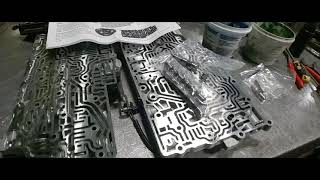
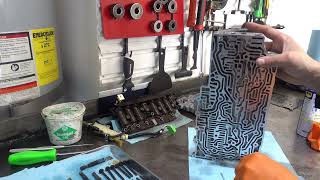
Typical fix: Replace the entire TEHCM assembly located inside the transmission oil pan. The TEHCM is often separated from the valve body by removing five 7mm and two 8mm bolts. The new module must be programmed to the vehicle's VIN.
Est. part cost: $400-$800 - Wiring or Connector Issues 🟡 Medium Probability The main transmission connector can become contaminated with fluid from a leaking internal harness seal. External wiring is also exposed to road debris, exhaust heat, and engine oil leaks which can saturate the harness and cause intermittent signals.
How to confirm: Inspect the main electrical connector on the transmission case for corrosion, bent pins, or the presence of transmission fluid. Test for continuity on the solenoid 'C' circuit from the TEHCM connector to the main harness.
Typical fix: Clean or replace the connector. If the internal harness seal has failed, the internal harness/TEHCM must be replaced.
Est. part cost: $50-$800 - Internal Mechanical Failure ⚪ Low Probability While robust, high mileage or severe use can lead to wear in the valve body or other mechanical parts, causing hydraulic pressure losses that mimic a solenoid failure. Burnt clutch packs from prolonged slipping are a common result.
How to confirm: This is a diagnosis of exclusion. If fluid, wiring, and the TEHCM are all good, a mechanic will perform hydraulic pressure tests. Finding significant metal shavings in the pan is a clear sign of mechanical failure.
Typical fix: Requires transmission overhaul or replacement.
Est. part cost: $2500-$5000
Rare But Worth Checking
- Failing Torque Converter:
Diagnosis Steps
- Check the transmission fluid level and condition. If it is low, dark, smells burnt, or contains a grey metallic paste, this indicates a significant internal issue.
- Scan the TCM for any other transmission-related codes. Note codes for other solenoids (P0751, P0756) or slipping (P0894), as this points to a systemic problem like TEHCM failure or major contamination.
- Inspect the main transmission wiring harness and connector for any signs of damage, corrosion, or fluid intrusion.
- Using a professional-grade scan tool, command Shift Solenoid 'C' on and off while monitoring its status. This directly tests the solenoid's electrical function and is a critical step.
- If the solenoid does not respond, drop the transmission pan and inspect for debris. If significant metallic debris is found, the torque converter is suspect.
- If the fluid is relatively clean, test the wiring for power and ground at the TEHCM connector.
- If wiring is confirmed to be good and the solenoid command test fails, the failure is internal to the TEHCM assembly itself.
- If replacing the TEHCM, it must be separated from the valve body (typically five 7mm and two 8mm bolts), and the new unit must be programmed to the vehicle's VIN before it will function correctly.
Parts You'll Likely Need
- Transmission Electro-Hydraulic Control Module (TEHCM)
(OEM #24256939 (Multiple P/Ns exist, verify by VIN))— This is the most common point of failure for this code on 6L80/8L90 transmissions. It contains the solenoids and the control computer as a single unit.
Trusted brands: ACDelco (GM Genuine), Sonnax (Remanufactured)
OEM price range: $500-$900
Aftermarket price range: $400-$700 - Automatic Transmission Fluid and Filter Kit — Required for any internal transmission service. Low or dirty fluid is a primary cause, and the fluid (DEXRON-VI) and filter must be replaced when the TEHCM is serviced.
Trusted brands: ACDelco
OEM price range: $100-$150
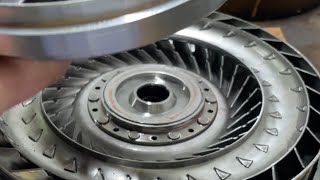
Aftermarket price range: $75-$120 - Torque Converter — Often the root cause of the failure. The original converter's clutch sheds material, contaminating the fluid and destroying the TEHCM. It is frequently replaced along with the TEHCM to ensure a long-term repair.
Trusted brands: ACDelco, Transtar
OEM price range: $400-$700
Aftermarket price range: $300-$600
Related Codes That Often Appear With This One
- P0700 — This is a generic code indicating the Transmission Control Module has stored a fault. It acts as a 'heads-up' that a more specific code, like P0761, is present.
- P0751, P0756, P0762 — These are codes for other shift solenoids ('A', 'B', 'C Stuck On'). When they appear with P0761, it strongly suggests a systemic problem like a failing TEHCM, widespread fluid contamination, or a power supply issue. [Bulletin #PIE0371B, 7]
- P0894 — This code for 'Transmission Component Slipping' often accompanies solenoid codes, as the solenoid's failure to provide correct hydraulic pressure can directly cause clutch packs to slip. [Bulletin #PIP4379M]
Technical Service Bulletins (TSBs) & Recalls
- PIE0371B: Notes that P0761 can occur with other solenoid codes, causing a Check Engine Light, delayed shifts, or the transmission being stuck in gear. Note: This TSB is for the Allison transmission but describes analogous symptoms.
- PIP4379M: Groups P0761 with a large family of transmission codes that can result from a single issue, causing conditions like no reverse engagement or a range inhibit.
Platform-Specific Known Issues
- A widely documented failure pattern on the 6L80 transmission involves the torque converter clutch (TCC). Due to OEM tuning and design, the TCC can constantly slip, generating excessive heat and shedding metallic friction material. This debris circulates through the transmission, clogs the filter, and embeds itself in the small orifices and solenoid valves within the TEHCM. This contamination causes the solenoid valves to stick, leading to performance codes like P0761, harsh shifts, and burnt clutches. A comprehensive repair often requires replacing the torque converter, flushing the cooler lines, and replacing the TEHCM, sometimes followed by a software tune to adjust TCC lockup behavior to prevent a recurrence.
Mechanic-Grade Diagnostic Values
- Shift Solenoid (On/Off type) Resistance — expected: 20-40 Ohms. Failure: A reading outside this range (open circuit or short) indicates a failed solenoid coil within the TEHCM.
- Pressure Control (PWM type) Solenoid Resistance — expected: 3-8 Ohms. Failure: A reading outside this range indicates a failed PWM solenoid coil within the TEHCM. Note: Shift Solenoid 'C' on a 6L80 is a PWM solenoid.
- Shift Solenoid (On/Off type) Current Draw — expected: 0.3-0.7 Amps at 12V. Failure: Incorrect amperage suggests the solenoid has failed and the TEHCM needs replacement.
- Transmission Fluid Temperature (for diagnostics) — expected: 158°F - 212°F (70°C - 100°C). Failure: Diagnostics and relearn procedures must be performed within this temperature range for accurate results.
Scan Tool Commands That Help
- GDS2 / Tech 2: Transmission Output Control / Solenoid Test — Used to command a specific solenoid (like Shift Solenoid 'C') on and off with the engine off. This helps isolate whether the fault is electrical (solenoid/TEHCM) or hydraulic/mechanical without having to drop the pan.
- GDS2 / High-End Scan Tool: Service Fast Learn Adapts — This procedure is mandatory after replacing the TEHCM or the entire transmission. It allows the new module to learn the clutch fill volumes and apply pressures. Skipping this step will result in poor shift quality, harsh engagement, and potential damage.
- GDS2 / High-End Scan Tool: Solenoid Automated Cleaning Process — If a solenoid performance DTC is present and fluid contamination is suspected, this function cycles all solenoids in a specific sequence to attempt to flush out debris. It can be attempted before condemning the TEHCM.
- GDS2 / High-End Scan Tool: Garage Shift Adapts — A manual procedure performed after the Service Fast Learn to fine-tune the shift adapts for Reverse-to-Drive and Neutral-to-Drive engagements. It involves repeatedly shifting between ranges for a set number of cycles.
Wiring & Ground Locations
- TEHCM Main Connector — On the side of the transmission case. The TEHCM itself is internal, bolted to the valve body.. This 16-pin connector is the sole communication and power link between the vehicle's main harness and the internal TEHCM. Corrosion or fluid intrusion at this connector can interrupt the command signal to Shift Solenoid 'C', causing a P0761 code.
Real Owner Repair Stories
- SilveradoSierra.com Forum (2014 Chevrolet Silverado 1500) — Truck would not shift out of 1st gear, Check Engine Light on with code P0761.
❌ Tried (didn't work) The user did not report trying other fixes first; they went straight to a professional diagnosis.
✅ What actually fixed it The dealership replaced the torque converter and the valve body (which includes the TEHCM). The total cost was approximately $3,400. This aligns with the common understanding that a failed torque converter contaminates the fluid, which in turn damages the TEHCM/valve body.
OEM Part Supersession History
24256939→24257213, 24259639, 24259835, 24261870, 24264141, 24265259, 24267576, 24270598, 24275873, 24276637— GM has released multiple revisions of the TEHCM over the years to address reliability issues and make hardware/software updates.
Heads up: While many part numbers supersede older ones, it is critical to use a TEHCM programmed for the specific vehicle VIN. Installing a used TEHCM from another vehicle without reprogramming will result in a no-start or limp mode condition due to GM's theft-deterrent system.
Model Year Variations Within This Range
- 2015-2017: Starting in 2015 on some models, the 8-speed 8L90 transmission became available alongside the 6-speed 6L80. While both use a similar TEHCM design, the specific part numbers, internal logic, and solenoid arrangements are different. Diagnosis remains similar (fluid check, scan tool commands, likely TEHCM failure), but parts are not interchangeable.
Helpful Videos

Used OEM Parts in Stock


New Aftermarket Parts Available



The information in this article is provided for general reference and educational purposes only. Vehicle specifications, procedures, and part compatibility can vary by production date, trim level, and region. Always consult your vehicle's factory service manual and verify part numbers before purchasing or performing repairs. Safety-critical components such as airbags, seat belts, and braking systems should be installed by a qualified professional.
- Chevrolet SILVERADO 1500:
- 🎬 Helpful Videos
- 🛍️ Shop This Part
- What's Unique About the 2014-2017 Chevrolet SILVERADO 1500
- Diagnostic Flowchart
- Symptoms You May Notice
- Most Likely Causes
- Rare But Worth Checking
- Diagnosis Steps
- Parts You'll Likely Need
- Related Codes That Often Appear With This One
- Technical Service Bulletins (TSBs) & Recalls
- Platform-Specific Known Issues
- Mechanic-Grade Diagnostic Values
- Scan Tool Commands That Help
- Wiring & Ground Locations
- Real Owner Repair Stories
- OEM Part Supersession History
- Model Year Variations Within This Range
- 🎟️ Get 5% Off