

P0756 on 2001-2005 GMC Sierra: 2-3 Shift Solenoid 'B' Causes and Fixes
P0756 on a 2001-2005 GMC Sierra indicates a problem with the 2-3 Shift Solenoid 'B' inside the 4L60E or 4L80E transmission. The most common fix is to replace the A and B shift solenoids, transmission filter, and fluid. This is often caused by dirty fluid or, more notably, a mechanically stuck 2-3 shift valve in the valve body, which a new solenoid alone cannot fix.
- P0756 on a 2001-2005 Sierra points to a fault with the 2-3 Shift Solenoid 'B'.
- The most common causes are dirty transmission fluid, a failed solenoid, or a mechanically stuck valve in the valve body.
- Do not drive the vehicle extensively with this code, as it can lead to severe transmission damage.
- When performing the repair, it is best practice to replace both shift solenoids (A and B), the transmission filter, and the fluid.
- If replacing the solenoid doesn't fix the problem, the valve body passages likely need to be cleaned.
What's Unique About the 2001-2005 Gmc SIERRA

The GMT800 platform, which includes the 2001-2005 Sierra, relies heavily on the durable but aging 4L60E and 4L80E transmissions. A common point of failure in these units is not just the solenoid itself, but the mechanical valve it controls within the valve body. Debris from normal wear can cause this valve to stick, meaning a simple solenoid replacement might not fix the issue. Owners often find that cleaning the valve body bores or addressing fluid contamination is key to a lasting repair. A YouTube video by Scotties Hobbies demonstrates using low-pressure air to free these stuck valves after solenoid replacement failed to solve the problem. Additionally, these transmissions use plastic accumulator pistons that can crack over time, leading to pressure loss and shifting issues that can be related.
Diagnostic Flowchart

Tap your situation to follow the diagnostic path that matches what you're seeing on this vehicle.
Symptoms You May Notice
- Check Engine Light is on
- Transmission is stuck in one gear (limp mode), often 3rd gear.
- Harsh or delayed shifting.
- Inability to shift into certain gears, particularly affecting the 2-3 shift
- Vehicle has sluggish acceleration from a stop
- No reverse engagement or a range inhibit message (as noted in TSB PIP4379K)
- Transmission slipping, where engine RPMs rise without an increase in speed.
- Transmission overheating.
- Replacing only the shift solenoid when the actual problem is a mechanically stuck valve in the valve body. This leads to the code returning shortly after the repair.
- Assuming the solenoid is bad when the transmission filter is severely clogged, starving the system of required fluid pressure.
Most Likely Causes

- Low or Dirty Transmission Fluid 🔴 High Probability Over time, transmission fluid breaks down and collects clutch material and metal shavings. This contaminated fluid can clog the fine passages in the valve body or cause the solenoid's plunger to stick. A clogged filter can also restrict flow, causing similar symptoms.
How to confirm: Check the transmission fluid level and condition using the dipstick. The fluid should be bright red and clear, not brown, black, or smelling burnt. If the level is low or the fluid is dirty, this is a likely contributor.
Typical fix: Perform a transmission fluid and filter change. Use fluid that meets GM's DEXRON-VI specification.
Est. part cost: $75-$150 - Failed 2-3 Shift Solenoid 'B' 🔴 High Probability The solenoid is an electromechanical part that is constantly working in hot fluid. The internal coil can fail electrically (open or short), or the mechanical plunger can wear out and stick.
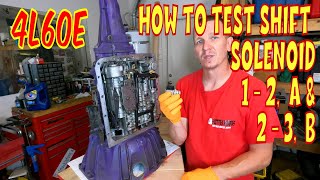
How to confirm: After dropping the transmission pan, the solenoid can be tested with a multimeter for proper resistance (typically 20-40 ohms). A scan tool can also be used to command the solenoid on and off to listen for a click. 🎬 Watch: How to test shift solenoids A and B A 9-volt battery can also be used to manually trigger the solenoid to listen for a click.
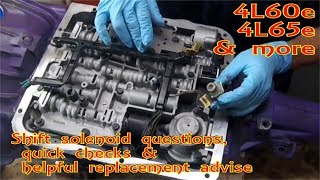
Typical fix: Replace the shift solenoid. It is highly recommended to replace both the 'A' (1-2) and 'B' (2-3) solenoids at the same time as they are identical parts (ACDelco P/N 24230298) and have experienced the same wear.
Est. part cost: $30-$60 - Sticking Valve in the Valve Body 🟡 Medium Probability This is a very common issue on 4L60E/4L80E transmissions. Debris in the fluid can cause the 2-3 shift valve to get stuck in its bore within the aluminum valve body. A new solenoid cannot fix a mechanically stuck valve, which is a frequent reason for the code returning after a repair attempt.
How to confirm: This is difficult to confirm without experience. After removing the solenoid, a technician may try to carefully move the valve in its bore with a small pick to check for free movement. In one forum post, a user confirmed their 2-3 shift valve was stuck and would only move about 3/4 of an inch before getting jammed.
Typical fix: The valve body must be removed for cleaning. The bores for the shift valves need to be thoroughly cleaned with solvent and a soft brush. In a YouTube repair video, the creator used low-pressure (35 PSI) compressed air to force the stuck valve out after solenoid replacement didn't work. In severe cases of scoring, the valve body may need to be replaced.
Est. part cost: $0 (if cleaning works) - $350+ - Damaged Internal Wiring Harness ⚪ Low Probability The wiring harness inside the transmission is submerged in hot fluid, which can make the insulation brittle and prone to cracking over time, leading to shorts or open circuits.
How to confirm: Visually inspect the wiring harness for brittle, cracked, or damaged insulation after dropping the transmission pan. Check for continuity on the solenoid circuit wires from the main external transmission connector to the solenoid connector.
Typical fix: Repair the specific damaged wire or replace the entire internal transmission wiring harness. Master solenoid kits often include a new harness.
Est. part cost: $50-$100
Rare But Worth Checking
- Faulty Powertrain Control Module (PCM): This is extremely rare and should only be considered after all other possibilities, including fluid, solenoids, valve body, and wiring, have been completely ruled out. A faulty PCM will usually present with multiple other seemingly unrelated codes.
Diagnosis Steps
- Check the transmission fluid level and condition. If low, top it off and check for leaks. If dark or burnt, a fluid and filter change is the first step.
- Use an OBD-II scanner to confirm P0756 and check for any other related transmission codes like P0700, P0751, or P073X.
- Drop the transmission oil pan to gain access to the internal components. Inspect the pan for excessive metal shavings or clutch material, which would indicate a more severe internal failure requiring a rebuild. A Reddit user with this code noted their magnet was covered in shavings, pointing to a larger issue.
- Visually inspect the internal wiring harness for any signs of damage, brittleness, or corrosion at the connectors.
- Locate Shift Solenoid 'B' (the 2-3 shift solenoid). Test its resistance with a multimeter. A reading between 20-40 ohms is typical. An open or shorted reading indicates a bad solenoid.
- If the solenoid tests good electrically, command it with a scan tool or a 9-volt battery and listen for a click. No click indicates it is mechanically stuck.
- If the solenoid clicks and tests good, remove it and gently probe the 2-3 shift valve within the valve body to ensure it moves freely in its bore. If it's stuck, the valve body needs to be cleaned or serviced.
- If all internal components and wiring check out, the final step would be to test the wiring from the main transmission connector back to the PCM, though this is less common.
Parts You'll Likely Need

- 1-2 & 2-3 Shift Solenoid Kit
(OEM #24230298)— This is the component directly identified by the code and is a common failure point. The 'A' and 'B' solenoids are identical and should be replaced as a pair.
Trusted brands: ACDelco, Bosch, Rostra
OEM price range: $30-$50
Aftermarket price range: $15-$30 - Transmission Filter and Pan Gasket Kit
(OEM #24236799 (Example Kit P/N))— This is required for any repair that involves dropping the transmission pan. A clogged filter can cause low pressure and is a primary cause of this code.
Trusted brands: ACDelco, Wix, ATP
OEM price range: $30-$50
Aftermarket price range: $15-$30 - Automatic Transmission Fluid (DEXRON-VI)
Related Codes That Often Appear With This One
- P0700 — This is a general transmission fault code. It means the Transmission Control Module (TCM) has detected a fault and has requested the Check Engine Light be turned on. P0756 is the specific fault.
- P0751 — This code is for the Shift Solenoid 'A' (1-2 shift). Since the A and B solenoids are identical parts that wear at the same rate, it's common for them to fail around the same time or be replaced as a pair.
- P0732 — This code means 'Gear 2 Incorrect Ratio'. Since P0756 affects the shift into or out of 2nd and 3rd gear, a failure can cause the computer to detect a gear ratio slip when commanding 2nd gear.
Technical Service Bulletins (TSBs) & Recalls
- PIP4379K: Mentions P0756 in a list of codes related to no reverse or range inhibit conditions, suggesting a potential link to broader hydraulic or internal issues.
Mechanic-Grade Diagnostic Values
- 1-2 (A) and 2-3 (B) Shift Solenoid Resistance — expected: 20-40 Ohms. Failure: A reading of 0 Ohms (short) or infinite/OL (open circuit).
- 1-2 (A) and 2-3 (B) Shift Solenoid Resistance (Alternate Spec) — expected: 19-24 Ohms at 68°F, 24-31 Ohms at 194°F. Failure: Readings outside of these temperature-corrected ranges indicate a failing coil.
- Solenoid Circuit Continuity Check — expected: 0 Ohms. Failure: Any resistance reading above zero indicates a problem in the wiring harness.
Scan Tool Commands That Help
- GM Tech 2 / GDS2: Solenoid Output Control / Transmission Output Controls — This bidirectional function allows a technician to command the 2-3 shift solenoid 'B' ON and OFF with the engine off. A distinct 'click' should be heard from the transmission pan area each time. The absence of a click confirms the solenoid is either electrically failed or mechanically stuck, helping to isolate the fault without having to immediately drop the pan.
Wiring & Ground Locations
- Transmission Case Connector — The main round electrical connector on the passenger side of the 4L60E/4L80E transmission case.. This is the primary point for testing the entire solenoid circuit from outside the transmission. Pin B is the control (ground side) for the 2-3 Shift Solenoid 'B', and Pin E is the 12V power feed for both shift solenoids. Testing for resistance between Pin B and Pin E will test the solenoid and internal harness. Testing for 12V at Pin E (key on) confirms power to the transmission.
- G103 / G104 — Main engine-to-chassis grounds, typically located on the front or side of the engine block near the cylinder heads.. A poor engine or PCM ground can cause erratic voltage and unpredictable behavior from electronically controlled components like transmission solenoids. While not a direct cause, verifying these grounds are clean and tight is a crucial step in diagnosing any electronic fault.
Real Owner Repair Stories
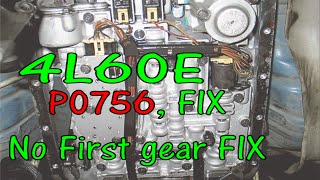
- YouTube channel 'Scotties Hobbies' (2001 Chevrolet Tahoe with 4L60E (mechanically similar to Sierra)) — P0756 code, no first gear.
❌ Tried (didn't work) Replacing both shift solenoids ('A' and 'B')., Resetting the computer by disconnecting the battery.
✅ What actually fixed it The 2-3 shift valve in the valve body was mechanically stuck. The owner dropped the pan, removed the solenoids, and used low-pressure (35 PSI) compressed air in the valve body passages to force the stuck valve out. After cleaning the valve and its bore, the code was resolved and normal shifting returned. - gmtruckcentral.com forum user (2004 GMC Envoy with 4L60E and 115,000 miles (mechanically similar to Sierra)) — P0756 code, sluggishness, downshift problems.
❌ Tried (didn't work) Replacing shift solenoids, filter, and fluid., Resetting the computer.
✅ What actually fixed it The user dropped the pan a second time and found the 2-3 shift valve was physically stuck in its bore, only moving about 3/4 of an inch. Freeing the stuck valve was the ultimate solution. - Reddit user in r/ChevyTahoe (2003 Chevrolet Tahoe with 240,000 miles (mechanically similar to Sierra)) — P0756 code returned repeatedly, loss of 1st and 4th gear.
❌ Tried (didn't work) Replacing the shift solenoids twice.
✅ What actually fixed it The user noted that each time the pan was dropped, the magnet was covered in metal shavings. The community concluded that the repeated code, despite new solenoids, combined with excessive metal debris, pointed to a larger internal mechanical failure requiring a transmission rebuild or replacement.
Model Year Variations Within This Range
- 2001+: In 2001, GM introduced the 4L65E, a heavy-duty version of the 4L60E, often paired with larger V8s (like the 6.0L). It features stronger internals, most notably 5-pinion planetary gearsets instead of the 4L60E's 4-pinion sets, and a hardened input shaft to handle more torque. While the solenoids and general diagnosis for P0756 are the same, it's important to correctly identify the transmission for ordering the right internal parts if a rebuild is needed.
- 2003+: Starting around 2003/2004, the EPC (Electronic Pressure Control) solenoid and internal wiring harness were changed. While this doesn't directly affect the 2-3 shift solenoid, it's a critical detail if replacing the entire internal harness.
Helpful Videos

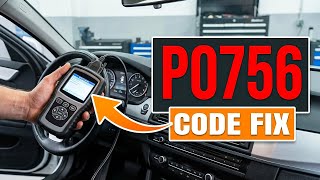
We Have This Part in Stock


The information in this article is provided for general reference and educational purposes only. Vehicle specifications, procedures, and part compatibility can vary by production date, trim level, and region. Always consult your vehicle's factory service manual and verify part numbers before purchasing or performing repairs. Safety-critical components such as airbags, seat belts, and braking systems should be installed by a qualified professional.
- Gmc SIERRA:
- 🎬 Helpful Videos
- 🛍️ Shop This Part
- What's Unique About the 2001-2005 Gmc SIERRA
- Diagnostic Flowchart
- Symptoms You May Notice
- Most Likely Causes
- Rare But Worth Checking
- Diagnosis Steps
- Parts You'll Likely Need
- Related Codes That Often Appear With This One
- Technical Service Bulletins (TSBs) & Recalls
- Mechanic-Grade Diagnostic Values
- Scan Tool Commands That Help
- Wiring & Ground Locations
- Real Owner Repair Stories
- Model Year Variations Within This Range
- 🎟️ Get 5% Off