

P0756 on 2011-2015 Chevrolet Silverado: Shift Solenoid 'B' Stuck Off Fixes
P0756 on a 2011-2015 Silverado with the 6L80 transmission indicates the 2-3 Shift Solenoid 'B' is stuck off. This is very often a mechanical issue, not an electrical one. The root cause is frequently debris from a failing torque converter lock-up clutch contaminating the fluid and causing the 'Clutch Select Valve #3' to stick in the valve body. The fix requires dropping the transmission pan to inspect/clean the valve body and replace the fluid and filter. Replacing only the solenoid often fails
- P0756 points to a failure in the 2-3 shift solenoid circuit, but the root cause is often mechanical (stuck valve) or hydraulic (clogged passage) rather than purely electrical.
- Always start diagnosis by checking the transmission fluid level and condition. Dirty, burnt, or low fluid is a major red flag and a common cause.
- GM has issued Technical Service Bulletins (TSBs) specifically linking this code to debris in the valve body, sometimes from aftermarket filters. [PIP5100, PIP5100A]
- Simply replacing the solenoid is often not enough. The fix must include a new filter, new fluid, and a thorough inspection and cleaning of the valve body to prevent the problem from recurring.
- This is not a beginner-friendly DIY repair. Due to the risk of contamination and the need for specialized tools, professional service is highly recommended.
What's Unique About the 2011-2015 Chevrolet SILVERADO
The 2011-2015 Silverado, particularly models with the 6-speed 6L80 automatic transmission, is known for issues within the valve body. A primary point of failure is the torque converter lock-up clutch, which is known to shed friction material. This metallic dust contaminates the Dexron VI fluid and travels through the transmission, lodging in tight-tolerance areas. Manufacturer Technical Service Bulletins (TSBs) specifically point to this debris clogging small orifices in the valve body separator plate and causing valves to stick, which directly triggers code P0756. [PIP5100, PIP5100A] This makes debris from the torque converter the root cause more often than a simple electrical failure of the solenoid itself. The 2014+ models also introduced a transmission thermostat that keeps temperatures higher, which some believe accelerates torque converter wear.
Diagnostic Flowchart
Tap your situation to follow the diagnostic path that matches what you're seeing on this vehicle.
Generation note: This range covers two Silverado generations. The 2011-2013 models are the end of the second generation (GMT900), while 2014-2015 models are the beginning of the third generation (K2XX). Both primarily used 6-speed automatic transmissions (like the 6L80) where these issues are common, but always verify the specific transmission in your truck before ordering parts. The K2XX models (2014+) introduced a transmission thermostat that runs the fluid hotter, which some owners believe contributes to premature torque converter failure compared to the earlier GMT900s.
Symptoms You May Notice
- Check Engine Light is on
- Vehicle is stuck in one gear (limp mode).
- Harsh, erratic, or delayed shifting.
- Failure to shift, especially the 1-2 or 2-3 shift.
- Transmission slipping.
- No engagement into reverse. [PIP4379K]
- Vehicle will not move in forward or reverse. [PIP5100, PIP5100A]
- Transmission overheating.
- Reduced fuel economy.
- Replacing only the shift solenoid (or the entire TEHCM) without addressing the root cause of fluid contamination. If debris from a failing torque converter is the real problem, the new parts will soon be damaged by the same debris, and the code will return.
- Assuming the solenoid is bad when the actual problem is a mechanically stuck valve within the valve body.
Most Likely Causes
- Contaminated or Low Transmission Fluid 🔴 High Probability The 6L80's torque converter lock-up clutch is a known failure point that sheds metallic debris into the fluid. TSBs confirm this debris is a primary cause, blocking passages in the valve body. [PIP5100, PIP5100A] Over time, this contaminated fluid causes solenoid valves to stick.
How to confirm: Check the transmission fluid level and condition. The fluid should be bright red and clear. If it is dark, gritty, smells burnt, or has a glittery/metallic appearance, it is contaminated and indicates internal wear, likely from the torque converter.
Typical fix: Perform a transmission fluid (Dexron VI) and filter change. If significant debris is found, a full transmission flush and torque converter replacement may be necessary to prevent a recurrence.
Est. part cost: $75-$150 - Stuck Shift Valve in Valve Body 🔴 High Probability Debris from fluid contamination physically jams the mechanical valves within the valve body. For P0756 on a 6L80, the 'Clutch Select Valve #3' is a specific known culprit that gets stuck in its bore. This is a mechanical problem, not an electrical one, which is why simply replacing the solenoid often doesn't work.
How to confirm: This requires removing the valve body from the transmission. The shift valve corresponding to solenoid 'B' (Clutch Select Valve #3) must be checked to ensure it moves freely in its bore without binding.
Typical fix: Remove, disassemble, and thoroughly clean the valve body passages. 🎬 Watch: How to disassemble and clean the 6L80 valve body Free up the stuck valve. If the valve or bore is scored, the valve body may need to be replaced or rebuilt by a specialist.
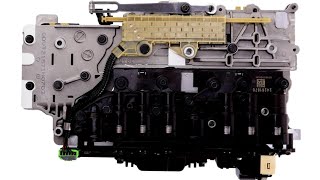
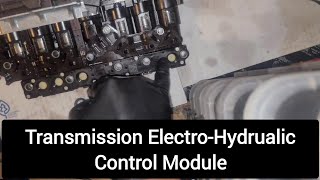
Est. part cost: $0 (cleaning) - $700+ - Failed Shift Solenoid 'B' / TEHCM Fault 🟡 Medium Probability While less common than a mechanically stuck valve, the solenoid itself can fail electrically. In the 6L80, the shift solenoids are integrated into the Transmission Electro-Hydraulic Control Module (TEHCM), which is the combined valve body electronics and TCM. A failure may require replacing this entire unit.
How to confirm: After dropping the pan, a mechanic can test the solenoid's resistance with a multimeter. A reading outside the 20-40 ohm range indicates failure. A high-end scan tool can also command the solenoid on and off to check for an audible click.
Typical fix: If the solenoid is confirmed bad, the TEHCM assembly is typically replaced. This requires programming to the vehicle's VIN.
Est. part cost: $400-$900
Rare But Worth Checking
- Faulty Aftermarket Spin-on Filter: TSB #PIP5100A specifically calls out aftermarket spin-on filters as a potential source of debris that can block valve body orifices. If you have recently had a transmission flush or service using non-OEM parts, this is a possibility.
- Damaged Wiring or Connectors: While less common than internal issues, wiring inside the transmission pan can become brittle from heat and fluid exposure, leading to a poor connection at the TEHCM connector. This should be checked when the pan is off.
- Faulty Transmission Control Module (TCM): This is a rare cause for this specific code on the 6L80 because the TCM is integrated into the TEHCM. A TCM fault is usually diagnosed as a TEHCM failure and the entire unit is replaced. It should only be considered after all other possibilities have been ruled out.
Diagnosis Steps
- Check the transmission fluid level and condition. If low, top it off. If dark, burnt, or contains metallic 'glitter', fluid contamination is likely. Note the presence of excessive debris in the pan.
- Use a professional scan tool to check for other transmission-related codes.
- With the scan tool, attempt to command Shift Solenoid 'B' on and off to see if it responds. A click may be audible from the transmission pan.
- Drop the transmission oil pan and visually inspect the fluid and pan magnet for excessive metal shavings or debris. A 'glitter bomb' in the pan points to torque converter failure.
- Inspect the wiring harness and main connector at the TEHCM for any signs of damage or corrosion.
- Test the resistance of Shift Solenoid 'B' with a multimeter. The expected range is 20-40 ohms. 🎬 Watch: How to rebuild and test the TEHCM circuits An open or shorted reading indicates electrical failure.
- If the solenoid tests good electrically, the primary suspect becomes a mechanical issue. Remove the valve body and inspect the 'Clutch Select Valve #3' to ensure it moves freely in its bore without sticking.
- Inspect the valve body separator plate for blocked orifices and worn check ball seats.
Parts You'll Likely Need
- Automatic Transmission Fluid and Filter Kit (Dexron VI) — Contaminated fluid is a primary cause and symptom of this code. A fluid and filter change using the correct Dexron VI fluid is essential to remove debris and restore proper hydraulic function.
Trusted brands: ACDelco
OEM price range: $80-$150
Aftermarket price range: $50-$100 - Transmission Control Module (TEHCM) — In the 6L80 transmission, the shift solenoids are integrated into this module. If a solenoid has an electrical failure, the entire TEHCM is typically replaced and must be programmed to the vehicle.
Trusted brands: ACDelco (OEM)
OEM price range: $400-$900
Aftermarket price range: $300-$600 - Valve Body Separator Plate — TSBs indicate the orifices in this plate can become blocked. [PIP5100] It can also be damaged by worn check balls. During a valve body service, it is often replaced as a preventative measure.
Trusted brands: ACDelco, Sonnax
OEM price range: $60-$120
Aftermarket price range: $40-$80
Related Codes That Often Appear With This One
- P0700 — This is a general transmission fault code that indicates the TCM has stored a specific code, like P0756. It often appears as a precursor.
- P0751 — This code is for Shift Solenoid 'A' Stuck Off. It's common to see codes for multiple solenoids when the issue is systemic, like widespread fluid contamination from a failing torque converter. [PIP4379K]
- P0776 — This code for Clutch Pressure Control (PC) Solenoid 2 Stuck Off can appear with P0756 as they are both related to valve body and pressure control issues stemming from the same root causes like debris or worn check balls.
- P0731-P0735 — These are codes for incorrect gear ratios. They often accompany solenoid codes because a stuck solenoid or valve directly causes the transmission to be in the wrong gear. [PIP4379K]
Technical Service Bulletins (TSBs) & Recalls
- PIP4379K: Mentions P0756 in a list of codes related to no reverse or range inhibit issues.
- PIP5100: Links P0756 to vehicles that won't move, advising inspection of valve body separator plate orifices for debris.
- PIP5100A: Similar to PIP5100, but specifically calls out blockage due to an aftermarket spin-on filter as a possible cause for code P0756.
Platform-Specific Known Issues
- TSB #PIP5100 and #PIP5100A note that vehicles may not move in forward or reverse and may set P0756 due to debris blocking orifices in the valve body separator plate. One bulletin specifically mentions debris from an aftermarket spin-on filter as a potential cause. [PIP5100, PIP5100A]
- TSB #PIP4379K lists P0756 among a wide range of transmission codes that can result from various internal hydraulic or mechanical faults, often presenting as 'no reverse' or a range inhibit. [PIP4379K]
- A common failure progression for the 6L80 transmission is for the torque converter clutch to fail, sending debris throughout the transmission. This debris then causes a valve (like the Clutch Select Valve #3) to stick in the valve body, which in turn sets the P0756 code.
Mechanic-Grade Diagnostic Values
- Shift Solenoid (On/Off Type) Resistance — expected: 20-40 Ohms. Failure: A reading outside this range (open or shorted) indicates a failed solenoid coil.
- Pressure Control (PWM Type) Solenoid Resistance — expected: 3-8 Ohms. Failure: A reading outside this range indicates a failed solenoid coil. While not directly Shift Solenoid 'B', a failure in other solenoids can point to a systemic TEHCM issue.
- Shift Solenoid (On/Off Type) Current Draw — expected: 0.3 - 0.7 Amps at 12V. Failure: Incorrect amperage draw when the solenoid is manually energized indicates a failure.
Scan Tool Commands That Help
- GDS2 / Tech2 / Professional Scan Tool: Solenoid Valve State Control / Output Control — This bidirectional command allows a technician to manually command Shift Solenoid 'B' on and off. An audible 'click' from the transmission pan indicates the solenoid is mechanically actuating. This helps differentiate between an electrical failure and a mechanical (stuck) issue without dropping the pan.
- GDS2 / Tech2 / Professional Scan Tool: Transmission Service Fast Learn — This procedure is required after replacing the TEHCM or valve body. It allows the TCM to relearn clutch apply pressures and shift timing. Failure to perform this can result in harsh shifting or persistent codes even with new parts. The procedure requires the transmission to be at operating temperature (70°C-95°C) and involves shifting through gears while the brake is applied.
- GDS2 / Tech2 / Professional Scan Tool: Solenoid Cleaning Procedure — Some GM software includes an automated function that cycles all solenoids to dislodge small amounts of debris. This can be attempted before more invasive repairs if the issue is intermittent or suspected to be minor contamination.
Wiring & Ground Locations
- TEHCM Main Connector — Inside the transmission, connected to the TEHCM/valve body assembly. Accessible after removing the transmission oil pan.. This is the sole electrical connection for all solenoids. The internal harness can become brittle from heat and fluid exposure, leading to poor connections or shorts. The connector and its pins should be inspected for damage or corrosion when the pan is off.
- G103 / G108 — G103 is on the front corner of the passenger side cylinder head. G108 is on the lower right rear of the engine block.. These are key engine and control module ground points. While not directly for the transmission, poor grounds here can cause erratic voltage and unpredictable behavior in various electronic modules, including the TCM. Corrosion at these points is a known issue and can cause a host of seemingly unrelated codes.
- Braided Ground Strap (Body/Engine to Frame) — One key strap runs from the back of the passenger side cylinder head area down to the frame, near the front passenger door area.. This strap provides the main ground path from the engine/transmission assembly to the vehicle's frame. If this strap is corroded, frayed, or broken—a common issue in salt-belt regions—control modules may ground improperly, leading to shifting issues and fault codes.
Real Owner Repair Stories
- YouTube User / GMTNation Forum Reports (Chevrolet Tahoe with 4L60E (similar valve body principles)) — P0756 code, no first gear, harsh shifting.
❌ Tried (didn't work) Replacing both shift solenoids ('A' and 'B')., Clearing codes and resetting the computer.
✅ What actually fixed it The 2-3 shift valve inside the valve body was physically stuck in its bore. The owner removed the valve body, worked the valve free, cleaned the bore, and reassembled. This restored normal function without replacing any additional parts.
OEM Part Supersession History
Varies by year (e.g., 24256861 for early models)→Multiple revisions exist (e.g., GM6L-TEHCM-C6 for 2012-2015 models)— Hardware and software updates to improve reliability of pressure switches, solenoids, and thermal tolerance.
Heads up: TEHCMs are year- and model-specific. Installing the wrong Tag ID or part number can result in a no-start condition, immediate limp mode, or failure to program. The part must be matched to the vehicle's VIN and specific calibration. Always reprogram a new TEHCM using GM's Service Programming System (SPS).
Model Year Variations Within This Range
- 2014-2015: The K2XX generation trucks introduced a transmission thermal bypass valve (thermostat) designed to get the transmission up to operating temperature faster. This system keeps the average fluid temperature around 196°F. Some mechanics and owners believe this higher operating temperature contributes to accelerated fluid breakdown and a higher rate of torque converter failure compared to the 2011-2013 GMT900 models, which generally run cooler.
Helpful Videos
Used OEM Parts in Stock


New Aftermarket Parts Available



The information in this article is provided for general reference and educational purposes only. Vehicle specifications, procedures, and part compatibility can vary by production date, trim level, and region. Always consult your vehicle's factory service manual and verify part numbers before purchasing or performing repairs. Safety-critical components such as airbags, seat belts, and braking systems should be installed by a qualified professional.
- Chevrolet SILVERADO:
- 🎬 Helpful Videos
- 🛍️ Shop This Part
- What's Unique About the 2011-2015 Chevrolet SILVERADO
- Diagnostic Flowchart
- Symptoms You May Notice
- Most Likely Causes
- Rare But Worth Checking
- Diagnosis Steps
- Parts You'll Likely Need
- Related Codes That Often Appear With This One
- Technical Service Bulletins (TSBs) & Recalls
- Platform-Specific Known Issues
- Mechanic-Grade Diagnostic Values
- Scan Tool Commands That Help
- Wiring & Ground Locations
- Real Owner Repair Stories
- OEM Part Supersession History
- Model Year Variations Within This Range
- 🎟️ Get 5% Off