

P0756 on 2014-2017 Chevrolet Silverado 1500: Shift Solenoid 'B' Stuck Off Fixes
This code means the 2-3 shift solenoid in your 6L80 transmission is stuck off. The most common causes are contaminated transmission fluid, often from a failing torque converter, or a stuck valve in the valve body. Expect to pay $350-$1300 for a professional repair that involves dropping the pan to replace the solenoid, fluid, and filter, and potentially the valve body or torque converter.
- P0756 means the 2-3 shift solenoid is stuck off, which will likely put your truck in 'limp mode' (stuck in 3rd gear).
- Always check the transmission fluid level and condition first; low or dirty fluid is a very common and simple cause.
- The problem may not be the solenoid itself, but a valve that is physically stuck inside the transmission's valve body due to debris.
- This is not a simple DIY fix for most people. Internal transmission work is complex and best left to a professional to avoid causing more damage.
What's Unique About the 2014-2017 Chevrolet SILVERADO 1500
For the 2014-2017 Silverado 1500, typically equipped with the 6L80 transmission, this code is a known and widespread issue. A primary culprit is the failure of the original torque converter, which sheds metallic debris into the transmission fluid. This contaminated fluid then clogs passages and causes the 2-3 shift valve or the solenoid itself to stick within the valve body. GM has acknowledged related issues in Technical Service Bulletins. [Bulletin #PIE0371B, Bulletin #PIP4379M] Because the TCM is integrated with the valve body (as a single unit called the TEHCM), debris can quickly damage these sensitive electronics, making a simple solenoid swap more complex.
Diagnostic Flowchart
Tap your situation to follow the diagnostic path that matches what you're seeing on this vehicle.
Symptoms You May Notice
- Check Engine Light is on
- Transmission is stuck in one gear (limp mode).
- Harsh, erratic, or delayed shifting.
- Vehicle feels sluggish or has no power from a stop.
- Failure to shift between 2nd and 3rd gear.
- Transmission slipping.
- May be unable to engage reverse. [Bulletin #PIP4379M]
- A feeling like a 'rumble strip' or shudder during light acceleration, which is a key symptom of torque converter failure.
- Replacing only the shift solenoid when the actual problem is a mechanically stuck valve in the valve body. The new solenoid will not fix a stuck valve.
- Replacing the solenoid or valve body without addressing the root cause of contamination from a failing torque converter. The new parts will fail again quickly if debris is still circulating in the system.
Most Likely Causes
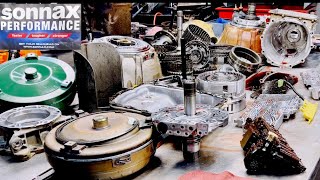
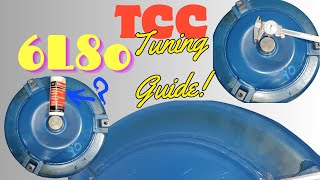
- Failing Torque Converter leading to Contaminated Fluid Very High Probability The stock 6L80 torque converter is a known weak point. The lockup clutch material is prone to breaking down and flaking off, sending metallic debris throughout the transmission. This is considered the #1 cause of 6L80 failure. 🎬 Watch: See what a failed torque converter looks like inside. This debris is what ultimately causes the valves and solenoids to stick.
How to confirm: When the transmission pan is dropped, inspect the magnet. A pan full of metallic sludge or 'coffee grounds' material is a definitive sign of torque converter failure. You may also experience a shudder at highway speeds (35-55 mph) before the code appears.
Typical fix: If significant debris is found, the torque converter must be replaced, the transmission cooler and lines must be flushed or replaced, and the valve body/solenoids (TEHCM) must be cleaned or replaced. Simply changing the fluid is not enough.
Est. part cost: $300-$800 for an upgraded billet torque converter - Sticking 2-3 Shift Valve in Valve Body 🔴 High Probability This is a very common issue on GM transmissions. Debris from normal wear or a failing torque converter can cause the metal 2-3 shift valve to get stuck in its bore within the valve body, even if the solenoid is working perfectly. An ATRA technical document specifically calls out inspecting the clutch select valve #3 in the lower valve body for wear and sticking when P0756 is present.
How to confirm: This is diagnosed after confirming the solenoid itself is good. A technician will remove the solenoid and manually check if the valve moves freely in its bore. In a documented case on a similar GM vehicle, a user found the 2-3 shift valve was physically stuck and required removal of the valve body to free it.
Typical fix: The valve body must be removed for cleaning and to free the stuck valve. In some cases, the valve bore can be reamed and oversized valves installed. Often, the entire valve body assembly (TEHCM) is replaced.
Est. part cost: $300-$700 for a remanufactured valve body - Failed 2-3 Shift Solenoid ('B') or TEHCM Assembly 🟡 Medium Probability On the 6L80, the solenoids are part of the Transmission Electro-Hydraulic Control Module (TEHCM) which lives inside the hot transmission fluid. Heat and contamination can cause electrical failure of the solenoid coil or mechanical failure of its plunger.
How to confirm: After dropping the transmission pan, the solenoid can be tested with a multimeter for correct resistance. A professional scan tool can also attempt to command the solenoid on and off to check its response. However, since it's part of the TEHCM, it's often replaced as a unit.
Typical fix: Replace the faulty shift solenoid. On a 6L80, this often means replacing the entire TEHCM assembly which includes all solenoids and the TCM. The new module will require programming to the vehicle.
Est. part cost: $400-$900 for a new or remanufactured TEHCM - Damaged Internal Wiring Harness ⚪ Low Probability The constant heat and fluid exposure inside the transmission can make wiring insulation brittle over time, leading to shorts or open circuits.
How to confirm: Visually inspect the wiring harness within the transmission for any signs of corrosion, breaks, or loose pins after dropping the pan.
Typical fix: Repair the damaged section of the harness or replace the entire internal harness, which is often part of the TEHCM assembly on a 6L80.
Est. part cost: $50-$150
Rare But Worth Checking
- Faulty Transmission Control Module (TCM): This is very rare as a standalone failure and should only be considered after all other possibilities have been ruled out. On the 6L80, the TCM is integrated into the TEHCM/valve body assembly, so it is typically replaced along with the solenoids.
Diagnosis Steps
- Check the transmission fluid level and condition. If it is low, dark, or smells burnt, this indicates a problem.
- Use an advanced scan tool to confirm P0756 is the primary code and check for any other related transmission codes, especially P0741 (TCC).
- Clear the code and perform a test drive to see if the symptoms and code return immediately.
- Drop the transmission oil pan and inspect the fluid and pan magnet for excessive metal shavings or clutch material. A light gray film is normal, but heavy, gritty, metallic sludge is a clear sign of torque converter or other hard part failure.
- Visually inspect the internal wiring harness for any obvious damage or loose connectors.
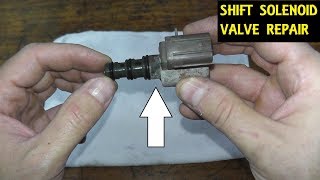
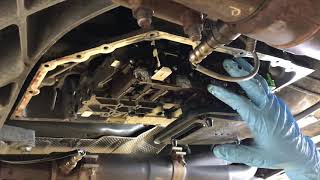
- Locate and test the 2-3 Shift Solenoid ('B'). Check its resistance with a multimeter. 🎬 Watch: How to test and replace your shift solenoids. Compare the reading to the manufacturer's specification (typically 20-40 ohms for these solenoids).
- If the solenoid tests good, inspect the 2-3 shift valve it controls within the valve body. Check if it moves freely in its bore. If it is stuck, the valve body needs to be serviced or replaced.
- If significant debris was found in the pan, the torque converter is the likely root cause and must be replaced to prevent a repeat failure.
- If a new TEHCM (valve body/solenoid assembly) is installed, it will require programming to the vehicle's VIN.
Parts You'll Likely Need
- Transmission Control Module (TEHCM)
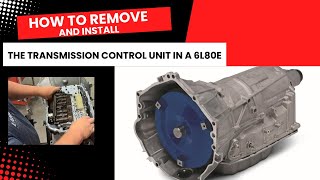
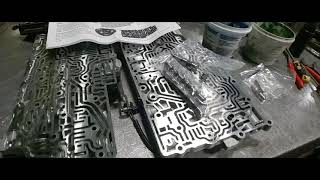
(OEM #24256523)— On the 6L80, the solenoids, valve body, and TCM are often serviced as one unit called the TEHCM. This is the most direct fix if the solenoid or valve body is confirmed to be faulty. Note that this part requires programming. 🎬 See this walkthrough for removing and installing the valve body.
Trusted brands: ACDelco (GM Genuine), Dorman (Remanufactured)
OEM price range: $500-$900
Aftermarket price range: $300-$600 - Transmission Filter Kit (Filter and Pan Gasket)
(OEM #24236933)— This is required anytime the transmission pan is removed for service. A clean filter is critical for proper fluid flow, especially after a contamination event.
Trusted brands: ACDelco, Wix, ATP
OEM price range: $40-$60
Aftermarket price range: $20-$40 - Automatic Transmission Fluid (DEXRON-VI)
(OEM #10-9395 / 19418016 (ACDelco))— The system must be refilled with fresh, clean fluid meeting GM's DEXRON-VI specification after any service. A pan drop requires about 6-7 quarts.
Trusted brands: ACDelco DEXRON-VI
OEM price range: $8-$12 per quart
Related Codes That Often Appear With This One
- P0751 — This code is for Shift Solenoid 'A' Stuck Off. Both codes are mentioned together in TSB #PIE0371B, suggesting a common underlying cause like fluid contamination from a failing torque converter affecting multiple solenoids.
- P0700 — This is a generic transmission fault code. It simply means the Transmission Control Module (TCM) has stored a fault code (like P0756) and has requested the main engine computer to turn on the Check Engine Light.
- P0741 — This code indicates 'Torque Converter Clutch Circuit Performance or Stuck Off'. It frequently appears alongside solenoid codes when the torque converter is failing and shedding debris, which is the root cause of the entire problem.
Technical Service Bulletins (TSBs) & Recalls
- PIE0371B: Addresses Check Engine Light, Delayed Shifts and/or Transmission Stuck in Gear with DTC P0756 set. This TSB was informational and directed technicians to standard diagnostic procedures.
- PIP4379M: Mentions DTC P0756 in a list of codes related to various transmission shifting issues, including no reverse, indicating a possible major internal fault.
Platform-Specific Known Issues
- GM issued Technical Service Bulletin #PIE0371B for 2016-2017 models which specifically mentions P0756 in relation to customer complaints of a Check Engine Light, delayed shifts, and/or the transmission being stuck in gear.
- TSB #PIP4379M for 2014 models also lists P0756 among a large group of DTCs that can occur with conditions like no reverse or a range inhibit, pointing to a significant internal issue.
- The #1 cause of failure for the 6L80 transmission is the torque converter shedding clutch material, which contaminates the entire system and leads to secondary failures like P0756.
Mechanic-Grade Diagnostic Values
- Shift Solenoid (On/Off type, e.g., SS1, SS2) Resistance — expected: 20-40 Ohms. Failure: A reading outside this range indicates a failed solenoid coil.
- Pressure Control Solenoid (PWM type) Resistance — expected: 3-8 Ohms. Failure: A reading outside this range indicates a failed solenoid coil. Note that Shift Solenoid 'B' (SS2) is an On/Off type.
- Shift Solenoid (On/Off type) Current Draw — expected: 0.3 - 0.7 Amps at 12V. Failure: Incorrect amperage suggests a faulty solenoid, though this is a less common test.
- Transmission Line Pressure at Idle — expected: 45-80 PSI. Failure: Pressure outside this range can indicate pump issues, valve body leaks, or other internal hydraulic problems.
Scan Tool Commands That Help
- GDS2 / Tech2: Solenoid Valve Cleaning Procedure — This is an automated function to use before component replacement. The tool cycles all solenoids to try and flush out debris that may be causing one to stick. If the code returns after this procedure, mechanical or electrical failure is more likely.
- GDS2 / Tech2: Transmission Service Fast Learn — This procedure is mandatory after replacing the TEHCM, valve body, or entire transmission. It resets and relearns the adaptive pressure values for the new components. Failure to perform this can result in harsh shifting or persistent codes even with new parts.
- GDS2 / Tech2: Output Controls / Solenoid Test — Allows a technician to manually command each solenoid on and off while monitoring transmission data. This can help isolate a specific solenoid that is not responding electrically or mechanically.
Wiring & Ground Locations
- G218 — Under the dash, behind the driver's side kick panel and carpet/insulation.. This is a major body ground point. On K2XX trucks, the foam insulation can get pinched under the ground nut, causing a poor connection over time. This leads to a host of bizarre electrical issues, including module communication problems that could potentially affect the TCM.
- Engine Block to Frame/Body Grounds — Multiple locations. One key ground runs from the negative battery cable to the side of the engine block. Another is located on the passenger side frame rail, often covered in grime.. Poor engine grounds can cause voltage drops and electrical noise, affecting all electronic modules, including the TEHCM. A video shows a 2015 Silverado with a bad ground connection at the block causing various issues. Cleaning these main contact points is a critical step in diagnosing any electrical fault.
- Transmission Case Connector — The main 16-pin round connector on the passenger side of the 6L80 transmission case.. This is the sole electrical link between the truck's main wiring harness and the internal TEHCM. Pins 5 (Ground), 10 (CAN Hi), and 11 (CAN Low) are critical for TCM operation. Corrosion or damage here will sever communication and power.
Real Owner Repair Stories
- Reddit user in r/Silverado (Gen 3 (2014-2018) Silverado with 6L80) — Not specified, but implied transmission failure.
❌ Tried (didn't work) The user understood that just replacing the torque converter would not be enough.
✅ What actually fixed it A full DIY transmission rebuild. The user replaced the torque converter with an aftermarket unit (Thor "Odin Original"), installed a shift kit, rebuilt the pump, and replaced seals in the TEHCM. The user noted that if the fluid shows signs of contamination, a full rebuild is necessary to prevent the debris from the old torque converter from destroying the new parts.
OEM Part Supersession History
Multiple (e.g., 24252423, 24256254, 24258562)→24256523 (for Gen 1 6T/6L series)— Consolidation of part numbers and potential design revisions by GM.
Heads up: The TEHCM for the 6L80 is often listed with parts for the 6T40/6T45, but they are physically different. Crucially, there are Gen 1 and Gen 2 versions of these modules that are not interchangeable. For the 2014 model year, it's critical to verify which generation is in the vehicle, as it was a transition period. Many vendors require a VIN to ensure the correct programmed module is supplied.
Model Year Variations Within This Range
- 2014-2018: While the 6L80 (RPO code MYC) was the primary 6-speed automatic used in this range for the 5.3L V8, the 8-speed 8L90 transmission was introduced as an option on higher trims starting in 2015. It's important to confirm which transmission the vehicle has, although P0756 is a common 6L80 issue. The 6L80 itself remained largely unchanged during this period.
Helpful Videos

Used OEM Parts in Stock


New Aftermarket Parts Available



The information in this article is provided for general reference and educational purposes only. Vehicle specifications, procedures, and part compatibility can vary by production date, trim level, and region. Always consult your vehicle's factory service manual and verify part numbers before purchasing or performing repairs. Safety-critical components such as airbags, seat belts, and braking systems should be installed by a qualified professional.
- Chevrolet SILVERADO 1500:
- 🎬 Helpful Videos
- 🛍️ Shop This Part
- What's Unique About the 2014-2017 Chevrolet SILVERADO 1500
- Diagnostic Flowchart
- Symptoms You May Notice
- Most Likely Causes
- Rare But Worth Checking
- Diagnosis Steps
- Parts You'll Likely Need
- Related Codes That Often Appear With This One
- Technical Service Bulletins (TSBs) & Recalls
- Platform-Specific Known Issues
- Mechanic-Grade Diagnostic Values
- Scan Tool Commands That Help
- Wiring & Ground Locations
- Real Owner Repair Stories
- OEM Part Supersession History
- Model Year Variations Within This Range
- 🎟️ Get 5% Off