

P0751 on 2009-2010 GMC Sierra 2500: Shift Solenoid 'A' Causes and Fixes
On a 2009-2010 GMC Sierra 2500, code P0751 usually means the Shift Solenoid 'A' (specifically, the Clutch Select Solenoid Valve 2) is stuck or has failed inside the 6L90 transmission. This causes poor acceleration from a stop (a 4th gear start) and other shifting problems. The most reliable fix, recommended by GM TSBs, involves replacing the lower valve body, which contains the faulty valve. This repair can cost between $400 and $1100 at a shop.
- P0751 on your Sierra 2500 points to a problem with Shift Solenoid 'A', which controls gear changes.
- The most common symptom is poor acceleration from a stop, as confirmed by a GM Technical Service Bulletin. [Bulletin #PI1344C]
- Always check the transmission fluid level and condition first, as this is the simplest potential fix.
- The most likely repair is replacing the faulty shift solenoid inside the transmission oil pan.
- Driving with this code can cause serious and expensive damage to your transmission; it should be addressed promptly.
What's Unique About the 2009-2010 Gmc SIERRA 2500
The 2009-2010 GMC Sierra 2500 uses a heavy-duty 6-speed automatic transmission (the 6L90). While generally durable, GM has acknowledged issues with solenoid performance in this family of transmissions. Technical Service Bulletin PI1344C explicitly states that a sticking 'Clutch Select Solenoid Valve 2' (359) is the cause of P0751. This failure results in the transmission starting in 4th gear, which manifests as the primary symptom of poor acceleration from a launch. This makes a faulty valve within the valve body a more direct and likely cause on this truck compared to generic possibilities. Early 6L80/90E transmissions were also prone to this code due to a valve body spacer plate gasket that didn't provide enough oil to the solenoid; an updated, notched gasket helps resolve this.
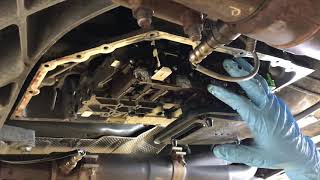
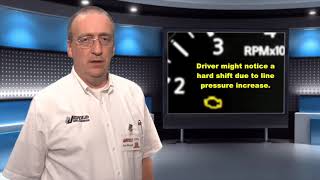
🎬 Watch: Expert explanation of the P0751 code and notched gasket fix.Diagnostic Flowchart
Tap your situation to follow the diagnostic path that matches what you're seeing on this vehicle.
Symptoms You May Notice
- Reduced acceleration, especially from a stop (feels like starting in 4th gear).
- Transmission slipping between gears.
- Harsh or delayed shifting.
- Transmission gets stuck in one gear (limp mode).
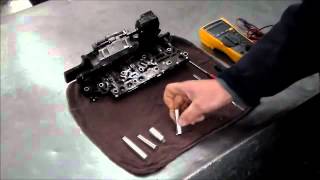
- Failure to engage reverse. [Bulletin #PIP4379N] 🎬 Watch: A helpful breakdown of shift solenoid performance issues.
- Check Engine Light is on.
- Flashing Tow/Haul light.
- Replacing the entire transmission when only the lower valve body was faulty.
- Replacing an individual solenoid when the valve bore in the valve body is scored, leading to a repeat failure.
- Replacing the TCM/TEHCM when the actual problem is a simple wiring issue, low fluid, or a clogged filter.
Most Likely Causes
- Failed or Sticking Shift Solenoid 'A' / Clutch Select Valve 2 🔴 High Probability GM TSB #PI1344C specifically identifies a sticking 'Clutch Select Solenoid Valve 2' as the primary cause for P0751. The valve itself can get scratches or scoring, causing it to bind in the valve body bore. Debris from normal wear or torque converter failure is often the underlying cause of the sticking.
How to confirm: A professional scan tool can command 'PC Solenoid 2' on and off to check for a response. TSB PI1344C details a performance test using compressed air (90-100 psi) to check for proper function. After dropping the pan, the valve can be removed from the lower valve body and visually inspected for scratches.
Typical fix: Drop the transmission pan and replace the entire lower valve body assembly, as recommended by GM TSBs if the valve shows signs of sticking or damage. In some cases, only the solenoid is replaced, but this may not fix an issue with the valve bore itself.
Est. part cost: $60-$700 - Low or Dirty Transmission Fluid 🟡 Medium Probability
How to confirm: Check the transmission fluid level and condition. On the 6L90, this is done via a fill plug at a specific operating temperature, as there is no dipstick. The fluid should be at the correct level, bright red (DEXRON-VI), and not smell burnt.
Typical fix: Perform a transmission fluid and filter change using DEXRON-VI fluid. If the fluid is very dark or contains significant metal particles, it points to a more severe internal failure.
Est. part cost: $75-$150 - Internal Transmission/Valve Body Issues ⚪ Low Probability TSB #PIP4379N points to a range of internal issues that can cause P0751. [Bulletin #PIP4379N] Debris from a failing torque converter is a known issue in 6L80/90 transmissions and can clog passages in the valve body, causing solenoids to stick. An early-style valve body spacer plate gasket could also starve the solenoid of oil.
How to confirm: After dropping the pan, inspect for excessive metal shavings or clutch material. This indicates a more serious internal problem requiring a transmission specialist.
Typical fix: Requires cleaning or replacing the valve body. An updated, notched valve body spacer plate gasket may be installed. In severe cases of debris, a full transmission rebuild and torque converter replacement may be necessary.
Est. part cost: $500-$3500+ - Wiring Harness or Connector Fault ⚪ Low Probability
How to confirm: Visually inspect the external transmission wiring harness for chafing, melting, or corrosion. Check the main 16-pin connector at the transmission for bent or corroded pins. The internal harness can also become brittle from heat and fluid exposure.
Typical fix: Repair the damaged section of wiring or replace the faulty connector. If the internal harness is faulty, it must be replaced, which requires dropping the pan and valve body.
Est. part cost: $20-$200
Rare But Worth Checking
- Faulty Transmission Control Module (TCM): This is rare and should only be considered after all other possibilities have been ruled out. On the 6L90, the TCM is integrated into the TEHCM (Transmission Electro-Hydraulic Control Module) inside the transmission pan, making it susceptible to heat and vibration. A TEHCM failure often requires replacing the entire valve body assembly.
Diagnosis Steps
- Check the transmission fluid level and condition. If it is low, dark, or smells burnt, address this first.
- Use an OBD-II scanner to check for other transmission-related codes, especially P0700, P0741, or other solenoid codes.
- With a professional scan tool, command 'PC Solenoid 2' on and off to see if it responds. Listen for a click from the transmission pan.
- Inspect the external transmission wiring harness and the main connector for any signs of damage, corrosion, or loose pins.
- If the solenoid appears unresponsive, drain the fluid and remove the transmission pan.
- Visually inspect the pan for excessive metal debris. A silver or gray metallic sheen indicates serious internal failure, possibly from the torque converter.
- Remove the lower valve body and locate the Clutch Select Solenoid Valve 2. Remove the valve from its bore and inspect it for scratches or scoring. If any marks are present, the lower valve body must be replaced per TSB PI1344C.
- If the valve and wiring test good, the issue may be a clogged valve body passage, a faulty TEHCM, or another internal transmission component, requiring professional diagnosis.
Parts You'll Likely Need
- Transmission Valve Body (Lower) — This is the most definitive repair recommended by GM TSBs when the Clutch Select Solenoid Valve 2 is found to be sticking or scored. It contains the valve bores and often comes with new solenoids.
Trusted brands: ACDelco
OEM price range: $400-$700
Aftermarket price range: $300-$500 - Transmission Shift Solenoid 'A' (Clutch Select Solenoid 2)
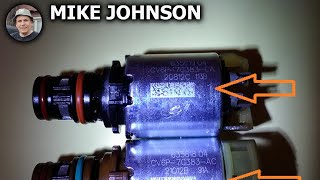
(OEM #24259852)— This is the specific solenoid identified in TSBs. It may be replaced individually if the valve body bore is not damaged, but this is a less common fix.
Trusted brands: ACDelco
OEM price range: $60-$120
Aftermarket price range: $40-$80 - Transmission Fluid and Filter Kit
(OEM #24236933 (Filter Kit))— Low or dirty fluid is a common cause, and the fluid and filter must be replaced anytime the transmission pan is removed for service. DEXRON-VI fluid is required.
Trusted brands: ACDelco
OEM price range: $100-$150
Aftermarket price range: $75-$120 - Valve Body Spacer Plate
(OEM #24272467)— An updated, notched version of this gasket is a known fix for P0751 on early 6L80/90 transmissions, as it improves oil flow to the solenoid, preventing the delay that triggers the code.
Related Codes That Often Appear With This One
- P0700 — This is a generic code indicating the TCM has detected a fault. It acts as a request to the main engine computer to turn on the check engine light and will almost always accompany a specific transmission code like P0751.
- P0894 — This code means 'Transmission Component Slipping'. It often appears with P0751 because a stuck solenoid prevents proper gear engagement, which the TCM interprets as clutch slippage. [Bulletin #PIP4379N]
- P0756 — This code is for Shift Solenoid 'B'. Seeing codes for multiple solenoids can point to a common root cause like contaminated fluid, low voltage, or a failing TEHCM/valve body.
- P0741 — This code for 'Torque Converter Clutch Circuit Performance or Stuck Off' is a strong companion code. Its presence suggests the root cause of the P0751 is a failing torque converter shedding debris into the valve body.
Technical Service Bulletins (TSBs) & Recalls
- PI1344C: Diagnostic tips for reduced acceleration and slipping from a launch with DTC P0751 set. Recommends lower valve body replacement if the Clutch Select Solenoid Valve 2 is scratched or sticking.
- PIP4379N: Lists P0751 among many other codes related to delayed engagement, no reverse, or range inhibit due to internal transmission issues.
- 07-07-30-031D: An early TSB for 6L80/6L90 transmissions that also identified inspecting Clutch Select Valve 2 for freedom of movement as a fix for P0751.
Platform-Specific Known Issues
- TSB #PI1344C specifically mentions that P0751 can cause 'reduced acceleration at low speed and/or transmission slipping from a launch' due to a sticking Clutch Select Solenoid Valve 2, resulting in a 4th gear start.
- TSB #PIP4379N includes P0751 in a long list of codes that can be triggered by various internal transmission faults, leading to symptoms like delayed engagement or no reverse.
- An early TSB (#07-07-30-031D) for 6L80/6L90 transmissions also identified Clutch Select Valve 2 as a cause for P0751, indicating this has been a known issue for a long time.
Mechanic-Grade Diagnostic Values
- Shift Solenoid (On/Off type) Resistance — expected: 20-40 Ohms. Failure: A reading outside this range indicates a faulty solenoid coil.
- Pressure Control Solenoid (PWM type) Resistance — expected: 3-8 Ohms. Failure: A reading outside this range indicates a faulty solenoid coil.
- Voltage at TEHCM Connector Pin 4 (Battery +) — expected: ~12.6V (Battery Voltage). Failure: Low or no voltage indicates a problem with the power supply to the transmission control module.
- Voltage at TEHCM Connector Pin 5 (Ground -) — expected: ~0V. Failure: Voltage significantly above 0V indicates a poor ground connection, which can cause erratic TEHCM behavior.
Scan Tool Commands That Help
- GDS2 / Tech2: Solenoid Control / Active Test — This bidirectional command allows a technician to manually cycle Shift Solenoid 'A' (Clutch Select Solenoid 2) with the engine off. A healthy solenoid will produce an audible 'click' from the transmission pan, confirming the electrical circuit and solenoid coil are functional.
- GDS2 / Tech2: Transmission Service Fast Learn Adapts — This procedure is mandatory after replacing the TEHCM, valve body, solenoids, or the entire transmission. It runs the transmission through a sequence to learn clutch fill times and pressures, ensuring smooth shifts and preventing premature wear.
Wiring & Ground Locations
- Main Transmission Connector — The 16-pin main electrical connector for the TEHCM is located on the passenger side of the transmission case.. This is the primary point for testing power (Pin 4) and ground (Pin 5) to the entire TEHCM. Corrosion or damage here can cut power or communication, causing various codes including P0751.
- G103 — On the front of the right (passenger side) cylinder head.. This is a primary engine ground point. The TEHCM and other critical engine sensors rely on clean ground connections. A poor ground at G103 can cause voltage fluctuations and erratic electronic behavior, potentially triggering false transmission codes.
- Engine Block to Firewall/Chassis Ground Strap — A braided strap typically located at the rear of the engine, connecting the cylinder head or block to the vehicle's firewall/chassis.. This is a critical ground path for the entire powertrain. Corrosion or breakage of this strap is a known issue that causes a wide range of electrical problems, including poor shifting performance and seemingly random trouble codes as modules search for a stable ground.
Real Owner Repair Stories
- Jasper Engines & Transmissions Tech Update (Early-style GM 6L80/90E transmissions (applies to 2009-2010 models)) — DTC P0751 is set, Check Engine Light is on, driver may notice a hard shift.
❌ Tried (didn't work) The source implies that simply replacing the solenoid or clearing the code is not a permanent fix for this specific underlying issue.
✅ What actually fixed it The definitive fix is to install an updated, 'notched' valve body spacer plate gasket. This updated gasket provides a higher volume of oil to the Clutch Pressure Control Solenoid 2 (Shift Solenoid 'A'), preventing the operational delay that triggers the P0751 code.
When the Usual Fixes Don't Work
- In cases where replacing the entire TEHCM (valve body, solenoids, and TCM) does not resolve the P0751 code, the root cause is almost certainly a major internal mechanical failure. A well-documented example is a cracked 1-2-3-4 clutch piston or wave plate. This part's failure prevents the hydraulic circuit from building pressure, so even with a perfectly functioning new solenoid and valve body, the shift cannot complete. The TCM sees this failure and re-sets the P0751 code, leading the technician to believe the new electronic parts are also faulty when the problem lies deeper within the clutch drums, requiring a full transmission teardown.
OEM Part Supersession History
Unknown (original piston in pre-2010 models)→24258159— The original 1-2-3-4 clutch piston in applications built before June 2010 was prone to cracking. The updated piston has 22% more rib area for increased strength.
Heads up: This is a recommended durability upgrade when rebuilding an early 6L90 transmission.Unknown (original flat spacer plate gasket)→Notched Valve Body Spacer Plate Gasket (e.g., 24272467)— The original gasket design could lead to oil starvation for the Clutch Select Solenoid 2, causing a delay that sets P0751. The updated notched gasket provides a higher volume of oil to the solenoid.
Heads up: This is a specific fix for early-style 6L80/90E transmissions experiencing P0751.
Model Year Variations Within This Range
- 2009-Early 2010: These models are more susceptible to a cracked 1-2-3-4 clutch piston and may have the original, non-notched valve body spacer plate gasket, making them prime candidates for the edge-case failures and specific part upgrades mentioned.
Helpful Videos
We Have This Part in Stock



The information in this article is provided for general reference and educational purposes only. Vehicle specifications, procedures, and part compatibility can vary by production date, trim level, and region. Always consult your vehicle's factory service manual and verify part numbers before purchasing or performing repairs. Safety-critical components such as airbags, seat belts, and braking systems should be installed by a qualified professional.
- Gmc SIERRA 2500:
- 🎬 Helpful Videos
- 🛍️ Shop This Part
- What's Unique About the 2009-2010 Gmc SIERRA 2500
- Diagnostic Flowchart
- Symptoms You May Notice
- Most Likely Causes
- Rare But Worth Checking
- Diagnosis Steps
- Parts You'll Likely Need
- Related Codes That Often Appear With This One
- Technical Service Bulletins (TSBs) & Recalls
- Platform-Specific Known Issues
- Mechanic-Grade Diagnostic Values
- Scan Tool Commands That Help
- Wiring & Ground Locations
- Real Owner Repair Stories
- When the Usual Fixes Don't Work
- OEM Part Supersession History
- Model Year Variations Within This Range
- 🎟️ Get 5% Off