

P0751 on 2006-2010 Chevrolet Silverado: Shift Solenoid 'A' Performance Guide
On a 2006-2010 Silverado, P0751 almost always means the 1-2 Shift Solenoid ('A') is failing or clogged with debris. On 4-speed (4L60-E) models, this is a simple solenoid replacement. On 6-speed (6L80) models, it's often a sticking valve in the valve body, as noted in GM TSBs, requiring more extensive work. The fix involves dropping the transmission pan to replace the solenoid/valve body, fluid, and filter. Parts typically cost $50-$150 for the 4-speed repair.
- P0751 on a 2006-2010 Silverado indicates a performance problem with the 1-2 Shift Solenoid ('A').
- The most common cause is the solenoid itself sticking or failing, a problem documented by GM in service bulletins.
- The second most common cause is old, dirty, or low transmission fluid.
- The repair requires dropping the transmission pan and is best left to a professional or experienced DIYer.
- Do not continue to drive with this code, as it can quickly lead to more severe and expensive transmission damage.
What's Unique About the 2006-2010 Chevrolet SILVERADO
This year range covers two distinct Silverado generations and their transmissions: the GMT800 'Classic' (2006-early 2007) with the 4-speed 4L60-E, and the GMT900 (late 2007-2010) which used both the 4L60-E and the newer 6-speed 6L80. While P0751 points to the 'A' solenoid in both, the physical parts and common failure differ significantly. On the 4L60-E, it's an individual, easily replaced solenoid. On the 6L80, the solenoid is part of a larger assembly called the TEHCM (Transmission Electro-Hydraulic Control Module), and the code is often caused by a physically sticking valve within the valve body itself, not just the solenoid. GM has issued specific TSBs like PI1344B for the 6-speed transmission, confirming it's a well-documented issue related to a sticking 'Clutch Select Solenoid Valve 2'.
Diagnostic Flowchart
Tap your situation to follow the diagnostic path that matches what you're seeing on this vehicle.
Generation note: This range covers the end of the GMT800 'Classic' generation (2006-early 2007) and the start of the GMT900 generation (late 2007-2010). GMT800s primarily used the 4-speed 4L60-E transmission, where the shift solenoids are individual components. GMT900s introduced the 6-speed 6L80, which integrates the solenoids into the Transmission Electro-Hydraulic Control Module (TEHCM). The cause and symptoms are similar, but the repair procedure and parts are different. You can identify your transmission by the RPO code in the glove box: M30 indicates a 4L60-E, while MYC indicates a 6L80.
Symptoms You May Notice
- Transmission slipping or feels like it's starting in a high gear (often 4th gear on 6L80 models).
- Reduced or very poor acceleration from a stop.
- Transmission is stuck in one gear (limp mode), often 3rd or 4th.
- Delayed or no engagement into reverse.
- Harsh, abrupt, or 'clunking' shifts.
- Check Engine Light is illuminated.
- Transmission may refuse to shift out of 1st gear (on 4L60-E models).
- Replacing the entire transmission when only an inexpensive solenoid or fluid service was required.
- Replacing the TCM/TEHCM when the actual fault is a poor ground connection or a chafed wire in the external harness.
Most Likely Causes
- Failed or Sticking Shift Solenoid 'A' 🔴 High Probability A GM Technical Service Bulletin (PI1344B) specifically identifies the 'Clutch Select Solenoid Valve 2' (which functions as Solenoid 'A' on 6-speeds) sticking in its bore as a primary cause for this code. Debris in the fluid from normal wear is the most common reason for the valve to stick or for the solenoid to fail electronically.
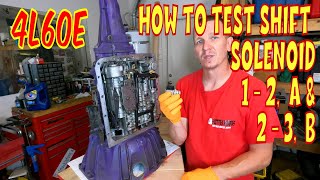
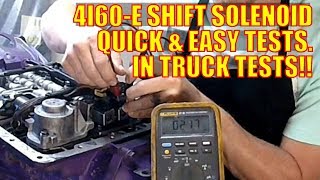
How to confirm: After dropping the pan, test the solenoid's resistance with a multimeter. On a 4L60-E, the 1-2 shift solenoid should read 20-30 ohms. A reading outside this range indicates electrical failure. 🎬 Watch: How to test shift solenoids A and B with a multimeter. For 6L80 models, the TSB recommends physically removing the valve to inspect for scratches or sticking, as it may become unstuck once the valve body is loosened.
Typical fix: For 4L60-E models, replace the faulty shift solenoid (part #24230298). It is highly recommended by owners to replace both the 'A' (1-2) and 'B' (2-3) solenoids at the same time. For 6L80 models, if the valve is scratched or stuck, the official GM fix is to replace the lower valve body assembly. 🎬 See why the 6L80 triggers P0751 and how to fix it.
Est. part cost: $30-$80 for a single solenoid, $250-$500 for a TEHCM/valve body assembly. - Low or Dirty Transmission Fluid 🟡 Medium Probability As fluid ages, it degrades and becomes contaminated with clutch material and metal shavings. This debris is a leading cause of solenoids and valve body passages getting clogged, causing them to stick. The 6L80 is also known for potential torque converter clutch wear, which can shed excessive debris into the fluid.
How to confirm: Check the transmission fluid level and condition. On models with a dipstick, the fluid should be bright red and clear, not brown, black, or smell burnt. On 6L80 models without a dipstick, this must be checked via a fill plug at a specific operating temperature.
Typical fix: Perform a transmission fluid and filter change. If the fluid is very dirty, this may be a temporary fix, as the new fluid can dislodge more debris or the solenoid may already be damaged.
Est. part cost: $75-$150 for DEXRON-VI fluid and a new filter kit. - Internal Transmission Wiring Harness Failure ⚪ Low Probability The wiring harness inside the transmission is subjected to constant heat and vibration, which can make the wires brittle and cause intermittent connections or shorts over time at the solenoid connector.
How to confirm: Visually inspect the wiring harness for signs of damage, brittleness, or corroded pins at the connector when the transmission pan is removed. Check for continuity from the external transmission connector to the solenoid connector.
Typical fix: Replace the internal transmission wiring harness.
Est. part cost: $50-$100
Rare But Worth Checking
- Faulty Transmission Control Module (TCM): This is rare and should only be considered after all other possibilities (solenoid, fluid, wiring) have been thoroughly ruled out. On 6L80 models, the TCM is integrated into the TEHCM with the solenoids, so it gets replaced as part of that assembly.
- Worn Valve Body Spacer Plate Gasket (6L80): On early 6L80 transmissions, the original valve body spacer plate gasket was prone to deterioration, causing internal hydraulic leaks. This can lead to a lack of oil pressure at the Clutch Pressure Control Solenoid 2, triggering a P0751. An updated, notched gasket is available to fix this issue.
Diagnosis Steps
- Check the transmission fluid level and condition. Top off or change if necessary.
- Use an OBD-II scanner to check for other related transmission codes, such as P0700, P0756, or P0753.
- With a capable scan tool, attempt to command Shift Solenoid 'A' on and off while listening for an audible click from the transmission pan.
- Drain the transmission fluid and remove the pan.
- Visually inspect the fluid and pan for excessive metal debris or clutch material. A small amount of fine grey material on the magnet is normal, but large flakes are a bad sign.
- Locate Shift Solenoid 'A' (1-2 solenoid on 4L60-E). Test its resistance with a multimeter. The spec is 20-30 ohms for a 4L60-E. An open (infinite) or shorted (near zero) reading indicates a bad solenoid.
- Inspect the internal wiring harness for any signs of damage, corrosion, or loose connections.
- For 6L80 models, follow TSB PI1344B: remove the lower valve body and inspect the Clutch Select Solenoid Valve 2 for physical scratches or sticking in its bore.
- If the solenoid and wiring test good, the issue may be a blockage in the valve body, a faulty spacer plate gasket (6L80), or, rarely, a faulty TCM.
Parts You'll Likely Need
- 1-2 Shift Solenoid 'A' (for 4L60-E)
(OEM #24230298)— This is the most common part to fail for this code on the 4-speed transmission. It is identical to the 2-3 ('B') solenoid and many owners replace them in pairs. 🎬 Watch this walkthrough to replace all 4L60E shift solenoids yourself.
Trusted brands: ACDelco (GM Genuine)
OEM price range: $40-$70
Aftermarket price range: $25-$50 - Transmission Electro-Hydraulic Control Module (TEHCM) (for 6L80) — For 6-speed models, the solenoid is integrated into this module. More often, the issue is a sticking valve in the valve body attached to the TEHCM. The entire assembly is often replaced to fix the issue and prevent future solenoid failures. This part requires programming to the vehicle's VIN.
Trusted brands: ACDelco
OEM price range: $300-$600
Related Codes That Often Appear With This One
- P0700 — This is a generic code indicating the TCM has stored a fault. It almost always appears alongside specific transmission codes like P0751.
- P0756 — This code is for Shift Solenoid 'B'. Seeing both codes together often points to a more systemic problem like contaminated fluid, a bad wiring harness, or a failing valve body affecting multiple solenoids. It's common practice to replace both solenoids on a 4L60-E at the same time.
- P0753 — This code indicates an electrical fault (open or short) in the Shift Solenoid 'A' circuit. If seen with P0751 (performance), it strongly suggests the solenoid itself has failed electrically or there is a wiring issue.
- P0894 — This code means 'Transmission Component Slipping'. It often appears with P0751 because a stuck solenoid prevents proper gear engagement, which the TCM interprets as clutch slippage.
Technical Service Bulletins (TSBs) & Recalls
- PI1344B/C: Addresses reduced acceleration and slipping from a launch on 2010+ models with 6-speed transmissions. It identifies the cause as the 'Clutch Select Solenoid Valve 2' sticking in its bore, resulting in a 4th gear start. The TSB advises inspecting the valve for physical scratches and replacing the lower valve body if damage is found.
- PIP4379K: Covers 2006 models and lists P0751 among a wide array of transmission codes that can be linked to conditions like delayed reverse engagement or a range inhibit, pointing to broader hydraulic or electrical issues.
- PIP5100A: Connects P0751 to a 'no move' condition that can be caused by debris from aftermarket transmission filters blocking critical valve body orifices.
Platform-Specific Known Issues
- TSB #PI1344B/C notes that on 2010 models with the 6-speed (6L80) transmission, a sticking Clutch Select Solenoid Valve 2 can cause P0751, resulting in reduced acceleration and a 4th gear start from a stop. The fix is to inspect the valve for scratches and replace the lower valve body if damaged.
- TSB #PIP4379K covers 2006 models and links P0751 to a broad set of transmission problems, including delayed or no reverse, indicating potential valve body or pressure issues that go beyond a single solenoid.
- On early 6L80 transmissions (2007-2010), an updated, notched valve body spacer plate gasket may be required to prevent hydraulic pressure loss to the solenoids, which can trigger P0751.
Mechanic-Grade Diagnostic Values
- 4L60-E Shift Solenoid 'A' (1-2) and 'B' (2-3) Resistance — expected: 20-30 Ohms. Failure: A reading significantly outside this range, or an open/infinite reading, indicates a failed solenoid coil.
- 6L80 On/Off Shift Solenoid Resistance — expected: 20-40 Ohms. Failure: A reading outside this range indicates an electrical failure within the solenoid, requiring TEHCM replacement.
- 6L80 PWM Solenoid Resistance (Pressure Control) — expected: 3-8 Ohms. Failure: This is for non-shift solenoids but is useful when testing the entire TEHCM. A reading outside this range points to a bad solenoid.
- 4L60-E Main Connector Pin E Voltage — expected: 12V+ (Ignition Power). Failure: Loss of voltage at this pin will disable all solenoids and cause multiple codes. This indicates a power supply issue, not a solenoid failure.
Scan Tool Commands That Help
- GDS2 (GM Global Diagnostic System 2): Solenoid Automated Cleaning Process — If a P0751 performance code is set and the solenoid passes electrical resistance tests, this function can be used. It rapidly cycles the solenoids with the engine running to dislodge small amounts of debris that may be causing the valve to stick. If the code is resolved after this procedure, it confirms the issue was contamination.
- Tech2 / GDS2: Output Controls / Solenoid Test — This is a basic bidirectional test to command a specific solenoid (e.g., Shift Solenoid 1) on and off with the engine off. With the pan on, a technician can listen for an audible 'click'. With the pan off, the solenoid's physical movement can be observed. This helps distinguish a mechanical failure from a wiring or TCM driver issue.
Wiring & Ground Locations
- 4L60-E Main Connector (20-pin) — Passenger side of the transmission case.. This is the main interface between the vehicle harness and all internal transmission electronics. Pin A is the ground control for Shift Solenoid 'A' (1-2) from the TCM. Pin E is the 12V ignition power feed for the solenoids. A voltage test here is a primary diagnostic step.
- G110 / G103 — Typically found on the rear of the passenger side cylinder head or on the engine block-to-frame connection.. These are critical powertrain grounds. A loose or corroded ground at these locations can cause erratic voltage and unpredictable behavior from the TCM, potentially setting false performance codes like P0751. Verifying ground integrity is crucial before condemning expensive components.
- 6L80 TEHCM Connector — The main vehicle harness connector plugs directly into the TEHCM assembly, accessible after removing the transmission pan.. While individual solenoid pins are not externally accessible, inspecting this main connector for corrosion, bent pins, or fluid intrusion is a key step before replacing the entire TEHCM assembly.
Real Owner Repair Stories
- SilveradoSierraClub.com forum user (2009 Chevrolet Silverado 1500 w/ 6L80) — P0751 code, transmission stuck in what felt like 3rd or 4th gear (limp mode), no 1st gear from a stop.
❌ Tried (didn't work) Initial diagnosis pointed to a bad shift solenoid.
✅ What actually fixed it The user reported that the final fix was the replacement of the entire TEHCM (valve body with integrated solenoids and TCM) and also a new valve body spacer plate. This combination of parts resolved the code and restored normal shifting.
OEM Part Supersession History
24248893→24230298— Part update/consolidation for the 4L60-E 1-2 and 2-3 shift solenoids.
Heads up: These parts are generally interchangeable for this application. 24230298 is the most current and widely available part number.Various early TEHCM PNs (e.g., 24252363)→24256861, then 19435614— Updates to address common failures in early 6L80 TEHCM units, including pressure switch failures and solenoid issues. Later parts have improved designs.
Heads up: TEHCMs are not backward or forward compatible. A replacement TEHCM must match the vehicle's specific calibration and model year. Using the wrong part number will result in immediate limp mode or no-start conditions. The part must be programmed to the vehicle's VIN.
Model Year Variations Within This Range
- 2006-early 2010 (6L80): Early 6L80 models were particularly prone to a faulty valve body spacer plate gasket that would deteriorate and cause internal hydraulic leaks. This could lead to a P0751 code by starving the Clutch Pressure Control Solenoid 2 of oil. An updated, notched gasket was released to fix this. Later models from 2010 onward used an improved plate design.
- 2007-2010 (6L80): The TEHCM design evolved during these years. Early Gen 1 TEHCMs (pre-2010) are known for frequent pressure switch and solenoid failures. Models from 2010 onward (like PN 24256861) featured improved solenoids and an updated pressure manifold gasket to increase reliability.
Helpful Videos


We Have This Part in Stock



The information in this article is provided for general reference and educational purposes only. Vehicle specifications, procedures, and part compatibility can vary by production date, trim level, and region. Always consult your vehicle's factory service manual and verify part numbers before purchasing or performing repairs. Safety-critical components such as airbags, seat belts, and braking systems should be installed by a qualified professional.
- Chevrolet SILVERADO:
- 🎬 Helpful Videos
- 🛍️ Shop This Part
- What's Unique About the 2006-2010 Chevrolet SILVERADO
- Diagnostic Flowchart
- Symptoms You May Notice
- Most Likely Causes
- Rare But Worth Checking
- Diagnosis Steps
- Parts You'll Likely Need
- Related Codes That Often Appear With This One
- Technical Service Bulletins (TSBs) & Recalls
- Platform-Specific Known Issues
- Mechanic-Grade Diagnostic Values
- Scan Tool Commands That Help
- Wiring & Ground Locations
- Real Owner Repair Stories
- OEM Part Supersession History
- Model Year Variations Within This Range
- 🎟️ Get 5% Off