

P0751 on 2010-2015 Cadillac Escalade ESV: Shift Solenoid 'A' Stuck Off Fixes
P0751 on your Escalade almost always points to a sticking shift solenoid inside the 6L80 transmission, specifically the Clutch Select Solenoid Valve 2. This causes significant slipping and reduced acceleration from a stop, often feeling like the truck is starting in 4th gear. The fix is typically to replace the entire solenoid pack (TEHCM) or the lower valve body, which is located inside the transmission pan. Expect a professional repair cost of $500-$900, though some owners report quotes for fu
- P0751 on a 2010-2015 Escalade is a well-documented problem, not a random failure.
- The most likely cause is a sticking Clutch Select Solenoid Valve 2 inside the transmission, as confirmed by GM Technical Service Bulletins.
- The fix involves replacing the transmission solenoid module (TEHCM), which is located inside the oil pan.
- Always check the transmission fluid level and condition first, as low or dirty fluid can cause similar symptoms.
- This is not a recommended DIY repair; professional service is strongly advised due to the complexity.
What's Unique About the 2010-2015 Cadillac ESCALADE ESV
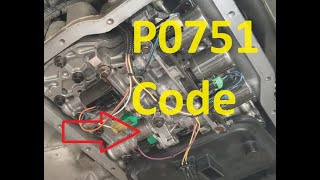
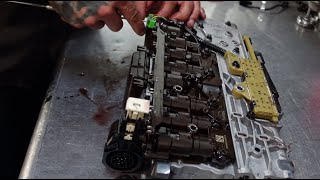
The 2010-2015 Escalade ESV uses the GM 6L80 automatic transmission (RPO code MYC), which is known for this specific issue. The problem is so common that GM issued multiple Technical Service Bulletins (TSBs), including PI1344C, directly addressing P0751. The TSBs confirm the cause is a sticking Clutch Select Solenoid Valve 2, which can get scratched or stuck in its bore, causing the vehicle to feel like it's starting in 4th gear. This makes the problem a well-documented pattern failure rather than a random occurrence, 🎬 Watch: Common causes and fixes for the P0751 code affecting a wide range of GM trucks and SUVs with the same transmission.
Diagnostic Flowchart
Tap your situation to follow the diagnostic path that matches what you're seeing on this vehicle.
Generation note: This range covers two Escalade generations. The 2010-2014 models are the third generation (GMT900), and the 2015 model is the fourth generation (K2XL). Both generations in this timeframe were commonly equipped with the 6L80 (RPO code MYC) automatic transmission, where this P0751 issue is well-documented. The 2015 model also had an optional 8-speed 8L90 automatic, which is less commonly associated with this specific TSB. The 6L80 transmission was used across a vast range of GM vehicles starting in 2006.
Symptoms You May Notice
- Reduced acceleration at low speed, feeling like it's starting in a high gear (e.g., 4th gear).
- Transmission slipping from a launch.
- Harsh or abrupt shifts, sometimes with a 'clunk' sound or a feeling of being rear-ended at a stop.
- Transmission gets stuck in one gear (limp mode).
- Delayed gear engagement.
- Check Engine Light is on.
- Cruise control may be disabled.
- Replacing only an individual solenoid when the TSB points to a sticking valve in the valve body bore, which is a separate component. The fix often requires replacing the lower valve body or the complete TEHCM.
- Replacing the entire transmission when only the TEHCM/valve body is needed. Some owners have been quoted for a full rebuild when the issue is isolated to this known component failure.
Most Likely Causes
- Sticking Clutch Select Solenoid Valve 2 (Shift Solenoid 'A') 🔴 High Probability This is a known issue documented in GM Technical Service Bulletin #PI1344C and its predecessors for this specific vehicle and 6L80 transmission. The valve can develop scratches or get stuck in its bore from debris or wear. Aftermarket companies like TransGo and Sonnax produce specific kits to address this valve-sticking issue.
How to confirm: A technician can use a bidirectional scan tool (like GM's GDS2) to command 'Shift Solenoid 1' on and off while monitoring transmission data. Physical inspection is definitive; following the TSB, a technician drops the pan and removes the valve to inspect it for scoring or sticking in its bore.
Typical fix: If the valve is stuck or scratched, the TSB recommends replacing the lower valve body which contains the solenoid. Many shops opt to replace the entire Transmission Electro-Hydraulic Control Module (TEHCM), as the solenoids are integrated into it. A new TEHCM requires programming to the vehicle.
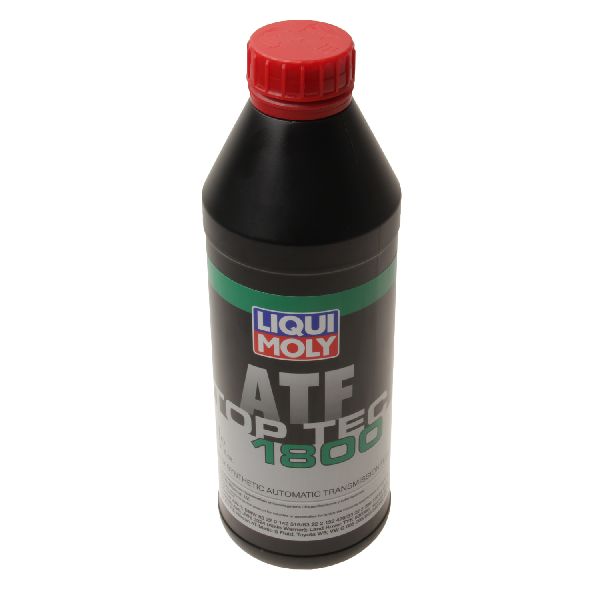
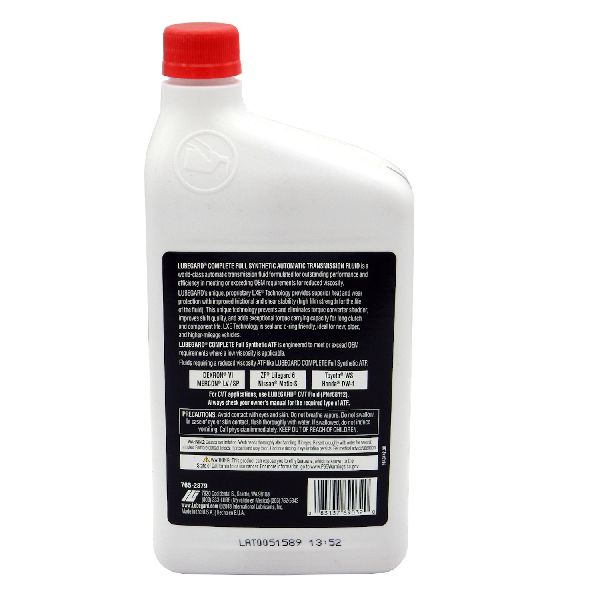
Est. part cost: $250-$500 - Low or Dirty Transmission Fluid 🟡 Medium Probability The 6L80 transmission requires DEXRON-VI full synthetic fluid. Over time, this fluid degrades and can become contaminated with clutch material and metal debris. This debris can clog the small passages in the valve body and cause solenoids to stick. Since these vehicles do not have a traditional dipstick, fluid service is often neglected.
How to confirm: These vehicles do not have a traditional dipstick. The fluid level must be checked via a fill plug on the transmission pan when the fluid is at a specific temperature (typically 100-122°F). If the fluid is dark, has a burnt smell, or is low, it needs to be addressed.
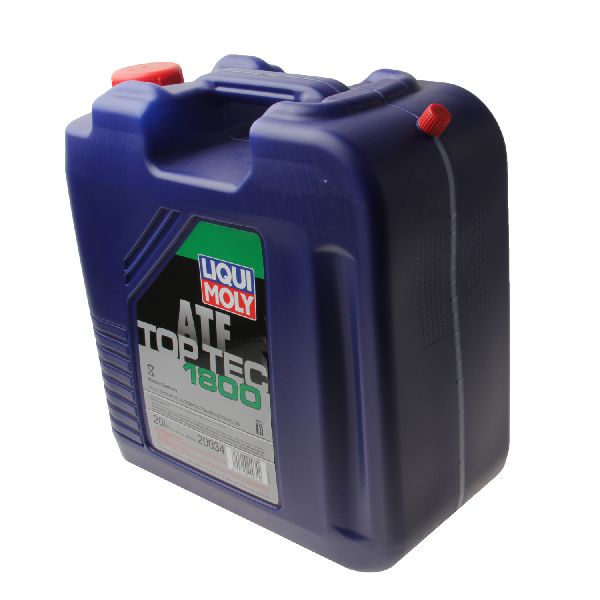
Typical fix: Perform a transmission fluid and filter change using the correct DEXRON-VI fluid. If this doesn't resolve the issue, the underlying mechanical/electrical cause must be addressed.
Est. part cost: $75-$200 - Faulty Wiring or Connectors ⚪ Low Probability The internal transmission wiring harness is constantly submerged in hot fluid, which can make wires brittle over time. External connectors are exposed to heat and vibration, which can lead to corrosion, frayed wires, or loose connections, disrupting the signal to the solenoid.
How to confirm: Visually inspect the external wiring harness leading to the transmission for any signs of damage. A multimeter can be used to check for continuity and proper voltage at the solenoid connector. A scan tool can also be used to perform active tests on the solenoid circuit.
Typical fix: Repair the damaged section of wiring or replace the faulty connector. If the internal harness is faulty, it is often replaced during the TEHCM or valve body service.
Est. part cost: $20-$100
Rare But Worth Checking
- Faulty Transmission Control Module (TCM): In the 6L80 transmission, the TCM is integrated with the solenoid pack into a single unit called the TEHCM. A failure of the control module itself can cause this code, but it's far less common than a mechanical issue with the solenoid valve. This is usually considered only after all other possibilities have been ruled out.
Diagnosis Steps
- Check the transmission fluid level and condition. This must be done at the correct operating temperature via the fill plug. Top off or change the fluid (DEXRON-VI) and filter if necessary.
- Use an OBD-II scanner to confirm P0751 is the primary code and check for any other related transmission codes, like P0700.
- With a professional bidirectional scan tool (like GM GDS2), use the 'Output Control' function to command the Shift Solenoid 'A' (SS1) on and off to test its electronic response and listen for a click.
- Inspect the external transmission wiring harness and connectors for any visible damage, corrosion, or loose connections.
- If the solenoid is suspected, drop the transmission pan to access the valve body and TEHCM assembly.
- Following the procedure in TSB #PI1344C, remove and inspect the Clutch Select Solenoid Valve 2 for scratches or sticking in its bore. The TSB warns that loosening the valve body bolts may free a stuck valve, so inspection for scratches is critical.
- If the valve is damaged or sticking, replace the lower valve body or the complete TEHCM (solenoid pack).
- After replacement, the new TEHCM will require programming to the vehicle's VIN using a tool like GM's SPS2 or Techline Connect.
- Clear the trouble code and perform a test drive, including multiple stops and starts, to ensure the shifting issue is resolved.
Parts You'll Likely Need
- Transmission Solenoid Module (TEHCM)
(OEM #24256861)— This is the most common failure point for code P0751 on the 6L80 transmission, as the solenoids are integrated into this module. Replacing it as a unit addresses the solenoid, its internal wiring, and the TCM at once. This part often requires programming. Note: Part numbers are year-specific; 24256861 is common for 2010-2013 models and is superseded by 19435614.
Trusted brands: ACDelco, GM Genuine
OEM price range: $350-$500
Aftermarket price range: $250-$400 - Transmission Fluid and Filter Kit — This is required whenever the transmission pan is removed. Using fresh, correct-spec fluid (DEXRON-VI for the 6L80) is critical for transmission health and performance.
Trusted brands: ACDelco
OEM price range: $100-$150
Aftermarket price range: $75-$120 - Lower Valve Body — The TSB specifically calls for replacing the lower valve body if the Clutch Select Solenoid Valve 2 is found to be scratched or stuck in its bore. This part contains the problematic valve bore.
Trusted brands: GM Genuine
OEM price range: $200-$400
Aftermarket price range: $150-$300
Related Codes That Often Appear With This One
- P0700: This is a generic Transmission Control System Malfunction code that indicates the TCM has stored a fault code (in this case, P0751). It often appears alongside more specific transmission codes.
- P0752: This code indicates Shift Solenoid 'A' is Stuck On, the opposite of P0751. It is less common but can appear if the solenoid's behavior is erratic.
Technical Service Bulletins (TSBs) & Recalls
- PI1344C: Diagnostic tips for reduced acceleration at low speed and/or transmission slipping from a launch, DTC P0751 set. This TSB supersedes previous versions and identifies the cause as a sticking Clutch Select Solenoid Valve 2.
- PI1344B: An earlier version of the TSB with the same core diagnosis, noting customers may comment on reduced acceleration or slipping from a launch with DTC P0751.
- PI1344: The original TSB from 2014 that first documented this specific failure mode for P0751 on the 6L-series transmissions.
Platform-Specific Known Issues
- A known issue documented in TSB #PI1344C involves the Clutch Select Solenoid Valve 2 sticking, causing a sensation of starting in 4th gear, reduced acceleration, and setting code P0751.
Mechanic-Grade Diagnostic Values
- Shift Solenoid (On/Off type) Resistance — expected: 20 - 40 Ohms. Failure: A reading of 0 Ohms (short) or OL/infinite (open) indicates a failed solenoid coil.
- Pressure Control (PWM type) Solenoid Resistance — expected: 3 - 8 Ohms. Failure: Readings outside this range indicate a failing PWM solenoid within the TEHCM.
- Shift Solenoid (On/Off type) Current Draw — expected: 0.3 - 0.7 Amps at 12V. Failure: Incorrect amperage suggests a failing solenoid, even if resistance is within spec.
- Voltage at Transmission Main Connector — expected: Approximately 12.6V (Battery Voltage). Failure: Low or no voltage indicates a problem in the power supply wiring to the transmission.
Scan Tool Commands That Help
- GM GDS2 (Global Diagnostic System 2): Output Control / Control Functions — This function is used to individually command each transmission solenoid on and off. For P0751, a technician would command Shift Solenoid 1 (SS1) to verify it clicks and, if bench testing with tool DT47825, that it correctly directs air pressure.
- GM GDS2 (Global Diagnostic System 2): Solenoid Cleaning Procedure — Some service information mentions an automated feature on the scan tool that cycles all solenoids in a specific sequence to flush debris. This can be attempted before replacing the TEHCM if the issue is suspected to be minor contamination.
Wiring & Ground Locations
- G101 — Located at the lower front of the engine block.. This ground point serves both the Engine Control Module (ECM) and the Transmission Control Module (TCM). A poor connection here can cause erratic behavior and communication issues for the TCM, potentially leading to false solenoid codes.
- Transmission Main Connector (16-pin) — The main electrical connector on the passenger side of the transmission case.. This is the primary interface between the vehicle's wiring harness and the internal TEHCM. All power, ground, and data bus signals pass through this connector. Checking for battery voltage and clean ground signals here is a critical step before condemning the internal TEHCM.
Real Owner Repair Stories
- YouTube user 'life with Derrick' (GM Truck with 6L80 Transmission (symptoms match Escalade)) — Vehicle would feel like it was being rear-ended at a stop light (at about 3 mph), then would take off. The transmission would not shift correctly from a stop.
❌ Tried (didn't work) Replacing the torque converter., Changing the transmission fluid and filter.
✅ What actually fixed it The owner was quoted high prices for a full transmission rebuild by multiple shops. He researched the issue and found the common cause was the TEHCM. He purchased a replacement TEHCM/valve body assembly, installed it himself, and the shifting problems were completely resolved. The total cost was approximately $560.
"I Checked Everything" — The Actual Cause
- The equivalent for this code is when the Shift Solenoid 'A' passes all electrical tests (resistance, current draw) but the code persists. The root cause, as identified in GM's TSB PI1344C, is often a *mechanical* failure, not an electrical one. The Clutch Select Solenoid Valve 2 physically sticks in its bore within the valve body due to scoring or debris. A technician may replace a perfectly good TEHCM (solenoid pack) only to have the problem return because the physical valve bore in the lower valve body was the actual point of failure.
OEM Part Supersession History
24256861→19435614— Part has been updated by the manufacturer for improved reliability or to address known failure modes.
Heads up: Part number 24256861 is commonly listed for 2010-2013 GM trucks and SUVs with the 6L80. Always verify the correct part number for your specific VIN, as TEHCM hardware and software are year-specific and not interchangeable. Installing the wrong TEHCM can result in a no-start or limp mode condition.24275872→N/A - This is a '1st Design' part number itself.— This part number replaced earlier versions 24041873 and 24241890.
Heads up: This part is generally associated with earlier 6L80 models (approx. 2007-2012). It is critical to match the TEHCM to the vehicle's model year and calibration.
Model Year Variations Within This Range
- 2015: The 2015 model year was a transition period. While the 6L80 transmission was still standard on many trims, the new 8-speed 8L90 automatic transmission was introduced as an option, particularly on higher-end Escalade and Denali models. It's important to confirm which transmission the vehicle is equipped with before diagnosing or ordering parts.
- 2014-2015: Some aftermarket repair kits for the 6L80 note a change in the transmission cooling circuit starting in 2014, including a 'cooler bypass delete kit' for 2014-on models. This indicates a design change in the thermal management system that could affect long-term durability.
- 2010-2013 vs 2014-2015: The TEHCM part numbers are different for these year ranges. For example, 2010-2013 models often use part number 24256861, while 2014-2016 models may use 24274046 or 24285393. This reflects internal hardware and software changes, and the units are not cross-compatible.
Helpful Videos
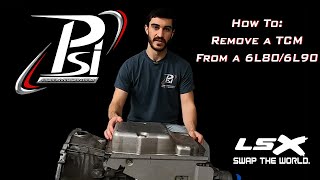
Used OEM Parts in Stock

New Aftermarket Parts Available


The information in this article is provided for general reference and educational purposes only. Vehicle specifications, procedures, and part compatibility can vary by production date, trim level, and region. Always consult your vehicle's factory service manual and verify part numbers before purchasing or performing repairs. Safety-critical components such as airbags, seat belts, and braking systems should be installed by a qualified professional.
- Cadillac ESCALADE ESV:
- 🎬 Helpful Videos
- 🛍️ Shop This Part
- What's Unique About the 2010-2015 Cadillac ESCALADE ESV
- Diagnostic Flowchart
- Symptoms You May Notice
- Most Likely Causes
- Rare But Worth Checking
- Diagnosis Steps
- Parts You'll Likely Need
- Related Codes That Often Appear With This One
- Technical Service Bulletins (TSBs) & Recalls
- Platform-Specific Known Issues
- Mechanic-Grade Diagnostic Values
- Scan Tool Commands That Help
- Wiring & Ground Locations
- Real Owner Repair Stories
- "I Checked Everything" — The Actual Cause
- OEM Part Supersession History
- Model Year Variations Within This Range
- 🎟️ Get 5% Off